



Market Summary
The global Micro-inverter market size was valued at USD 4.20 billion in 2025 and is projected to reach USD 12.20 billion by 2033, growing at a CAGR of 14.20% from 2026 to 2033. The micro-inverter market is expected to have a substantial CAGR due to the rising adoption of residential and commercial solar power systems. Technological developments in power electronics and smart monitoring systems improve energy efficiency and reliability. Government initiatives and net metering regulations in North America, Europe, and Asia Pacific contribute to the growth of the micro-inverter market.
Market Size & Forecast
- 2025 Market Size: USD 4.20 Billion
- 2033 Projected Market Size: USD 12.20 Billion
- CAGR (2026-2033): 14.20%
- North America: Largest Market in 2026
- Asia Pacific: Fastest Growing Market

To learn more about this report,  Download Free Sample Report
Key Market Trends Analysis
- North America is a prominent region with high adoption rates of grid-tied micro-inverters in the residential and commercial sectors, with power electronics and monitoring systems being the major components, residential rooftops being the primary application segment, and homeowners and SMEs as the major end-users
- United States is a significant market with high penetration rates of grid-tied micro-inverters in the residential sector, with communication modules and monitoring systems being the primary components, residential and commercial sectors being the major applications, and homeowners, SMEs, and large enterprises as the major end-users
- Asia Pacific is a growing market with high adoption rates of grid-tied and off-grid micro-inverters, with power electronics and monitoring systems being the major components, residential and utility-scale applications being the major segments, and homeowners, SMEs, and large enterprises as the major end-users in China, India, Japan, and Australia
- Grid-tied micro-inverters account for the majority of the product type segment in the global market due to their increased energy output, improved safety, and ease of installation, which has led to a significant uptake in residential and commercial rooftops in developed regions such as North America and Europe.
- Residential systems account for the majority of the market share due to the widespread adoption of rooftop solar installations, especially in North America, Europe, and Asia Pacific, where economic incentives, subsidies, and rising electricity costs have led to a significant uptake of micro-inverter-based solar installations.
- Homeowners account for the majority of the end-use segment due to the efficiency, safety, and modularity advantages offered by micro-inverters, especially in developed regions where the residential solar market has shown significant growth due to economic incentives and subsidies offered by governments for the adoption of renewable energy sources.
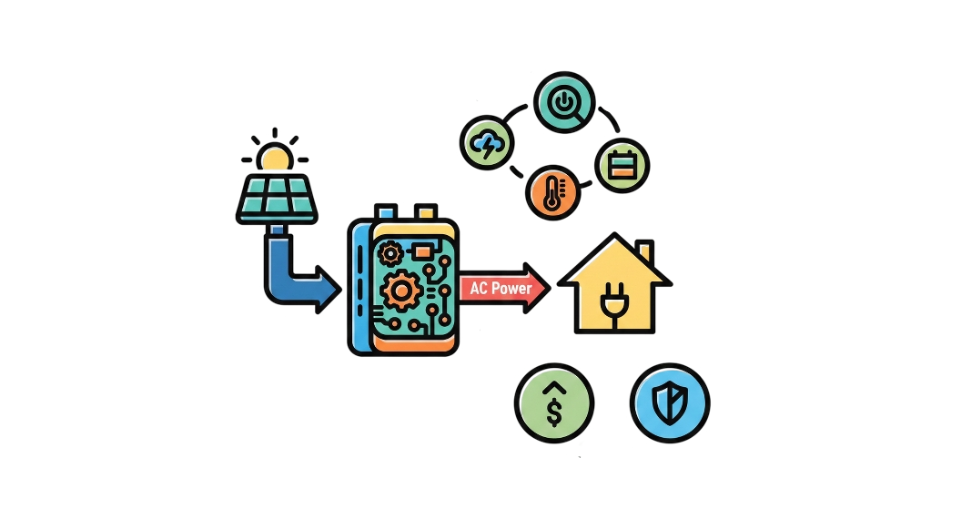
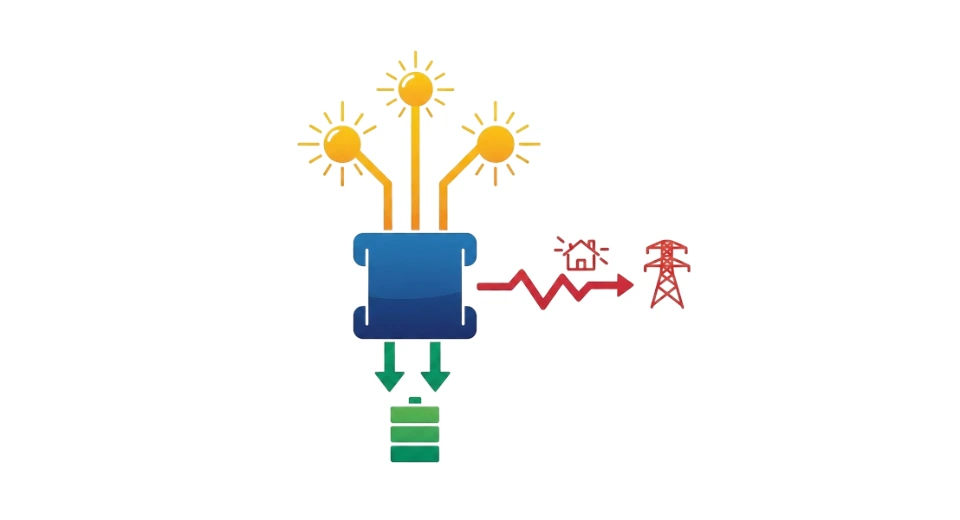
So, the micro-inverter market is a global market that involves micro-inverters, which are devices that convert direct current (DC) produced by individual solar panels to alternating current (AC) that can be used directly or fed into the power grid. Micro-inverters are different from string inverters because they allow panel-level optimization, which enhances energy production, reliability, and performance of solar panels even when shaded. The micro-inverter market has experienced growth due to the increasing cost of electricity, government incentives, and the global sustainability agenda that encourages the use of renewable energy sources. Advancements in power electronics, communication modules, and monitoring systems have also improved the efficiency of micro-inverters. The adoption of grid-tied solutions continues to be most prevalent in developed areas, while off-grid micro-inverters are gaining traction in the emerging market for rural electrification and off-grid solar applications. The rising demand for smart energy solutions and the integration of Internet of Things (IoT) technology is also fueling the growth of the market, in addition to the rising awareness of the benefits of solar energy. In summary, the market is fueled by the combined impact of government support, innovation, and rising demand.
Micro-inverter Market Segmentation
By Product Type
- Grid-tied Micro-inverter
Grid-tied micro-inverters are the most widely used in residential and commercial solar power systems because of their capability to export surplus power to the grid. They are most popular in North America and Europe because of government subsidies and net metering policies. Their performance in partially shaded solar panels makes them the best choice for urban areas.
- Off-grid Micro-inverter
Off-grid micro-inverters are the most preferred choice in areas where power supply is not reliable, such as the Asia Pacific and African regions. They are essential for off-grid solar power systems. Their demand is driven by the rising adoption of off-grid solar power systems in emerging countries.
By Component
- Power Electronics
Power electronics, such as inverters and converters, are the primary components of micro-inverters. The demand is high in the developed areas of North America and Europe, where efficiency and reliability are given importance. Upgrades in technology for semiconductor materials are fueling the growth of the market.
- Communication Module
Communication modules facilitate monitoring, analysis, and connectivity to smart grids. The use of communication modules is rapidly growing in Europe, North America, and Asia Pacific, driven by the increasing adoption of IoT-based solar power systems. They improve system performance and predictive analysis.
- Monitoring System
Monitoring systems offer real-time energy production data and diagnostic analysis for faults. The systems are largely adopted in commercial and residential applications in developed areas of North America and Europe. The rising interest in energy efficiency and renewable energy management is fueling growth.
By Application
- Residential
The residential solar market continues to be the largest application segment, especially in North America, Europe, and certain regions of Asia Pacific. Micro-inverters maximize solar power output in residential solar installations, minimize system losses, and ensure better system safety. Government incentives and subsidies play a major role in market adoption.
- Commercial
Commercial solar applications include office buildings, shopping malls, and industrial rooftops. The market is expanding in Europe and North America because of the widespread adoption of solar power on a commercial scale for economic and environmental reasons. Micro-inverters enable modular and scalable commercial solar installations in the medium to large size range.
- Utility-Scale
Utility-scale solar applications involve the use of micro-inverters in utility-scale solar power plants with high monitoring needs. The market is expanding in emerging countries like India, China, and Brazil because of the increasing focus on renewable energy sources. Micro-inverters maximize solar power output per panel and ensure easy maintenance.
To learn more about this report, Download Free Sample Report
By End User
- Homeowners
Homeowners are the biggest end-use segment in developed countries. Micro-inverters ensure easy installation, enhanced safety, and optimal energy harvest for each panel. Government incentive schemes and increasing electricity prices drive the adoption of micro-inverters in the US, Germany, and Japan.
- Small and Medium Enterprises (SMEs)
SMEs are gradually embracing solar solutions with micro-inverters to cut down costs and promote sustainability. The main markets for micro-inverters are North America, Europe, and Asia Pacific. The micro-inverter's compact design and minimal maintenance needs make it an ideal choice for small commercial rooftop solar installations.
- Large Enterprises
Large businesses use micro-inverters for commercial solar rooftops and industrial purposes to maximize energy efficiency and meet sustainability goals. The main markets for micro-inverters are North America, Europe, and Asia Pacific. Compatibility with energy management solutions improves ROI and system reliability.
Regional Insights
North America currently has the largest market for micro-inverters, with the United States being the primary driver for the adoption of residential and commercial solar power systems. Canada and Mexico also follow suit, with an increasing number of commercial solar rooftop systems and a growing interest in distributed solar energy systems. Europe is also experiencing steady growth, with Germany, the United Kingdom, and France being the primary early adopters because of their robust renewable energy policies. Spain, Italy, and the rest of Europe are primarily focusing on the expansion of residential solar and smart grid integration. The Asia Pacific market is also growing at a very rapid pace, with China and India being the primary leaders in both residential and utility-scale solar micro-inverter systems. The remaining Asia Pacific markets are expanding with off-grid solar installations and rural electrification initiatives. The South America market is emerging with growth in Brazil and Argentina, driven by renewable energy investments and residential solar adoption, while the remaining South America market is gradually adopting micro-inverters, owing to infrastructure constraints. The Middle East & Africa market is concentrated on commercial and off-grid solar installations, with Saudi Arabia and UAE exploiting utility-scale solar farms, South Africa encouraging residential solar adoption, and the remaining market exploring off-grid solutions to improve energy access.
To learn more about this report, Download Free Sample Report
Recent Development News
- October 2025, Enphase Energy, a world leader in micro-inverter-based solar and battery solutions, has introduced a new all-in-one off-grid solar and battery solution that can function autonomously without the need for a connection to the utility grid. The new solution combines IQ Battery 5P with grid-forming microinverters, IQ8 Series Microinverters with Sunlight JumpStart Technology, and standby AC generators to provide power to homes during a grid outage, and is set to be launched in other countries in 2026.
- In December 2024, Sungrow Power Supply Co., Ltd. recently announced that its microinverter has achieved the world’s first VDE EMC certificate, which reflects its outstanding electromagnetic compatibility. The VDE EMC certificate, granted by VDE (Germany), verifies that the product can work properly in a complicated electromagnetic environment without affecting other devices, thus setting a new global standard for micro-inverter products.
|
Report Metrics |
Details |
|
Market size value in 2025 |
USD 4.20 Billion |
|
Market size value in 2026 |
USD 4.80 Billion |
|
Revenue forecast in 2033 |
USD 12.20 Billion |
|
Growth rate |
CAGR of 14.20% from 2026 to 2033 |
|
Base year |
2025 |
|
Historical data |
2021 – 2024 |
|
Forecast period |
2026 – 2033 |
|
Report coverage |
Revenue forecast, competitive landscape, growth factors, and trends |
|
Regional scope |
North America; Europe; Asia Pacific; Latin America; Middle East & Africa |
|
Country scope |
United States; Canada; Mexico; United Kingdom; Germany; France; Italy; Spain; Denmark; Sweden; Norway; China; Japan; India; Australia; South Korea; Thailand; Brazil; Argentina; South Africa; Saudi Arabia; United Arab Emirates |
|
Key company profiled |
Enphase Energy, APsystems, Hoymiles Power Electronics, SolarEdge Technologies, SMA Solar Technology AG, Darfon Electronics Corp, Chilicon Power LLC, Delta Electronics, Sparq Systems Inc, Deye Inverter Technology, Envertech, Sungrow Power Supply Co. Ltd, Northern Electric Power Technology, Solis (Ginlong Technologies), and SunPower Corp |
|
Customization scope |
Free report customization (country, regional & segment scope). Avail customized purchase options to meet your exact research needs. |
|
Report Segmentation |
By Product Type (Grid-tied Micro-inverter, Off-grid Micro-inverter), By Component (Power Electronics, Communication Module, Monitoring System), By Application (Residential, Commercial, Utility-Scale) and By End User (Homeowners, Small and Medium Enterprises (SMEs), Large Enterprises) |
Key Micro-inverter Company Insights
Enphase Energy is generally acknowledged as the leading player in the micro-inverter market, having introduced panel-level power conversion with its IQ series of products, which optimize energy capture, performance, and system security. The company’s vertically integrated business model integrates hardware, software, and storage solutions for seamless residential and small commercial applications. The company enjoys a leading position in the North American market and is expanding its base in the international market with its strong brand, comprehensive support infrastructure, and relentless innovation in efficiency and monitoring performance. The company’s strategic foray into energy storage and international distribution networks, along with high volumes, ensures its leading market position and ability to seize market share in the dynamic market.
Key Micro-inverter Companies:
- Enphase Energy
- APsystems
- Hoymiles Power Electronics
- SolarEdge Technologies
- SMA Solar Technology AG
- Darfon Electronics Corp
- Chilicon Power LLC
- Delta Electronics
- Sparq Systems Inc
- Deye Inverter Technology
- Envertech
- Sungrow Power Supply Co. Ltd
- Northern Electric Power Technology
- Solis (Ginlong Technologies)
- unPower Corp
Global Micro-inverter Market Report Segmentation
By Product Type
- Grid-tied Micro-inverter
- Off-grid Micro-inverter
By Component
- Power Electronics
- Communication Module
- Monitoring System
By Application
- Residential
- Commercial
- Utility-Scale
By End-User
- Homeowners
- Small and Medium Enterprises (SMEs)
- Large Enterprises
Regional Outlook
- North America
- United States
- Canada
- Mexico
- Europe
- Germany
- United Kingdom
- France
- Spain
- Italy
- Rest of Europe
- Asia Pacific
- Japan
- China
- Australia & New Zealand
- South Korea
- India
- Rest of Asia Pacific
- South America
- Brazil
- Argentina
- Rest of South America
- Middle East & Africa
- Saudi Arabia
- United Arab Emirates
- South Africa
- Rest of the Middle East & Africa






 APAC:+91 7666513636


