
Feb 23, 2026
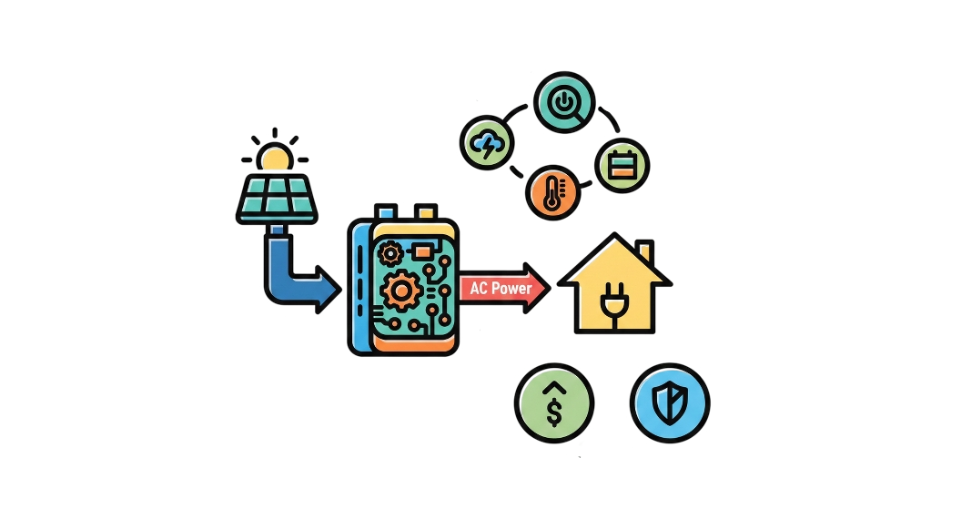
The report “Micro-inverter Market By Product Type (Grid-tied Micro-inverter, Off-grid Micro-inverter), By Component (Power Electronics, Communication Module, Monitoring System), By Application (Residential, Commercial, Utility-Scale) and By End User (Homeowners, Small and Medium Enterprises (SMEs), Large Enterprises)” is expected to reach USD 12.20 billion by 2033, registering a CAGR of 14.20% from 2026 to 2033, according to a new report by Transpire Insight.
The international micro-inverter market is growing rapidly due to the increasing use of residential, commercial, and utility-scale solar power systems. Micro-inverters are devices that convert DC power from solar panels to AC power at a panel level, ensuring panel-level optimization, improved safety, and the ability to function effectively even when shaded or mismatched panels are used. Unlike string inverters, micro-inverters ensure maximum energy production from each panel, thus reducing system losses and improving system reliability. Increasing awareness about renewable energy sources, rising electricity prices, and government incentives across the globe are driving the demand for micro-inverters, especially in North America, Europe, and Asia Pacific. The residential rooftop segment is a major contributor to the market demand, as residential consumers are increasingly looking for modular, easy-to-install, and efficient solar energy solutions. The commercial segment, including office buildings, retail, and industrial rooftops, is increasingly adopting micro-inverters for cost savings, sustainability projects, and improved energy management. Utility-scale solar power systems are also increasing in size, especially in emerging countries such as China, India, and Brazil, where solar farms are being developed on a distributed basis to optimize energy production.
Advancements in power electronics, monitoring, and communication technology are also improving the capabilities of micro-inverters. Real-time monitoring, predictive maintenance, and IoT-based energy management are also being incorporated into advanced solar solutions, giving customers greater control, improved efficiency, and less downtime. Off-grid solutions are also becoming popular in regions with unstable grid connectivity, thereby fueling the overall growth of the market. The micro-inverter market is also expected to continue its robust growth trajectory in the coming years, driven by the global movement towards clean energy and a sustainable future. Key players in the industry are also making efforts to improve market dynamics through innovation, geographic expansion, and partnerships with installers and energy companies. The convergence of these factors is expected to fuel the growth of the micro-inverter market in the coming years.
The Grid-tied Micro-inverter segment is projected to witness the highest CAGR in the Micro-inverter during the forecast period.
According to Transpire Insight, Grid-tied micro-inverters currently dominate the product type category because of their better performance characteristics in residential and commercial rooftop applications. They facilitate panel-level energy optimization, which is essential in densely populated regions where partial shading can impact performance. These solutions improve overall energy production and simplify maintenance compared to conventional string inverters. Mature markets like North America and Europe have reported robust adoption because of the benefits of net metering, as well as high awareness of energy efficiency benefits. Grid-tied micro-inverters also facilitate reliable connectivity with smart energy solutions, which support sustainability and cost-effectiveness throughout the system’s life cycle.
The use of grid-tied systems is encouraged by the fast pace of technological advancements in power electronics and monitoring modules. Companies are working to enhance the efficiency, communication, and real-time monitoring of inverters to ensure smooth integration with solar panels, energy storage systems, and the grid. The modularity of the system enables residential, SME, and corporate users to easily add to their systems without much hassle. In addition, the declining cost of solar panels and the increasing trend towards decentralized energy production will make grid-tied micro-inverters even more popular, thereby ensuring their position as the leading product type segment worldwide.
The Power Electronics segment is projected to witness the highest CAGR in the Micro-inverter during the forecast period.
Power electronics are the core of micro-inverter technology and include inverters, converters, and other circuitry. The market leads because of the need for higher efficiency, reliability, and integration with smart solar solutions. The latest semiconductor technology and inverter designs improve energy conversion and minimize system losses, which are essential in residential as well as commercial applications. The adoption of micro-inverters in North America and Europe is driven by the need for quality, awareness, and the adoption of technologically advanced solar solutions. Power electronics also facilitate compatibility with energy storage and IoT-based monitoring, further solidifying their position as the market leader in component technology.
Research and development activities in power electronics are also propelling the development of micro-inverters that function effectively even when partially shaded and in a fluctuating grid environment. Companies are working towards enhancing the thermal, robustness, and power handling capabilities of micro-inverters to ensure reliable performance throughout the lifetime of the system. The addition of communication modules and monitoring systems to power electronics is also enhancing the efficiency of system operation. With energy maximization and grid compatibility emerging as important considerations, power electronics will continue to fuel the growth of the micro-inverter market and retain a leading market share.
The Residential segment is projected to witness the highest CAGR in the Micro-inverter during the forecast period.
According to Transpire Insight, Residential use continues to be the leading application segment because of the widespread adoption of rooftop solar in developed and emerging markets. Homeowners are increasingly adopting micro-inverters because of their modularity, ease of installation, and efficiency. The use of micro-inverters is driven by government incentives, rebates, and net metering programs, particularly in North America and Europe. Residential solar power systems have the advantage of panel-level optimization, which ensures that power is generated regardless of the shading conditions in the environment. Increasing costs of electricity, environmental concerns, and the need for decentralized electricity generation make residential use the leading application segment.
Residential micro-inverter solutions are being increasingly integrated with monitoring solutions, communication interfaces, and battery storage solutions to offer comprehensive energy management solutions. This enables residential consumers to monitor their real-time energy production, carry out predictive maintenance, and optimize their storage usage, thereby enhancing the efficiency of the energy management solutions. The ability to expand the solutions in a modular fashion also enables flexibility in meeting future energy requirements. With further advancements and government support, the residential sector is expected to continue its dominance in the market.
The Homeowners segment is projected to witness the highest CAGR in the Micro-inverter during the forecast period.
Homeowners constitute the largest end-use market because of the widespread adoption of rooftop solar solutions with micro-inverters. Homeowners value efficiency, safety, modularity, and cost-effectiveness, and micro-inverters offer them benefits of panel-level energy optimization. The largest adoption of micro-inverters by homeowners is observed in North America and Europe, thanks to government subsidies, tax benefits, and net metering regulations. The homeowner market also adopts advanced smart monitoring systems and energy storage solutions, which improve the overall user experience and efficiency. Homeowners are increasingly conscious about sustainability, energy independence, and return on investment, thus ensuring their dominance as the largest end-use market in the micro-inverter market.
The homeowner market derives benefits from the steady advancements in micro-inverter technology, such as advancements in communication modules, monitoring systems, and battery solutions. These advancements offer homeowners real-time information, predictive maintenance notifications, and improved energy management, thus fueling further adoption. As the appeal for decentralized energy production grows, homeowners are expected to increase their adoption of micro-inverters over time, opting for modular solutions to cater to their rising energy requirements. This sustained adoption trend further cements the homeowner market's position as the key end-users fueling the micro-inverter market.
The North America region is projected to witness the highest CAGR in the Micro-inverter during the forecast period.
North America leads the micro-inverter market because of the widespread adoption of residential and commercial rooftop solar systems, favorable government policies, and the adoption of advanced technology. The United States is the key driving force behind the micro-inverter market, with favorable policies, net metering, and rising electricity costs pushing consumers towards adopting micro-inverter solutions. The micro-inverter solutions are further aided by advanced monitoring systems, communication modules, and smart grid solutions, making North America the leading market in the global micro-inverter market.
The North American micro-inverter market is experiencing significant growth in the residential and commercial sectors, with grid-tied micro-inverters being the leading product type. Small and large businesses are increasingly adopting micro-inverters to enhance energy efficiency and meet sustainability goals. Technological advancements in power electronics, monitoring systems, and communication modules are helping to improve energy efficiency and reliability. Moreover, the integration of micro-inverters with smart energy management solutions is providing predictive maintenance, scalability, and improved ROI, solidifying North America’s leading position in the global micro-inverter market.
Key Players
The top 15 players in the Micro-inverter market include Enphase Energy, APsystems, Hoymiles Power Electronics, SolarEdge Technologies, SMA Solar Technology AG, Darfon Electronics Corp, Chilicon Power LLC, Delta Electronics, Sparq Systems Inc, Deye Inverter Technology, Envertech, Sungrow Power Supply Co. Ltd, Northern Electric Power Technology, Solis (Ginlong Technologies), and SunPower Corp.
Drop us an email at:
Call us on:
+91 7666513636

 inquiry@transpireinsight.com
 APAC:+91 7666513636
 Address





