
Medical Sensor Market Summary:
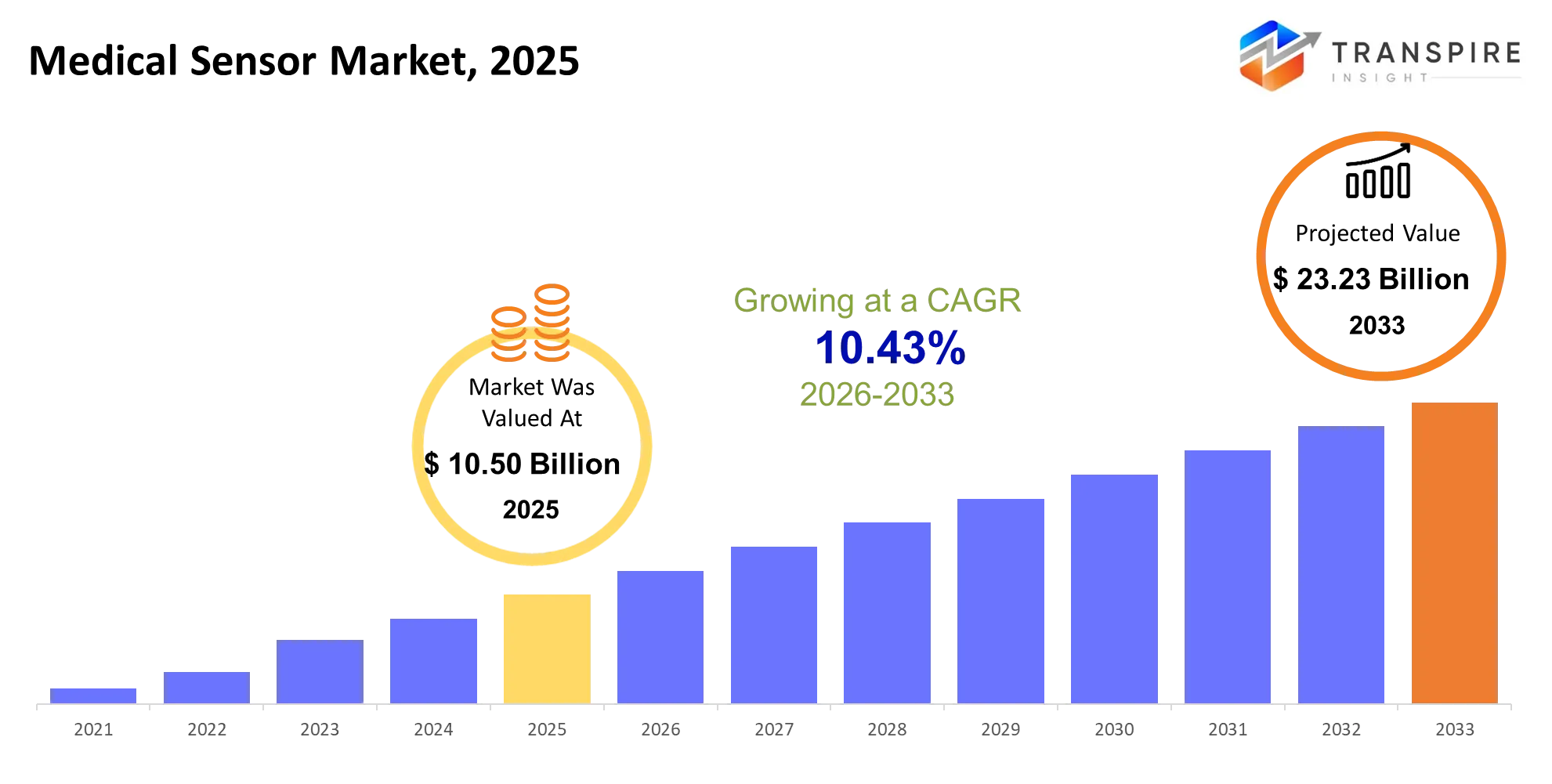
As per Transpire Insight, the Medical Sensor Market size is estimated at USD 10.50 billion in 2025 and is anticipated to reach USD 23.23 billion by 2033, growing at a CAGR of 10.43% from 2026 to 2033.
The medical sensor market is changing. Healthcare providers are shifting toward patient monitoring. They want diagnosis and more personalised treatment. Medical sensors measure things like body temperature, blood pressure, glucose levels, oxygen saturation and movement. These sensors give doctors real-time data on a patient’s health. This helps clinicians make decisions. In the past three to five years, the market has changed a lot. It is no longer limited to hospital equipment. Now it includes wearables, remote monitoring systems and small diagnostic devices. The rise of home healthcare and digital health services has pushed this change forward. This is especially helpful for people with conditions. A major shift has been the integration of connectivity and data analytics into medical devices. This allows health information to be accessed easily outside hospitals. Patients can now be monitored from home or other non-clinical settings. Remote consultations are becoming more common. There is also a need to track patients after they leave the hospital. These factors have made medical sensors more essential than ever. Because of this manufacturers are now focusing on making sensors that're smaller more accurate and more energy-efficient. They want sensors that work reliably in different healthcare environments. From hospitals to homes, these sensors are becoming a part of modern healthcare.
Medical Sensor Market Size & Forecast:
- Market Size 2025: USD 10.50 Billion
- Expected Market Value (2033): USD 23.23 Billion
- Forecast CAGR (2026–2033): 10.43%
- Leading Region in 2025: North America
- Fastest Growing Region: Asia Pacific
- Key Company Profiles: TE Connectivity, Honeywell, Analog Devices, Texas Instruments, STMicroelectronics, NXP Semiconductors, Sensirion, Bosch Sensortec, Siemens Healthineers, Medtronic, Abbott, GE HealthCare, Koninklijke Philips, Smiths Medical, Amphenol
Key Market Insights:
Market is moving toward the connected healthcare model based on reliable measurements that enable earlier action and disease management
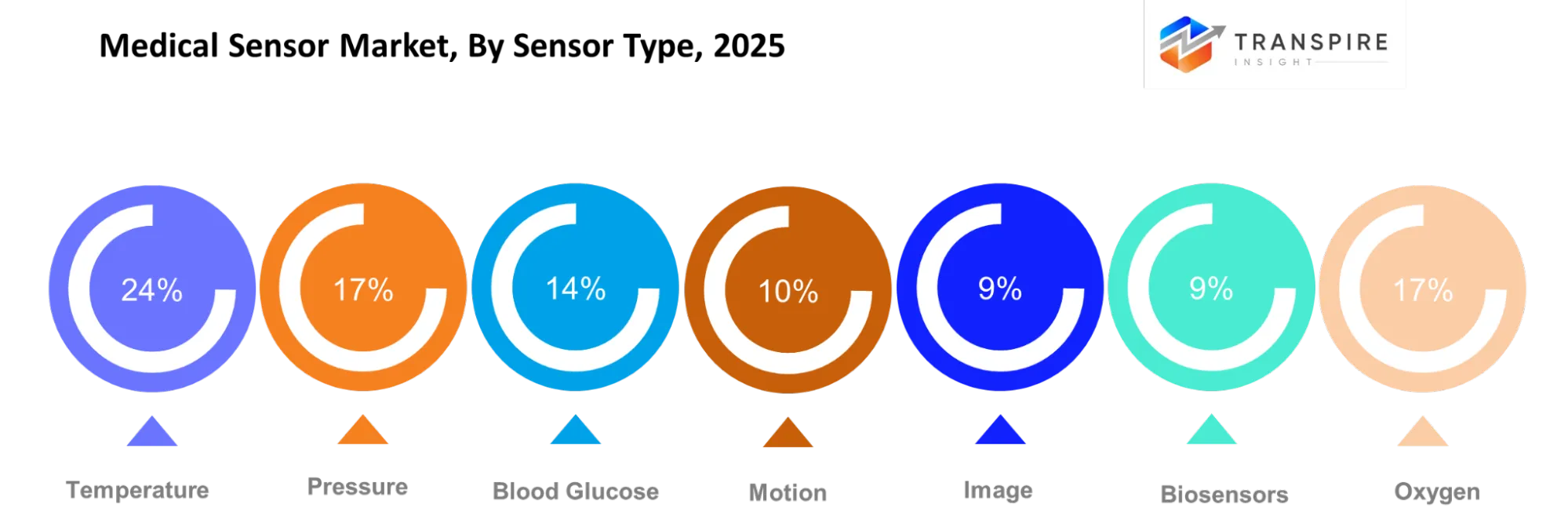
- The sensors that measure temperature account for 23.5% of the market, based on their application in patient monitoring, clinical instruments, and temperature-sensitive medicine.
- Sensors that measure pressure account for 17.5% of the market, as they are used for measuring blood pressure, respiration monitoring, and fluid management systems.
- Sensors that measure blood glucose constitute 14.0% of the market; companies like Abbott are working to provide continuous glucose monitoring sensors.
- Motion sensors holds for 10.5% of the market, to their application in wearables, rehabilitation devices, and movement monitoring.
- The sensors that measure images account for 9.5% of the market, helping the medical imaging and diagnosis systems to capture visual information.
- The biosensors make up 9.0% of the market and are expected to grow at a CAGR of 10.7%, according to the provided statistics.
What are the Key Drivers, Restraints, and Opportunities in the Medical Sensor Market?
Drivers:
Growing adoption of continuous monitoring, connected medical devices and early diagnosis is spurring growth of the medical sensor market. Increased use of remote patient monitoring of diabetes, cardiovascular and respiratory diseases is a key growth driver for the market. The rise in use of wearable devices such as glucose monitors and connected vital-sign monitors, have led to healthcare providers collecting health data outside of hospital visits, generating revenues for sensor makers through device sales, replacements, and ongoing monitoring.
Restraints:
The device may be expensive to develop and adopt. Sensors for use in medicine must meet rigorous specifications of accuracy, reliability, safety and regulatory approval before use in the clinic. For more sophisticated devices, there may be significant and expensive interoperability challenges when sensors must be integrated with other hospital systems and medical devices.
Opportunities:
Opportunities are also emerging from biosensors, implantable monitoring and point-of-care diagnostics. Advances in miniaturised electronics and wireless technology could make testing and monitoring far less burdensome on the patient, as the devices will enable continuous or near-continuous measurement with minimal disruption. Asia Pacific is an appealing market for producers who are seeking to scale-up manufacturing of sensors to serve growing markets in which diagnostic research budgets are also increasing.
|
Driver |
Relative Impact on Growth (%) |
Geographic Relevance |
Impact Timeline |
Demand Strength |
Growth Mechanism |
Key Beneficiaries |
Major Constraint |
|
Rising prevalence of chronic diseases and demand for continuous monitoring |
28% |
North America, Europe, Asia-Pacific |
Short-term |
High |
Expands demand for glucose, cardiac, and vital-sign monitoring sensors |
Medical sensor manufacturers, hospitals, diabetes-care providers, patients |
High device costs and recurring sensor replacement expenses |
|
Growing adoption of wearable devices and remote patient monitoring |
24% |
North America, Europe, Asia-Pacific |
Short-term |
High |
Enables continuous home monitoring and reduces hospital visits |
Wearable manufacturers, telehealth providers, sensor suppliers, patients |
Data privacy concerns and inconsistent reimbursement policies |
|
Technological advancements in miniaturization, AI, and sensor integration |
20% |
North America, Asia-Pacific, Europe |
Medium-term |
High |
Improves diagnostic accuracy, portability, sensitivity, and real-time analysis |
Semiconductor firms, sensor developers, medical device manufacturers |
Technical complexity and costly research and development |
|
Increasing healthcare expenditure and expansion of diagnostic infrastructure |
16% |
Asia-Pacific, North America, Middle East |
Medium-term |
High |
Increases procurement of sensor-enabled diagnostic and monitoring equipment |
Hospitals, diagnostic laboratories, equipment suppliers, healthcare networks |
Budget limitations and unequal access to advanced healthcare |
|
Regulatory support and investment in advanced medical technologies |
12% |
North America, Europe, Asia-Pacific |
Long-term |
Medium |
Encourages validated sensor innovation and commercial deployment |
Medical technology firms, research institutions, component suppliers |
Lengthy approval processes and stringent safety requirements |
|
Total |
100% |
— |
— |
— |
— |
— |
— |
What Has the Impact of Artificial Intelligence Been on the Medical Sensor Market?
Artificial Intelligence is becoming increasingly popular in medical sensor analysis, allowing healthcare providers not only to measure but also to monitor and make decisions. Sensors can provide information about such things as heart rate, oxygen saturation, body temperature, blood glucose level, and motion. AI technology helps to find out about possible changes in a patient's condition through analysing the obtained data. When we speak about continuous glucose monitoring, a predictive analytical system would predict changes in the patient's blood glucose level according to the provided data and its previous patterns. The use of such a system would allow for better patient monitoring, fast reactions, and effective resource allocation. Nevertheless, the usage of such a system may face the problem of low-quality sensor data, lack of training samples of patients, and inappropriate validation studies in the clinical setting. False positive findings, differences between various patient groups, possible cybersecurity issues, and high cost of implementation would prevent the use of such systems.
Instance:
In June 2026, the US FDA cleared Masimo’s 510(k) approval of AI-enabled capability on its Radius VSM wearable patient monitor. The technology continuously evaluates physiological data to detect the early onset of opioid-induced respiratory depression and demonstrates how AI can enhance medical sensors’ data interpretation.
Key Market Trends
The development of medical sensors is increasingly shifting from single-point measurement to an integrated approach that yields continuously useful data.
- Sensor miniaturisation. Medical devices are integrating smaller sensor parts into wearable or portable devices to facilitate monitoring for patients.
- Technologies of glucose and vital sign monitoring are moving away from sporadic readings to more consistent monitoring of chronic diseases.
- Bluetooth- and Wi-Fi-enabled devices allow easy transmission of patients' readings to compatible applications and healthcare platforms.
- The manufacturers of medical devices are incorporating multiple sensors into one platform to enable clinicians to track several health parameters at once.
- Telehealth and home monitoring encourage device manufacturers to develop sensors that will function not only in hospitals and specialised clinics.
- Research in this area moves towards faster biological measurements and more convenient diagnostic tests.
- Sensor readings are becoming integrated with software analytics to generate alerts, identify trends, and optimise workflow.
Medical Sensor Market Segmentation
By sensor type:
The temperature sensors lead with 23.5% market share due to extensive use in clinical thermometers, patient monitoring systems, and temperature-based medical technology. Pressure sensors have 17.5%, thanks to blood pressure measurement, respiration devices, and fluid monitors. The market share of blood glucose sensors is 14.0%, based on diabetes treatment and continuous glucose monitoring. Motion sensors have 10.5%, and image sensors have 9.5%. They are used in movement assessment, rehabilitation technology, and medical imaging. Biosensors have the smallest market share but represent the fastest-growing category with a CAGR of 10.7%, according to the provided information. They occupy 9.0%. Oxygen sensors and other sensor types occupy 8.0% each.
By technology:
MEMS sensors are used for their compact size, low power consumption and ease of integration into portable medical devices. CMOS is used for image sensing and electronic integration. Optical sensors may be used in non-invasive measurement of oxygen saturation and other physiological measurements, but have applications in the imaging of certain physiological measurements. Electrochemical sensors are widely used in glucose testing and other biochemical sensing. Piezoelectric sensors and semiconductors are used for pressure sensing and other specialised sensors. Fibre-optic sensors are potentially useful for electromagnetic protection and certain specialised measurement scenarios. will depend on their ability to meet the requirements of the medical-grade applications. Data on individual technology market shares were not available.
By application:
Patient monitoring is an obvious application for sensors as physicians rely on the sensor data to monitor vital signs and changes in a patient's condition. Diagnostics is another obvious use case, especially in glucose testing, biosensing and point-of-care measurements. Medical imaging is based on sensors to produce image information to be used in a clinical setting. Therapeutic use of sensing includes sensors integrated into delivery devices and controls to facilitate the delivery of therapy or procedure. Sensors in surgical devices are used for measurement, positioning and feedback on procedures. Future application areas will be driven by ease of use, validation in the clinical setting, integration into the environment and overall value of the information.
By device type:
There are growing numbers of wearable sensors to facilitate easy monitoring while people go about their daily activities, sending the information to a suitable device. Implantable sensors would provide prolonged monitoring, but the design process faces many more difficulties because of the need to make the device biocompatible and robust enough. Portable devices allow conducting tests and monitoring in a clinical environment, an ambulance or at home, while stationary devices remain useful in hospitals and diagnostic centres. Smart devices in medicine combine the sensing, processing, and transmission in one device. The development of each of these types of devices will depend on their usefulness, user-friendliness, robustness and price. Market share of each type of device was not given.
By end user:
Hospitals represent the biggest market left for medical sensors since hospitals use sensors in controlling their patient monitoring devices, diagnostic machinery, surgical equipment and high-acuity health technologies. Sensors are used by diagnostic centres and clinics in simple tests and other clinical diagnoses. Home healthcare providers and consumers themselves use portable and wearable monitors, especially for long-term disease management. Sensor use by research organizations is in conducting clinical trials, biomedical research and developing new products. The growth rate of each of these markets will vary according to the amount of investment, budgets and reimbursement programs available and how easily each of them can handle the sensor data.
By connectivity:
This means traditional wired sensors remain in use where stability and initial equipment are key; for wearable technology and monitoring, Bluetooth is relevant; Wi-Fi offers some data transmission within a connected healthcare system. NFC and RFID provide identification, interaction and tracking depending on design; and cellular can offer remote monitoring when networks are not available. ZigBee may be relevant for some low-powered connected systems, while other options may be appropriate for other specific needs. The trend is towards safe, secure data exchange between sensors, medical equipment and the Internet of Things.
What are the Key Use Cases Driving the Medical Sensor Market?
Measuring the temperature is one of the principal application cases in the medical sensor market across the globe that is dominated by temperature sensors. Temperature sensors can be used for patient monitoring, clinical thermometers, and some medical equipment; additionally, the portable version helps measure the temperature even at home. In addition, pressure sensors help in measuring blood pressure, breathing process, and fluid management. The set of application cases becomes wider as it involves continuous glucose monitoring, pulse oximetry, health monitoring, medical imaging, and diagnostics. All of these devices help the doctors to keep track of changes in the state of the patients and to control the chronical illnesses of people. Moreover, these devices are used in clinics and diagnostic centres in order to speed up and automate routine measurements. One of the promising new application cases may be implantable monitoring, biosensors, and continuous physiological data analysis using artificial intelligence. Some of the point-of-care devices may be used for moving the tests to patients' places.
|
Report Metrics |
Details |
|
Market size value in 2025 |
USD 10.50 Billion |
|
Market size value in 2026 |
USD 11.60 Billion |
|
Revenue forecast in 2033 |
USD 23.23 Billion |
|
Growth rate |
CAGR of 10.43% from 2026 to 2033 |
|
Base year |
2025 |
|
Historical data |
2021 - 2024 |
|
Forecast period |
2026 - 2033 |
|
Report coverage |
Revenue forecast, competitive landscape, growth factors, and trends |
|
Regional scope |
United States; Canada; Mexico; United Kingdom; Germany; France; Italy; Spain; Denmark; Sweden; Norway; China; Japan; India; Australia; South Korea; Thailand; Brazil; Argentina; South Africa; Saudi Arabia; United Arab Emirates |
|
Key company profiled |
TE Connectivity, Honeywell, Analog Devices, Texas Instruments, STMicroelectronics, NXP Semiconductors, Sensirion, Bosch Sensortec, Siemens Healthineers, Medtronic, Abbott, GE HealthCare, Koninklijke Philips, Smiths Medical, Amphenol |
|
Customization scope |
Free report customization (country, regional & segment scope). Avail customized purchase options to meet your exact research needs. |
|
Report Segmentation |
Sensor Type (Temperature, Pressure, Blood Glucose, Motion, Image, Biosensors, Oxygen, Others)Technology (MEMS, CMOS, Optical, Electrochemical, Piezoelectric, Semiconductor, Fiber Optic, Others)Application (Patient Monitoring, Diagnostics, Imaging, Therapeutics, Wearable Devices, Home Healthcare, Surgical Devices, Others)Device Type (Wearable, Implantable, Portable, Stationary, In-Vitro, Point-of-Care, Smart Medical Devices, Others)End User (Hospitals, Diagnostic Centers, Clinics, Home Healthcare, Research Institutions, Pharmaceutical Companies, Medical Device Companies, Others)Connectivity (Wired, Bluetooth, Wi-Fi, NFC, RFID, Cellular, Zigbee, Others) |
Which Regions are Driving the Medical Sensor Market Growth?
North America:
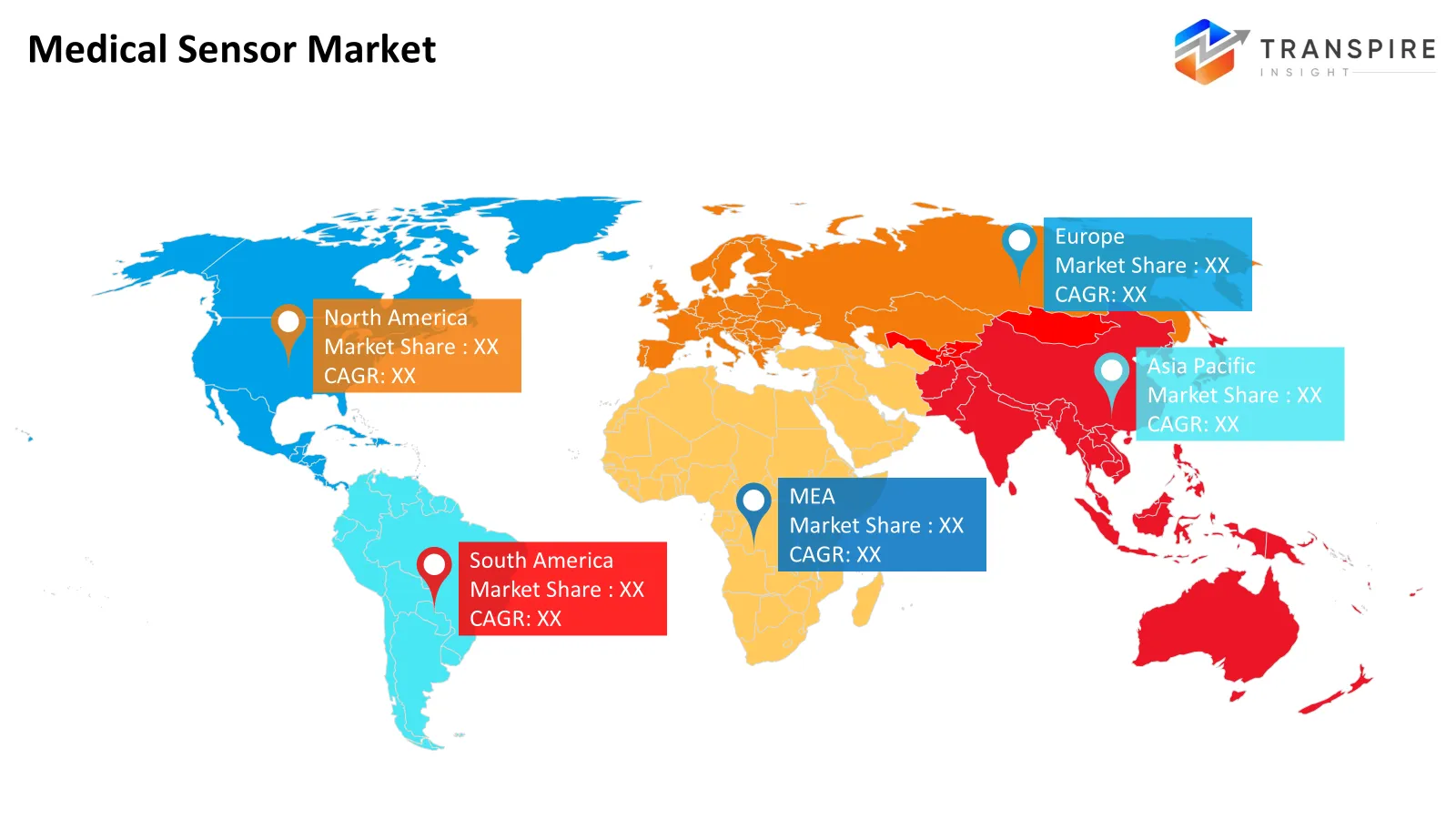
North America is the dominating region in the medical sensor market with 38.6% market share. This is attributed to developed healthcare infrastructure, newer medical device technology, and the utilisation of medical diagnosis and monitoring devices. The application of sensing innovations is affected by investments and regulations on medical devices in healthcare. Expansion of smart hospitals, the use of continuous glucose monitoring, and remote patient monitoring are projected to result in the demand for advanced sensors.
In August 2025, Orpyx Medical Technologies launched an innovative sensory insole system using sensors for remote monitoring of foot pressure and temperature, which helps in preventing foot ulcers in patients with diabetes.
Europe:
Europe accounts for a 27.5% share of the medical sensor market. This market position has been achieved due to the high level of developed healthcare in Europe, production of medical equipment and the need for accurate and reliable medical diagnosis and monitoring equipment. Medical device standards and regulations place a high importance on product safety and traceability. Market growth opportunities include hospital equipment upgrades, home monitoring and sensors suitable for all ages.
In November 2025, Fraunhofer IMS showcased advanced ECG chips and implantable pressure sensors, providing in vivo health monitoring and medical diagnosis solutions.
https://www.ims.fraunhofer.de/en/Newsroom/Press-releases/2025/COMPAMED-2025.html
Asia Pacific:
Asia Pacific constitutes 23.8% of the market and is the fastest-growing region, with an expected CAGR of 9.8%. Investments in healthcare infrastructure, increasing capacity for diagnostics, and increased adoption of digital health services are opening up avenues for the manufacture of sensors. The presence of production facilities and increasing use of portable medical devices can help in the development of the market. Firms that create sensors that are economically viable and cater to the needs of different healthcare systems could benefit from this market growth.
In May 2025, Aevice Health, an innovative Medtech company from Singapore, got FDA clearance for its wearable respiratory monitor device for remote monitoring of respiratory issues.
Who are the Key Players in the Medical Sensor Market, and how do they Compete?
The competition in the medical sensor market involves specialist sensor manufacturers, semiconductor companies, and medical technology firms, which manufacture comprehensive monitoring systems. Competitors distinguish themselves by their accuracy, size, power efficiency, regulatory experience, and medical device integration. In terms of competition, the medical sensor market consists of providers of sensing components and finished products; thus, competitiveness differs depending on the applications. The competitiveness of TE Connectivity comes from the engineering knowledge and sensor solutions that are fit for challenging environments in the medical field. Differentiation is made through a combination of sensing component products and connectivity solutions. As far as the strategy of expansion is concerned, TE Connectivity works with equipment makers in the medical sector to offer various applications. As for Honeywell, the company competes in providing sensing technologies for use in medical devices and specialised measuring systems. Thanks to wide engineering know-how, the company is able to develop products for applications where performance reliability is necessary.
Medical Sensor Market Companies
- TE Connectivity
- Honeywell
- Analog Devices
- Texas Instruments
- STMicroelectronics
- NXP Semiconductors
- Sensirion
- Bosch Sensortec
- Siemens Healthineers
- Medtronic
- Abbott
- GE HealthCare
- Koninklijke Philips
- Smiths Medical
- Amphenol
|
Company |
Est. Revenue Share Range |
Key Offerings |
Strategic Positioning |
Geographic Strength |
Technology Focus |
|
TE Connectivity |
Estimated 5–9% |
Pressure sensors, temperature sensors, biomedical electrodes, miniature medical sensors |
Broad portfolio with customized medical sensing solutions |
North America, Europe, Asia Pacific |
MEMS sensing, precision pressure measurement, biopotential sensing |
|
Medtronic plc |
Estimated 4–8% |
Glucose sensors, cardiac sensing technologies, physiological monitoring sensors |
Integrated sensing for advanced therapeutic devices |
North America, Europe, Asia Pacific |
Implantable sensing, continuous glucose monitoring, physiological signal processing |
|
Analog Devices, Inc. |
Estimated 3–6% |
MEMS accelerometers, analog front ends, temperature sensors, biomedical signal acquisition |
High-precision sensing and signal conditioning expertise |
North America, Europe, Asia Pacific |
Low-noise processing, MEMS technology, biomedical signal conversion |
|
Honeywell International Inc. |
Estimated 3–6% |
Medical pressure sensors, airflow sensors, force sensors, temperature sensors |
Specialized sensing for critical medical equipment |
North America, Europe, Asia Pacific |
Pressure measurement, thermal sensing, airflow monitoring |
|
Abbott Laboratories |
Estimated 3–7% |
FreeStyle Libre sensors, continuous glucose monitoring systems, diagnostic sensing technologies |
Integrated diabetes management and continuous sensing |
North America, Europe, Asia Pacific |
Electrochemical biosensing, wearable monitoring, glucose measurement |
|
STMicroelectronics |
Estimated 2–5% |
MEMS motion sensors, pressure sensors, inertial sensors, sensor interfaces |
Semiconductor-driven compact medical sensing solutions |
Europe, Asia Pacific, North America |
MEMS integration, low-power sensing, embedded processing |
|
Texas Instruments |
Estimated 2–4% |
Temperature sensors, current sensors, analog signal conditioners, data converters |
Cost-efficient sensing components for medical electronics |
North America, Asia Pacific, Europe |
Precision analog circuitry, signal conditioning, sensor interfacing |
|
Sensirion AG |
Estimated 2–4% |
Medical flow sensors, differential pressure sensors, gas sensors, humidity sensors |
Specialist provider of precision medical flow sensing |
Europe, North America, Asia Pacific |
Thermal mass-flow sensing, pressure measurement, gas analysis |
|
GE HealthCare Technologies Inc. |
Estimated 2–5% |
Patient monitoring sensors, imaging detector technologies, physiological measurement components |
Integrated sensing across diagnostic and monitoring platforms |
North America, Europe, Asia Pacific |
Physiological monitoring, imaging detection, multimodal data acquisition |
|
Masimo Corporation |
Estimated 2–4% |
Pulse oximetry sensors, rainbow® sensors, acoustic respiration monitoring, patient monitoring technologies |
Specialized noninvasive patient monitoring solutions |
North America, Europe, Asia Pacific |
Optical spectroscopy, motion-tolerant oximetry, signal extraction |
Recent Development News
- In June 2026, Medtronic has announced its extended strategic partnership with Corsano Health to make available its FDA-cleared multiparameter wearable in the U.S., to be used in hospitals and for hospital-to-home applications. The device is intended to enable continuous vital signs monitoring, adding to Medtronic's connected health care options and enabling access to wearable biosensing technology to healthcare providers. https://news.medtronic.com/Medtronic-expands-its-Acute-Care-Monitoring-wearables-portfolio-in-the-U-S-with-a-new-distribution-agreement-for-the-Corsano-TM-multi-parameter-wearable
- In August 2025, Abbott announced the availability of its FreeStyle Libre 2 Plus sensor in India, providing users with automatic glucose readings every minute and optional alerts for high or low glucose levels on their compatible smartphones. This launch proves the development of connected biosensors intended to simplify the monitoring of diabetes in patients and caregivers. https://www.abbott.com/en-in/news/press-releases/abbott-launches-next-gen-freestyle-libre2-plus-with-continuous-glucose-readings-every-minute-and-optional-alarms
What Strategic Insights Define the Future of the Medical Sensor Market?
The future of the worldwide medical sensor market is going to rely on how good the manufacturers are at turning accurate measurements into clinically meaningful information. The future belongs to smaller, interconnected sensors allowing for continuous monitoring, remote medicine and early detection of possible health issues. It seems that biosensors have much more to offer and that they can be especially valuable in terms of glucose measurement, point-of-care diagnostics and other novel biological measurements. It must be noted that one of the risks in this situation is related to possible technological developments of AI and connectivity being developed faster than clinical validation, integration with existing medical devices and security systems. It is advisable that manufacturers make sure their sensors can deliver dependable measurements and consume minimal amounts of energy before introducing additional functionalities.Strategic partnerships with medical facilities and companies working in the field of developing medical devices may be used for validation of a product in practical use. Regional manufacturing and pricing policies must also be considered.
Key Segmentations are:
Sensor Type
- Temperature
- Pressure
- Blood Glucose
- Motion
- Image
- Biosensors
- Oxygen
- Others
Technology
- MEMS
- CMOS
- Optical
- Electrochemical
- Piezoelectric
- Semiconductor
- Fiber Optic
- Others
Application
- Patient Monitoring
- Diagnostics
- Imaging
- Therapeutics
- Wearable Devices
- Home Healthcare
- Surgical Devices
- Others
Device Type
- Wearable
- Implantable
- Portable
- Stationary
- In-Vitro
- Point-of-Care
- Smart Medical Devices
- Others
End User
- Hospitals
- Diagnostic Centers
- Clinics
- Home Healthcare
- Research Institutions
- Pharmaceutical Companies
- Medical Device Companies
- Others
Connectivity
- Wired
- Bluetooth
- Wi-Fi
- NFC
- RFID
- Cellular
- Zigbee
- Others
By Regional Analysis
North America
- US
- Canada
- Mexico
Europe
- Germany
- UK
- France
- Italy
- Spain
- Russia
- Rest of Europe
Asia Pacific
- China
- Japan
- India
- South Korea
- Australia
- Rest of Asia Pacific
South America
- Brazil
- Argentina
- Rest of South America
Middle East & Africa
- UAE
- Saudi Arabia
- Qatar
- South Africa
- Rest of the Middle East & Africa
Frequently Asked Questions
Find quick answers to common questions.
The medical sensor market size was valued at USD 10.50 billion in 2025 and is poised to reach USD 23.23 billion by 2033, expanding at a 10.43% CAGR.
Key segments for the medical sensor market are Sensor Type (Temperature, Pressure, Blood Glucose, Motion, Image, Biosensors, Oxygen, Others)Technology (MEMS, CMOS, Optical, Electrochemical, Piezoelectric, Semiconductor, Fiber Optic, Others)Application (Patient Monitoring, Diagnostics, Imaging, Therapeutics, Wearable Devices, Home Healthcare, Surgical Devices, Others)Device Type (Wearable, Implantable, Portable, Stationary, In-Vitro, Point-of-Care, Smart Medical Devices, Others)End User (Hospitals, Diagnostic Centers, Clinics, Home Healthcare, Research Institutions, Pharmaceutical Companies, Medical Device Companies, Others)Connectivity (Wired, Bluetooth, Wi-Fi, NFC, RFID, Cellular, Zigbee, Others).
Growth is primarily driven by increasing demand for wearable health monitoring devices, growing adoption of remote patient monitoring, advancements in sensor technology, and the expanding use of AI-enabled medical devices. Increasing healthcare expenditure and the need for early disease detection and continuous patient monitoring further support market growth.
The market is led by major manufacturers including TE Connectivity, Honeywell, Analog Devices, Texas Instruments, STMicroelectronics, NXP Semiconductors, Sensirion, Bosch Sensortec, Siemens Healthineers, Medtronic, Abbott, GE HealthCare, Koninklijke Philips, Smiths Medical, Amphenol.
North America holds 38.6% of the market for medical sensors, attributed to the availability of advanced healthcare infrastructure, growing usage of wearable medical devices, increasing need for remote patient monitoring, significant investments in medical technology research, and the presence of major medical sensor companies.
The market for Medical sensors has lucrative commercial opportunities in the form of increasing usage of wearable health monitoring devices, remote health monitoring devices and smart devices. A number of technology innovations, such as intelligent sensors integrated with AI, point-of-care diagnostics, and minimally invasive monitoring devices.
- TE Connectivity
- Honeywell
- Analog Devices
- Texas Instruments
- STMicroelectronics
- NXP Semiconductors
- Sensirion
- Bosch Sensortec
- Siemens Healthineers
- Medtronic
- Abbott
- GE HealthCare
- Koninklijke Philips
- Smiths Medical
- Amphenol
About the Authors

Pankaj Ghogare Patil
I am Pankaj Ghogare Patil, a Senior Research Analyst at Transpire Insight, specializing in the Pharmaceutical, Chemicals & Materials, Healthcare IT, and Biotechnology industry. My expertise lies in conducting comprehensive market research, analyzing industry trends, evaluating competitive landscapes, and translating complex data into actionable insights. At Transpire Insight, I closely follow emerging technologies, regulatory developments, and market innovations to create accurate, well-researched, and informative content that helps businesses and professionals make informed decisions. I am committed to producing credible, evidence-based articles that reflect industry best practices while making technical topics accessible and valuable for a broad audience.

Chakradhar Khansole
Chakradhar serves as the Research Director at Transpire Insight, bringing over 8 years of experience in technology, innovation, and strategic market intelligence. He specializes in transforming complex market data into actionable business insights that enable organizations to make informed, growth-oriented decisions. Recognized for his strategic vision and analytical expertise, Chakradhar leads high-impact research initiatives, delivering comprehensive market assessments, competitive intelligence, and forward-looking industry analysis.
Recently Published Reports
-
Apr 2026
AI in Diabetic Retinopathy Market
AI in Diabetic Retinopathy Market Size, Share & Analysis Report By Type (Screening AI Systems, Diagnostic AI Systems, and Predictive AI Models), By Application Segment (Hospitals, Ophthalmology Clinics, Diagnostic Centers, and Research and Development), and Geography (North America, Europe, Asia-Pacific, Middle East and Africa, South and Central America), 2021 - 2031
-
Apr 2026
Psychometric Tests Market
Psychometric Tests Market Size, Share & Analysis Report By Type (Personality Tests, Ability/Aptitude Tests, Skill/Knowledge Tests, and Others), By Application (Talent Acquisition and Talent Management), and Geography (North America, Europe, Asia-Pacific, Middle East and Africa, South and Central America), 2021 – 2031
-
Apr 2026
Rare Biological Sample Collection Market
Rare Biological Sample Collection Market Size, Share & Analysis Report By Type (Isolation Kits & Reagent, Blood Collection Tubes, and Others), By Application (Oncology, Transcriptomics, Pharmacogenomics, and Others), and Geography (North America, Europe, Asia-Pacific, Middle East and Africa, South and Central America), 2021 – 2031
-
Jul 2026
Diabetic Retinopathy Market
Diabetic Retinopathy Market Size, Share & Analysis Report By Type (Proliferative Diabetic Retinopathy, and Diabetic Macular Edema (DME)), By Treatment Type (Anti VEGF Drug, Steroid Implants, Laser Surgeries, and Vitrectomy), and Geography (North America, Europe, Asia-Pacific, Middle East and Africa, South and Central America), 2021 – 2031
Our Clients







