Large Volume Parenteral (LVP) Market Summary:
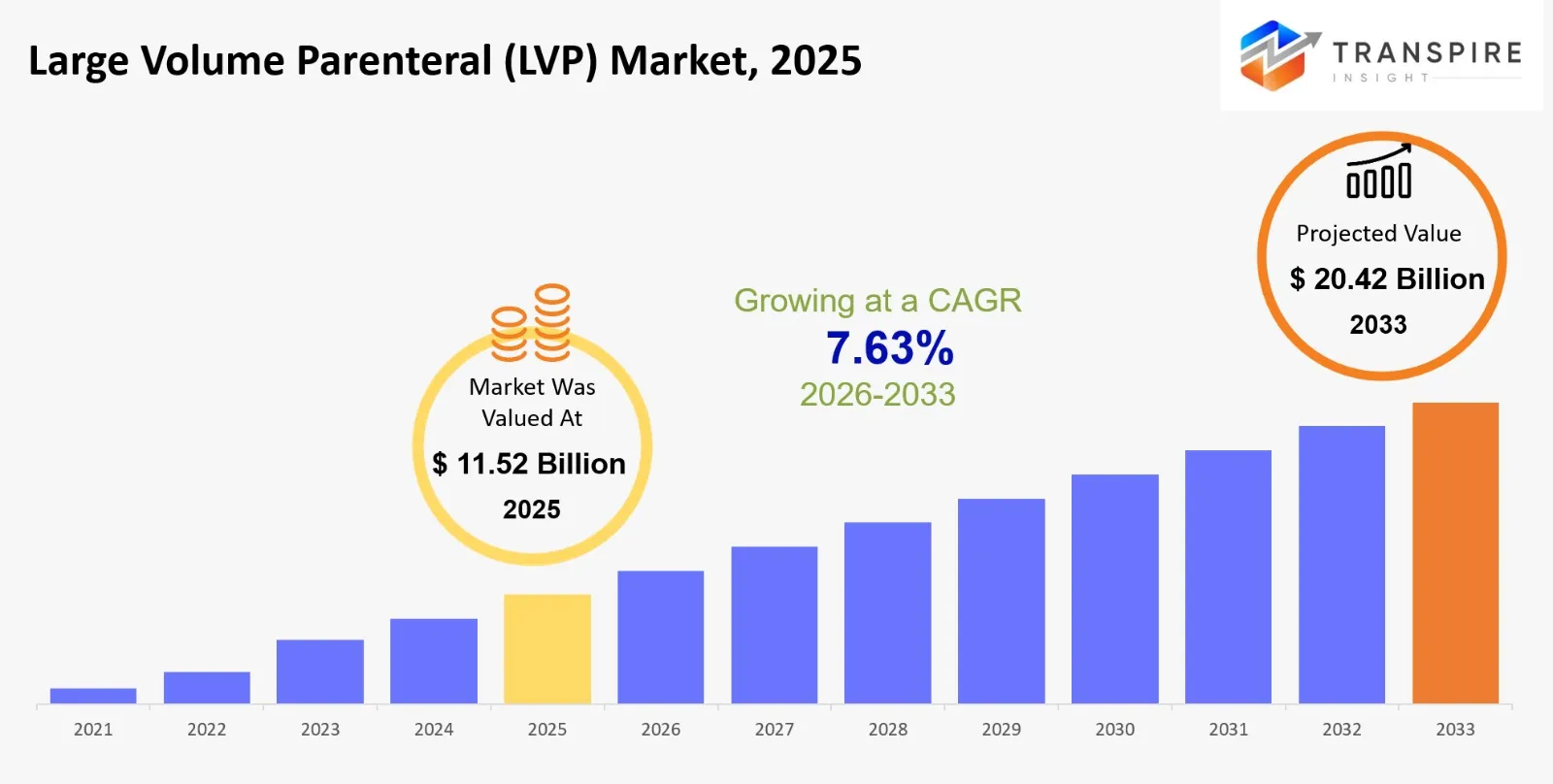
As per the Transpire Insight Analysis, The Large Volume Parenteral (LVP) Market size is estimated at USD 11.52 billion in 2025 and is anticipated to reach USD 20.42 billion by 2033, growing at a CAGR of 7.63% from 2026 to 2033.
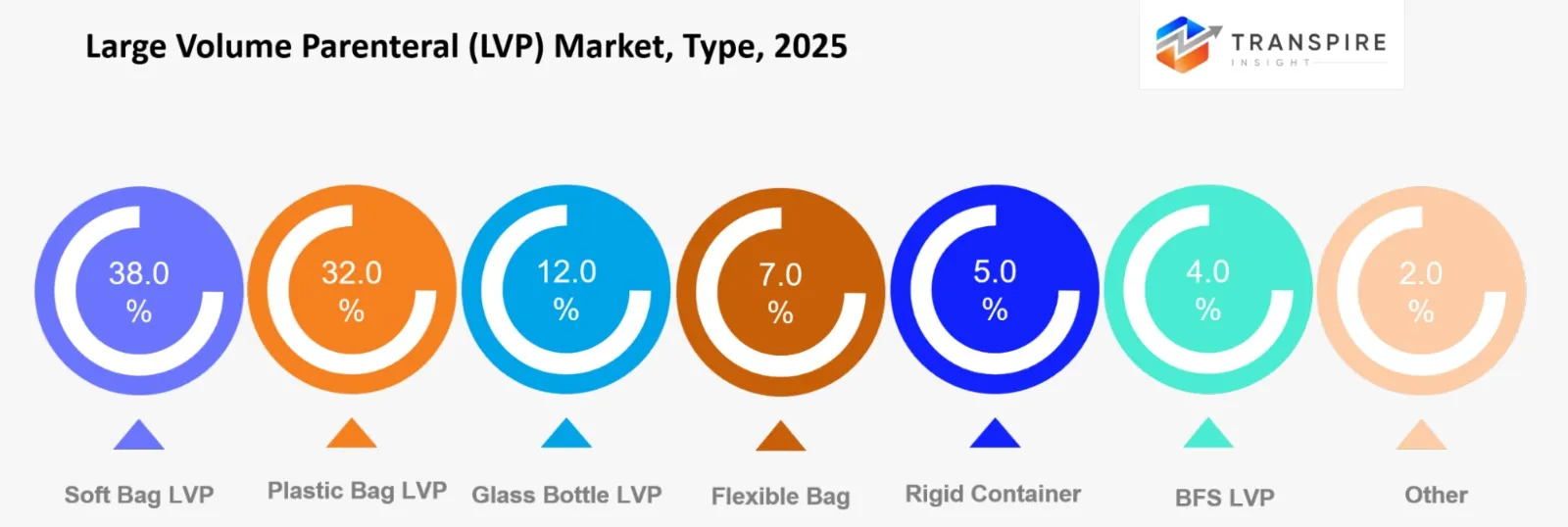
Large Volume Parenterals are sterile intravenous solutions and nutritionals in containers of 100 mL or more. They are in daily use by hospitals for hydration, electrolyte correction, surgery, drug dilution, and parenteral nutrition. Over the past three to five years, the market has shifted from commodity supply of fluids to safer, ready-to-use, closed-system solutions. Material changes are occurring by replacing glass bottles with soft and plastic bag systems that alleviate concerns about breakage, ingress of air, storage, and contamination. Currently, soft bags account for 38.0% of the market and plastic bags 32.0%. The motivation has been supply interruptions that interrupt intravenous (IV) fluid supply and drive hospitals to improve medication safety. As a result, investments are being made in automated aseptic filling and Blow-Fill-Seal capacity. Market drivers include more surgical procedures, chronic disease management, and home infusion; more complex patients require reliable sterile fluids, and more hospitals are seeing value in suppliers of traceable, ready-to-use products that can be used at home.
Large Volume Parenteral (LVP) Market Size & Forecast:
- Market Size 2025: USD 11.52 Billion
- Expected Market Value (2033): USD 20.42 Billion
- Forecast CAGR (2026–2033): 7.63%
- Leading Region in 2025: North America
- Fastest Growing Region: Asia Pacific
- Key Company Profiles: Pfizer, Fresenius Kabi, Abbott, Otsuka, Baxter, B. Braun, Grifols, Cipla, ICU Medical, Biocon, Sichuan Kelun, Gland Pharma, Sandoz, Hikma Pharmaceuticals, Amanta Healthcare.
Key Large Volume Parenteral (LVP) Market Insights:
The LVP industry is moving away from traditional fluid production to resilient supply chains, tailored infusion solutions, and technology-driven clinical delivery. The key to competitive advantage is production reliability, packaging innovations, and adapting to evolving hospital procurement needs.
- Soft Bag LVP reigns at 38.0% share, due to the ease of collapsing and closed-system administration in hospital settings.
- Scalable production and reduced logistics costs are the factor that supports Plastic Bag LVP at 32.0%.
- In situations where existing hospital workflows and terminal sterilisation are more suited to rigid formats, Glass Bottle LVP has 12.0% retention.
- BFS technology is expected to contribute 58.10% to manufacturing technology and is projected to witness 8.12% CAGR during the forecast period as it will allow production of forms in a single sterile process.
- The 500–1000 mL containers can be used for routine hydration and peri-operative care and make up 39.12% of volume demand.
- Above 2000 mL containers are growing at 9.08% CAGR due to the demand for controlled and larger volumes for critical-care and nutrition protocols.
- Therapeutic Infusion is expanding its product mix to include more premixed and speciality infusion bags, and it is expanding at about 8% CAGR.
- Fresenius Kabi is now building an IV generics portfolio alongside the nutrition, medtech, and biopharma growth drivers to develop an IV care ecosystem.
- Amanta Healthcare is expanding the Steriport LVP portfolio from 6.6 crore to 11.6 crore units with commercial production scheduled for Q2 FY27, aligning with the capacity-led approach in the region.
- The procurement criteria are shifting from price per bag to safety and value to workflow with smart infusion devices and barcode verification, and administration via EHR.
What are the Key Drivers, Restraints, and Opportunities in the Large Volume Parenteral (LVP) Market?
Driver:
Hospital demand is shifting toward ready-to-use and closed-system LVPs because they reduce compounding steps, medication errors, and infection exposure. The trigger is heightened patient-safety scrutiny and IV-fluid shortage experience, which encouraged providers to hold resilient, standardized fluid inventories. This supports revenue through premium multi-chamber, therapeutic, and nutrition bags rather than low-margin basic saline; therapeutic infusion is growing at approximately 8% CAGR. Automated aseptic fill-finish and BFS lines also improve throughput, helping manufacturers convert demand into scalable supply.
Restraint:
Sterility assurance, contamination prevention, and packaging compatibility create substantial manufacturing constraints. Injectable products require stringent control of container-closure integrity, material compatibility, and microbial contamination. These requirements persist because even minor packaging failures can compromise patient safety, while validation and regulatory approval make manufacturing changes costly and time-consuming.
Opportunity:
Advanced manufacturing, automated inspection, and geographically diversified production offer opportunities to improve reliability and reduce operational interruptions. FDA’s guidance on its Advanced Manufacturing Technologies Designation Program supports technologies capable of strengthening manufacturing robustness and improving the supply of medically important products. Investments in automated filling, real-time monitoring, and flexible production lines could particularly benefit manufacturers serving rapidly expanding healthcare markets in India and other Asia-Pacific countries. These capabilities can improve production consistency, reduce avoidable downtime, and support broader access to sterile infusion products.
Driver Impact Analysis for Large Volume Parenteral (LVP) Market
|
Driver |
Relative Impact on Growth (%) |
Geographic Relevance |
Impact Timeline |
Demand Strength |
Growth Mechanism |
Key Beneficiaries |
Major Constraint |
|
1. Rising Chronic Diseases and Intravenous Therapy Demand |
28% |
North America, Europe, Asia-Pacific |
Long-term (≥4 years) |
High |
Chronic disease treatments increase hydration, electrolyte replacement, and therapeutic infusion requirements. |
LVP manufacturers, hospitals, infusion providers, pharmaceutical companies |
Healthcare affordability, treatment alternatives, and reimbursement limitations. |
|
2. Expanding Surgical Procedures and Critical Care Infrastructure |
24% |
North America, Europe, Asia-Pacific |
Medium-term (2–4 years) |
High |
Surgical recovery and intensive care increase perioperative fluid administration and electrolyte management. |
IV fluid manufacturers, hospitals, surgical centers, healthcare distributors |
Hospital budget constraints, procedure delays, and procurement price pressures. |
|
3. Healthcare Infrastructure Expansion and Emerging-Market Investments |
20% |
Asia-Pacific, Latin America, Middle East and Africa |
Medium-term (2–4 years) |
High |
New hospitals, expanded healthcare access, and local production increase essential infusion consumption. |
Regional manufacturers, pharmaceutical investors, hospitals, healthcare infrastructure providers |
Capital requirements, regulatory delays, and uneven healthcare accessibility. |
|
4. Adoption of Advanced Aseptic Manufacturing and Infusion Technologies |
16% |
North America, Europe, Asia-Pacific |
Short-term (≤2 years) |
High |
BFS automation, digital inspection, and process monitoring improve sterility assurance and production efficiency. |
LVP manufacturers, automation vendors, packaging suppliers, healthcare providers |
High equipment costs, validation requirements, and technology integration challenges. |
|
5. Shift Toward Non-PVC Packaging and Ready-to-Use Infusion Solutions |
12% |
North America, Europe, Asia-Pacific |
Medium-term (2–4 years) |
Medium |
Flexible non-PVC bags and premixed solutions improve handling, compatibility, and administration convenience. |
Packaging manufacturers, LVP producers, hospital pharmacies, sustainability-focused healthcare providers |
Material costs, compatibility testing, and pharmaceutical packaging qualification. |
|
Total Relative Impact: 100% |
|||||||
What Has the Impact of Artificial Intelligence Been on the Large Volume Parenteral (LVP) Market?
AI is establishing itself in LVP manufacturing and hospital settings as a layer of how to operate, rather than as a standalone offering. In manufacturing, machine-vision AI models conduct line-speed inspection of particulate, seal integrity, fill level, and label verification, eroding the manual quality-control bottleneck. Automation can also optimise fills, sterilization, and preventive-maintenance schedules to further decrease reject volumes and downtime. Prescriptive models that estimate hospital demand by building risk-adjusted procedure and seasonality models inform the distribution of ready-to-use basic fluids and speciality nutrition bags, thus avoiding hospital shortages.
In hospitals, infusion-AI-enabled platforms cross-validate prescribed fluids, pump, and patient data to mitigate incompatibility or dosing risks before delivery. EHR integrations also reduce manual data-entry errors and enable near real-time trend analysis and alerts. Limitations include the costs of integration and data reliability: Many hospitals still operate in silos using aged legacy technology; clinical AI requires validated, high-quality EHR and device data, or models may generate false alerts or not be validated for regulators. As such, the most common hospital adopters are large, integrated health systems and existing LVP suppliers that have the capital and digital tools to leverage this technology.
In June 2026, WeInfuse, a leading software platform for infusion providers, established a strategic partnership with medical device developer Eitan Medical to directly bridge smart infusion pump hardware with cloud-based clinical workflows.https://weinfuse.com/press-release-eitan-medical-and-weinfuse-announce-strategic-partnership/
Key Large Volume Parenteral (LVP) Market Trends:
The LVP industry is undergoing a transition from volume to resilience, packaging innovation, and quality-driven operations. The recent disruptions and technological changes are changing the focus of procurement, production, and product development.
- Glass bottles are being replaced with collapsible bags to reduce the risk of breakage, storage, and contamination in hospitals.
- Bedside mixing and compounding errors are being minimized with ready-made multi-chamber bags.
- Capacity in the BFS and automated fill-finish is being increased to bolster supply resiliency.
- Due to the pressure from sustainability, manufacturers are increasingly choosing non-PVC and recyclable polymer formats.
- The introduction of RFID, barcode, and EHR-related identification is enhancing the traceability of bags and inventories.
- Hospitals are getting stable hydration, antibiotic, and nutrition therapy out of the hospital with home infusion programs.
- Infusion is becoming more prevalent than therapeutic infusion and is growing with the increasing prevalence of clinical nutrition and speciality drug delivery.
- Regionalisation in the supply chain is growing as tariffs, disruption of logistics, and risk of shortages change the sourcing equation.
- Technology of smart pumps and connected devices is expanding LVPs to be part of a monitored therapy workflow.
Large Volume Parenteral (LVP) Market Segmentation
Type:
Soft Bag LVP makes up the largest share of the market at 38.0%. As a collapsible container, Soft Bag provides a closed system of administration that reduces transportation costs and can be employed within automated filling systems. Plastic Bag LVP accounts for a 32.0% share, offering fluid delivery in a durable, scalable format. Glass Bottle LVP, used predominantly in markets with well-established sterilization infrastructure, accounts for a 12.0% market share. Flexible Bag accounts for a 7.0% share, Rigid Container has a 5.0% share, BFS LVP makes up 4.0% of sales, and Other formats account for 2.0%. Future growth is expected in Soft Bag and Flexible Bag due to increased hospital adoption of lighter, more cost-effective solutions.
Volume:
The 500–1000 mL category remains the workhorse format, accounting for a 39.12% share in 2025, as its capacity suits routine hydration, perioperative fluids, and drug dilution. Smaller 100–250 mL and 250–500 mL containers support controlled administration and pediatric care, while larger volumes serve intensive fluid replacement and nutritional requirements. Multi-chamber and custom formats address specialised clinical needs. Notably, above-2000 mL containers are projected to grow at a 9.08% CAGR, reflecting specialised treatment requirements.
Application:
Basic Infusion continues to anchor LVP consumption through routine hydration and hospital fluid administration. However, Therapeutic Infusion is the fastest-growing application, recording approximately 8% CAGR, supported by intravenous antibiotics, electrolyte correction, and speciality medication delivery. Nutritious Infusion and Parenteral Nutrition benefit from multi-chamber formulations that simplify preparation and administration. Meanwhile, Fluid Replacement and Electrolyte Therapy remain essential in surgical, emergency, and critical-care settings, sustaining consistent clinical utilization across healthcare facilities.
Packaging:
Plastic Bags dominate the supplied packaging classifications, with respective shares of 38.0% and 32.0%, while Glass Bottles account for 12.0%. Flexible Containers represent 7.0%, Rigid Containers 5.0%, and Blow-Fill-Seal 4.0%. Multi-Chamber Bags are gaining relevance through premixed nutrition and drug-delivery applications. The broader industry direction favours lightweight, single-use, closed-system packaging that simplifies administration, reduces handling complexity, and supports more efficient hospital workflows.
End User:
Hospitals remain the principal LVP consumption channel because surgical procedures, emergency treatment, and critical-care services require dependable intravenous fluid availability. Medical centres and clinics are expanding their utilisation as outpatient infusion becomes more established. Ambulatory Centres, Emergency Care, and Speciality Facilities increasingly require compact, ready-to-administer solutions. Home Healthcare presents a strategic opportunity as portable infusion bags, smart pumps, and remote monitoring support treatment outside conventional hospital settings, potentially improving patient convenience and reducing inpatient resource utilisation.
Manufacturing Technology:
Traditional Aseptic Fill-Finish remains important for diverse sterile product portfolios, while Blow-Fill-Seal (BFS) accounted for 58.10% of manufacturing-technology share in 2025 and is projected to grow at 8.12% CAGR. Its integrated container-forming, filling, and sealing process supports manufacturing efficiency and contamination-control objectives. Form-Fill-Seal (FFS), Terminal Sterilisation, Blow-Molding, and Automated Filling also contribute to production modernisation. Investment increasingly prioritises consistent output, traceability, operational efficiency, and reliable sterile manufacturing.
What are the Key Use Cases Driving the Large Volume Parenteral (LVP) Market?
The core use case is perioperative and inpatient fluid management, where 500–1000 mL soft-bag LVPs deliver hydration, electrolyte balance, and drug dilution across surgery, intensive care, and emergency departments. Their dominance reflects the need for reliable, ready-to-use fluids in high-turnover hospital settings.
Expanding applications include therapeutic infusion and parenteral nutrition. Multi-chamber bags enable safe administration of amino acids, glucose, lipids, and electrolytes, particularly for patients unable to tolerate enteral feeding; therapeutic infusion is growing at about 8% CAGR.
Emerging use cases centre on home and ambulatory infusion. Connected pumps, barcode-verified bags, and portable flexible containers are enabling longer-course antibiotic therapy, hydration, and nutrition outside hospitals, shifting demand toward user-friendly, traceable LVP formats.
|
Report Metrics |
Details |
|
Market size value in 2025 |
USD 11.52 Billion |
|
Market size value in 2026 |
USD 12.40 Billion |
|
Revenue forecast in 2033 |
USD 20.42 Billion |
|
Growth rate |
CAGR of 7.63% from 2026 to 2033 |
|
Base year |
2025 |
|
Historical data |
2021 - 2024 |
|
Forecast period |
2026 - 2033 |
|
Report coverage |
Revenue forecast, competitive landscape, growth factors, and trends |
|
Regional scope |
United States; Canada; Mexico; United Kingdom; Germany; France; Italy; Spain; Denmark; Sweden; Norway; China; Japan; India; Australia; South Korea; Thailand; Brazil; Argentina; South Africa; Saudi Arabia; United Arab Emirates |
|
Key companies profiled |
Pfizer, Fresenius Kabi, Abbott, Otsuka, Baxter, B. Braun, Grifols, Cipla, ICU Medical, Biocon, Sichuan Kelun, Gland Pharma, Sandoz, Hikma Pharmaceuticals, Amanta Healthcare. |
|
Customization scope |
Free report customization (country, regional & segment scope). Available customized purchase options to meet your exact research needs. |
|
Report Segmentation |
Type (Soft Bag LVP, Plastic Bag LVP, Glass Bottle LVP, Flexible Bag, Rigid Container, BFS LVP, Other); Volume (100–250 mL, 250–500 mL, 500–1000 mL, 1000–2000 mL, Above 2000 mL, Multi-Chamber, Custom); Application (Basic Infusion, Therapeutic Infusion, Nutritious Infusion, Fluid Replacement, Electrolyte Therapy, Drug Delivery, Parenteral Nutrition); Packaging (Plastic Bags, Glass Bottles, Flexible Containers, Rigid Containers, Multi-Chamber Bags, Blow-Fill-Seal, Other); End User (Hospitals, Medical Centers, Clinics, Ambulatory Centers, Emergency Care, Home Healthcare, Specialty Facilities); Manufacturing Technology (Traditional Aseptic Fill-Finish, BFS, FFS, Terminal Sterilization, Blow-Molding, Automated Filling, Other). |
Which Regions are Driving the Large Volume Parenteral (LVP) Market Growth?
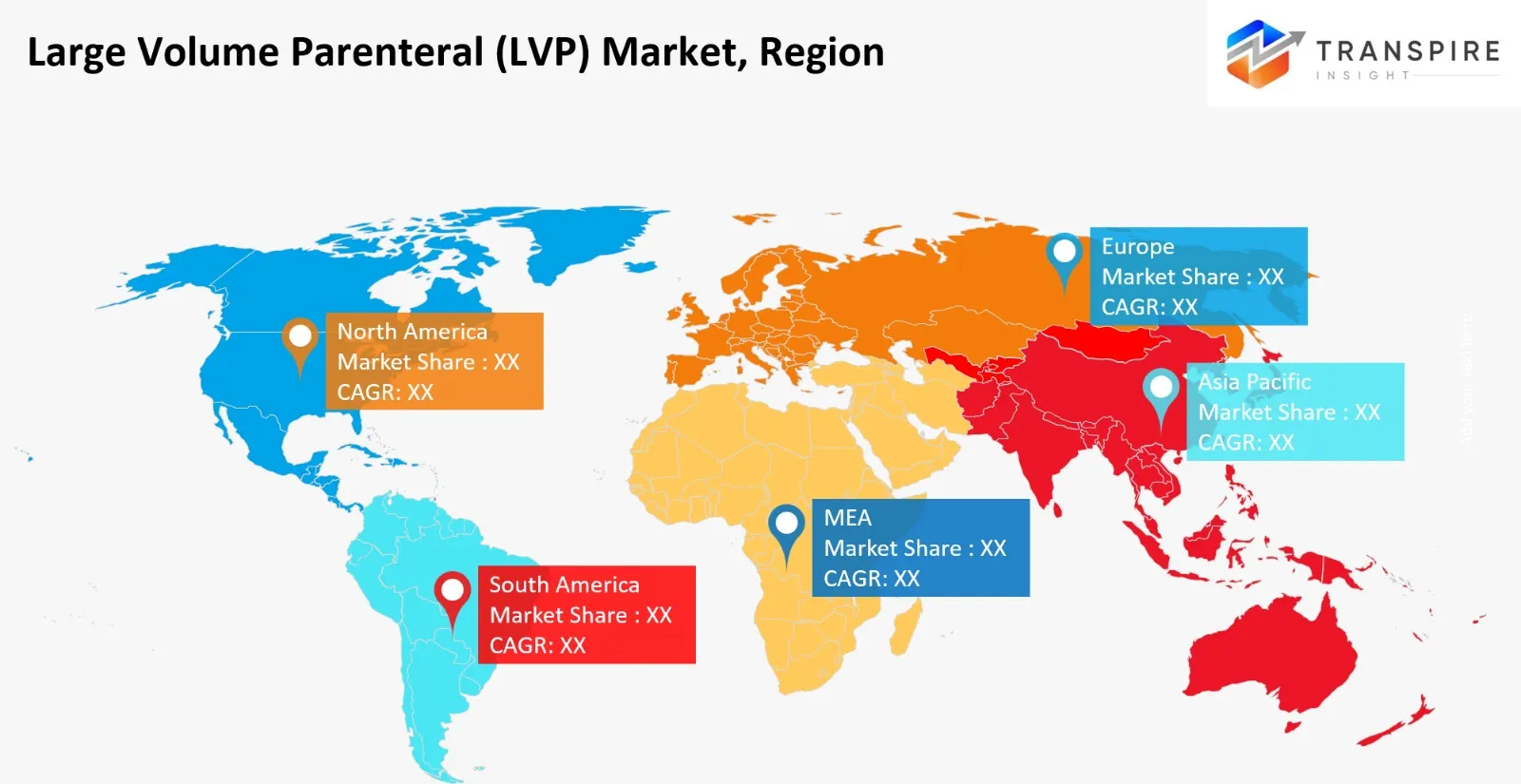
North America accounts for 35.25% of total revenue share owing to high procedure numbers, established reimbursement practices, and a vast reach of hospitals that generate sustained demand for sterile infusion products. A strong regulatory framework, matured quality measures, and a range of insured benefits help offset the effect of pricing pressures. Manufacturers compete on the basis of secure distribution channels, automation, and uninterrupted supplies rather than on the cost of products. Hence, North America is a high-value market for ready-to-use large volume parenteral formats that are traceable and made with safety features.
In August 2026, B. Braun (specifically B. Braun Canada) announced the Health Canada approval of the Spaceplus Infusion System, which introduces the next evolution of its smart infusion therapy hardware, including the Spaceplus Infusomat Large Volume Pump and accompanying OnlineSuiteplus software.https://www.bbraun.ca/en/about-us/media/company-news.html
Europe has 25.0% of the market and competes more on stability than on how big the demand is. Europe has the potential for coordinated purchasing, high-quality expectations, sustainability needs, and strong public health systems. Compared to North America, European demand is more sensitive to policy and compliance: European hospitals tend to prefer suppliers that can prove environmental sustainability, product traceability, and supplier capacity. Asia Pacific is just behind Europe at 24.0%, while Latin America (8.5%) and the Middle East and Africa (7.25%) rely even more on local manufacturing and price competitiveness.
In April 2026, Asker Healthcare Group agreed to acquire 100% of the shares of RMS Medical Devices, a specialized medical device and digital health distributor operating in the Benelux region. This tactical expansion directly illustrates the European market's emphasis on bolstering regional supply chains and clinical continuity, as the integration directly enhances the group's local European medical device offerings and operational efficiencies.https://www.asker.com/investors-and-media/press-releases-and-news/2026/acquisition-of-rms-medical-devices/
Asia Pacific (APAC) is the fastest-growing region, with a CAGR of 8.63%, propelled by hospital capacity growth, growing burden of chronic disease, and government-supported localisation of key medicines. Recent investment in India and China sterile capacity has minimised dependency on imports and delivered low-cost supply to local and export markets. Such as Gland Pharma is expanding its large-volume parenterals capacity and Amanta Healthcare in rapidly growing new sales. Scale and price-effective manufacturing at both Sichuan Kelun and Gland Pharma production sites is capitalised on by the industry. Here, the integration of low-cost base fluids with more sophisticated nutrition, therapeutic and digitally supported infusion products could succeed.
In September 2026,Amanta Healthcare officially announced the commissioning of a new production line under its flagship "SteriPort" brand. This capacity expansion is backed by a ₹150 crore capital expenditure program aimed at scaling up its sterile liquid deliverables and transitioning from volume-driven production to value-added medical formulations.https://www.amanta.co.in/
Who are the Key Players in the Large Volume Parenteral (LVP) Market, and how do they compete?
Competition for the LVP market is split into sterile-therapy platforms, regional cost leaders, and device-linked specialists. Scale matters as sterile manufacturing, water systems, and distribution require large investment, but product differentiation increasingly involves closed-system packaging, supply reliability, and infusion device integration.
The top players are Baxter, B. Braun, Fresenius Kabi and ICU Medical, employing differentiation strategies. Baxter and B. Braun provide premixed, multi-chamber and closed-system products that obviate bedside compounding. ICU Medical builds premium value through infusion device integration and medication-management connectivity. Fresenius Kabi combines reliable, broad IV generics with nutrition and medical technology via a wide clinical portfolio. value players Pfizer, Otsuka, Grifols, Sandoz, Hikma and Biocon compete via portfolio breadth, plasma-derived expertise or generics scale. Regional specialist players Cipla, Gland Pharma, Sichuan Kelun and Amanta Healthcare scale low-cost manufacturing, regional capacity and export capability. Although a small regional presence, Amanta's Steriport LVP plant addition from 6.6 crore to 11.6 crore capacity illustrates how regional players are transforming capacity into hospital supply advantages.
Key Players are:
- Pfizer
- Fresenius Kabi
- Abbott
- Otsuka
- Baxter
- B. Braun
- Grifols
- Cipla
- ICU Medical
- Biocon
- Sichuan Kelun
- Gland Pharma
- Sandoz
- Hikma Pharmaceuticals
- Amanta Healthcare
Large Volume Parenteral (LVP) Market — Enhanced Competitive Benchmarking
|
Company |
Est. Revenue Share Range |
Key Offerings |
Strategic Positioning |
Geographic Strength |
Technology Focus |
|
Baxter International Inc. |
10–16% |
IV saline, dextrose, electrolyte solutions, parenteral nutrition |
Broad portfolio leadership with hospital supply reliability |
North America, Europe, Asia Pacific |
Flexible IV containers and automated sterile manufacturing |
|
Fresenius Kabi AG |
8–13% |
IV fluids, electrolyte solutions, parenteral nutrition, infusion therapies |
Integrated infusion therapy portfolio with strong clinical nutrition capabilities |
Europe, North America, Asia Pacific |
Advanced aseptic processing and ready-to-use formulations |
|
B. Braun SE |
7–12% |
IV solutions, electrolyte infusions, parenteral nutrition, infusion products |
Integrated hospital-care solutions and infusion-system differentiation |
Europe, North America, Asia Pacific |
Polymer containers and integrated infusion technologies |
|
Otsuka Pharmaceutical Factory, Inc. |
5–9% |
Electrolyte solutions, IV fluids, therapeutic infusions, nutritional solutions |
Speciality infusion expertise with strong Japanese market leadership |
Asia Pacific, North America |
Formulation optimisation and advanced infusion manufacturing |
|
Sichuan Kelun Pharmaceutical Co., Ltd. |
4–8% |
Large-volume injections, electrolyte solutions, glucose infusions, sterile fluids |
High-volume manufacturing and competitive cost positioning |
Asia Pacific, emerging international markets |
Large-scale sterile production and aseptic fill-finish |
|
ICU Medical, Inc. |
3–6% |
IV solutions, saline products, infusion-related pharmaceutical products |
Hospital-focused infusion portfolio and supply-chain expansion |
North America, Asia Pacific |
Closed-system infusion technologies and sterile manufacturing |
|
Pfizer Inc. |
2–5% |
Sterile injectable medicines and selected large-volume infusion products |
Established pharmaceutical brand and regulated-market capabilities |
North America, Europe |
Sterile injectable manufacturing and quality-control systems |
|
Grifols S.A. |
2–4% |
IV saline solutions, infusion fluids, selected parenteral products |
Speciality healthcare manufacturing with infusion-market participation |
Europe, North America |
Sterile solution production and flexible-container technologies |
|
JW Life Science Corp. |
1–3% |
IV fluids, electrolyte solutions, parenteral nutrition products |
Regional pharmaceutical specialisation and hospital-market focus |
Asia Pacific |
Aseptic manufacturing and infusion formulation development |
|
Albert David Limited |
0.5–2% |
IV fluids, electrolyte solutions, dextrose infusions, sterile parenterals |
Regional value positioning and domestic manufacturing specialisation |
Asia Pacific, particularly India |
Sterile injectable production and cost-efficient packaging |
Recent Development News
- In June 2026, Fresenius Kabi launched its Pedismof® range of ready-to-use, three-chamber parenteral nutrition bags across Europe. The launch strengthens its pediatric clinical nutrition portfolio by providing age-specific formulations for neonates, infants, children, and adolescents, supporting standardized nutritional care and simplifying administration in healthcare settings.https://www.fresenius.com/European-launch-of-Pedismof-range
- In July 2026, Apotex Health Corp. launched four configurations of generic Infuvite® Adult and Pediatric Injection in the United States, developed in collaboration with Orbicular Pharmaceutical Technologies and Gland Pharma. The launch expands access to injectable multivitamin therapies for patients receiving parenteral nutrition and strengthens the availability of essential hospital injectable medicines.http://apotex.com//news/news-release/2026/07/08/apotex-expands-us-hospital-portfolio-with-launch-of-generic-infuvite-adult-and-pediatric-injection
- In July 2026, Vector Science & Therapeutics, LyoGenesis Plus, and Wynn Pharmaceuticals signed a memorandum of understanding to develop and manufacture intravenous bag and vial adapter products. The collaboration is expected to expand specialized IV delivery capabilities and support the development of hospital-use injectable products, with production anticipated to begin within three to four months.https://www.investing.com/news/stock-market-news/vector-lyogenesis-plus-wynn-sign-mou-for-iv-adaptor-products-93CH-5518353
What Strategic Insights Define the Future of the Large Volume Parenteral (LVP) Market?
The LVP market is moving towards more integrated sterile-supply platforms that incorporate base fluids, parenteral nutrition, therapeutic bags, and connected infusion systems. While consolidation offers an opportunity to improve production efficiencies and optimize hospital purchasing, it also represents a hidden risk: dependence on a few categories of very high-volume fluids and specific manufacturing locations. A quality issue, water failure, or logistics delay could quickly cause shortages across hospitals. An integrated opportunity exists with AI-enabled demand prediction combining regional fill-finish capacity, enabling LVP suppliers to predict usage, keep critical supplies close to wards and avoid waste. A key area to address is adaptable bag platforms, BFS and EHR-compatible tracking. Commercially, organisations cannot apply unit-price competition alone. Instead, contracts can be designed to price in avoidance of compounding labour, reduction of administration errors, assured supply, and minimized disruption to clinicians' workflows. This moves supply chain assurance into the realm of measurable service benefits rather than a manufacturing pledge for clinicians and hospitals.
Key Segmentations are:
Type
- Soft Bag LVP
- Plastic Bag LVP
- Glass Bottle LVP
- Flexible Bag
- Rigid Container
- BFS LVP
- Other
Volume
- 100–250 mL
- 250–500 mL
- 500–1000 mL
- 1000–2000 mL
- Above 2000 mL
- Multi-Chamber
- Custom
Application
- Basic Infusion
- Therapeutic Infusion
- Nutritious Infusion
- Fluid Replacement
- Electrolyte Therapy
- Drug Delivery
- Parenteral Nutrition
Packaging
- Plastic Bags
- Glass Bottles
- Flexible Containers
- Rigid Containers
- Multi-Chamber Bags
- Blow-Fill-Seal
- Others
End User
- Hospitals
- Medical Centers
- Clinics
- Ambulatory Centers
- Emergency Care
- Home Healthcare
- Speciality Facilities
Manufacturing Technology
- Traditional Aseptic Fill-Finish
- BFS
- FFS
- Terminal Sterilization
- Blow-Molding
- Automated Filling
- Other
By Regional Analysis
North America
- US
- Canada
- Mexico
Europe
- Germany
- UK
- France
- Italy
- Spain
- Russia
- Rest of Europe
Asia Pacific
- China
- Japan
- India
- South Korea
- Australia
- Rest of Asia Pacific
South America
- Brazil
- Argentina
- Rest of South America
Middle East & Africa
- UAE
- Saudi Arabia
- Qatar
- South Africa
- Rest of the Middle East & Africa
Frequently Asked Questions
Find quick answers to common questions.
The large volume parenteral (LVP) market size was valued at USD 11.52 billion in 2025 and is poised to reach USD 20.42 billion by 2033, expanding at a 7.63% CAGR.
Key segments for the large volume parenteral (LVP) market are Type (Soft Bag LVP, Plastic Bag LVP, Glass Bottle LVP, Flexible Bag, Rigid Container, BFS LVP, Other); Volume (100–250 mL, 250–500 mL, 500–1000 mL, 1000–2000 mL, Above 2000 mL, Multi-Chamber, Custom); Application (Basic Infusion, Therapeutic Infusion, Nutritious Infusion, Fluid Replacement, Electrolyte Therapy, Drug Delivery, Parenteral Nutrition); Packaging (Plastic Bags, Glass Bottles, Flexible Containers, Rigid Containers, Multi-Chamber Bags, Blow-Fill-Seal, Other); End User (Hospitals, Medical Centers, Clinics, Ambulatory Centers, Emergency Care, Home Healthcare, Specialty Facilities); Manufacturing Technology (Traditional Aseptic Fill-Finish, BFS, FFS, Terminal Sterilization, Blow-Molding, Automated Filling, Other).
Growth is primarily driven by expanding hospital-based intravenous therapies, surgical procedures, critical-care requirements, parenteral nutrition, healthcare infrastructure development, and investments in sterile manufacturing, flexible packaging, and supply-chain resilience.
The large volume parenteral (LVP) market is led by major manufacturers including Pfizer, Fresenius Kabi, Abbott, Otsuka, Baxter, B. Braun, Grifols, Cipla, ICU Medical, Biocon, Sichuan Kelun, Gland Pharma, Sandoz, Hikma Pharmaceuticals, and Amanta Healthcare.
North America holds 35.25% of the market, supported by advanced healthcare infrastructure, established pharmaceutical manufacturing, strong hospital procurement, stringent quality standards, and extensive infusion therapy adoption.
Key opportunities include AI-enabled demand forecasting, automated sterile manufacturing, BFS technology, multi-chamber infusion bags, regional manufacturing expansion, and home healthcare infusion solutions.
- Pfizer
- Fresenius Kabi
- Abbott
- Otsuka
- Baxter
- B. Braun
- Grifols
- Cipla
- ICU Medical
- Biocon
- Sichuan Kelun
- Gland Pharma
- Sandoz
- Hikma Pharmaceuticals
- Amanta Healthcare
About the Authors

Pankaj Ghogare Patil
I am Pankaj Ghogare Patil, a Senior Research Analyst at Transpire Insight, specializing in the Pharmaceutical, Chemicals & Materials, Healthcare IT, and Biotechnology industry. My expertise lies in conducting comprehensive market research, analyzing industry trends, evaluating competitive landscapes, and translating complex data into actionable insights. At Transpire Insight, I closely follow emerging technologies, regulatory developments, and market innovations to create accurate, well-researched, and informative content that helps businesses and professionals make informed decisions. I am committed to producing credible, evidence-based articles that reflect industry best practices while making technical topics accessible and valuable for a broad audience.

Chakradhar Khansole
Chakradhar serves as the Research Director at Transpire Insight, bringing over 8 years of experience in technology, innovation, and strategic market intelligence. He specializes in transforming complex market data into actionable business insights that enable organizations to make informed, growth-oriented decisions. Recognized for his strategic vision and analytical expertise, Chakradhar leads high-impact research initiatives, delivering comprehensive market assessments, competitive intelligence, and forward-looking industry analysis.
Recently Published Reports
-
Apr 2026
AI in Diabetic Retinopathy Market
AI in Diabetic Retinopathy Market Size, Share & Analysis Report By Type (Screening AI Systems, Diagnostic AI Systems, and Predictive AI Models), By Application Segment (Hospitals, Ophthalmology Clinics, Diagnostic Centers, and Research and Development), and Geography (North America, Europe, Asia-Pacific, Middle East and Africa, South and Central America), 2021 - 2031
-
Apr 2026
Psychometric Tests Market
Psychometric Tests Market Size, Share & Analysis Report By Type (Personality Tests, Ability/Aptitude Tests, Skill/Knowledge Tests, and Others), By Application (Talent Acquisition and Talent Management), and Geography (North America, Europe, Asia-Pacific, Middle East and Africa, South and Central America), 2021 – 2031
-
Apr 2026
Rare Biological Sample Collection Market
Rare Biological Sample Collection Market Size, Share & Analysis Report By Type (Isolation Kits & Reagent, Blood Collection Tubes, and Others), By Application (Oncology, Transcriptomics, Pharmacogenomics, and Others), and Geography (North America, Europe, Asia-Pacific, Middle East and Africa, South and Central America), 2021 – 2031
-
Jul 2026
Diabetic Retinopathy Market
Diabetic Retinopathy Market Size, Share & Analysis Report By Type (Proliferative Diabetic Retinopathy, and Diabetic Macular Edema (DME)), By Treatment Type (Anti VEGF Drug, Steroid Implants, Laser Surgeries, and Vitrectomy), and Geography (North America, Europe, Asia-Pacific, Middle East and Africa, South and Central America), 2021 – 2031
Our Clients