

Japan Tralokinumab Market Summary:
According to Transpire Insight, a detailed research report on the Japan Tralokinumab Market reflects that Adtralza® (tralokinumab), marketed by LEO Pharma K.K., accounts for the primary product presence in Japan, with its 150 mg prefilled syringe priced at approximately JPY 29,295 per syringe and its 300 mg prefilled pen introduced in 2024, making LEO Pharma the key contributor to market development, innovation in IL-13-targeted biologic therapy, expanding treatment accessibility through home self-injection, and growth dynamics in Japan's atopic dermatitis treatment landscape. Japan-specific market revenue and percentage share figures are not publicly established.
Market Snapshot
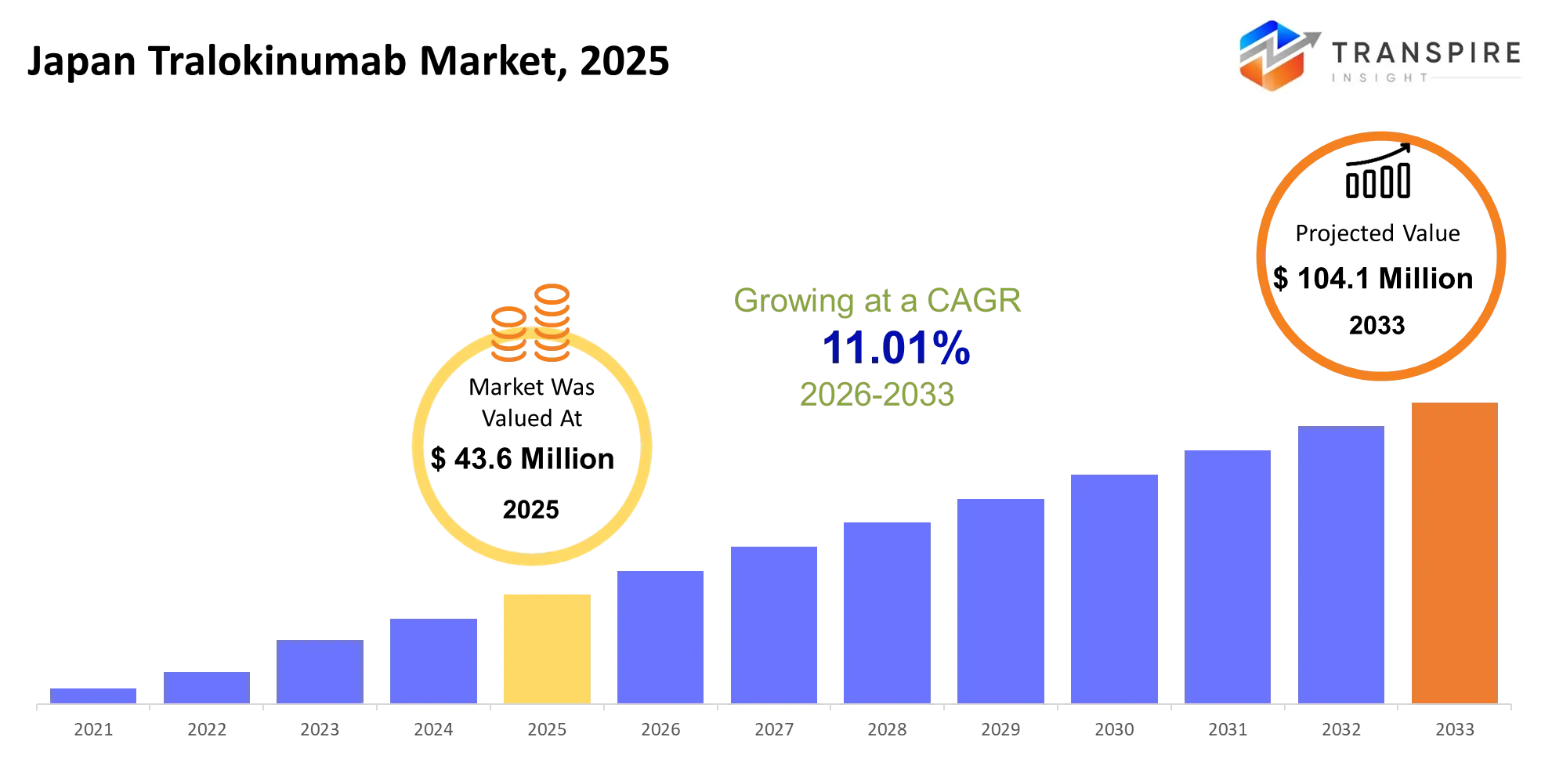
- Market Value (2025): USD 43.6 Million.
- Expected Market Value (2026): USD 50.1 Million.
- Estimated Market Value (2033): USD 104.1 Million.
- Forecast CAGR (2026–2033): 11.01%.
Introduction
The Japan Tralokinumab Market represents the process of discovery, commercialization, marketing, and usage of tralokinumab, known as Adtralza, as a biologic treatment for moderate to severe atopic dermatitis in patients who are suitable candidates. Tralokinumab is a monoclonal antibody targeting interleukin-13 (IL-13), a cytokine which plays an important role in the development of inflammation and disease pathogenesis. Market dynamics are driven by the demand for innovative biologic products, changes in the approach to the treatment of dermatological disorders, and the requirement for long-term disease management in the case when standard therapy is ineffective. Infrastructure of the country’s healthcare system, availability of dermatologists in Japan, and the scheme of reimbursements will affect the treatment availability and uptake.
Key Market Highlights: -
- By Indication, the Adult Atopic Dermatitis dominated the market and holds approximately 53% share in 2025 and is projected to grow at a substantial CAGR during the forecast period.
- By Patient Type, the Adults dominated the market and holds approximately 72% share in 2025 and is projected to grow at a substantial CAGR during the forecast period.
- By Route, the subcutaneous injection Manufacturers segment dominated the market and holds approximately 80% share in 2025 and is projected to grow at a substantial CAGR during the forecast period.
- The Japanese tralokinumab market will be influenced by rising demand for targeted biologics for atopic dermatitis, use of Adtralza, changing treatment approaches, and healthcare insurance coverage of eligible individuals.
How is Technology Driving Growth in the Japan Tralokinumab Market?
Technologies enable the Japan Tralokinumab Market mainly via innovations in biologics, drug delivery systems, and patient monitoring tools. Prefilled syringes and pen injection systems allow the subcutaneous administration of Adtralza to take place. Health technology applications and electronic medical records could be used by dermatologists to monitor medication compliance, severity of the condition, and patient-reported outcomes. Innovations in clinical data analysis could be used to make personalized decisions about the use of treatment, while the use of tralokinumab-specific AI-enabled dosing is currently not practiced. In addition, technologies in biopharmaceuticals production and logistics help ensure the quality and consistent distribution of medications.
Market Drivers
Japan Tralokinumab Market Growth can be attributed to the demand for a targeted biological therapy for patients with moderate-to-severe atopic dermatitis, along with the requirement for effective disease management. Adtralza is a biological drug developed by LEO Pharma, which blocks IL-13 selectively, thus providing another option for eligible patients, who have failed to respond to standard therapies. The presence of established dermatology care services and health insurance coverage in Japan help in gaining access to available biological drugs. Pre-filled syringe and pen-based delivery mechanisms increase the flexibility of administering the drug.
Restrain
The Japan Tralokinumab Market would be subjected to competition from existing biological therapies like dupilumab as well as JAK inhibitors taken orally. Affordability could be limited by high costs of therapy and pricing practices of the Japanese pharma industry. Furthermore, scientific research suggests heterogeneity in the effectiveness of therapy among patients, especially those who had previous experience with systemic therapy. Slow efficacy of the treatment might impact prescription and adherence rates.
|
Driver |
Relative Impact on Market Growth (%) |
Geographic Relevance |
Impact Timeline |
Demand Strength |
Growth Mechanism |
Key Beneficiaries |
Major Constraint |
|
1. Rising demand for targeted biologic treatment of moderate-to-severe atopic dermatitis |
30% |
Nationwide; major dermatology centers in Tokyo, Osaka, and other urban regions |
Short-term (≤2 years) |
High |
IL-13 inhibition expands targeted treatment options for inadequately controlled patients. |
LEO Pharma, dermatologists, eligible patients, specialty pharmacies |
High treatment costs and biologic eligibility restrictions |
|
2. Clinical adoption of IL-13-specific therapy and treatment personalization |
24% |
Nationwide; specialist dermatology and allergy clinics |
Medium-term (2–4 years) |
High |
Targeted cytokine inhibition supports individualized disease management and treatment selection. |
LEO Pharma, dermatology clinics, patients, clinical researchers |
Variable individual response and competing biologic therapies |
|
3. Japan's regulatory and reimbursement framework supporting appropriate biologic use |
19% |
Nationwide; hospitals and qualified dermatology practices |
Short-term (≤2 years) |
Medium |
Approved indications and insurance coverage enable eligible patient access. |
LEO Pharma, healthcare providers, insured patients |
Prescribing criteria and reimbursement-related treatment restrictions |
|
4. Growing real-world evidence and patient-reported treatment outcome monitoring |
15% |
Nationwide; participating dermatology centers and clinical research networks |
Medium-term (2–4 years) |
Medium |
Real-world outcomes improve clinician confidence and inform treatment decisions. |
LEO Pharma, clinicians, researchers, patients |
Limited long-term Japan-specific effectiveness and persistence data |
|
5. Expansion of biologic delivery options and treatment convenience |
12% |
Nationwide; outpatient clinics and home-injection-eligible patients |
Long-term (≥4 years) |
Medium |
Prefilled injection options may improve convenience and treatment continuation. |
LEO Pharma, patients, healthcare providers, specialty pharmacies |
Injection burden, cold-chain requirements, and affordability |
Analysis of Prices and Consumer Behaviour
The Japan Tralokinumab Market is characterized by the use of biologic targeted therapy for moderate to severe cases of atopic dermatitis, which includes the biologic drug Adtralza (tralokinumab). No verified market share data and consumer purchase data is available for Japan, so the blueberry extract percentages cannot be directly transferred to this market due to the lack of reliable information. The cost of tralokinumab is determined by national pricing and reimbursement policies for drugs, and treatment usage is determined by clinical appropriateness and individual choice. Treatment demand is determined by a desire to maintain continuous control of the disease, treatment convenience, and access to biologics.
|
Company |
Est. Revenue Share Range |
Key Offerings |
Strategic Positioning |
Geographic Strength |
Technology Focus |
|
LEO Pharma K.K. |
Estimated: dominant; exact share undisclosed |
Adtralza 150 mg prefilled syringe; Adtralza 300 mg pen; IL-13-targeted biologic therapy |
Japan's tralokinumab marketing authorization holder; focused dermatology commercialization |
Japan; Europe |
Human monoclonal antibody; selective IL-13 neutralization |
|
Sanofi K.K. |
Not applicable to tralokinumab; competing AD biologic |
Dupixent; subcutaneous biologic; prefilled syringe and pen |
Established biologic competitor with broad type-2 inflammation positioning |
Japan; Europe; North America |
IL-4Rα blockade; targeted cytokine signaling inhibition |
|
Maruho Co., Ltd. |
Not applicable to tralokinumab; competing AD therapies |
Nemolizumab (Mitchga); dermatology medicines; topical treatments |
Dermatology-focused Japanese commercialization and specialty-market presence |
Japan |
IL-31 receptor targeting; itch-focused biologic therapy |
|
AbbVie GK |
Not applicable to tralokinumab; competing systemic therapy |
Rinvoq (upadacitinib); oral JAK inhibitor |
Oral targeted-treatment alternative for eligible AD patients |
Japan; North America; Europe |
Selective JAK1 inhibition; oral targeted immunomodulation |
|
Pfizer Japan Inc. |
Not applicable to tralokinumab; competing systemic therapy |
Cibinqo (abrocitinib); oral JAK inhibitor |
Competes through oral administration and systemic treatment choice |
Japan; North America; Europe |
JAK1 inhibition; small-molecule immunomodulation |
|
Eli Lilly Japan K.K. |
Not applicable to tralokinumab; competing AD biologic |
Ebglyss (lebrikizumab); IL-13-targeting biologic |
Competes within the IL-13 biologic treatment segment |
Japan; North America; Europe |
IL-13 neutralization; monoclonal antibody engineering |
|
Novartis Pharma K.K. |
Not applicable to tralokinumab; competing systemic therapy |
Immunology portfolio; investigational and marketed targeted therapies relevant to inflammatory disease |
Competes through immunology expertise and specialty-care infrastructure |
Japan; Europe; North America |
Targeted immunology; biologic and small-molecule development |
|
Japan Tobacco Inc. / Torii Pharmaceutical Co., Ltd. |
Not applicable to tralokinumab; competing AD therapies |
Core dermatology and allergy treatment portfolio; topical AD therapies |
Local specialty-care presence and established dermatology relationships |
Japan |
Topical drug formulation; dermatology-focused development |
|
Kyowa Kirin Co., Ltd. |
Not applicable to tralokinumab; adjacent immunology competitor |
Biologic and immunology portfolio; specialty medicines |
Specialty-biopharmaceutical capabilities with adjacent inflammatory-disease relevance |
Japan; Europe; North America |
Antibody engineering; biologics development |
|
GlaxoSmithKline K.K. |
Not applicable to tralokinumab; adjacent market competitor |
Specialty medicines and immunology portfolio |
Broad specialty-pharma capabilities; no confirmed direct tralokinumab product participation |
Japan; Europe; North America |
Biologics research; immune pathway targeting |
Who are the Key Players in the Japan Tralokinumab Market and how do they compete?
Japan Tralokinumab Market competitiveness requires companies with expertise in developing biologics, target drugs for atopic dermatitis, and pharmaceuticals logistics infrastructure. Competing not only through pricing but using advanced biologics, clinical differentiation, patient-centered solutions, and healthcare integration allows companies to develop their products further and make treatments more accessible, clinically effective, and patient-oriented.
Development of tralokinumab drug as a targeted inhibitor of IL-13 for atopic dermatitis allows LEO Pharma to strengthen its competitive position on the market. Development of Dupixent drug (dupilumab) as a targeted biologic for inflammatory diseases helps Sanofi differentiate itself among competitors. Development of its position through offering of Dupixent drug in collaboration with Sanofi company allows Regeneron Pharmaceuticals to help patients suffering from atopic dermatitis with biologic targeting.
Top Companies in the Japan Tralokinumab Market
- LEO Pharma
- Sanofi
- Regeneron Pharmaceuticals
- AstraZeneca
- Eli Lilly
- AbbVie
- Pfizer
- Novartis
- Roche
- GSK
- Bristol Myers Squibb
- Johnson & Johnson
- UCB
- Maruho
- Torii Pharmaceutical
Japan Tralokinumab Market Segmentation
The Japan Tralokinumab Market share is divided into six categories: By Indication, By Patient Type, By Route, By Treatment Line, By Distribution Channel, By End User.
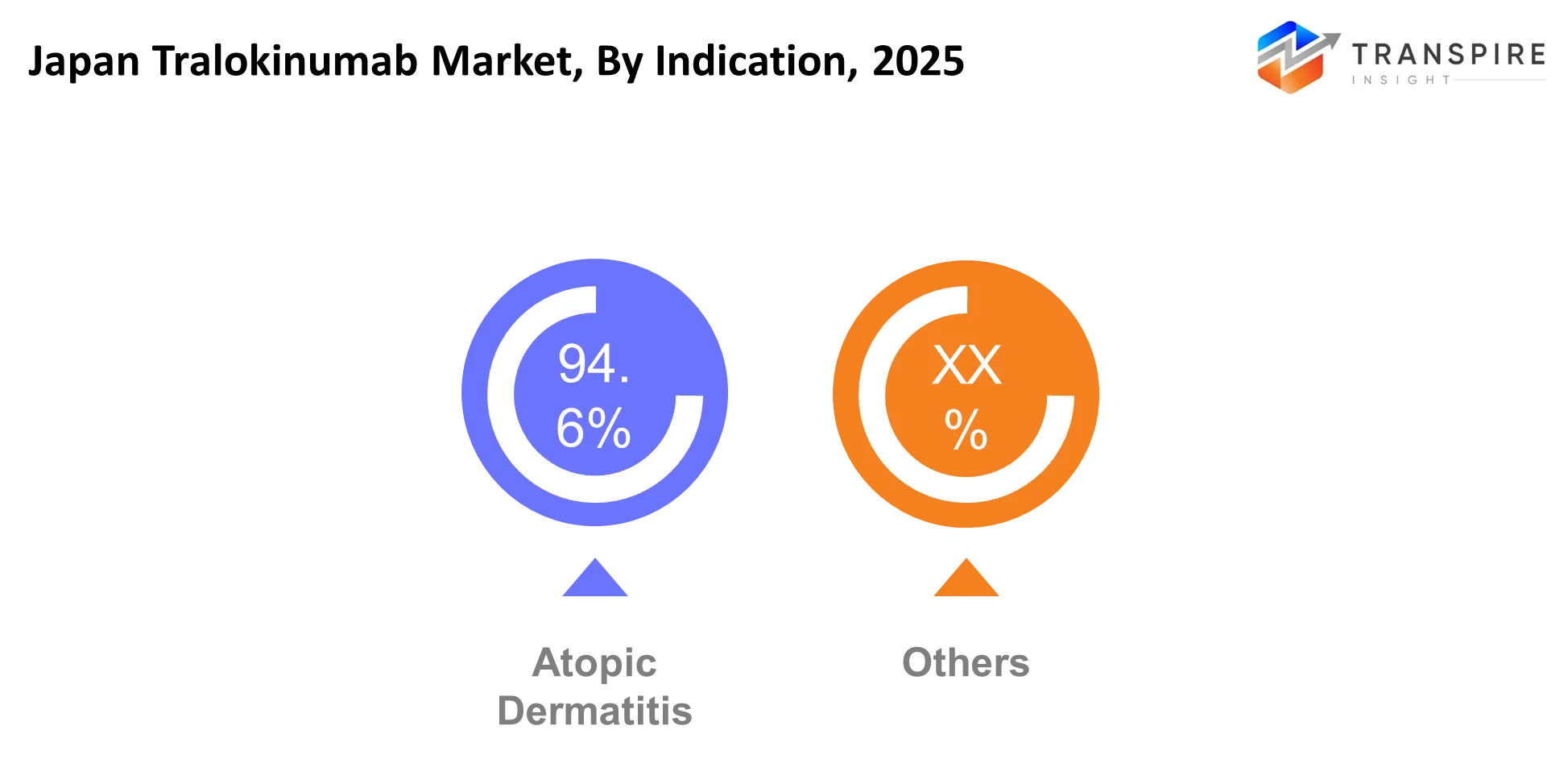
The Adult Atopic Dermatitis dominated the market, accounting for nearly 53% in 2025 and is expected to rise at a significant CAGR during the forecast period.
The Japan Tralokinumab Market is segmented by indicationinto atopic dermatitis, moderate-to-severe atopic dermatitis, severe atopic dermatitis, chronic eczema, other type-2 inflammatory conditions, pediatric atopic dermatitis, adult atopic dermatitis, adolescent atopic dermatitis. Among these, the Adult Atopic Dermatitis segment dominated the market, accounting for nearly 53% in 2025 and expected to increase at a significant CAGR during the forecast period. The adult atopic dermatitis segment was driven by a large patient base, significant disease burden, and increasing demand for efficacious treatment options.
The Adults dominated the market, accounting for nearly 72% in 2025, and is expected to rise at a significant CAGR during the forecast period.
The Japan Tralokinumab Market is segmented by patient type into adults, adolescents, children, elderly, moderate cases, severe cases, refractory cases, long-term patients. Among these, the Adults dominated the market, accounting for nearly 72% in 2025 and expected to increase at a significant CAGR during the forecast period. The adults segment was dominant owing to the higher prevalence of atopic dermatitis and increased need for treatment among patients suitable for biologic drugs.
The subcutaneous injection dominated the market, accounting for nearly 80% in 2025 and is expected to rise at a significant CAGR during the forecast period.
The Japan Tralokinumab Market is segmentedby route into subcutaneous injection, prefilled syringe, autoinjector, clinic administration, home administration, loading dose, maintenance dose, other delivery forms. Among these, the subcutaneous injection dominated the market, accounting for nearly 80% in 2025 and expected to increase at a significant CAGR during the forecast period. The subcutaneous injection mode of administration dominated owing to the convenience and continuous drug delivery associated with subcutaneous injections.
Future Market Trends for the Japan Tralokinumab Market: -
- Usage of Targeted Biologic Therapy: Japan has a market for tralokinumab that is driven by the demand for targeted treatments for eligible adults who have atopic dermatitis and cannot be treated through regular treatments.
- Easy Administration: The Adtralza 300 mg auto-injector pen and eligibility for self-injection at home make the treatment easy to administer.
- Clinical Studies and Availability of Drug: Clinical trials conducted in Japan proved tralokinumab to be an eligible treatment option.
Recent Development
- In January 2026: LEO Pharma provided evidence regarding the long-term effectiveness of tralokinumab for treating moderate to severe atopic dermatitis among Japanese patients based on real-world data post-Japan launch.
- In December 23, 2022: The MHLW of Japan granted an initial approval for Adtralza (tralokinumab) injection for subcutaneous use, thereby entering the regulatory market for atopic dermatitis treatment in Japan.
- In September 26, 2023: LEO Pharma released the first syringe formulation of Adtralza in Japan, increasing the availability of biological treatment for targeting IL-13 among adults with moderate to severe atopic dermatitis.
- In December 2, 2024: LEO Pharma released the 300 mg auto-injector pen formulation of Adtralza in Japan, providing a self-injection option for adult patients with atopic dermat
Market Segmentation
This study forecasts revenue at Japan, regional and country levels from 2020 to 2033. Transpire Insight has segmented the Japan Tralokinumab Market based on the below-mentioned segments:
Japan Tralokinumab Market, By Indication
- Atopic Dermatitis
- Moderate-to-Severe Atopic Dermatitis
- Severe Atopic Dermatitis
- Chronic Eczema
- Other Type-2 Inflammatory Conditions
- Pediatric Atopic Dermatitis
- Adult Atopic Dermatitis
- Adolescent Atopic Dermatitis
Japan Tralokinumab Market, By Patient Type
- Adults
- Adolescents
- Children
- Elderly
- Moderate Cases
- Severe Cases
- Refractory Cases
- Long-Term Patients
Japan Tralokinumab Market, By Route
- Subcutaneous Injection
- Prefilled Syringe
- Autoinjector
- Clinic Administration
- Home Administration
- Loading Dose
- Maintenance Dose
- Other Delivery Forms
Japan Tralokinumab Market, By Treatment Line
- First-Line Biologic
- Second-Line Biologic
- Post-Topical Therapy
- Post-Systemic Therapy
- Combination Therapy
- Monotherapy
- Maintenance Therapy
- Rescue Therapy
Japan Tralokinumab Market, By Distribution Channel
- Hospital Pharmacy
- Specialty Pharmacy
- Retail Pharmacy
- Specialty Distributors
- Direct Hospital Procurement
- Clinics
- Homecare Supply
- Other Channels
Japan Tralokinumab Market, By End User
- Hospitals
- Dermatology Clinics
- Allergy Clinics
- Specialty Centers
- Academic Medical Centers
- Research Institutes
- Pharmacies
- Home Healthcare
Frequently Asked Questions
Find quick answers to common questions.
The Japan Tralokinumab Market covers Adtralza commercialization and use as an IL-13-targeting biologic for eligible atopic dermatitis patients.
The market is projected to reach USD 104.1 million by 2033, according to the report’s market estimates.
LEO Pharma K.K. is the primary product participant in Japan, marketing Adtralza for eligible patients with moderate-to-severe atopic dermatitis.
Growth is supported by demand for targeted biologics, ongoing atopic dermatitis management needs, insurance access, and convenient subcutaneous delivery options.
Subcutaneous injection leads the market, supported by its established use for Adtralza and the availability of prefilled delivery options.
- LEO Pharma
- Sanofi
- Regeneron Pharmaceuticals
- AstraZeneca
- Eli Lilly
- AbbVie
- Pfizer
- Novartis
- Roche
- GSK
- Bristol Myers Squibb
- Johnson & Johnson
- UCB
- Maruho
- Torii Pharmaceutical
About the Authors

Pankaj Ghogare Patil
I am Pankaj Ghogare Patil, a Senior Research Analyst at Transpire Insight, specializing in the Pharmaceutical, Chemicals & Materials, Healthcare IT, and Biotechnology industry. My expertise lies in conducting comprehensive market research, analyzing industry trends, evaluating competitive landscapes, and translating complex data into actionable insights. At Transpire Insight, I closely follow emerging technologies, regulatory developments, and market innovations to create accurate, well-researched, and informative content that helps businesses and professionals make informed decisions. I am committed to producing credible, evidence-based articles that reflect industry best practices while making technical topics accessible and valuable for a broad audience.

Chakradhar Khansole
Chakradhar serves as the Research Director at Transpire Insight, bringing over 8 years of experience in technology, innovation, and strategic market intelligence. He specializes in transforming complex market data into actionable business insights that enable organizations to make informed, growth-oriented decisions. Recognized for his strategic vision and analytical expertise, Chakradhar leads high-impact research initiatives, delivering comprehensive market assessments, competitive intelligence, and forward-looking industry analysis.
Recently Published Reports
-
Jul 2026
Alopecia Treatment Market
Alopecia Treatment Market Size, Share & Analysis Report By Disease Type (Alopecia Areata, Cicatricial Alopecia, Traction Alopecia, Alopecia Totalis, Androgenetic Alopecia, Alopecia Universalis, and Other Disease Types), By Treatment Type (Topical Treatments, Oral Medications, Injectable Therapies, and Hair Transplantation), By Gender (Male, and Female), By Distribution Channel (Hospitals and Clinics, Retail Pharmacies, and Online Retailers), and Geography (North America, Europe, Asia-Pacific, Middle East and Africa, South and Central America), 2021 - 2031
-
Jul 2026
Medical Ultrasound Probe Market
Medical Ultrasound Probe Market Size, Share & Analysis Report By Type (Linear Type, Convex Type, Endocavitary Probe, Phased Array/Cardiac Probe, Transesophageal (TEE) Probe, and Others), By Application (Ophthalmology, Cardiology, Musculoskeletal, Oncology, Obstetrics & Gynecology, General Imaging, and Others), By End User (Hospitals & Clinics, Diagnostic Centers, Ambulatory Surgical Centers, and Others), and Geography (North America, Europe, Asia-Pacific, Middle East and Africa, South and Central America), 2021 – 2031
-
May 2026
Biosimilars Market
Biosimilars Market By Product Type (Monoclonal Antibodies, Recombinant Hormones, Erythropoietin, G-CSF, Others), By Indication (Oncology, Autoimmune Diseases, Blood Disorders, Diabetes, Others), By Manufacturing Type (In-House Manufacturing, Contract Manufacturing), By Distribution Channel (Hospital Pharmacies, Retail Pharmacies, Online Pharmacies), By Industry Analysis, Size, Share, Growth, Trends, and Forecasts 2021-2033
-
Apr 2026
Gastrointestinal Endoscopy Market
Gastrointestinal Endoscopy Market By Type (Rigid Gastrointestinal Endoscope, Flexible Gastrointestinal Endoscopes, Disposable Gastrointestinal Endoscope), By Procedure Type (Colonoscopy, Gastroscopy, Duodenoscopy, Enteroscopy, Flexible Sigmoidoscopy, Others), By Application (Diagnosis, Treatment), By End-Users (Hospitals, Ambulatory Surgical Centers, Specialty Clinics, Laboratories, Others), By Industry Analysis, Size, Share, Growth, Trends, and Forecasts 2021-2033