

Japan Kallmann Syndrome Market Size & Forecast:
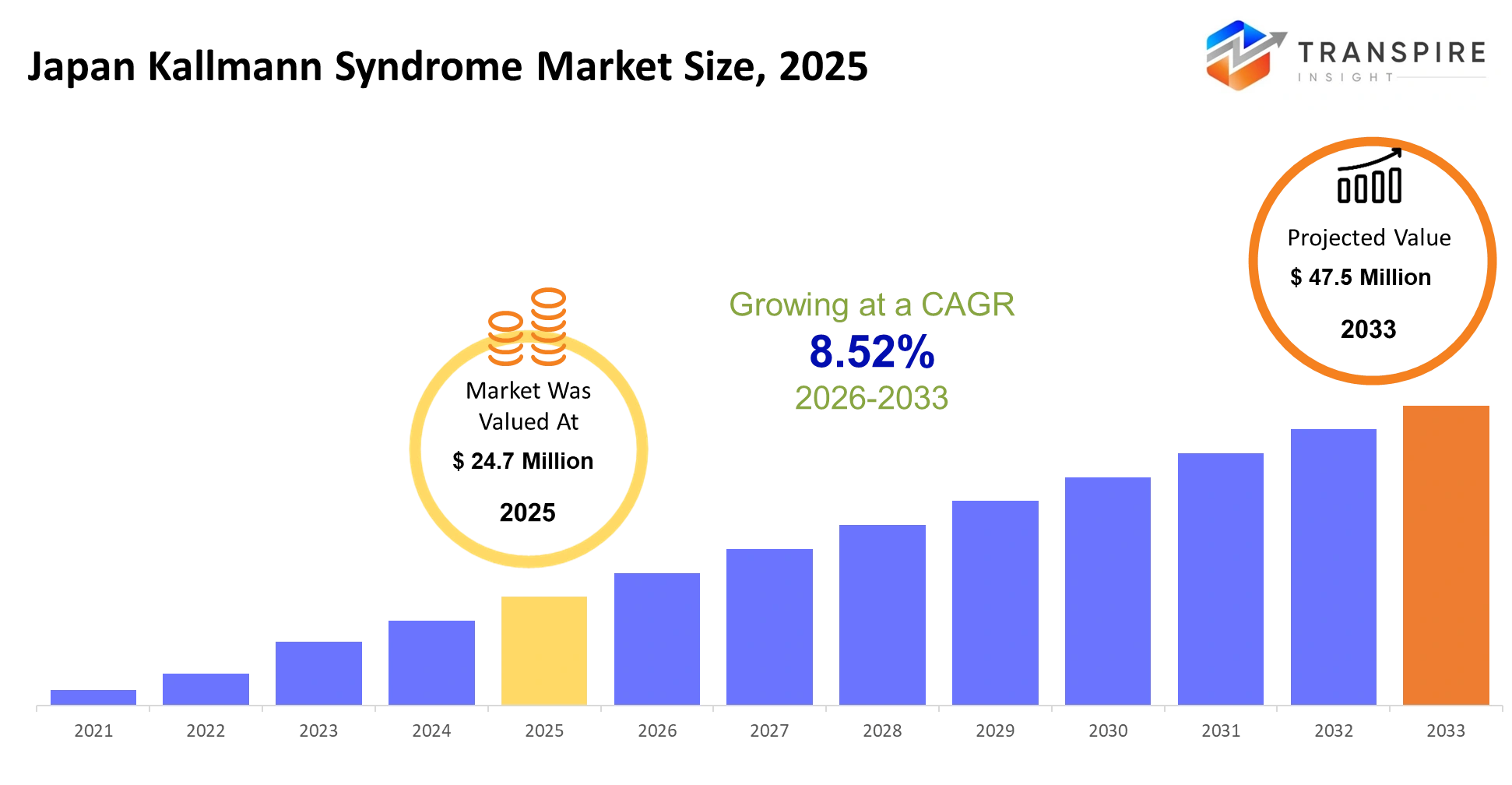
- Japan Kallmann Syndrome Market Size 2025: USD 24.7 Million
- Japan Kallmann Syndrome Market Size 2033: USD 47.5 Million
- Japan Kallmann Syndrome Market CAGR: 8.52%
- Japan Kallmann Syndrome Market Segments: By Treatment (Hormone Therapy, Fertility Treatment, Surgery, Support Therapy), By Diagnosis (Genetic Testing, Hormone Tests, Imaging, Clinical Evaluation), By End-User (Hospitals, Clinics, Research Institutes, Patients)
To learn more about this report,  Download Free Sample Report
Japan Kallmann Syndrome Market Summary:
The Japan Kallmann Syndrome Market size is estimated at USD 24.7 Million in 2025 and is anticipated to reach USD 47.5 Million by 2033, growing at a CAGR of 8.52% from 2026 to 2033.The Japan Kallmann Syndrome market operates as a small market segment which has been growing steadily throughout the entire field of rare endocrine disorders because people have become more aware of the condition, doctors have acquired better diagnostic tools and scientists have developed better treatment methods. The genetic disorder of Kallmann syndrome which causes people to experience delayed puberty and complete loss of smell remains undetected in most cases until doctors start using genetic testing and hormone analysis which have now become standard practice in Japan. The market grows because better healthcare facilities and government assistance for rare diseases and the adoption of better imaging systems and next-generation sequencing technologies enable hospitals to make more precise and faster patient diagnoses.
Japan has established a new treatment system which uses hormone replacement therapy (HRT) as its main method of treatment while developing new options for fertility programs and gene-based medical treatments. Pharmaceutical companies are increasing their funding for new hormonal medications and customized medical solutions which aim to enhance the long-term health results of their patients. Digital health tools, combined with remote monitoring systems and patient-centred care methods, are gaining popularity because they help patients stick to their treatment plans and manage their health conditions. The Japan Kallmann Syndrome market will experience stable growth throughout the next few years because more people will become patients, and scientists will keep exploring genetic therapies.
Key Market Trends & Insights:
- The rising understanding about rare endocrine disorders in Japan leads to better outcomes through earlier detection of these medical conditions. The combination of government initiatives with medical education programs and patient advocacy groups creates an effective system which helps identify more patients thereby increasing the need for specialized diagnostic services and long-term disease management solutions.
- The development of next-generation sequencing technology has enabled genetic testing to reach new levels of diagnostic accuracy. The new medical technology enables healthcare professionals to identify genetic mutations at an early stage of treatment which leads to personalized treatment approaches that have become standard practice in Japanese healthcare institutions.
- Hormone replacement therapy maintains its position as the primary treatment method because researchers keep developing better product formulas and delivery systems. The implementation of long-acting therapies together with tailored patient dosing solutions enables both adolescent and adult patients to maintain higher levels of treatment compliance which leads to better health results and successful long-term disease management.
- The rising interest in fertility treatments comes from patient demand for reproductive health solutions. The combination of assisted reproductive technology advancements with hormone-based fertility treatment improvements has resulted in higher success rates while expanding treatment options which encourages doctors to create more complete treatment solutions.
- The implementation of digital health technologies is bringing about fundamental changes in how medical professionals deliver services to their patients. Telemedicine together with mobile health applications and remote tracking systems enables healthcare providers to maintain ongoing contact with patients while improving treatment plan compliance and healthcare results through customized and easy-to-reach treatment solutions.
Japan Kallmann Syndrome Market Segmentation
By Treatment
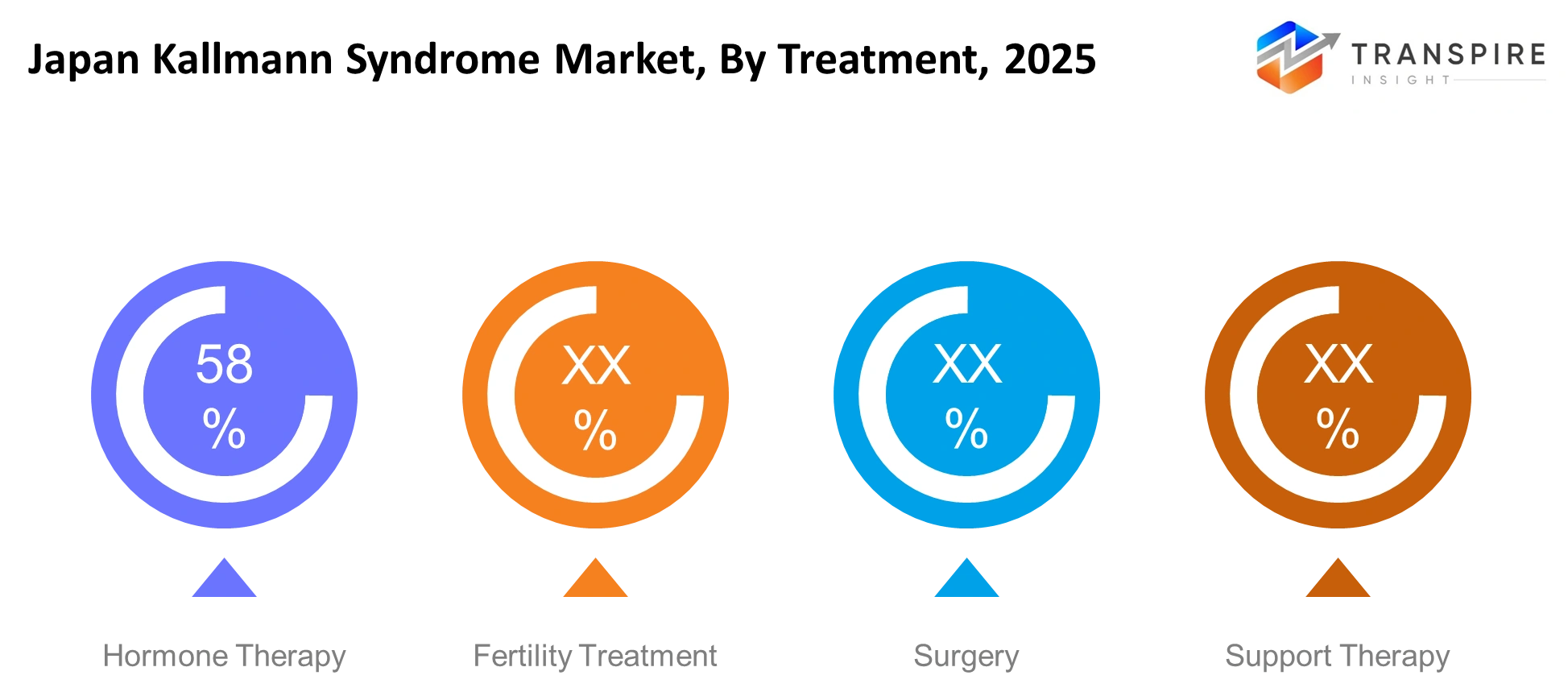
- Hormone Therapy: The main treatment method for this condition uses hormone therapy to restore hormonal levels and enable patients to experience puberty. The treatment consists of administering either testosterone or estrogen together with gonadotropin therapy. This treatment method leads the market because patients require continuous treatment which shows effective results that assists their physical growth and improves their life standard.
- Fertility Treatment: The demand for fertility treatment has increased because patients require assistance to achieve their reproductive goals. The therapies which include gonadotropin injections and assisted reproductive technologies provide assistance to women who want to ovulate and men who need to produce sperm. The demand for these reproductive solutions is growing because people become more aware of them and because reproductive medicine keeps advancing in specialized fertility centers.
- Surgery: The medical field uses surgical procedures in rare situations to treat patients who need anatomical issues fixed. The medical field handles most cases through non-invasive treatments which results in surgery becoming an uncommon treatment method that possesses limited medical facilities.
- Support Therapy: The components of support therapy include psychological counseling together with lifestyle management and patient education. The program provides essential support for people who experience emotional and social difficulties that arise from delayed puberty and infertility. The current trend toward complete patient treatment is making this area more essential for managing chronic illnesses.
To learn more about this report, Download Free Sample Report
By Diagnosis
- Genetic Testing: Genetic testing functions as an essential diagnostic method which detects genetic mutations that cause the medical condition. The development of sequencing technologies has enabled more precise results which allow for earlier detection of diseases and this technology has become an essential element of Japan's medical system because it provides accurate diagnostic results and customized treatment solutions.
- Hormone Tests: The medical field employs hormone testing as a standard method to assess reproductive hormone concentrations which include LH and FSH and testosterone and estrogen. The test provides rapid and affordable hormonal imbalance detection which serves as a basic diagnostic method that medical staff conduct at both hospitals and diagnostic centers.
- Imaging: Medical professionals use MRI and other imaging techniques to examine brain structures which include the olfactory bulbs and hypothalamus. The process assists in diagnosing the medical condition while it detects any irregularities. The segment operates through the advanced imaging systems which Japanese healthcare organizations possess at their contemporary medical facilities.
- Clinical Evaluation: Clinical evaluation requires medical professionals to conduct physical tests while they observe symptoms which include delayed puberty and diminished ability to detect scents. The process usually begins the diagnostic process which helps doctors determine the need for additional testing while it establishes the initial medical evaluation that leads to specialized diagnostic procedures.
By End-User
- Hospitals: The market uses hospitals as its main facilities which provide both medical tests and patient care and extended treatment programs. The facility provides hospitals with advanced medical testing equipment and dedicated medical professionals and multiple treatment methods, which makes it the ideal facility to treat people with intricate and uncommon endocrine medical conditions.
- Clinics: The function of clinics involves providing essential services for regular medical examinations and treatment progress assessments and administering hormone replacement therapies. The facility provides patients with treatment centers that operate at all times to deliver affordable medical services which help maintain their ongoing healthcare treatment needs.
- Research Institutes: Research institutes contribute to advancements in understanding genetic causes and developing innovative therapies. Their essential function in clinical trials and drug development and diagnostic improvement enables the market to achieve sustainable expansion and innovation.
- Patients: Patients as end-users are increasingly involved in self-management through home-based therapies and digital health tools. Rising awareness and access to telemedicine platforms empower patients to actively participate in treatment adherence and long-term disease monitoring.
Country Insights
The healthcare system in Japan establishes a solid base for rare disease management because it offers universal health coverage and it implements government policies which include the "Nanbyo" framework for rare and intractable diseases. The subsidy programs fail to support many rare conditions which include Kallmann Syndrome because these conditions exist as underrecognized medical disorders.
The genetic research advancements and healthcare professional awareness growth have created better diagnosis and treatment options for Japanese patients. Rare diseases in Japan typically affect fewer than 50,000 patients which shows the small number of affected individuals who create a specialized market. The medical field still struggles with delayed diagnosis for genetic conditions but researchers and doctors and technology systems will work together to build better systems for early diagnosis and patient treatment during the next several years.
Recent Development News
Recent clinical research (2025) has highlighted advances in genetic diagnostics for Kallmann Syndrome, particularly focusing on mutations in KAL1 and FGFR1. The research demonstrates how molecular testing and prenatal screening methods enhance both early diagnosis capabilities and the prevention of genetic inheritance.
The 2025–2026 case studies show that Kallmann Syndrome patients achieve successful results from hormone replacement therapy when they start treatment later than usual. The insight leads to treatment protocol changes while increasing the development of personalized medicine for patients.
|
Report Metrics |
Details |
|
Market size value in 2025 |
USD 24.7 Million |
|
Market size value in 2026 |
USD 26.8 Million |
|
Revenue forecast in 2033 |
USD 47.5 Million |
|
Growth rate |
CAGR of 8.52% from 2026 to 2033 |
|
Base year |
2025 |
|
Historical data |
2021 – 2024 |
|
Forecast period |
2026 – 2033 |
|
Report coverage |
Revenue forecast, competitive landscape, growth factors, and trends |
|
Country scope |
Japan |
|
Key company profiled |
Pfizer, Novartis, Roche, Bayer, Merck, Takeda, Astellas, AbbVie, Sanofi, GSK, Eli Lilly, AstraZeneca, Teva, Daiichi Sankyo, Bristol Myers Squibb |
|
Customization scope |
Free report customization (country, regional & segment scope). Avail customized purchase options to meet your exact research needs. |
|
Report Segmentation |
By Treatment (Hormone Therapy, Fertility Treatment, Surgery, Support Therapy), By Diagnosis (Genetic Testing, Hormone Tests, Imaging, Clinical Evaluation), By End-User (Hospitals, Clinics, Research Institutes, Patients) |
Key Japan Kallmann Syndrome Market Company Insights
The Japanese market for Kallmann Syndrome treatment exists because international and local pharmaceutical companies develop endocrine treatments and rare disease medications. The companies Pfizer Novartis and Roche operate as leading pharmaceutical organizations because they specialize in developing hormone replacement therapies and biologic medicines. The companies develop testosterone therapies and gonadotropins and reproductive health medications because Kallmann Syndrome causes hypogonadism in patients who need treatment. Their research activities, combined with their clinical trials and product development work on long-acting hormone treatments have created a stronger competitive edge for them.
The Japanese market is supported by Takeda, Astellas, and Daiichi Sankyo, as these companies maintain extensive distribution networks and research facilities nationwide. The global companies AbbVie Sanofi GSK Eli Lilly AstraZeneca Teva Merck Bayer and Bristol Myers Squibb currently work to develop new endocrinology and fertility treatments. The companies use strategic partnerships, alongside generic medicine manufacturing and precision medicine projects, to establish a stronger footprint in the Japanese market for rare disease treatments.
Company List
- Pfizer
- Novartis
- Roche
- Bayer
- Merck
- Takeda
- Astellas
- AbbVie
- Sanofi
- GSK
- Eli Lilly
- AstraZeneca
- Teva
- Daiichi Sankyo
- Bristol Myers Squibb
Japan Kallmann Syndrome Market Report Segmentation
By Treatment
- Hormone Therapy
- Fertility Treatment
- Surgery
- Support Therapy
By Diagnosis
- Genetic Testing
- Hormone Tests
- Imaging
- Clinical Evaluation
By End-User
- Hospitals
- Clinics
- Research Institutes
- Patients
Frequently Asked Questions
Find quick answers to common questions.
The Approximate Japan Kallmann Syndrome Market size for the Market will be USD 47.5 Million in 2033.
Key Segments for the Japan Kallmann Syndrome Market are By Treatment (Hormone Therapy, Fertility Treatment, Surgery, Support Therapy), By Diagnosis (Genetic Testing, Hormone Tests, Imaging, Clinical Evaluation), By End-User (Hospitals, Clinics, Research Institutes, Patients)
Major Japan Kallmann Syndrome Market Players are Pfizer, Novartis, Roche, Bayer, Merck, Takeda, Astellas, AbbVie, Sanofi, GSK, Eli Lilly, AstraZeneca, Teva, Daiichi Sankyo, Bristol Myers Squibb.
The Current Japan Kallmann Syndrome Market size is USD 24.7 Million in 2025.
The Japan Kallmann Syndrome Market CAGR is 8.52%.
- Pfizer
- Novartis
- Roche
- Bayer
- Merck
- Takeda
- Astellas
- AbbVie
- Sanofi
- GSK
- Eli Lilly
- AstraZeneca
- Teva
- Daiichi Sankyo
- Bristol Myers Squibb
Recently Published Reports
-
May 2026
Biosimilars Market
Biosimilars Market By Product Type (Monoclonal Antibodies, Recombinant Hormones, Erythropoietin, G-CSF, Others), By Indication (Oncology, Autoimmune Diseases, Blood Disorders, Diabetes, Others), By Manufacturing Type (In-House Manufacturing, Contract Manufacturing), By Distribution Channel (Hospital Pharmacies, Retail Pharmacies, Online Pharmacies), By Industry Analysis, Size, Share, Growth, Trends, and Forecasts 2021-2033
-
Apr 2026
Gastrointestinal Endoscopy Market
Gastrointestinal Endoscopy Market By Type (Rigid Gastrointestinal Endoscope, Flexible Gastrointestinal Endoscopes, Disposable Gastrointestinal Endoscope), By Procedure Type (Colonoscopy, Gastroscopy, Duodenoscopy, Enteroscopy, Flexible Sigmoidoscopy, Others), By Application (Diagnosis, Treatment), By End-Users (Hospitals, Ambulatory Surgical Centers, Specialty Clinics, Laboratories, Others), By Industry Analysis, Size, Share, Growth, Trends, and Forecasts 2021-2033
-
Apr 2026
Rare Inherited Metabolic Disorder Drug Market
Rare Inherited Metabolic Disorder Drug Market By Drug Class (Enzyme Replacement Drugs, Gene Therapy Drugs, Substrate Reduction Drugs, Small Module Drugs, Protein Drugs), By Route of Administration(Parenteral, Oral, Intrathecal), By Clinical Development (Marketed Drugs, Late Stage Clinical Phase III, Early Stage Clinical Phase I-II, Preclinical Candidates), By Indication (Lysosomal Storage Disorders, Urea Cycle Disorders, Amino Acid Metabolic Disorders, organic Acidemias, Peroximal Disorders), By Industry Analysis, Size, Share, Growth, Trends, and Forecasts 2021-2033
-
Jan 2026
Pharmaceutical Cleanroom Technology Market
Pharmaceutical Cleanroom Technology Market By Product (Equipment, Consumables, Services); By Cleanroom Type (Standard Cleanrooms, Modular Cleanrooms); By End Use (Pharmaceutical Companies, Biotechnology Companies), By Industry Analysis, Size, Share, Growth, Trends, and Forecasts 2021-2033