Japan Cardiac Resynchronization Therapy Devices Market Size & Forecast:
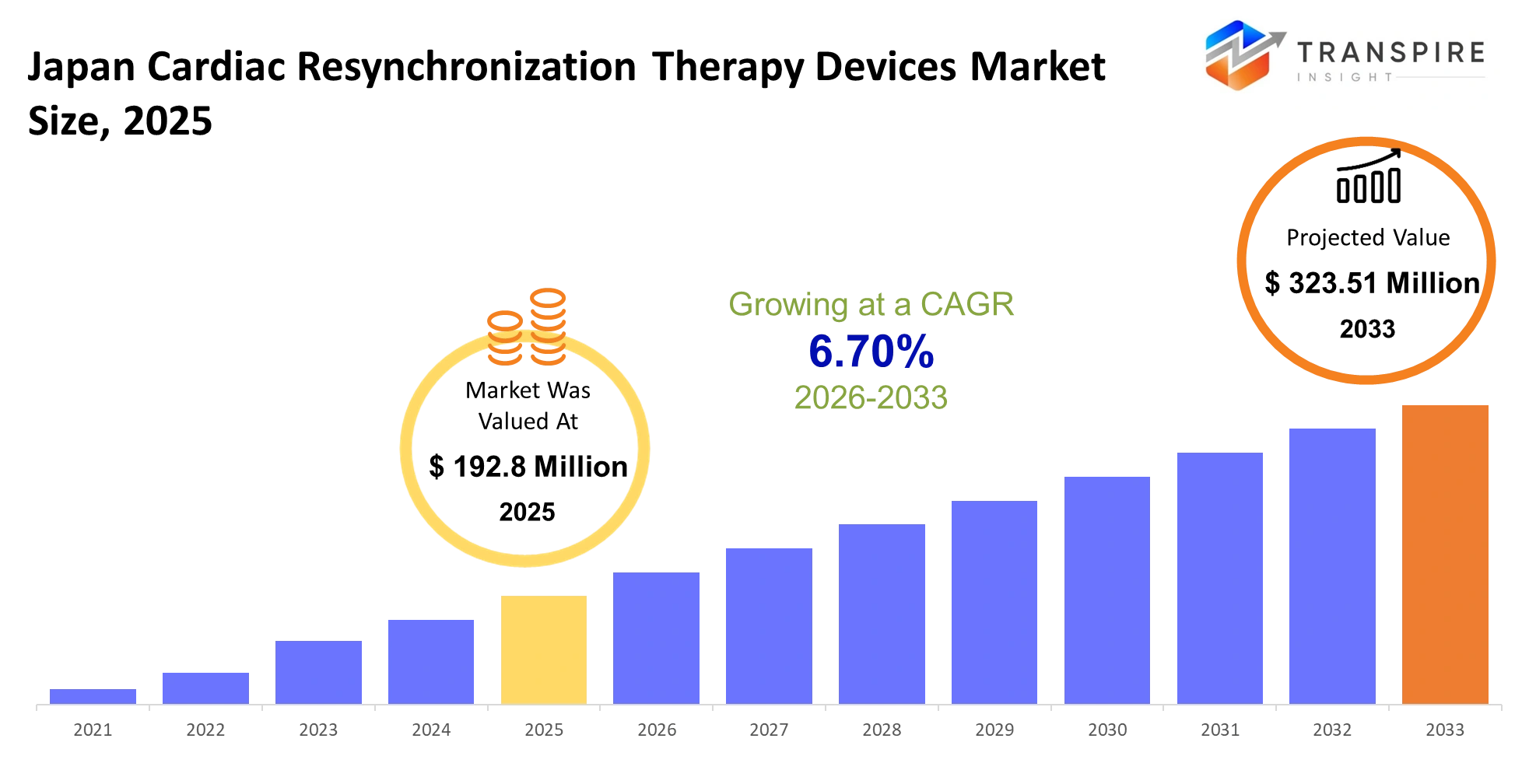
- Japan Cardiac Resynchronization Therapy Devices Market Size 2025: USD 192.8 Million
- Japan Cardiac Resynchronization Therapy Devices Market Size 2033: USD 323.51 Million
- Japan Cardiac Resynchronization Therapy Devices Market CAGR: 6.70%
- Japan Cardiac Resynchronization Therapy Devices Market Segments: By Type (CRT-P, CRT-D, Combination Devices, Implantable Devices), By Application (Heart Failure, Arrhythmia, Cardiac Disorders, Monitoring), By End-User (Hospitals, Cardiac Centers, Clinics, Patients).
To learn more about this report,  Download Free Sample Report
Japan Cardiac Resynchronization Therapy Devices Market Summary:
The Japan Cardiac Resynchronization Therapy Devices Market size is estimated at USD 192.8 Million in 2025 and is anticipated to reach USD 323.51 Million by 2033, growing at a CAGR of 6.70% from 2026 to 2033. Market growth is mainly fueled by the increasing prevalence of heart failure, a rapidly aging population, and strong clinical evidence that supports CRT effectiveness to enhance both survival rates and quality of life. The adoption process receives a boost from technological advancements that include leadless systems, conduction system pacing, and AI-enabled remote monitoring. The established healthcare system of Japan together with its reimbursement system creates conditions that sustain demand for CRT devices.
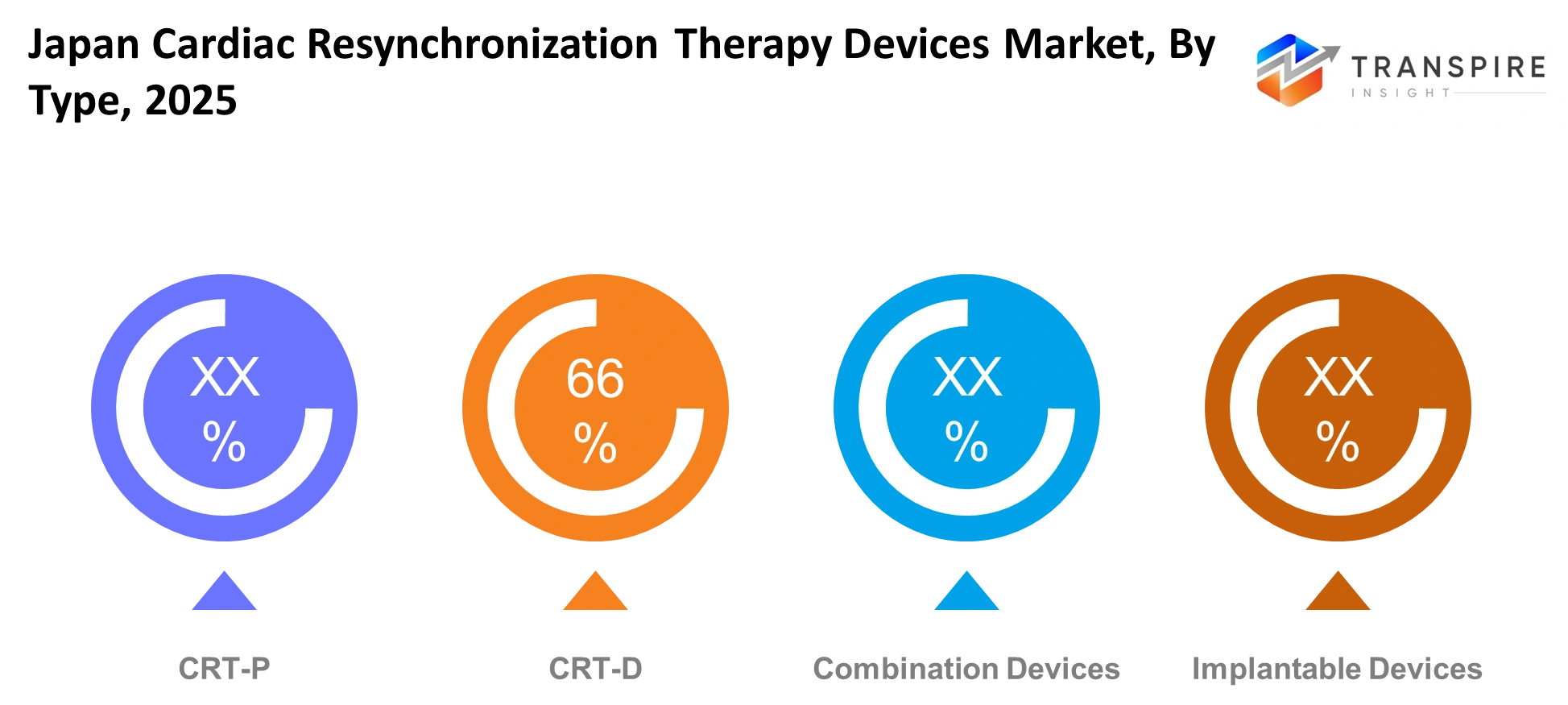
The market currently sees CRT-defibrillators (CRT-D) as the leading product type because these devices combine resynchronization with defibrillation capabilities, while CRT-pacemakers (CRT-P) will experience rapid market expansion because their usage increases for treating both less severe cases and older patients. The market includes Medtronic, Abbott, Boston Scientific, BIOTRONIK, and MicroPort Scientific as leading companies that develop innovative products while establishing their operations in the Japanese market.
The Japan CRT devices market will experience stable growth because of demographic developments together with ongoing technological progress and rising public knowledge about advanced cardiac treatment options.
Key Market Trends & Insights:
- The increasing occurrence of heart failure in Japan which results from its aging demographic pattern creates more demand for cardiac resynchronization therapy devices. Hospitals and specialized cardiac centers are adopting CRT technologies because of their rising diagnosis rates and their implementation of early intervention methods.
- The CRT landscape undergoes transformation through technological advancements which include leadless pacing systems, MRI-compatible devices, and AI-enabled remote monitoring. The innovations lead to better patient results and fewer medical complications while they simplify long-term management of medical devices which results in faster CRT solution adoption by Japanese healthcare providers.
- The market continues to be dominated by CRT-defibrillators (CRT-D) because they provide doctors a way to treat both heart failure and arrhythmias at the same time. However, CRT-pacemakers (CRT-P) are gaining traction among elderly patients and those with less severe conditions, contributing to a diversified product demand landscape.
- Japan’s advanced healthcare infrastructure together with its favorable reimbursement policies establishes an environment which enables patients to access expensive implantable cardiac devices. The combination of government support together with insurance coverage for cardiac treatments creates a financial incentive which leads both patients and healthcare institutions to choose CRT procedures as their preferred option, which results in stable market expansion.
- The CRT devices market experiences an impact from the rising demand for personalized medicine and individualized treatment development. Physicians use advanced imaging and diagnostic tools to choose the appropriate devices while they optimize therapy, which results in better clinical results and increased CRT adoption throughout Japan.
Japan Cardiac Resynchronization Therapy Devices Market Segmentation
By Type
- CRT-P: The technology of Cardiac Resynchronization Therapy Pacemakers (CRT-P) provides heart failure treatment to patients who need moderate care and do not need defibrillation. The devices enable better ventricular contraction coordination which results in enhanced heart function. The elderly population in Japan is increasing their use of CRT-P devices because the technology costs less and has simpler usage and lower risk of problems.
- CRT-D: The market for Cardiac Resynchronization Therapy Defibrillators (CRT-D) products operates as a monopoly because these devices provide both pacing functions and emergency shock delivery to treat patients experiencing sudden cardiac arrest. Healthcare facilities across Japan prefer these devices for patients with high-risk heart failure because of their proven clinical advantages which lead to increased demand.
- Combination Devices: Combination devices integrate multiple cardiac therapies that include pacing defibrillation and monitoring functions into one system. The advanced solutions provide complete disease management which results in better patient results. The Japanese market shows increasing demand for multifunctional devices because people want cardiac treatment methods that provide efficient results during extended periods without requiring extra surgical procedures.
- Implantable Devices: The market core that manages cardiac diseases for extended periods consists of implantable CRT devices. The devices need surgical implantation to deliver ongoing medical treatment. The Japanese market shows strong demand for implantable cardiac treatment solutions because of their high reliability and technological advancements and growing patient acceptance.
To learn more about this report, Download Free Sample Report
By Application
- Heart Failure: The primary use of CRT devices in Japan is for heart failure treatment because these systems help patients achieve better heart function and improved life quality. The demand for CRT devices is increasing because the aging population and changing lifestyle patterns create more patients who need treatment while clinical research proves CRT devices work effectively.
- Arrhythmia: CRT devices operate as essential tools to control arrhythmias because they bring back normal heart rhythms while stopping strange heart electrical patterns. The rise of arrhythmia awareness in Japan together with improved early diagnosis methods has led to more people adopting treatment, which shows especially strong growth among patients who have both heart failure and rhythm disorders.
- Cardiac Disorders: Doctors use CRT devices to treat multiple cardiac disorders which go beyond heart failure and arrhythmia because these devices help patients with ventricular coordination problems. The development of new clinical applications together with enhanced device performance in Japan allows medical professionals to use these tools for better results in treating complex cardiovascular diseases which need extended treatment.
- Monitoring: The growing significance of monitoring applications stems from CRT devices which now combine their remote tracking capabilities with advanced data analytics functions. The system enables medical professionals to watch patients continuously while they receive urgent medical treatment at the appropriate moment. The use of digital health technologies in Japan helps hospitals to follow up patients better while decreasing their need for hospital visits, which results in better patient management outcomes.
By End-User
- Hospitals: The hospital systemoperates as the biggest user group because its facilities have modern equipment and their medical staff includes trained cardiologists and their teams can conduct challenging surgical operations. The major hospitals in Japan operate as the primary users of CRT technology because they receive sufficient reimbursement support and their patient volume for cardiac procedures and surgical operations continues to grow.
- Cardiac Centers: The demand for CRT devices is increasing at specialized cardiac centers because these institutions deliver cutting-edge cardiovascular medical services. The centers function as essential market development partners because they provide specialized diagnosis services and surgical implantation expertise for post-surgical treatment programs within Japan's healthcare system which is becoming more advanced.
- Clinics: The role of clinics in managing CRT devices is gradually increasing as they take on responsibility for both pre-implantation and post-implantation treatment. The smaller healthcare facilities in Japan have started using remote monitoring technology while they work with hospitals to enhance CRT patient care access and treatment continuity.
- Patients: Patients have started taking control of their heart disease management which has led to increased demand for advanced CRT devices. The Japanese population shows improved awareness about healthcare services which leads to better treatment access and increased use of CRT therapies because they prefer procedures that involve less physical intrusion and provide extended therapeutic benefits.
Country Insights
Japan holds the status of being the leading market for cardiac resynchronization therapy devices which shows advanced technological development throughout the Asia-Pacific region. The country's rapidly aging population—one of the highest globally—has created continuous need for CRT solutions because it has increased heart failure cases together with other cardiovascular disorders.
Japan operates an advanced healthcare system that provides patients with complete access to modern medical technologies and expert cardiology doctors. The combination of strong government backing and universal health insurance and effective reimbursement systems for cardiac procedures enables more patients to access expensive implantable devices like CRT-P and CRT-D systems.
Japan uses its health screening programs together with its advanced diagnostic tools to develop its system for detecting diseases at an early stage and providing preventive treatment. The proactive healthcare system enables doctors to detect cardiac conditions at an early stage which results in better patient outcomes who need CRT implantation.
Recent Development News
- In 2025, Medtronic received Japan's prestigious Good Design Award for multiple healthcare technologies including advanced cardiac rhythm solutions. The recognition highlights the company's focus on innovation, patient comfort and minimally invasive device design which helps the company strengthen its position in Japan's developing CRT and cardiac care market.
- The major international companies Abbott Medtronic and Boston Scientific are now dedicating their efforts to develop MRI-compatible and next-generation CRT devices. Recent developments include improved remote monitoring capabilities and smartphone connection features which enhance patient management and drive greater adoption of advanced CRT systems throughout Japan.
|
Report Metrics |
Details |
|
Market size value in 2025 |
USD 192.8 Million |
|
Market size value in 2026 |
USD 205.52 Million |
|
Revenue forecast in 2033 |
USD 323.51 Million |
|
Growth rate |
CAGR of 6.70% from 2026 to 2033 |
|
Base year |
2025 |
|
Historical data |
2021 – 2024 |
|
Forecast period |
2026 – 2033 |
|
Report coverage |
Revenue forecast, competitive landscape, growth factors, and trends |
|
Country scope |
Japan |
|
Key company profiled |
Medtronic, Abbott, Boston Scientific, Biotronik, LivaNova, MicroPort, Nihon Kohden, Philips, GE Healthcare, Siemens Healthineers, Fukuda Denshi, Zoll Medical, Asahi Kasei, Terumo, Nipro. |
|
Customization scope |
Free report customization (country, regional & segment scope). Avail customized purchase options to meet your exact research needs. |
|
Report Segmentation |
By Type (CRT-P, CRT-D, Combination Devices, Implantable Devices), By Application (Heart Failure, Arrhythmia, Cardiac Disorders, Monitoring), By End-User (Hospitals, Cardiac Centers, Clinics, Patients). |
Key Japan Cardiac Resynchronization Therapy Devices Market Company Insights
The Japan Cardiac Resynchronization Therapy (CRT) Devices market operates through a combination of international market leaders together with local market experts who create new products while improving their devices and patient medical results. The Japanese market for advanced cardiac rhythm management solutions maintains constant demand because of its older population and high heart failure rates, which allow Medtronic, Abbott, Boston Scientific, and Biotronik to establish major market presence through their full range of CRT pacemaker (CRT‑P) and CRT defibrillator (CRT‑D) products combined with their extensive research development and clinician training programs and their remote patient monitoring solutions. The market share leaders in this industry maintain their dominant position because they constantly improve their products through better device durability and advanced lead technologies and their digital cardiac care systems.
The competitive environment receives additional support from LivaNova and MicroPort because they implement market entry tactics for specific regions while providing affordable product options, and Nihon Kohden and Philips add value through their broad range of cardiac monitoring solutions, which help medical facilities adopt CRT therapy. The companies work together to drive innovation and establish healthcare partnerships while they develop new devices to advance Japan's CRT market, which helps patients receive better synchronization therapy results and improved quality of living.
Company List
- Medtronic
- Abbott
- Boston Scientific
- Biotronik
- LivaNova
- MicroPort
- Nihon Kohden
- Philips
- GE Healthcare
- Siemens Healthineers
- Fukuda Denshi
- Zoll Medical
- Asahi Kasei
- Terumo
- Nipro
Japan Cardiac Resynchronization Therapy Devices Market Report Segmentation
By Type
- CRT-P
- CRT-D
- Combination Devices
- Implantable Devices
By Application
- Heart Failure
- Arrhythmia
- Cardiac Disorders
- Monitoring
By End-User
- Hospitals
- Cardiac Centers
- Clinics
- Patients
Frequently Asked Questions
Find quick answers to common questions.
The approximate Japan Cardiac Resynchronization Therapy Devices Market size for the market will be USD 323.51 Million in 2033.
Key segments for the Japan Cardiac Resynchronization Therapy Devices Market are By Type (CRT-P, CRT-D, Combination Devices, Implantable Devices), By Application (Heart Failure, Arrhythmia, Cardiac Disorders, Monitoring), By End-User (Hospitals, Cardiac Centers, Clinics, Patients).
Major Japan Cardiac Resynchronization Therapy Devices Market players are Medtronic, Abbott, Boston Scientific, Biotronik, LivaNova, MicroPort, Nihon Kohden, Philips, GE Healthcare, Siemens Healthineers, Fukuda Denshi, Zoll Medical, Asahi Kasei, Terumo, Nipro.
The Japan Cardiac Resynchronization Therapy Devices Market size is USD 192.8 Million in 2025.
The Japan Cardiac Resynchronization Therapy Devices Market CAGR is 6.70%.
- Medtronic
- Abbott
- Boston Scientific
- Biotronik
- LivaNova
- MicroPort
- Nihon Kohden
- Philips
- GE Healthcare
- Siemens Healthineers
- Fukuda Denshi
- Zoll Medical
- Asahi Kasei
- Terumo
- Nipro
Recently Published Reports
-
Apr 2026
AI in Diabetic Retinopathy Market
AI in Diabetic Retinopathy Market Size, Share & Analysis Report By Type (Screening AI Systems, Diagnostic AI Systems, and Predictive AI Models), By Application Segment (Hospitals, Ophthalmology Clinics, Diagnostic Centers, and Research and Development), and Geography (North America, Europe, Asia-Pacific, Middle East and Africa, South and Central America), 2021 - 2031
-
Apr 2026
Psychometric Tests Market
Psychometric Tests Market Size, Share & Analysis Report By Type (Personality Tests, Ability/Aptitude Tests, Skill/Knowledge Tests, and Others), By Application (Talent Acquisition and Talent Management), and Geography (North America, Europe, Asia-Pacific, Middle East and Africa, South and Central America), 2021 – 2031
-
Apr 2026
Rare Biological Sample Collection Market
Rare Biological Sample Collection Market Size, Share & Analysis Report By Type (Isolation Kits & Reagent, Blood Collection Tubes, and Others), By Application (Oncology, Transcriptomics, Pharmacogenomics, and Others), and Geography (North America, Europe, Asia-Pacific, Middle East and Africa, South and Central America), 2021 – 2031
-
May 2026
Patient Lift Pendant Market
Patient Lift Pendant Market By Product Type (Wired Pendants, Wireless, Programmable), By Operation Type(Manual, Electric), By End-Users (Healthcare Professionals, Patients), By Application (Hospitals, Homecare, Rehabilitation Centers, Others), By Industry Analysis, Size, Share, Growth, Trends, and Forecasts 2021-2033
Our Clients
.jpg)