
Japan High Fructose Corn Syrup Market Size & Forecast:
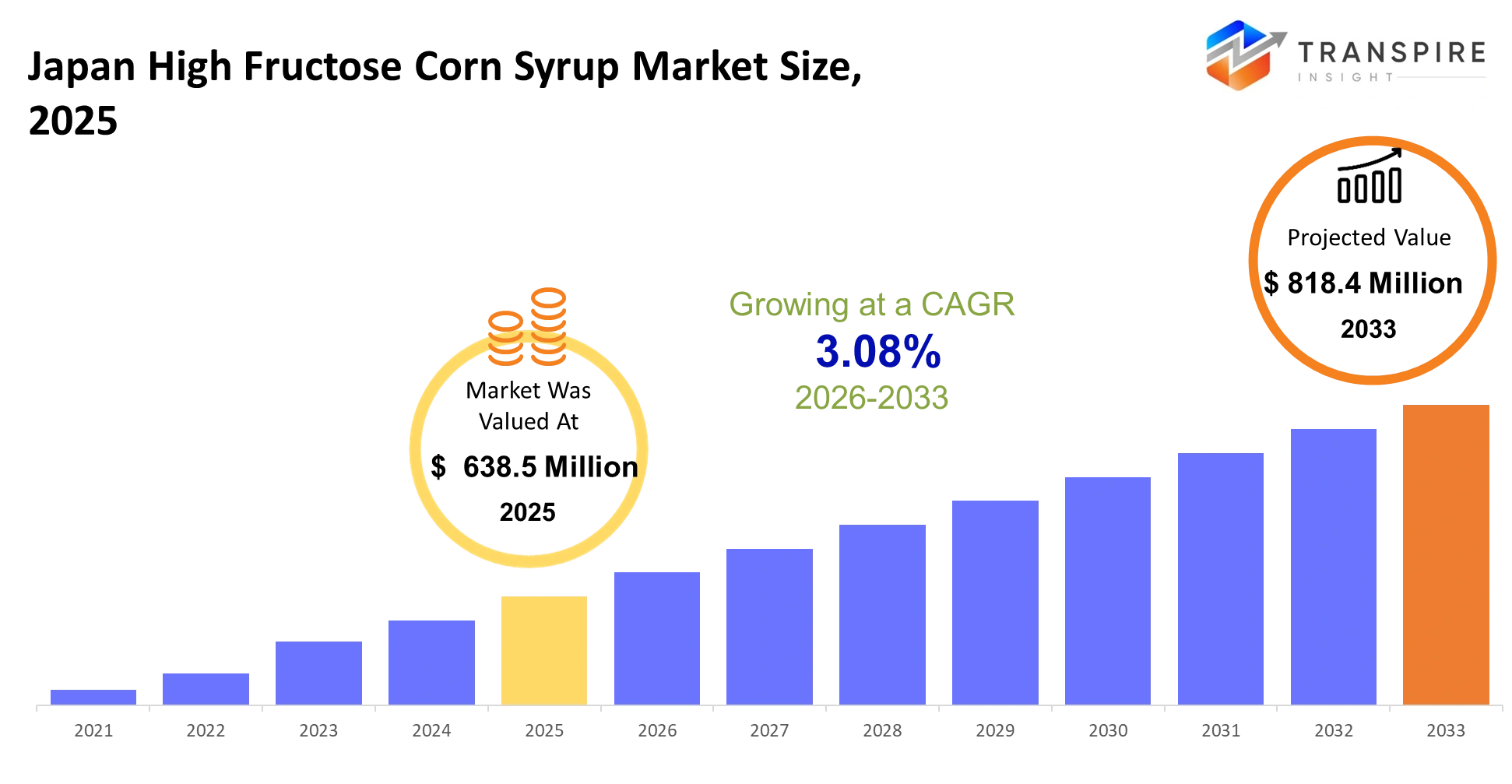
- Japan High Fructose Corn Syrup Market Size 2025: USD 638.5 Million
- Japan High Fructose Corn Syrup Market Size 2033: USD 818.4 Million
- Japan High Fructose Corn Syrup Market CAGR:3.08%
- Japan High Fructose Corn Syrup Market Segments: By Type (HFCS-42, HFCS-55, HFCS-90, Liquid), By Application (Beverages, Bakery, Dairy, Processed Food), By End-User (Food Companies, Beverage Firms, Consumers, Retailers)
To learn more about this report,  Download Free Sample Report
Japan High Fructose Corn Syrup Market Summary:
The Japan High Fructose Corn Syrup Market size is estimated at USD 638.5 Million in 2025 and is anticipated to reach USD 818.4 Million by 2033, growing at a CAGR of 3.08% from 2026 to 2033. The Japan High Fructose Corn Syrup (HFCS) market operates as a developed sector which keeps changing within the country's food and beverage market. The sweetener HFCS which people use in soft drinks and processed foods and dairy products and confectionery items functions as a result of Japan's strong manufacturing system which supports the continuous need for ready-to-eat food products. Large-scale food producers choose it as their main sweetener because it combines cost efficiency with easy blending and dependable performance. As people start to value their health more they begin to examine all forms of sugar which includes added sugars and artificial sweeteners.
The market maintains stability because companies have established long-term supply agreements while production technologies have improved and domestic manufacturers operate at high efficiency. Companies are developing new product lines which maintain existing products while improving their nutritional content to meet evolving customer tastes. Japan's food safety regulations and its demand for high-quality ingredients create a competitive environment which companies must navigate. The HFCS market in Japan will maintain its demand through product innovation and because it serves as a crucial component of the nation's processed food industry.
Key Market Trends & Insights:
- The demand for high fructose corn syrup is being affected by rising health awareness in Japan which leads consumers to choose products with lower sugar content or no sugar at all. Manufacturers now need to create new formulas which will decrease sweetener usage while they search for natural alternatives that will maintain product taste and stability.
- The Japanese beverage industry uses high fructose corn syrup most extensively which it applies to carbonated drinks and flavored beverages and ready-to-drink tea products.Companies need to control sweetness in their products because consumers now prefer drinks that have health benefits and functional properties.
- Manufacturers use technological breakthroughs in enzymatic processing and refining techniques to enhance their production of high fructose corn syrup with better quality results and increased operational efficiency and reduced operational costs. The new technologies enable manufacturers to create specific fructose mixtures which they need for different food processing applications while complying with Japan's stringent quality and safety regulations.
- Japanese HFCS production and distribution operations benefit from the strong market presence of established domestic companies who operate complete supply networks. The market will maintain stability because food and beverage companies establish long-term contracts which tie their business operations to their partners even though external forces like corn price changes and import member partner relationships will impact their expenses.
- The HFCS market is experiencing gradual changes from government dietary regulations and health promotion initiatives which shape public eating habits. The health-oriented market environment drives manufacturers to create new products and expand their existing product lines because of the new labeling regulations and sugar reduction initiatives and public health education campaigns.
Japan High Fructose Corn Syrup Market Segmentation
By Type
- HFCS-42: HFCS-42 serves as a sweetening agent which contains 42% fructose and finds its application in various processed foods and baked goods and breakfast cereals and dairy products. The product functions as an effective sweetening agent because its price makes it affordable and its taste and functional attributes help to create better taste and texture and extended product freshness.
- HFCS-55: HFCS-55 contains 55% fructose which makes it taste similar to sucrose and serves as the main sweetening agent for beverages. The sweetener is used in carbonated beverages and juice products and ready-to-drink items because it delivers consistent flavor while remaining economically viable.
- HFCS-90: HFCS-90 functions as a high-fructose syrup which food manufacturers use to create specific sweetness levels through blending with other syrups. The solution enables food processors to create their desired product characteristics by using customized formulation methods which require either intense sweetness or exact flavor control.
- Liquid: Japan uses liquid HFCS as its most common sweetening form because this form simplifies both storage and transportation tasks. The system provides manufacturers with a complete solution which enables them to efficiently combine their products while they keep their desired sweetening level throughout large-scale food and beverage manufacturing operations.
By Application
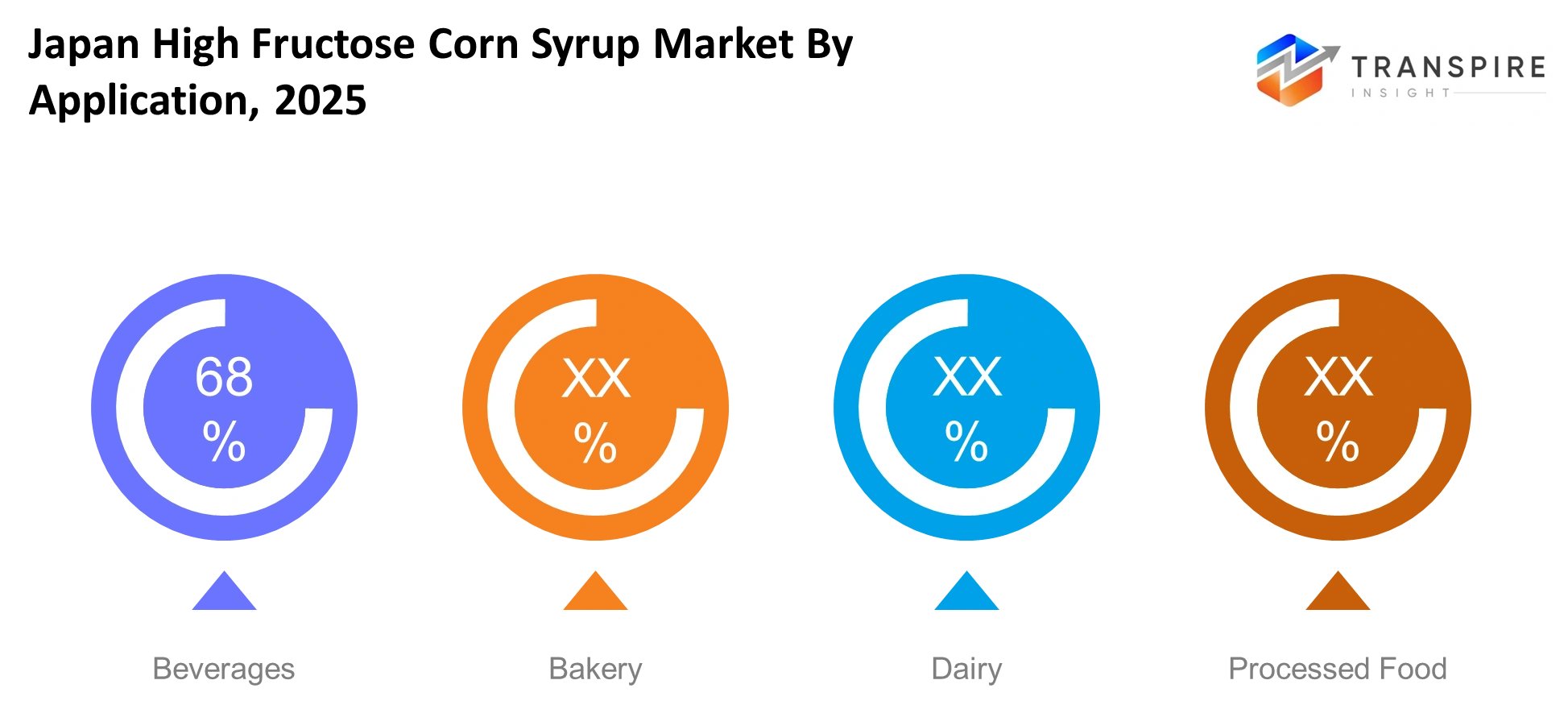
- Beverages: The beverage segment leads HFCS consumption in Japan through its extensive application in soft drinks and flavored beverages and ready-to-drink teas. The solution delivers consistent sweet taste which improves product flavoring and enables manufacturers to make large quantities of products while keeping production expenses under control.
- Bakery: HFCS enables bakery products like bread and cakes and pastries to maintain their moisture levels and achieve better texture and extended shelf life. The ingredient provides essential value because it improves product taste and visual appeal while maintaining product quality standards.
- Dairy: Flavored milk and yogurt and desserts use HFCS as a common ingredient because it increases their sweet taste and overall flavor. The ingredient enables manufacturers to create dairy products that have consistent flavors and attractive textures which meet consumer preferences.
- Processed Food: HFCS functions as a sweetener and preservative and texture enhancer in processed food products. The ingredient serves as a flavoring agent which provides packaged foods with extended shelf life and product stability by preventing spoilage in sauces and canned goods and snacks and ready meals.
To learn more about this report, Download Free Sample Report
By End-User
- Food Companies: Food companies are major users of HFCS because they include it in their production of packaged and processed foods. The production process benefits from his affordable price and flexible applications and functional properties which permit manufacturers to produce stable products with consistent taste and economical manufacturing across all their product variations.
- Beverage Firms: Beverage companies use HFCS as their primary sweetener for soft drinks and ready-to-drink beverages. The product provides beverages with consistent flavor protection and stability together with cost benefits which make it necessary for manufacturers who produce large quantities of drinks.
- Consumers: People consume HFCS because they eat packaged products and beverages which use HFCS as an ingredient. The shift in consumer tastes towards healthier eating habits together with decreased sugar consumption has started to create new consumption patterns which drive people to seek alternative sweeteners.
- Retailers: HFCS-containing products reach consumers through supermarket channels and convenience store distribution and online shopping platforms because retailers operate as their main distribution system. The company maintains product access and product availability while it adapts to changing customer demands for healthier food options and premium beverage products.
Country Insights
The High Fructose Corn Syrup (HFCS) market in Japan operates through its advanced food processing system and beverage production sector which needs sweetening methods that function with maximum efficiency and minimum expense. The urban and suburban markets maintain level HFCS demand because people across these areas consume packaged snacks and ready-to-drink drinks and convenience items. Japan's advanced manufacturing system together with its strong supply chain network moves HFCS through production and distribution processes while industrial facilities use it for their large-scale operations.
The market responds to changing customer preferences together with the increasing importance of health and nutrition regulations. The public learns about sugar consumption and health problems from lifestyle choices which drives manufacturers to decrease sugar levels while testing new sweetener options. The functional benefits of HFCS combined with its low cost and suitability for large-scale production processes keep it as a major component. Health trends and industrial demand will determine how the HFCS market in Japan develops during upcoming years.
Recent Development News
August 2025 – The August 2025 global market update showed that the HFCS industry will reach approximately USD 11.2 billion by 2034 because the food and beverage sectors will create demand, but health concerns and the adoption of alternative sweeteners will slow industry growth.
September 2025 –The announcement from Tyson Foods that it will stop using HFCS in its products by the end of 2025 shows a major food company reform which demonstrates the worldwide movement toward clean-label products that use healthier ingredients.
|
Report Metrics |
Details |
|
Market size value in 2025 |
USD 638.5 Million |
|
Market size value in 2026 |
USD 661.8 Million |
|
Revenue forecast in 2033 |
USD 818.4 Million |
|
Growth rate |
CAGR of 3.08% from 2026 to 2033 |
|
Base year |
2025 |
|
Historical data |
2021 – 2024 |
|
Forecast period |
2026 – 2033 |
|
Report coverage |
Revenue forecast, competitive landscape, growth factors, and trends |
|
Country scope |
Japan |
|
Key company profiled |
Cargill, ADM, Tate & Lyle, Ingredion, Roquette, COFCO, Showa Sangyo, Meiji, Ajinomoto, Mitsubishi, Kerry, Bunge, Wilmar, Nihon Shokuhin Kako, Daesang |
|
Customization scope |
Free report customization (country, regional & segment scope). Avail customized purchase options to meet your exact research needs. |
|
Report Segmentation |
By Type (HFCS-42, HFCS-55, HFCS-90, Liquid), By Application (Beverages, Bakery, Dairy, Processed Food), By End-User (Food Companies, Beverage Firms, Consumers, Retailers) |
Key Japan High Fructose Corn Syrup Market Company Insights
The Japanese high fructose corn syrup market shows active competition because international agribusiness corporations and local business entities work together to create complete supply chain systems.Cargill, Archer Daniels Midland, Tate & Lyle, and Ingredion operate as multinational companies that dominate their industry through their ability to process corn on a large scale while utilizing advanced technologies and maintaining extensive worldwide distribution networks. The companies which produce HFCS supply their products to large beverage and food companies through their established contracts and complete value chain operations which help them sustain their market dominance.
Regional companies such as Showa Sangyo and Nihon Shokuhin Kako and Ajinomoto provide essential services for the domestic market because they operate production facilities and maintain partnerships with Japanese food producers. The competitive environment receives contributions from global and Asia-based companies such as Roquette and COFCO and Daesang and Bunge and Wilmar and Kerry Group and Meiji Holdings and Mitsubishi Corporation through their various business operations and their efforts to expand into different territories. The combination of international knowledge and local capabilities provides Japan with dependable supplies, creative solutions, and the capacity to adapt to evolving consumer preferences and regulatory requirements.
Company List
- Cargill
- ADM
- Tate & Lyle
- Ingredion
- Roquette
- COFCO
- Showa Sangyo
- Meiji
- Ajinomoto
- Mitsubishi
- Kerry
- Bunge
- Wilmar
- Nihon Shokuhin Kako
- Daesang
Japan High Fructose Corn Syrup Market Report Segmentation
By Type
- HFCS-42
- HFCS-55
- HFCS-90
- Liquid
By Application
- Beverages
- Bakery
- Dairy
- Processed Food
By End-User
- Food Companies
- Beverage Firms
- Consumers
- Retailers
Frequently Asked Questions
Find quick answers to common questions.
The approximate Japan High Fructose Corn Syrup Market size for the market will be USD 818.4 Million in 2033.
Key segments for the Japan High Fructose Corn Syrup Market are By Type (HFCS-42, HFCS-55, HFCS-90, Liquid), By Application (Beverages, Bakery, Dairy, Processed Food), By End-User (Food Companies, Beverage Firms, Consumers, Retailers).
Major Japan High Fructose Corn Syrup Market players are Cargill, ADM, Tate & Lyle, Ingredion, Roquette, COFCO, Showa Sangyo, Meiji, Ajinomoto, Mitsubishi, Kerry, Bunge, Wilmar, Nihon Shokuhin Kako, Daesang.
The Japan High Fructose Corn Syrup Market size is USD 638.5 Million in 2025.
The Japan High Fructose Corn Syrup Market CAGR is 3.08%.
- Cargill
- ADM
- Tate & Lyle
- Ingredion
- Roquette
- COFCO
- Showa Sangyo
- Meiji
- Ajinomoto
- Mitsubishi
- Kerry
- Bunge
- Wilmar
- Nihon Shokuhin Kako
- Daesang
Recently Published Reports
-
Apr 2026
Baby Infant Formula Market
Baby Infant Formula Market Size, Share & Analysis Report By ype (Infant Milk, Follow On Milk, Specialty Baby Milk, Growing-Up Milk), By Ingredient (Carbohydrate, Fat, Protein, Minerals, Vitamins, and Others), By Product Form (Powder, Liquid, and Ready-to-feed), By Distribution Channels (Supermarket/Hypermarket, Specialty Store, Pharmacies, Online Retail, and Others), and Geography (North America, Europe, Asia-Pacific, Middle East and Africa, South and Central America), 2021 - 2031
-
Apr 2026
Edible Insects for Animal Feed Market
Edible Insects for Animal Feed Market Size, Share & Analysis Report By Type (Insect Powder, Insect Meal, Insect Bar, Insect Paste, Insect Oil, and Others), By Insect Type (Beetles, Cricket, Caterpillar, Hymenoptera, Orthoptera, Tree Bugs, and Others), By Application (Livestock, Pet Food, and Aquaculture), By Livestock Type (Poultry, Swine, and Others), and Geography (North America, Europe, Asia-Pacific, Middle East and Africa, South and Central America), 2021 - 2031
-
Apr 2026
Food Industry Disinfection and Bacterial Control Market
Food Industry Disinfection and Bacterial Control Market Size, Share & Analysis Report By Type (Chemical Disinfectants, Physical Disinfectants, and Biocides and Antimicrobials), By Application (Food Processing Equipment Surface Disinfection, Food Preparation Areas Surface Disinfection, Storage Areas Surface Disinfection, Anti-microbial Coatings Food Preservation, and Preservative Solutions Food Preservation), By End User (Meat and Poultry Processing, Dairy Processing, Seafood Processing, Bakery and Confectionery, Restaurants and Commercial Kitchens, and Food Service Providers), By Sales Channel (Online, Offline), and Geography (North America, Europe, Asia-Pacific, Middle East and Africa, South and Central America), 2021 - 2031
-
Apr 2026
Freeze Dried Food Market
Freeze Dried Food Market Size, Share & Analysis Report By Product Type (Fruits, Vegetables, Freeze-Dried Dairy Products, Freeze-Dried Meat and Seafood, Freeze-Dried Pet Food, and Prepared Meal), By Nature (Organic, and Conventional), By Form (Powdered, Granules, and Diced), By End Use (Breakfast Cereals, Dairy Products, Bakery & Confectionery, Nutritional Bars & Supplements, Powdered Beverages, Snacks, and Retail (Household)), and Geography (North America, Europe, Asia-Pacific, Middle East and Africa, South and Central America), 2021 - 2031