

Japan Malt Beverages Market Size & Forecast:
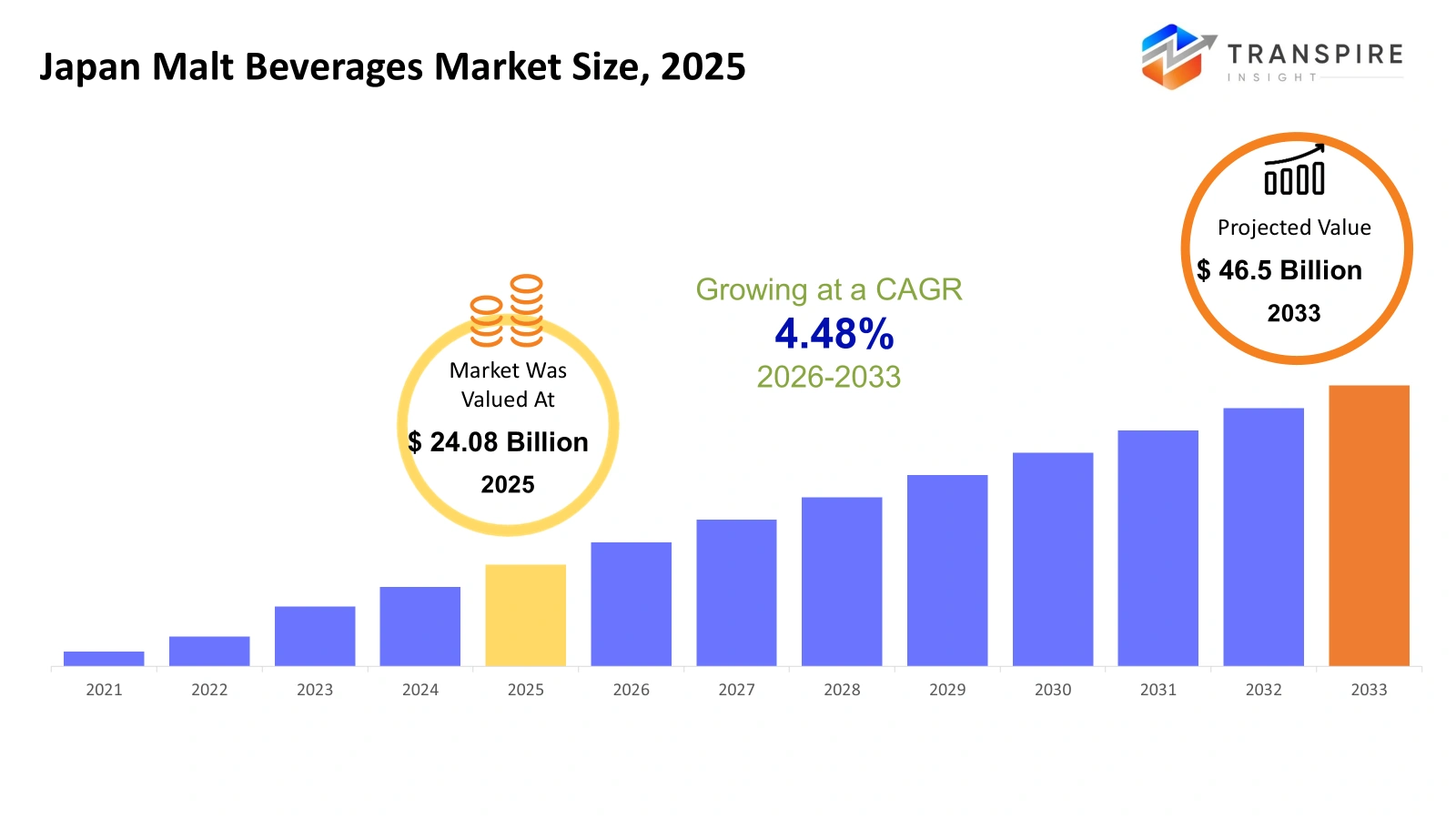
- Japan Malt Beverages Market Size 2025: USD 24.08 Billion
- Japan Malt Beverages Market Size 2033: USD 46.5 Billion
- Japan Malt Beverages Market CAGR: 4.48%
- Japan Malt Beverages Market Segments:By Product Type (Alcoholic Malt Beverages, Non-Alcoholic Malt Beverages), By Distribution Channel (Supermarkets, Convenience Stores, Online Retail).
To learn more about this report,  Download Free Sample Report
Japan Malt Beverages Market Summary:
The Japan Malt Beverages Market size is estimated at USD 24.08 Billion in 2025 and is anticipated to reach USD 46.5 Billion by 2033, growing at a CAGR of 4.48% from 2026 to 2033. Japan's malt beverage market shows both traditional elements and modern innovations which develop through changing customer preferences and new drinking patterns. Beer continues to maintain its market position, yet there exists an increasing need for both low-alcohol beverages and non-alcoholic drinks because people are becoming more health conscious. The primary brewing companies test new flavors and high-quality products to win over young consumers. The combination of convenience store expansion and e-commerce platform growth creates better product access, which leads to increased sales. The market maintains its active nature because it combines traditional elements with current consumer tendencies, and it introduces new products to the market.
Key Market Trends & Insights:
- Japanese consumers show an increasing preference for drinks which contain low levels of alcohol and non-alcoholic malt beverages. The health trend developed because young people and professional workers changed their drinking habits and became more aware of health matters.
- The demand for premium and craft-style malt beverages has increased. Consumers will pay higher prices when they discover products which offer exceptional quality through distinct tastes and superior product delivery.
- Breweries create new seasonal drinks which include fruit flavours and special temporary products. The company develops new products to maintain market interest while attracting customers who want to sample different flavour selections.
- Convenience stores provide essential product distribution services which enable customers to buy products through spontaneous purchases. The wide distribution of malt beverages at convenience stores allows customers to find these products at any time.
- Online platforms have become essential sales channels which deliver malt beverages to customers. The combination of simple ordering systems and home delivery services, together with special online promotions, drives more customers to make online purchases.
Japan Malt Beverages Market Segmentation
By Product Type
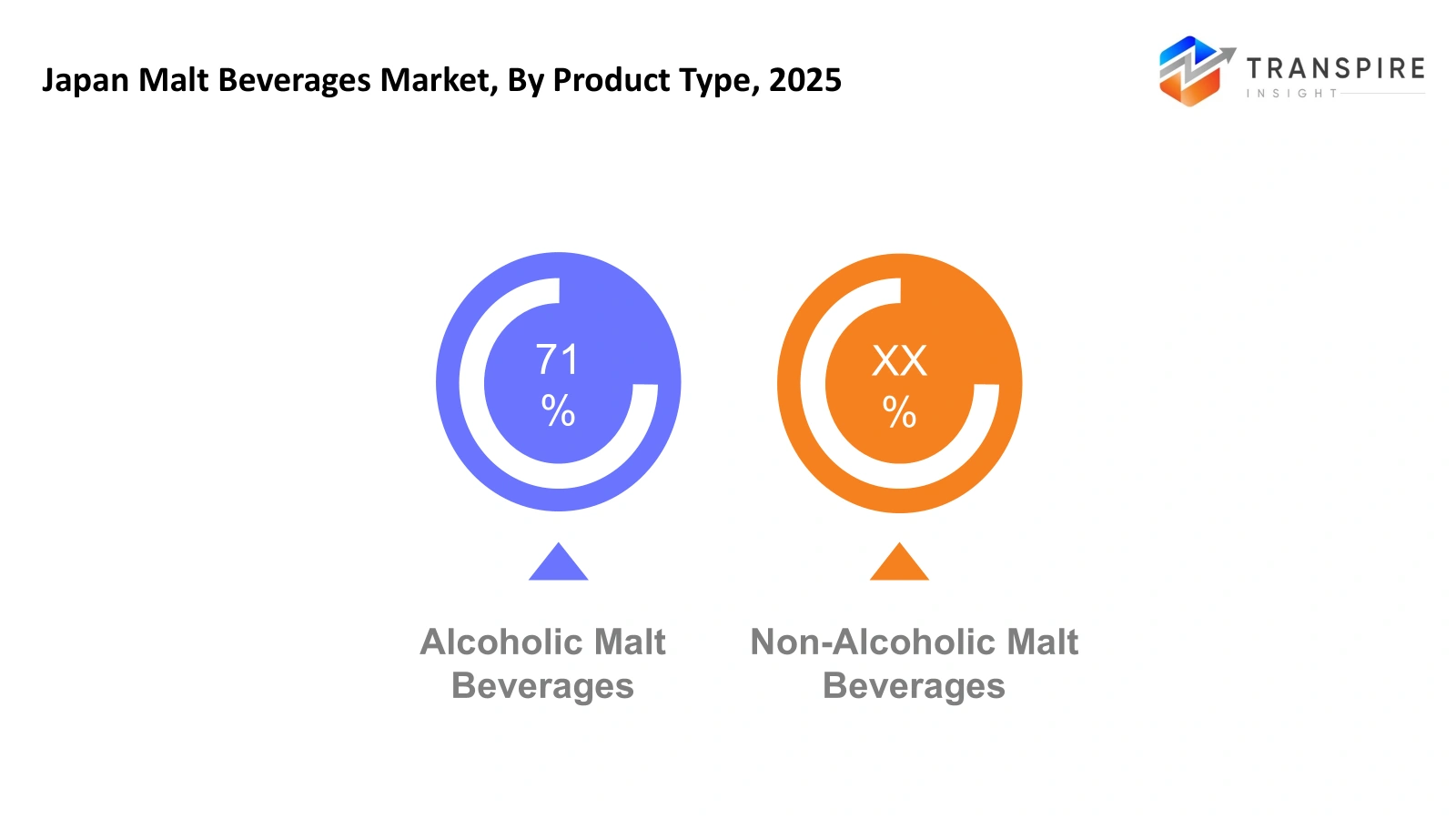
- Alcoholic Malt Beverages: The Japanese market for alcoholic malt beverages remains the leading alcoholic beverage market because Japanese people show strong cultural acceptance for beer and its related products. People drink these beverages at social events and dining occasions. The market for premium beers and craft beers is expanding because consumers want to try different beer flavours which provide them with high product quality and special brewing techniques that create unique drinking experiences.
- Non-Alcoholic Malt Beverages: Non-alcoholic malt beverages are experiencing constant demand growth because more people choose to drink these beverages that support their health and drinking limitations. The drinks provide people with an alcohol-free alternative to beer, which includes both drivers and health-conscious individuals. The two products have become more desirable to Japanese consumers of all age groups because better taste and increased product distribution have improved their market presence.
To learn more about this report, Download Free Sample Report
By Distribution Channel
- Supermarkets: Supermarkets serve as essential distribution points which provide customers access to multiple malt beverage products at their locations. Customers choose these stores because they offer discounts and product selection and allow customers to purchase items in larger quantities. Supermarkets become the preferred shopping destination because their attractive in-store promotions and seasonal displays help customers make purchasing choices during their regular shopping trips.
- Convenience Stores: Convenience stores function as essential distribution points for malt beverages in Japan because they provide customers with easy access to their products throughout the entire day. The stores provide quick shopping options which serve customers who need to purchase items without delays. Customers prefer the store because its popular brands remain available through its strategic locations and regular product updates.
- Online Retail: The significance of online retail continues to grow in Japan because more people now use digital platforms. Customers find it convenient to explore products from home because they can view different options and make their purchases along with product comparisons. Online malt beverage sales have increased because customers can access special offers and subscription services and home delivery options, which make it easier to buy products in bulk and high-end items.
Country Insights
Japan’s malt beverages market exists because Japanese people use beer as their social drinking beverage during parties and dining and after-work events. The fast-paced urban lifestyles of Tokyo and Osaka, together with their active nighttime entertainment systems, result in high levels of alcohol consumption in these two cities. The demand for products has changed because of two demographic trends: an increasing elderly population and people under 30 who prioritise their health. People show rising interest in products that contain low alcohol content and products that provide no alcohol because these products support the current trend of moderate drinking.
Consumers show increasing interest in premium and craft products which provide them with distinctive taste experiences and better quality products. Seasonal offerings and limited editions also play an important role in attracting attention. The strong retail infrastructure of Japan, which includes convenience stores and online platforms, enables retailers to provide their products to customers throughout the country. The market shows a traditional and modern innovation balance which enables it to adapt to new consumer trends while preserving its cultural heritage.
Recent Development News
Asahi restarts beer production after cyberattack disruption: Japan’s beer industry recently faced supply chain disruptions due to cybersecurity issues affecting major brewers. This created temporary shortages and highlighted operational risks.
Japan tax reforms to reshape beer consumption dynamics: Tax reforms are expected to influence pricing and consumption patterns across beer categories in Japan.
|
Report Metrics |
Details |
|
Market size value in 2025 |
USD 24.08 Billion |
|
Market size value in 2026 |
USD 26.3 Billion |
|
Revenue forecast in 2033 |
USD 46.5 Billion |
|
Growth rate |
CAGR of 4.48% from 2026 to 2033 |
|
Base year |
2025 |
|
Historical data |
2021 – 2024 |
|
Forecast period |
2026 – 2033 |
|
Report coverage |
Revenue forecast, competitive landscape, growth factors, and trends |
|
Country scope |
Japan |
|
Key company profiled |
Asahi Group Holdings Ltd., Kirin Holdings Company Ltd., Suntory Holdings Ltd., Sapporo Breweries Ltd., Anheuser-Busch InBev, Heineken NV, Molson Coors Beverage Company, Carlsberg Group, Diageo PLC, Boston Beer Company, Pabst Brewing Company, BrewDog PLC, Constellation Brands Inc., Tsingtao Brewery Group, Kirin Ichiban Brewery. |
|
Customization scope |
Free report customization (country, regional & segment scope). Avail customized purchase options to meet your exact research needs. |
|
Report Segmentation |
By Product Type (Alcoholic Malt Beverages, Non-Alcoholic Malt Beverages), By Distribution Channel (Supermarkets, Convenience Stores, Online Retail). |
Key Japan Malt Beverages Company Insights
Established brewers, together with new craft breweries, create a competitive market environment which drives innovation in the Japanese malt beverage industry. Main business operators work to sustain product standards while they develop fresh tastes and special products to attract customer interest. Many companies develop new product lines which include low-alcohol drinks and non-alcoholic beverages to satisfy changing customer needs. The fast-paced industry requires businesses to develop enduring customer trust through their distribution systems and brand development activities and strategic partnerships.
Company List
- Asahi Group Holdings Ltd.
- Kirin Holdings Company Ltd.
- Suntory Holdings Ltd.
- Sapporo Breweries Ltd.
- Anheuser-Busch InBev
- Heineken NV
- Molson Coors Beverage Company
- Carlsberg Group
- Diageo PLC
- Boston Beer Company
- Pabst Brewing Company
- BrewDog PLC
- Constellation Brands Inc.
- Tsingtao Brewery Group
- Kirin Ichiban Brewery
Japan Malt Beverages Market Report Segmentation
By Product Type
- Alcoholic Malt Beverages
- Non-Alcoholic Malt Beverages
By Distribution Channel
- Supermarkets
- Convenience Stores
- Online Retail
Frequently Asked Questions
Find quick answers to common questions.
The Approximate Japan Malt Beverages Market size for the Market will be USD 46.5 Billion in 2033.
The key segments of the Japan Malt Beverages Market are By Product Type (Alcoholic Malt Beverages, Non-Alcoholic Malt Beverages), By Distribution Channel (Supermarkets, Convenience Stores, Online Retail).
Major Players in the Japan Malt Beverages Market are Asahi Group Holdings Ltd., Kirin Holdings Company Ltd., Suntory Holdings Ltd., Sapporo Breweries Ltd., Anheuser-Busch InBev, Heineken NV, Molson Coors Beverage Company, Carlsberg Group, Diageo PLC, Boston Beer Company, Pabst Brewing Company, BrewDog PLC, Constellation Brands Inc., Tsingtao Brewery Group, Kirin Ichiban Brewery.
The Current Market size of the Japan Malt Beverages Market is USD 24.08 Billion in 2025.
The Japan Malt Beverages Market CAGR is 4.48%.
- Asahi Group Holdings Ltd.
- Kirin Holdings Company Ltd.
- Suntory Holdings Ltd.
- Sapporo Breweries Ltd.
- Anheuser-Busch InBev
- Heineken NV
- Molson Coors Beverage Company
- Carlsberg Group
- Diageo PLC
- Boston Beer Company
- Pabst Brewing Company
- BrewDog PLC
- Constellation Brands Inc.
- Tsingtao Brewery Group
- Kirin Ichiban Brewery
Recently Published Reports
-
Apr 2026
Baby Infant Formula Market
Baby Infant Formula Market Size, Share & Analysis Report By ype (Infant Milk, Follow On Milk, Specialty Baby Milk, Growing-Up Milk), By Ingredient (Carbohydrate, Fat, Protein, Minerals, Vitamins, and Others), By Product Form (Powder, Liquid, and Ready-to-feed), By Distribution Channels (Supermarket/Hypermarket, Specialty Store, Pharmacies, Online Retail, and Others), and Geography (North America, Europe, Asia-Pacific, Middle East and Africa, South and Central America), 2021 - 2031
-
Apr 2026
Edible Insects for Animal Feed Market
Edible Insects for Animal Feed Market Size, Share & Analysis Report By Type (Insect Powder, Insect Meal, Insect Bar, Insect Paste, Insect Oil, and Others), By Insect Type (Beetles, Cricket, Caterpillar, Hymenoptera, Orthoptera, Tree Bugs, and Others), By Application (Livestock, Pet Food, and Aquaculture), By Livestock Type (Poultry, Swine, and Others), and Geography (North America, Europe, Asia-Pacific, Middle East and Africa, South and Central America), 2021 - 2031
-
Apr 2026
Food Industry Disinfection and Bacterial Control Market
Food Industry Disinfection and Bacterial Control Market Size, Share & Analysis Report By Type (Chemical Disinfectants, Physical Disinfectants, and Biocides and Antimicrobials), By Application (Food Processing Equipment Surface Disinfection, Food Preparation Areas Surface Disinfection, Storage Areas Surface Disinfection, Anti-microbial Coatings Food Preservation, and Preservative Solutions Food Preservation), By End User (Meat and Poultry Processing, Dairy Processing, Seafood Processing, Bakery and Confectionery, Restaurants and Commercial Kitchens, and Food Service Providers), By Sales Channel (Online, Offline), and Geography (North America, Europe, Asia-Pacific, Middle East and Africa, South and Central America), 2021 - 2031
-
Apr 2026
Freeze Dried Food Market
Freeze Dried Food Market Size, Share & Analysis Report By Product Type (Fruits, Vegetables, Freeze-Dried Dairy Products, Freeze-Dried Meat and Seafood, Freeze-Dried Pet Food, and Prepared Meal), By Nature (Organic, and Conventional), By Form (Powdered, Granules, and Diced), By End Use (Breakfast Cereals, Dairy Products, Bakery & Confectionery, Nutritional Bars & Supplements, Powdered Beverages, Snacks, and Retail (Household)), and Geography (North America, Europe, Asia-Pacific, Middle East and Africa, South and Central America), 2021 - 2031