

Japan Erythropoietin (EPO) Drugs Market Summary:
According to Transpire Insights, a detailed research report on the market reflects that the renal disease application segment dominates the Japan Erythropoietin (EPO) Drugs Market, accounting for approximately 70–75% of total consumption, primarily driven by the high prevalence of chronic kidney disease and Japan’s large dialysis patient population. Kyowa Kirin is one of the leading companies in the Japanese EPO market, supported by its established erythropoiesis-stimulating agent portfolio, making it an important contributor to Japan market development, innovation, advanced EPO drug production, expanding therapeutic capabilities, and growth dynamics.
Market Snapshot
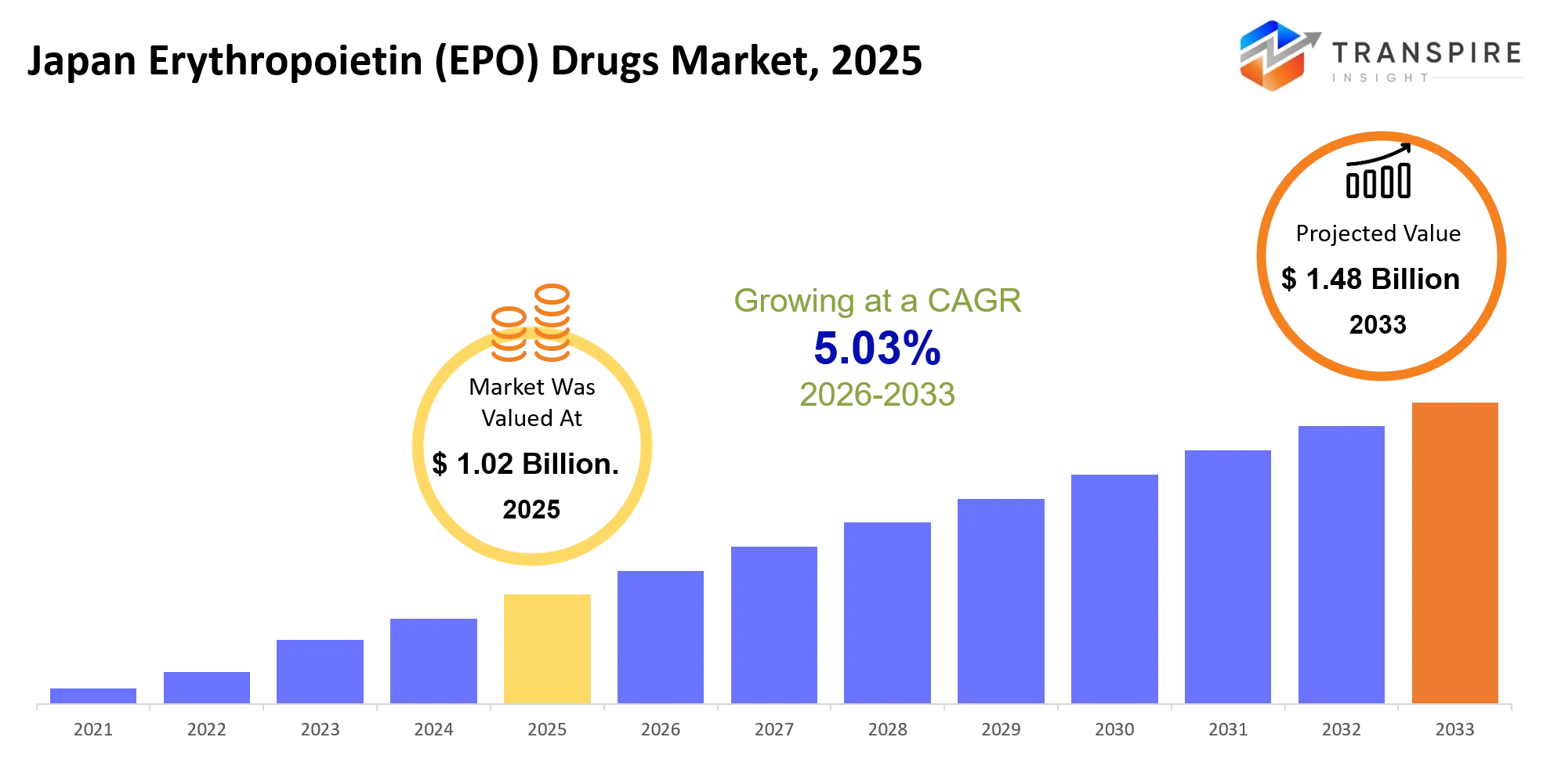
- Market Value (2025): USD 1.02 Billion.
- Expected Market Value (2026): USD 1.05 Billion.
- Estimated Market Value (2033): USD 1.48 Billion.
- Forecast CAGR (2026–2033): 5.03%
Introduction
Erythropoietin (EPO) Drugs Market comprises the earnings of all the producers and distributors of Erythropoietin Drugs Market or erythropoiesis stimulating agents (ESAs). These medicines have the ability to stimulate the bone marrow to make red blood cells. They can be used to treat anemia which arises from chronic kidney disease, cancer chemotherapy and other medical problems. Erythropoietin (EPO) is a hormone made by the kidneys to stimulate the bone marrow to produce red blood cells. EPO drugs are similar hormones used for treating anemia due to chronic kidney disease or cancer chemotherapy. There are various therapeutic uses of the Erythropoietin (EPO) drugs that can be of great importance for patients suffering from anemia caused due to chronic kidney disease or due to chemotherapy. The production of red blood cells is facilitated through stimulation of bone marrow erythropoiesis, leading to restoration of hemoglobin levels. Anemia can lead to tiredness and weakness in patients; hence, by treating anemia, patients can get relief from the symptoms of tiredness and weakness. Reduction of transfusion is another important benefit that comes with the use of EPO drugs because they help reduce the need for regular transfusions of red blood cells.
Key Market Highlights: -
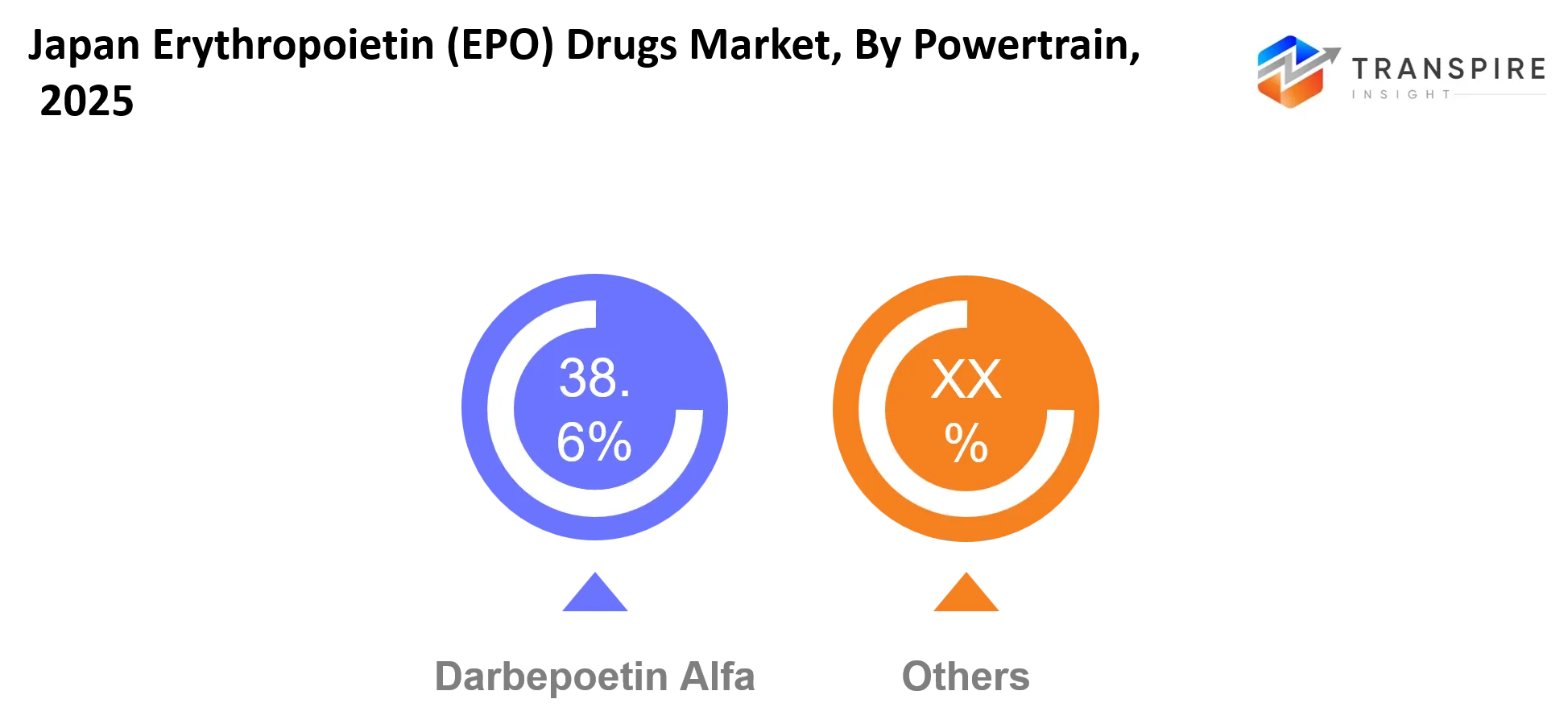
- By product type, the Epoetin Alfa segment dominated the market and holds nearly 38% share in 2025 and is projected to grow at a substantial CAGR during the forecast period.
- By application, the Chronic Kidney Disease segment dominated the market and holds nearly 64% share in 2025 and is projected to grow at a substantial CAGR during the forecast period.
- By end user, the Hospitals segment dominated the market and holds nearly 43% share in 2025 and is projected to grow at a substantial CAGR during the forecast period.
- Price Adjustments: Price adjustments of NHI drug reimbursement rates are made by Japan’s MHLW in conjunction with Chuikyo. Such price adjustments might reduce the reimbursement rates of EPO drugs, which would add to the pricing pressures in the Japan EPO Drugs Market.
How is Technology Driving Growth in the Japan Erythropoietin (EPO) Drugs Market?
The market for Erythropoietin drugs is moving forward because of innovations in formulation, manufacture, and digitization of healthcare. Recombinant DNA technology allows creating a steady supply of biologics, whereas long-acting erythropoietin formulations allow reducing injection frequency. Improvements in molecular purity will lead to better product quality and safety. Innovations in manufacture, such as the use of engineered cell lines and automated bioreactors, will increase the efficiency intravenous of manufacturing and decrease the cost of production. The use of biosimilars will further decrease the cost of treatments and make them accessible. Digital healthcare, which includes smart infusion pumps, remote monitoring applications, and connected dialysis systems, improves treatment management.
Market Drivers
Several factors including structural and technological drive the Japan Erythropoietin (EPO) Drugs Market. The aging population and increased cases of chronic kidney diseases (CKD) and anemia contribute to the need for therapies aimed at promoting erythropoiesis. Increasing cases of renal disorders such as those that result from lifestyle and diabetes contribute to the increase in the number of chronic patients. Biologics innovations backed up by pharmaceutical companies and healthcare policies help reduce costs of treatments. In addition, advances in technologies of recombinant erythropoietin products promote safety and efficiency as well as convenient administration. Moreover, outpatient and home dialysis are boosting the market for Japan’s EPO drugs market. The erythropoietin drugs confer many benefits to patients suffering from chronic anemia, especially chronic kidney disease. The reduction of transfusion is one major advantage because erythropoietin treatment enhances the formation of red blood cells, thus reducing the need for repeated administration of red blood cells. Symptom management enables the alleviation of symptoms such as tiredness, fatigue, and weakness that come with anemia. The increased patient compliance is made possible through long-acting erythropoietins, like the use of darbepoetin alfa. Cost-effectiveness is further enhanced through the development of biosimilars of erythropoietins, which offer cost-effective treatment alternatives in the Japanese reimbursement system.
Restrain
Some of the restraints present in the Japan Erythropoietin (EPO) Drugs Market include alternative treatments to renal anemia, such as HIF-PHI inhibitors, which might increase the treatment options and decrease the dependence on the EPO treatment. Price control measures implemented by the government and the constant revision of the reimbursement policy limit the revenues generated from drug manufacturing. The increased presence of biosimilars increases the pressure of pricing and competes with innovative drugs.
Analysis of Prices and Consumer Behaviour
The EPO drug market is characterized by the high dominance of the ESAs (81.2% of eligible dialysis patients received ESAs mainly owing to the continuous demand for anemia management amongst dialysis patients). The proportion of darbepoetin alfa injectable was estimated at 59.2% among categorized ESA users, which is a direct reflection of the widespread adoption of the long-acting EPOs in Japan. The prevalence of diabetic nephropathy among prevalent dialysis patients was estimated at 39.2%, indicating one of the major underlying conditions for end-stage kidney disease and anemia management demand. The sales volume is driven by the existing adoption of the EPO treatments for the management of anemia among chronic kidney disease and dialysis segments. The chronic kidney disease and dialysis segments account for about 39.2% of the prevalent dialysis patient pool through diabetic nephropathy. The purchasing decision of healthcare professionals shows that clinical efficacy, safety, dosing convenience, and reimbursement issues continue to be relevant in choosing EPO drugs. Anemia therapy is additional 81.2% of eligible dialysis patients receiving ESAs reflects the ongoing significance of the erythropoiesis-stimulating therapies in Japan's dialysis treatment market.
Top Companies in the Japan Erythropoietin (EPO) Drugs Market
- Chugai Pharmaceutical
- Kyowa Kirin
- JCR Pharmaceuticals
- Sanofi
- Roche
- Pfizer
- Novartis
- Teva
- Sandoz
- Amgen
- Biocon
- Celltrion
- Samsung Bioepis
- LG Chem
- Johnson & Johnson
Japan Erythropoietin (EPO) Drugs Market Segmentation
The Japan Erythropoietin (EPO) Drugs Market share is divided into six categories: By product type, application, route, end user, distribution channel and patient.
The Epoetin Alfa dominated the market, accounting for nearly 38% in 2025 and is expected to rise at a significant CAGR during the forecast period.
The Japan Erythropoietin (EPO) Drugs Market is segmented by product type intoEpoetin Alfa, Epoetin Beta, Darbepoetin Alfa, Epoetin Theta, Methoxy PEG-Epoetin Beta, Biosimilar EPO, Other ESAs, Combination Products. Among these, the Epoetin Alfa segment dominated the market, accounting for nearly 38% in 2025 and expected to increase at a significant CAGR during the forecast period. Epoetin alfa led the global market for Erythropoietin (EPO) Drugs Market in 2025 owing to its high clinical effectiveness, its use in the treatment of anemia that arises from chronic kidney diseases and chemotherapy, and high recognition among physicians. The proven safety, high accessibility, and established production processes keep the demand for epoetin alfa high. Increasing adoption of this drug by dialysis centers and hospitals also supports market growth.
The Chronic Kidney Disease dominated the market, accounting for nearly 64% in 2025, and is expected to rise at a significant CAGR during the forecast period.
The Japan Erythropoietin (EPO) Drugs Market is segmented by application into Chronic Kidney Disease, Cancer-Related Anemia, Chemotherapy-Induced Anemia, Dialysis, Myelodysplastic Syndromes, Surgery-Related Anemia, Blood Disorders, Other Conditions. Among these, the Chronic Kidney Disease segment dominated the market, accounting for nearly 64% in 2025 and expected to increase at a significant CAGR during the forecast period. The Erythropoietin (EPO) Drugs Market was driven by Chronic Kidney Disease in 2025 owing to the rising incidence of anemia among individuals with chronic kidney dysfunction. The shortage of erythropoietin makes patients rely on drugs that help in stimulating erythropoiesis. Increasing numbers of patients requiring dialysis and rising chronic diseases have contributed to the market growth.
The Hospitals dominated the market, accounting for nearly 43% in 2025 and is expected to rise at a significant CAGR during the forecast period.
The Japan Erythropoietin (EPO) Drugs Market is segmented by end user into Hospitals, Homecare, Specialty Clinics, Dialysis Centers, Oncology Centers, Nephrology Centers, Research Institutes, Other Healthcare Facilities. Among these, the Hospitals segment dominated the market, accounting for nearly 43% in 2025 and expected to increase at a significant CAGR during the forecast period. In the year 2025, Hospitals were the dominant end users for Erythropoietin (EPO) Drugs market as hospitals cater to large numbers of patients who need to be treated for their anemia conditions especially those undergoing dialysis, chemotherapy, and treatment of chronic diseases. The hospitals provide special monitoring and administration of EPO drugs under the supervision of doctors.
Future Market Trends for the Japan Erythropoietin (EPO) Drugs Market: -
- Expansion of Biosimilar Penetration: Biosimilar EPO is a key contributor to the unit volume and will continue to increase its market share as switching guidelines and physician confidences improve.
- Emergence of Long-Acting Analog: Long-acting analogs, like darbepoetin alfa and CERA, remain strong in terms of market value because of ease of administration and compliance.
- NHI Pricing Reduction: Continued mandatory NHI pricing adjustments are anticipated to limit the growth of value although there is constant volume demand.
- Competition from Oral HIF-PH Inhibitor: Other alternative drugs, such as HIF-PH inhibitors including Duvroq, are in competition for renal anemia treatment.
Recent Development
- In February 2026: The Japanese authorities updated the system of specific use drug designation to encourage the development of drugs treating serious medical needs, with PMDA participating in the regulatory assessment process. The new regulation will likely help accelerate the development and assessment of innovative drugs in question, but it is not specifically related to EPO drugs.
- In May 2026: Samsung Bioepis and Nipro introduced their first biosimilar in Japan following its inclusion in the National Health Insurance (NHI) Drug Price Standard. The biosimilar product is for ustekinumab and was approved for marketing in December 2025 and listed on May 19, 2026. Even though it is not an Erythropoietin (EPO) drug, the introduction marks a step forward in developing the Japanese biosimilar market.
Market Segment
This study forecasts revenue at Japan, regional and country levels from 2020 to 2033. Transpire Insights has segmented the Japan Erythropoietin (EPO) Drugs Market based on the below-mentioned segments:
Japan Erythropoietin (EPO) Drugs Market, By Product Type
- Epoetin Alfa
- Epoetin Beta
- Darbepoetin Alfa
- Epoetin Theta
- Methoxy PEG-Epoetin Beta
- Biosimilar EPO
- Other ESAs
- Combination Products
Japan Erythropoietin (EPO) Drugs Market, By Application
- Chronic Kidney Disease
- Cancer-Related Anemia
- Chemotherapy-Induced Anemia
- Dialysis
- Myelodysplastic Syndromes
- Surgery-Related Anemia
- Blood Disorders
- Other Conditions
Japan Erythropoietin (EPO) Drugs Market, By Route
- Intravenous
- Subcutaneous
- Injectable
- Prefilled Syringe
- Vial
- Other Parenteral Forms
- Hospital Administration
- Home Administration
Japan Erythropoietin (EPO) Drugs Market, By End User
- Hospitals
- Homecare
- Specialty Clinics
- Dialysis Centers
- Oncology Centers
- Nephrology Centers
- Research Institutes
- Other Healthcare Facilities
Japan Erythropoietin (EPO) Drugs Market, By Distribution channel
- Hospital Pharmacies
- Retail Pharmacies
- Specialty Pharmacies
- Direct Procurement
- Drug Wholesalers
- Specialty Distributors
- Clinics
- Online/Direct Channels
Japan Erythropoietin (EPO) Drugs Market, By Patient Type
- CKD Patients
- Dialysis Patients
- Cancer Patients
- Elderly Patients
- Surgical Patients
- MDS Patients
- Anemia Patients
- Other Patients
Frequently Asked Questions
Find quick answers to common questions.
The Japan EPO Drugs Market is projected to grow at 5.03% CAGR, reaching USD 1.48 billion by 2033
Epoetin Alfa dominates the Japan EPO Drugs Market, accounting for nearly 38% share in 2025, supported by established clinical adoption.
Chronic Kidney Disease leads the Japan EPO Drugs Market, accounting for nearly 64% share in 2025, driven by anemia prevalence.
Hospitals dominate the Japan EPO Drugs Market with nearly 43% share, supported by specialized monitoring and administration of EPO therapies
Key trends include biosimilar adoption, long-acting EPO therapies, NHI pricing reductions, and increasing competition from oral HIF-PH inhibitors.
- Chugai Pharmaceutical
- Kyowa Kirin
- JCR Pharmaceuticals
- Sanofi
- Roche
- Pfizer
- Novartis
- Teva
- Sandoz
- Amgen
- Biocon
- Celltrion
- Samsung Bioepis
- LG Chem
- Johnson & Johnson
About the Authors

Pankaj Ghogare Patil
I am Pankaj Ghogare Patil, a Senior Research Analyst at Transpire Insight, specializing in the Pharmaceutical, Chemicals & Materials, Healthcare IT, and Biotechnology industry. My expertise lies in conducting comprehensive market research, analyzing industry trends, evaluating competitive landscapes, and translating complex data into actionable insights. At Transpire Insight, I closely follow emerging technologies, regulatory developments, and market innovations to create accurate, well-researched, and informative content that helps businesses and professionals make informed decisions. I am committed to producing credible, evidence-based articles that reflect industry best practices while making technical topics accessible and valuable for a broad audience.

Chakradhar Khansole
Chakradhar serves as the Research Director at Transpire Insight, bringing over 8 years of experience in technology, innovation, and strategic market intelligence. He specializes in transforming complex market data into actionable business insights that enable organizations to make informed, growth-oriented decisions. Recognized for his strategic vision and analytical expertise, Chakradhar leads high-impact research initiatives, delivering comprehensive market assessments, competitive intelligence, and forward-looking industry analysis.
Recently Published Reports
-
Jul 2026
Alopecia Treatment Market
Alopecia Treatment Market Size, Share & Analysis Report By Disease Type (Alopecia Areata, Cicatricial Alopecia, Traction Alopecia, Alopecia Totalis, Androgenetic Alopecia, Alopecia Universalis, and Other Disease Types), By Treatment Type (Topical Treatments, Oral Medications, Injectable Therapies, and Hair Transplantation), By Gender (Male, and Female), By Distribution Channel (Hospitals and Clinics, Retail Pharmacies, and Online Retailers), and Geography (North America, Europe, Asia-Pacific, Middle East and Africa, South and Central America), 2021 - 2031
-
Jul 2026
Medical Ultrasound Probe Market
Medical Ultrasound Probe Market Size, Share & Analysis Report By Type (Linear Type, Convex Type, Endocavitary Probe, Phased Array/Cardiac Probe, Transesophageal (TEE) Probe, and Others), By Application (Ophthalmology, Cardiology, Musculoskeletal, Oncology, Obstetrics & Gynecology, General Imaging, and Others), By End User (Hospitals & Clinics, Diagnostic Centers, Ambulatory Surgical Centers, and Others), and Geography (North America, Europe, Asia-Pacific, Middle East and Africa, South and Central America), 2021 – 2031
-
May 2026
Biosimilars Market
Biosimilars Market By Product Type (Monoclonal Antibodies, Recombinant Hormones, Erythropoietin, G-CSF, Others), By Indication (Oncology, Autoimmune Diseases, Blood Disorders, Diabetes, Others), By Manufacturing Type (In-House Manufacturing, Contract Manufacturing), By Distribution Channel (Hospital Pharmacies, Retail Pharmacies, Online Pharmacies), By Industry Analysis, Size, Share, Growth, Trends, and Forecasts 2021-2033
-
Apr 2026
Gastrointestinal Endoscopy Market
Gastrointestinal Endoscopy Market By Type (Rigid Gastrointestinal Endoscope, Flexible Gastrointestinal Endoscopes, Disposable Gastrointestinal Endoscope), By Procedure Type (Colonoscopy, Gastroscopy, Duodenoscopy, Enteroscopy, Flexible Sigmoidoscopy, Others), By Application (Diagnosis, Treatment), By End-Users (Hospitals, Ambulatory Surgical Centers, Specialty Clinics, Laboratories, Others), By Industry Analysis, Size, Share, Growth, Trends, and Forecasts 2021-2033