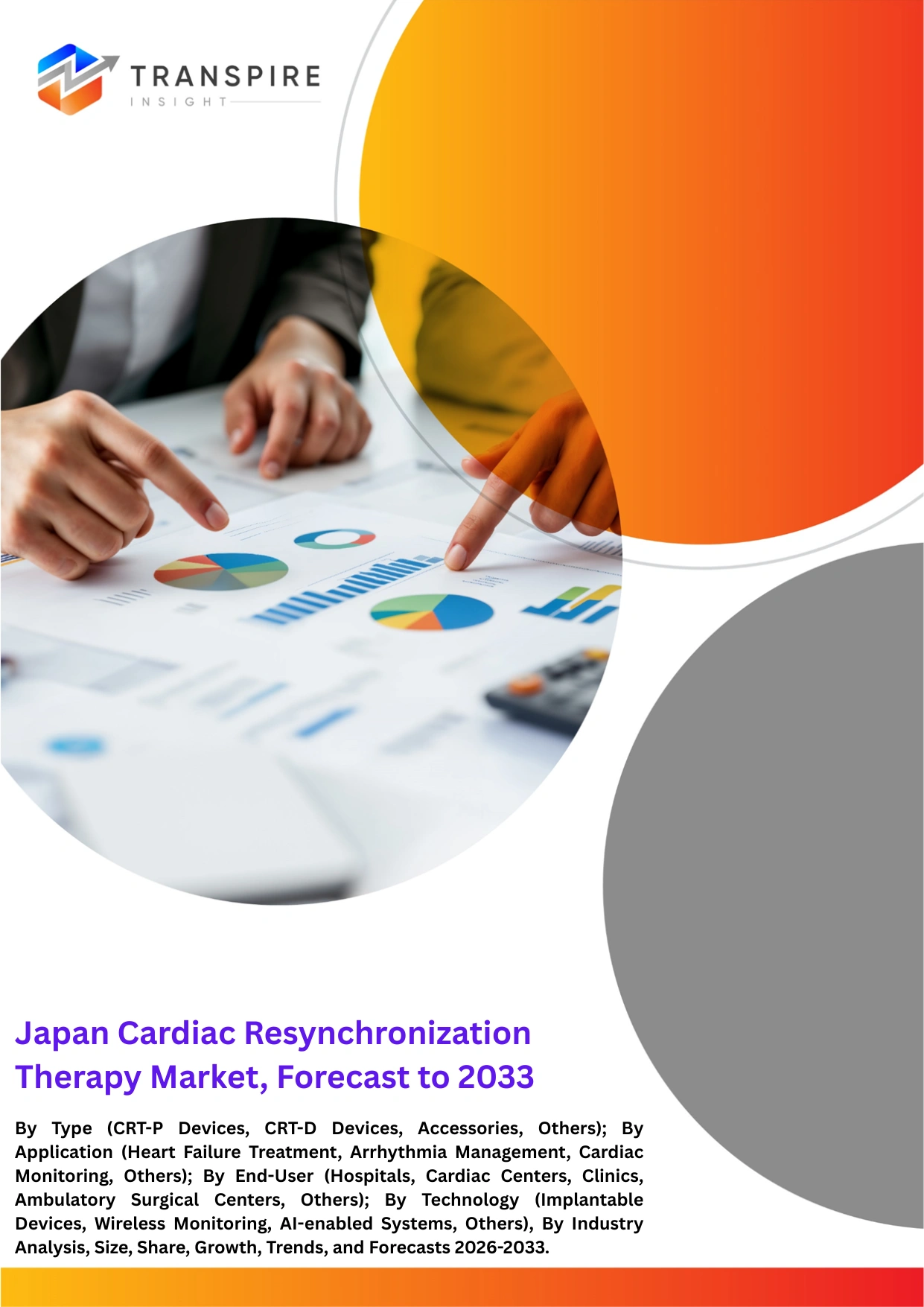
Japan Cardiac Resynchronization Therapy Market Size & Forecast:
- Japan Cardiac Resynchronization Therapy Market Size 2025: USD 193.2 Million
- Japan Cardiac Resynchronization Therapy Market Size 2033: USD 324.37 Million
- Japan Cardiac Resynchronization Therapy Market CAGR: 6.70%
- Japan Cardiac Resynchronization Therapy Market Segments: By Type (CRT-P Devices, CRT-D Devices, Accessories, Others); By Application (Heart Failure Treatment, Arrhythmia Management, Cardiac Monitoring, Others); By End-User (Hospitals, Cardiac Centers, Clinics, Ambulatory Surgical Centers, Others); By Technology (Implantable Devices, Wireless Monitoring, AI-enabled Systems, Others).
To learn more about this report,  Download Free Sample Report
Japan Cardiac Resynchronization Therapy Market Summary
The Japan Cardiac Resynchronization Therapy Market was valued at USD 193.2 Million in 2025. It is forecast to reach USD 324.37 Million by 2033. That is a CAGR of 6.70% over the period.
The Japan cardiac resynchronization therapy market enables patients with advanced heart failure to achieve coordinated heart rhythm restoration through implantable devices which enhance heart pumping capacity while decreasing hospital stays and improving their long-term health. Japanese hospitals use these systems as essential components to deliver cardiovascular treatment because they deal with rising numbers of elderly patients who have multiple heart problems.
The market has undergone a complete transformation during the last three to five years because it now focuses on MRI-compatible CRT devices which enable remote monitoring of patient health and device operation without requiring doctors to conduct physical examinations. The healthcare system adopted digital monitoring in response to the COVID-19 pandemic which forced hospitals to minimize patient visits while continuing to provide medical services. The semiconductor shortages created temporary barriers to device distribution which led suppliers to improve their methods of local inventory and distribution management. The new developments enable revenue expansion because medical professionals choose devices which enable them to treat patients earlier and monitor their health continuously throughout specialized cardiac centers which leads to increased procedural activity across the entire country.
Key Market Insights
- Kanto controls the Japan Cardiac Resynchronization Therapy Market because advanced cardiac specialty hospitals enable it to reach 38% market share which it will maintain until 2025.
- The Kansai region serves as the second-largest market because it possesses strong electrophysiology facilities and its device implantation procedures receive increasing financial support for reimbursement.
- The Chubu region will experience its fastest growth until 2030 because specialized cardiovascular treatment facilities will implement their expansion plans.
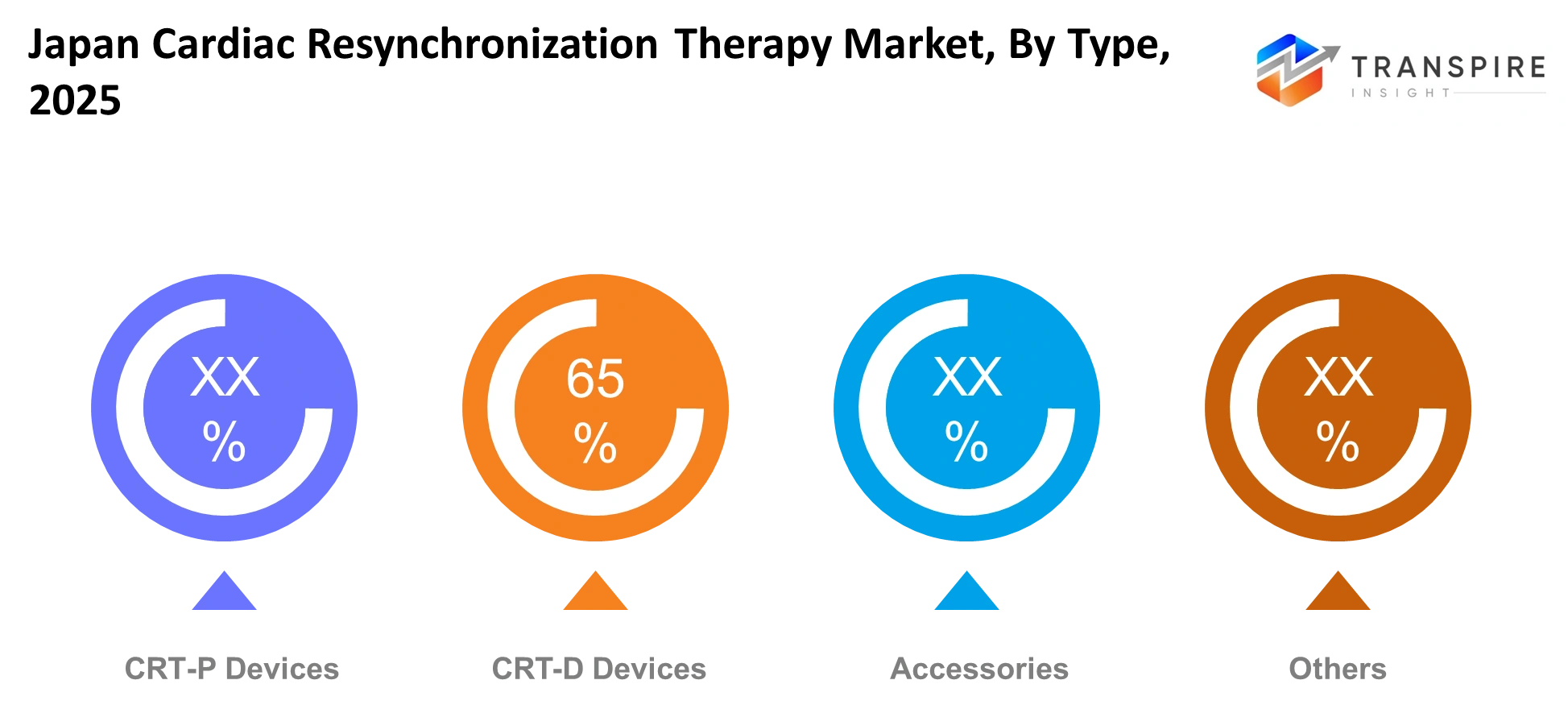
- CRT-D devices share 57% of the market in 2025 because doctors prefer their combination of defibrillation and synchronization therapy functions.
- The industry size of CRT-P systems ranks as the second largest because elderly heart failure patients need procedures which require less operational complexity.
- The segment which uses Bluetooth-enabled CRT systems that work with MRI machines represents the fastest growth between now and the projected end of the study period according to current digital monitoring patterns.
- Heart failure management with reduced ejection fraction dominates as the main treatment method which accounts for more than 64 percent of Japan Cardiac Resynchronization Therapy Market demand in 2025.
- The application of post-cardiac remodeling intervention has become the most rapidly expanding field because of increased access to specialist services and better diagnostic technologies.
- Large tertiary hospitals control the market with their 61 percent share because they possess electrophysiology expertise and advanced implantation capabilities.
- The outpatient procedures which specialized cardiovascular clinics provide represent their most rapid growth period until the year 2030.
What are the Key Drivers, Restraints, and Opportunities in the Japan Cardiac Resynchronization Therapy Market?
The Japan cardiac resynchronization therapy market experiences its strongest growth because urban hospitals establish advanced heart failure management programs. The change gained strength after Japan established better reimbursement terms for remote cardiac monitoring and digital health services which followed the healthcare system modernization that took place after 2020. The next-generation CRT devices with wireless telemetry systems have become standard in hospitals because these systems enable doctors to track their patients continuously while addressing their medical needs at the first signs of health problems. The system has brought about direct benefits to both implantation numbers and ongoing service revenue which relates to device monitoring and follow-up diagnostics and replacement operations.
Japan faces its most critical obstacle because it lacks enough specialized electrophysiologists who have the necessary skills to execute complicated CRT implantation operations. The limited availability of specialists stems from three factors which include extensive training times for doctors and their work at metropolitan teaching hospitals and the slow development of advanced cardiac rhythm management services in outlying medical centers. The situation needs a long time to fix because organizations must spend years developing their specialized skills through formal training and significant financial resources. The result of this situation shows that among patient groups who qualify for treatment will experience treatment delays which will impact revenue from medical procedures while hindering market development in areas beyond major prefectures.
AI-integrated remote monitoring platforms currently linked with MRI-compatible CRT systems present hospitals with their most important growth opportunity. Digital cardiology infrastructure expansion by hospitals throughout Chubu and Kyushu regions creates optimal conditions for hospitals to adopt digital solutions. Predictive analytics investment for device performance anomaly detection will lead to decreased hospital admissions and improved doctor productivity while creating additional recurring revenue channels.
What Has the Impact of Artificial Intelligence Been on the Japan Cardiac Resynchronization Therapy Market?
Artificial intelligence and advanced digital technologies are transforming Japan's cardiac resynchronization therapy field through their capacity to enhance device monitoring systems and their ability to perform automated patient data analysis and their effect on clinical decision-making processes. Hospitals now use AI-powered remote monitoring systems which can automatically evaluate cardiac rhythm data produced by devices to identify abnormal pacing patterns and notify doctors when they need to take action. The automation process helps decrease the manual work needed by electrophysiology departments while it boosts operational efficiency for hospitals that handle many cardiac patients.
Machine learning models boost the predictive abilities of implantable rhythm management systems through their advanced predictive analysis capabilities. These tools examine patient telemetry data which tracks heart rate fluctuations and pacing response activities to forecast complications that include lead failure and arrhythmia recurrence and the worsening of heart failure symptoms before patients require emergency hospitalization. Multiple advanced CRT systems now include predictive diagnostic capabilities which help doctors identify patients who need immediate medical assistance while they decrease unnecessary hospital readmissions according to some hospitals which have documented decreased emergency follow-up appointments and faster device optimization processes.
The digital systems operate to create better therapy adherence which enables constant patient monitoring and allows medical specialists to use their time more effectively. Remote optimization abilities enable doctors to modify treatment settings without requiring patients to make multiple trips to the office which helps decrease treatment expenses while enabling doctors to respond more quickly.
Key Market Trends
- The adoption rate of remote CRT monitoring systems in Japanese hospitals has increased by almost 30% since 2022 which lets hospitals operate their major electrophysiology centers with fewer in-person patient follow-up visits.
- After 2021, physicians preferred MRI-compatible systems because Medtronic and Abbott accelerated their efforts to create local versions of their products.
- The semiconductor shortages which occurred between 2021 and 2023 forced manufacturers to build new supply chains that required them to stock more inventory at local sites while their replacement-device manufacturing process took less time.
- The 2023 reimbursement changes have led clinicians to begin implanting devices for high-risk heart failure patients at earlier stages of their medical condition.
- After 2024, AI-enabled diagnostics became a unique market advantage because predictive alert systems reduced the time needed for therapy optimization in tertiary hospitals.
- The hospitals which serve the Chubu and Kyushu regions have increased their spending on electrophysiology equipment since 2022 by 15% which lessened their historical need for cardiac treatment at facilities located in Tokyo.
- The device batteries developed through Boston Scientific and BIOTRONIK achieved longer operational periods which decreased the need for replacements when compared to devices from the year 2020.
- Device manufacturers and hospital IT infrastructure providers establish wider partnerships because buyers show a growing preference for digital ecosystems that operate as complete systems instead of using separate standalone implants.
- The training system which functions nationwide serves as a major obstacle for healthcare organizations to develop new medical procedures which have become more necessary since 2021.
- The market rivalry has changed after 2024 because vendors now use remote telemetry systems as their primary method for creating unique product features which help them win long-term medical contracts.
Japan Cardiac Resynchronization Therapy Market Segmentation
By Type:
The Japan Cardiac Resynchronization Therapy Market regards CRT-P devices as a crucial segment because these devices serve as the primary option for patients who require pacing assistance with their heart rhythm difficulties. The demand for these methods will increase because hospitals now use treatment strategies which maintain heart function over time and decrease the need for additional medical treatment. The need for early rhythm correction has created extensive acceptance of this solution among medical professionals.
The market shows sustained interest in CRT-D devices because they provide hospitals with defibrillation capabilities during critical rhythm emergencies. The technology proves beneficial for professionals who work in advanced cardiac care facilities. The market grows through the distribution of accessories and support components which hospitals need to conduct successful implantation operations through their specialized equipment which includes leads and connectors and monitoring devices. The field of device development continues to create new product categories through ongoing technological progress.
To learn more about this report, Download Free Sample Report
By Application:
Heart failure treatment represents the leading application area since cardiac resynchronization therapy is widely recognized for improving ventricular coordination and supporting better pumping efficiency. Japan has developed an increasing interest in therapies which promote better life quality for elderly cardiac patients and this trend will further enhance development in specialized medical treatment facilities.
The ability to restore accurate heart rhythms now establishes a central goal for medical professionals who work to resolve arrhythmia problems. Cardiac monitoring applications are expanding through connected systems that allow continuous assessment after implantation. Medical professionals are discovering new ways to use synchronized pacing with rhythm management in various cardiac conditions which leads to the development of new applications.
By End-User:
The advanced surgical techniques which hospitals need to implement require dedicated medical facilities and qualified surgical personnel and continuous access to patient monitoring technology which makes hospitals the primary location for their implementation. The major healthcare facilities in Japan maintain their growth through ongoing investments in cutting-edge cardiac treatment technologies which result in continuous patient procedures and establish a robust base for treatment implementation.
Cardiac centers are expanding their facilities to become specialized treatment centers which focus on managing heart rhythms and performing device implantation procedures. Clinics are increasing their involvement in assessing patients and monitoring their progress after treatment. The importance of ambulatory surgical centers has been increasing as they provide effective medical services which enable patients to recover more quickly. Healthcare institutions provide diagnostic services while delivering extended monitoring solutions to support patient care.
By Technology:
The main technology field for implantable devices demonstrates its dominance because internal pacing systems offer dependable therapeutic results. Engineers are developing new technologies which create smaller and more efficient devices which function better during extended operational periods. The segment will receive additional support from advancements in battery technology and improvements to lead placement systems.
The need for ongoing therapy monitoring has driven higher demand for wireless patient monitoring technologies. AI systems that use predictive analysis create opportunities for companies to identify device performance problems and detect heart rhythm abnormalities at early stages. The technologies enable healthcare practitioners to enhance their treatment accuracy while they make faster clinical decisions throughout all cardiac treatment environments.
What are the Key Use Cases Driving the Japan Cardiac Resynchronization Therapy Market?
Advanced heart failure treatment for patients with ventricular dyssynchrony treated at tertiary cardiac hospitals represents the main use case which drives technology adoption in Japan. The application generates its highest operational volume because CRT technology enables better cardiac output and reduced rehospitalization rates while it meets existing payment systems for intricate cardiovascular treatments.
The technology now extends its usage to handle post-myocardial infarction cardiac remodeling and rhythm stabilization treatment for elderly patients who visit specialized cardiovascular clinics. The medical field now uses device-based therapy to deliver early treatment solutions, which research shows they use more frequently as regional centers enhance their electrophysiology treatment capabilities.
The new applications of the technology include AI-based remote patient monitoring with home optimization and the creation of digital platforms for complete cardiac management. Hospitals are developing these monitoring systems which work at scale because they need to manage high-risk patients who live in remote areas and they face physician shortages especially in underserved prefectures that lack specialized follow-up services.
|
Report Metrics |
Details |
|
Market size value in 2025 |
USD 193.2 Million |
|
Market size value in 2026 |
USD 205.95 Million |
|
Revenue forecast in 2033 |
USD 324.37 Million |
|
Growth rate |
CAGR of 6.70% from 2026 to 2033 |
|
Base year |
2025 |
|
Historical data |
2021 - 2024 |
|
Forecast period |
2026 - 2033 |
|
Report coverage |
Revenue forecast, competitive landscape, growth factors, and trends |
|
Country scope |
Japan |
|
Key company profiled |
Medtronic, Abbott, Boston Scientific, Biotronik, GE Healthcare, Philips, Siemens Healthineers, MicroPort, Lepu Medical, iRhythm, AliveCor, Hill-Rom, Nihon Kohden, Fukuda Denshi, Edwards Lifesciences. |
|
Customization scope |
Free report customization (country, regional & segment scope). Avail customized purchase options to meet your exact research needs. |
|
Report Segmentation |
By Type (CRT-P Devices, CRT-D Devices, Accessories, Others); By Application (Heart Failure Treatment, Arrhythmia Management, Cardiac Monitoring, Others); By End-User (Hospitals, Cardiac Centers, Clinics, Ambulatory Surgical Centers, Others); By Technology (Implantable Devices, Wireless Monitoring, AI-enabled Systems, Others). |
Which Regions are Driving the Japan Cardiac Resynchronization Therapy Market Growth?
The Kanto region dominates Japan's cardiac resynchronization therapy market because it possesses advanced reimbursement systems and multiple tertiary care hospitals and its most extensive trained electrophysiologists workforce. Academic medical centers located in Tokyo drive the clinical uptake of next-generation CRT systems by serving as early testing sites for upcoming device innovations. The healthcare ecosystem achieves complete operational integration through the strong partnership between hospitals and research facilities and international medical device companies. The organization maintains its position as a leading medical center because it enables healthcare workers to implement remote monitoring technologies while providing ongoing access to complicated medical implantation operations.
Kansai holds the second-largest position, but its strength comes from stability rather than scale-driven expansion. The region benefits from established cardiovascular treatment networks across Osaka, Kyoto, and Kobe, where large hospital systems sustain their procedural capacities through their long-term commitment to building electrophysiology programs. The Kansai region implements new technologies after first completing the clinical validation process which the Kanto region systematically adopts across its medical facilities. The region establishes itself as a reliable revenue source because it follows an investment strategy which protects against supply chain interruptions and changes in reimbursement policies.
Chubu is emerging as the fastest-growing regional market due to recent investments in digital cardiology infrastructure and expansion of specialized cardiac treatment centers. The prefectural health systems have started to modernize their operations through 2023 by using remote monitoring systems which help them deal with their shortage of specialists and their need to support elderly patients. Hospitals in the area are implementing advanced CRT systems to decrease the number of patients who need to go to bigger hospitals. The period from 2026 to 2033 will provide strong business prospects for market entrants and investors because of existing momentum which drives their business through partnerships that focus on technology deployment and physician training and regional service network expansion.
Who are the Key Players in the Japan Cardiac Resynchronization Therapy Market and How Do They Compete?
The Japan cardiac resynchronization therapy market maintains its consolidated structure because a few multinational device companies control most treatment activities through their established relationships with hospitals and their expertise in regulatory matters. The main focus of competition exists between two companies because they discover different ways to improve their technology through developing remote monitoring systems and extending battery life and creating MRI-compatible systems and building data-based diagnostic tools. The existing companies which operate in the market compete through creating deeper connections with hospital digital systems instead of using price-based strategies. New disruption is emerging through software-enabled monitoring platforms and special service partnerships which enhance efficiency of post-implantation care.
Medtronic competes through ongoing device development and extensive physician educational programs, which create a competitive advantage for academic medical centers that handle complex procedures. The company establishes long-term partnerships with electrophysiology centers through its dedication to establishing advanced systems for telemetry and predictive health monitoring. Abbott uses its unique design for compact devices to create strong compatibility with hospital systems that connect remote patient management. The company establishes new partnerships with digital health platforms to enter new markets outside its main urban areas.
Boston Scientific develops its technologies to achieve long-lasting battery life through advanced pacing system designs which decrease the need for device replacements thus providing hospitals with reduced operational costs for medical procedures. BIOTRONIK has built competitive strength through highly responsive remote monitoring capabilities and specialized electrophysiology support services. MicroPort CRM operates its business through selective expansion by forming partnerships with regional hospitals which allows it to enter markets where digital cardiology infrastructure is developing but there is less competition.
Company List
- Medtronic
- Abbott
- Boston Scientific
- Biotronik
- GE Healthcare
- Philips
- Siemens Healthineers
- MicroPort
- Lepu Medical
- iRhythm
- AliveCor
- Hill-Rom
- Nihon Kohden
- Fukuda Denshi
- Edwards Lifesciences
Recent Development News
In November 2025, Boston Scientific launched its COGNIS cardiac resynchronization therapy defibrillator (CRT-D) and TELIGEN® implantable cardioverter defibrillator platforms in Japan. The launch followed Japanese regulatory and reimbursement approvals, expanding advanced heart-failure device availability and strengthening competition in Japan’s cardiac resynchronization therapy market.
Source: https://news.bostonscientific.com/
In March 2026, Abbott Laboratories disclosed that its AVEIR™ conduction system pacing leadless pacemaker platform had secured FDA Breakthrough Device designation. The certification supports next-generation pacing innovation that could influence future CRT technology adoption pathways and competitive product development strategies in Japan’s cardiac rhythm management market.
Source: https://www.abbottinvestor.com/
What Strategic Insights Define the Future of the Japan Cardiac Resynchronization Therapy Market?
The Japan cardiac resynchronization therapy market will progress through its next five to seven years toward interconnected data-driven cardiac management systems which will replace current methods of selling individual implantable devices. The aging population in Japan together with increasing demands for specialist medical services and hospitals needing to monitor patients through remote health assessments and AI-powered solutions are forcing this development. The company will generate revenue through its integrated software solutions which include predictive monitoring and ongoing clinical support services.
The market displays hidden dangers because it relies on a few global companies for most of its production. The hospital system faces procurement issues because it relies on specific manufacturing and semiconductor sourcing channels which create risks of interruptions to supply and cost increases. The digital cardiology infrastructure in Kyushu and Chubu regional prefectures shows advanced development compared to their current procedural capabilities which creates an exciting new business opportunity.
The most effective strategy for market participants requires them to establish physician training partnerships and create local digital service networks at an early stage. Companies that develop their medical procedures while establishing remote patient monitoring systems in hospitals across various regions will achieve better success during the upcoming adoption phase.
Japan Cardiac Resynchronization Therapy Market Report Segmentation
By Type
- CRT-P Devices
- CRT-D Devices
- Accessories
By Application
- Heart Failure Treatment
- Arrhythmia Management
- Cardiac Monitoring
By End-User
- Hospitals
- Cardiac Centers
- Clinics
- Ambulatory Surgical Centers
By Technology
- Implantable Devices
- Wireless Monitoring
- AI-enabled Systems
Frequently Asked Questions
Find quick answers to common questions.
The Japan Cardiac Resynchronization Therapy Market size is USD 324.37 Million in 2033.
Key segments for the Japan Cardiac Resynchronization Therapy Market are By Type (CRT-P Devices, CRT-D Devices, Accessories, Others); By Application (Heart Failure Treatment, Arrhythmia Management, Cardiac Monitoring, Others); By End-User (Hospitals, Cardiac Centers, Clinics, Ambulatory Surgical Centers, Others); By Technology (Implantable Devices, Wireless Monitoring, AI-enabled Systems, Others).
Major Japan Cardiac Resynchronization Therapy Market players are Medtronic, Abbott, Boston Scientific, Biotronik, GE Healthcare, Philips, Siemens Healthineers, MicroPort, Lepu Medical, iRhythm, AliveCor, Hill-Rom, Nihon Kohden, Fukuda Denshi, Edwards Lifesciences.
The Japan Cardiac Resynchronization Therapy Market size is USD 193.2 Million in 2025.
The Japan Cardiac Resynchronization Therapy Market CAGR is 6.70% from 2026 to 2033.
- Medtronic
- Abbott
- Boston Scientific
- Biotronik
- GE Healthcare
- Philips
- Siemens Healthineers
- MicroPort
- Lepu Medical
- iRhythm
- AliveCor
- Hill-Rom
- Nihon Kohden
- Fukuda Denshi
- Edwards Lifesciences
Recently Published Reports
-
Apr 2026
AI in Diabetic Retinopathy Market
AI in Diabetic Retinopathy Market Size, Share & Analysis Report By Type (Screening AI Systems, Diagnostic AI Systems, and Predictive AI Models), By Application Segment (Hospitals, Ophthalmology Clinics, Diagnostic Centers, and Research and Development), and Geography (North America, Europe, Asia-Pacific, Middle East and Africa, South and Central America), 2021 - 2031
-
Apr 2026
Psychometric Tests Market
Psychometric Tests Market Size, Share & Analysis Report By Type (Personality Tests, Ability/Aptitude Tests, Skill/Knowledge Tests, and Others), By Application (Talent Acquisition and Talent Management), and Geography (North America, Europe, Asia-Pacific, Middle East and Africa, South and Central America), 2021 – 2031
-
Apr 2026
Rare Biological Sample Collection Market
Rare Biological Sample Collection Market Size, Share & Analysis Report By Type (Isolation Kits & Reagent, Blood Collection Tubes, and Others), By Application (Oncology, Transcriptomics, Pharmacogenomics, and Others), and Geography (North America, Europe, Asia-Pacific, Middle East and Africa, South and Central America), 2021 – 2031
-
Apr 2026
Patient Lift Pendant Market
Patient Lift Pendant Market By Product Type (Wired Pendants, Wireless, Programmable), By Operation Type(Manual, Electric), By End-Users (Healthcare Professionals, Patients), By Application (Hospitals, Homecare, Rehabilitation Centers, Others), By Industry Analysis, Size, Share, Growth, Trends, and Forecasts 2021-2033
Our Clients
.jpg)