

Japan Acromegaly Market Size & Forecast:
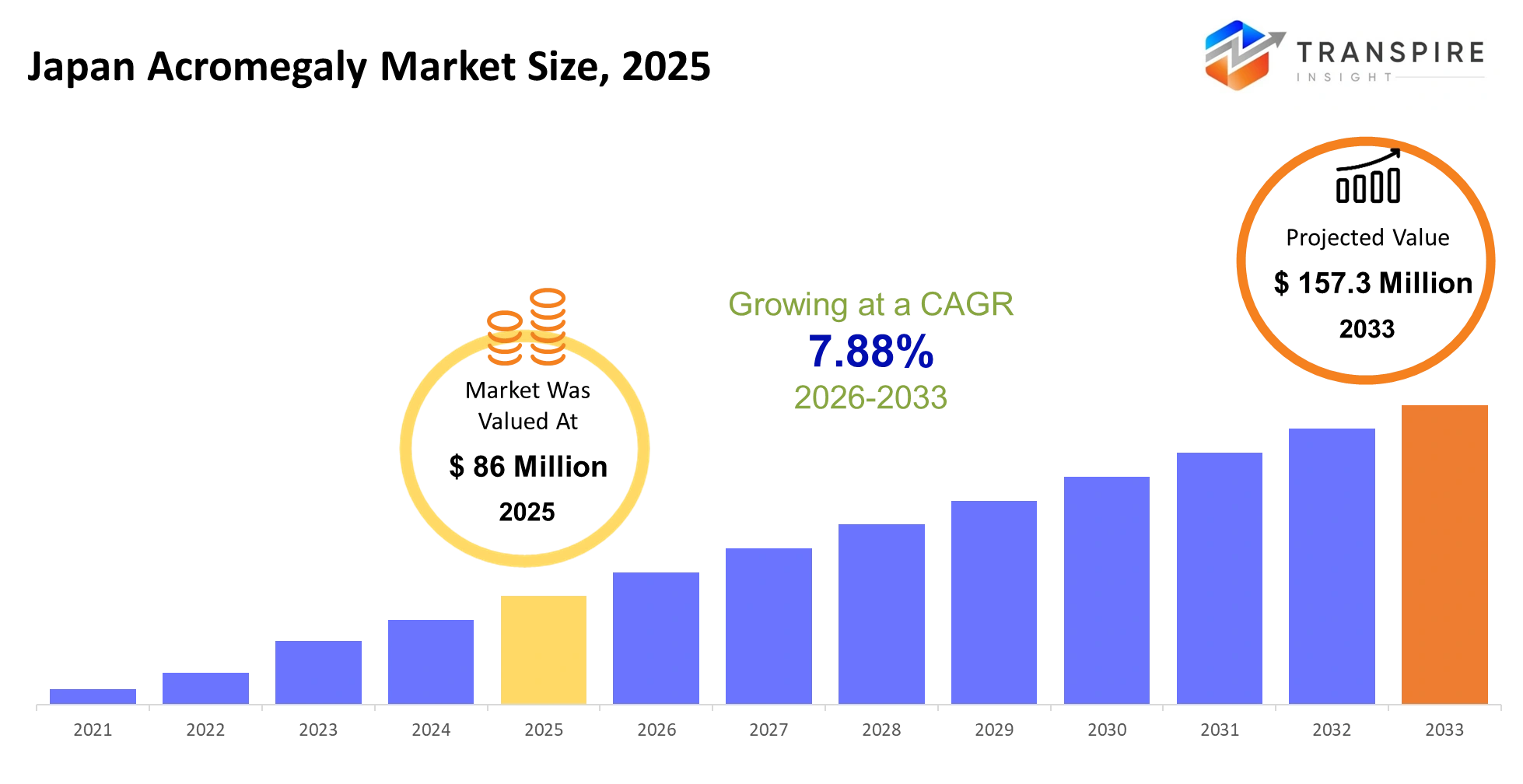
- Japan Acromegaly Market Size 2025: USD 86 Million
- Japan Acromegaly Market Size 2033: USD 157.3 Million
- Japan Acromegaly Market CAGR: 7.88%
- Japan Acromegaly Market Segments: By Treatment (Drug Therapy, Surgery, Radiation, Hormonal Therapy), By Diagnosis (Hormone Tests, Imaging, Clinical, Genetic), By End-User (Hospitals, Clinics, Research Institutes, Patients).
To learn more about this report,  Download Free Sample Report
Japan Acromegaly Market Summary:
The Japan Acromegaly Market size is estimated at USD 86 Million in 2025 and is anticipated to reach USD 157.3 Million by 2033, growing at a CAGR of 7.88% from 2026 to 2033. Japan's advanced medical system together with its powerful drug manufacturing sector and its government programs which enhance rare disease treatment access create the foundation for business development in the nation. The demand for effective treatments continues to grow because the country faces two challenges: its population is aging and the number of people with pituitary disorders is increasing.
The market treatment segments are led by somatostatin analogues (SSAs) which provide superior performance for managing growth hormone levels, whereas the market will experience rapid expansion through new treatments that include growth hormone receptor antagonists and other drug classes. The market will experience expansion in the upcoming years through three factors which include ongoing research activities and innovative drug development work and a greater emphasis on early disease detection methods.
Key Market Trends & Insights:
- The increased understanding and early identification of acromegaly in Japan lead to better results for patients. The healthcare system benefits from enhanced screening programs which provide better access to endocrinologists and advanced imaging technologies that enable earlier detection of medical conditions.
- The medical field sees extensive use of somatostatin analogues which help control growth hormone levels. Healthcare professionals select long-acting formulations and improved drug delivery systems as their first-line treatment option because these therapies enhance patient compliance.
- Treatment approaches in Japan's acromegaly market develop according to the increasing demand for personalized medicine. Physicians use patient response and hormone levels together with tumor characteristics to customize their therapies which results in better treatment outcomes and advances the move toward personalized medical treatment.
- Research and development progress receives acceleration from both local and international pharmaceutical companies which maintain strong operations in the industry. Continuous drug formulation development together with clinical trial execution and pipeline therapy advancement will create more treatment options which will drive market expansion and enhance long-term acromegaly patient care results.
- Market growth depends on government assistance for rare disease treatment and the implementation of reimbursement systems that benefit patients. Financial assistance programs and high-cost therapy insurance coverage practices enable better patient access to treatments while driving Japanese healthcare providers to implement modern medical technologies.
Japan Acromegaly Market Segmentation
By Treatment
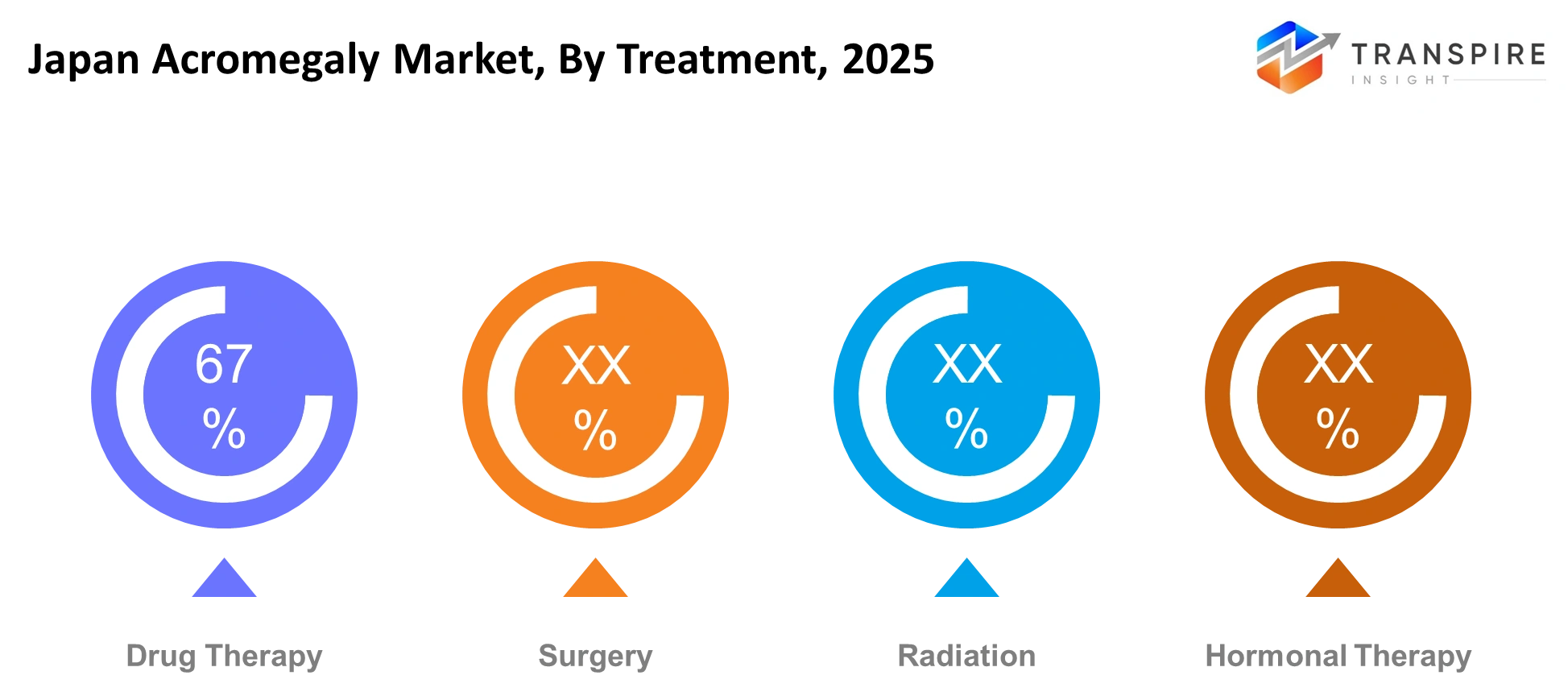
- Drug Therapy: Japan uses drug therapy as its primary treatment method which employs somatostatin analogues and dopamine agonists and growth hormone receptor antagonists. The medications provide patients with a non-invasive treatment solution which enables them to manage their hormone production and tumor advancement over an extended period.
- Surgery: Transsphenoidal surgery serves as the primary treatment method for patients who develop acromegaly from pituitary tumors. Japanese hospitals achieve high surgical success rates because their advanced techniques and skilled neurosurgeons enable them to perform optimal procedures on patients who present with early-stage accessible tumors.
- Radiation: Healthcare providers employ radiation therapy when patients experience insufficient surgical results or when drug treatment becomes impossible. The treatment method controls both tumor development and hormone production throughout the duration of the treatment process. The treatment method remains restricted because its effects occur after a delay and it presents risks of developing long-term complications . Healthcare professionals must select patients with precision because of these treatment challenges.
- Hormonal Therapy: The primary goal of hormonal therapy exists to treat hormone imbalances which occur in patients who have acromegaly. The treatment improves its results when combined with other medical interventions. The increasing importance of endocrine management in Japan leads to more healthcare providers using hormone treatments to achieve better results in disease management.
To learn more about this report, Download Free Sample Report
By Diagnosis
- Hormone Tests: The primary method for diagnosing hormone-related disorders requires the assessment of growth hormone and insulin-like growth factor-1 levels through blood testing. Japanese advanced laboratory facilities provide precise testing which allows medical professionals to conduct hormone tests for both diagnostic purposes and treatment progress assessment.
- Imaging: Doctors use MRI scanning techniques to detect pituitary tumors and determine their exact location. Japan's sophisticated medical imaging system provides accurate tumor imaging which helps doctors create treatment strategies and enhances surgical results for patients with acromegaly.
- Clinical: Doctors use physical examination results to make clinical diagnoses which include evaluating face changes and hand size increase and joining pain. Japanese healthcare providers conduct clinical assessments together with laboratory testing to achieve complete and precise condition diagnosis.
- Genetic: Genetic testing has emerged as a new diagnostic area which enables researchers to detect both inherited traits and uncommon genetic variations that cause acromegaly. This method, which is still emerging in Japan, enables doctors to identify endocrine disorders in patients who are most likely to develop them.
By End-User
- Hospitals: The presence of advanced diagnostic equipment and surgical capabilities and dedicated endocrinology units enables hospitals to dominate the market. In Japan, hospitals serve as the primary centers for diagnosis, treatment, and long-term management of acromegaly.
- Clinics: Clinics play an essential role in providing early diagnosis and routine monitoring and subsequent medical treatment. The facility provides healthcare services which enable patients to control their health through scheduled appointments and doctor-approved medication modifications.
- Research Institutes: Research institutes drive medical progress through their clinical trials and research studies which lead to better diagnostic and treatment solutions. Japan uses its strong research base to create new treatments while deepening its understanding of acromegaly which will fuel market expansion.
- Patients: Patients as end-users increasingly participate in both their treatment selection process and their self-care activities. Japanese patients demonstrate better treatment results because they now possess better knowledge and information about therapy compliance and health monitoring and healthy lifestyle practices.
Country Insights
The acromegaly market in Japan receives support from three main factors which include its advanced healthcare system and government funding and availability of specialized endocrinology services. The country’s universal health insurance system ensures that patients can access costly treatments such as hormone therapies and surgeries which result in better diagnosis rates and improved long-term disease management results.
The Japanese market experiences consistent expansion because of two factors which include its growing elderly population and its increasing awareness of rare diseases. The market gains strength through the presence of major pharmaceutical companies and active clinical research activities and the implementation of new treatment methods. The countrywide health system in the country benefits from early diagnosis methods which enable doctors to identify diseases more accurately through advanced medical techniques and better patient observation systems.
Recent Development News
- The Phase 3 clinical trials of Debio 4126 evaluate a new long-acting octreotide formulation which enables patients to receive treatment every three months instead of monthly injections. The new technology will help patients follow their treatment plans better while making it easier for them to access somatostatin analogue treatments.
- Next-generation therapies progress through development with their combination of oral medications and targeted treatments which include growth hormone receptor antagonists. The ongoing research and clinical development efforts will create major changes to acromegaly treatment in Japan and throughout the world according to current studies.
|
Report Metrics |
Details |
|
Market size value in 2025 |
USD 86 Million |
|
Market size value in 2026 |
USD 92.5 Million |
|
Revenue forecast in 2033 |
USD 157.3 Million |
|
Growth rate |
CAGR of 7.88% from 2026 to 2033 |
|
Base year |
2025 |
|
Historical data |
2021 – 2024 |
|
Forecast period |
2026 – 2033 |
|
Report coverage |
Revenue forecast, competitive landscape, growth factors, and trends |
|
Country scope |
Japan |
|
Key company profiled |
Novartis, Pfizer, Ipsen, Roche, Merck, Bayer, Takeda, Astellas, Sanofi, Eli Lilly, AstraZeneca, Teva, Bristol Myers Squibb, Daiichi Sankyo, GSK. |
|
Customization scope |
Free report customization (country, regional & segment scope). Avail customized purchase options to meet your exact research needs. |
|
Report Segmentation |
By Treatment (Drug Therapy, Surgery, Radiation, Hormonal Therapy), By Diagnosis (Hormone Tests, Imaging, Clinical, Genetic), By End-User (Hospitals, Clinics, Research Institutes, Patients). |
Key Japan Acromegaly Market Company Insights
The acromegaly market in Japan operates under intense competition because international pharmaceutical companies like Novartis Pfizer and Ipsen maintain market dominance through their existing somatostatin analogues and hormone treatment product lines. The companies concentrate on their research activities to develop new long-lasting treatments and innovative next-generation oral medications which help them maintain their position as leaders in rare endocrine disorder management. The companies use their research and development budget together with their worldwide clinical testing facilities to create new medical solutions that enhance patient health results.
Takeda Astellas Sanofi and Eli Lilly work together to develop endocrine treatments through their research agreements and product development activities. The competitive environment in the industry receives additional support from AstraZeneca Teva Bristol Myers Squibb Daiichi Sankyo GSK Merck Bayer and Roche which utilize their strong distribution systems and biologic research capabilities and business alliances. The companies work together to transform Japan's acromegaly market through their innovative activities and their success in obtaining regulatory permits and their efforts to make advanced treatments more accessible.
Company List
- Novartis
- Pfizer
- Ipsen
- Roche
- Merck
- Bayer
- Takeda
- Astellas
- Sanofi
- Eli Lilly
- AstraZeneca
- Teva
- Bristol Myers Squibb
- Daiichi Sankyo
- GSK
Japan Acromegaly Market Report Segmentation
By Treatment
- Drug Therapy
- Surgery
- Radiation
- Hormonal Therapy
By Diagnosis
- Hormone Tests
- Imaging
- Clinical
- Genetic
By End-User
- Hospitals
- Clinics
- Research Institutes
- Patients
Frequently Asked Questions
Find quick answers to common questions.
The approximate Japan Acromegaly Market size for the market will be USD 157.3 Million in 2033.
Key segments for the Japan Acromegaly Market areBy Treatment (Drug Therapy, Surgery, Radiation, Hormonal Therapy), By Diagnosis (Hormone Tests, Imaging, Clinical, Genetic), By End-User (Hospitals, Clinics, Research Institutes, Patients).
Major Japan Acromegaly Market players are Novartis, Pfizer, Ipsen, Roche, Merck, Bayer, Takeda, Astellas, Sanofi, Eli Lilly, AstraZeneca, Teva, Bristol Myers Squibb, Daiichi Sankyo, GSK.
The Japan Acromegaly Market size is USD 86 Million in 2025.
The Japan Acromegaly Market CAGR is 7.88%.
- Novartis
- Pfizer
- Ipsen
- Roche
- Merck
- Bayer
- Takeda
- Astellas
- Sanofi
- Eli Lilly
- AstraZeneca
- Teva
- Bristol Myers Squibb
- Daiichi Sankyo
- GSK
Recently Published Reports
-
May 2026
Biosimilars Market
Biosimilars Market By Product Type (Monoclonal Antibodies, Recombinant Hormones, Erythropoietin, G-CSF, Others), By Indication (Oncology, Autoimmune Diseases, Blood Disorders, Diabetes, Others), By Manufacturing Type (In-House Manufacturing, Contract Manufacturing), By Distribution Channel (Hospital Pharmacies, Retail Pharmacies, Online Pharmacies), By Industry Analysis, Size, Share, Growth, Trends, and Forecasts 2021-2033
-
Apr 2026
Gastrointestinal Endoscopy Market
Gastrointestinal Endoscopy Market By Type (Rigid Gastrointestinal Endoscope, Flexible Gastrointestinal Endoscopes, Disposable Gastrointestinal Endoscope), By Procedure Type (Colonoscopy, Gastroscopy, Duodenoscopy, Enteroscopy, Flexible Sigmoidoscopy, Others), By Application (Diagnosis, Treatment), By End-Users (Hospitals, Ambulatory Surgical Centers, Specialty Clinics, Laboratories, Others), By Industry Analysis, Size, Share, Growth, Trends, and Forecasts 2021-2033
-
Apr 2026
Rare Inherited Metabolic Disorder Drug Market
Rare Inherited Metabolic Disorder Drug Market By Drug Class (Enzyme Replacement Drugs, Gene Therapy Drugs, Substrate Reduction Drugs, Small Module Drugs, Protein Drugs), By Route of Administration(Parenteral, Oral, Intrathecal), By Clinical Development (Marketed Drugs, Late Stage Clinical Phase III, Early Stage Clinical Phase I-II, Preclinical Candidates), By Indication (Lysosomal Storage Disorders, Urea Cycle Disorders, Amino Acid Metabolic Disorders, organic Acidemias, Peroximal Disorders), By Industry Analysis, Size, Share, Growth, Trends, and Forecasts 2021-2033
-
Jan 2026
Pharmaceutical Cleanroom Technology Market
Pharmaceutical Cleanroom Technology Market By Product (Equipment, Consumables, Services); By Cleanroom Type (Standard Cleanrooms, Modular Cleanrooms); By End Use (Pharmaceutical Companies, Biotechnology Companies), By Industry Analysis, Size, Share, Growth, Trends, and Forecasts 2021-2033