Market Summary
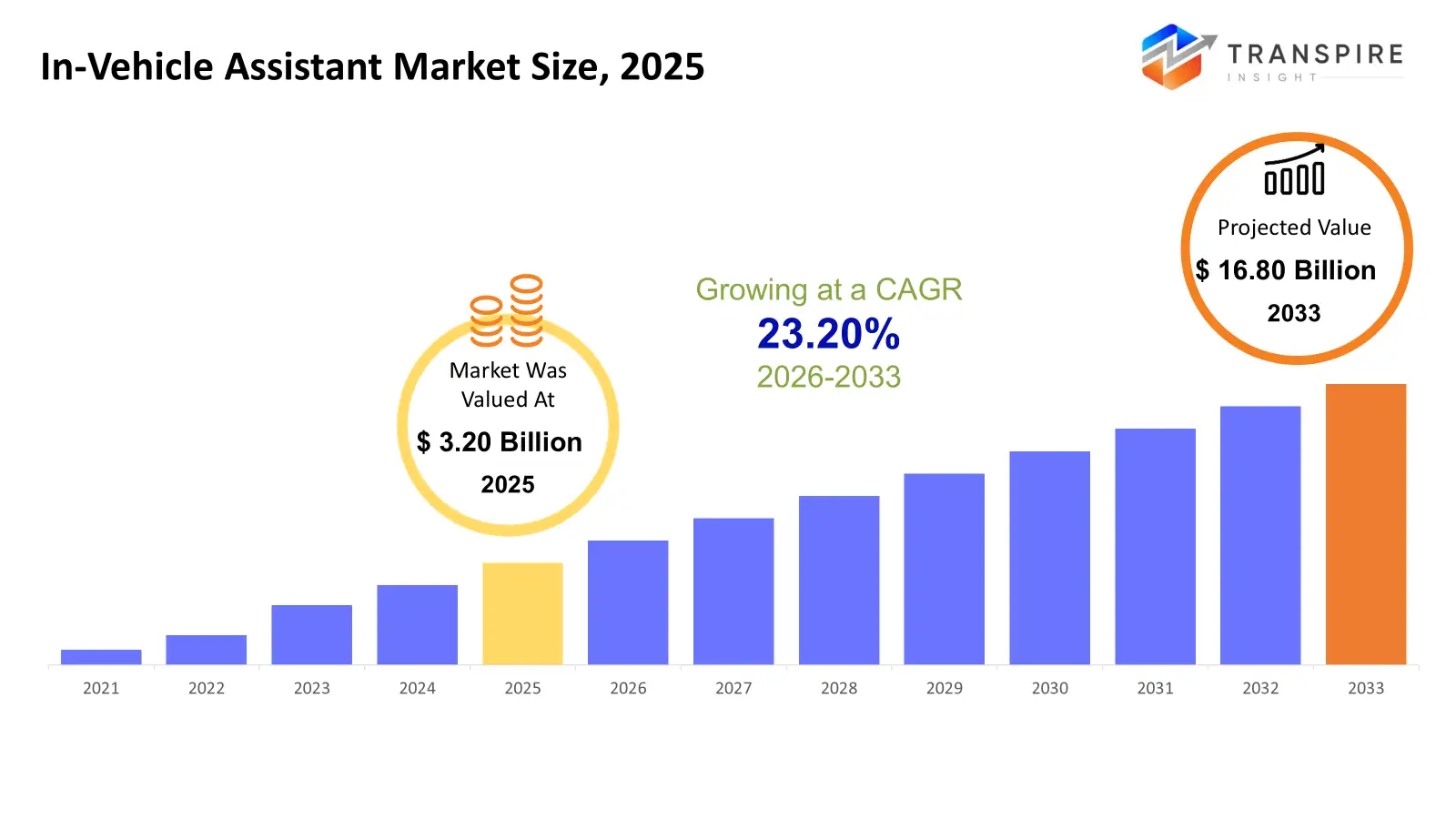
The global In-Vehicle Assistant market size was valued at USD 3.20 billion in 2025 and is projected to reach USD 16.80 billion by 2033, growing at a CAGR of 23.20% from 2026 to 2033. Rising use of AI voice tech pushes global In-Vehicle Assistant markets ahead. Connected cars that run on adaptable software see more uptake every year. Drivers want features they can operate without touching screens or buttons. Car makers now build smart helpers right into dashboards and controls. Safety improves when eyes stay on the road instead of devices. Navigation becomes smoother thanks to real-time updates spoken aloud. Infotainment systems talk back, take requests, and adjust settings. Vehicle functions like climate or lighting respond to verbal cues.
Market Size & Forecast
- 2025 Market Size: USD 3.20 Billion
- 2033 Projected Market Size: USD 16.80 Billion
- CAGR (2026-2033): 23.20%
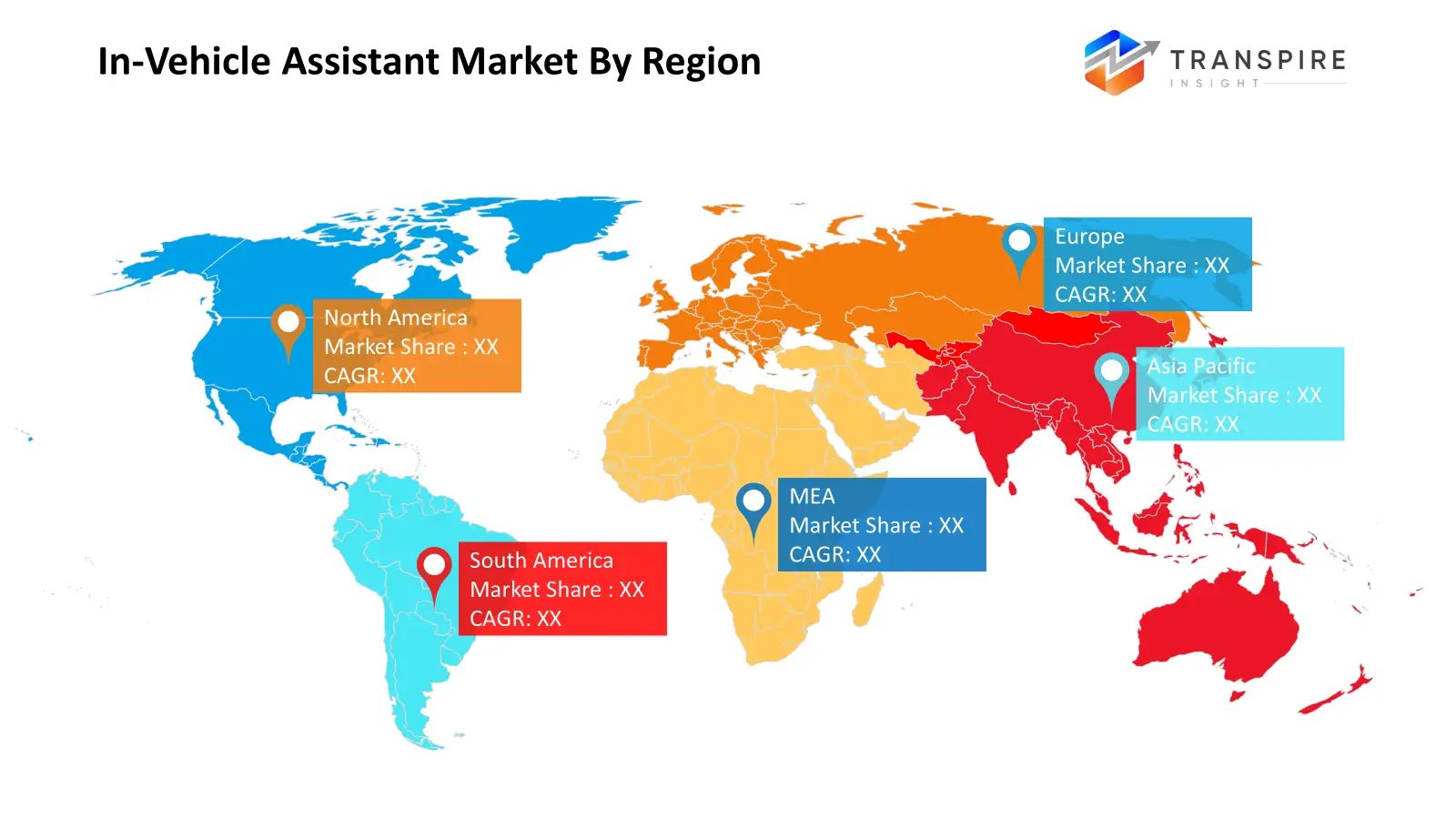
- North America: Largest Market in 2026
- Asia Pacific: Fastest Growing Market
To learn more about this report,  Download Free Sample Report
Key Market Trends Analysis
- The North American market share is estimated to be approximately 42% in 2026. Few places embrace new vehicle tech like North America, where smart cars catch on fast. Because major automakers act early, digital helpers live inside many dashboards here. Software firms thrive alongside AI specialists, shaping how people interact with their rides. A steady appetite for connectivity keeps things moving forward across roads north of Mexico.
- Software-defined cars are rolling out fast across the United States, pushing local demand ahead. People there really want them. Car builders and tech firms running on cloud systems work closely together, fueling growth from another angle.
- Not far behind comes Asia Pacific, where factories roll out huge numbers of vehicles. Regional carmakers push hard into AI helpers built right into dashboards. A growing number want smarter rides that link up easily, whether buying basic models or high-end ones. Momentum builds fast on all fronts at once.
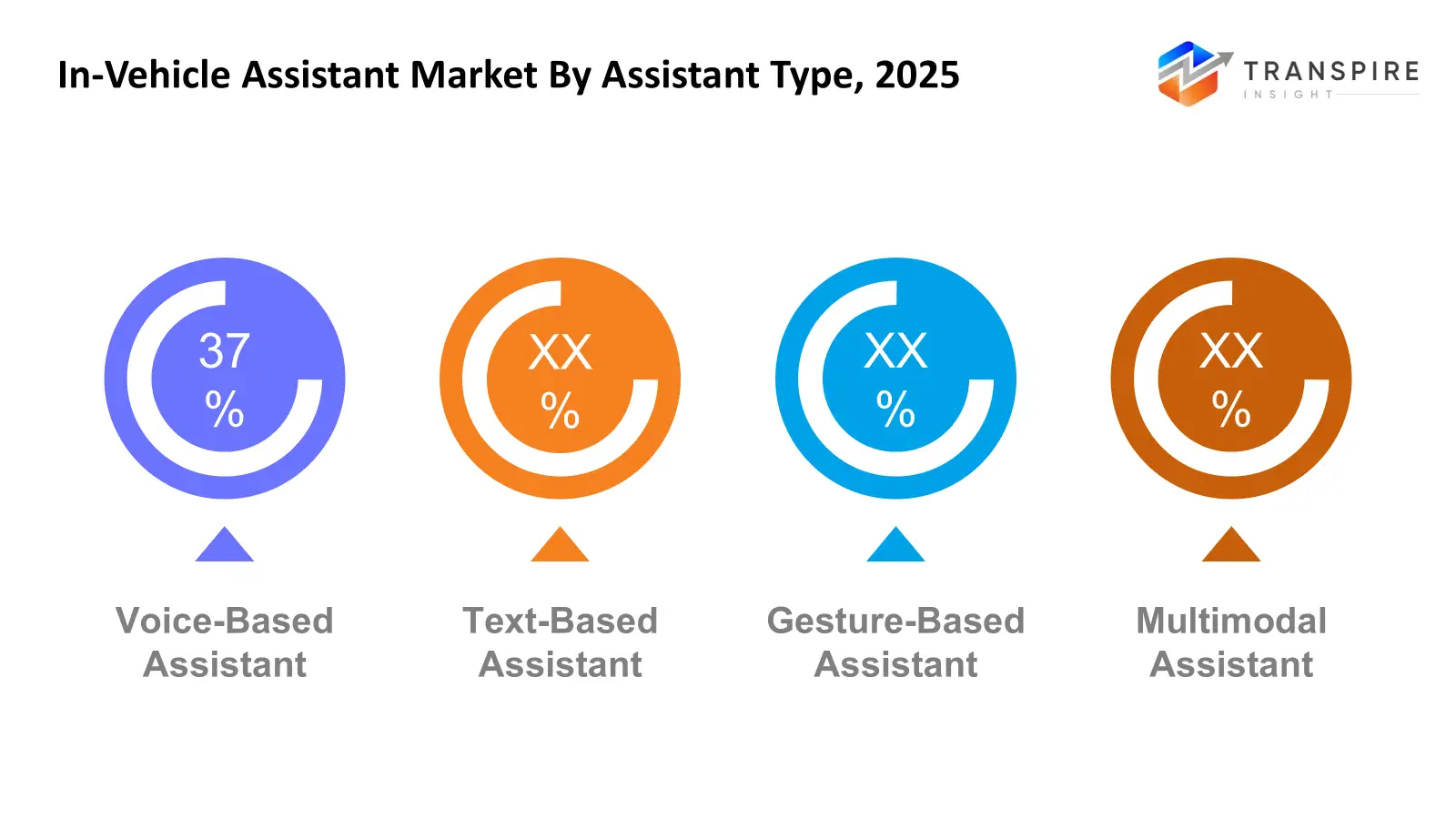
- Voice-Based Assistant shares approximately 38% in 2026. By assistant type voice-based. Out on the road, voice helpers are taking charge - car makers lean this way because letting drivers keep their hands free helps them stay safe while handling more tasks inside the vehicle. Though tech keeps growing, speaking stays simple.
- Artificial intelligence, along with natural language processing, makes machines grasp context, adapt responses, and link smoothly into car tech and online platforms.
- Now more folks are trying hybrid setups, which let devices handle quick tasks while leaning on the cloud for heavy thinking and fresh upgrades now and then.
- Focused mostly on drivers, these helpers grow popular as ways to cut distractions that pop up more often. Navigation gets sharper because attention shifts toward precision while managing vehicles live adds pressure too. Tools adjust fast when controlling cars matters right away during trips.
- Inside cars today, helpers powered by voice and artificial intelligence are taking shape slowly. Not just tools, they let people talk to their vehicles without touching anything. Through these systems, finding routes, adjusting music, changing cabin temperature, sending messages, or checking engine health happens more smoothly.
Out there, smarter algorithms help cars respond faster and understand better. Instead of just hearing words, today’s helpers catch the meaning behind what you say. Over weeks, they start noticing your habits, favorite routes, and usual stops. Because they connect to online hubs, fresh features arrive without visits to dealerships. Information flows live, from traffic shifts to calendar changes. Phones pair effortlessly; playlists and messages move across devices seamlessly. Learning happens quietly, adapting without being told each time fueling steady growth in the in-vehicle assistant market.
A car's built-in helper is shifting from add-on entertainment into something drivers rely on every day. Because hands stay on the wheel, attention stays down the road - voice does more, buttons do less. As these helpers grow smarter, they link directly to tools that warn about tire pressure before it drops too low. Updates arrive silently overnight, while driving aids learn how someone likes their seat position or following distance. Functions once separate now unfold together through one steady presence inside the cabin.
Working together, car makers team up with tech firms and coders to build flexible digital helpers for cars. Voice precision sets some apart, while others stand out through wide language options. Deep links into car electronics matter just as much as steady performance on rough roads or long highways. When autos connect more and drive themselves, these built-in aides will quietly guide how people interact inside the cabin.
In-Vehicle Assistant Market Segmentation
By Assistant Type
- Voice-Based Assistant
Starting with your voice, it handles directions without needing buttons. Instead of touching screens, you speak to manage music or calls. Talking replaces tapping when adjusting settings inside the car. With spoken words, controls respond while driving. Not pressing anything, just saying what you need gets results. Sound waves turn into actions for navigation, too. Using speech means less distraction from the road ahead.
- Text-Based Assistant
A screen-based helper answers typed words instead of spoken ones. This kind works best when quiet is needed. Typing lets you ask questions without making a sound. It handles messages, looks things up, and runs apps quietly, too. Some folks just like pressing keys more than talking out loud.
- Gesture-Based Assistant
A wave of the hand turns things on. This helper watches motion using sensors and a camera. Movement guides what happens inside the car. A flick or shift does tasks without touching buttons. It sees arms and hands to act. Simple motions replace switches. The system responds when it notices how you move.
- Multimodal Assistant
A car helper that listens, sees, touches, and responds through motion, too. Not just one way of talking, but many ways of working together somehow. Voice talks while fingers tap when needed, then stops. Movements guide what happens next without saying much at all. Each part connects differently depending on how you reach out. This mix makes using it feel smoother over time, actually.
To learn more about this report, Download Free Sample Report
By Technology
- Artificial Intelligence
Learning inside car assistants comes alive through smart tech that shapes choices, fine-tunes responses. One moment it guides, the next it adapts - driven by patterns, shaped by use. Personal touches emerge not from scripts but from experience built over time. Decisions form quietly, behind the scenes, fueled by what came before.
- Natural Language Processing
Funny how machines now grasp our words, almost like they are listening - picking up meaning so responses fit just right. Sentences get untangled not by rules but by sense, making answers feel less robotic. When you speak, it’s not just heard - it’s weighed, shaped by context that shifts on quiet cues. Meaning slips through slang, tone, even silence, yet still lands close to intent. Commands become clearer when the system gets not only what is said but also why.
- Speech Recognition
Voices turn into controls, letting drivers operate the car and entertainment by talking. Instead of pressing buttons, sound becomes signals that systems understand instantly. Speaking activates features without needing touch. Words trigger responses inside the dashboard through hidden listening tools. A driver says something, and machines respond right away. Talking replaces tapping when adjusting settings on the move.
- Computer Vision
From cameras, machines learn hand movements, watch drivers, while understanding their surroundings. A single system handles motion detection and attention tracking, yet adapts to scene changes. Seeing becomes knowing when visuals guide responses without touch. Movement shapes interaction as eyes stay on the road, and software stays alert. What appears as images transforms into actions behind the lens.
- Cloud-Based Assistant Platform
A workspace floating in the cloud keeps info fresh, tools running, while growing smart behind the scenes. Updates slip in quietly. Data flows fast when needed. Power expands without warning.
By Deployment
- Cloud-Based Assistant
Floating somewhere out there in digital space, this helper uses remote servers to run its smarter tools. Live data flows without pause thanks to connections far beyond your device. Updates arrive like quiet shifts overnight - no effort needed.
- Hybrid Assistant
A smart helper that uses both local device power and online links to keep things fast, steady, and smooth. Works close by when it can, reaches out when needed, and keeps running without hiccups. Balances speed and stability by switching modes behind the scenes.
- Fully Embedded In-Vehicle Assistant
Built right into the car, it works on its own without needing a signal. Even if service drops, everything keeps running like before.
By End-Users
- Driver-Centric Assistant
Starting with the person behind the wheel, help comes by listening rather than pressing buttons. It guides through routes while keeping eyes on the road. Safety steps up when hands stay on controls where they belong. Voice does the work, so attention never drifts far. Distractions fade as spoken words handle tasks instead.
- Passenger-Centric Assistant
During trips, riders get a smoother experience through tailored entertainment options. Comfort improves when settings adjust to individual preferences automatically. Accessing favorite media becomes simpler with smart suggestions along the way. Instead of searching, content appears based on past choices. Travel feels less routine once systems respond to personal habits. Infotainment adapts quietly in the background without needing input.
Regional Insights
Cars in North America already use smart tools inside them because people there started using internet-connected cars early. Tech companies and car makers are everywhere in this region, which helps spread these systems fast. In the United States, more drivers now talk to their dashboards thanks to helpers that respond to voice. Cloud-powered services plug into vehicles easily, making tasks smoother without touching buttons. People want safer ways to control music or messages while driving, so they pick models with fewer physical controls. Rules that push for less distraction behind the wheel also give this shift extra support. Growth keeps moving as long as safety stays a priority.
Growth ticks upward across Europe, pushed by tight rules on car safety, a shift toward electric models, and a stronger pull toward high-end features inside vehicles. In Germany, France, and the United Kingdom, carmakers weave smart assistant tech into dashboards - not just for directions but for checking engine health and meeting strict emissions targets. Working hand in glove, auto manufacturers and coders build voice helpers that speak local dialects, fit regional needs. Progress moves quietly, yet steadily, shaped by regulation, technology, and real-world demands.
Growth surges fastest here, powered by a booming car sector alongside more electric and internet-connected cars rolling off assembly lines. Smart travel tools pull stronger interest from buyers, helping momentum build even faster. Leading the charge: China, Japan, and South Korea, especially automakers in China, are pushing voice helpers and artificial intelligence into both affordable and high-end models. Phones link tighter with dashboards now, speech tech understands native dialects better, while official backing for smarter roads gives another boost along the way.
To learn more about this report, Download Free Sample Report
Recent Development News
- September 5, 2025 – Citroen launched the Cara in-car AI assistant.
(Source:https://ackodrive.com/news/citroen-launches-cara-in-car-ai-assistant-key-features-explained/)
- February 12, 2025 – Stellantis to launch AI-powered in-car assistant.
|
Report Metrics |
Details |
|
Market size value in 2025 |
USD 3.20 Billion |
|
Market size value in 2026 |
USD 3.90 Billion |
|
Revenue forecast in 2033 |
USD 16.80 Billion |
|
Growth rate |
CAGR of 23.20% from 2026 to 2033 |
|
Base year |
2025 |
|
Historical data |
2021 – 2024 |
|
Forecast period |
2026 – 2033 |
|
Report coverage |
Revenue forecast, competitive landscape, growth factors, and trends |
|
Regional scope |
North America; Europe; Asia Pacific; Latin America; Middle East & Africa |
|
Country scope |
United States; Canada; Mexico; United Kingdom; Germany; France; Italy; Spain; Denmark; Sweden; Norway; China; Japan; India; Australia; South Korea; Thailand; Brazil; Argentina; South Africa; Saudi Arabia; United Arab Emirates |
|
Key company profiled |
Apple Inc., Amazon.com, Inc., Google LLC, Microsoft Corporation, Nuance Communications, Cerence Inc., SoundHound Inc., Harman International (Samsung Electronics), Baidu, Inc., Alibaba Group Holding Limited, NVIDIA Corporation, Robert Bosch GmbH, Aptiv PLC, Visteon Corporation, LG Electronics Inc., Panasonic Corporation, and Hyundai Mobis Co., Ltd |
|
Customization scope |
Free report customization (country, regional & segment scope). Avail customized purchase options to meet your exact research needs. |
|
Report Segmentation |
By Assistant Type (Voice-Based Assistant, Text-Based Assistants, Gesture-Based Assistants, Multimodal Assistant), By Technology (Artificial Intelligence, Natural Language Processing, Speech Recognition, Computer Vision, Cloud-Based Assistant Platform), By Deployment (Cloud-Based Assistant, Hybrid Assistant, Fully Embedded In-Vehicle Assistant), By End-Users (Driver-Centric Assistant, Passenger-Centric Assistant) |
Key In-Vehicle Assistant Company Insights
One name stands out in car-based voice tech: Cerence Inc., building smart spoken interfaces made just for vehicles. Instead of generic tools, their systems hear commands clearly, grasp intent accurately, and then respond in real time across many languages. These are not add-ons; they weave into dashboards and controls at the core level. Partnerships run deep with major auto makers and top hardware developers worldwide, shaping both built-in and cloud-linked setups that react fast without delays. Safety stays central, thanks to ruggedized design choices and constant updates behind the scenes. Over time, this dedication to performance under pressure makes them hard to replace inside tomorrow’s smarter cars.
Key In-Vehicle Assistant Companies:
- Apple Inc.
- com, Inc.
- Google LLC
- Microsoft Corporation
- Nuance Communications
- Cerence Inc
- SoundHound Inc.
- Harman International (Samsung Electronics)
- Baidu, Inc
- Alibaba Group Holding Limited
- NVIDIA Corporation
- Robert Bosch GmbH
- Aptiv PLC
- Visteon Corporation
- LG Electronics Inc.
- Panasonic Corporation
- Hyundai Mobis Co., Ltd
Global In-Vehicle Assistant Market Report Segmentation
By Assistant Type
- Voice-Based Assistant
- Text-Based Assistants
- Gesture-Based Assistants
- Multimodal Assistant
By Technology
- Artificial Intelligence
- Natural Language Processing
- Speech Recognition
- Computer Vision
- Cloud-Based Assistant Platform
By Deployment
- Cloud-Based Assistant
- Hybrid Assistant
- Fully Embedded In-Vehicle Assistant
By End-Users
- Driver-Centric Assistant
- Passenger-Centric Assistant
Regional Outlook
- North America
- United States
- Canada
- Mexico
- Europe
- Germany
- United Kingdom
- France
- Spain
- Italy
- Rest of Europe
- Asia Pacific
- Japan
- China
- Australia & New Zealand
- South Korea
- India
- Rest of Asia Pacific
- South America
- Brazil
- Argentina
- Rest of South America
- Middle East & Africa
- Saudi Arabia
- United Arab Emirates
- South Africa
- Rest of the Middle East & Africa
Frequently Asked Questions
Find quick answers to common questions.
The approximate In-Vehicle Assistant Market size for the market will be USD 16.80 billion in 2033.
Key segments for the In-Vehicle Assistant Market are By Assistant Type (Voice-Based Assistant, Text-Based Assistants, Gesture-Based Assistants, Multimodal Assistant), By Technology (Artificial Intelligence, Natural Language Processing, Speech Recognition, Computer Vision, Cloud-Based Assistant Platform), By Deployment (Cloud-Based Assistant, Hybrid Assistant, Fully Embedded In-Vehicle Assistant), By End-Users (Driver-Centric Assistant, Passenger-Centric Assistant).
Major In-Vehicle Assistant Market players are Terra Universal, Clean Air Products, Azbil Corporation, and Getinge AB.
The North America region is leading the In-Vehicle Assistant Market.
The In-Vehicle Assistant Market CAGR is 23.20%.
- Apple Inc.
- com, Inc.
- Google LLC
- Microsoft Corporation
- Nuance Communications
- Cerence Inc
- SoundHound Inc.
- Harman International (Samsung Electronics)
- Baidu, Inc
- Alibaba Group Holding Limited
- NVIDIA Corporation
- Robert Bosch GmbH
- Aptiv PLC
- Visteon Corporation
- LG Electronics Inc.
- Panasonic Corporation
- Hyundai Mobis Co., Ltd
Recently Published Reports
-
Apr 2026
ATV & UTV Market
ATV & UTV Market Size, Share & Analysis Report By Type (ATV, and UTV), By Variants (Less Than 400 CC, 400 CC To 800 CC, and More Than 800 CC), and Geography (North America, Europe, Asia-Pacific, Middle East and Africa, South and Central America), 2021 - 2031
-
Apr 2026
Automotive Central Gateway Module Market
Automotive Central Gateway Module Market Size, Share & Analysis Report By Type (Ethernet Central Gateway Module, CAN Central Gateway Module, LIN Central Gateway Module, and FlexRay), By Application (Powertrain Control, Body Control, Infotainment System, Advanced Driver Assistance Systems (ADAS), and Others), By End User (Passenger Vehicles, and Commercial Vehicles), and Geography (North America, Europe, Asia-Pacific, Middle East and Africa, South and Central America), 2021 - 2031
-
Apr 2026
Automotive Engine Oil Filter Market
Automotive Engine Oil Filter Market Size, Share & Analysis Report By Filter Type (Fuel Filter, Engine Oil Filter, Hydraulic Oil Filter, and Others), By Filter Media (Cellulose, Synthetic, and Micro), By Sales Channel (OEMs, and Aftermarket), By Vehicle Type (Passenger Cars, Light Commercial Vehicles, Heavy Duty Trucks, Buses and Coaches, and Off-road Vehicles), and Geography (North America, Europe, Asia-Pacific, Middle East and Africa, South and Central America), 2021 - 2031
-
Apr 2026
Automotive Parts Aluminium Die Casting Market
Automotive Parts Aluminium Die Casting Market Size, Share & Analysis Report By Production Process (Pressure Die Casting, Vacuum Die Casting, Squeeze Die Casting, Gravity Die Casting), By Application (Body Parts, Engine Parts, Transmission Parts, Battery And Related Components, Other Application Types), and Geography (North America, Europe, Asia-Pacific, Middle East and Africa, South and Central America), 2021 - 2031
Our Clients