Home Medical Equipment Market Summary:
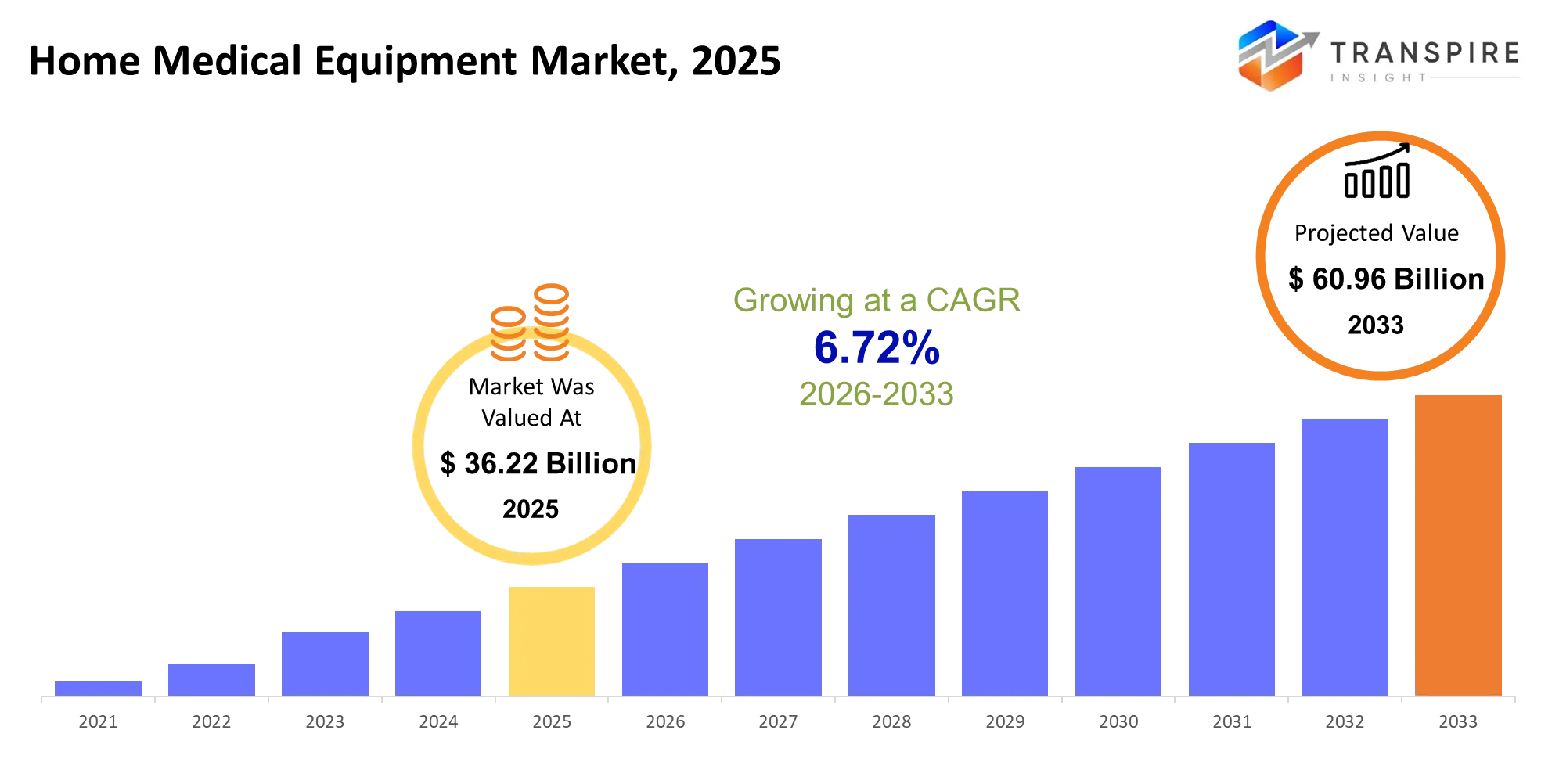
As per the Transpire Insight Analysis, The Home Medical Equipment Market size is estimated at USD 36.22 billion in 2025 and is anticipated to reach USD 60.96 billion by 2033, growing at a CAGR of 6.72% from 2026 to 2033.
The Home Medical Equipment Market supports the treatment, recovery, and management of everyday health outside of hospitals, which includes oxygen concentrators, infusion pumps, mobility aids, blood pressure monitors, and home dialysis. Over the course of three to five years, there has been a marked shift from isolated to connected equipment and coordinated care at home. This shift has been driven by the pressures on hospital capacity, ageing populations, the growth of hospital-at-home programmes and remote patient monitoring following chronic workforce shortages. The synergy between the connected monitoring and the clinical process means that clinicians can review readings remotely without having to visit the patient's home or hospital setting frequently. This evolution provides manufacturers with opportunities to pair equipment with software, services, and maintenance. The logic for this transition is clear: earlier hospital discharges and ongoing management of complex, chronic diseases will demand greater reliance on dependable home equipment, while digital connectivity will facilitate remote oversight of patients, making this approach more viable for patients, family members and clinicians.
Home Medical Equipment Market Size & Forecast:
- Market Size 2025: USD 36.22 Billion
- Expected Market Value (2033): USD 60.96 Billion
- Forecast CAGR (2026–2033): 6.72%
- Leading Region in 2025: North America
- Fastest Growing Region: Asia Pacific
- Key Company Profiles: Invacare, Medline Industries, Drive DeVilbiss, Philips, ResMed, Hillrom, Baxter, Fresenius Medical Care, Cardinal Health, Stryker, Sunrise Medical, Invacare, Omron Healthcare, GE HealthCare, Medtronic.
Key Home Medical Equipment Market Insights:
The market is moving from selling devices to connected devices with services, and usability and clinical integration are becoming key competitive differentiators. Affordability is a major determinant of regional growth and product adoption; remote-care infrastructure and reliable patient support are important.
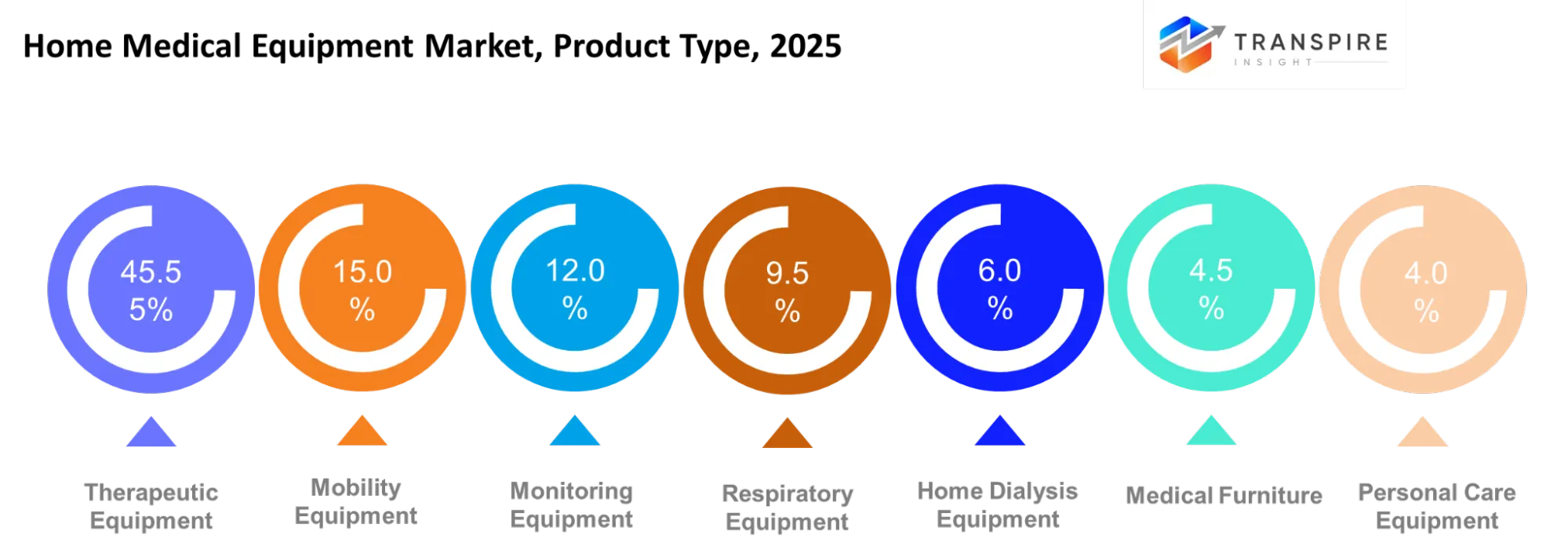
- Therapeutic equipment accounts for 45.55% of revenue, and ResMed has more than 27 million cloud-connected devices as of May 2025, further establishing data-driven respiratory therapy.
- Mobility equipment accounts for 15.0%, and lightweight, configurable power mobility is being developed by both Invacare and Sunrise Medical to help with ageing in place.
- Monitoring equipment makes up 12.0%, and Omron is expanding connected blood-pressure ecosystems to reach the physician's side of the equation.
- Respiratory equipment accounts for 9.5%, and Philips is reshoring its home respiratory and ventilation business with portable, wireless care products.
- Home dialysis equipment represents 6.0%, and Baxter and Fresenius Medical Care are developing home renal programs that include machines, training, and consumables.
- Medical furniture is 4.5%, and Hillrom is bringing beds and support surfaces together with caregiver workflow and remote-status tools.
- Personal care equipment represents 4.0%, and Medline is expanding managed-equipment programs to replace single purchases with contracts for a longer service life.
- Others have 3.45%, and Cardinal Health is leveraging distribution scale to enhance last-mile access to home-care supplies and devices.
- Almost 35% of 2026 sales were from connected remote-monitoring devices, indicating interoperability is becoming a buying factor.
What are the Key Drivers, Restraints, and Opportunities in the Home Medical Equipment Market?
Driver:
The expansion of hospital-at-home programmes and earlier patient discharge is shifting equipment requirements from clinical facilities into residential settings. The pandemic accelerated remote-care adoption, while persistent pressure on hospital beds has encouraged providers to manage suitable patients at home. This transition supports purchases and rentals of oxygen concentrators, infusion pumps, monitoring devices, and patient-support equipment, creating opportunities for recurring maintenance and service revenue.
Restraint:
Reimbursement and interoperability gaps still limit scale. Many connected devices generate data, but fragmented EHR integration, inconsistent payer coverage across regions, and the operational burden of monitoring large patient panels prevent providers from converting device use into billable, clinically actionable care. This persists because home-care workflows, data standards, and payment rules mature more slowly than device hardware.
Opportunity:
Connected care offers manufacturers opportunities to combine equipment with remote monitoring, maintenance, and clinical support. Bluetooth-enabled monitors, cloud-connected respiratory devices and automated medication systems can help providers supervise patients without continuous physical visits. Ageing populations and the growing need for independent living also create opportunities for mobility aids and assistive technologies. The United Nations projects that the population aged 60 and above will rise from 1.22 billion to 2.11 billion by 2050, strengthening the long-term case for accessible home-care solutions.
Driver Impact Analysis – Home Medical Equipment Market
|
Driver |
Relative Impact on Growth (%) |
Geographic Relevance |
Impact Timeline |
Demand Strength |
Growth Mechanism (5–10 words) |
Key Beneficiaries (5–10 words) |
Major Constraint (5–10 words) |
|
Rising prevalence of chronic diseases and ageing population |
27% |
North America, Europe, Asia-Pacific |
Long-term (≥4 years) |
High |
Sustains demand for respiratory, mobility, and monitoring equipment |
Medical device manufacturers, elderly patients, home-care providers |
High equipment costs and limited household affordability |
|
Shift from hospital-based treatment to home-based care |
24% |
North America, Europe, Asia-Pacific |
Medium-term (2–4 years) |
High |
Transfers post-acute recovery and long-term treatment into homes |
Home-care providers, equipment suppliers, patients, healthcare payers |
Limited caregiver availability and complex home-care requirements |
|
Expansion of remote patient monitoring and connected medical devices |
20% |
North America, Europe, Asia-Pacific |
Medium-term (2–4 years) |
High |
Connects home devices with clinicians for continuous monitoring |
Smart-device manufacturers, telehealth providers, technology vendors |
Connectivity gaps, cybersecurity risks, and interoperability challenges |
|
Healthcare cost containment and reimbursement support |
17% |
North America, Europe, selected Asia-Pacific markets |
Short-term (≤2 years) |
High |
Improves access through eligible insurance coverage and rental programs |
Insurers, equipment distributors, patients, home-health agencies |
Uneven reimbursement policies and restrictive coverage eligibility |
|
Technological advancement in portable, user-friendly, and energy-efficient equipment |
12% |
Asia-Pacific, North America, Europe |
Long-term (≥4 years) |
Medium |
Enhances portability, usability, treatment adherence, and device efficiency |
Medical technology firms, component suppliers, patients, distributors |
Regulatory compliance costs and affordability of advanced devices |
|
Total |
100% |
— |
— |
— |
— |
— |
What Has the Impact of Artificial Intelligence Been on the Home Medical Equipment Market?
AI also boosts home medical device responsiveness by helping turn everyday readings into clinical signals. Connected products such as BP and pulse oximetry monitors and glucose monitors can leverage algorithms to recognize abnormal readings, identify trends of decline, and triage alerts to clinicians. Connected respiratory therapy devices can use utilisation data to recognise non-adherence, and predictive analytics can assist service technicians in identifying hardware failures, replacement opportunities, or battery outages.
Automation accelerates efficiency: remote dashboards eliminate the need for manual review of patient logs, and intelligent alerts free clinicians to focus on patients who need attention now. When connected to therapeutic devices, these features help bring a greater sense of personalised care adjustments and align with the workflows of patients, caregivers, and clinicians. Accuracy of artificial intelligence depends on data quality, device interoperability, and connectivity. Errant data, patchy patient records, and false alarms could all erode clinicians' trust. Additionally, compatibility with existing systems comes with higher implementation costs, and smaller health providers often lack the technical resources. Regulatory oversight will be needed; in February 2026, the US Food and Drug Administration published new recommendations concerning the cybersecurity of medical devices with connected features, including the need for "adequate design" and secure documentation.
In August 2026, Abbott and Google announced a multi-year partnership integrating Abbott's Lingo over-the-counter continuous glucose monitor data into the Google Health app. This collaboration leverages a new generative AI tool called the Google Health Coach to analyse continuous metabolic data alongside other daily metrics. https://abbott.mediaroom.com/2026-08-11-Abbott-and-Google-launch-first-of-its-kind-partnership-to-transform-everyday-health-through-glucose-insights-and-AI
Key Home Medical Equipment Market Trends:
Home care is shifting from providing equipment to connected and service-supported treatment, ultimately offering patients increased independence. The manufacturers are reacting by pairing device reliability with remote monitoring and increased ease of daily use.
- Rewards for providers have been established for remote monitoring as a clinical service, helping them to implement devices as part of a continuing chronic-care program.
- Hospital-at-home is driving infusion and respiratory, dialysis, and monitoring devices into the home.
- Care of diabetes is becoming more closed-loop, with continuous glucose monitoring and automated insulin delivery.
- Home dialysis is becoming more policy supported and will be covered by Medicare for eligible patients with acute kidney injury starting in January 2025.
- Mobility products are moving to powered, ergonomic and rental solutions to facilitate ageing in place.
- Businesses are transitioning from selling products to providing services, consumables, and device plus software revenue.
- High-acuity home devices are increasingly expected to come with built-in Bluetooth, Wi-Fi, cellular, and cloud.
- AI-prompted triage is transforming the workflows of caregivers by prioritising risk instead of just presenting key vital-sign data.
- Regulators are codifying AI regulation, providing manufacturers with more channels for adaptive software updates.
- Electronic channels and homecare providers are becoming crucial in an effort to provide quicker fulfilment and set-up assistance for patients and agencies.
Home Medical Equipment Market Segmentation
Product Type:
Therapeutic Equipment leads the Home Medical Equipment Market with a revenue share of 45.55%. This is attributed to home oxygen therapy, nebulisers, infusion, and dialysis equipment that are an essential part of chronic treatment. Others have a share of 4.55%. Mobility Equipment contributes 15.0%, Monitoring Equipment 12.0%, Respiratory Equipment 9.5%, Home Dialysis Equipment 6.0%, Medical Furniture 4.5%, Personal Care Equipment 4.0%, and Others 3.45%. Further, Mobility Assist and Patient Support is also expected to witness a CAGR of 8.55% due to the preference for ageing-in-place and rising demand for light-duty equipment for the treatment of in-home health conditions.
Function:
Therapeutic applications anchor the market by enabling patients to receive treatment at home, while Diagnostic and Monitoring functions help detect changes in health conditions and support timely clinical intervention. Mobility Assistance addresses movement limitations, whereas Respiratory Support helps manage breathing disorders outside hospitals. Rehabilitation equipment supports recovery following surgery or injury, while Patient Support products improve comfort and safety. These functions are increasingly combined with connected monitoring and caregiver assistance, creating opportunities for manufacturers to offer integrated home-care solutions.
Connectivity:
Conventional devices remain important for households prioritising affordability, straightforward operation and minimal technical requirements. Connected equipment extends functionality through Bluetooth, Wi-Fi, Cellular, IoT-enabled, and Cloud-connected technologies, allowing readings and usage information to reach healthcare professionals remotely. These capabilities can improve follow-up and support earlier identification of potential complications. However, unreliable internet access, cybersecurity vulnerabilities, and compatibility issues can restrict adoption. Manufacturers that provide secure data transmission, intuitive interfaces, and flexible connectivity options can serve households with different technological capabilities.
Distribution Channel:
Retail Medical Stores and Pharmacies provide convenient access to essential equipment and purchasing guidance. Online Retailers improve price transparency, product comparison, and home delivery, particularly for frequently replaced supplies. Hospitals and Homecare Providers influence equipment selection through discharge planning, clinical recommendations, and ongoing patient support. Direct Sales channels allow manufacturers to explain specialised products, while Distributors extend geographic reach and inventory availability. Installation, maintenance, training and dependable after-sales service increasingly influence purchasing decisions, particularly for complex therapeutic devices and equipment requiring regular servicing.
End User:
Elderly people require mobility aids, monitoring devices and safety equipment to support independent living. Chronic-Disease Patients benefit from equipment that enables regular health tracking and treatment adherence, while Disabled Patients may require specialised mobility and patient-support solutions. Post-Surgical Patients often need temporary rehabilitation equipment, adjustable beds or assistance with daily activities. Pediatric Patients require appropriately sized devices and caregiver supervision. Homecare Patients may need combinations of therapeutic and monitoring equipment, while Caregivers depend on accessible interfaces, clear instructions and reliable technical support to maintain safe, consistent care.
Application:
Diabetes Care relies on glucose meters and continuous glucose monitoring systems, while Respiratory Care uses oxygen concentrators, nebulisers and related breathing-support equipment. Cardiovascular Care depends on blood pressure monitors and other devices for tracking relevant health indicators. Orthopedic Care incorporates rehabilitation aids and recovery-support products, whereas Mobility Care focuses on wheelchairs, walkers and transfer equipment. Wound Care uses suitable dressing and monitoring supplies to support recovery at home. Renal Care includes home dialysis systems for eligible patients, alongside water-treatment and related support equipment. Clinical guidance, patient training and maintenance remain essential across applications.
What are the Key Use Cases Driving the Home Medical Equipment Market?
The core use case is home-based management of chronic therapy, anchored by therapeutic equipment’s 45.55% share: patients use oxygen concentrators, CPAP/BiPAP systems, infusion pumps, and dialysis equipment to continue prescribed treatment while avoiding frequent facility visits.
Expanding applications include connected monitoring for diabetes, cardiovascular disease, and post-surgical recovery. Continuous glucose monitors, blood-pressure devices, pulse oximeters, and multi-parameter hubs enable clinicians to review trends remotely and intervene earlier, supported by reimbursable remote-monitoring workflows.
Emerging use cases combine AI, mobility, and caregiver support: automated insulin delivery, AI-assisted cardiac screening, smart hospital beds, and connected mobility aids help elderly and disabled patients remain independent while giving families and homecare agencies actionable safety and adherence data.
|
Report Metrics |
Details |
|
Market size value in 2025 |
USD 36.22 Billion |
|
Market size value in 2026 |
USD 38.66 Billion |
|
Revenue forecast in 2033 |
USD 60.96 Billion |
|
Growth rate |
CAGR of 6.72% from 2026 to 2033 |
|
Base year |
2025 |
|
Historical data |
2021 - 2024 |
|
Forecast period |
2026 - 2033 |
|
Report coverage |
Revenue forecast, competitive landscape, growth factors, and trends |
|
Regional scope |
United States; Canada; Mexico; United Kingdom; Germany; France; Italy; Spain; Denmark; Sweden; Norway; China; Japan; India; Australia; South Korea; Thailand; Brazil; Argentina; South Africa; Saudi Arabia; United Arab Emirates |
|
Key companies profiled |
Invacare, Medline Industries, Drive DeVilbiss, Philips, ResMed, Hillrom, Baxter, Fresenius Medical Care, Cardinal Health, Stryker, Sunrise Medical, Invacare, Omron Healthcare, GE HealthCare, Medtronic. |
|
Customization scope |
Free report customization (country, regional & segment scope). Available customized purchase options to meet your exact research needs. |
|
Report Segmentation |
Product Type (Therapeutic Equipment, Mobility Equipment, Monitoring Equipment, Respiratory Equipment, Home Dialysis Equipment, Medical Furniture, Personal Care Equipment, Others)Function (Therapeutic, Diagnostic, Monitoring, Mobility Assistance, Respiratory Support, Rehabilitation, Patient Support, Others)Connectivity (Conventional, Connected, Bluetooth, Wi-Fi, Cellular, IoT-Enabled, Cloud-Connected, Others)Distribution Channel (Retail Medical Stores, Online Retailers, Hospitals, Pharmacies, Homecare Providers, Direct Sales, Distributors, Others)End User (Elderly, Chronic-Disease Patients, Disabled Patients, Post-Surgical Patients, Pediatric Patients, Homecare Patients, Caregivers, Others)Application (Diabetes Care, Respiratory Care, Cardiovascular Care, Orthopedic Care, Mobility Care, Wound Care, Renal Care, Others). |
Which Regions are Driving the Home Medical Equipment Market Growth?
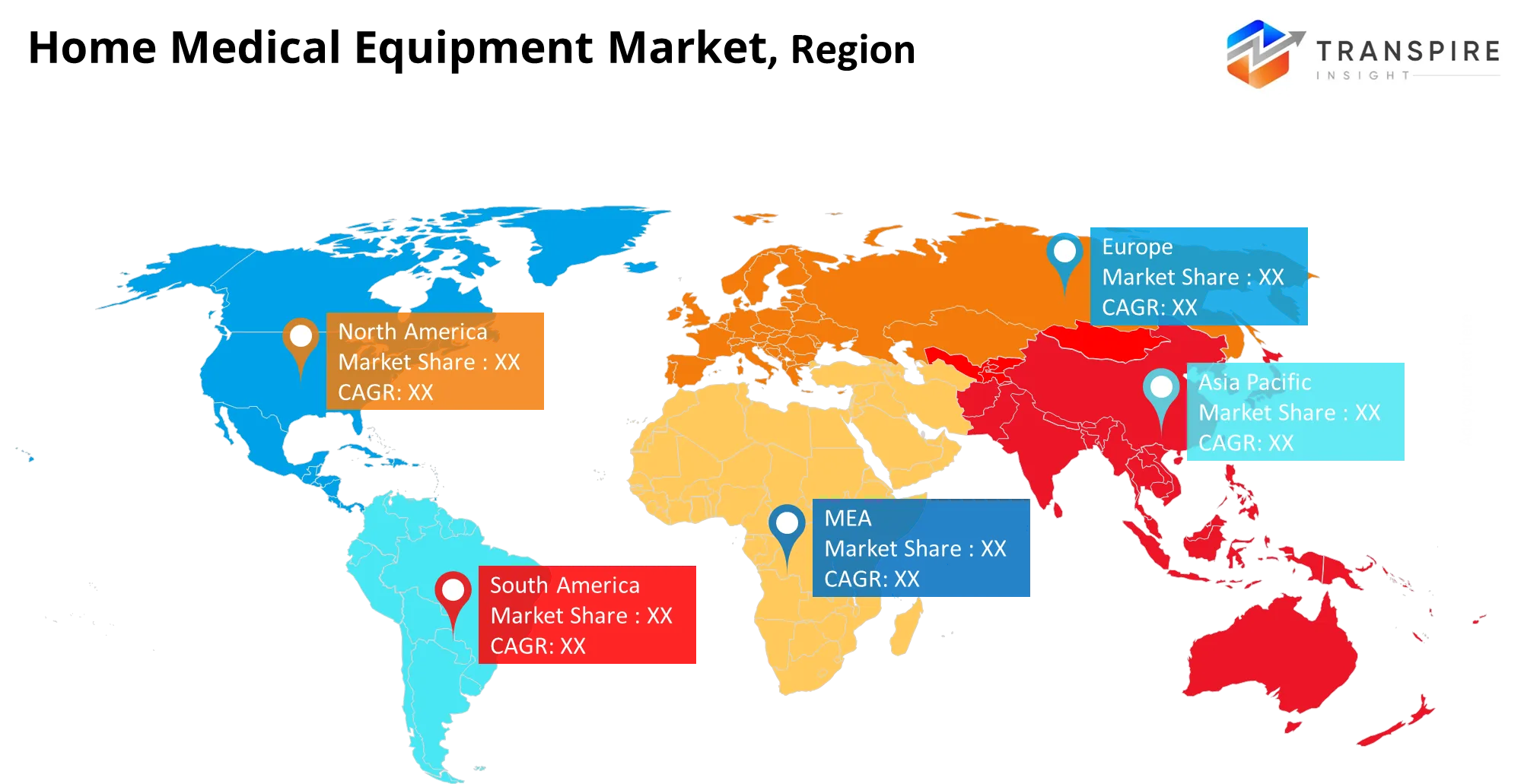
North America's share dominates at 37.75% due to existing reimbursement models, a mature home-health system, and the payer imperative to shift stable patients out of the hospital. Inclusion of Medicare's permanent remote physiologic monitoring codes and the hospital-at-home flexibility has led to the integration of connected devices into reimbursable care pathways instead of optional purchases. Chronic diseases are prevalent, there are mature homecare organisations, and clinician capacity limits support ongoing demand for respiratory, dialysis, mobility, and monitoring solutions.
In January 2026, Boston Scientific executed a definitive agreement to acquire Penumbra for $14.5 billion. This strategic acquisition secures Penumbra's portfolio of advanced clot-removal and bleeding-control devices, directly positioning Boston Scientific to capture the accelerating demand for connected vascular and thrombectomy equipment utilized across integrated post-acute and acute homecare settings. https://www.medtechdive.com/news/top-10-medtech-deals-in-the-first-half-of-2026/824435/
Europe holds a 27.97% stake and offers a growth profile that is stable, regulatory-based, and different from North America. National healthcare systems, ageing populations and digital health programmes all drive home-based rehabilitation, respiratory care and homecare for the elderly, with reimbursements differing from country to country. Strengths here include clear device safety expectations, present players and medical technology manufacturers, and a rapid increase in the number of home devices that are linked to telehealth systems.
In October 2026, Aptar Pharma acquired Pulmotree, a Germany-based developer of pulmonary drug delivery systems, to expand its portfolio in targeted lung therapies. This acquisition integrates Pulmotree’s Kolibri Non-Propellant Liquid Inhaler platform, which features advanced connectivity for treatment monitoring, patient engagement, and real-world therapy. https://www.investorsinhealthcare.com/articles/category/news/germany-aptar-pharma-acquires-pulmotree-to-expand-its-respiratory-drug-delivery-offering/
Asia Pacific accounts for 23.82% of the market and is growing fastest at a predicted compound annual growth of 10.25%. Improving access to healthcare, growth of local manufacturing, and increasing digital connectivity are improving the availability of home medical equipment. As the healthcare industry expands in India and the population in China grows, there are opportunities for low-cost monitoring devices, respiratory equipment and mobility aids. Manufacturers adopting a localisation and service network approach, or offering low-cost connected products, are best placed to benefit from future regional growth.
In March 2026, Gurman Medical expanded its authorized service network footprint in India through a strategic service partnership renewal with Philips. This action directly addresses the growing regional demand for localized service networks by deploying authorized maintenance, support, and technical care services for advanced home respiratory equipment and sleep therapy devices across prominent hubs like Mohali and Gurgaon. https://gurmanmedical.com/blogs/news/tagged/partnership-with-philips
Who are the Key Players in the Home Medical Equipment Market, and how do they compete?
The competition will shift from a focus on product specs to ecosystems including equipment, consumables, connectivity, training, and reimbursement assistance. Vendors that can guarantee minimum hospital use and can integrate seamlessly into a provider's system will earn a stronger position with payers and homecare agencies.
Medtronic invests in chronic-care expertise with connected devices and digital adherence tools for long-term management of patients. Omron Healthcare's solution is a beginner-friendly home-use blood-pressure monitor and diagnostic offerings; GE Health Care leads with monitoring and diagnostic know-how; Invacare, Drive DeVilbiss and Sunrise Medical focus on mobility, respiratory assistance and activities of daily living, and weave in differentiated product lineups and distribution partnerships. Medline Industries and Cardinal Health focus on scale in the medical product supply chain, while Baxter and Fresenius Medical Care work in therapy solutions and at-home treatment, including kidney care. Hillrom and Stryker can lean on their legacy of patient-support equipment and clinical-care expertise, and Medtronic applies its therapy expertise in chronic-disease management. All players are expanding through connectivity ecosystems, regional collaborations, and reliable device support rather than hardware.
Key Players are:
- ResMed
- Hillrom
- Baxter
- Fresenius Medical Care
- Cardinal Health
- Stryker
- Sunrise Medical
- Invacare
- Omron Healthcare
- GE HealthCare
- Medtronic
Home Medical Equipment Market — Enhanced Competitive Benchmarking
|
Company |
Est. Revenue Share Range |
Key Offerings |
Strategic Positioning |
Geographic Strength |
Technology Focus |
|
ResMed Inc. |
Estimated 4–8% |
CPAP devices, bilevel PAP systems, home ventilators, connected respiratory care |
Respiratory care leadership through connected therapy ecosystems |
North America, Europe, Asia Pacific |
Cloud-connected devices and remote therapy monitoring |
|
Koninklijke Philips N.V. |
Estimated 3–7% |
Home respiratory care, sleep therapy equipment, home patient monitoring |
Broad clinical portfolio with established home-care capabilities |
North America, Europe, Asia Pacific |
Connected monitoring and integrated patient-care platforms |
|
Medline Industries |
Estimated 3–6% |
Hospital beds, mobility aids, patient support equipment, home-care supplies |
Distribution scale and broad durable-equipment portfolio |
North America, Europe, Asia Pacific |
Supply-chain integration and equipment standardization |
|
Drive DeVilbiss Healthcare |
Estimated 2–5% |
Oxygen concentrators, CPAP equipment, wheelchairs, mobility aids |
Broad product range with value-oriented pricing |
North America, Europe, Asia Pacific |
Portable oxygen delivery and user-friendly respiratory equipment |
|
Invacare Corporation |
Estimated 1–4% |
Manual wheelchairs, power mobility devices, patient lifts, respiratory equipment |
Mobility specialization and rehabilitation-focused solutions |
North America, Europe |
Powered mobility, seating systems and ergonomic design |
|
OMRON Healthcare |
Estimated 1–3% |
Blood pressure monitors, nebulizers, thermometers, personal health monitors |
Consumer-focused home diagnostics and preventive monitoring |
Asia Pacific, North America, Europe |
Connected health monitoring and digital measurement |
|
Sunrise Medical |
Estimated 1–3% |
Manual wheelchairs, power wheelchairs, seating and positioning systems |
Premium mobility and individualized rehabilitation equipment |
Europe, North America, Asia Pacific |
Custom seating, powered mobility and ergonomic engineering |
|
Fisher & Paykel Healthcare |
Estimated 1–3% |
Home respiratory devices, humidification systems, sleep apnea therapy interfaces |
Respiratory specialization through differentiated therapy interfaces |
North America, Europe, Asia Pacific |
Respiratory humidification and patient-interface engineering |
|
Baxter International |
Estimated 1–3% |
Home peritoneal dialysis systems, infusion-related equipment, home-care technologies |
Home-based renal care and clinical treatment delivery |
North America, Europe, Asia Pacific |
Automated dialysis and connected treatment management |
|
Fresenius Medical Care |
Estimated 1–3% |
Home dialysis systems, peritoneal dialysis equipment, dialysis consumables |
Renal-care specialization with integrated equipment and treatment support |
North America, Europe, Asia Pacific |
Home dialysis automation and treatment-data management |
Recent Development News
- In June 2026, Fresenius Medical Care launched kinexus ly, a unified digital platform for home dialysis that connects remote therapy monitoring, prescription management, and supply ordering for peritoneal dialysis and home hemodialysis. The launch supports more coordinated home-based treatment by helping clinical teams monitor patients remotely, streamline workflows, and manage therapy adjustments, reinforcing the role of connected technologies in home medical care.https://freseniusmedicalcare.com/en/media/newsroom/fresenius-medical-care-launches-kinexus-worldwide- a-unified-digital-platform-to-support-home-dialysis/
- In August 2026, Philips announced new collaborations with Blue Spark Technologies, Caretaker Medical, Cuviva, LifeSignals, Respiree and smartQare to expand its patient monitoring ecosystem beyond hospital settings. The partnerships integrate wearable sensors, continuous vital-sign monitoring, and hospital-at-home technologies, supporting better visibility into patient conditions during recovery at home and improving continuity of care across healthcare settings. https://www.philips.com/a-w/about/news/archive/standard/news/press/2026/philips-expands-open-patient-monitoring-ecosystem-to-help-health-systems-keep-sight-of-patients-beyond-the-bedside.html
- In September 2026, Aeroflow Health partnered with Fallon Health to expand access to durable medical equipment (DME) for commercial and Medicare members across Massachusetts. This action integrates Aeroflow's technology-enabled healthcare platform with Fallon Health's payer network to simplify the insurance verification and ordering process for essential home equipment like CPAP devices. The impact of this development is enhanced healthcare equity and streamlined delivery of chronic care support, allowing patients to easily secure home medical devices covered by their insurance plans. https://www.globenewswire.com/news-release/2026/09/01/3354251/0/en/aeroflow-health-partners-with-fallon-health-to-expand-dme-access-to-commercial-and-medicare-members-in-massachusetts.html
What Strategic Insights Define the Future of the Home Medical Equipment Market?
The home medical equipment market is shifting towards an outcome-based home care model. Instead of making money through the sale of equipment, manufacturers will make money through compliance monitoring, remote guidance, and ongoing service provision. The higher risk here is being left exposed due to a lack of cybersecurity and seamless data interoperability with healthcare providers; any device that struggles to communicate with a medical system securely will face adoption barriers despite delivering clinical results. A new opportunity for emerging markets has arisen, as we're seeing increased use of AI-enabled risk stratification among ageing and post-acute patients in homes in the APAC market. Tying devices together with implementation, caregiver education, analytics, and payer-ready reports will provide for more than just a one-time sale, but instead ongoing revenue streams. Vendors that focus on secure connectivity, simple integration into workflows, and intuitive operation will help mitigate reimbursement pressures, under-capacity at hospitals, and the need for efficient, coordinated home-based care.
Key Segmentations are:
Product Type
- Therapeutic Equipment
- Mobility Equipment
- Monitoring Equipment
- Respiratory Equipment
- Home Dialysis Equipment
- Medical Furniture
- Personal Care Equipment
- Others
Function
- Therapeutic
- Diagnostic
- Monitoring
- Mobility Assistance
- Respiratory Support
- Rehabilitation
- Patient Support
- Others
Connectivity
- Conventional
- Connected
- Bluetooth
- Wi-Fi
- Cellular
- IoT-Enabled
- Cloud-Connected
- Others
Distribution Channel
- Retail Medical Stores
- Online Retailers
- Hospitals
- Pharmacies
- Homecare Providers
- Direct Sales
- Distributors
- Others
End User
- Elderly
- Chronic-Disease Patients
- Disabled Patients
- Post-Surgical Patients
- Pediatric Patients
- Homecare Patients
- Caregivers
- Others
Application
- Diabetes Care
- Respiratory Care
- Cardiovascular Care
- Orthopedic Care
- Mobility Care
- Wound Care
- Renal Care
- Others
By Regional Analysis
North America
- US
- Canada
- Mexico
Europe
- Germany
- UK
- France
- Italy
- Spain
- Russia
- Rest of Europe
Asia Pacific
- China
- Japan
- India
- South Korea
- Australia
- Rest of Asia Pacific
South America
- Brazil
- Argentina
- Rest of South America
Middle East & Africa
- UAE
- Saudi Arabia
- Qatar
- South Africa
- Rest of the Middle East & Africa
Frequently Asked Questions
Find quick answers to common questions.
The home medical equipment market size was valued at USD 36.22 billion in 2025 and is poised to reach USD 60.96 billion by 2033, expanding at a 6.72% CAGR
Key segments for the home medical equipment market are Product Type (Therapeutic Equipment, Mobility Equipment, Monitoring Equipment, Respiratory Equipment, Home Dialysis Equipment, Medical Furniture, Personal Care Equipment, Others)Function (Therapeutic, Diagnostic, Monitoring, Mobility Assistance, Respiratory Support, Rehabilitation, Patient Support, Others)Connectivity (Conventional, Connected, Bluetooth, Wi-Fi, Cellular, IoT-Enabled, Cloud-Connected, Others)Distribution Channel (Retail Medical Stores, Online Retailers, Hospitals, Pharmacies, Homecare Providers, Direct Sales, Distributors, Others)End User (Elderly, Chronic-Disease Patients, Disabled Patients, Post-Surgical Patients, Pediatric Patients, Homecare Patients, Caregivers, Others)Application (Diabetes Care, Respiratory Care, Cardiovascular Care, Orthopedic Care, Mobility Care, Wound Care, Renal Care, Others).
Growth is primarily driven by an ageing population, rising chronic disease prevalence, hospital-at-home programmes, remote patient monitoring, and the shift toward long-term treatment and recovery at home.
The home medical equipment market is led by major manufacturers, including Invacare, Medline Industries, Drive DeVilbiss, Philips, ResMed, Hillrom, Baxter, Fresenius Medical Care, Cardinal Health, Stryker, Sunrise Medical, Omron Healthcare, GE HealthCare, and Medtronic
North America holds a 37.75% market share, supported by advanced healthcare infrastructure, established reimbursement systems, homecare networks, and remote patient monitoring adoption.
Key opportunities include AI-enabled monitoring, connected therapeutic devices, home dialysis solutions, mobility-support equipment, and recurring revenue from maintenance and remote-care services.
- Invacare
- Medline Industries
- Drive DeVilbiss
- Philips
- ResMed
- Hillrom
- Baxter
- Fresenius Medical Care
- Cardinal Health
- Stryker
- Sunrise Medical
- Invacare
- Omron Healthcare
- GE HealthCare
- Medtronic
About the Authors

Pankaj Ghogare Patil
I am Pankaj Ghogare Patil, a Senior Research Analyst at Transpire Insight, specializing in the Pharmaceutical, Chemicals & Materials, Healthcare IT, and Biotechnology industry. My expertise lies in conducting comprehensive market research, analyzing industry trends, evaluating competitive landscapes, and translating complex data into actionable insights. At Transpire Insight, I closely follow emerging technologies, regulatory developments, and market innovations to create accurate, well-researched, and informative content that helps businesses and professionals make informed decisions. I am committed to producing credible, evidence-based articles that reflect industry best practices while making technical topics accessible and valuable for a broad audience.

Chakradhar Khansole
Chakradhar serves as the Research Director at Transpire Insight, bringing over 8 years of experience in technology, innovation, and strategic market intelligence. He specializes in transforming complex market data into actionable business insights that enable organizations to make informed, growth-oriented decisions. Recognized for his strategic vision and analytical expertise, Chakradhar leads high-impact research initiatives, delivering comprehensive market assessments, competitive intelligence, and forward-looking industry analysis.
Recently Published Reports
-
Apr 2026
AI in Diabetic Retinopathy Market
AI in Diabetic Retinopathy Market Size, Share & Analysis Report By Type (Screening AI Systems, Diagnostic AI Systems, and Predictive AI Models), By Application Segment (Hospitals, Ophthalmology Clinics, Diagnostic Centers, and Research and Development), and Geography (North America, Europe, Asia-Pacific, Middle East and Africa, South and Central America), 2021 - 2031
-
Apr 2026
Psychometric Tests Market
Psychometric Tests Market Size, Share & Analysis Report By Type (Personality Tests, Ability/Aptitude Tests, Skill/Knowledge Tests, and Others), By Application (Talent Acquisition and Talent Management), and Geography (North America, Europe, Asia-Pacific, Middle East and Africa, South and Central America), 2021 – 2031
-
Apr 2026
Rare Biological Sample Collection Market
Rare Biological Sample Collection Market Size, Share & Analysis Report By Type (Isolation Kits & Reagent, Blood Collection Tubes, and Others), By Application (Oncology, Transcriptomics, Pharmacogenomics, and Others), and Geography (North America, Europe, Asia-Pacific, Middle East and Africa, South and Central America), 2021 – 2031
-
Jul 2026
Diabetic Retinopathy Market
Diabetic Retinopathy Market Size, Share & Analysis Report By Type (Proliferative Diabetic Retinopathy, and Diabetic Macular Edema (DME)), By Treatment Type (Anti VEGF Drug, Steroid Implants, Laser Surgeries, and Vitrectomy), and Geography (North America, Europe, Asia-Pacific, Middle East and Africa, South and Central America), 2021 – 2031
Our Clients