
Market Summary
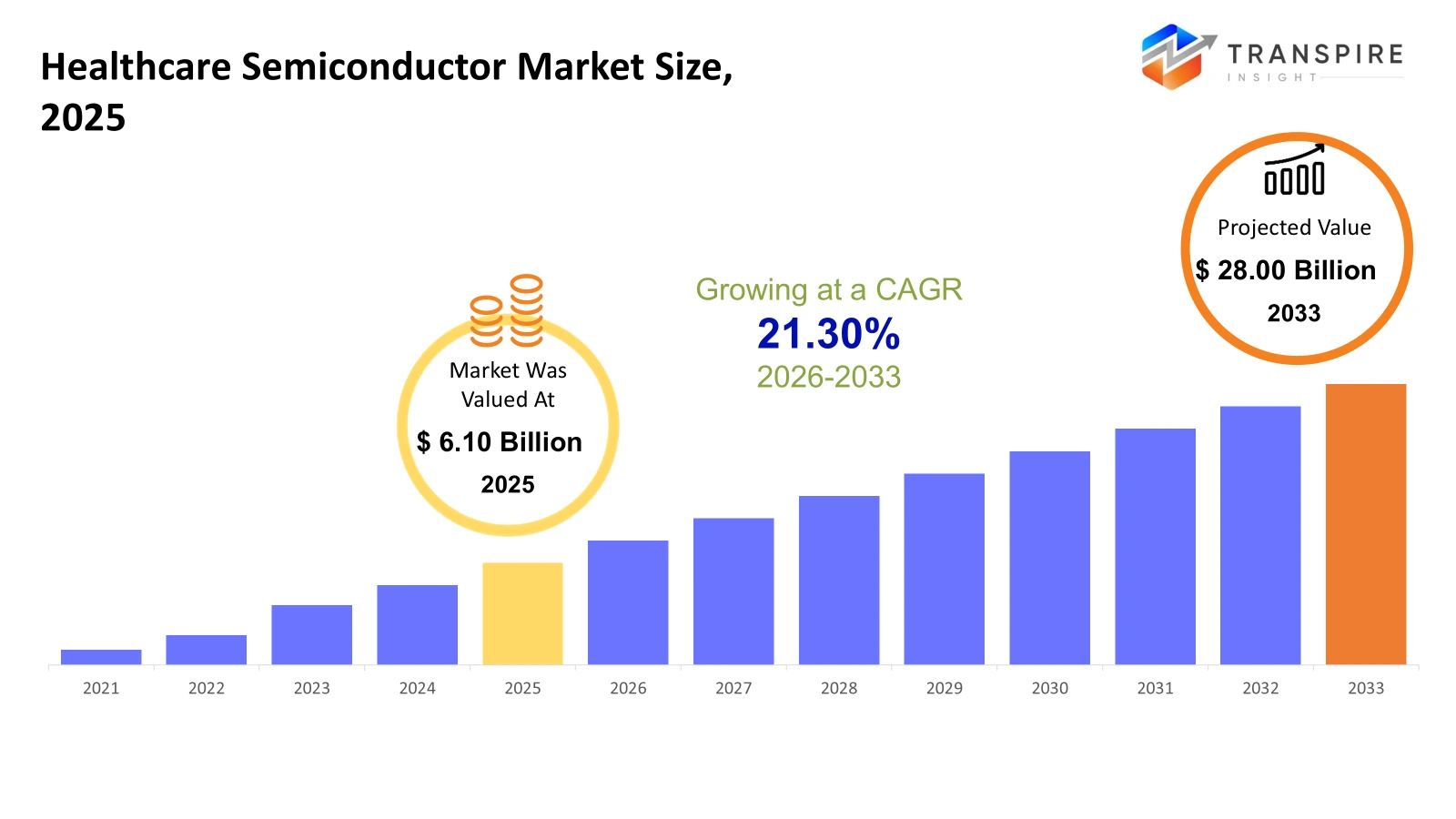
The global Healthcare Semiconductor market size was valued at USD 6.10 billion in 2025 and is projected to reach USD 28.00 billion by 2033, growing at a CAGR of 21.30% from 2026 to 2033. Growth in the worldwide Healthcare Semiconductor industry looks set to speed up, fueled by more use of modern medical tools like fitness trackers, testing machines, and devices placed inside the body. These tiny chips make it possible to track health instantly, handle information quickly, while delivering precise results, helping patients get better attention and stronger recovery chances. As people lean harder on linked medical systems and watch patients from afar, pressure builds for faster, smarter chip technology.
Market Size & Forecast
- 2025 Market Size: USD 6.10 Billion
- 2033 Projected Market Size: USD 28.00 Billion
- CAGR (2026-2033): 21.30%
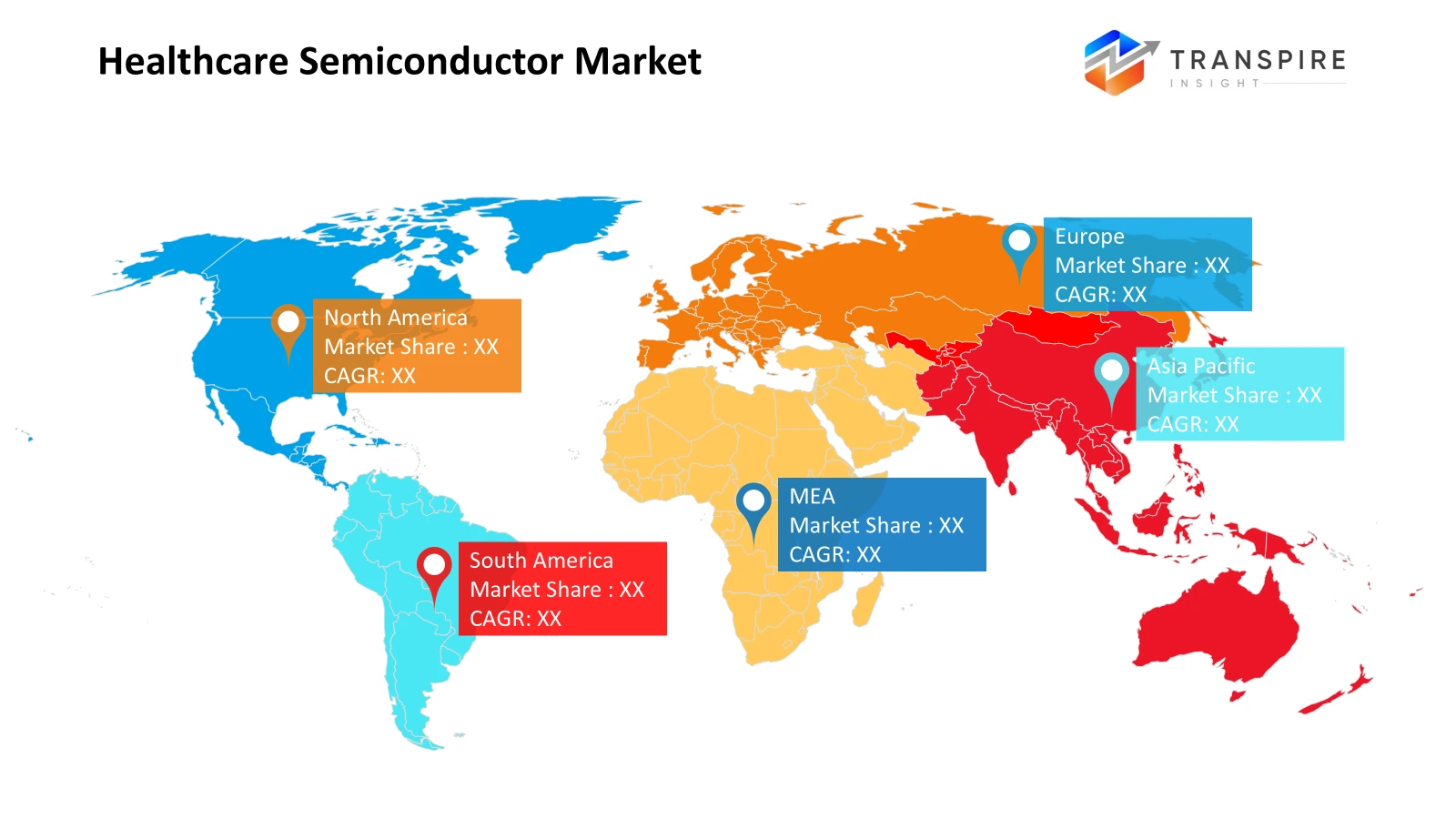
- North America: Largest Market in 2026
- Asia Pacific: Fastest Growing Market
To learn more about this report,  Download Free Sample Report
Key Market Trends Analysis
- The North American market share is estimated to be approximately 30% in 2026. Health tech moves fast here because hospitals use new tools quickly. A solid network of clinics helps push progress forward. Factories making computer chips are already set up across the region. That gives an edge when building connected medical gear.
- Home to the biggest slice of North America's market, the United States stands out because people spend heavily on health care. New medical tech pops up regularly here, often shaping trends elsewhere. Connected tools that link patients and providers catch on fast across hospitals and clinics. Spending drives growth, sure, but it is fresh ideas that keep momentum going.
- In the Asia Pacific, growth outpaces other regions because better healthcare systems are taking shape. New uses for wearables gain ground here as daily habits shift. What also stands out is how deeply rooted chip production already is across these countries.
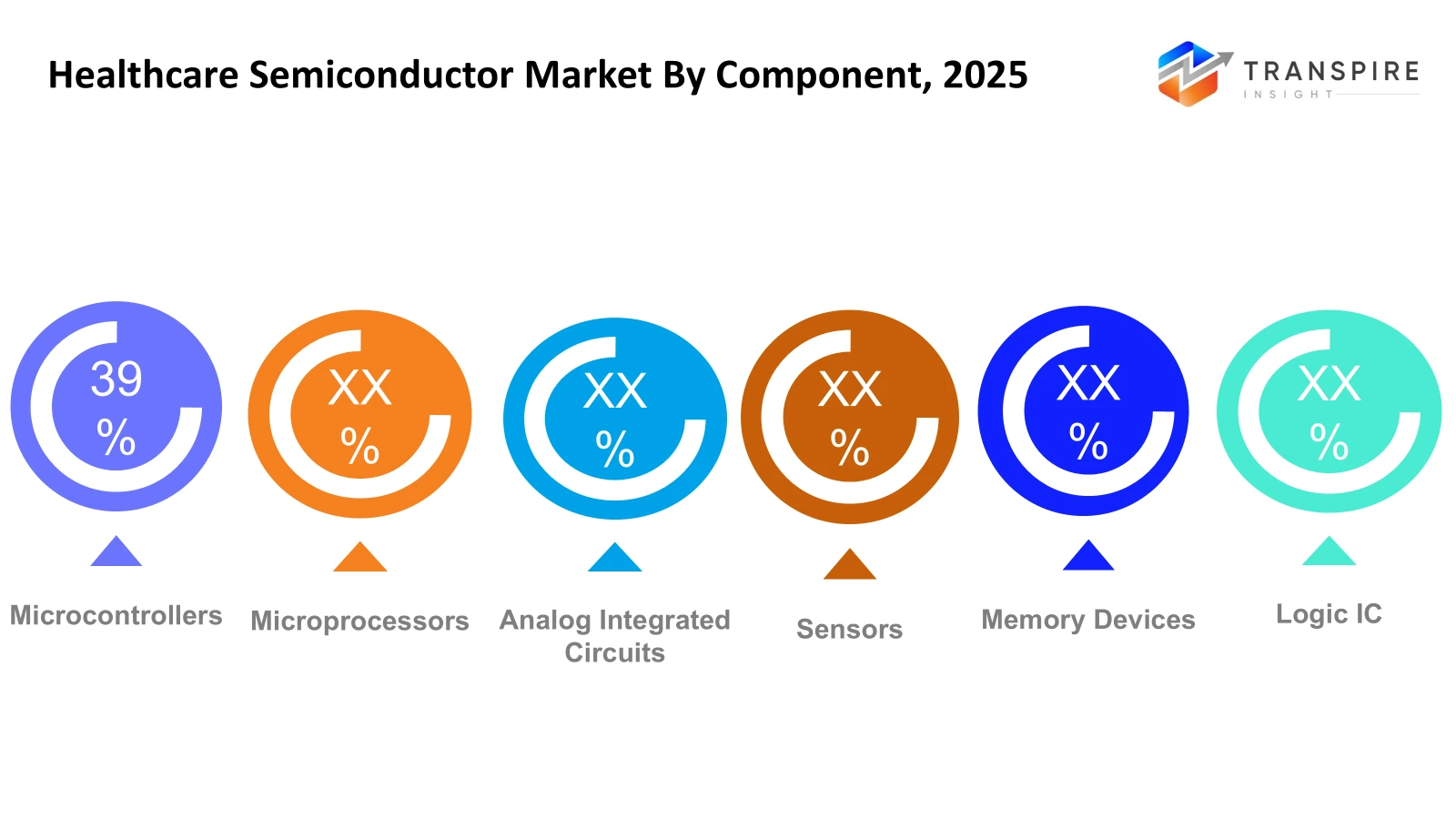
- Microcontrollers share approximately 39% in 2026. They handle many tasks at once. These chips work in wearables, health trackers, and tools that diagnose issues. Their strength lies in using very little power. Flexibility gives them an edge over other parts. One big reason they lead is how easily they adapt.
- It uses less power, fits into tight spaces, and runs at a lower price point, key for gadgets that monitor health plus tools linked to care systems.
- Now here's a twist: patient monitoring gadgets lead the pack, simply because more people around the world need constant health updates, distant care check-ins, or virtual doctor visits. These tools are not just growing; they are setting the pace. With every heartbeat tracked from afar, their role gets clearer. Not magic, just necessity shaping what comes next.
- Most users come from hospitals and clinics. These places widely use modern equipment powered by semiconductors, especially for checking health, treating patients, and watching vital signs. Advanced tools fit naturally into daily routines there. Patient needs drive constant upgrades in tech used across these settings.
Because more people use smart medical tools, chips for health tech are selling faster now. Inside hospital machines, these tiny parts handle tasks like turning signals into data, linking devices together, running information quickly, and watching body changes live. Devices like scanners, wearables that track health, gadgets you can put inside the body, and systems keeping an eye on patients all rely on them. Better performance means diagnoses get sharper. Care becomes smoother, too. As innovation accelerates across digital health solutions, the healthcare semiconductor market continues to expand, fueled by rising demand for advanced medical electronics and connected care technologies.
Now machines inside medical gear run sharper, last longer, thanks to better chip designs. Smarter tools show up when AI slips into devices that talk to each other online. Signals travel fast through the air instead of wires, linking equipment smoothly across rooms or cities. Watching vital signs happens live now, without delays piling up in storage. Data moves more quickly than before because processors sort it on the spot. Devices behave better under stress since updates arrive silently in the background. Care shifts happen sooner due to alerts nudging staff at the right moments.
More people wanting wearables for health means more chips inside them. Because these gadgets track vital signs nonstop, they can catch problems sooner. That cuts down how often someone must go see a doctor in person. Since staying healthy before issues arise matters more now, small medical tools at home are spreading fast. As those devices grow common, tiny electronics find their way into more parts of care.
Another wave of spending hits hospitals and tech labs, while digital upgrades quietly reshape operations behind the scenes. Instead of bulkier parts, chip makers now push smaller designs that sip power yet deliver stronger results for medical gear builders. New ideas keep flowing, even as clinics lean harder into intelligent systems meant to last beyond short trends. Growth seems locked in, simply because tools must evolve faster than yesterday’s limits.
Healthcare Semiconductor Market Segmentation
By Component
- Microcontrollers
Starting small, microcontrollers handle tasks across many medical tools because they adapt easily. Not just limited to one job, these chips run everything from wearables to tracking systems. Functionality shifts smoothly between devices, making them a go-to choice in healthcare tech.
- Microprocessors
Inside modern medical devices, microprocessors handle intense computing tasks. These chips manage vast amounts of information quickly. Where speed matters most, they support complex image analysis. Advanced diagnostics rely on their ability to process detail-heavy inputs. Performance demands push design toward these powerful units. Large-scale data flows smoothly through their circuits.
- Analog Integrated Circuits
Starting off, analog integrated circuits handle signals in ways digital ones can not. These chips connect sensors to systems without losing detail. Working quietly behind the scenes, they ensure accuracy when measuring vital signs. Medical devices rely on them because small errors matter a lot. Precision comes naturally when these components stay steady under pressure.
- Sensors
From temperature to heart rate, tiny detectors keep track of body signals. These tools show what's happening inside without needing wires or big machines. Whether stuck on skin, placed under it, or used nearby, they gather key health details. Information flows continuously when sensors stay close to or within the body. Their job matters most during long checkups or sudden medical events.
- Memory Devices
That job belongs to the memory parts. These pieces hold onto details, then give them back when needed. Without hiccups, they keep things running smoothly. Patient records stay safe because of how these elements behave. Smooth function follows when access is fast and steady. Reliability comes from consistent performance behind the scenes.
- LogicIC
Running checks inside hospital gadgets, logic ICs handle choices, math tasks, plus system commands. These chips guide actions in self-operating health tools through step-by-step reasoning paths.
To learn more about this report, Download Free Sample Report
By Technology
- CMOS Technology
Small, affordable, built on CMOS chips - these devices sip energy while running. Medical gear leans heavily on such circuitry simply because it lasts longer between charges. Efficiency here means less heat, fewer parts, and lighter tools overall. Chips made this way fit tight spaces without demanding extra cooling. Their design allows mass production at stable prices over time.
- MEMS Technology
Tiny machines live inside your fitness tracker. These micro parts sense movement or control tiny actions. Because of them, medical implants keep working quietly. Small gadgets now track health without getting in the way. Precision hides in these nearly invisible chips.
- System-on-Chip
A tiny computer built into one piece of silicon powers many tasks at once. This setup helps medical gadgets work faster while using less energy. Instead of needing several parts, everything fits in a single unit. Efficiency jumps because signals travel shorter distances. Performance gains come naturally when components share space. Smart health tools benefit most from this compact design.
- Others
Apart from mainstream uses, certain advanced chips serve narrow medical device needs. These semiconductors perform under strict demands found only in health tech. Specialized designs enable functions that regular parts cannot handle. Performance matters most where precision is non-negotiable. Custom solutions emerge when off-the-shelf components fall short. Medical tools often require what general hardware can not deliver.
By Application
- Medical Imaging Systems
Inside machines that take pictures of the body, tiny electronic parts help sharpen images. These components make sure scans show fine details clearly. Without them, results might miss key signs. They work silently during MRI, CT, or ultrasound checks. Precision comes from how these elements handle data fast. Clarity in diagnosis often ties back to their performance.
- Patient Monitoring Devices
Health trackers keep tabs on patients nonstop. These gadgets feed information into distant systems through live updates. Information flows without delay thanks to constant scanning. Real-time insights come alive via steady signals sent by machines watching vital signs.
- Wearable Medical Devices
Inside smart health bands, tiny chips quietly run the show. These sensors catch heartbeat rhythms throughout your day. A close look reveals how body signals turn into data points. From step counts to oxygen levels, information flows without pause. Vital checks happen in real time, with no delays. Small but strong computer parts make constant tracking possible. Fitness details build up hour by hour. Hidden tech follows every breath and move.
- Implantable Medical Devices
Tiny electronics inside medical implants keep them working when size matters most - pacemakers depend on it, just like insulin pumps do. Built small, expected to last, they operate where failure is not an option. These systems run quietly beneath the skin, doing their job without drawing attention. Reliability hides in circuits no bigger than a coin. Long-term performance comes down to precision at the microscopic level.
- Diagnostic Equipment
Out in labs and clinics, semiconductors help handle signals fast. Moving through devices, they grab data without slowing down. Instead of waiting, results come quicker because these materials process information cleanly. Not just stored, the info gets shaped into something usable right away. Through each step, speed stays high due to how tightly systems are built. Even when small, machines perform steadily thanks to tiny internal parts working together.
By End-Users
- Hospitals & Clinics
From intensive care units to routine checkups, chips help track vitals and support accurate testing. Medical centers now rely on smart tools that process data quickly during exams. Where healing happens, tiny tech works behind the scenes, improving scans and readings. Even small procedures benefit when sensors deliver real-time updates. Equipment powered by semiconductors adjusts responses based on body signals. In treatment rooms across cities, digital precision shapes how doctors see health.
- Diagnostic Centers
Fine-tuned chips power tools inside labs where tests happen. Imaging gear runs faster because of tiny electronic parts built into machines. Equipment used day after day leans on solid semiconductor performance behind the scenes.
- Home Healthcare
Devices in homes now track health more often, so chips inside them get used a lot. Telehealth visits grow, which means more tech is needed behind the scenes. Patient care shifts outside hospitals, pushing up the need for tiny electronics. Monitoring at home rises, tied closely to stronger reliance on digital tools. More people stay where they live while getting checked, fueling steady chip consumption.
- Medical Device Manufacturers
Inside hospitals, gear built by device makers runs smarter because chips help it work better. These tools do their jobs more smoothly, thanks to tiny electronics tucked inside. Performance climbs when hardware teams up with advanced circuitry. Dependability goes up once digital brains join mechanical bodies. Equipment behaves more predictably with silicon at its core.
Regional Insights
Advanced healthcare systems help North America lead in medical chip use. Big tech firms settle here, bringing expertise plus new ideas. Early interest in fitness trackers and smart implants gives the area an edge. Spending on care stays high, fueling growth in electronic medicine tools. Research gets steady backing, helping engineers build next-gen parts. Chip architects work close to device makers, speeding up progress. Rules favor innovation, making approvals faster than elsewhere. Smart machines powered by artificial intelligence spread quickly across clinics. Hospitals adopt intelligent gear that relies heavily on semiconductors. New inventions in diagnostics push the need for better processors. Demand climbs as digital health expands throughout the continent. Leaders keep pushing boundaries in both medicine and microchips.
Growth here outpaces most places because clinics and hospitals keep expanding alongside more people needing care. China, Japan, South Korea, and then India - each putting big money into making chips, plus better health tech at the same time. Factories across these lands build semiconductors nonstop, forming key links that feed medical device makers. Wearables catch on fast, doctor visits happen online now, handheld scanners pop up everywhere - all pushing sales higher. Production lines stretch wider than elsewhere, giving this part of the world an edge when it comes to supplying tiny tech for medicine.
Not far behind, Europe shows strength through skilled production of medical devices and highly developed care networks. Healthcare upgrades drive progress there, along with a wider use of digital tools in medicine. Elsewhere, parts of Latin America move forward slowly, helped by better availability of services and stronger funding for hospitals. Similarly, areas across the Middle East and Africa begin to grow, supported by new tech investments and smarter recordkeeping in clinics. New policies aim to refresh aging buildings where patients are treated. People now recognize high-tech testing methods more than before. All these points toward higher need for chip-based components throughout these places as time passes.
To learn more about this report, Download Free Sample Report
Recent Development News
- December 5, 2025 – Nordic Semiconductor breakthrough low-voltage Bluetooth LE SoC for next-gen healthcare wearables.
- January 7, 2026 – NXP Semiconductors partners with GE Healthcare, shares rise 8%.
|
Report Metrics |
Details |
|
Market size value in 2025 |
USD 6.10 Billion |
|
Market size value in 2026 |
USD 7.20 Billion |
|
Revenue forecast in 2033 |
USD 28.00 Billion |
|
Growth rate |
CAGR of 21.30% from 2026 to 2033 |
|
Base year |
2025 |
|
Historical data |
2021 – 2024 |
|
Forecast period |
2026 – 2033 |
|
Report coverage |
Revenue forecast, competitive landscape, growth factors, and trends |
|
Regional scope |
North America; Europe; Asia Pacific; Latin America; Middle East & Africa |
|
Country scope |
United States; Canada; Mexico; United Kingdom; Germany; France; Italy; Spain; Denmark; Sweden; Norway; China; Japan; India; Australia; South Korea; Thailand; Brazil; Argentina; South Africa; Saudi Arabia; United Arab Emirates |
|
Key company profiled |
Intel Corporation, Texas Instruments, Analog Devices, Inc., NXP Semiconductors, ON Semiconductor, STMicroelectronics, Infineon Technologies, Renesas Electronics, Maxim Integrated, Microchip Technology, Broadcom Inc., Qualcomm Incorporated, Samsung Electronics, Analogix Semiconductor, Skyworks Solutions, Cypress Semiconductor, and Microsemi Corporation |
|
Customization scope |
Free report customization (country, regional & segment scope). Avail customized purchase options to meet your exact research needs. |
|
Report Segmentation |
By Component (Microcontrollers, Microprocessors, Analog Integrated Circuits, Sensors, Memory Devices, Logic ICs), By Technology (CMOS Technology, MEMS Technology, System-on-Chip, Others), By Application (Medical Imaging Systems, Patient Monitoring Devices, Wearable Medical Devices, Implantable Medical Devices, Diagnostic Equipment), By End-Users (Hospitals & Clinics, Diagnostic Centers, Home Healthcare, Medical Device Manufacturers) |
Key Healthcare Semiconductor Company Insights
Starting off in Santa Clara, California, Intel Corporation stands as a major force among global makers of semiconductors. Instead of just building chips, it crafts powerful microprocessors, microcontrollers, and full system-on-a-chip units used across industries. When it comes to healthcare, its technology runs inside tools like diagnostic machines, wearables that track vital signs, plus gear that keeps watch over patients’ day by day. These parts allow devices to process information instantly while staying connected through networks. Innovation drives the company forward, especially when blending artificial intelligence into health tech. It also pushes for smarter chip designs that sip energy rather than gulp it, alongside shrinking size without losing speed. All these efforts help shape how fast the healthcare semiconductor field grows around the world.
Key Healthcare Semiconductor Companies:
- Intel Corporation
- Texas Instruments
- Analog Devices, Inc.
- NXP Semiconductors
- ON Semiconductor,
- STMicroelectronics
- Infineon Technologies
- Renesas Electronics
- Maxim Integrated
- Microchip Technology
- Broadcom Inc.
- Qualcomm Incorporated
- Samsung Electronics
- Analogix Semiconductor
- Skyworks Solutions
- Cypress Semiconductor
- Microsemi Corporation
Global Healthcare Semiconductor Market Report Segmentation
By Component
- Microcontrollers
- Microprocessors
- Analog Integrated Circuits
- Sensors
- Memory Devices
- Logic ICs
By Technology
- CMOS Technology
- MEMS Technology
- System-on-Chip
- Others
By Application
- Medical Imaging Systems
- Patient Monitoring Devices
- Wearable Medical Devices
- Implantable Medical Devices
- Diagnostic Equipment
By End-Users
- Hospitals & Clinics
- Diagnostic Centers
- Home Healthcare
- Medical Device Manufacturers
Regional Outlook
- North America
- United States
- Canada
- Mexico
- Europe
- Germany
- United Kingdom
- France
- Spain
- Italy
- Rest of Europe
- Asia Pacific
- Japan
- China
- Australia & New Zealand
- South Korea
- India
- Rest of Asia Pacific
- South America
- Brazil
- Argentina
- Rest of South America
- Middle East & Africa
- Saudi Arabia
- United Arab Emirates
- South Africa
- Rest of the Middle East & Africa
Frequently Asked Questions
Find quick answers to common questions.
The approximate Healthcare Semiconductor Market size for the market will be USD 28.00 billion in 2033.
Key segments for the Healthcare Semiconductor Market are By Component (Microcontrollers, Microprocessors, Analog Integrated Circuits, Sensors, Memory Devices, Logic ICs), By Technology (CMOS Technology, MEMS Technology, System-on-Chip, Others), By Application (Medical Imaging Systems, Patient Monitoring Devices, Wearable Medical Devices, Implantable Medical Devices, Diagnostic Equipment), By End-Users (Hospitals & Clinics, Diagnostic Centers, Home Healthcare, Medical Device Manufacturers).
Major Healthcare Semiconductor Market players are Intel Corporation, Texas Instruments, Analog Devices, Inc., NXP Semiconductors, and ON Semiconductor.
The North America region is leading the Healthcare Semiconductor Market.
The Healthcare Semiconductor Market CAGR is 21.30%.
- Intel Corporation
- Texas Instruments
- Analog Devices, Inc.
- NXP Semiconductors
- ON Semiconductor,
- STMicroelectronics
- Infineon Technologies
- Renesas Electronics
- Maxim Integrated
- Microchip Technology
- Broadcom Inc.
- Qualcomm Incorporated
- Samsung Electronics
- Analogix Semiconductor
- Skyworks Solutions
- Cypress Semiconductor
- Microsemi Corporation
Recently Published Reports
-
Apr 2026
Fiber Optic Faceplates Market
Fiber Optic Faceplates Market Size, Share & Analysis Report By Type (< 300 mm2, 300-350 mm2, and > 350 mm2, By Application (Night Vision, Holographic Imaging, Medical, and Others), and Geography (North America, Europe, Asia-Pacific, Middle East and Africa, South and Central America), 2021 - 2031
-
Apr 2026
High Temperature Superconductors Market
High Temperature Superconductors Market Size, Share & Analysis Report By Type (1G HTS, and 2G HTS), By Application (Power Cable, Fault Current Limiter, and Transformer), and Geography (North America, Europe, Asia-Pacific, Middle East and Africa, South and Central America), 2021 - 2031
-
Apr 2026
Industrial Plugs and Socket Market
Industrial Plugs and Socket Market Size, Share & Analysis Report By Type (Industrial Plugs, Industrial Sockets), By Current (Up to 32 A, 32 to 125 A, Above 125 A), By Protection (Dustproof and Splash Proof, Waterproof, Explosion Proof), By End User (Heavy Industries, Oil and Gas, Chemicals and Pharmaceuticals, Power Generation, Others), and Geography (North America, Europe, Asia-Pacific, Middle East and Africa, South and Central America), 2021 - 2031
-
Apr 2026
InGaAs Avalanche Photodiodes Market
InGaAs Avalanche Photodiodes Market Size, Share & Analysis Report By Type (1100 - 1700 nm, and 1000 - 1600 nm), By Application (Missile Warning System, Muzzle Flash Detection, Wafer Defect Inspection, Laser Rangefinders, and Others), and Geography (North America, Europe, Asia-Pacific, Middle East and Africa, South and Central America), 2021 - 2031