

Health And Wellness Packaged Food Market Summary:
According to Transpire Insight, a detailed research report on the market reflects that the functional foods segment dominates the Health And Wellness Packaged Food Market, accounting for approximately 38.26% of the total share worldwide. Nestlé S.A. leads the market with approximately (around USD 107.63 billion) in annual revenue and an estimated 12-15% market share, making it the leading contributor to market development, innovation, advanced health and wellness packaged food production, expanding manufacturing capabilities, and growth dynamics.
Market Snapshot
- Market Value (2025): USD 115.6 Billion.
- Expected Market Value (2026): USD 122.2 Billion.
- Estimated Market Value (2033): USD 190.3 Billion.
- Forecast CAGR (2026-2033): 6.50%.
- Leading Region in 2025: North America
- Second-largest Region: Asia Pacific
- Fastest Growing Region: Europe
Introduction
The Health And Wellness Packaged Food Market encompasses the commercially processed and packaged food products that are formulated to provide nutritional, functional and health benefits beyond basic nutrition. These include organic and clean label foods, fortified foods and beverages, low sugar and low fat products, high protein products, probiotic and prebiotic foods and other functional food products. The market addresses a wide range of applications, including weight management, digestive health, sports & active nutrition, immune health, and healthy aging. Its growth is fueled by rising health awareness, demand for convenient and nutritious food choices, increasing preference for transparent and clean-label ingredients and rising interest in functional nutrition. The increasing awareness of preventive health and personal dietary requirements is also driving the consumers to opt for packaged foods that contribute toward overall well-being. Thus, the health and wellness packaged food is becoming an increasingly important segment of the food industry.
For instance:
- North America: Investment & Innovation: Strong investment in plant-based, low-sugar, allergen-free, functional and clean-label packaged foods, fueled by product innovation, advanced processing and increasing direct-to-consumer distribution.
- Asia-Pacific: Market Expansion & Investment: Increased health awareness and rising e-commerce are drawing investment into functional foods, fortified products, plant-based proteins, probiotic foods and regionally tailored wellness packaged products.

Market Highlights: -
- North America is expected to grow at a rapid CAGR in the Health And Wellness Packaged Food Market by holding around 40% of the share during the forecast period.
- Asia Pacific is anticipated to hold roughly 36.6% share of the Health And Wellness Packaged Food Market over the predicted time frame.
- Europe is anticipated to hold around 33% share of the Health And Wellness Packaged Food Market over the predicted time frame.
- By Product Type, the Functional Foods dominated the market and holds nearly 52.01% share in 2025 and is projected to grow at a substantial CAGR during the forecast period.
- By Distribution Channel, the Supermarkets & Hypermarkets dominated the market and holds nearly 48% share in 2025 and is projected to grow at a substantial CAGR during the forecast period.
- By End User, the Adults and Health-conscious Consumers dominated the market and holds nearly 50% share in 2025 and is projected to grow at a substantial CAGR during the forecast period.
- Government initiatives like India’s PLI Scheme, Eat Right India Movement and Shree Anna campaign are spurring healthier food formulations, domestic food processing, nutritional awareness and greater uptake of health and wellness packaged foods.
How is Technology Driving Growth in the Health And Wellness Packaged Food Market?
Technology is fueling growth in the Health And Wellness Packaged Food Market through personalized nutrition, innovative product development, effective manufacturing, and improved transparency in the supply chain. Artificial intelligence, data analytics and digital platforms help manufacturers understand consumer preferences and develop targeted functional food products. Automation, Industry 4.0, high-pressure processing (HPP) and AI-based quality inspection improve production efficiency, food safety and shelf life. At the same time, smart packaging, traceability technologies and e-commerce platforms increase product transparency, consumer confidence and market access. They allow the creation of clean-label, functional, nutritious and convenient packaged foods that respond to the evolution of consumer health preferences.
Market Drivers
The packaged food market for health and wellness is being driven by the rising consumer preference for clean-label, organic, functional, plant-based and nutritionally enhanced packaged foods. Market growth is supported by aging populations and strong demand for sustainable, transparent and minimally processed products in Europe. The Asia-Pacific region is witnessing growing demand driven by increased health awareness, growing urbanization, e-commerce penetration and increasing adoption of functional and fortified foods. North America is seeing investment in product innovation, alternative proteins, low-sugar formulations, advanced food processing and direct-to-consumer distribution. The advent of technological innovations, sustainable sourcing, changing dietary preferences, and the availability of health-oriented packaged foods continue to fuel the market growth and competitive opportunities across regions.
For Instance: - Europe: Sustainable & Clean-Label Demand Growing demand for organic, clean-label, functional, and sustainably sourced packaged foods is driving investment in innovative formulations, transparent supply chains and healthy-aging products.
Restrain
Some restraints such as high prices of products owing to premium ingredients, processing and certification requirements are also being observed in the Health And Wellness Packaged Food Market. Affordability is a challenge for price-sensitive consumers, especially during economic uncertainty. Production and distribution efficiency can be impacted by supply chain challenges, fluctuating raw material prices, and the scarcity of specialized ingredients. Additionally, inadequate retail infrastructure in rural and underserved markets may restrict access to health-oriented packaged food products and limit broader market penetration.
Analysis of Prices and Consumer Behaviour
Functional foods (38.26% of all market revenues in 2025) lead the market for packaged foods that promote health and wellness. This is primarily attributed to an increasing demand for products with particular benefits like improved digestion, immunity, and nutrition. Health and wellness packaged food sales constitute around 47.38% of supermarkets and hypermarkets that have a wide range of product availability, established distribution networks and consumer access. Functional foods are the leading product category, riding on the back of growing demand for fortified, probiotic, protein-rich and nutritionally enhanced packaged goods. Consumer buying behavior is getting more and more toward clean-label ingredients, nutritional value, product transparency and functional health benefits. Convenient access through organized retail and growing e-commerce channel continues to influence purchasing decisions and strengthen the growth of market.
Who are the Key Players in the Health And Wellness Packaged Food Market and how do they compete?
Product innovations, solutions specific to consumer health needs & development of distribution networks on a level by the firms is driving the competitiveness of the Health And Wellness Packaged Food Market. This approach to competition drives continuous product development and helps organizations deliver greater consumer value, product availability, brand differentiation and market visibility by competing not only on price but on nutritious product formulations, clean-label ingredients, functional food solutions and integration with modern retail and digital platforms.
Nestlé is focusing on functional foods, fortified products, clean-label offerings and nutrition-focused packaged foods to strengthen its position in the market. Danone’s competitive advantage rests on its quality packaged food products for healthy nutrition, convenient consumption, functional wellness &other health-oriented applications. General Mills’ approach is to provide integrated solutions in health-oriented packaged foods, nutrition, product innovation, and convenient food offerings to help consumers improve nutritional intake and overall well-being.
Top Companies in the Health And Wellness Packaged Food Market
- Nestlé
- Danone
- General Mills
- Kellogg's
- PepsiCo
- Unilever
- Abbott Laboratories
- Glanbia
- Hain Celestial
- Oatly
- Beyond Meat
- Kraft Heinz
- Amway
- Herbalife
- Nature's Bounty
Market Segmentation
The Health And Wellness Packaged Food Market share is divided into five categories: By Product Type, By Distribution Channel, By End User, By Application, By Ingredient Type.
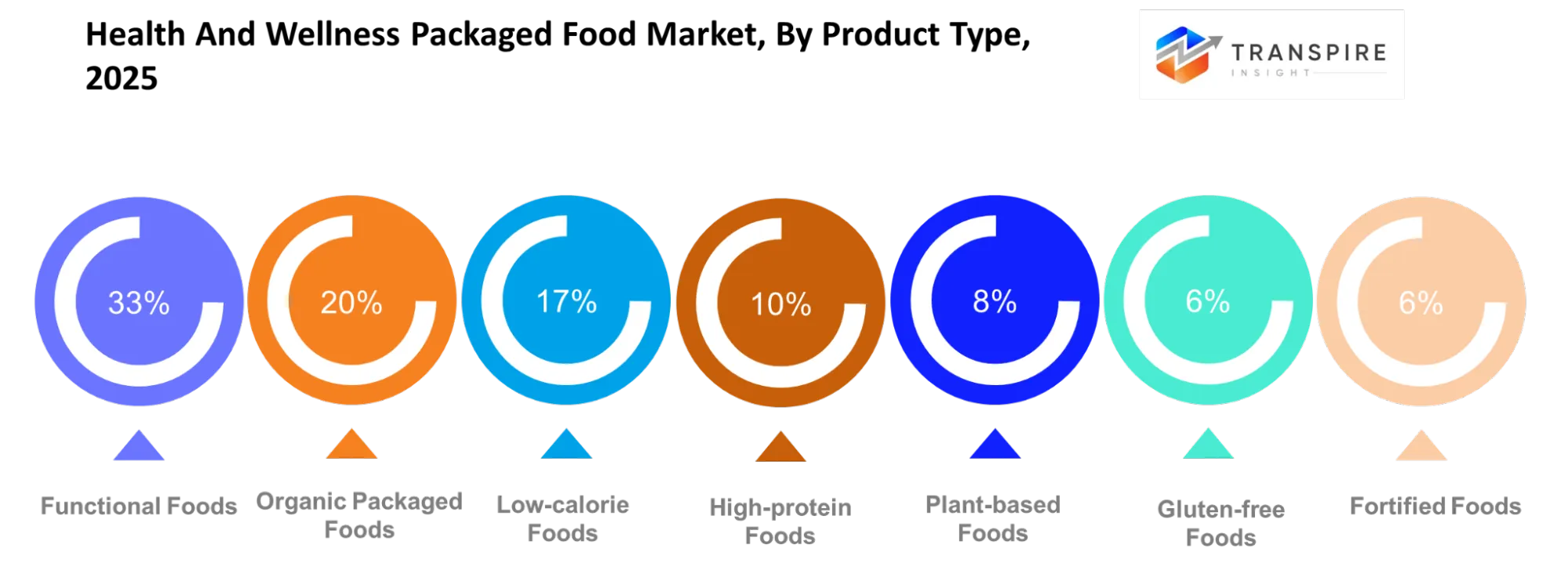
The Functional Foods dominated the market, accounting for nearly 52.01% in 2025 and is expected to rise at a significant CAGR during the forecast period.
The Health And Wellness Packaged Food Market is segmented by product type into functional foods, organic packaged foods, low-calorie foods, high-protein foods, plant-based foods, gluten-free foods, fortified foods, others. Among these, the Functional Foods dominated the market, accounting for nearly 52.01% in 2025 and expected to increase at a significant CAGR during the forecast period. The Functional Foods segment accounted for the largest market share of the market in 2025. There is a growing demand from consumers for packaged food products that are nutritious, fortified and promote health and overall wellness.
The Supermarkets & Hypermarkets dominated the market, accounting for nearly 48% in 2025, and is expected to rise at a significant CAGR during the forecast period.
The Health And Wellness Packaged Food Market is segmented by distribution channel into supermarkets & hypermarkets, convenience stores, online retail, specialty stores, pharmacies, direct-to-consumer, others. Among these, the Supermarkets & Hypermarkets dominated the market, accounting for nearly 48% in 2025 and expected to increase at a significant CAGR during the forecast period. It was dominant on the basis of the widespread availability of products, established retail networks, convenient shopping experiences and a robust consumer trust in organized food distribution channels.
The Adults and Health-conscious Consumers dominated the market, accounting for nearly 50% in 2025 and is expected to rise at a significant CAGR during the forecast period.
The Health And Wellness Packaged Food Market is by end user into adults, children, elderly, fitness enthusiasts, health-conscious consumers, athletes, others. Among these, the Adults and Health-conscious Consumers dominated the market, accounting for nearly 50% in 2025 and expected to increase at a significant CAGR during the forecast period. Growing health awareness, the rise of preventive nutrition, and strong demand for convenient, functional and nutritionally enhanced packaged foods drove its dominance.
Regional Segment Analysis of the Health And Wellness Packaged Food Market:
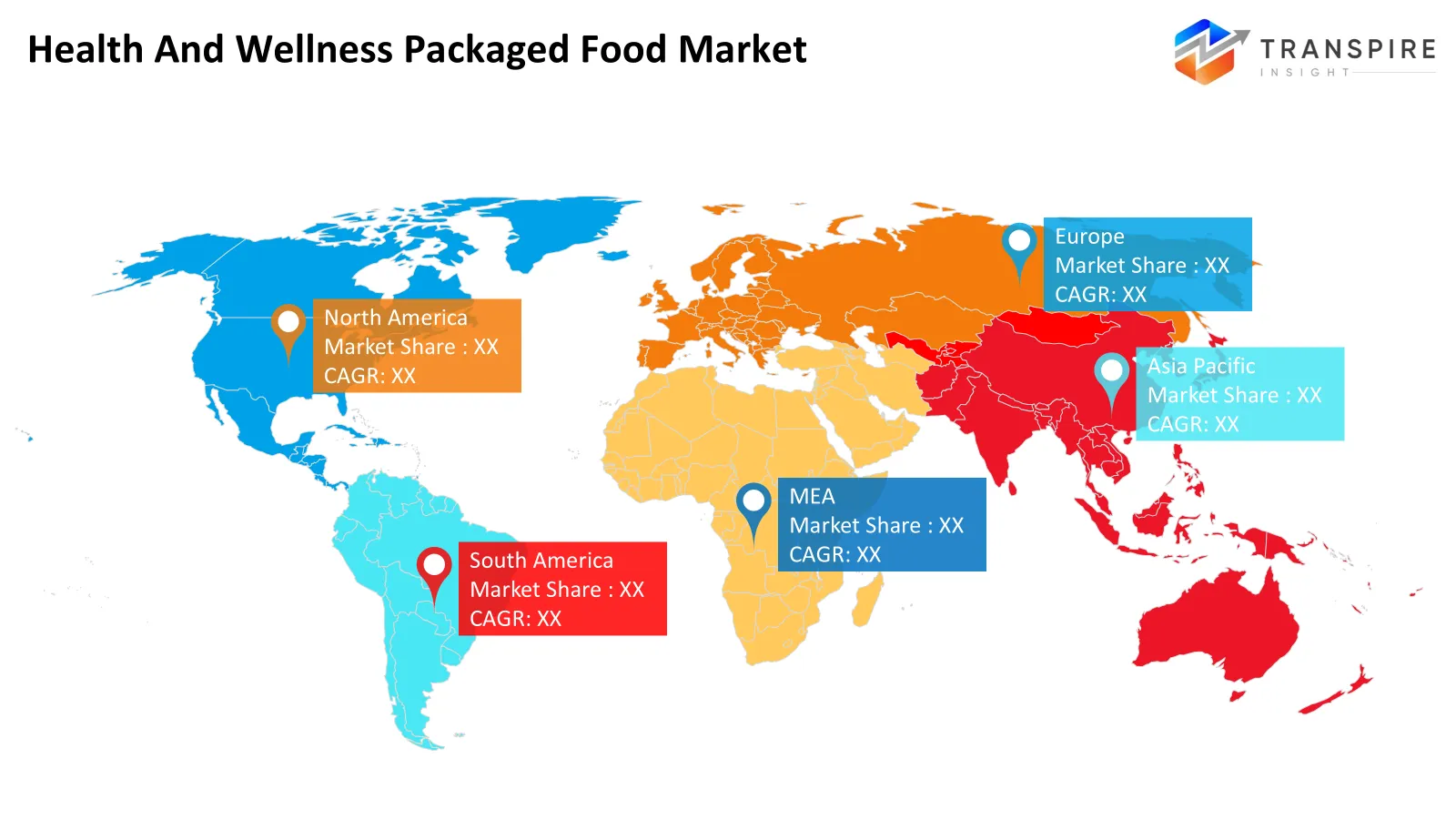
- North America (U.S., Canada, Mexico)
- Europe (Germany, France, U.K., Italy, Spain, Rest of Europe)
- Asia-Pacific (China, Japan, India, Rest of APAC)
- South America (Brazil and the Rest of South America)
- The Middle East and Africa (UAE, South Africa, Rest of MEA)
North America is the fastest-growing region in the Health And Wellness Packaged Food Market during the period, holding around 40% share.
North America holds the largest share of the market due to increasing consumer health awareness, high demand for functional and clean-label packaged foods, and rising adoption of organic, plant-based and nutritionally enhanced products. Advanced food processing technologies, extensive retail networks, strong e-commerce penetration and continuous product innovation further underpin regional growth. On the other hand, increasing consumer focus toward preventive nutrition, wellness and convenient healthy eating options are also driving demand for health and wellness packaged foods across the region.
Asia Pacific is expected to grow at a rapid CAGR in the Health And Wellness Packaged Food Market, holding roughly 36.6% of the share during the forecast period.
Asia Pacific is witnessing rapid growth due to increasing health awareness, urbanization, growing middle-class populations and growing demand for convenient and nutritious packaged foods. Regional demand is being bolstered by growing adoption of functional, organic, plant-based, fortified and clean-label products. With the growth of e-commerce platforms, modern retail infrastructure and food processing capabilities, product accessibility is improving. Furthermore, rising consumer interest in preventive nutrition, healthy living, and economical wellness solutions is fueling the growth of the health and wellness packaged food market in Asia Pacific.
Europe is the fastest-growing region in the Health And Wellness Packaged Food Market during the period, holding around 33% share.
High health awareness, increasing demand for clean-label, organic, functional and plant-based packaged foods and growing consumer preference for nutritious products are the factors that are attributed to Europe’s strong market position. Market development is further supported by stringent food quality standards, advanced food processing technologies and a well established retail infrastructure. Increasing interest in preventive nutrition, sustainable food choices and healthy lifestyles, along with expanding product innovation, are driving demand for health and wellness packaged foods in European markets.
Strategies for Market Growth in Non-Leading Regions:
The development of efficient and scalable health and wellness packaged food manufacturing technologies for non-leading regions would benefit small to medium sized food processors. Local sourcing & processing of nutritious, functional, organic, plant-based & clean-label ingredients, and setting up regional food processing facilities may help reduce import dependency and overall production costs. Forming strategic alliances with regional farmers, ingredient suppliers, food manufacturers, retailers, &food distributors will help improve market penetration for health and wellness packaged food products. Training programs and technical skill enhancement will be needed to improve knowledge of the formulation of healthy foods, food processing, quality control, nutritional standards and product safety. In addition, health and wellness packaged food products will be made more affordable and encouraged for adoption amongst consumers through flexible financing options, long term supply agreements and contract manufacturing arrangements. Collaborative programs development with government, agriculture, nutrition and food processing initiatives and use of digital sales channels will improve access to health and wellness packaged food products and help sustainable worldwide market growth in developing countries.
Future Market Trends for the Health And Wellness Packaged Food Market: -
- High-Protein Nutrition: Rising demand for high-protein snacks, fortified foods, dairy alternatives and meal replacements is fueling health-focused innovation in packaged foods.
- Gut health & personalized nutrition Increasing consumer interest in digestive wellness, probiotics, prebiotics, fiber and personalized nutrition is leading to functional food product development.
- Clean Labels & Sustainable Packaging: Consumers are demanding transparent ingredients, minimal processing, recyclable packaging and environmentally responsible solutions driving the growth of the sustainable packaged food market.
Recent Development
- March 2026 - Product Launch: Nestlé expanded its U.S. frozen foods portfolio with Lean Cuisine and Vital Pursuit products, which are high-protein and nutrition-focused and designed for weight management and wellness.
- May 2026 - Product Launch: Nestlé launched Maggi Kitchen, a line of easy single-serve ready meals featuring ly inspired recipes and quick microwave preparation for the nutrition-conscious consumer.
- Early 2026 - Innovation Shift: Packaged food companies are increasingly adding prebiotics, adaptogens, peptides and other functional ingredients into convenient snacks and long-life wellness-oriented food products.
This study forecasts revenue at regional and country levels from 2020 to 2033. Transpire Insights has segmented the Health And Wellness Packaged Food Market based on the below-mentioned segments:
Health And Wellness Packaged Food Market, By Product Type
- Functional Foods
- Organic Packaged Foods
- Low-calorie Foods
- High-protein Foods
- Plant-based Foods
- Gluten-free Foods
- Fortified Foods
- Others
Health And Wellness Packaged Food Market, By Distribution Channel
- Supermarkets & Hypermarkets
- Convenience Stores
- Online Retail
- Specialty Stores
- Pharmacies
- Direct-to-Consumer
- Others
Health And Wellness Packaged Food Market, By End User
- Adults
- Children
- Elderly
- Fitness Enthusiasts
- Health-conscious Consumers
- Athletes
- Others
Health And Wellness Packaged Food Market, By Application
- Weight Management
- Daily Nutrition
- Sports Nutrition
- Medical Nutrition
- Healthy Snacking
- Immune Support
- Others
Health And Wellness Packaged Food Market, By Ingredient Type
- Natural Ingredients
- Plant Proteins
- Probiotics
- Vitamins & Minerals
- Fiber
- Botanical Extracts
- Functional Oils
- Others
Health And Wellness Packaged Food Market, By Regional Analysis
North America
- US
- Canada
- Mexico
Europe
- Germany
- UK
- France
- Italy
- Spain
- Russia
- Rest of Europe
Asia Pacific
- China
- Japan
- India
- South Korea
- Australia
- Rest of Asia Pacific
South America
- Brazil
- Argentina
- Rest of South America
Middle East & Africa
- UAE
- Saudi Arabia
- Qatar
- South Africa
- Rest of the Middle East & Africa
Frequently Asked Questions
Find quick answers to common questions.
Rising health awareness, demand for functional nutrition, clean-label products, convenient healthy foods, and preventive wellness are driving market growth.
Functional foods dominate due to increasing consumer demand for fortified, nutritious, probiotic, and health-enhancing packaged food products.
North America leads due to strong consumer health awareness, advanced food processing, extensive retail networks, and high demand for functional foods.
High-protein nutrition, gut health, personalized nutrition, clean-label formulations, sustainable packaging, and functional ingredients are shaping future market trends.
Key companies include Nestlé, Danone, General Mills, PepsiCo, Unilever, Abbott Laboratories, Glanbia, Oatly, Beyond Meat, and Kraft Heinz.
- Nestlé
- Danone
- General Mills
- Kellogg's
- PepsiCo
- Unilever
- Abbott Laboratories
- Glanbia
- Hain Celestial
- Oatly
- Beyond Meat
- Kraft Heinz
- Amway
- Herbalife
- Nature's Bounty
About the Authors

Chetan Dhatrak
I’m Chetan Dhatrak, a Senior Research Analyst at Transpire Insight, specializing in the Consumer Goods, Foods and Beverages industry. I focus on analyzing market trends, consumer behavior, competitive landscapes, and industry developments to deliver accurate, data-driven insights. My research at Transpire Insight is built on credible sources and in-depth analysis, helping businesses and readers better understand market dynamics, emerging opportunities, and evolving consumer preferences. I’m committed to creating reliable, well-researched content that supports informed decision-making and reflects the latest developments in the consumer goods and food & beverage sectors.

Chakradhar Khansole
Chakradhar serves as the Research Director at Transpire Insight, bringing over 8 years of experience in technology, innovation, and strategic market intelligence. He specializes in transforming complex market data into actionable business insights that enable organizations to make informed, growth-oriented decisions. Recognized for his strategic vision and analytical expertise, Chakradhar leads high-impact research initiatives, delivering comprehensive market assessments, competitive intelligence, and forward-looking industry analysis.
Recently Published Reports
-
Apr 2026
Baby Infant Formula Market
Baby Infant Formula Market Size, Share & Analysis Report By ype (Infant Milk, Follow On Milk, Specialty Baby Milk, Growing-Up Milk), By Ingredient (Carbohydrate, Fat, Protein, Minerals, Vitamins, and Others), By Product Form (Powder, Liquid, and Ready-to-feed), By Distribution Channels (Supermarket/Hypermarket, Specialty Store, Pharmacies, Online Retail, and Others), and Geography (North America, Europe, Asia-Pacific, Middle East and Africa, South and Central America), 2021 - 2031
-
Apr 2026
Edible Insects for Animal Feed Market
Edible Insects for Animal Feed Market Size, Share & Analysis Report By Type (Insect Powder, Insect Meal, Insect Bar, Insect Paste, Insect Oil, and Others), By Insect Type (Beetles, Cricket, Caterpillar, Hymenoptera, Orthoptera, Tree Bugs, and Others), By Application (Livestock, Pet Food, and Aquaculture), By Livestock Type (Poultry, Swine, and Others), and Geography (North America, Europe, Asia-Pacific, Middle East and Africa, South and Central America), 2021 - 2031
-
Apr 2026
Food Industry Disinfection and Bacterial Control Market
Food Industry Disinfection and Bacterial Control Market Size, Share & Analysis Report By Type (Chemical Disinfectants, Physical Disinfectants, and Biocides and Antimicrobials), By Application (Food Processing Equipment Surface Disinfection, Food Preparation Areas Surface Disinfection, Storage Areas Surface Disinfection, Anti-microbial Coatings Food Preservation, and Preservative Solutions Food Preservation), By End User (Meat and Poultry Processing, Dairy Processing, Seafood Processing, Bakery and Confectionery, Restaurants and Commercial Kitchens, and Food Service Providers), By Sales Channel (Online, Offline), and Geography (North America, Europe, Asia-Pacific, Middle East and Africa, South and Central America), 2021 - 2031
-
May 2026
Freeze Dried Food Market
Freeze Dried Food Market Size, Share & Analysis Report By Product Type (Fruits, Vegetables, Freeze-Dried Dairy Products, Freeze-Dried Meat and Seafood, Freeze-Dried Pet Food, and Prepared Meal), By Nature (Organic, and Conventional), By Form (Powdered, Granules, and Diced), By End Use (Breakfast Cereals, Dairy Products, Bakery & Confectionery, Nutritional Bars & Supplements, Powdered Beverages, Snacks, and Retail (Household)), and Geography (North America, Europe, Asia-Pacific, Middle East and Africa, South and Central America), 2021 - 2031