

Asia Pacific Health And Wellness Foods Market Size & Forecast:
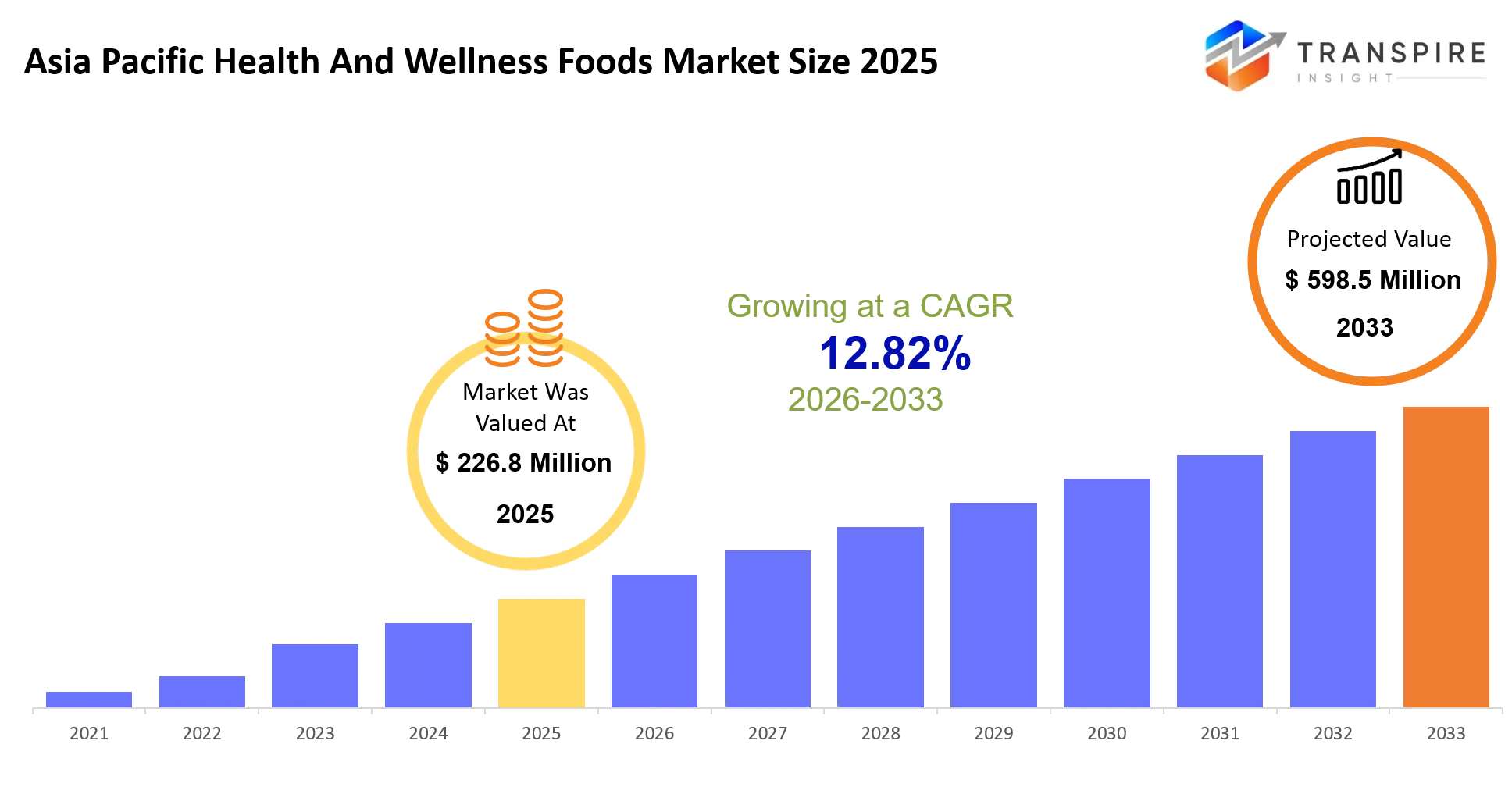
- Asia Pacific Health And Wellness Foods Market Size 2025: USD 226.8 Million
- Asia Pacific Health And Wellness Foods Market Size 2033: USD 598.5 Million
- Asia Pacific Health And Wellness Foods Market CAGR: 12.82%
- Asia Pacific Health And Wellness Foods Market Segments: By Product Type (Functional Foods, Organic Foods, Fortified Foods, Plant-Based Foods, Probiotic Foods, Low-Calorie Foods, Others); By Distribution Channel (Supermarkets, Health Stores, Online Retail, Pharmacies, Others); By End User (Adults, Seniors, Athletes, Children, Others); By Ingredient Type (Natural Ingredients, Organic Ingredients, Plant-Based Ingredients, Others)
Asia Pacific Health And Wellness Foods Market Summary
The Asia Pacific Health And Wellness Foods Market was valued at USD 226.8 Million in 2025. It is forecast to reach USD 598.5 Million by 2033. That is a CAGR of 12.82% over the period.
The Asia Pacific Health and Wellness Foods Market serves a practical role in helping consumers manage nutrition, lifestyle-related health concerns, and preventive wellness through everyday food choices. These products, including functional, fortified, organic, plant-based, and probiotic foods, allow consumers to integrate health objectives into daily diets without relying solely on medical interventions or supplements.
Over the last five years, the market has undergone a structural shift from general nutrition products toward targeted wellness solutions that address digestive health, immunity, weight management, and metabolic health. Food manufacturers are increasingly using scientific validation, clean-label formulations, and personalized nutrition strategies to differentiate products. The COVID-19 pandemic acted as a major trigger, accelerating consumer scrutiny of ingredient quality and immune-supporting food options. This behavioral change expanded premium food categories and encouraged retailers to allocate more shelf space to wellness-focused products. As urban populations face higher rates of lifestyle disorders, manufacturers are capturing greater value through specialized formulations, creating stronger pricing power and expanding revenue opportunities across both offline and digital distribution channels.
Key Market Insights
- China dominates the market with approximately 32% share in 2025, supported by strong consumer spending on nutrition-focused food products.
- Japan maintains a significant position due to its established functional food sector and widespread adoption of fortified products.
- India is projected to be the fastest-growing country during 2025–2032, driven by urbanization and expanding digital retail channels.
- Southeast Asian economies are experiencing emerging demand for clean-label, organic, and plant-based food categories.
- Functional foods lead the market with nearly 30% share in 2025, supported by demand for digestive health and immunity-focused products.
- Organic foods represent the second-largest segment, benefiting from consumer preference for natural and minimally processed ingredients.
- Plant-based foods are forecast to record the fastest growth through 2032 as sustainability and dietary diversification gain traction.
- Probiotic and fortified food categories continue expanding through science-backed nutritional positioning and premium product offerings.
- Daily nutrition and preventive health applications account for approximately 40% of total market revenue in 2025.
- Digestive wellness remains a major application area due to broad adoption of probiotic and fiber-enriched products.
What are the Key Drivers, Restraints, and Opportunities in the Asia Pacific Health And Wellness Foods Market?
The strongest force accelerating the Asia Pacific Health And Wellness Foods Market is the shift toward preventive healthcare driven by rising healthcare expenditures and the growing prevalence of lifestyle-related diseases. Governments, employers, and consumers increasingly recognize that long-term health management begins with everyday nutrition rather than medical treatment alone. This shift has encouraged food manufacturers to develop products targeting immunity, digestive health, metabolic wellness, and healthy aging. As a result, premium functional and fortified food categories command higher price points, allowing companies to expand revenue while increasing product penetration across both traditional retail and e-commerce channels.
The most significant barrier remains the high cost of developing, sourcing, and validating health-focused food products. Functional ingredients, organic certification requirements, and scientific substantiation for health claims create structural cost pressures throughout the value chain. These challenges cannot be resolved quickly because they depend on agricultural supply systems, regulatory frameworks, and long-term research investments. Consequently, premium pricing limits affordability in price-sensitive markets, slowing adoption among mass-market consumers and constraining overall revenue potential despite strong consumer interest.
Personalized nutrition represents a major opportunity for the next phase of market expansion. Advances in digital health platforms, wearable devices, and nutrition analytics are enabling companies to tailor food recommendations and formulations to individual health goals. Markets such as China, Japan, and South Korea are witnessing growing investment in health technology ecosystems that connect consumer data with nutrition solutions. This convergence creates opportunities for premium product innovation, stronger customer retention, and higher lifetime consumer value.
What Has the Impact of Artificial Intelligence Been on the Asia Pacific Health And Wellness Foods Market?
Artificial intelligence and advanced digital technologies are transforming the Asia Pacific health and wellness foods industry by improving product development, supply chain efficiency, and consumer targeting. Food manufacturers increasingly use AI-powered analytics to automate quality control processes, monitor ingredient consistency, and detect production anomalies in real time. Computer vision systems on production lines can identify packaging defects and contamination risks faster than manual inspections, helping reduce waste and improve operational efficiency.
Machine learning models are also enhancing predictive capabilities across the value chain. Companies analyze consumer purchasing patterns, health trends, and retail data to forecast demand more accurately and optimize inventory levels. Predictive analytics helps manufacturers anticipate raw material requirements, reducing stock shortages and excess inventory costs. In functional and fortified food categories, AI-assisted research platforms accelerate ingredient discovery and formulation development by identifying promising nutrient combinations from large scientific datasets.
These technologies are delivering measurable operational improvements through shorter product development cycles, lower manufacturing waste, improved forecast accuracy, and stronger supply chain resilience. Digital personalization platforms are also increasing customer retention by recommending nutrition products aligned with individual wellness goals.
However, a key limitation remains the high cost and complexity of integrating AI systems across fragmented supply chains. Many regional producers lack access to standardized consumer data and digital infrastructure, which can limit model accuracy and slow large-scale deployment.
Key Market Trends
- Since 2020, manufacturers have shifted from general wellness claims toward clinically supported benefits for immunity, digestive health, and metabolic wellness.
- Plant-based product launches increased significantly between 2021 and 2025 as consumers diversified protein sources beyond traditional animal-based foods.
- Major companies including Nestlé, Danone, and Unilever expanded functional food portfolios through probiotic, fortified, and personalized nutrition offerings.
- E-commerce evolved from a supplementary channel into a core sales platform, enabling direct consumer engagement and faster product testing.
- Clean-label reformulation accelerated after 2021, with manufacturers reducing artificial additives and improving ingredient transparency across premium product lines.
- Food companies increasingly use AI-driven consumer analytics to identify emerging nutrition preferences and shorten product development timelines.
- Regulatory scrutiny of health claims strengthened across several Asia Pacific markets, encouraging greater investment in scientific validation and clinical evidence.
- Supply chains shifted toward traceable sourcing models as consumers began demanding greater visibility into ingredient origin and production practices.
- Personalized nutrition moved from a niche concept to a commercial growth strategy, particularly in China, Japan, and South Korea after 2022.
- Retailers expanded shelf space for functional and wellness-focused foods, reflecting sustained consumer preference for preventive health solutions over traditional products.
Asia Pacific Health And Wellness Foods Market Segmentation
By Product Type:
Functional foods continue to hold a strong position because of broad acceptance among consumers seeking nutrition that supports specific health goals. Products enriched with vitamins, minerals, probiotics, and fiber have moved beyond niche shelves and entered mainstream retail channels. Manufacturers have expanded portfolios with formulations focused on digestive health, immunity support, and energy management. Continuous product development has strengthened category visibility across urban markets.
Organic foods have gained traction as ingredient transparency and production standards receive greater attention. Plant-based foods have also expanded rapidly, supported by changing dietary preferences and wider product availability. Fortified foods remain important due to efforts to address nutritional gaps through everyday consumption. Probiotic and low-calorie offerings have attracted interest from consumers focused on balanced diets and preventive wellness, creating opportunities for premium product positioning.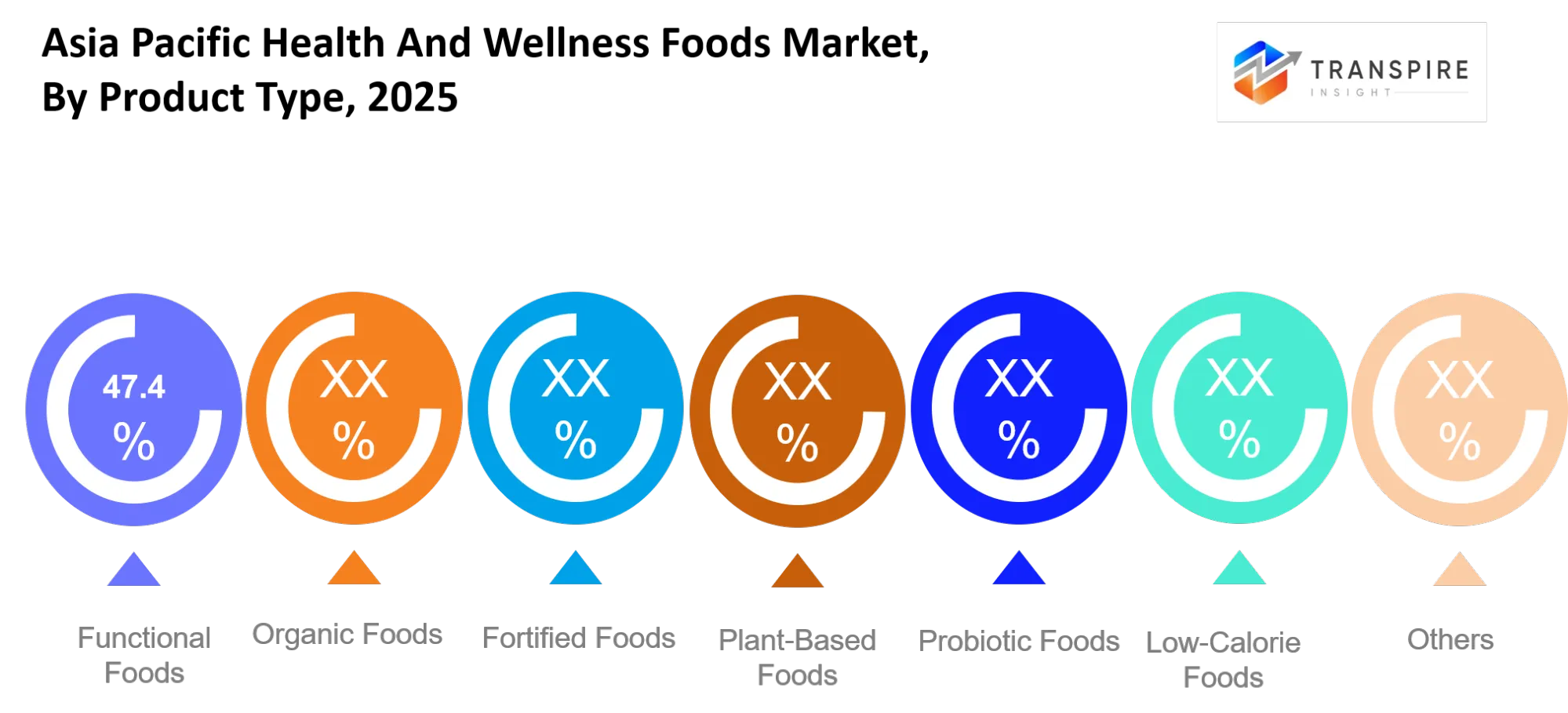
By Distribution Channel:
Supermarkets remain a key sales channel because of extensive product variety and convenient access to established brands. Large retail chains continue to dedicate more shelf space to nutrition-focused food categories. In-store promotions and product sampling activities support customer engagement and encourage trial purchases. Strong retail networks have helped manufacturers reach broader consumer groups across the region.
Online retail has emerged as one of the most dynamic channels during recent years. Digital platforms provide direct access to product information, reviews, and personalized recommendations. Health stores continue to serve consumers seeking specialized nutrition products and expert guidance. Pharmacies also contribute to sales growth through trusted positioning and increasing availability of wellness-focused food options, while other retail formats support distribution in local markets.
By End User:
Adults account for a substantial share of consumption because wellness-focused food choices increasingly form part of daily routines. Busy lifestyles have encouraged demand for convenient products that offer nutritional value and specific health benefits. Functional snacks, fortified beverages, and protein-enriched products have gained acceptance among working populations. Product innovation continues to address varied nutritional requirements across different age groups.
Students and professionals represent expanding consumer segments due to greater focus on energy, concentration, and overall well-being. Aging populations across several countries have increased interest in products designed to support healthy aging and long-term wellness. Manufacturers are introducing targeted formulations that address changing dietary needs. Broader product accessibility has further strengthened adoption across diverse consumer categories.
By Ingredient Type:
Natural ingredients have become increasingly important as manufacturers respond to consumer preference for recognizable and minimally processed components. Fruits, vegetables, whole grains, and botanical extracts are widely incorporated into product formulations. Clean-label positioning has encouraged greater use of ingredients associated with transparency and quality. This trend has influenced product development strategies across multiple categories.
Probiotics, vitamins, minerals, proteins, and dietary fibers remain central to many nutrition-focused offerings. Demand for plant-derived ingredients has expanded as companies diversify sourcing strategies and introduce alternative formulations. Functional ingredients supported by scientific research continue to attract investment from leading manufacturers. Ongoing innovation in ingredient technology will support new product launches and strengthen value creation throughout the market.
What are the Key Use Cases Driving the Asia Pacific Health And Wellness Foods Market?
The primary use case centers on daily nutrition and preventive health management. Consumers increasingly choose foods enriched with probiotics, vitamins, minerals, and functional ingredients to support digestive health, immunity, and overall wellness. This application generates the largest share of demand because it integrates easily into regular eating habits without requiring major lifestyle changes.
Secondary applications are expanding in weight management and active lifestyle nutrition. Working professionals and fitness-focused consumers are adopting protein-enriched snacks, low-calorie foods, and fortified beverages to support energy levels and metabolic health. Demand is also growing for products designed to address specific nutritional needs among aging populations.
Emerging use cases include personalized nutrition and digitally guided wellness programs. Companies are developing food products tailored to individual health profiles, while health technology platforms increasingly connect dietary recommendations with targeted nutritional solutions. These applications remain early-stage but show strong long-term potential.
|
Report Metrics |
Details |
|
Market size value in 2025 |
USD 226.8 Million |
|
Market size value in 2026 |
USD 257.3 Million |
|
Revenue forecast in 2033 |
USD 598.5 Million |
|
Growth rate |
CAGR of 12.82% from 2026 to 2033 |
|
Base year |
2025 |
|
Historical data |
2021 - 2024 |
|
Forecast period |
2026 - 2033 |
|
Report coverage |
Revenue forecast, competitive landscape, growth factors, and trends |
|
Regional scope |
Asia Pacific |
|
Key company profiled |
Nestlé, Danone, PepsiCo, Kellogg’s, General Mills, Herbalife, Amway, Yakult, Abbott, Unilever, Glanbia, Blackmores, Fonterra, DSM, Nature's Bounty |
|
Customization scope |
Free report customization (country, regional & segment scope). Avail customized purchase options to meet your exact research needs. |
|
Report Segmentation |
By Product Type (Functional Foods, Organic Foods, Fortified Foods, Plant-Based Foods, Probiotic Foods, Low-Calorie Foods, Others); By Distribution Channel (Supermarkets, Health Stores, Online Retail, Pharmacies, Others); By End User (Adults, Seniors, Athletes, Children, Others); By Ingredient Type (Natural Ingredients, Organic Ingredients, Plant-Based Ingredients, Others) |
Which Regions are Driving the Asia Pacific Health And Wellness Foods Market Growth?
East Asia holds the leading position in the Asia Pacific Health And Wellness Foods Market, supported by strong consumer spending power, advanced food manufacturing capabilities, and well-established health and nutrition industries. China, Japan, and South Korea have built extensive ecosystems that connect research institutions, ingredient suppliers, food processors, and retail networks. Regulatory frameworks in these countries support product innovation while maintaining quality and safety standards. Large urban populations and widespread availability of premium wellness products continue to sustain regional leadership.
Oceania represents the second-largest regional contributor, although growth dynamics differ from those seen in East Asia. Australia and New Zealand benefit from mature food industries, strong agricultural resources, and high consumer trust in health-focused food products. Stable economic conditions and consistent investment in product quality have supported long-term market development. Strong export capabilities also allow regional manufacturers to serve consumers across multiple Asia Pacific markets, creating a reliable revenue base.
South Asia is emerging as the fastest-growing region, driven primarily by changing dietary habits, expanding middle-income populations, and rapid growth in digital retail channels. India has witnessed significant investment in nutrition-focused food production, e-commerce infrastructure, and health-oriented product innovation over recent years. Wider access to wellness products has expanded consumer reach beyond major metropolitan areas. This momentum is expected to create attractive opportunities for manufacturers, retailers, and investors seeking long-term expansion across the 2026–2033 period.
Who are the Key Players in the Asia Pacific Health And Wellness Foods Market and How Do They Compete?
Competition in the Asia Pacific Health And Wellness Foods Market remains moderately consolidated, with large multinational food companies holding substantial market share while regional and specialty brands continue to expand. Competitive positioning increasingly depends on product innovation, scientific validation of health claims, ingredient transparency, and distribution reach rather than price alone. Established companies are defending market positions through continuous portfolio expansion, while newer entrants focus on specialized nutrition categories such as plant-based foods, probiotics, and personalized wellness products. Digital commerce and direct-to-consumer channels have also lowered barriers for niche brands seeking targeted consumer segments.
Nestlé differentiates itself through extensive investment in nutrition science and product development across functional foods and personalized nutrition solutions. The company continues to expand through research partnerships and region-specific product launches tailored to local dietary preferences. Danone focuses heavily on digestive health and probiotic nutrition, leveraging scientific research to strengthen consumer trust and product credibility. Continued investment in health-focused dairy and plant-based offerings has allowed Danone to address multiple wellness categories simultaneously.
Yakult maintains a specialized position through probiotic formulations supported by decades of microbiome research. This focused strategy creates differentiation in digestive wellness products where scientific backing plays a critical role in purchasing decisions. Unilever has expanded wellness-oriented food portfolios by integrating clean-label ingredients and nutrition-focused formulations into established consumer brands. Abbott concentrates on targeted nutritional solutions for specific age groups and health needs, creating competitive advantages through clinically supported formulations and strong healthcare distribution networks across major Asia Pacific markets.
Company List
- Nestlé
- Danone
- PepsiCo
- Kellogg’s
- General Mills
- Herbalife
- Amway
- Yakult
- Abbott
- Unilever
- Glanbia
- Blackmores
- Fonterra
- DSM
- Nature's Bounty
Recent Development News
"In February 2026, Nestlé announced a stronger strategic focus on nutrition and health as part of a broader growth initiative under new leadership. The move reinforced investment in health-oriented food categories and highlighted the company's commitment to expanding nutrition-focused product portfolios. Full URL:https://www.reuters.com
"In October 2025, Yakult Singapore launched Y1000, a probiotic beverage containing more than 100 Million LcS bacteria per bottle. The launch expanded Yakult's premium probiotic portfolio and increased competition in the functional wellness beverage segment across Asia. Full URL:https://yakult.com.sg/p
What Strategic Insights Define the Future of the Asia Pacific Health And Wellness Foods Market?
Over the next five to seven years, the Asia Pacific Health And Wellness Foods Market is expected to move beyond broad wellness positioning toward highly targeted nutrition solutions designed for specific health outcomes. The underlying driver will be the convergence of nutrition science, digital health platforms, and consumer data analytics, enabling manufacturers to develop products tailored to age, lifestyle, and metabolic needs. Value creation will increasingly come from personalization and scientifically validated formulations rather than product volume alone.
A less visible risk lies in the growing dependence on specialized functional ingredients such as probiotics, botanical extracts, and bioactive compounds. Concentration within ingredient supply chains could expose manufacturers to price volatility, sourcing disruptions, and margin pressure, particularly as demand expands across multiple countries simultaneously.
An emerging opportunity is developing in personalized nutrition ecosystems, especially in China, Japan, and South Korea, where digital health adoption and nutrition technology investment continue to accelerate. Companies that integrate health data, nutrition recommendations, and tailored food products will be better positioned to capture premium consumers. Market participants should invest early in clinical validation, ingredient traceability, and data-driven product development to build long-term competitive differentiation.
Asia Pacific Health And Wellness Foods Market Report Segmentation
By Product Type
- Functional Foods
- Organic Foods
- Fortified Foods
- Plant-Based Foods
- Probiotic Foods
- Low-Calorie Foods
- Others
By Distribution Channel
- Supermarkets
- Health Stores
- Online Retail
- Pharmacies
- Others
By End User
- Adults
- Seniors
- Athletes
- Children
- Others
By Ingredient Type
- Natural Ingredients
- Organic Ingredients
- Plant-Based Ingredients
- Others
Frequently Asked Questions
Find quick answers to common questions.
The Expected Asia Pacific Health And Wellness Foods Market size for the Market will be USD 598.5 Million in 2033.
Key segments for the Asia Pacific Health And Wellness Foods Market are By Product Type (Functional Foods, Organic Foods, Fortified Foods, Plant-Based Foods, Probiotic Foods, Low-Calorie Foods, Others); By Distribution Channel (Supermarkets, Health Stores, Online Retail, Pharmacies, Others); By End User (Adults, Seniors, Athletes, Children, Others); By Ingredient Type (Natural Ingredients, Organic Ingredients, Plant-Based Ingredients, Others).
Major Asia Pacific Health And Wellness Foods Market players are Nestlé, Danone, PepsiCo, Kellogg’s, General Mills, Herbalife, Amway, Yakult, Abbott, Unilever, Glanbia, Blackmores, Fonterra, DSM, Nature's Bounty.
The Current Asia Pacific Health And Wellness Foods Market size is USD 226.8 Million in 2025.
The Asia Pacific Health And Wellness Foods Market CAGR is 12.82% from 2026 to 2033.
- Nestlé
- Danone
- PepsiCo
- Kellogg’s
- General Mills
- Herbalife
- Amway
- Yakult
- Abbott
- Unilever
- Glanbia
- Blackmores
- Fonterra
- DSM
- Nature's Bounty
About the Authors

Chetan Dhatrak
I’m Chetan Dhatrak, a Senior Research Analyst at Transpire Insight, specializing in the Consumer Goods, Foods and Beverages industry. I focus on analyzing market trends, consumer behavior, competitive landscapes, and industry developments to deliver accurate, data-driven insights. My research at Transpire Insight is built on credible sources and in-depth analysis, helping businesses and readers better understand market dynamics, emerging opportunities, and evolving consumer preferences. I’m committed to creating reliable, well-researched content that supports informed decision-making and reflects the latest developments in the consumer goods and food & beverage sectors.

Chakradhar Khansole
Chakradhar serves as the Research Director at Transpire Insight, bringing over 8 years of experience in technology, innovation, and strategic market intelligence. He specializes in transforming complex market data into actionable business insights that enable organizations to make informed, growth-oriented decisions. Recognized for his strategic vision and analytical expertise, Chakradhar leads high-impact research initiatives, delivering comprehensive market assessments, competitive intelligence, and forward-looking industry analysis.
Recently Published Reports
-
Apr 2026
Baby Infant Formula Market
Baby Infant Formula Market Size, Share & Analysis Report By ype (Infant Milk, Follow On Milk, Specialty Baby Milk, Growing-Up Milk), By Ingredient (Carbohydrate, Fat, Protein, Minerals, Vitamins, and Others), By Product Form (Powder, Liquid, and Ready-to-feed), By Distribution Channels (Supermarket/Hypermarket, Specialty Store, Pharmacies, Online Retail, and Others), and Geography (North America, Europe, Asia-Pacific, Middle East and Africa, South and Central America), 2021 - 2031
-
Apr 2026
Edible Insects for Animal Feed Market
Edible Insects for Animal Feed Market Size, Share & Analysis Report By Type (Insect Powder, Insect Meal, Insect Bar, Insect Paste, Insect Oil, and Others), By Insect Type (Beetles, Cricket, Caterpillar, Hymenoptera, Orthoptera, Tree Bugs, and Others), By Application (Livestock, Pet Food, and Aquaculture), By Livestock Type (Poultry, Swine, and Others), and Geography (North America, Europe, Asia-Pacific, Middle East and Africa, South and Central America), 2021 - 2031
-
Apr 2026
Food Industry Disinfection and Bacterial Control Market
Food Industry Disinfection and Bacterial Control Market Size, Share & Analysis Report By Type (Chemical Disinfectants, Physical Disinfectants, and Biocides and Antimicrobials), By Application (Food Processing Equipment Surface Disinfection, Food Preparation Areas Surface Disinfection, Storage Areas Surface Disinfection, Anti-microbial Coatings Food Preservation, and Preservative Solutions Food Preservation), By End User (Meat and Poultry Processing, Dairy Processing, Seafood Processing, Bakery and Confectionery, Restaurants and Commercial Kitchens, and Food Service Providers), By Sales Channel (Online, Offline), and Geography (North America, Europe, Asia-Pacific, Middle East and Africa, South and Central America), 2021 - 2031
-
May 2026
Freeze Dried Food Market
Freeze Dried Food Market Size, Share & Analysis Report By Product Type (Fruits, Vegetables, Freeze-Dried Dairy Products, Freeze-Dried Meat and Seafood, Freeze-Dried Pet Food, and Prepared Meal), By Nature (Organic, and Conventional), By Form (Powdered, Granules, and Diced), By End Use (Breakfast Cereals, Dairy Products, Bakery & Confectionery, Nutritional Bars & Supplements, Powdered Beverages, Snacks, and Retail (Household)), and Geography (North America, Europe, Asia-Pacific, Middle East and Africa, South and Central America), 2021 - 2031