

Global UTI Drugs Market Size & Forecast:
- Global UTI Drugs Market Size 2025: USD 5.09 Billion
- Global UTI Drugs Market Size 2033: USD 8.3 Billion
- Global UTI Drugs Market CAGR: 6.33%
- Global UTI Drugs Market Segments: By Drug Class (Antibiotics, Analgesics, Antifungals, Combination Drugs, Others); By Indication (Complicated UTI, Uncomplicated UTI, Recurrent UTI, Catheter-associated UTI, Others); By Route (Oral, Injectable, Others); By End User (Hospitals, Clinics, Homecare, Others); By Distribution Channel (Hospital Pharmacy, Retail Pharmacy, Online Pharmacy, Others).
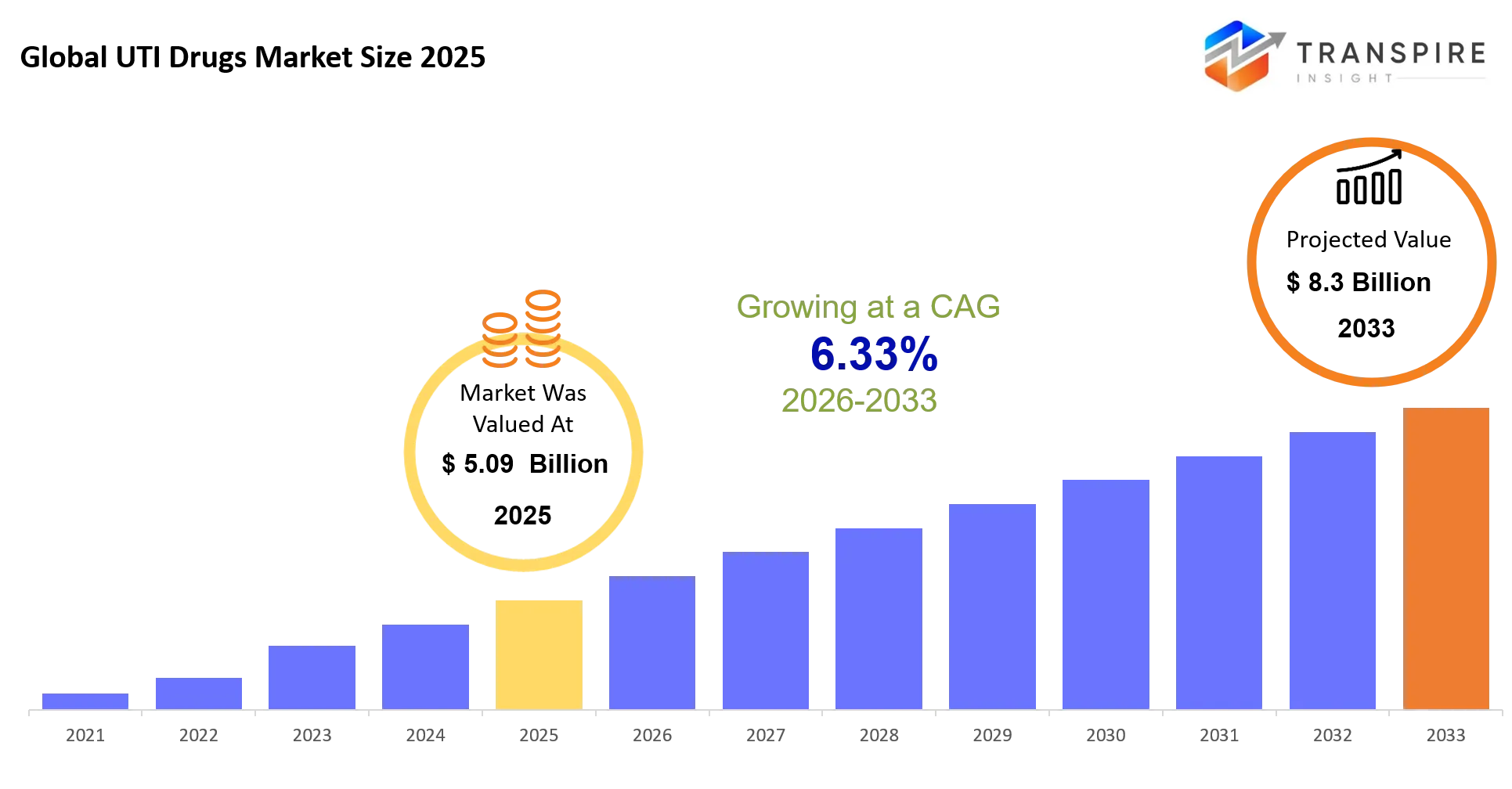
Global UTI Drugs Market Summary:
As per Transpire Insight Analysis, the Global UTI Drugs Market size is estimated at USD 5.09 Billion in 2025 and is anticipated to reach USD 8.3 Billion by 2033, growing at a CAGR of 6.33% from 2026 to 2033.
The Urinary Tract Infection treatment market segment centres on a multitude of drugs in various stages of formulation, manufacturing, commercialisation, as well as prescription, in treatment and prevention for a UTI. Over the last three to five years, we’ve seen an inflexion in patient trends from waiting patiently during their illness to proactively treating urinary tract symptoms through inexpensive, readily available over-the-counter ( OTC) rapid diagnostic tests. On the other side, we've seen a structural change take hold in the antibiotic stewardship mandates being implemented in healthcare, which are making physician access to broad-spectrum therapies more tightly restricted. This move towards narrower-spectrum antibiotic use and targeted combo therapies has arisen due to drug-resistant, multi drug resistant bacteria strains which have rendered first-line therapies obsolete. The market growth is then largely driven by an increased utilisation of new costly narrow spectrum and combo treatments with higher ASP's.
Key Global UTI Drugs Market Insights:
The paradigm is moving away from the use of broad-spectrum antibiotics to precision treatment, digital diagnostics, and drug development that considers resistance. Companies are leaning towards innovation while keeping antimicrobial stewardship in mind to generate value for the long term by offering targeted therapies and broader access to patients.
- Pfizer and Merck boost next-generation antibiotic product lines as antibiotics gain 58% share.
- Combination therapies are growing at an 8.9% CAGR; AbbVie and Astellas are focusing on enhancing efficacy and relapse prevention.
- North America is the biggest region, with 36% – GSK and Bayer drive clinical and evidence-based treatment adoption.
- Europe accounts for 30%, with Sandoz and Teva building on generic availability with sustainable manufacturing of their generics.
- Asia Pacific accounts for 25% and is the fastest-growing region with a CAGR of 9.8%, owing to Cipla, Sun Pharma, and Dr Reddy's growing affordable drugs.
- While this is the case, Lupin and Zydus Lifesciences expand their hospital-based partnerships and infection-management range.
- Online pharmacy growth is projected to be driven by digital prescribing and telehealth, and manufacturers are improving their e-pharmacy partnerships and adherence programs.
- AI-powered susceptibility testing and biomarker-driven treatment are transforming prescribing practices, allowing for quicker treatment decisions and enhanced antimicrobial stewardship.
What are the Key Drivers, Restraints, and Opportunities in the Global UTI Drugs Market?
Driver:
The overall expansion in the market of these products is the overall trend in the global increasing numbers of outpatient surgeries and the ageing of the population, which leads to an extreme rise in the prevalence of CAUTIs that require intervention. Operating the market in practice necessitates more innovative high-tier therapies adopted by hospitals that require an urgently needed prevention of the systemic infection spreading to other systems caused by contaminated catheters, which drives the adoption of high-end IV therapies. In February 2026, the CAUTI Alliance officially launched its multi-organizational pan-European health consortium in Brussels alongside the European Sepsis Alliance and the European Specialist Nurses Organisation. This deployment establishes a unified regional framework for clinical urology protocols.
Restraint:
Growth is severely bottlenecked by the slow, expensive pipeline development for novel molecular entities capable of bypassing bacterial resistance mechanisms. This bottleneck persists due to a structural flaw in pharmaceutical economics: the low profit margins of short-course acute therapies fail to justify the massive capital expenditure required for clinical trials, leaving providers reliant on older, increasingly ineffective formulations.
Opportunity:
A significant pathway for expansion in the space could come from the commercial development of niche, non-antibiotic prophylactic products, such as anti-adhesion vaccines and small-molecule virulence inhibitors. Upstream biotechnology investments in North America have recently been focused on novel therapies that block E. Coli adherence to the bladder wall, opening up an entirely novel preventative reimbursement class. In March 2026, researchers partnering with Wiley's Chemistry – An Asian Journal published a comprehensive clinical development layout optimising alternative non-antibiotic therapeutic strategies that isolate and shut down bacterial virulence mechanisms without causing selective resistance pressure.
What Has the Impact of Artificial Intelligence Been on the Global UTI Drugs Market?
Pharmaceutical AI assist in accelerating the drug discovery process and automating the first few screening stages of molecular compositions for resistant uropathogens. The machine learning algorithms can then use historical genetic sequence results to estimate how a particular bacterial mutation reacts to new chemical compositions, thereby cutting down years of preclinical development to just months. From an operational perspective, hospital-integrated AI tools assess live electronic healthcare records for early shifts in key biomarkers that might indicate hospital-borne infectiousness before significant adverse clinical issues have emerged.
A critical barrier in the uptake of AI is the prevalence of inaccuracies, due in no small part to the fact that health-related data is not standardised and/or segmented across a range of hospital locations globally. Models that have had their clinical history input based on selective or imperfect data inputs may give rise to positive diagnoses for Drug resistance that need to be corroborated by the use of conventional laboratory cultures, which, of course, does not add value from a patient care perspective but will enhance patient safety. In June 2026, South Korea's Celltrion showcased its expanded AI-driven target discovery and advanced antibody-drug conjugate (ADC) design capabilities at the BIO International Convention. This deployment establishes scalable, data-driven pipelines that compress early-stage development cycles.
Key Global UTI Drugs Market Trends:
The global market is moving away from an empirical approach toward a hyper-targeted approach, with a focus on resistance-aware treatments based on quick diagnostic information and combination products tailored for specific indications.
- The focus is moving from the use of generic monotherapies to non-antibiotic preventive regimens to prevent disrupting the microbiome.
- Telehealth adoption has been a game-changer in the way consumers are buying prescriptions, with doctors sending prescriptions through a specialised digital platform.
- Regulatory agencies are approving novel molecular treatments that are resistant to current drugs on accelerated tracks to combat resistant pathogens.
- Diagnostic integration is increasing – physicians are increasingly prescribing directly to point-of-care susceptibility tests.
- The resistance to taking medicines as directed is eliminating extended-release medicines as an option in most institutions.
- Biofilm-disrupting agents have moved beyond exploratory stages of research and development into the later phases of clinical development.
- Rapid modernisation of supply chains, which is increasing access to advanced therapeutic options, is underway in emerging economies.
- Data-driven stewardship protocols are in place at outpatient clinics to control prescribing practices daily.
Global UTI Drugs Market Segmentation
By Drug:
Antibiotics lead the UTI drugs market with 58% of global revenue, driven by their role as the primary treatment for uncomplicated and complicated infections. Analgesics account for 15% and are widely used for symptom relief, while antifungals hold 9%, supported by demand for treating fungal urinary infections in high-risk patients. Combination drug therapies represent 8% of the market and are projected to grow at the fastest 8.9% CAGR due to rising antimicrobial resistance and recurrent UTI cases. The remaining 10% consists of niche therapies supported by ongoing pharmaceutical innovation.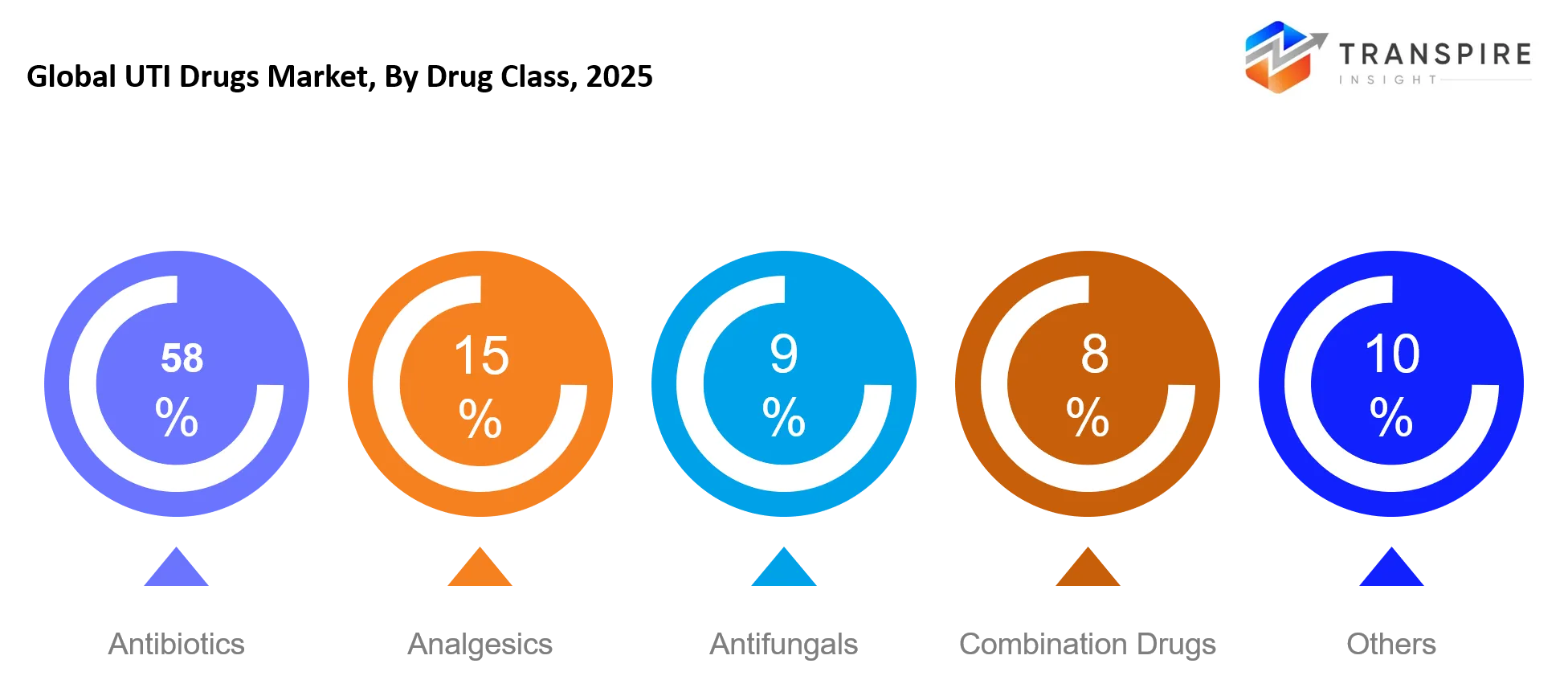
By Indication:
Uncomplicated UTI treatment commands the largest share due to its high diagnosis rate and widespread outpatient management. Complicated UTI continues to generate significant hospital-based demand, while recurrent UTI is expanding steadily with the growing elderly and diabetic population. Catheter-associated UTI therapies are benefiting from stricter infection-control protocols, creating demand for advanced treatment strategies.
By Route:
The oral route dominates administration owing to convenience, affordability, and high patient adherence, while injectable therapies remain essential for severe infections requiring rapid clinical intervention. Other administration routes are expected to witness selective adoption with specialized formulations.
By End User:
Hospitals remain the leading end users because of higher admission rates for complicated infections, followed by clinics managing routine cases. Home care is gaining momentum through telemedicine-supported treatment and outpatient antimicrobial programs.
By Distribution Channel:
Hospital pharmacies maintain the strongest position through institutional procurement, while retail pharmacies continue to benefit from prescription refills for community-managed infections. Online pharmacies are recording the fastest expansion, supported by digital healthcare platforms, e-prescriptions, and home delivery services, indicating a gradual shift toward technology-enabled pharmaceutical access.
What are the Key Use Cases Driving the Global UTI Drugs Market?
Market drivers for high-volume occur with uncomplicated UTIs in acute clinical settings (primary care settings)-these settings represent volume for many typical first-line oral antibiotics because there is the need for rapid patient flow and empirical prescribing-this pattern holds across much of the world.
More recent applications include management of urinary catheter-related infections in ICU settings and nursing facilities; these require higher use of premium oral drugs and multiple drugs to remove the very tight (persistent bacterial biofilm) that can build on many indwelling devices.
The use of antibiotic therapies long-term to prevent chronic recurrence; this indicates that the market should slowly migrate from cycles of antibiotic treatment to more targeted and preventive use of antibiotics and alternative (non-antibiotic barrier) therapies.
|
Report Metrics |
Details |
|
Market size value in 2025 |
USD 5.09 Billion |
|
Market size value in 2026 |
USD 5.4 Billion |
|
Revenue forecast in 2033 |
USD 8.3 Billion |
|
Growth rate |
CAGR of 6.33% from 2026 to 2033 |
|
Base year |
2025 |
|
Historical data |
2021 - 2024 |
|
Forecast period |
2026 - 2033 |
|
Report coverage |
Revenue forecast, competitive landscape, growth factors, and trends |
|
Regional scope |
United States; Canada; Mexico; United Kingdom; Germany; France; Italy; Spain; Denmark; Sweden; Norway; China; Japan; India; Australia; South Korea; Thailand; Brazil; Argentina; South Africa; Saudi Arabia; United Arab Emirates |
|
Key company profiled |
Pfizer, GSK, Bayer, Merck, Cipla, Sun Pharma, Astellas, AbbVie, Lupin, Teva, Sandoz, Dr Reddy's, Ferring, Zydus Lifesciences, Bristol Myers Squibb. |
|
Customization scope |
Free report customisation (country, regional & segment scope). Avail customised purchase options to meet your exact research needs. |
|
Report Segmentation |
By Drug Class (Antibiotics, Analgesics, Antifungals, Combination Drugs, Others); By Indication (Complicated UTI, Uncomplicated UTI, Recurrent UTI, Catheter-associated UTI, Others); By Route (Oral, Injectable, Others); By End User (Hospitals, Clinics, Homecare, Others); By Distribution Channel (Hospital Pharmacy, Retail Pharmacy, Online Pharmacy, Others). |
Which Regions are Driving the Global UTI Drugs Market Growth?
North America has the largest market share of 36%, owing to the well-developed healthcare infrastructure, diagnostic precision, and reimbursement systems. Good antimicrobial stewardship programs promote the use of effective antibiotic prescriptions while ensuring responsible antibiotic use. Investment in the continuous R&D of pharmaceutical products, combined with a well-established clinical trial ecosystem, speeds up the commercialisation of products. Additionally, the region is well-regulated and widely known to its patients, adding to its market leadership.
European markets make up 30% of the market and are growing steadily, with public healthcare systems and comprehensive infection-control programs well developed. The area has stronger adherence to standardised prescribing guidelines and generic drug use than North America. Surveillance programmes by government agencies provide better resistance monitoring and best treatment practices. Sustainable health expenditure and regular supply of prescription medicines allow for market resilience.
In April 2026, Shionogi & Co., Ltd. released advanced real-world clinical findings from its multi-centre CIRCE chart review study at the ESCMID Global Congress in Munich. This product utilisation research documents a robust 68% clinical cure rate for its specialised siderophore cephalosporin antibiotic.
Asia Pacific accounts for 25% of the market, which is expected to grow at the fastest CAGR of 9.8% till 2033. Urbanisation, growth in healthcare coverage and investments have greatly increased the availability of diagnosis and treatment. Governments promote access to affordable health care, and pharmaceutical companies boost their production capacities at home. These structural changes leave the region as the main growth driver for the global market for UTI drugs in the future. In January 2026, Shionogi & Co., Ltd. officially secured formal market authorisation from China’s National Medical Products Administration (NMPA) for its advanced iron-binding antibiotic Cefiderocol. This regulatory product launch dramatically expands the accessibility of next-generation critical care therapies within the Asia-Pacific corridor.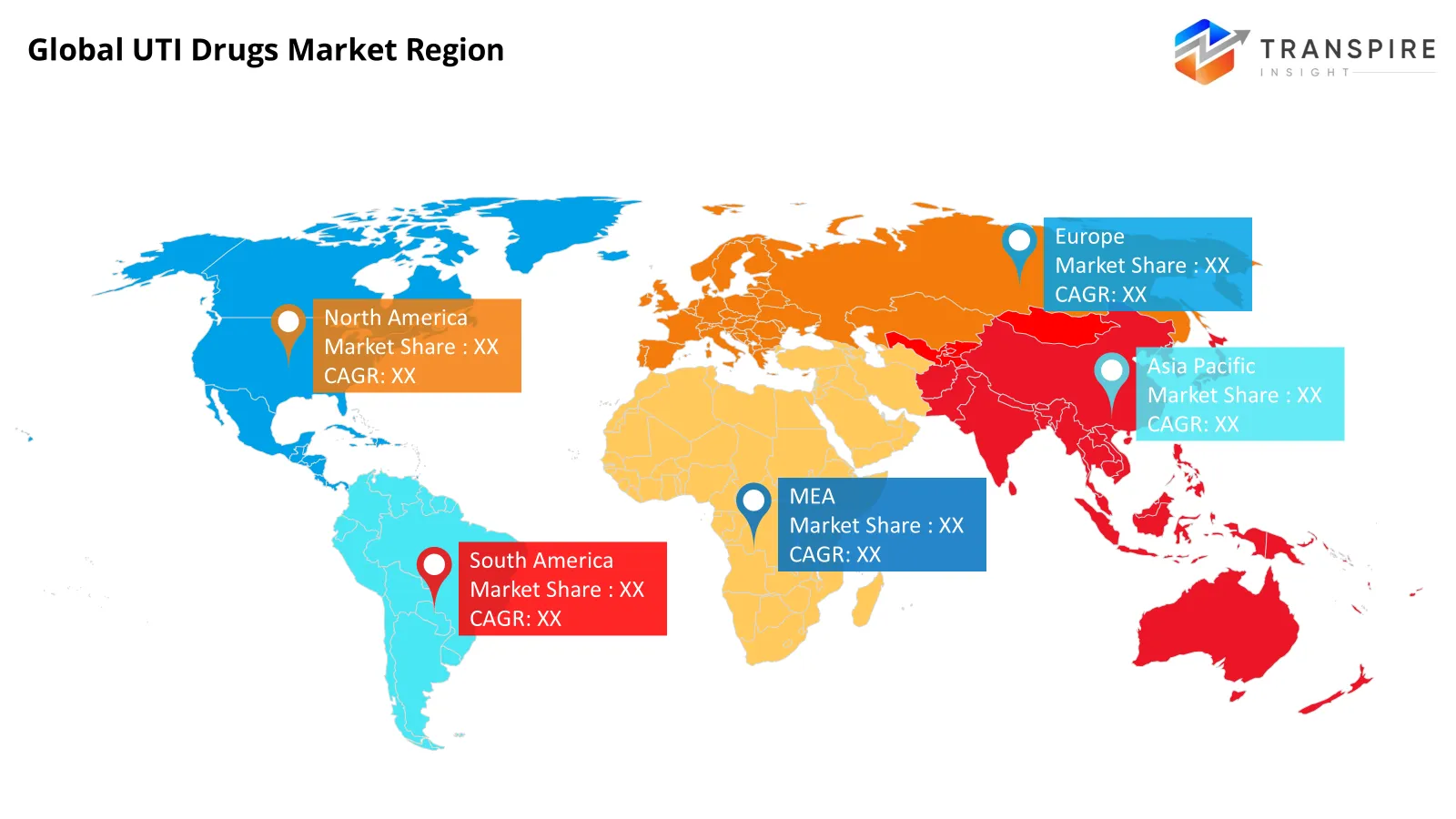
Who are the Key Players in the Global UTI Drugs Market, and how do they compete?
Competition is set by branded innovator firms, generic providers, and regional pharma players focused on price segmentation, innovation within antimicrobials, and geographical extension. Firms are expanding competition not through volumes but through resistance studies, pipeline extension via lifecycle management and partnerships to stay ahead. Innovator strategy through innovation focus (new anti-infective R&D pipeline development), global commercial capabilities, broad regulatory approvals across regulated markets and IP are core competitive advantages for the likes of Pfizer, Merck, GSK, Bayer, AbbVie, Bristol Myers Squibb, and Astellas to enhance access in regulated markets by launching therapies in high-value markets and establishing a strong hospital network for purchasing power. Cipla, Sun Pharma, Lupin, Dr Reddy’s, Zydus Lifesciences, Teva, Sandoz and Ferring leverage low-cost manufacturing, robust generic portfolios, and extensive distribution reach and seek to gain competitive share by ensuring availability and affordability for patients with vast numbers of approvals, including generic and biosimilar products across regions. They focus on expanding in emerging markets, expanding capacity and leveraging license agreements and digital pharmacies.
Key Players are:
- rPfize
- GSK
- Bayer
- Merck
- Cipla
- Sun Pharma
- Astellas
- AbbVie
- Lupin
- Teva
- Sandoz
- Dr Reddy's
- Ferring
- Zydus Lifesciences
- Bristol Myers Squibb
Recent Development News
- In March 2026, Alembic Pharmaceuticals Limited recorded its first prescription-based commercial sale of Pivya (pivmecillinam) tablets in the United States. This product launch establishes the company’s official entry into the U.S. branded pharmaceutical market through its subsidiary.
https://www.indianpharmapost.com
· In June 2026, Wockhardt secured regulatory approval from the U.S. Food and Drug Administration (FDA) for its severe-service therapeutic drug Zaynich (cefepime-zidebactam). This product launch addresses a critical unmet global crisis in nephrology and urology care.
What Strategic Insights Define the Future of the Global UTI Drugs Market?
The future market will place a premium on organisations that master a convergence of antimicrobial innovation, precision diagnostics, and digital health solutions. Revenue growth will become more about maximising value through targeted therapies that limit the development of resistance while optimising patient care. A looming danger is the increased dissemination of AMR that will shorten the lifespans of existing antibiotic and antiviral options and increase investment in innovative R&D. An evolving opportunity revolves around the use of AI-driven susceptibility testing and microbiome therapies, along with combination therapy platforms for personalised infection management. Market expansion through localised manufacturing and strategic partnerships within rapidly expanding Asian economies must also be a priority. Companies that will rise to the top will embed robust diagnostics, real-world evidence, and prudent antimicrobial stewardship within the core of their go-to-market plans.
Key Segmentations are:
By Drug Class
- Antibiotics
- Analgesics
- Antifungals
- Combination Drugs
- Others
By Indication
- Complicated UTI
- Uncomplicated UTI
- Recurrent UTI
- Catheter-associated UTI
- Others
By Route
- Oral
- Injectable
- Others
- By End User
- Hospital
- Clinics
- Homecare
- Others
By Distribution Channel
- Hospital Pharmacy
- Retail Pharmacy
- Online Pharmacy
- Others
Regional Outlook
North America
- United States
- Canada
- Mexico
Europe
- Germany
- United Kingdom
- France
- Spain
- Italy
- Rest of Europe
Asia Pacific
- Japan
- China
- Australia & New Zealand
- South Korea
- India
- Rest of Asia Pacific
South America
- Brazil
- Argentina
- Rest of South America
Middle East & Africa
- Saudi Arabia
- United Arab Emirates
- South Africa
- Rest of the Middle East & Africa
Frequently Asked Questions
Find quick answers to common questions.
The Global UTI Drugs Market size was valued at USD 5.09 Billion in 2025 and is poised to reach USD 8.3 Billion by 2033, expanding at a 6.33% CAGR.
Key Segments for the Global UTI Drugs Market are By Drug Class (Antibiotics, Analgesics, Antifungals, Combination Drugs, Others); By Indication (Complicated UTI, Uncomplicated UTI, Recurrent UTI, Catheter-associated UTI, Others); By Route (Oral, Injectable, Others); By End User (Hospitals, Clinics, Homecare, Others); By Distribution Channel (Hospital Pharmacy, Retail Pharmacy, Online Pharmacy, Others).
Growth is primarily driven by the escalating global volume of outpatient surgical procedures and ageing demographics that have triggered a dramatic rise in catheter-associated urinary tract infections (CAUTIs), combined with an urgent clinical need for newer, high-cost targeted narrow-spectrum antibiotics to combat multidrug-resistant bacterial mutations.
The global voice and language intelligence market is led by major manufacturers, including Pfizer, GSK, Bayer, Merck, Cipla, Sun Pharma, Astellas, AbbVie, Lupin, Teva, Sandoz, Dr Reddy's, Ferring, Zydus Lifesciences, and Bristol Myers Squibb.
North America influences global dynamics by holding a dominant 33.6% market share, a leading position sustained by its highly advanced diagnostic infrastructure, rapid commercial adoption of premium novel therapeutic entities, and substantial biotechnology investments in non-antibiotic prophylactic pipelines.
Promising commercial opportunities lie in the market introduction and monetisation of specialised non-antibiotic prophylactic therapies, including anti-adhesion vaccines and small-molecule virulence blockers designed to permanently disrupt bacterial biofilm-binding mechanisms.
- Pfizer
- GSK
- Bayer
- Merck
- Cipla
- Sun Pharma
- Astellas
- AbbVie
- Lupin
- Teva
- Sandoz
- Dr Reddy's
- Ferring
- Zydus Lifesciences
- Bristol Myers Squibb
About the Authors

Pankaj Ghogare Patil
I am Pankaj Ghogare Patil, a Senior Research Analyst at Transpire Insight, specializing in the Pharmaceutical, Chemicals & Materials, Healthcare IT, and Biotechnology industry. My expertise lies in conducting comprehensive market research, analyzing industry trends, evaluating competitive landscapes, and translating complex data into actionable insights. At Transpire Insight, I closely follow emerging technologies, regulatory developments, and market innovations to create accurate, well-researched, and informative content that helps businesses and professionals make informed decisions. I am committed to producing credible, evidence-based articles that reflect industry best practices while making technical topics accessible and valuable for a broad audience.

Chakradhar Khansole
Chakradhar serves as the Research Director at Transpire Insight, bringing over 8 years of experience in technology, innovation, and strategic market intelligence. He specializes in transforming complex market data into actionable business insights that enable organizations to make informed, growth-oriented decisions. Recognized for his strategic vision and analytical expertise, Chakradhar leads high-impact research initiatives, delivering comprehensive market assessments, competitive intelligence, and forward-looking industry analysis.
Recently Published Reports
-
Jul 2026
Alopecia Treatment Market
Alopecia Treatment Market Size, Share & Analysis Report By Disease Type (Alopecia Areata, Cicatricial Alopecia, Traction Alopecia, Alopecia Totalis, Androgenetic Alopecia, Alopecia Universalis, and Other Disease Types), By Treatment Type (Topical Treatments, Oral Medications, Injectable Therapies, and Hair Transplantation), By Gender (Male, and Female), By Distribution Channel (Hospitals and Clinics, Retail Pharmacies, and Online Retailers), and Geography (North America, Europe, Asia-Pacific, Middle East and Africa, South and Central America), 2021 - 2031
-
Jul 2026
Medical Ultrasound Probe Market
Medical Ultrasound Probe Market Size, Share & Analysis Report By Type (Linear Type, Convex Type, Endocavitary Probe, Phased Array/Cardiac Probe, Transesophageal (TEE) Probe, and Others), By Application (Ophthalmology, Cardiology, Musculoskeletal, Oncology, Obstetrics & Gynecology, General Imaging, and Others), By End User (Hospitals & Clinics, Diagnostic Centers, Ambulatory Surgical Centers, and Others), and Geography (North America, Europe, Asia-Pacific, Middle East and Africa, South and Central America), 2021 – 2031
-
May 2026
Biosimilars Market
Biosimilars Market By Product Type (Monoclonal Antibodies, Recombinant Hormones, Erythropoietin, G-CSF, Others), By Indication (Oncology, Autoimmune Diseases, Blood Disorders, Diabetes, Others), By Manufacturing Type (In-House Manufacturing, Contract Manufacturing), By Distribution Channel (Hospital Pharmacies, Retail Pharmacies, Online Pharmacies), By Industry Analysis, Size, Share, Growth, Trends, and Forecasts 2021-2033
-
Apr 2026
Gastrointestinal Endoscopy Market
Gastrointestinal Endoscopy Market By Type (Rigid Gastrointestinal Endoscope, Flexible Gastrointestinal Endoscopes, Disposable Gastrointestinal Endoscope), By Procedure Type (Colonoscopy, Gastroscopy, Duodenoscopy, Enteroscopy, Flexible Sigmoidoscopy, Others), By Application (Diagnosis, Treatment), By End-Users (Hospitals, Ambulatory Surgical Centers, Specialty Clinics, Laboratories, Others), By Industry Analysis, Size, Share, Growth, Trends, and Forecasts 2021-2033