
Global Synthetic Fur Market Size & Forecast:
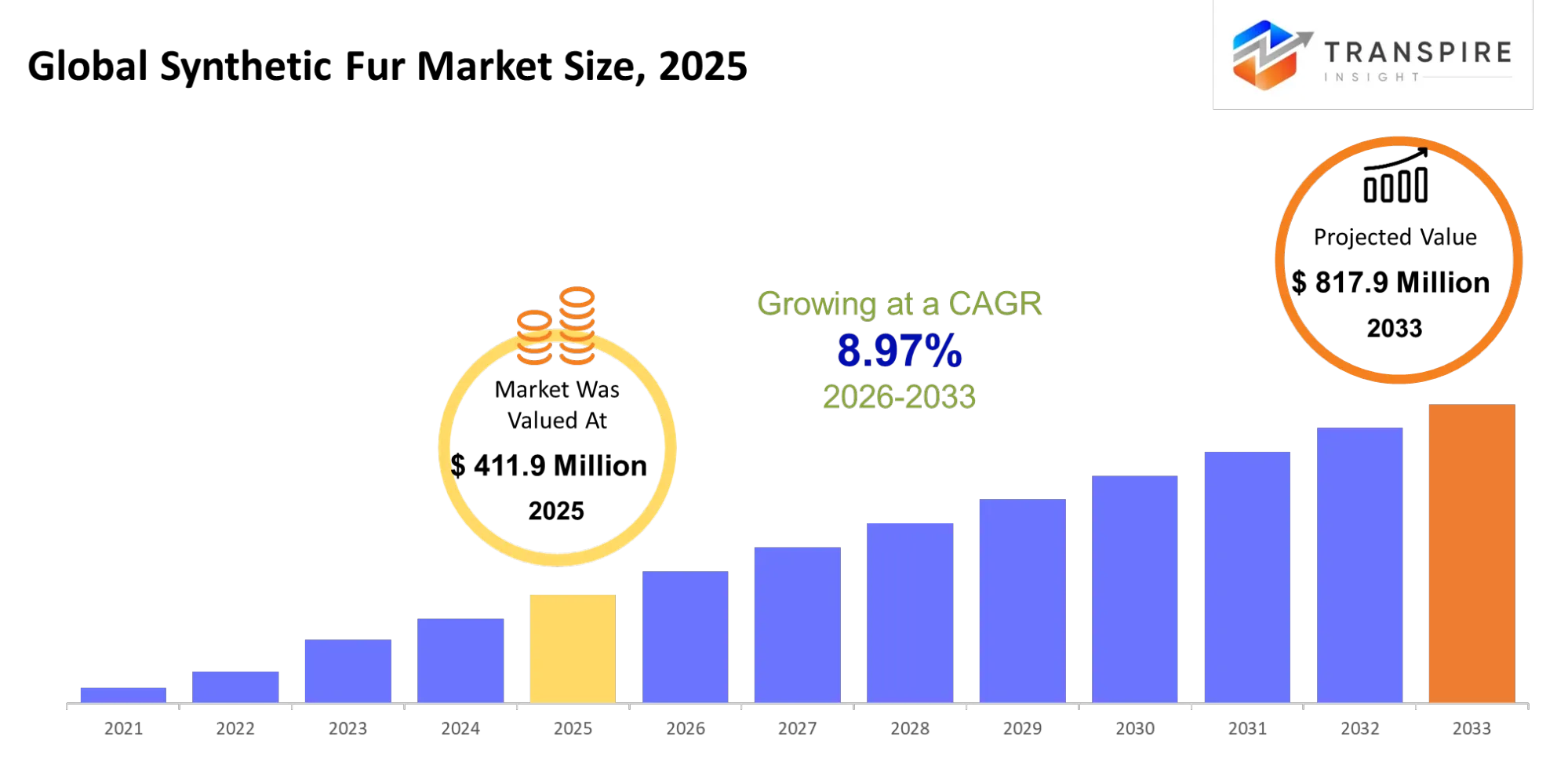
- Global Synthetic Fur Market Size 2025: USD 411.9 Million
- Global Synthetic Fur Market Size 2033: USD 817.9 Million
- Global Synthetic Fur Market CAGR: 8.97%
- Global Synthetic Fur Market Segments: By Type (Acrylic Synthetic Fur, Polyester Synthetic Fur, Modacrylic Fur, Faux Mink Fur, Faux Rabbit Fur, Eco-friendly Synthetic Fur, Others); By Application (Fashion Apparel, Home Furnishings, Toys & Accessories, Automotive Interiors, Costume Design, Others); By End-User (Fashion Brands, Furniture Manufacturers, Toy Manufacturers, Consumers, Others); By Texture (Short-pile Fur, Long-pile Fur, Plush Fur, Patterned Fur, Others).
To learn more about this report,  Download Free Sample Report
Global Synthetic Fur Market Summary:
The Global Synthetic Fur Market size is estimated at USD 411.9 Million in 2025 and is anticipated to reach USD 817.9 billion by 2033, growing at a CAGR of 8.97% from 2026 to 2033. High pile textile alternatives, which mimic animal pelts, are designed, produced, and sold by the Global Synthetic Fur Market to the market in apparel, home decor, and footwear. It practically acts as the supply chain bridge between fashion brands and the look and weight of luxury outerwear without animal products.
In the last three to five years, the market has gained an improved image from being a cheap, stiff plastic alternative. A significant change occurred when manufacturers began incorporating plant-based polymers and recycled ocean plastics (rPET) in replacement to acrylics with a high petroleum content.
A well-known real-world catalyst was when big luxury groups like Kering announced the completion of total fur-free policies for all their fashion houses, including Gucci and Saint Laurent. With luxury runways sanctioning high-quality faux substitutes, there was an inevitable reaction in this cause-and-effect effect; consumers' perception flipped. The synthetics appear to have come on board as an option for prestige. This growing brand uptake directly contributes to the market expansion as high-fidelity faux materials are much sought after for both high and mass market winter collections.
Key Market Insights:
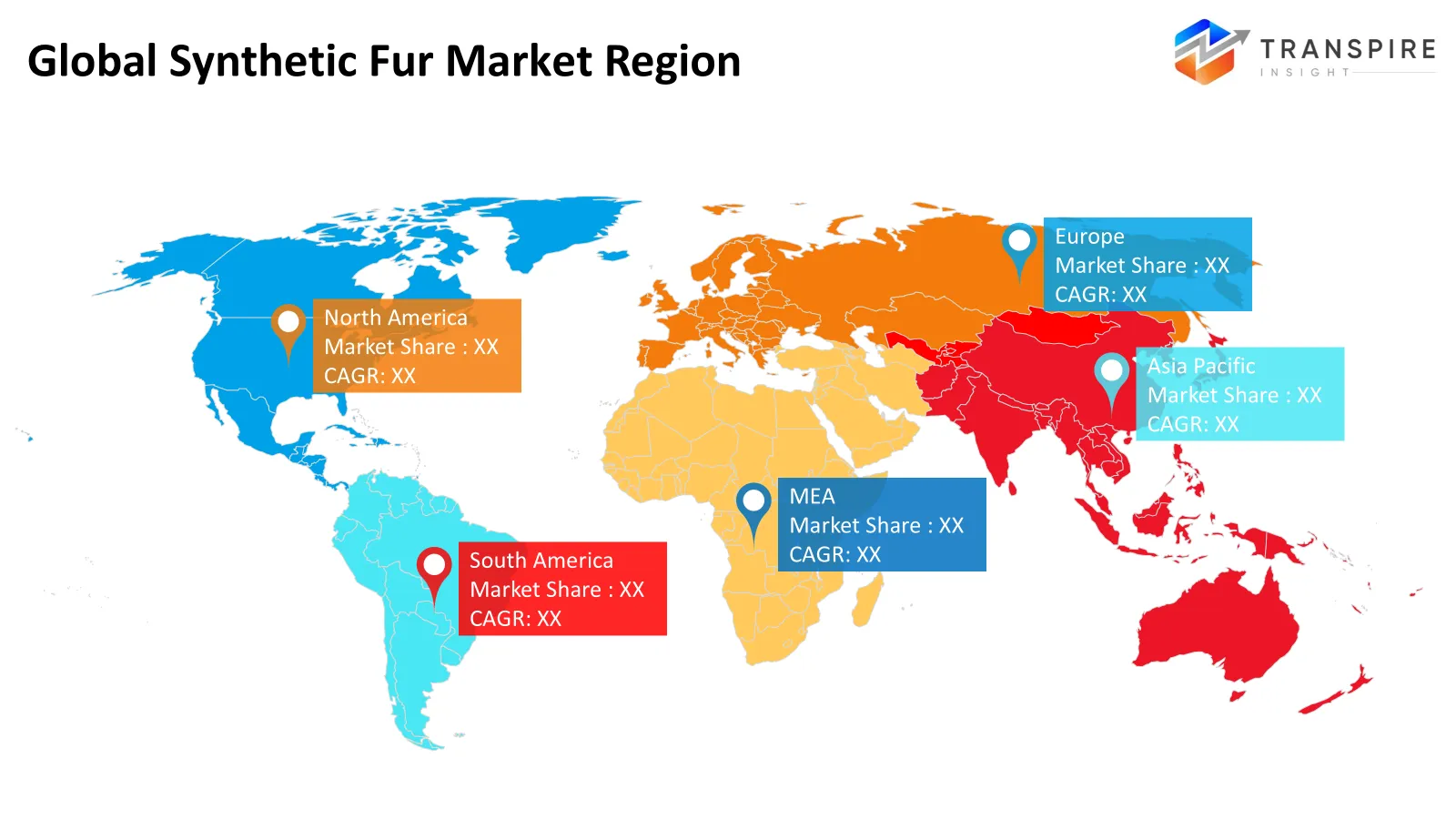
- Europe is the dominant region with a market share of 35%.
- Asia Pacific is the fastest-growing region with a CAGR 11.9%
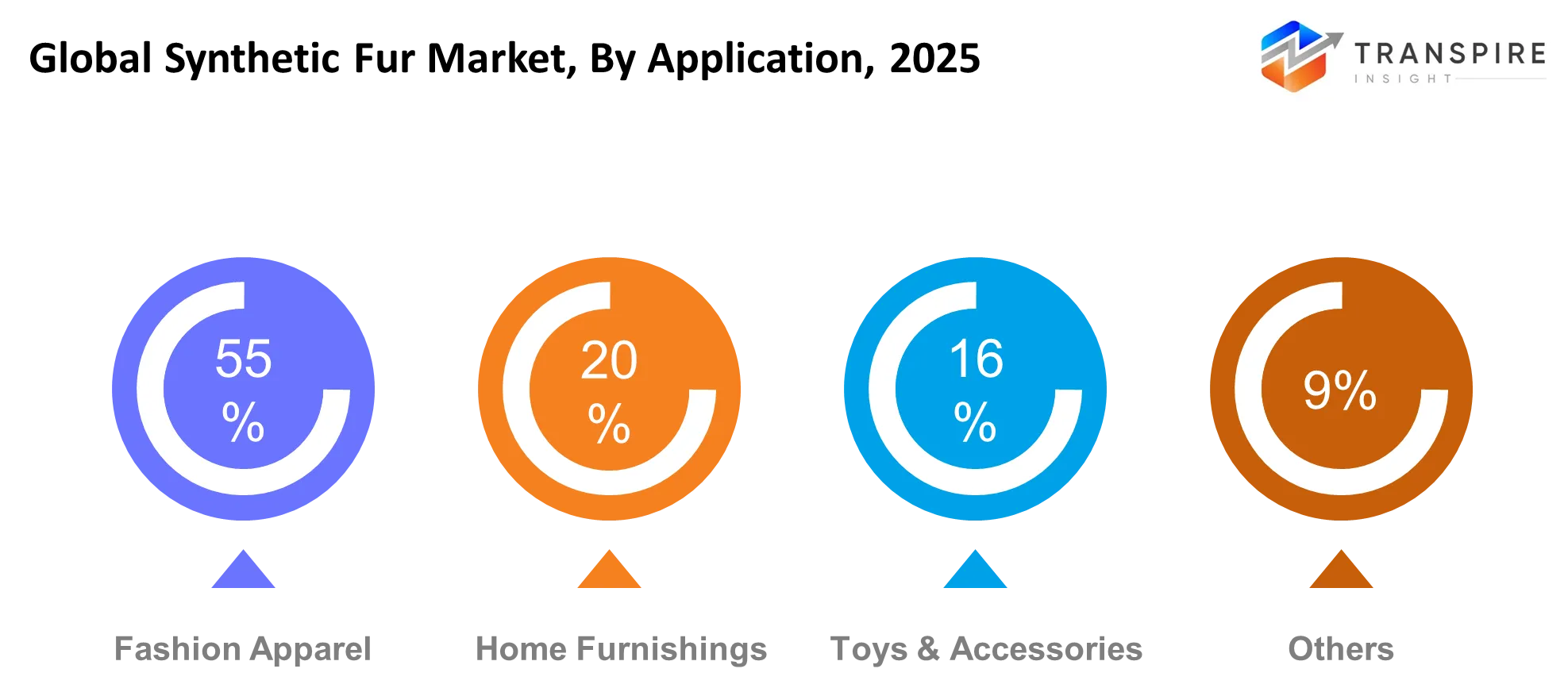
- Fashion apparel has 55% market share.
- Eco-friendly synthetic fur with a CAGR of 12.8%.
- Asia-Pacific has 31% market share.
- Toys & accessories has 16% market share.
- Home furnishings has 20% market share.
What are the Key Drivers, Restraints, and Opportunities in the Global Synthetic Fur Market?
Driver
Strict legislation prohibiting animal fur farming and sales in major areas such as California and in several European countries fuels the growth. Animal protection coalitions brought about this political shift through their long-term and intense anti-fur efforts around the world. BioFluff took the commercialization of its faux fur technology based on natural fibers, rather than plastics, to the next level. The innovation is to promote sustainable synthetic fur adoption and to provide support to the next generation of cruelty-free fashion materials. In March 2026, BioFluff expanded the commercialization of its plant-based faux fur technology made from natural fibers instead of plastics. The innovation is strengthening sustainable synthetic fur adoption and supporting next-generation cruelty-free fashion materials.
Restraint
Environmental consequences of the material's structure hinder its expansion greatly. Since the vast majority of faux fur is made from petroleum-based polymers, acrylic, modacrylic, and polyester, it produces thousands of non-biodegradable, microplastic particles into the water system with each wash cycle. This fingerprint remains in plastic, leading to extreme regulatory scrutiny and consumer disaffection with this segment.
Opportunity
The industrial commercialization of 100% bio-based and biodegradable synthetic materials, which completely separate production from fossil fuels, is the future of scaling. Major brands are already investing in this area, as Stella McCartney did recently with its investment in plant-based, corn by-product fiber technology for a new brand that will replicate the look of a high-quality mink without the animal, while allowing the garment to dissolve once it is worn, creating a prized circular luxury market.
What Has the Impact of Artificial Intelligence Been on the Global Synthetic Fur Market?
Knowing how to duplicate the intricacy of depth, color, and texture of animal skins has always been a labor-intensive process. Manufacturers are now using computer vision and machine learning algorithms on knitting and tufting machines. These physical AI systems are able to measure fibres as they are being fed, adjusting the tension on the yarn and the position of the needles in real time to eliminate texturing defects.
AI has a strong ability to reduce the industry's substantial material waste impact when it comes to operating work. A group of advanced pattern-layout algorithms describes the deformability of high-pile synthetic textile materials and predicts their processing behaviour. AI can analyze real-time data to optimize fabric cuts and reduce up to 20% in fabric waste.
The Artificial fur market was supported by a growing trend of using AI in fashion design, digital simulation of materials, and the development of sustainable textiles. Innovation is playing an ever-more important role in the manufacturing of a more realistic fur texture, manufacturing efficiency, and sustainable synthetic fur solutions. In May 2026, growing adoption of AI-driven fashion design, digital material simulation, and sustainable textile development was identified as a key trend supporting the Artificial Fur Market. Manufacturers are increasingly using advanced technologies to improve texture realism, production efficiency, and eco-friendly synthetic fur solutions.
Key Market Trends:
- In response to strict brand sustainability requirements, manufacturers started using recycled ocean plastics.
- New bio-fabrics made from corn-byproduct polymers are replacing synthetic blends for real circularity.
- AI increases the efficiency of the tension of textile machines, and automatically reproduces the more complex depth of natural hair follicles.
- Global supply chains were structurally shifted to synthetic fur due to strict regional fur farming bans.
- The use of heavy chemical dyes was replaced by advanced digital textile printing for a drastic reduction of factory water pollution footprints.
- Strategic company investments are quickly being scaled up for biodegradable fibers.
- Outdoor clothing manufacturers created a new line of seasonal clothes with faux fur accents and technical performance clothing.
Global Synthetic Fur Market Segmentation
By Type
Acrylic Synthetic Fur leads in the Global Synthetic Fur Market, accounting for the largest market share. Their dense, wool-like nature, combined with excellent weather resistance, a close fit of high-pile animal hair, and their extensive use in mass-market winter clothing, makes them successful.
Eco-friendly synthetic fur is the fastest-growing segment expected to reach a CAGR of 12.8%. The demand is being fuelled by the use of biopolymer advancements, corn products derived from plants, and sustainable closed-loop processing.
The other fur types consist of polyester, modacrylic, faux mink, and faux rabbit. They are unique materials in special applications, like costume fabrics of high flame resistance, modacrylics, or mass-market plush fabrics of ultra-soft faux rabbits.
By Application
The leading position of Fashion Apparel is attributed to the luxury fashion house and high street stores worldwide, discarding real animal pelts and depriving it of a large share of the market, as 55% of the global market share. Seasonal winter outerwear, high-quality runway fashion presentations, and the growing acceptance of high-fidelity faux alternatives in the mainstream are all factors supporting the growth of segments.
The Home Furnishings segment is proving to be the fastest-growing application segment, accounting for 20% of the market, with contemporary interior design styles increasingly embracing cosy, tactile fabrics. The demand from consumers for luxury area rugs, faux fur throws, and high-quality upholstery is fueling the growth. These interior design investments are gaining momentum throughout the world, providing textile factories a profitable year-round diversification from seasonal clothes dumps.
The other app market is represented by Toys & Accessories (16%) and more specialised application sectors such as Costume Design and Automotive Interiors (9%). These segments depend on synthetic fur to provide soft, long-lasting, and highly adjustable finishes to everyday consumer goods and commercial transport spaces.
To learn more about this report, Download Free Sample Report
By End-User
Commercial Fashion Brands are the main end user segment, as large-scale contract manufacturing and long-term corporate retail commitments represent the biggest procurement volume in the world. As the segment continues to expand, it is seeing more quick-fashion turnover, a complete animal-free rebranding, and global expansion of high-end faux lines.
The Furniture Manufacturers segment is turning into the fastest-growing end-user market, and they are rapidly adopting synthetic fabrics into their home decor and commercial hospitality product lines. The growth is being fueled by the growing popularity of tactile, high-end furniture accents, which meet rigorous commercial wear and tear standards.
The rest of the end-user market consists of Toy Manufacturers, individual consumers, and craft buyers. These buyers prefer to use down-to-earth, very colorful, and safe synthetic materials in children's products and custom-made fashion items.
By Texture
What makes Short-pile Fur systems so popular is that they have a great deal of versatility, a modern and fresh look, and a lower structural weight in the manufacturing process. The popularity of these units is growing as they easily fit into standard outerwear linings, footwear trims, and sleek garments that have low-bulk requirements.
Long-pile Fur is the fastest-growing texture market as the world of fashion embraces bold vintage looks and maximalist streetwear in global urban markets. Dr. Eva has created dramatic, high-luxury looks that are increasingly similar to the high-end fox or wolf pelts and that are increasing the demand for intelligent texturing.
The rest of the texture variations include Plush Fur, Patterned Fur, and custom-embossed finishes. Children's wear companies and novelty designers use these materials to their advantage because of the unique animal prints, sculpted ridges, or ultra-dense texture that they offer.
What are the Key Use Cases Driving the Global Synthetic Fur Market?
Fashion apparel is the key application area for this market, which is primarily used for outerwear and trimming in the premium winter application. Short-pile and long-pile synthetics are used by large luxury and fast fashion companies to simulate the weight, warmth, and appearance of real animal skins for jackets, coats, and finishes on the soles of shoes.
The home furnishings industry is well known for its expanding applications. To satisfy consumer demand for luxurious home décor, interior designers and furniture makers are using plush, high-density faux fur for accent rugs, plush, tactile upholstery cushions, and luxury throws.
Use cases are starting to become more popular in the automotive interior and costume design. Specialized, fire-retardant synthetic accents are used for customizable seating by premium automotive brands, and highly vibrant and patterned faux fur is used for theatrical costuming by entertainment production houses.
Report Metrics
|
Report Metrics |
Details |
|
Market size value in 2025 |
USD 411.9 Million |
|
Market size value in 2026 |
USD 448.2 Million |
|
Revenue forecast in 2033 |
USD 817.9 Million |
|
Growth rate |
CAGR of 8.97% from 2026 to 2033 |
|
Base year |
2025 |
|
Historical data |
2021 - 2024 |
|
Forecast period |
2026 - 2033 |
|
Report coverage |
Revenue forecast, competitive landscape, growth factors, and trends |
|
Regional scope |
United States; Canada; Mexico; United Kingdom; Germany; France; Italy; Spain; Denmark; Sweden; Norway; China; Japan; India; Australia; South Korea; Thailand; Brazil; Argentina; South Africa; Saudi Arabia; United Arab Emirates |
|
Key company profiled |
Shijiazhuang Longde Textile, Aono Pile, Peltex Fibres, Sommers Plastic Products, Fur-Textiles Nederland, Ecopel, Tongxiang Zhuoyi Textile, Jiangsu Unitex, Sanyang Textile, Ramtex, Furlab, Kaneka Corporation, Tissavel, Kopenhagen Fur, and HengHua Textile. |
|
Customization scope |
Free report customization (country, regional & segment scope). Avail customized purchase options to meet your exact research needs. |
|
Report Segmentation |
By Type (Acrylic Synthetic Fur, Polyester Synthetic Fur, Modacrylic Fur, Faux Mink Fur, Faux Rabbit Fur, Eco-friendly Synthetic Fur, Others); By Application (Fashion Apparel, Home Furnishings, Toys & Accessories, Automotive Interiors, Costume Design, Others); By End-User (Fashion Brands, Furniture Manufacturers, Toy Manufacturers, Consumers, Others); By Texture (Short-pile Fur, Long-pile Fur, Plush Fur, Patterned Fur, Others). |
Which Regions are Driving the Global Synthetic Fur Market Growth?
Europe has the largest share of the Global Synthetic Fur Market, with a significant 35% market share. This geographic strength is bolstered by an extensive supporting framework of animal welfare policies and national real fur farming bans in important countries. Some of the leading companies that are pushing the region forward are Peltex Fibres SARL, Ambassador Textiles Ltd, and Tissavel. Recently, INNOVERA™ has been launched in this region, and it is driving the ultimate growth of this region.
Asia Pacific is the second largest region with 31% market share. The major companies that are contributing to the growth of the Asia-Pacific are ECOPEL, Kaneka Corporation, Aono Pile Co., Ltd., and Jong Stit Co., Ltd. Such a massive industrial capacity allows the region to be very stable and withstand large bulk orders. BioFluff expanded its faux fur technology for animal products to include plants. This is one of the reasons why this area is at a good stage for development in synthetic fur production. In March 2026, BioFluff expanded the commercialization of its plant-based faux fur technology, while luxury brands increased the adoption of bio-based fur alternatives. The development supports the rising demand for sustainable synthetic fur products across the Asia-Pacific fashion and textile markets.
The Asia Pacific region is also the fastest growing, with an impressive CAGR of 11.9%. The recent Hong Kong International Fashion Fur & Fashion Fair showcased the increased significance Asia-Pacific is playing as a global fashion sourcing and manufacturing center. There is growing demand for sustainable and humane alternatives to fur, and some brands and suppliers throughout China, Hong Kong, South Korea, India, and Southeast Asia are increasing their investment in synthetic and ‘bio' alternatives to fur. In March 2026, the Hong Kong International Fur & Fashion Fair 2026 was held alongside the Asia Pacific Leather Fair (APLF) in Hong Kong. The event brought together global suppliers, designers, and buyers, highlighting growing demand for innovative, sustainable, and alternative fur materials across Asia-Pacific fashion supply chains.
To learn more about this report, Download Free Sample Report
Who are the Key Players in the Global Synthetic Fur Market and how do they Compete?
The Global Synthetic Fur Market is highly fragmented, and the primary market players are vying against one another heavily for their innovations in fur material, cost-cutting, and niche markets. Sustainable innovation is the answer to the leadership of industrial giants such as Ecopel and Kaneka Corporation. Ecopel is pioneering the use of bio-based faux furs, such as KOBA, which are made from plant-based resources, and Kaneka is concentrating on material quality to create the highest quality modacrylic fibers, which are comparable to natural pelts in weight and translucency.
Tissavel, on the other hand, is dedicated to the ultra-luxury market with a premium niche approach, by developing its own woven backings that do not shed fibers and win exclusive contracts with the top fashion houses in Europe.
On the other hand, some manufacturers follow a strict cost-leadership strategy, such as Shijiazhuang Longde Textile, Tongxiang Zhuoyi Textile, and Jiangsu Unitex, which are driven by volume.
Global Synthetic Fur Market Companies:
- Shijiazhuang Longde Textile
- Aono Pile
- Peltex Fibres
- Sommers Plastic Products
- Fur-Textiles Nederland
- Ecopel
- Tongxiang Zhuoyi Textile
- Jiangsu Unitex
- Sanyang Textile
- Ramtex
- Furlab
- Kaneka Corporation
- Tissavel
- Kopenhagen Fur
- HengHua Textile
Recent Development News
In February 2026, Jacquemus and Moon Boot launched a new faux-fur winter footwear collaboration. The collection highlighted growing consumer demand for fashionable synthetic fur products.
(Source- https://www.harpersbazaar.in)
What Strategic Insights Define the Future of the Global Synthetic Fur Market?
The Global Synthetic Fur Market is heading toward a critical inflection point where material circularity, rather than simple animal-free positioning, will dictate market survivability. Due to stricter microplastic regulations internationally, the use of acrylics that are traditionally made from petroleum will soon be a major disadvantage and will push the need for an industry-wide shift toward closed-loop production.
A new and high-margin opportunity is industrial scaling of next-generation bio-synthetics, using agricultural wastes or cellular agriculture, to achieve hyper-realistic thermal insulation levels comparable to those of wildlife's fur.
To take advantage of this trend, the strategic suggestion to manufacturers is to be active in pushing capital outflows from conventional polyester processing and to attempt to make exclusive supply agreements with agritech companies. Direct R&D partnerships with luxury conglomerates will create co-developed, proprietary biodegradable fibers that will give suppliers secure, high-margin, long-term B2B volume, as sustainable baselines are non-negotiable.
Global Synthetic Fur Market Segmentation
By Type
- Acrylic Synthetic Fur
- Polyester Synthetic Fur
- Modacrylic Fur
- Faux Mink Fur
- Faux Rabbit Fur
- Eco-friendly Synthetic Fur
- Others
By Application
- Fashion Apparel
- Home Furnishings
- Toys & Accessories
- Automotive Interiors
- Costume Design
- Others
By End-User
- Fashion Brands
- Furniture Manufacturers
- Toy Manufacturers
- Consumers
- Others
By Texture
- Short-pile Fur
- Long-pile Fur
- Plush Fur
- Patterned Fur
- Others
Regional Outlook
North America
- United States
- Canada
- Mexico
Europe
- Germany
- United Kingdom
- France
- Spain
- Italy
- Rest of Europe
Asia Pacific
- Japan
- China
- Australia & New Zealand
- South Korea
- India
- Rest of Asia Pacific
South America
- Brazil
- Argentina
- Rest of South America
Middle East & Africa
- Saudi Arabia
- United Arab Emirates
- South Africa
- Rest of the Middle East & Africa
Frequently Asked Questions
Find quick answers to common questions.
The global synthetic fur market size was valued at USD 411.9 Million in 2025 and is poised to reach USD 817.9 Million by 2033, expanding at a 8.97% CAGR.
Key segments for the global synthetic fur market are By Type (Acrylic Synthetic Fur, Polyester Synthetic Fur, Modacrylic Fur, Faux Mink Fur, Faux Rabbit Fur, Eco-friendly Synthetic Fur, Others); By Application (Fashion Apparel, Home Furnishings, Toys & Accessories, Automotive Interiors, Costume Design, Others); By End-User (Fashion Brands, Furniture Manufacturers, Toy Manufacturers, Consumers, Others); By Texture (Short-pile Fur, Long-pile Fur, Plush Fur, Patterned Fur, Others).
The global synthetic fur market is driven by animal fur bans, growing demand for cruelty-free fashion, and innovations in sustainable faux fur materials such as plant-based alternatives.
The global synthetic fur market is led by major manufacturers, such as Shijiazhuang Longde Textile, Aono Pile, Peltex Fibres, Sommers Plastic Products, Fur-Textiles Nederland, Ecopel, Tongxiang Zhuoyi Textile, Jiangsu Unitex, Sanyang Textile, Ramtex, Furlab, Kaneka Corporation, Tissavel, Kopenhagen Fur, and HengHua Textile.
Europe holds 35% of the global synthetic fur market, driven by strict regulations against animal fur, strong consumer preference for sustainable fashion, and the presence of leading fashion brands adopting cruelty-free and eco-friendly materials.
Commercial opportunities in the global synthetic fur market lie in the development of 100% bio-based and biodegradable fur materials, growing investments in sustainable textile innovations, and rising demand for circular luxury fashion products that reduce dependence on fossil-fuel-based fibers.
- Shijiazhuang Longde Textile
- Aono Pile
- Peltex Fibres
- Sommers Plastic Products
- Fur-Textiles Nederland
- Ecopel
- Tongxiang Zhuoyi Textile
- Jiangsu Unitex
- Sanyang Textile
- Ramtex
- Furlab
- Kaneka Corporation
- Tissavel
- Kopenhagen Fur
- HengHua Textile
About the Authors

Pankaj Ghogare Patil
I am Pankaj Ghogare Patil, a Senior Research Analyst at Transpire Insight, specializing in the Pharmaceutical, Chemicals & Materials, Healthcare IT, and Biotechnology industry. My expertise lies in conducting comprehensive market research, analyzing industry trends, evaluating competitive landscapes, and translating complex data into actionable insights. At Transpire Insight, I closely follow emerging technologies, regulatory developments, and market innovations to create accurate, well-researched, and informative content that helps businesses and professionals make informed decisions. I am committed to producing credible, evidence-based articles that reflect industry best practices while making technical topics accessible and valuable for a broad audience.

Chakradhar Khansole
Chakradhar serves as the Research Director at Transpire Insight, bringing over 8 years of experience in technology, innovation, and strategic market intelligence. He specializes in transforming complex market data into actionable business insights that enable organizations to make informed, growth-oriented decisions. Recognized for his strategic vision and analytical expertise, Chakradhar leads high-impact research initiatives, delivering comprehensive market assessments, competitive intelligence, and forward-looking industry analysis.
Recently Published Reports
-
May 2026
Healthcare Polymer Packaging Market
Healthcare Polymer Packaging Market Size, Share & Analysis Report By Packaging Type (Syringes, IV Bottles and Pouches, Clamshells, Blisters, Bottles & Jars, Containers, Tubes, IV Parental Packaging, Others), By Type (Regulated, Non-regulated), By Polymer Type (LDPE (Low-Density Polyethylene), HDPE (High-Density Polyethylene), Homo-polymer (Homo), Random Copolymer (Random), Block Copolymer (Block), PET, Polystyrene, Polyvinyl Chloride, Polyamide/EVOH, Others), and Geography (North America, Europe, Asia-Pacific, Middle East and Africa, South and Central America), 2021 - 2031
-
Apr 2026
Hydrophilic Tape (Waterstop) Market
Hydrophilic Tape (Waterstop) Market Size, Share & Analysis Report By Type (Bentonite-Based Hydrophilic Tape, Rubber-Based Hydrophilic Tape), By Application (Residential Buildings, Commercial Buildings, Infrastructure Projects), and Geography (North America, Europe, Asia-Pacific, Middle East and Africa, South and Central America), 2021 - 2031
-
Apr 2026
Metalens Market
Metalens Market Size, Share & Analysis Report By Type (Visible Light Metalens, and Infrared Metalens), By Application (Consumer Electronics, Automotive Electronics, Industrial, Medical, and Others), and Geography (North America, Europe, Asia-Pacific, Middle East and Africa, South and Central America), 2021 - 2031
-
Apr 2026
PBT Resin Market
PBT Resin Market Size, Share & Analysis Report By Type (Reinforced PBT Resin, Unreinforced PBT Resin), By Processing Method (Injection Molding, Extrusion, Blow Molding, Others), By End-User (Automotive, Electrical & Electronics, Consumer Appliances, Industrial Machinery, Medical Devices, Packaging, Others), and Geography (North America, Europe, Asia-Pacific, Middle East and Africa, South and Central America), 2021 - 2031