
Global Portable Medical Devices Market Size & Forecast:
- Global Portable Medical Devices Market Size 2025: USD 64.9 Billion
- Global Portable Medical Devices Market Size 2033: USD 152.7 Billion
- Global Portable Medical Devices Market CAGR: 11.23%
- Global Portable Medical Devices Market Segments: By Product (Portable Monitoring Devices, Diagnostic Devices, Therapeutic Devices, Imaging Devices, Respiratory Devices, Wearables, Emergency Devices, Others); By Application (Cardiology, Diabetes, Respiratory, Neurology, Orthopedics, Others); By End User (Hospitals, Home Care, Clinics, Ambulatory Centers, Others); By Technology (Wireless, Bluetooth-enabled, IoT-enabled, Others); By Distribution Channel (Online, Direct Sales, Retail, Others).

Global Portable Medical Devices Market Summary
As per Transpire Insight Analysis, the Global Portable Medical Devices Market size is estimated at USD 64.9 Billion in 2025 and is anticipated to reach USD 152.7 Billion by 2033, growing at a CAGR of 11.23% from 2026 to 2033. This vital healthcare industry designs compact, battery-powered diagnostic, therapeutic, and monitoring hardware that allows clinicians and patients to track vital signs outside conventional hospital wards. Over the last few years - severe nursing shortages and strained hospital bed capacities forced healthcare systems to push chronic disease management directly into patient homes. This transition triggered a massive structural shift, as medical providers rapidly migrated from bulky, bedside monitoring towers to intelligent, wireless wearables and cloud-connected telemetry devices. Because inpatient hospital stays create massive financial drains on insurance networks - providers are utilizing advanced portable monitors to track cardiac and respiratory metrics remotely. This practical approach allows clinical teams to spot health deterioration early, preventing expensive readmissions and driving immense hardware procurement worldwide.
Key Market Insights
The global portable medical devices market - fundamentally shifting from siloed, bedside diagnostics to continuous, cloud-integrated clinical ecosystems that decentralize patient care. Driven by persistent hospital bed shortages and chronic disease volumes, healthcare systems are replacing rigid, wired instruments with highly mobile, wireless telemetry units and intelligent wearables to safely monitor vital signs outside intensive care wards.
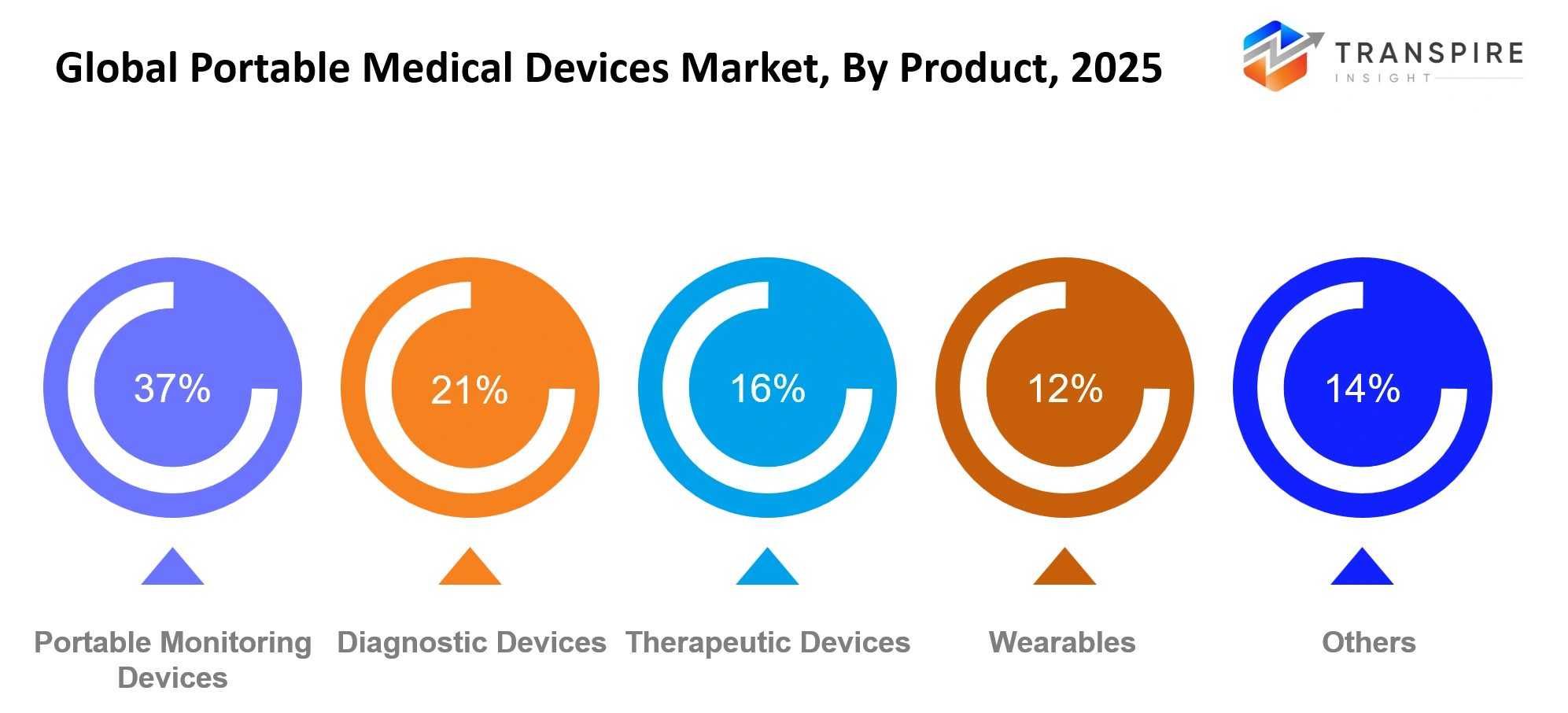
- Locking down a 37% share, Portable Monitoring Devices lead the market as GE HealthCare rolls out medical-grade wireless telemetry transmitters to untether patients from hospital beds.
- Expanding at an explosive 15.9% CAGR, Wearable Diagnostic Devices dominate marketplace acceleration as Dexcom integrates continuous, micro-sensor telemetry to automate real-time metabolic tracking.
- Capturing 39% of worldwide revenue, North America functions as the largest geographic market, backed by Abbott deploying miniaturized insertable cardiac monitors across established remote patient clinics.
- Commanding a stable 29% market slice, Europe drives device innovation, pushing Philips to launch multi-parameter patient monitors that comply with stringent regional medical data-privacy protocols.
- Representing 24% of total industry demand, the Asia Pacific theater operates as the fastest-growing corridor, accelerating at a 16.7% CAGR via regional public healthcare modernization.
- Accounting for 21% of procurement volume, Diagnostic Devices remain an essential hardware pillar, with Roche embedding advanced optical biosensors into handheld blood gas analyzers.
- Securing 16% of the product matrix, Therapeutic Devices face rapid upgrades as Medtronic engineers automated, closed-loop insulin delivery pods to eliminate manual injection calculation errors.
- Claiming a targeted 12% market footprint, Wearables expand into traditional workflows as AliveCor deploys multi-lead, AI-enabled personal electrocardiograms to streamline remote arrhythmia detection.
- Representing 4% of total global sales, Latin America grows steadily as regional clinics procure ruggedized, battery-extended pulse oximeters to stabilize rural outpatient triage systems.
- Capturing a matching 4% market slice, the Middle East & Africa region focuses on basic respiratory deployment, prompting ResMed to deliver lightweight, adaptive ventilators optimized for unstable power grids.
What are the Key Drivers, Restraints, and Opportunities in the Global Portable Medical Devices Market?
Driver
The market is expanding due to the financial urgency to transition chronic disease monitoring away from high-cost, fixed inpatient beds into continuous outpatient environments. Traditional clinical monitoring relies on hardwired hospital-bed layouts that cost thousands of dollars per day and limit operational capacity. This pressure was triggered by severe nursing shortages and high post-pandemic hospital readment rates, forcing healthcare networks to adopt decentralized monitoring models. This dynamic drives rapid hardware adoption as operators choose multi-parameter, remote-ready physiological monitoring units that bypass expensive critical care spreads.
In January 2026, healthcare technology leader Medtronic Diabetes expanded access to its full-stack mobile insulin delivery ecosystem by securing significant U.S. FDA clearances for its automated MiniMed Go Smart MDI system. This specialized rollout combines wireless data tracking with smart insulin pen hardware to eliminate manual dosing calculation steps directly through a patient’s personal smartphone. By integrating these real-time continuous diagnostics with mobile therapeutic delivery tools, this deployment significantly reduces diabetes-related hospitalizations and accelerates global commercial adoption of portable health informatics.
Restraint
A severe structural constraint stems from data fragmentation and the lack of standardized interoperability frameworks between third-party medical devices and legacy hospital Electronic Health Record (EHR) systems. Many portable diagnostic tools generate proprietary - siloed data streams that cannot automatically populate clinical dashboards without extensive custom software middleware. This baseline friction persists because major medical hardware manufacturers rely on closed-source software ecosystems to protect corporate IP, leaving hospital IT departments to cope with heavy configuration backlogs and security vulnerabilities that limit broader clinical integration.
Opportunity
The most lucrative growth window lies in embedding specialized edge-computing artificial intelligence microchips directly into handheld point-of-care ultrasound and portable imaging equipment. Fusing low-power AI inference engines with compact diagnostic nodes allows emergency responders and rural clinicians to automatically detect internal bleeding or organ abnormalities without waiting for a hospital radiologist review. This technical transition unlocks massive long-term procurement contracts as public health agencies across Asia Pacific and Latin America build out decentralized emergency trauma networks capable of handling advanced triage sequences away from urban health centers.
What Has the Impact of Artificial Intelligence Been on the Global Portable Medical Devices Market?
Artificial intelligence is completely changing how healthcare providers deploy portable medical devices - shifting the clinical landscape away from reactive bedside tracking into proactive, preventative home care. Instead of forcing patients to stay tethered to bulky hospital infrastructure, medical networks utilize automated machine learning models to continuously evaluate data flowing directly from compact, wireless health monitors.
On patient-worn units, embedded AI cleans up noisy physiological data streams by filtering out ambient body movements or clothing friction in real time. These neural models track fluctuating vital signs, blood glucose swings, and cardiac waveforms, identifying hazardous pattern shifts like silent arrhythmias long before physical symptoms appear. This predictive capability enables remote care teams to coordinate early outpatient interventions, dramatically optimizing hospital bed utilization. However, a major integration limitation persists: algorithmic accuracy gaps. Deep-learning engines validated on uniform clinical trial data often exhibit reduced performance across diverse real-world patient demographics, leading to false alerts. Even with these integration hurdles, device intelligence is advancing rapidly.
In January 2026, ambulatory cardiology leader AliveCor received U.S. FDA clearance for its next-generation KAI 12L algorithm, built exclusively for its ultra-portable Kardia 12L ECG system. This advanced mobile intelligence framework utilizes a simplified single-cable, five-electrode layout to capture eight distinct lead fields and automatically detect 39 distinct cardiac conditions, including acute myocardial infarction and structural rhythm modifiers. By condensing complex, multi-lead analysis logic into a pocket-sized form factor, this automated tool allows clinicians to instantly spot life-threatening heart issues across unconventional, remote care environments.
Key Market Trends
The portable medical devices landscape is undergoing a profound structural evolution, shifting away from standalone, episodic diagnostic instruments toward continuous, hyper-connected digital health networks. Driven by persistent clinical staffing shortages - the rising global burden of chronic conditions, medical engineering teams are replacing high-maintenance bedside monitors with miniaturized, patient-worn biosensors that feed continuous biometric data streams directly into hospital cloud dashboards without disrupting daily patient mobility.
- For decades, acute care physicians relied almost exclusively on standard hardwired bedside monitors to track cardiac metrics, but clinical teams are rapidly moving toward patch-based ambulatory electrocardiogram sensors to monitor high-risk outpatients continuously.
- Instead of running rigid, desktop-bound glucose meters that require frequent manual fingerpricks, endocrinologists are actively equipping diabetic populations with smart continuous glucose monitoring patches to track metabolic trends automatically.
- Traditional pulmonology departments historically separated home oxygen machines from clinical tracking software, but modern respiratory teams are aggressively fusing cloud-connected Internet of Medical Things telemetry directly into portable oxygen concentrators and CPAP machines.
- To prevent severe cardiovascular emergency drop-offs and delayed emergency response windows, hardware developers are pivoting away from standard consumer metrics to integrate clinical-grade, multi-lead AI detection logic directly into pocket-sized personal devices.
- Rather than deploying heavy, line-powered automated external defibrillators that require dedicated medical storage, product designers are transitioning toward ultra-compact, battery-extended smart defibrillator kits to secure immediate public emergency response capabilities during sudden cardiac arrests.
- Commercial imaging centers are looking far beyond standard hospital-bound radiology departments, driving a massive operational move toward handheld, battery-powered ultrasound probes that connect to basic smartphones or tablets at the point of care.
- Instead of relying on manual nursing check-ins or localized low-bandwidth storage cards that delay critical alert data, modern hospital systems are deeply embedding enterprise Wi-Fi and Bluetooth mesh microchips directly onto every mobile telemetry unit.
- To satisfy tightening international data protection and medical privacy protocols, healthcare software developers are abandoning unencrypted raw transmissions to adopt secure, edge-computing encryption algorithms that minimize cloud-based cybersecurity vulnerability risks.
- Local ambulatory surgery centers are completely overhauling their post-operative patient management plans, pushing a strategic transition toward wearable, multi-parameter vital sign patches that stream oxygen saturation and heart rates back to remote nursing command centers.
Global Portable Medical Devices Market Segmentation
By Product
Portable Monitoring Devices command the largest share of market capital, holding a dominant 37% of all global revenue. Diagnostic Devices follow as an essential structural line at 21%, with Therapeutic Devices sitting at 16%, Wearables leading operational acceleration with a dominant 12% footprint, and alternative hardware categories like Imaging and Respiratory systems accounting for 14%. This distribution persists because outpatient asset management requires continuous biological telemetry arrays to safely manage fluctuating physiological workflows. Portable Monitoring Devices maintain their dominant market position because hospital systems are actively shifting away from traditional hardwired bedside setups to maximize their open clinical capacities. Meanwhile, the Wearables category is accelerating exponentially as healthcare teams demand highly mobile, micro-sensor tools to execute home-based chronic tracking and log metabolic data without deploying full bedside diagnostic configurations. Moving forward, structural hardware will transition fully toward integrated, medical-grade multisensor pods. Equipment providers will focus heavily on delivering modular, low-power monitoring patches integrated with real-time analytics to meet strict clinical safety mandates and lower healthcare overhead expenses.
By Application
Cardiology management functions as the undisputed anchor of this segment, locking down the largest portion of hardware procurement due to the immense global burden of cardiovascular disease. At the same time, Diabetes management activities represent the fastest-growing application spaces, driven by the massive commercial migration toward automated continuous glucose monitoring. The underlying growth logic is tied directly to the aging profile of the world's population and the soaring operational costs associated with managing unmonitored chronic metabolic complications within emergency departments. Cardiology applications demand highly reliable, permanent diagnostic access points to capture fleeting arrhythmia incidents, while Diabetes applications are growing rapidly as patients seek non-invasive, automated insulin delivery mechanisms. Looking ahead, product development will focus heavily on long-term clinical reliability and software cross-compatibility. Portable hardware manufacturers will need to balance two distinct workloads: building highly durable, specialized diagnostic arrays for core clinical fields while simultaneously refining modular, consumer-friendly telemetry nodes tailored for short-cycle home care campaigns.
By End User
Hospitals serve as the primary financial engine of the market, controlling large-scale capital procurement budgets and infrastructure networks. Concurrently, Home Care environments stand as the undisputed market accelerator, driving the fastest operational growth as healthcare decentralization expands globally. This divergence is shaped by the exhaustion of legacy centralized hospital beds, forcing medical providers to move routine observation workflows directly into residential spaces. Standard hospital access lines fail in home environments because they lack the ruggedized form factor and simplified interfaces required for non-professional handling. Home Care systems resolve this technical hurdle by incorporating drop-tested polymer housings, simplified graphical interfaces, and extended battery architectures. In the coming years, end-user categories will merge with advanced automated remote patient monitoring (RPM) workflows. Device suppliers will need to redesign their product lineups to focus on intelligent, home-deployed diagnostic blocks that can run autonomously for extended timelines without constant physical nursing intervention.
By Technology
Wireless and Bluetooth-enabled networks capture the largest volume of day-to-day equipment orders, while IoT-enabled architectures stand as the undisputed market accelerator, driving the fastest growth across premium clinical portfolios. This pattern is driven by a broad industrial transition toward flexible, cord-free clinical setups designed to eliminate the physical data bottlenecks and wiring hazards tied to traditional analog hardware. Legacy Bluetooth assemblies are ideal for short-range personal device syncing, but IoT-enabled configurations are gaining rapid ground because they allow devices to bypass localized smartphone proxies and stream telemetry straight into centralized clinical clouds. Looking ahead, the industry will pivot sharply toward cellular-embedded, zero-configuration architectural designs. Hardware suppliers will be forced to transition toward standardized IoT chips that allow devices to automatically lock onto available cellular bands out of the box, ensuring uninterrupted patient monitoring regardless of domestic home Wi-Fi network limitations.
By Distribution Channel
Direct Sales pipelines retain a massive portion of the existing operational footprint due to their long historical deployment as the primary channel for institutional hospital procurement contracts. Meanwhile, Online and retail e-commerce channels are leading market growth as the fastest-accelerating procurement options. The growth dynamic relies on the shifting procurement model of global healthcare, where institutional groups establish long-term framework contracts for complex critical hardware, while independent consumers and outpatient networks manage the day-to-day purchasing of disposable monitoring sensors online. Direct channels use multi-year enterprise agreements to secure system standardization across healthcare networks, whereas online portals prioritize modular, user-accessible delivery setups that adapt to rapid patient turnover. Moving forward, market success will require a move away from standalone transaction sales. Long-term profitability will belong to providers who offer integrated "Device-as-a-Service" models, bundling physical consumer hardware with ongoing online prescription replenishment and predictive software field support.
What are the Key Use Cases Driving the Global Portable Medical Devices Market?
The primary use case driving this market is continuous remote physiological tracking for decentralized cardiology and metabolic management. Hospital networks deploy medical-grade multi-parameter vital sign patches and continuous glucose monitors directly onto outpatients to track real-time glycemic trends and cardiac waveforms - allowing clinical teams to spot early biological anomalies and prevent expensive emergency readmissions.
Expanding applications focus heavily on managing point-of-care diagnostics across emergency medical services and rural ambulatory clinics. Triage teams utilize ruggedized, battery-powered handheld ultrasound probes and compact blood gas analyzers to execute rapid bedside imaging and trauma assessments directly within field environments - completely bypassing the scheduling bottlenecks of centralized hospital radiology wards.
An emerging use case centers on post-operative decentralized home care loops and virtual ward monitoring. Healthcare providers utilize smart cellular-embedded therapeutic devices and portable ventilators within residential spaces to automatically manage complex respiratory - post-surgical workflows, establishing secure, cloud-connected home recovery lines that drastically reduce inpatient length-of-stay metrics.
|
Report Metrics |
Details |
|
Market size value in 2025 |
USD 64.9 Billion |
|
Market size value in 2026 |
USD 72.5 Billion |
|
Revenue forecast in 2033 |
USD 152.7 Billion |
|
Growth rate |
CAGR of 11.23% from 2026 to 2033 |
|
Base year |
2025 |
|
Historical data |
2021 - 2024 |
|
Forecast period |
2026 - 2033 |
|
Report coverage |
Revenue forecast, competitive landscape, growth factors, and trends |
|
Regional scope |
United States; Canada; Mexico; United Kingdom; Germany; France; Italy; Spain; Denmark; Sweden; Norway; China; Japan; India; Australia; South Korea; Thailand; Brazil; Argentina; South Africa; Saudi Arabia; United Arab Emirates |
|
Key company profiled |
Medtronic, GE HealthCare, Philips, Abbott, Siemens Healthineers, Omron, Dexcom, ResMed, Roche, Masimo, Nihon Kohden, Dräger, Becton Dickinson, iHealth, AliveCor. |
|
Customization scope |
Free report customization (country, regional & segment scope). Avail customized purchase options to meet your exact research needs. |
|
Report Segmentation |
By Product (Portable Monitoring Devices, Diagnostic Devices, Therapeutic Devices, Imaging Devices, Respiratory Devices, Wearables, Emergency Devices, Others); By Application (Cardiology, Diabetes, Respiratory, Neurology, Orthopedics, Others); By End User (Hospitals, Home Care, Clinics, Ambulatory Centers, Others); By Technology (Wireless, Bluetooth-enabled, IoT-enabled, Others); By Distribution Channel (Online, Direct Sales, Retail, Others). |
Which Regions are Driving the Global Portable Medical Devices Market Growth?
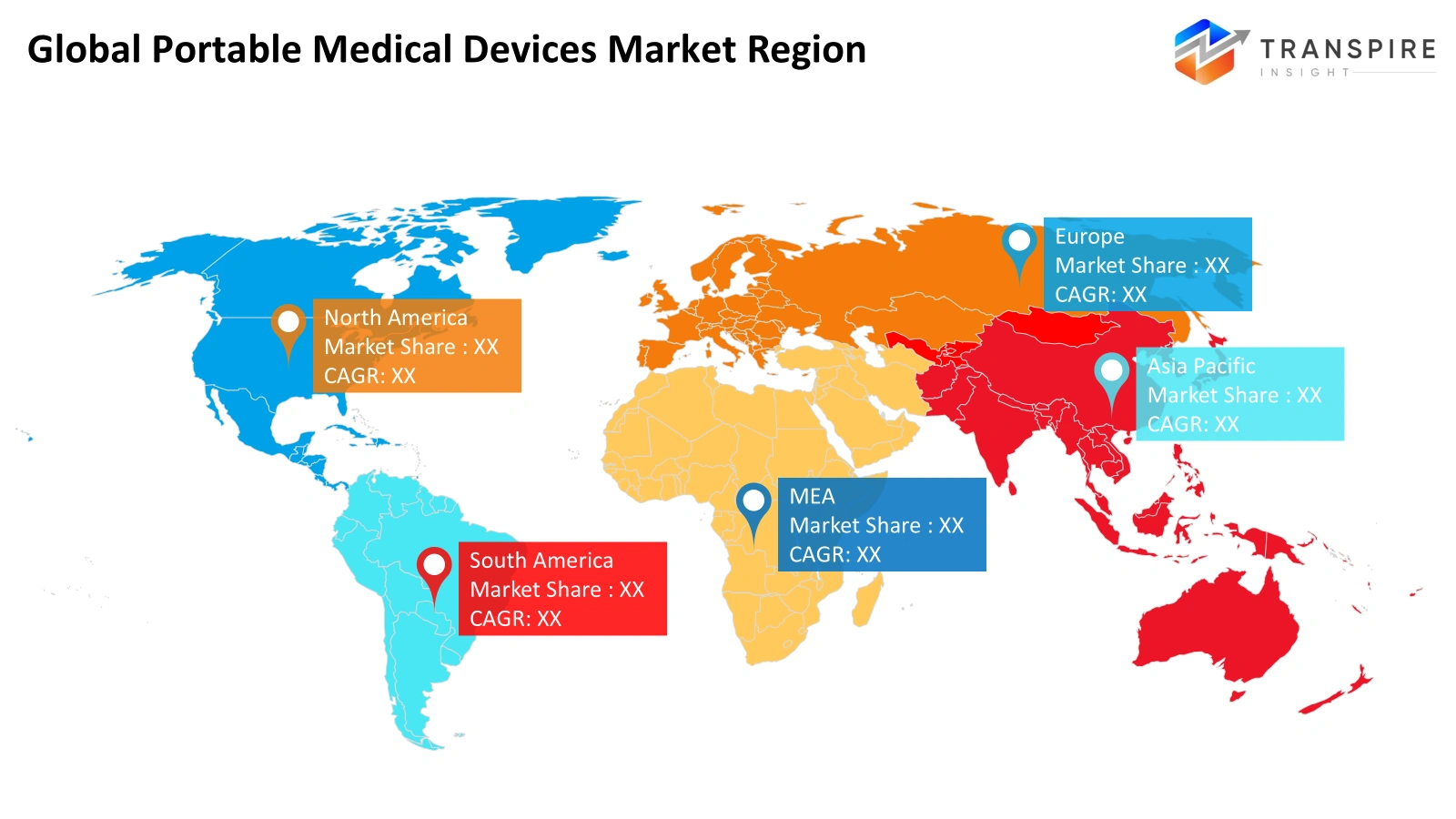
North America maintains a commanding grip on the portable medical devices market, capturing a dominant 39% of all worldwide industry revenue. This geographic leadership is heavily driven by a severe shortage of inpatient clinical staff alongside a high concentration of aging patients managing complex, chronic comorbidities. The regional ecosystem is structurally supported by favorable Medicare reimbursement expansion plans for remote patient monitoring and a robust digital IT infrastructure capable of handling large telemetry data pipelines. Consequently, integrating medical-grade wearable sensors and smart home diagnostics has become a major operational standard for regional hospital networks aiming to lower re-admission rates.
In June 2026, healthcare technology pioneer Medtronic significantly expanded its acute care and monitoring portfolio within the United States market by entering a strategic distribution agreement for the FDA-cleared Corsano multi-parameter wearable device. This sophisticated, patient-worn device allows clinicians to continuously track a wide array of contextual vital signs and biological indicators directly within home care and ambulatory environments. By integrating this wireless sensor line seamlessly into existing centralized monitoring platforms, the deployment enables domestic hospitals to manage high-acuity outpatients safely without exhausting traditional bedside resources.
Europe serves as a highly stable, predictable secondary pillar for the global market, locking down an essential 29% share of total industry demand. While North American market dynamics focus heavily on commercial insurance billing advantages and independent home monitoring apps, European device adoption is driven entirely by centralized public health programs and strict pan-European medical data protection regulations. This regional market stability is structurally insulated by state-backed universal healthcare infrastructure and an engineering focus on deploying interoperable, open-source device networks that fit directly into localized municipal care settings. To maintain strict workflow integrity amidst rising demographic pressures, European regional health boards steadily invest in high-security, multi-parameter transport monitors that move seamlessly between ambulatory vehicles and public clinics.
In May 2026, global health technology leader Philips secured a landmark multi-partner consortium contract to deliver continuous, digitally connected hospital-at-home monitoring technology for up to 15,000 patients annually across the Region Stockholm public healthcare network in Sweden. This extensive eight-year regional deployment integrates advanced clinical measurement devices, real-time electrocardiogram streaming, and secure data pipelines directly across the territory's home care infrastructure. This long-term framework deployment ensures a steady procurement pipeline for high-reliability portable telemetry systems while establishing a scalable model for sustainable, patient-centered connected care across broader European networks.
The Asia Pacific region has emerged as the fastest-growing territory globally, accelerating at a market-leading CAGR of 16.7% to capture a 24% slice of global sales. This sudden structural shift is driven by massive public hospital modernization campaigns, expanding middle-class disposable income, and a rapid pivot toward localized medical device manufacturing across emerging hubs. Historically, regional healthcare models relied almost completely on centralized, high-density metropolitan hospitals, but the territory has now rapidly pivoted toward decentralized diagnostic networks to service vast rural and semi-urban populations. Looking ahead, future equipment procurement in this booming corridor relies entirely on deploying affordable, cellular-embedded portable imaging probes and low-power point-of-care vital sensors capable of operating reliably outside traditional infrastructure grids.
In June 2026, medical technology giant Medtronic officially expanded its cardiovascular intervention and mobile diagnostic footprint within the Asia Pacific corridor by launching its advanced PulseSelect Pulsed Field Ablation system directly in India. This next-generation therapeutic tool targets the country's soaring atrial fibrillation and stroke burdens by utilizing short electrical pulses instead of extreme thermal energy to treat heart rhythm disorders. By introducing this precise, low-complication clinical technology into local treatment pathways, the automated system rollout allows regional physicians to dramatically enhance procedural precision and patient recovery velocities across expanding day-care clinics.
Who are the Key Players in the Global Portable Medical Devices Market and how do they Compete?
The global portable medical devices market features an intensely competitive landscape dominated by diversified medical technology giants and specialized digital health providers. Competition is centered around algorithmic accuracy, micro-sensor battery longevity, and seamless cloud interoperability with hospital electronic health record systems. Companies fight for multi-year enterprise supply agreements with hospital networks and strategic positioning within rapidly expanding home care channels.
American medical technology leader Abbott utilizes a dedicated innovation strategy to differentiate its portfolio from traditional monitoring hardware. The company differentiates itself through its minimally invasive continuous glucose monitoring systems and miniaturized - insertable cardiac monitors that stream real-time biometric alerts directly to smartphones. Abbott expands its global commercial footprint by pursuing broad regulatory clearances and forming deep integration partnerships with consumer digital health platforms.
In contrast - Dutch health technology specialist Philips pursues a clinical niche strategy focused on high-acuity portable monitoring and respiratory care ecosystems. The firm differentiates its hardware by integrating advanced predictive analytics and clinical decision support tools directly into its rugged transport monitors to filter out motion artifacts. Philips scales its footprint by establishing long-term enterprise managed service partnerships with massive public healthcare networks and ambulatory groups across North America and Europe.
Company List
- Medtronic
- GE HealthCare
- Philips
- Abbott
- Siemens Healthineers
- Omron
- Dexcom
- ResMed
- Roche
- Masimo
- Nihon Kohden
- Dräger
- Becton Dickinson
- iHealth
- AliveCor
Recent Development News
In March 2025, health technology enterprise ResMed executed a comprehensive brand consolidation strategy to unify its global home health and AI-powered sleep therapy portfolios under a singular corporate identity. This structural realignment streamlines consumer product pathways across 140 countries - accelerating the development of connected digital health platforms - cloud-connected respiratory software architectures to optimize long-term clinical compliance directly inside patient households.
Source: https://newsroom.resmed.com
In March 2026, glucose biosensing innovator Dexcom introduced its expanded clinical product roadmap at the 19th annual ATTD conference following the high-volume retail commercialization of its Dexcom G7 15-Day continuous monitoring system in the United States. This hardware pipeline update expands non-prescription metabolic tracking software indications to include pediatric populations - linking real-time biosensor telemetry data to preventive outpatient care frameworks to prevent acute diabetic hospitalizations.
Source: https://investors.dexcom.com/news/
In May 2026, sleep health wearable leaders ResMed and ŌURA finalized a major commercial partnership to link consumer-generated wellness insights with medical-grade clinical care pathways across the United States. This digital integration automatically connects Oura Ring members experiencing frequent nighttime breathing disturbances to ResMed's extensive remote patient monitoring network, enabling early identification of obstructive sleep apnea and streamlining clinical triage workflows without requiring initial institutional sleep laboratory stays.
Source: https://sleepreviewmag.com
What Strategic Insights Define the Future of the Global Portable Medical Devices Market?
The portable medical devices market is transitioning toward a zero-configuration, direct-to-cloud telemetry model that completely bypasses smartphone app reliance. Future expansion centers on shifting simple parameter trackers into autonomous clinical edge-computing systems capable of long-term patient telemetry. However, a major hidden risk lies in the severe lack of standardized data security protocols, leaving millions of interconnected, battery-powered clinical nodes vulnerable to unauthorized firmware manipulation and remote interception. Concurrently, an emerging opportunity rests in deploying contactless, camera-based optical vital sign trackers within expanding virtual ward systems. To maintain market leadership, device manufacturers must immediately pivot away from standalone hardware sales toward providing end-to-end, high-security enterprise device packages. These packages should feature unified data integration layers and built-in edge cryptography to satisfy tightening international medical device cybersecurity mandates.
Key Segmentations are:
By Product
- Portable Monitoring Devices
- Diagnostic Devices
- Therapeutic Devices
- Imaging Devices
- Respiratory Devices
- Wearables
- Emergency Devices
- Others
By Application
- Cardiology
- Diabetes
- Respiratory
- Neurology
- Orthopedics
- Others
By End User
- Hospitals
- Home Care
- Clinics
- Ambulatory Centers
- Others
- By Technology
- Wireless
- Bluetooth-enabled
- IoT-enabled
- Others
By Distribution Channel
- Online
- Direct Sales
- Retail
- Others
Regional Outlook
North America
- United States
- Canada
- Mexico
Europe
- Germany
- United Kingdom
- France
- Spain
- Italy
- Rest of Europe
Asia Pacific
- Japan
- China
- Australia & New Zealand
- South Korea
- India
- Rest of Asia Pacific
South America
- Brazil
- Argentina
- Rest of South America
Middle East & Africa
- Saudi Arabia
- United Arab Emirates
- South Africa
- Rest of the Middle East & Africa
Frequently Asked Questions
Find quick answers to common questions.
The global portable medical devices market size was valued at USD 64.9 Billion in 2025 and is poised to reach USD 152.7 Billion by 2033, expanding at a 11.23% CAGR.
Key segments for the global portable medical devices market are By Product (Portable Monitoring Devices, Diagnostic Devices, Therapeutic Devices, Imaging Devices, Respiratory Devices, Wearables, Emergency Devices, Others); By Application (Cardiology, Diabetes, Respiratory, Neurology, Orthopedics, Others); By End User (Hospitals, Home Care, Clinics, Ambulatory Centers, Others); By Technology (Wireless, Bluetooth-enabled, IoT-enabled, Others); By Distribution Channel (Online, Direct Sales, Retail, Others).
Growth is primarily driven by the critical financial and logistical urgency to transition chronic disease workflows out of overburdened, fixed inpatient hospital environments into continuous outpatient and decentralized home care settings. It is accelerated by rising nursing staff shortages, increasing hospital readmission penalties, and favorable expansion in public and private remote patient monitoring reimbursement policies.
The global market is led by major manufacturers including Medtronic, GE HealthCare, Philips, Abbott, Siemens Healthineers, Omron, Dexcom, ResMed, Roche, Masimo, Nihon Kohden, Dräger, Becton Dickinson, iHealth, AliveCor.
North America holds a dominant 39% share of the total worldwide revenue, heavily steering manufacturing standards toward high-bandwidth digital data security and medical-grade IoT integration. The region’s massive volume is fueled by extensive chronic comorbidity rates within an aging population, combined with advanced hospital IT networks and aggressive Medicare remote monitoring structural frameworks that subsidize commercial system deployment.
Lucrative opportunities include embedding low-power AI edge-computing inference microchips directly into handheld point-of-care ultrasound probes and compact diagnostic analyzers to automate instant trauma assessments. Additional expansion potential exists in deploying contactless optical vital sign tracking arrays within virtual hospital wards and designing cellular-embedded, zero-configuration remote patient monitoring hardware for rural regions lacking local Wi-Fi infrastructure.
- Medtronic
- GE HealthCare
- Philips
- Abbott
- Siemens Healthineers
- Omron
- Dexcom
- ResMed
- Roche
- Masimo
- Nihon Kohden
- Dräger
- Becton Dickinson
- iHealth
- AliveCor
About the Authors

Pankaj Ghogare Patil
I am Pankaj Ghogare Patil, a Senior Research Analyst at Transpire Insight, specializing in the Pharmaceutical, Chemicals & Materials, Healthcare IT, and Biotechnology industry. My expertise lies in conducting comprehensive market research, analyzing industry trends, evaluating competitive landscapes, and translating complex data into actionable insights. At Transpire Insight, I closely follow emerging technologies, regulatory developments, and market innovations to create accurate, well-researched, and informative content that helps businesses and professionals make informed decisions. I am committed to producing credible, evidence-based articles that reflect industry best practices while making technical topics accessible and valuable for a broad audience.

Chakradhar Khansole
Chakradhar serves as the Research Director at Transpire Insight, bringing over 8 years of experience in technology, innovation, and strategic market intelligence. He specializes in transforming complex market data into actionable business insights that enable organizations to make informed, growth-oriented decisions. Recognized for his strategic vision and analytical expertise, Chakradhar leads high-impact research initiatives, delivering comprehensive market assessments, competitive intelligence, and forward-looking industry analysis.
Recently Published Reports
-
Apr 2026
AI in Diabetic Retinopathy Market
AI in Diabetic Retinopathy Market Size, Share & Analysis Report By Type (Screening AI Systems, Diagnostic AI Systems, and Predictive AI Models), By Application Segment (Hospitals, Ophthalmology Clinics, Diagnostic Centers, and Research and Development), and Geography (North America, Europe, Asia-Pacific, Middle East and Africa, South and Central America), 2021 - 2031
-
Apr 2026
Psychometric Tests Market
Psychometric Tests Market Size, Share & Analysis Report By Type (Personality Tests, Ability/Aptitude Tests, Skill/Knowledge Tests, and Others), By Application (Talent Acquisition and Talent Management), and Geography (North America, Europe, Asia-Pacific, Middle East and Africa, South and Central America), 2021 – 2031
-
Apr 2026
Rare Biological Sample Collection Market
Rare Biological Sample Collection Market Size, Share & Analysis Report By Type (Isolation Kits & Reagent, Blood Collection Tubes, and Others), By Application (Oncology, Transcriptomics, Pharmacogenomics, and Others), and Geography (North America, Europe, Asia-Pacific, Middle East and Africa, South and Central America), 2021 – 2031
-
Jul 2026
Diabetic Retinopathy Market
Diabetic Retinopathy Market Size, Share & Analysis Report By Type (Proliferative Diabetic Retinopathy, and Diabetic Macular Edema (DME)), By Treatment Type (Anti VEGF Drug, Steroid Implants, Laser Surgeries, and Vitrectomy), and Geography (North America, Europe, Asia-Pacific, Middle East and Africa, South and Central America), 2021 – 2031
Our Clients







