
Global Patient-Controlled Analgesia Pumps Market Size & Forecast:
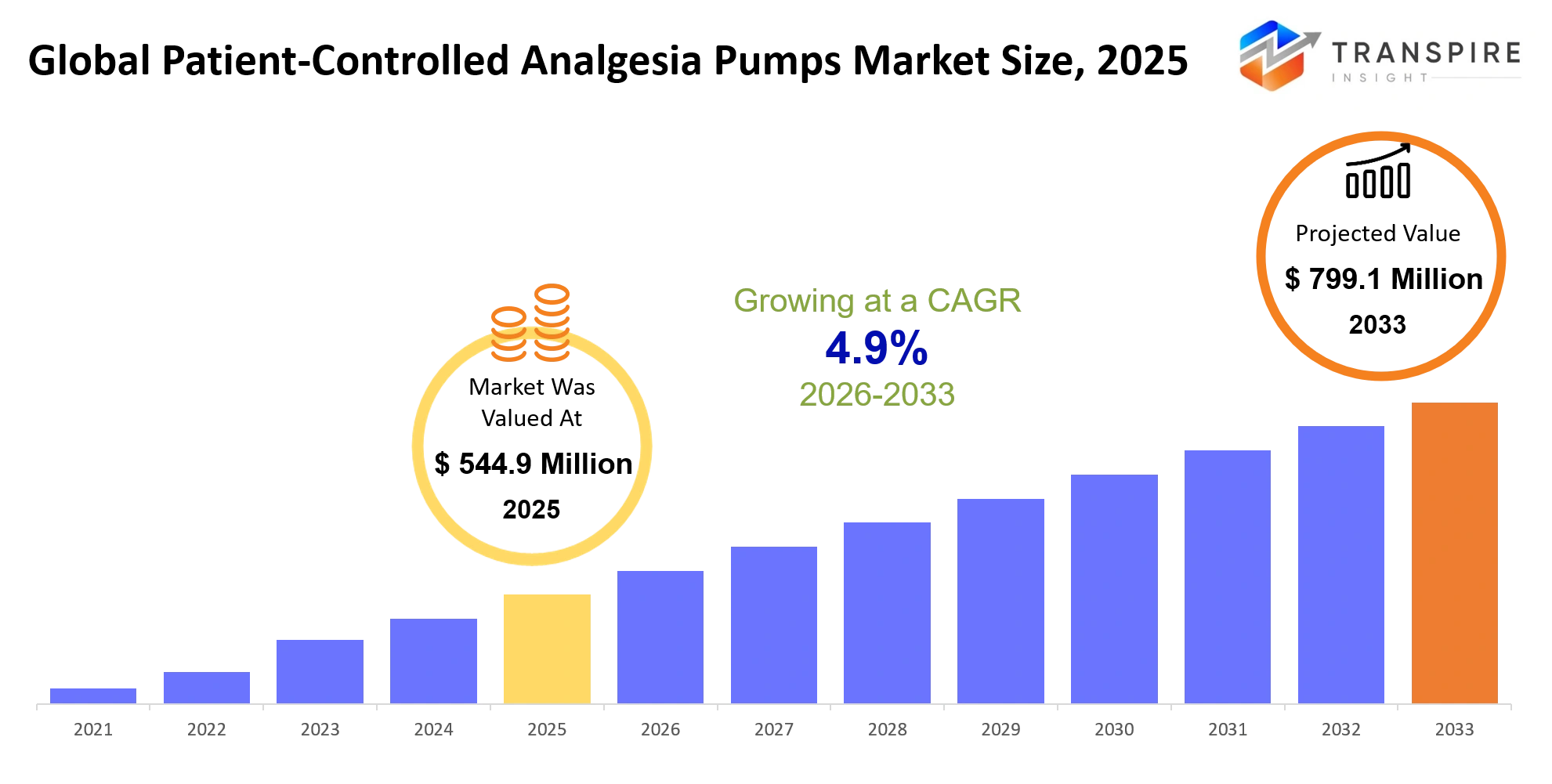
- Global Patient-Controlled Analgesia Pumps Market Size 2025: USD 544.9 Million
- Global Patient-Controlled Analgesia Pumps Market Size 2033: USD 799.1 Million
- Global Patient-Controlled Analgesia Pumps Market CAGR: 4.9%
- Global Patient-Controlled Analgesia Pumps Market Segments: By Product (Electronic PCA Pumps, Disposable PCA Pumps, Ambulatory PCA Pumps, Syringe Pumps, Others); By Application (Postoperative Pain, Cancer Pain, Labor Pain, Trauma, Others); By End User (Hospitals, Ambulatory Surgical Centers, Home Care, Others); By Route (Intravenous, Epidural, Regional, Others); By Technology (Smart Pumps, Conventional Pumps, Others).
Global Patient-Controlled Analgesia Pumps Market Summary
As per Transpire Insight Analysis, the Global Patient-Controlled Analgesia Pumps Market size is estimated at USD 544.9 Million in 2025 and is anticipated to reach USD 799.1 Million by 2033, growing at a CAGR of 4.9% from 2026 to 2033. This medical device sector provides specialized infusion systems that allow patients to safely self-administer controlled doses of pain medication via programmable locks. Over the past few years - a severe global nursing shortage alongside rising postoperative surgical volumes has forced clinical workflows away from slow, manual nursing-delivered bolus injections toward automated bedside delivery. This progression triggered a major structural shift as healthcare networks transitioned to cloud-connected smart pumps embedded with Dose Error Reduction Systems (DERS) to eliminate dangerous overmedication risks. By automating the delivery of immediate pain relief while ensuring strict clinical safeguards - these systems significantly shorten hospital stays and reduce manual nursing burdens.
Key Market Insights
The global patient-controlled analgesia (PCA) pumps landscape is shifting from standalone drug delivery hardware to highly integrated, cloud-connected infusion networks featuring auto-calculating safety parameters. Driven by severe global nursing shortages and the imperative to eliminate clinical overmedication, manufacturers are embedding advanced wireless tracking and barcode verification systems directly into lightweight, mobile medication systems.
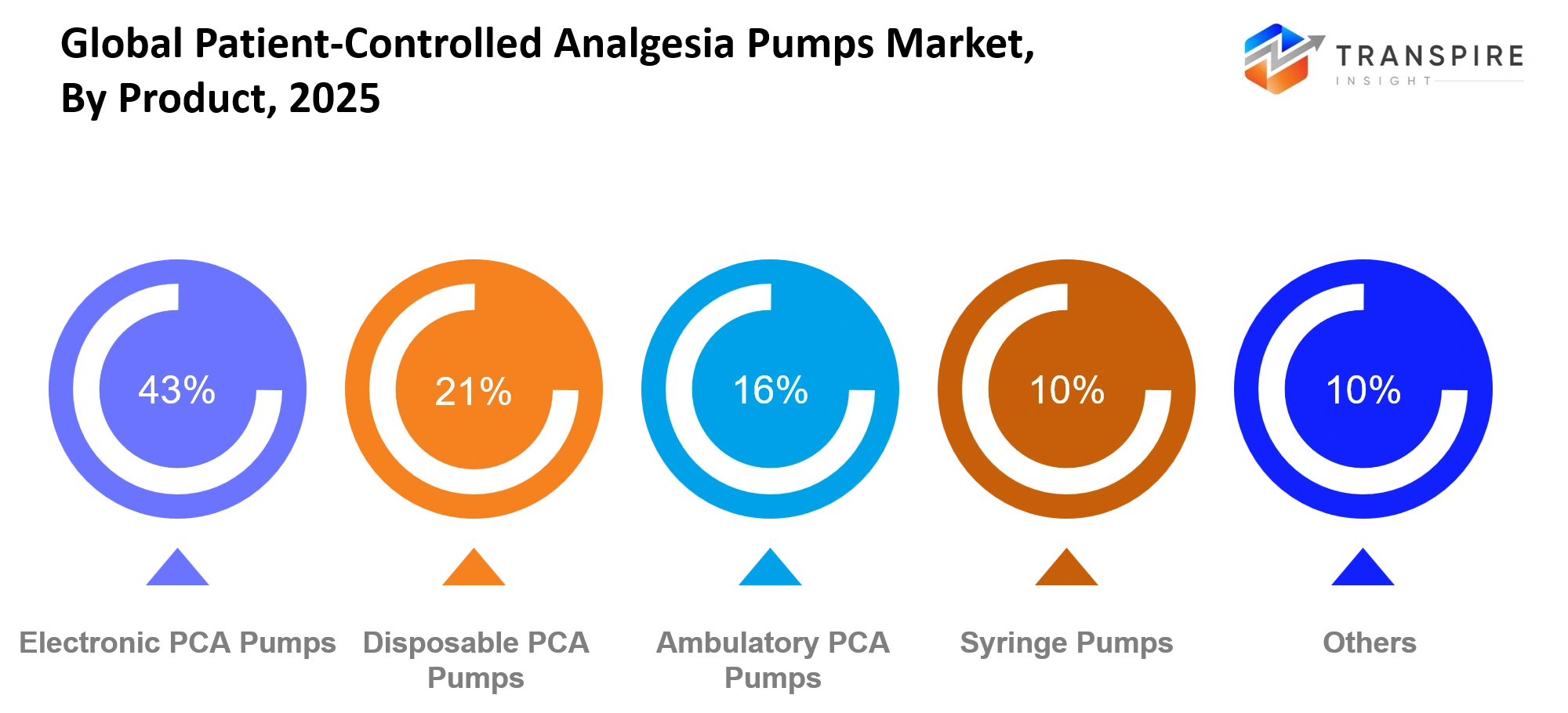
- Locking down a dominant 43% market share, Electronic PCA Pumps lead the product matrix, with Baxter expanding its advanced infusion platforms to offer seamless automated drug library updates across multi-ward hospital setups.
- Expanding at a market-leading standalone CAGR of 14.9%, Smart PCA Pumps dominate the technology segment as clinical facilities systematically phase out legacy, non-connected hardware to prevent critical dosing math errors.
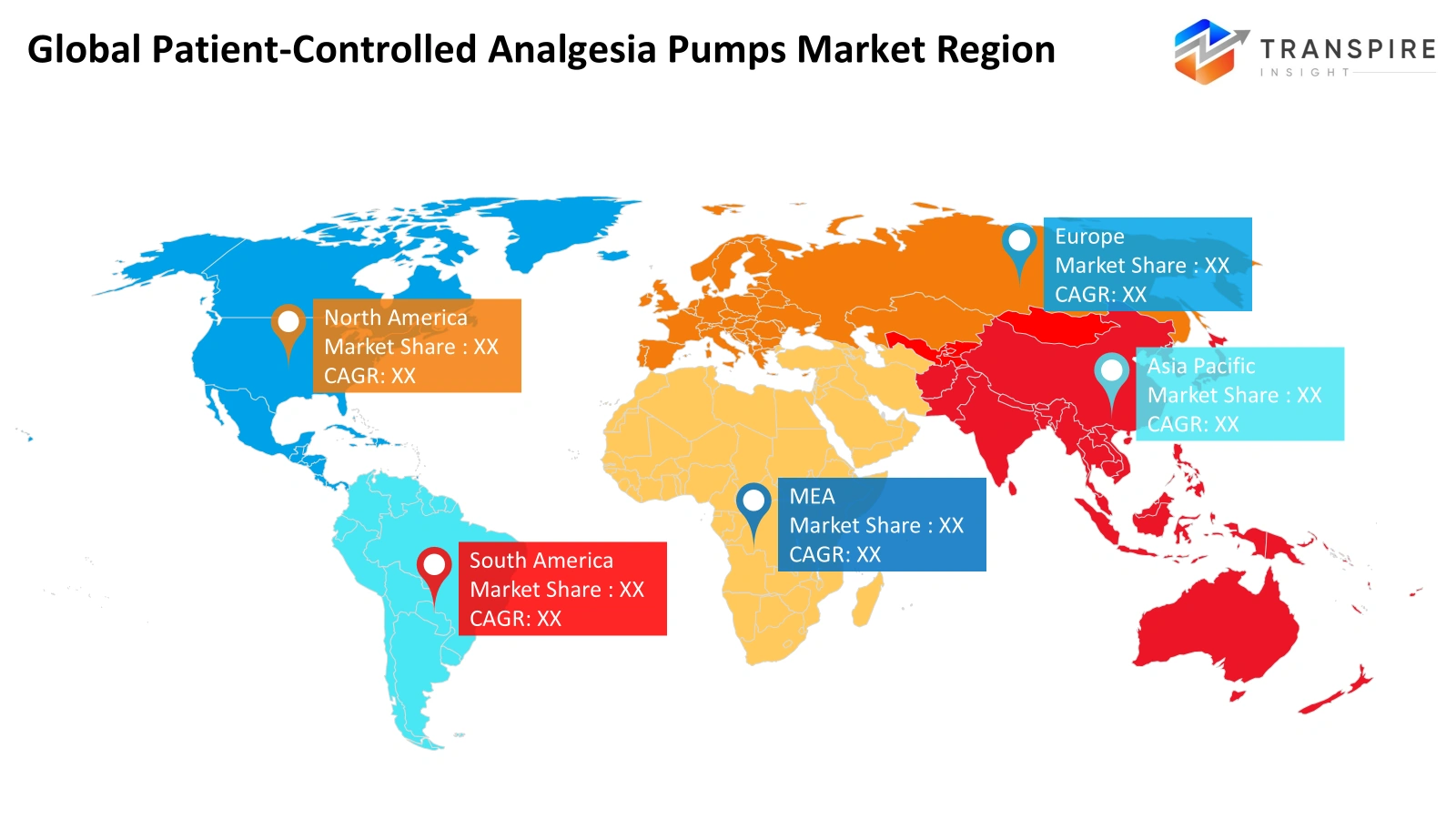
- Capturing a dominant 39% of total global revenue, North America functions as the largest regional market, backed by widespread electronic medical record (EMR) integrations and rigid FDA safety guidelines regarding controlled substances.
- Pacing regional market growth with an explosive standalone CAGR of 16.1%, Asia Pacific acts as the fastest-growing territory, fueled by massive tertiary hospital expansions and localized manufacturing hubs across India and China.
- Holding a stable 29% market slice, Europe drives strict procedural compliance, pushing medical device developers like B. Braun to introduce high-security wireless data modules that protect wireless telemetry lines against hospital cyber threats.
- Securing 21% of total industry demand, Disposable PCA Pumps remain a highly vital segment for outpatient pain relief, with specialized providers like Micrel Medical deploying lightweight elastomeric structures that let patients recover safely outside high-cost clinical wards.
- Representing 16% of the product footprint, Ambulatory PCA Pumps face rapid demand acceleration across specialized orthopedic care pipelines as surgeons favor mobile, battery-powered continuous nerve block infusion setups over systemic pills.
- Accounting for a targeted 10% slice of total revenue, Syringe PCA Pumps hold an essential technical presence, with engineering groups like Fresenius Kabi optimizing micro-volumetric piston engines to achieve hyper-precise epidural delivery in high-acuity labor units.
- Claiming an integrated 24% market presence, the global home care sector stands out as a highly active end-user segment, with ICU Medical deploying user-friendly, tamper-proof lockbox enclosures to support safer self-administration in residential palliative treatments.
- Controlling the final 4% share of global sales, Latin America represents an active infrastructure development zone, where healthcare procurement agencies are increasing bulk investments in baseline mechanical and volumetric devices to equip newly constructed rural surgical clinics.
What Are the Key Drivers, Restraints, and Opportunities in the Global Patient-Controlled Analgesia Pumps Market?
Driver
The market expansion is heavily propelled by a severe global shortage of specialized nursing staff paired with rising volumes of complex orthopedic and cardiovascular surgeries. Manually managing traditional post-surgical opioid bolus delivery places intense operational friction on shrinking clinical workforces, driving institutions toward automated bedside solutions. Patient-controlled devices optimize labor allocations by giving recovering individuals direct control over immediate pain relief within safe, pre-programmed clinical thresholds. This structural shift in clinical delivery directly increases device procurement and capital replacement revenue as major healthcare facilities systematically phase out standard manual IV lines for advanced automated systems.
In April 2025, infusion therapy innovator ICU Medical officially announced the extensive rollout of its newly cleared Plum Solo single-channel precision IV pump alongside its updated dual-channel Plum Duo system and LifeShield safety ecosystem. This large-scale product deployment introduces specialized cassette technology capable of maintaining ±3% delivery accuracy across various real-world clinical environments, effectively addressing infusion variability during high-acuity postoperative and acute pain management. By integrating these precise delivery tools into an electronic medical record framework, the launch provides medical institutions with a data-driven path to optimize clinical labor without sacrificing safety margins.
Restraint
Frequent product recalls stemming from software anomalies, faulty motor calibrations, and keystroke programming errors create intense friction for hospital procurement teams. When high-acuity delivery hardware exhibits system bugs—such as false occlusion alarms or screen freezing during active therapy—regulatory bodies mandate strict delivery holds or field corrections. This vulnerability persists because of the complex, multi-layered nature of custom drug library updates, which often require extensive physical servicing to patch, stalling capital deployments and depressing immediate vendor margins.
Opportunity
The most lucrative growth window lies in the development of lightweight, ambulatory smart pumps featuring biometric patient verification and cellular telemetry for home-based oncology and palliative care. Equipping compact, battery-powered medication systems with encrypted wireless nodes lets outpatient nursing networks remotely track active delivery volumes, monitor device battery metrics, and adjust delivery ceilings in real time. This transition unlocks highly stable residential clinical revenue streams by allowing chronic cancer patients to safely transition from high-cost hospital beds to home care settings.
What Has the Impact of Artificial Intelligence Been on the Global Patient-Controlled Analgesia Pumps Market?
Artificial intelligence is completely reinventing the patient-controlled analgesia pumps market, shifting high-acuity acute pain management away from rigid, pre-programmed delivery protocols toward dynamic, personalized safety loops. Instead of relying solely on baseline mechanical lockout periods to prevent overmedication, smart medication systems now embed advanced deep learning algorithms directly into centralized hospital networks to continuously evaluate patient-specific delivery patterns against historical clinical datasets.
Inside active hospital environments, built-in AI models drive operational improvements by running continuous anomaly detection across live drug library streams. These specialized algorithms monitor real-time interaction frequencies, automatically flagging when a clinician types in an unusually high flow rate or an irregular concentration mix before the command can reach the patient’s line. By cross-referencing active delivery metrics with electronic health records, the software provides clinical staff with predictive insights that actively minimize human programming mistakes and improve patient throughput across crowded recovery wards.
However, a serious operational limitation persists around data integration gaps and high upfront deployment costs. Connecting AI-augmented safety software with fragmented, multi-vendor electronic medical record systems requires extensive custom middleware, creating a steep technical implementation hurdle that can slow down enterprise-wide clinical hardware transitions.
Key Market Trends
The global patient-controlled analgesia (PCA) pumps space is moving rapidly away from standalone, non-communicating delivery hardware toward secure, cloud-native smart pumps that feature bidirectional electronic health record (EHR) interoperability. Spurred by strict federal guidelines regarding controlled substance surveillance and a clinical push to reduce medication charting errors, medical institutions are abandoning legacy manual programming matrices in favor of auto-verifying medical ecosystems.
- Clinical engineering departments are shifting away from standalone hardware installations to deploy enterprise-wide wireless networks that stream continuous infusion metrics directly to hospital IT command centers.
- Pharmacy networks are moving from tedious, manual ward-by-ward drug library updates to execute secure, cloud-based server broadcasts that push localized dosing limits to hundreds of active bedside units simultaneously.
- Surgical recovery wards are abandoning fixed, pole-mounted bedside volumetric units to adopt compact, battery-efficient ambulatory PCA pumps that support immediate post-operative mobility protocols.
- Anesthesia care squads are transitioning from systemic, heavy intravenous opioid delivery to execute hyper-localized epidural and regional pain block infusions to accelerate patient recovery times.
- Hospital safety committees are moving far past standard passive alarm tones to integrate dynamic, interactive touchscreen menus featuring explicit Dose Error Reduction Software (DERS) text prompts.
- Procurement managers are stepping away from universal equipment leasing structures to secure specialized, vendor-backed software-as-a-service (SaaS) bundles that include continuous cybersecurity patch automation.
- Ambulatory surgical centers are replacing complex, high-maintenance reusable hardware with lightweight, pre-filled disposable elastomeric PCA pumps to streamline high-volume outpatient discharges.
- Healthcare IT specialists are shifting from isolated device tracking to install multi-layered, device-level cryptographic authentication protocols to defend connected medical arrays against malicious enterprise cyberattacks.
- Palliative care groups are moving away from restrictive inpatient hospitalizations to implement smart home-care PCA systems equipped with encrypted cellular telemetry modules for secure remote clinician oversight.
Global Patient-Controlled Analgesia Pumps Market Segmentation
By Product
Electronic PCA Pumps command the largest share of market capital, holding a dominant 43% of global revenue due to their programmable multi-dose flexibility, integrated wireless networking capabilities, and widespread adoption across high-acuity hospital environments. Disposable PCA Pumps follow at 21%, Ambulatory PCA Pumps capture 16%, while Syringe PCA Pumps and other niche variations account for the remaining 20% of the industry footprint. This division is shaped by the absolute clinical necessity for precise, automated volumetric control to safely administer high-potency analgesics without human calculation errors. Electronic PCA Pumps maintain this peak position because modern surgical centers require heavy-duty, software-driven infusion frameworks that feature interactive touchscreen interfaces and dynamic history logs to verify patient compliance. Moving forward, structural designs will pivot toward advanced multi-channel configurations, forcing medical device manufacturers to reduce baseline hardware footprints while utilizing universal, plug-and-play cartridge architecture to streamline rapid bedside replacement.
By End User
Hospitals serve as the primary financial engine of the market, controlling massive procurement budgets and locking down an undisputed anchor position across global inpatient surgical pathways. Concurrently, Ambulatory Surgical Centers (ASCs) and Home Care networks represent highly active, accelerating secondary buyers requiring flexible, decentralized pain management systems. The underlying growth logic relies on shifting patient recovery locations and clinical labor constraints, where hospitals require fixed, high-security bedside units and home care settings require lightweight, tamper-proof portable designs. Hospitals dominate because high-stakes surgical interventions—such as open-heart, orthopedic, and major abdominal procedures—dictate continuous, closely monitored postoperative recovery cycles. Moving forward, market success will require a complete pivot toward full electronic medical record (EMR) interoperability, compelling device developers to supply open-architecture communication protocols that natively sync bedside dosing data with centralized nursing dashboards right out of the box.
By Application
Postoperative Pain management commands the largest baseline market position, driving the vast majority of equipment orders due to rising global surgical volumes and rigid clinical protocols demanding early patient mobilization. Cancer Pain tracking and palliative care stand out as the most active continuous growth vectors, while Labor Pain and Trauma management maintain stable secondary positions across labor wards and emergency medicine networks. This distribution pattern is driven by the major medical transition away from intermittent, nursing-dependent bolus injections toward continuous, patient-regulated baseline analgesia. Postoperative Pain leads because minimizing immediate post-surgical shock is directly linked to shorter length-of-stay metrics and reduced hospital readmission penalties. Moving forward, delivery technology will shift heavily toward localized, non-systemic regional nerve block configurations, enabling anesthesiologists to achieve targeted site-specific pain mitigation without exposing patients to the systemic side effects of traditional intravenous opioids.
By Route
Intravenous delivery networks maintain a commanding grip on this segment, locking down a dominant portion of total industry revenue due to their immediate onset of action, highly predictable pharmacokinetic profiles, and universal clinical familiarity. Epidural administration frameworks follow as a critical, highly integrated operational standard for obstetric and specialized thoracic surgeries, while Regional blocks handle the remaining secondary volume across modern outpatient orthopedic lines. This structural division is dictated by the specific anatomical requirements of different surgical fields and the precise mechanical pressure needed to safely navigate targeted neural pathways. Intravenous delivery leads because it provides the highly dependable, rapid vascular access path required to manage acute pain flare-ups across a vast spectrum of general surgical patients. Moving forward, clinical delivery strategies will focus heavily on continuous regional infiltration, pushing pump manufacturers to develop ultra-precise low-flow continuous electronic blocks that minimize accidental motor stall risks during long-term local anesthesia.
By Technology
Conventional Pumps maintain a stable legacy baseline share, while Smart PCA Pumps stand out as the undisputed technological and market driver, expanding at an explosive standalone CAGR of 14.9%. This rapid transition is dictated by strict global healthcare safety mandates requiring the total elimination of manual dosing configuration mistakes through the mandatory use of Dose Error Reduction Software (DERS). Smart PCA Pumps are growing exponentially because modern clinical networks require active, automated safety frameworks that feature built-in barcode medication validation and customizable drug libraries tailored to specific hospital wards. Moving forward, engineering strategies will focus heavily on cloud-native predictive analytics, pushing medical device firms to develop automated software overlays that leverage artificial intelligence to actively flag breathing rate anomalies or unusual patient button-pressing frequencies before a clinical complication can manifest.
What Are the Key Use Cases Driving the Global Patient-Controlled Analgesia Pumps Market?
Postoperative pain management drives the bulk of this market because programmable intravenous and epidural infusions are unbeatable at delivering immediate - personalized relief right after complex surgeries. Clinical teams configure these bedside devices following major orthopedic or cardiovascular procedures, allowing recovering patients to safely self-manage acute pain flare-ups without waiting for a nurse, which promotes faster physical rehabilitation.
Outside general surgical wards, oncology teams leverage smart ambulatory units to manage severe, chronic cancer pain. Because these secure, lightweight devices feature tight lockout windows alongside continuous baseline infusions - they give palliative care patients a dependable way to control breakthrough pain while preserving cognitive clarity.
Lately, labor and delivery units are increasingly adopting regional and epidural PCA configurations for customized childbirth pain management. Expectant mothers can dynamically adjust their own comfort levels during labor - giving them greater control over the birthing process while lowering the overall need for heavy systemic sedatives.
|
Report Metrics |
Details |
|
Market size value in 2025 |
USD 544.9 Million |
|
Market size value in 2026 |
USD 571.6 Million |
|
Revenue forecast in 2033 |
USD 799.1 Million |
|
Growth rate |
CAGR of 4.9% from 2026 to 2033 |
|
Base year |
2025 |
|
Historical data |
2021 - 2024 |
|
Forecast period |
2026 - 2033 |
|
Report coverage |
Revenue forecast, competitive landscape, growth factors, and trends |
|
Regional scope |
United States; Canada; Mexico; United Kingdom; Germany; France; Italy; Spain; Denmark; Sweden; Norway; China; Japan; India; Australia; South Korea; Thailand; Brazil; Argentina; South Africa; Saudi Arabia; United Arab Emirates |
|
Key company profiled |
Baxter, B. Braun, Fresenius Kabi, ICU Medical, Smiths Medical, Moog, BD, Micrel Medical, Ace Medical, Avanos Medical, Mindray, Terumo, Hospira, Medtronic, Arcomed. |
|
Customization scope |
Free report customization (country, regional & segment scope). Avail customized purchase options to meet your exact research needs. |
|
Report Segmentation |
By Product (Electronic PCA Pumps, Disposable PCA Pumps, Ambulatory PCA Pumps, Syringe Pumps, Others); By Application (Postoperative Pain, Cancer Pain, Labor Pain, Trauma, Others); By End User (Hospitals, Ambulatory Surgical Centers, Home Care, Others); By Route (Intravenous, Epidural, Regional, Others); By Technology (Smart Pumps, Conventional Pumps, Others). |
Which Regions are Driving the Global Patient-Controlled Analgesia Pumps Market Growth?
North America maintains a commanding grip on the patient-controlled analgesia pumps market, capturing a dominant 39% of all worldwide industry revenue. This geographic leadership is heavily driven by sophisticated electronic medical record integrations and a massive volume of specialized inpatient surgical procedures that require close controlled substance monitoring. The regional ecosystem is structurally supported by a rigid regulatory framework that enforces device efficacy guidelines alongside extensive private health insurance reimbursement models. Consequently, establishing continuous, bidirectional wireless data loops between bedside hardware and centralized clinical networks has become a standard operational benchmark for domestic care providers.
In February 2026, the American Society of Regional Anesthesia and Pain Medicine officially updated its clinical practice guidelines for continuous peripheral nerve blocks to emphasize automated micro-infusion safety. This clinical framework deployment highlights the necessity of using smart ambulatory infusion pumps equipped with automated locking mechanisms to optimize post-surgical orthopedic care across outpatient environments. By enforcing these updated safety protocols across regional trauma networks, the framework drives local hospital groups to systematically retire non-communicating legacy devices and replace them with interoperable smart systems. [https://medicalbuyer.co.in/global-patient-controlled-analgesia-pumps-to-reach-usd-819-42m/]
Europe serves as a highly stable, predictable secondary pillar for the global market, locking down an essential 29% share of total industry demand. While North American expansion is propelled by rapid technological absorption - private insurance networks, European patient-controlled analgesia pump adoption is shaped by public healthcare cost-containment mandates - intense nursing labor shortages across centralized hospital wards. This regional market stability is structurally insulated by centralized procurement frameworks that prioritize long-term equipment leasing packages featuring automated cybersecurity software patches. To lower downstream hospitalization costs and satisfy strict regional patient safety directives, European medical institutions steadily invest in high-security ambulatory setups that streamline post-operative recovery times.
The Asia Pacific region has emerged as the fastest-growing territory globally, accelerating at a market-leading standalone CAGR of 16.1% while currently holding a 24% slice of global sales. This sudden structural shift is driven by massive public-sector infrastructure spending to construct multi-specialty tertiary hospitals, expanding medical tourism pipelines, and an intensifying regional focus on advanced oncology and palliative care. Historically, healthcare facilities in this corridor relied on baseline manual injections, but a rapid push to modernize acute care has led to widespread adoption of computerized electronic delivery. Looking ahead, future development in this booming corridor relies heavily on deploying affordable, localized smart pump architectures tailored to high-volume municipal health networks.
In April 2026, China's National Health Commission (NHC), alongside the National Medical Products Administration, officially finalized and issued the joint "Guiding Principles for Defining Biomedical New Technologies and Drugs or Medical Devices." This comprehensive administrative decree builds directly upon the country's multi-year healthcare modernization blueprint, formally establishing a dedicated filing, naming, and data traceability standard for advanced clinical delivery apparatuses. By providing an accelerated, highly transparent regulatory approval pipeline for localized medical manufacturing groups, the framework drives rapid deployment of advanced micro-infusion and patient-controlled technologies throughout secondary provinces to manage an aging demographic.
Who Are the Key Players in the Global Patient-Controlled Analgesia Pumps Market and How Do They Compete?
The global patient-controlled analgesia (PCA) pumps space is an intense battleground between multi-billion-dollar medical device conglomerates and specialized infusion engineering firms. With international healthcare networks moving rapidly away from standalone hardware to hit aggressive digital charting targets, vendors compete on three fronts - engineering ultra-precise volumetric motor systems, embedding cyber-secure wireless data modules, and integrating advanced Dose Error Reduction Software (DERS) to prevent dosing math errors.
ICU Medical utilizes an innovation-focused strategy, positioning its global infusion segments around high-efficiency software interoperability and maximum clinical accuracy. What makes them stand out is their proprietary cassette technology and strict software integration capabilities, which allow their systems to maintain delivery accuracy while syncing live dosing data directly with electronic medical record platforms. The company expands its global market footprint by directing extensive capital expenditures into strategic software upgrades and hardware compliance to meet separate reimbursement criteria under new regional non-opioid pain legislation.
Braun runs a highly defensive platform strategy focused squarely on the high-volume, centralized hospital care and specialized regional anesthesia industries. The vendor differentiates its market presence by embedding highly specialized - non-DEHP/PVC-free consumables and secure, wireless server-managed drug libraries directly into its core infusion portfolio to ensure complete clinical safety compliance. They expand their industrial footprint through structured, long-term procurement leasing frameworks with multi-facility tier-one hospital groups, capturing growing international corridors through heavily automated, robotics-driven regional manufacturing plants.
Company List
- Baxter
- B. Braun
- Fresenius Kabi
- ICU Medical
- Smiths Medical
- Moog
- BD
- Micrel Medical
- Ace Medical
- Avanos Medical
- Mindray
- Terumo
- Hospira
- Medtronic
- Arcomed
Recent Development News
In May 2025, ICU Medical completed a strategic manufacturing joint venture with Otsuka Pharmaceutical Factory. This corporate partnership establishes one of the largest combined intravenous and clinical infusion solution networks in North America, scaling output to an estimated 1.4 billion annual fluid units to secure long-term product supply chain resiliency across hospital and home care pipelines.
Source: https://www.icumed.com
In September 2025, Becton, Dickinson and Company (BD) expanded its voluntary Class I safety correction software notice covering its BD Alaris Pump Module installations. This large-scale hardware and validation remediation updates performance ranges for loading bolus and flow rate metrics across its active clinical fleet, ensuring multi-dose infusion safety thresholds remain aligned with tightening U.S. Food and Drug Administration guidelines.
Source: https://news.bd.com
In January 2026, healthcare technology providers Medtronic and Mindray North America officially expanded their strategic patient monitoring and technology partnership into ambulatory surgery centers across the United States. This commercial rollout expands their baseline integrated monitoring architecture from central inpatient wards to high-velocity outpatient surgical fields, optimizing clinician charting workflows and increasing post-operative recovery monitoring precision.
Source: https://www.mindray.com
What Strategic Insights Define the Future of the Global Patient-Controlled Analgesia Pumps Market?
The global patient-controlled analgesia pumps market is heading toward autonomous closed-loop infusion architecture, where real-time patient biometric telemetry directly drives adaptive downhole-style delivery modifications without manual clinician titration.
A significant hidden risk lies in "interoperability security fragmentation." As healthcare facilities aggressively plug multi-vendor smart pumps into centralized electronic health record (EHR) networks, unpatched legacy firmware bridges create massive threat surfaces for ransomware, risking catastrophic fleet-wide operational freezes and unauthorized changes to drug delivery limits.
Conversely - a major emerging opportunity is the migration of acute pain therapies to home settings using cellular-enabled elastomeric and ambulatory systems, which lets oncology and palliative care patients exit high-cost hospital beds.
Strategic recommendation: Medical device firms must immediately halt capital investment in isolated hardware formats and pivot to open-architecture, software-as-a-service (SaaS) delivery platforms featuring device-level cryptographic authentication and automated cybersecurity patch pipelines.
Key Segmentations are:
By Product
- Electronic PCA Pumps
- Disposable PCA Pumps
- Ambulatory PCA Pumps
- Syringe Pumps
- Others
By Application
- Postoperative Pain
- Cancer Pain
- Labor Pain
- Trauma
- Others
By End User
- Hospitals
- Ambulatory Surgical Centers
- Home Care
- Others
By Route
- Intravenous
- Epidural
- Regional
- Others
By Technology
- Smart Pumps
- Conventional Pumps
- Others
Regional Outlook
North America
- United States
- Canada
- Mexico
Europe
- Germany
- United Kingdom
- France
- Spain
- Italy
- Rest of Europe
Asia Pacific
- Japan
- China
- Australia & New Zealand
- South Korea
- India
- Rest of Asia Pacific
South America
- Brazil
- Argentina
- Rest of South America
Middle East & Africa
- Saudi Arabia
- United Arab Emirates
- South Africa
- Rest of the Middle East & Africa
Frequently Asked Questions
Find quick answers to common questions.
The global patient-controlled analgesia pumps market size was valued at USD 544.9 Million in 2025 and is poised to reach USD 799.1 Million by 2033, expanding at a 4.9% CAGR.
Key segments for the global patient-controlled analgesia pumps market are Product (Electronic PCA Pumps, Disposable PCA Pumps, Ambulatory PCA Pumps, Syringe Pumps, Others), Application (Postoperative Pain, Cancer Pain, Labor Pain, Trauma, Others), End User (Hospitals, Ambulatory Surgical Centers, Home Care, Others), Route (Intravenous, Epidural, Regional, Others), and Technology (Smart Pumps, Conventional Pumps, Others).
Growth is primarily driven by a severe global shortage of specialized nursing staff paired with rising volumes of complex orthopedic and cardiovascular surgeries that require close controlled substance monitoring.
The global market is led by major manufacturers including Baxter, B. Braun, Fresenius Kabi, ICU Medical, Smiths Medical, Moog, BD, Micrel Medical, Ace Medical, Avanos Medical, Mindray, Terumo, Hospira, Medtronic, and Arcomed.
North America holds a dominant 39% share of total worldwide market revenue. This massive footprint influences global dynamics because its sophisticated healthcare infrastructure possesses extensive electronic medical record (EMR) integrations and adheres to rigid FDA safety guidelines regarding controlled substances, which establishes the baseline operational standards for automated drug delivery devices worldwide.
Lucrative opportunities exist in the development of lightweight, ambulatory smart pumps featuring biometric patient verification and cellular telemetry for home-based oncology and palliative care. This transition allows chronic cancer patients to safely move from high-cost hospital beds to home care environments while preserving continuous clinician oversight.
- Baxter
- B. Braun
- Fresenius Kabi
- ICU Medical
- Smiths Medical
- Moog
- BD
- Micrel Medical
- Ace Medical
- Avanos Medical
- Mindray
- Terumo
- Hospira
- Medtronic
- Arcomed
About the Authors

Pankaj Ghogare Patil
I am Pankaj Ghogare Patil, a Senior Research Analyst at Transpire Insight, specializing in the Pharmaceutical, Chemicals & Materials, Healthcare IT, and Biotechnology industry. My expertise lies in conducting comprehensive market research, analyzing industry trends, evaluating competitive landscapes, and translating complex data into actionable insights. At Transpire Insight, I closely follow emerging technologies, regulatory developments, and market innovations to create accurate, well-researched, and informative content that helps businesses and professionals make informed decisions. I am committed to producing credible, evidence-based articles that reflect industry best practices while making technical topics accessible and valuable for a broad audience.

Chakradhar Khansole
Chakradhar serves as the Research Director at Transpire Insight, bringing over 8 years of experience in technology, innovation, and strategic market intelligence. He specializes in transforming complex market data into actionable business insights that enable organizations to make informed, growth-oriented decisions. Recognized for his strategic vision and analytical expertise, Chakradhar leads high-impact research initiatives, delivering comprehensive market assessments, competitive intelligence, and forward-looking industry analysis.
Recently Published Reports
-
Apr 2026
AI in Diabetic Retinopathy Market
AI in Diabetic Retinopathy Market Size, Share & Analysis Report By Type (Screening AI Systems, Diagnostic AI Systems, and Predictive AI Models), By Application Segment (Hospitals, Ophthalmology Clinics, Diagnostic Centers, and Research and Development), and Geography (North America, Europe, Asia-Pacific, Middle East and Africa, South and Central America), 2021 - 2031
-
Apr 2026
Psychometric Tests Market
Psychometric Tests Market Size, Share & Analysis Report By Type (Personality Tests, Ability/Aptitude Tests, Skill/Knowledge Tests, and Others), By Application (Talent Acquisition and Talent Management), and Geography (North America, Europe, Asia-Pacific, Middle East and Africa, South and Central America), 2021 – 2031
-
Apr 2026
Rare Biological Sample Collection Market
Rare Biological Sample Collection Market Size, Share & Analysis Report By Type (Isolation Kits & Reagent, Blood Collection Tubes, and Others), By Application (Oncology, Transcriptomics, Pharmacogenomics, and Others), and Geography (North America, Europe, Asia-Pacific, Middle East and Africa, South and Central America), 2021 – 2031
-
Jul 2026
Diabetic Retinopathy Market
Diabetic Retinopathy Market Size, Share & Analysis Report By Type (Proliferative Diabetic Retinopathy, and Diabetic Macular Edema (DME)), By Treatment Type (Anti VEGF Drug, Steroid Implants, Laser Surgeries, and Vitrectomy), and Geography (North America, Europe, Asia-Pacific, Middle East and Africa, South and Central America), 2021 – 2031
Our Clients







