

Global Medical Device Packaging Market Summary:
As per Transpire Insight Analysis, The Global Medical Device Packaging Market size is estimated at USD 40.5 Billion in 2025 and is anticipated to reach USD 66.9 Billion by 2033, growing at a CAGR of 6.48% from 2026 to 2033.
The medical device packaging market develops and manufactures specialized - sterile barrier systems that protect sensitive medical equipment—from basic syringes to complex implantable pacemakers—against microbial contamination and physical damage throughout shipping and storage. Over the past three to five years - the industry has abandoned traditional, heavy PVC plastics to prioritize lightweight, highly peelable microbial barriers. This structural shift is heavily driven by tightening international medical quality regulations alongside strict hospital hospital-waste directives. Furthermore, the massive post-pandemic surge in complex home-care diagnostic kits and specialized outpatient surgical procedures has triggered an intense corporate need for single-use, foolproof aseptic opening configurations. As global healthcare infrastructure expands, this aggressive push for non-compromised device sterility directly drives long-term commercial volume growth for highly durable, bio-compatible packaging materials.
Global Medical Device Packaging Market Size & Forecast:
- Global Market Size 2025: USD 40.5 Billion
- Expected Market Value (2033): USD 66.9 Billion
- Forecast CAGR (2026–2033): 6.48%
- Leading Region in 2025: North America
- Fastest Growing Region: Asia Pacific
- Key Company Profiles: Amcor, West Pharmaceutical Services, Berry Global, DuPont, Sonoco Products, Oliver Healthcare Packaging, Wipak Group, Sealed Air, TekniPlex, SteriPack, Nelipak, Constantia Flexibles, Coveris, ProAmpac, UFP Technologies

Key Global Medical Device Packaging Market Insights
The medical device packaging market is shifting away from traditional, single-use fossil plastics toward multi-layered eco-friendly barrier structures that support advanced serialization and low-temperature gas extraction. Total microbial barrier preservation, high-speed automated seal integrity verification, and circular material procurement are the core mechanisms defining global medical manufacturing success.
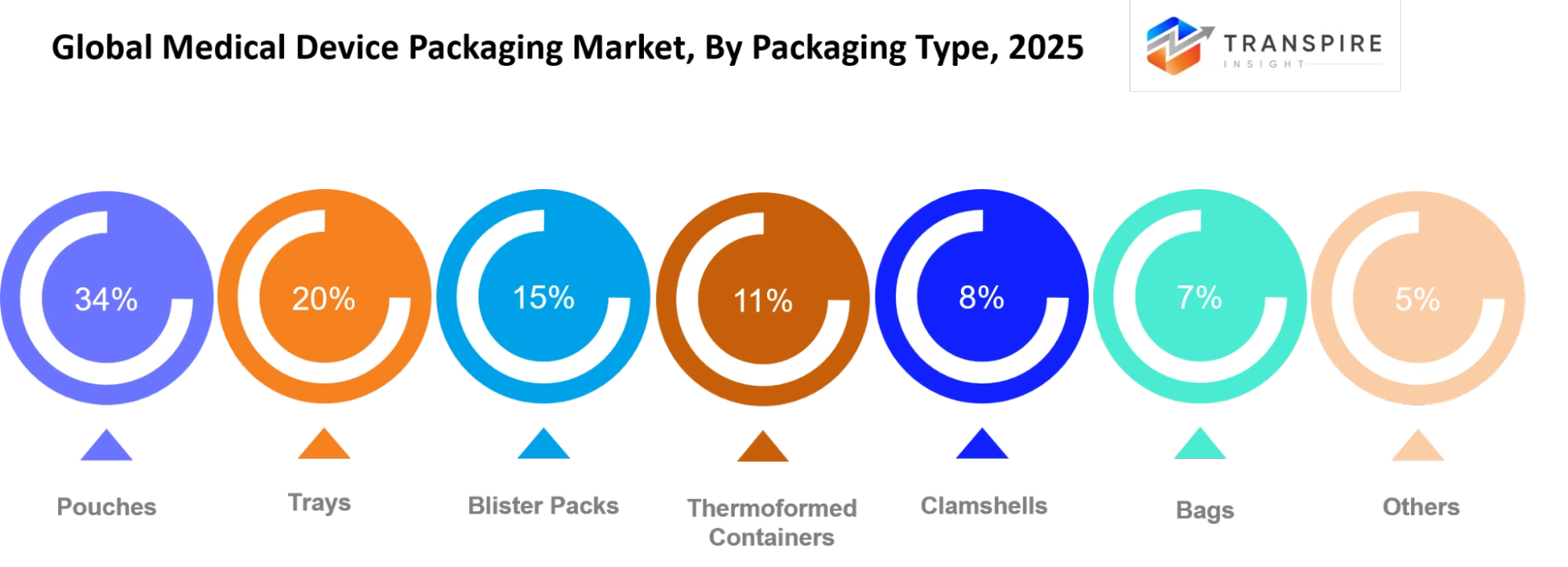
- Pouches command a dominant 34% market share - with Amcor and Oliver Healthcare Packaging driving high-speed roll-fed pouch validation configurations equipped with inline thermal seal telemetry to maximize barrier yield.
- Trays capture 20% of total revenue as Nelipak and TekniPlex optimize heavy-gauge thermoformed co-extrusions integrated with precise visual tracking grids for rigid orthopedic implant transport.
- Blister Packs hold 15% of industrial demand - propelled by Constantia Flexibles deploying smart, high-barrier moisture-barrier lidding foils optimized for high-throughput cleanroom packaging lines.
- Thermoformed Containers account for 11% of market capacity - with UFP Technologies scaling custom-engineered precision cavities built to eliminate transit abrasion in high-value cardiovascular units.
- Clamshells claim an 8% segment presence as Sonoco Products implements automated locking profiles that minimize secondary containment thickness while satisfying strict physical drop-test metrics.
- Bags compromise 7% of the industry footprint - where SteriPack expands large-volume medical-grade bags utilizing gas-permeable breathability structures for bulk kit sterilization protocols.
- Bio-based Medical Packaging stands out as the most volatile - highest-growth technology corridor expanding at a 15.8% CAGR as DuPont rolls out its renewable attribution Tyvek modules to hit strict healthcare sustainability goals.
- North America maintains an absolute structural hold at 39% of the global footprint - accelerated by Berry Global and Sealed Air deploying automated inline leak detection equipment to align with strict FDA regulatory frameworks.
- Asia Pacific operates as the fastest-growing geopolitical zone moving at a 16.7% CAGR because regional suppliers like Wipak Group expand domestic deep-draw thermoforming facilities in India to absorb expanding surgical device manufacturing scales.
What Are the Key Drivers, Restraints, and Opportunities in the Global Medical Device Packaging Market?
Driver
Market growth is heavily propelled by the global shift toward single-use - disposable medical devices combined with strict healthcare mandates for advanced infection prevention. Traditional multi-use surgical instruments require resource-intensive - post-operative autoclaving that risks cross-contamination. This critical concern triggered a massive manufacturing transition toward pre-sterilized - unit-dose device packaging. Consequently - this structural shift drives rapid corporate adoption because it allows medical device manufacturers to guarantee a flawless sterile barrier right up to the point of care.
In November 2025, global packaging leader Amcor officially launched its Amcor HealthCare AmFiba recyclable mono-material pouch platform designed for high-barrier medical applications. This material breakthrough replaces multi-layer plastic structures with a fully recyclable polyolefin laminate that withstands aggressive ethylene oxide sterilization. The deployment enables high-volume medical manufacturing plants to eliminate mixed-waste packaging lines - reduce carbon footprints, and satisfy tightening hospital eco-compliance mandates without compromising physical seal strength or microbial barrier protection.
Restraint
Exorbitant packaging validation expenditures and rigid compliance demands under global frameworks like ISO 11607 act as a major operational barrier. Altering even a minor film layer requires extensive - multi-month testing arrays—including real-time shelf-life testing - microbial barrier integrity validation - transit simulation stresses. This friction persists because modern healthcare regulations enforce zero-tolerance thresholds for seal breaches - trapping device suppliers in lengthy - cash-intensive regulatory approval loops that delay product commercialization.
Opportunity
The most lucrative growth window lies in the mainstream integration of temperature-reversing and cloud-linked smart labeling directly into bio-based barrier trays. Embedding thin-film RFID micro-sensors allows logistics networks to monitor real-time atmospheric shifts - complete chain-of-custody serialization. This technological pivot unlocks highly profitable long-term supply contracts—especially across expanding Asia-Pacific diagnostic - surgical manufacturing hubs—by letting suppliers deliver self-authenticating, eco-friendly barriers.
What Has the Impact of Artificial Intelligence Been on the Global Medical Device Packaging Market?
Artificial intelligence is fundamentally reshaping the medical device packaging market - transitioning cleanroom operations away from rigid manual sampling toward fully automated, zero-defect quality intelligence networks. Instead of relying on human operators to spot microscopic micro-leaks or wrinkles in sterile barriers - manufacturing facilities deploy deep learning algorithms to evaluate seal integrity in real time.
Inside high-throughput production lines, advanced computer vision systems drive immense operational improvements through automated inline surface defect detection and print serialization verification. By parsing high-resolution camera data at full line speeds exceeding hundreds of units per minute - edge-AI models instantly identify incomplete heat seals - sub-visible particulate contamination - or misaligned lidding materials. This predictive capability automatically eliminates defective pouches or trays before they exit production loops, maximizing sterile barrier yield.
However, a serious operational limitation persists around high training data requirements and strict regulatory validation gaps under global frameworks. Training convolutional neural networks requires massive repositories of pre-inspected, compliant, and defective baseline signatures. Mismatched matrix configurations or unverified algorithmic drift can lead to false accepts, creating severe compliance hurdles during final validation cycles.
In May 2026, industrial machine vision pioneer Cognex Corporation officially accelerated high-speed automated packaging validation by launching its high-performance In-Sight 3900 Vision System featuring an integrated, Qualcomm-powered embedded edge-AI architecture. The hardware configuration eliminates standard production tradeoffs by executing deep learning defect detection and complex character reading at full production line speeds without requiring external computing infrastructure. By deploying these self-contained AI vision blocks directly into high-volume cleanrooms, the framework allows medical device manufacturers to capture subtle package tears or micro-seal incursions while systematically satisfying strict quality audit tracking demands.
Key Market Trends
The medical device packaging market - shifting away from legacy, single-matrix fossil polymers toward highly circular, multi-layered bio-synthetic barrier networks. Driven by the critical industrial mandate to satisfy tightening international medical device safety directives and compress zero-defect cleanroom validation timelines, manufacturing facilities are rapidly transitioning from traditional rigid PVC materials to smart, flexible, and fully recyclable aseptic formats.
- Material sourcing is transitioning steadily from standard, single-use petroleum plastics to incorporate bio-based polymer matrices and renewable-attribute raw substrates to meet aggressive hospital zero-waste goals.
- Sterilization architectures are moving past aggressive, high-temperature autoclave cycles to adopt advanced electron-beam (E-beam) and low-temperature chemical vapor deployment methods to protect highly sensitive diagnostic electronics.
- Barrier processing is transforming from localized component production to co-located, air-knife coated medical paper facilities adjacent to regional manufacturing hubs to strengthen regional supply chain resilience.
- Packaging integration is migrating away from fragmented, multi-vendor components to adopt unified technical centers combining both rigid and flexible sterile barrier designs under one roof to accelerate time-to-market loops.
- Forming technologies are shifting from standard thermal stamping to utilize deep-draw, multi-layered advanced cast co-extrusion systems featuring multiple nylon layers to optimize puncture and abrasion resistance.
- Quality assurance is advancing from manual post-production batch inspection to deploy real-time inline heat-seal thermal telemetry and computer vision arrays to detect microscopic seal wrinkles instantly.
- Lidding engineering is leaving heavy, complex adhesives behind to implement clean-peeling, fiber-free synthetic coatings engineered to minimize cleanroom particulate sloughing during tray opening procedures.
- Traceability systems are evolving away from static barcode tags to integrate thin-film RFID tags and digital twin serialization protocols directly into the primary sterile web layer.
- Facility layouts are changing from isolated regional cleanrooms to fully integrated, international Class-A industrial hubs certified to ISO 13485 and ISO-7 cleanroom standards to absorb expanding surgical tool production scales.
Global Medical Device Packaging Market Segmentation
By Packaging Type
Pouches command the largest share of market capital, holding a dominant 34% of global revenue due to their high flexibility, cost-effective manufacturing, and near-universal integration across single-use surgical consumables. Trays follow at 20%, Blister Packs hold 15%, while Thermoformed Containers capture 11% of the industry footprint. Clamshells account for 8%, Bags represent 7%, while Wraps and other specialized structural variants round out the remaining 5% of the total revenue matrix. This division is shaped by the strict engineering balance between maintaining a verified microbial barrier and minimizing overall cleanroom material waste weight. Pouches maintain their peak position because medical device manufacturers rely heavily on high-speed, roll-fed pouch validation configurations to seal high-volume diagnostic kits and surgical tools without tearing the barrier web. Moving forward, application standards will pivot toward automated inline gas-purge pouch configurations, forcing package designers to supply advanced, multi-layer high-barrier structures that prevent physical crumpling or barrier bursts during international air transit cycles.
By Material
Plastic commands the largest share of market capital, controlling a dominant majority of industry revenue due to its unmatched molding versatility, chemical inertness, and lightweight durability. Paper & Paperboard follows as a highly active secondary segment supporting outer structural boxes, Tyvek serves as the premium high-performance standard for gas sterilization pathways, while Aluminum Foil handles high-barrier moisture protection. Glass handles specialized liquid diagnostic reagents, Composite Materials handle specialized structural blends, while Bio-based Materials stand out as the fastest-growing technology corridor expanding at a market-leading 15.8% CAGR, leaving other material variants to cover the remaining volume. The underlying growth logic relies on maintaining total sterile seal integrity while satisfying tightening international eco-compliance frameworks. Plastic dominates because medical co-extrusions offer the precise clarity and structural strength required to inspect package contents visually without compromising the internal sterile zone. Moving forward, materials engineering will shift heavily toward mono-polymer polyolefin formulations, forcing material vendors to roll out fully recyclable alternatives that mirror the tear resistance of legacy mixed-layer plastics.
By Sterilization Method
Ethylene Oxide Sterilization functions as the undisputed anchor of this matrix, capturing a commanding portion of total industry revenue due to its compatibility with complex, heat-sensitive device geometries. Gamma Sterilization stands out as the operational standard for high-throughput continuous radiation lines, while Steam Sterilization and Electron Beam Sterilization hold a stable secondary share. Radiation Sterilization, Aseptic Packaging, and Chemical Sterilization form highly specialized operational niches for biological and liquid-filled components. This distribution pattern is driven by the structural requirement for gaseous or radiative penetration through primary webs without causing material embrittlement. Ethylene Oxide leads because a vast majority of multi-component medical assemblies feature internal channels and porous materials that require low-temperature gas extraction to eliminate microbes safely. Moving forward, sterilization strategies will focus heavily on E-beam cross-linking validation, pushing framework developers to engineer highly radiation-resistant polymer grids that do not discolor or outgas volatile organic compounds upon exposure.
By End User
Medical Device Manufacturers function as the primary financial engine of the matrix, controlling the largest share of historical market capital due to their mass-scale automated packaging lines and direct integration of form-fill-seal machinery. Hospitals and Diagnostic Laboratories follow closely as key institutional consumption segments, while Contract Packaging Companies represent a rapidly expanding technical niche handling outsourced clinical batches. Pharmaceutical Companies, Ambulatory Surgical Centers, and Research Institutes represent targeted logistical routes for specialized combination products. This structural division persists because certifying custom medical barriers requires immense technical accountability and strict compliance with ISO 13485 manufacturing regulations. Medical Device Manufacturers maintain their peak position because they control primary device blueprints and establish the exact mechanical stress tolerances the packaging must survive during transit. Moving forward, end-user strategies will pivot sharply toward integrated smart serialization, forcing contract packagers and OEMs to embed unique device identifiers (UDIs) directly into the primary sterile barrier layers to satisfy global product tracking laws.
By Application
Surgical Instruments function as the primary volume driver of this market, controlling a combined majority of industry demand due to the immense scale of daily single-use tool deployment worldwide. Diagnostic Devices and Implantable Devices follow closely as high-value, high-margin pillars, while Catheters, Orthopedic Devices, Cardiovascular Devices, and Wound Care Devices represent highly specialized target components. This division is shaped by the macro transition away from heavy multi-part glass containers toward flexible, lightweight sterile barrier systems that improve hospital deployment speed. Surgical Instruments lead the market position because modern operating rooms require quick-peel, fiber-free presentation setups that allow nurses to transfer sharp stainless-steel tools aseptically without contact or particulate sloughing. Moving forward, application design will focus heavily on puncture-resistant, heavy-gauge thermoformed pockets, forcing component engineers to deploy specialized custom-fit rigid tray structures that immobilize heavy metal implants during rough physical cargo distribution loops.
What Are the Global Key Use Cases Driving the Medical Device Packaging Market?
The dominant utilization of flexible polymer pouches is heavily driven by large-scale single-use surgical instrument and medical consumable manufacturing to ensure absolute infection prevention. High-volume device builders integrate these high-barrier, peelable configurations directly into automated form-fill-seal lines—systematically sealing millions of diagnostic kits, catheters, and syringes daily to maintain a verified sterile barrier up to the point of care.
Beyond primary flexible barriers, expanding applications are highly visible across rigid structural trays optimized for high-value orthopedic and cardiovascular implants. Component manufacturers deploy heavy-gauge thermoformed container networks to safely immobilize complex, multi-part artificial joints and miniature pacemakers, providing vital crush space and physical shock dampening during rigorous global transit lines.
Emerging use cases focus on bio-based sustainable barriers and digital serialization for advanced smart packaging workflows. Next-generation biological device hubs utilize thin-film RFID tracking sensors and quick-response electronic labeling embedded directly within eco-friendly substrate layers to achieve real-time environmental monitoring while systematically fighting counterfeit product distribution.
|
Report Metrics |
Details |
|
Market size value in 2025 |
USD 40.5 Billion |
|
Market size value in 2026 |
USD 43.1 Billion |
|
Revenue forecast in 2033 |
USD 66.9 Billion |
|
Growth rate |
CAGR of 6.48% from 2026 to 2033 |
|
Base year |
2025 |
|
Historical data |
2022 - 2025 |
|
Forecast period |
2026 - 2033 |
|
Report coverage |
Revenue forecast, competitive landscape, growth factors, and trends |
|
Regional scope |
United States; Canada; Mexico; United Kingdom; Germany; France; Italy; Spain; China; Japan; India; Australia; South Korea; Brazil; Argentina; South Africa; Saudi Arabia; United Arab Emirates |
|
Key company profiled |
Amcor, West Pharmaceutical Services, Berry Global, DuPont, Sonoco Products, Oliver Healthcare Packaging, Wipak Group, Sealed Air, TekniPlex, SteriPack, Nelipak, Constantia Flexibles, Coveris, ProAmpac, UFP Technologies. |
|
Customization scope |
Free report customization (country, regional & segment scope). Avail customized purchase options to meet your exact research needs. |
|
Report Segmentation |
By Packaging Type (Pouches, Trays, Clamshells, Blister Packs, Bags, Wraps, Thermoformed Containers, Others); By Material (Plastic, Paper & Paperboard, Tyvek, Aluminum Foil, Glass, Bio-based Materials, Composite Materials, Others); By Sterilization Method (Ethylene Oxide Sterilization, Gamma Sterilization, Steam Sterilization, Electron Beam Sterilization, Radiation Sterilization, Aseptic Packaging, Chemical Sterilization, Others); By End User (Medical Device Manufacturers, Hospitals, Diagnostic Laboratories, Contract Packaging Companies, Pharmaceutical Companies, Ambulatory Surgical Centers, Research Institutes, Others); By Application (Surgical Instruments, Diagnostic Devices, Implantable Devices, Catheters, Orthopedic Devices, Cardiovascular Devices, Wound Care Devices, Others). |
Which Regions are Driving the Global Medical Device Packaging Market Growth?
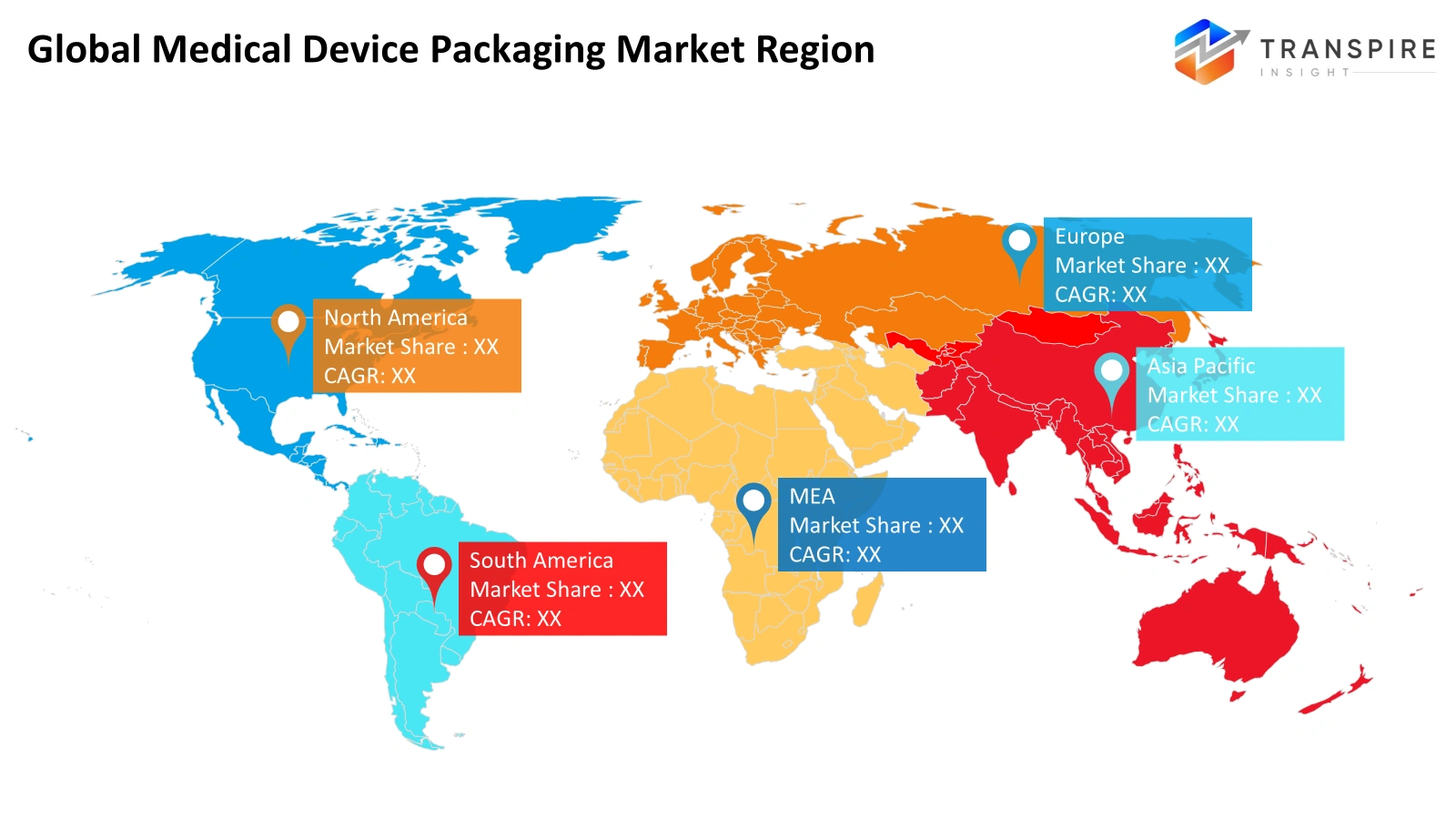
North America maintains a commanding grip on the medical device packaging market, capturing a dominant 39% of all worldwide industry revenue. This geographic leadership is heavily driven by the massive concentration of advanced medical device OEMs and strict regulatory mandates enforcing flawless sterile barrier systems. The regional ecosystem is structurally supported by robust FDA quality regulations, deep corporate healthcare investments, and automated high-speed cleanroom packaging lines. Consequently, transitioning away from traditional mixed-plastic films toward single-use, validate-ready aseptic configurations has become the standard choice for regional device suppliers seeking to minimize hospital contamination risks.
Europe serves as a highly stable, predictable secondary pillar for the global market, locking down an essential 28% share of total industry demand. While North American expansion is propelled by massive domestic surgical device manufacturing scales and rapid diagnostic kit distribution, European adoption is shaped by rigid regional eco-design initiatives and aggressive industrial carbon reduction mandates. This regional market stability is structurally insulated by long-term corporate sustainability partnerships that prioritize the development of fully recyclable, weight-optimized medical packaging. To minimize cleanroom waste and satisfy strict European Union plastic packaging tax penalties, continental healthcare lines steadily invest in mono-material thermoformed solutions that maintain sterile security.
In September 2025, material pioneer Evertis earned major continental recognition by winning a prestigious healthcare packaging award for its innovative Evercare Endurance R50 film framework. This specialized breakthrough introduces an industry-first solution that incorporates up to 50% - advanced post-consumer recycled content into rigid medical-grade packaging webs without sacrificing mechanical performance or patient safety. When paired seamlessly with standard Tyvek lidding - the material delivers a verified 47% reduction in carbon footprint compared to virgin PETG substrates - allowing European device manufacturers to confidently satisfy tightening regional circular-economy laws.
Asia Pacific has emerged as the fastest-growing territory globally, accelerating at a market-leading standalone CAGR of 16.7% while currently holding a 25% slice of global sales. This sudden structural shift is driven by rapid healthcare infrastructure expansions, rising medical tourism hubs, and an aggressive industrial migration toward localized high-throughput device manufacturing facilities. Historically, regional healthcare facilities relied heavily on importing pre-packaged sterile components from Western suppliers, but a strong push for domestic medical security has forced the widespread building of regional packaging centers. Looking ahead, future manufacturing development in this booming corridor relies heavily on deploying automated form-fill-seal lines to feed expanding localized surgical tool output.
In April 2026, packaging innovator Amcor officially accelerated regional medical manufacturing capabilities by launching a new advanced healthcare packaging coating facility in Subang Jaya - Malaysia. This - $35 million investment introduces sophisticated air-knife coating technology to Southeast Asia to produce high-grade coated medical paper utilized in sterile medical device configurations. By embedding localized manufacturing loops and advanced inline inspection systems directly within the region, this industrial rollout drastically improves regional supply chain resilience and speeds up commercialization loops for regional MedTech providers.
Who Are the Key Players in the Global Medical Device Packaging Market and How Do They Compete?
The global medical device packaging market is a highly competitive engineering arena contested by primary multinational packaging conglomerates, specialized sterile barrier converters, and precision material science firms. As global medical OEMs demand rapid validation cycles to satisfy tightening safety protocols - manufacturers compete across three major operational fronts—maximizing automated cleanroom throughput - eliminating multi-layer plastic recycling liabilities - securing dual-sourcing supply chain protections.
Amcor deploys a high-volume cost-optimization and material innovation strategy, positioning its footprint around its massive global cleanroom conversion network. The corporation differentiates its market position by engineering its flagship AmFiba and AmSky platforms - which replace traditional mixed-plastic laminates with recycle-ready mono-polyolefin structures that withstand aggressive ethylene oxide sterilization without seal degradation. The company drives its international expansion by embedding integrated manufacturing loops directly into high-growth corridors - exemplified by its recent multi-million-dollar advanced coating expansion in Southeast Asia.
Oliver Healthcare Packaging executes a highly targeted niche strategy focused on cleanroom-grade flexible barrier applications - specialized pharmaceutical lidding. The firm differentiates itself through its proprietary Dispos-a-vent barrier pouch configurations - CleanCut high-density polyethylene cards - which eliminate bulky secondary trays while maintaining strict microbial barrier integrity. The enterprise expands its global footprint by building co-located technical engineering units near major MedTech clusters, ensuring rapid quick-turn prototyping for clinical-stage biotechnology clients.
Company List
- Amcor
- West Pharmaceutical Services
- Berry Global
- DuPont
- Sonoco Products
- Oliver Healthcare Packaging
- Wipak Group
- Sealed Air
- TekniPlex
- SteriPack
- Nelipak
- Constantia Flexibles
- Coveris
- ProAmpac
- UFP Technologies
Recent Development News
In April 2025, international packaging giant Amcor officially completed its multi-billion-dollar all-stock acquisition of Berry Global Group, Inc.. This transformational consolidation brings Berry’s extensive healthcare web footprint directly under a unified corporate family - creating a global leader in high-barrier sterile device protection that leverages scaled multi-format conversion - combined material science teams to drive $650 million in projected structural synergies.
Source: https://www.sec.gov
In January 2026, materials expert TekniPlex Healthcare officially unveiled its expanded cleanroom packaging line consisting of multi-layer coextruded blown films and custom bags produced inside its advanced Puurs - Belgium facility. The new product launch introduces a heavy-duty - five-layer PE-EVOH-PE flexible configuration manufactured under strict ISO Class 7 cleanroom protocols to ensure zero-particulate output. This technology deployment expands high-barrier oxygen - moisture protection options for medical device builders handling highly sensitive diagnostics.
Source: https://www.globenewswire.com
In June 2026, manufacturing leader Amcor officially completed a multimillion-dollar industrial expansion by launching a new high-throughput medical production line at its Sira facility in Karnataka - India. The infrastructure project adds sophisticated automated online vision systems directly to the line to verify sterile container consistency while drastically slashing regional lead times. By powering the upgraded local network entirely with 100% renewable energy, this regional capacity boost allows global pharmaceutical - MedTech providers to safely absorb surging healthcare device demands across South Asia.
Source: https://ecoplasticsinpackaging.com
What Strategic Insights Define the Future of the Global Medical Device Packaging Market?
The global medical device packaging market is heading toward full-scale material standardization - localized - cleanroom-integrated form-fill-seal automation. Packaging execution is shifting from multi-component, complex plastics to high-barrier, mono-polymer designs to satisfy global circular-economy directives.
A major hidden risk lies in "micro-leak validation latency." As automated cleanroom packing lines accelerate past hundreds of units per minute, traditional offline seal integrity testing creates massive data bottlenecks. This gap allows sub-visible microbial barrier failures or pinhole compromises to escape into distribution loops, exposing manufacturers to devastating product recalls and severe FDA compliance penalties.
Conversely - an essential emerging opportunity is the integration of cloud-linked, thin-film RFID sensors and digital twin serialization directly within bio-based lidding layers. This technology lets medical device suppliers provide real-time chain-of-custody verification and atmospheric monitoring for high-value implants.
Strategic recommendation - Medical device packagers must immediately stop engineering custom, multi-layer laminated structures and pivot toward co-developing standardized, mono-polyolefin barrier configurations directly with material suppliers. Pre-validating standardized film gauges against ISO 11607 compliance frameworks ensures rapid product deployment without inflating testing cycles.
Key Segmentations are:
By Packaging Type
- Pouches
- Trays
- Clamshells
- Blister Packs
- Bags
- Wraps
- Thermoformed Containers
- Others
By Material
- Plastic
- Paper & Paperboard
- Tyvek
- Aluminum Foil
- Glass
- Bio-based Materials
- Composite Materials
- Others
By Sterilization Method
- Ethylene Oxide Sterilization
- Gamma Sterilization
- Steam Sterilization
- Electron Beam Sterilization
- Radiation Sterilization
- Aseptic Packaging
- Chemical Sterilization
- Others
By End User
- Medical Device Manufacturers
- Hospitals
- Diagnostic Laboratories
- Contract Packaging Companies
- Pharmaceutical Companies
- Ambulatory Surgical Centers
- Research Institutes
- Others
By Application
- Surgical Instruments
- Diagnostic Devices
- Implantable Devices
- Catheters
- Orthopedic Devices
- Cardiovascular Devices
- Wound Care Devices
- Others
Regional Outlook
North America
- United States
- Canada
- Mexico
Europe
- Germany
- United Kingdom
- France
- Spain
- Italy
- Rest of Europe
Asia Pacific
- Japan
- China
- Australia & New Zealand
- South Korea
- India
- Rest of Asia Pacific
South America
- Brazil
- Argentina
- Rest of South America
Middle East & Africa
- Saudi Arabia
- United Arab Emirates
- South Africa
- Rest of the Middle East & Africa
Frequently Asked Questions
Find quick answers to common questions.
The global medical device packaging size was valued at USD 40.5 Billion in 2025 and is poised to reach USD 66.9 Billion by 2033, expanding at a 6.48% CAGR.
Key segments for the medical device packaging are Packaging Type (Pouches, Trays, Clamshells, Blister Packs, Bags, Wraps, Thermoformed Containers, Others); Material (Plastic, Paper & Paperboard, Tyvek, Aluminum Foil, Glass, Bio-based Materials, Composite Materials, Others); Sterilization Method (Ethylene Oxide Sterilization, Gamma Sterilization, Steam Sterilization, Electron Beam Sterilization, Radiation Sterilization, Aseptic Packaging, Chemical Sterilization, Others); End User (Medical Device Manufacturers, Hospitals, Diagnostic Laboratories, Contract Packaging Companies, Pharmaceutical Companies, Ambulatory Surgical Centers, Research Institutes, Others); and Application (Surgical Instruments, Diagnostic Devices, Implantable Devices, Catheters, Orthopedic Devices, Cardiovascular Devices, Wound Care Devices, Others).
Growth is primarily driven by the massive global transition toward single-use, disposable medical devices and strict healthcare mandates prioritizing the elimination of hospital-acquired infections through high-barrier, pre-sterilized unit-dose configurations right up to the point of care.
The global market is led by major manufacturers including Amcor, West Pharmaceutical Services, Berry Global, DuPont, Sonoco Products, Oliver Healthcare Packaging, Wipak Group, Sealed Air, TekniPlex, SteriPack, Nelipak, Constantia Flexibles, Coveris, ProAmpac, and UFP Technologies.
North America holds a dominant 39% share of the global footprint, heavily influencing the market through its massive concentration of advanced medical device OEMs, robust FDA quality frameworks, deep corporate healthcare infrastructure spending, and pioneering adoption of high-speed automated cleanroom validation equipment.
Lucrative opportunities exist in the mainstream integration of cloud-linked thin-film RFID micro-sensors and temperature-reversing smart labels directly into bio-based sterile packaging barrier layers to enable full chain-of-custody tracking across expanding Asia-Pacific surgical and diagnostic manufacturing hubs.
- Amcor
- West Pharmaceutical Services
- Berry Global
- DuPont
- Sonoco Products
- Oliver Healthcare Packaging
- Wipak Group
- Sealed Air
- TekniPlex
- SteriPack
- Nelipak
- Constantia Flexibles
- Coveris
- ProAmpac
- UFP Technologies
About the Authors

Kartik bhong
I am Kartik Bhong, a Senior Research Analyst at Transpire Insight, specializing in the Packaging, Manufacturing, and Construction industry. My work focuses on analyzing market trends, emerging technologies, industry regulations, and competitive landscapes to deliver accurate, data-driven insights. I am passionate about transforming complex industry information into clear, practical content that helps businesses, professionals, and decision-makers stay informed and make confident strategic decisions. Through continuous research and a strong commitment to accuracy, I strive to create reliable, well-researched content that reflects the latest developments across these dynamic industries and supports the vision of Transpire Insight in delivering valuable market intelligence.

Chakradhar Khansole
Chakradhar serves as the Research Director at Transpire Insight, bringing over 8 years of experience in technology, innovation, and strategic market intelligence. He specializes in transforming complex market data into actionable business insights that enable organizations to make informed, growth-oriented decisions. Recognized for his strategic vision and analytical expertise, Chakradhar leads high-impact research initiatives, delivering comprehensive market assessments, competitive intelligence, and forward-looking industry analysis.
Recently Published Reports
-
Apr 2026
Pharmaceutical Cold Chain Packaging Market
Pharmaceutical Cold Chain Packaging Market By Material (Plastic,(Polyethylene (PE), Polypropylene (PP), Polyethylene Terephthalate (PET), Expanded Polystyrene (EPS), Polyurethane (PU),Others), Paper, Metal, Others), By Product (Small Boxes, Pallets, Large Sized Pallet Containers, Others), By End Use (Biopharmaceutical Companies, Clinical Research Organizations, Hospitals, Research Institutes, Logistics and Distribution Companies, Others)”, By Industry Analysis, Size, Share, Growth, Trends, and Forecasts 2026-2033
-
Apr 2026
Active & Intelligent Packaging Market
Active & Intelligent Packaging Market By Type (Active Packaging, Smart Packaging), By Material (Polymer-Based, Paper & Board-Based, Metal-Based, Glass-Based), By Technology (Time-Temperature Indicators, Freshness Indicators, RFID, Antimicrobial Packaging, Modified Atmosphere Packaging), By Application (Food & Beverages, Pharmaceutical, Cosmetics & Personal Care, Electronics & Consumer Goods, Others), By Industry Analysis, Size, Share, Growth, Trends, and Forecasts 2026-2033
-
Apr 2026
Biodegradable Cut Flower Packaging Market
Biodegradable Cut Flower Packaging Market By Material Type (Paper & Paperboard, Biodegradable Plastics, Natural Fibers, Molded Pulp, Others), By Product Type (Sleeves, Wraps, Boxes & Cartons, Bags & Pouches, Inserts & Holders), By Application (Roses, Carnations, Tulips, Chrysanthemums, Mixed Flowers, Others) and By Distribution Channel (Direct Sales, Distributors & Wholesalers, Online Channels), By Industry Analysis, Size, Share, Growth, Trends, and Forecasts 2026-2033
-
May 2026
Pharmaceutical Packaging Market
Pharmaceutical Packaging Market By Material Type (Plastic, Glass, Metal, Paper & Paperboard, Others), By Packaging Type (Bottles, Blister Packs, Vials, Ampoules, Pouches & Sachets, Others) and By End User (Hospitals & Clinics, Retail Pharmacies, Online Pharmacies, Pharmaceutical Manufacturers), By Industry Analysis, Size, Share, Growth, Trends, and Forecasts 2026-2033