

Global Lance Tubes Market Size & Forecast:
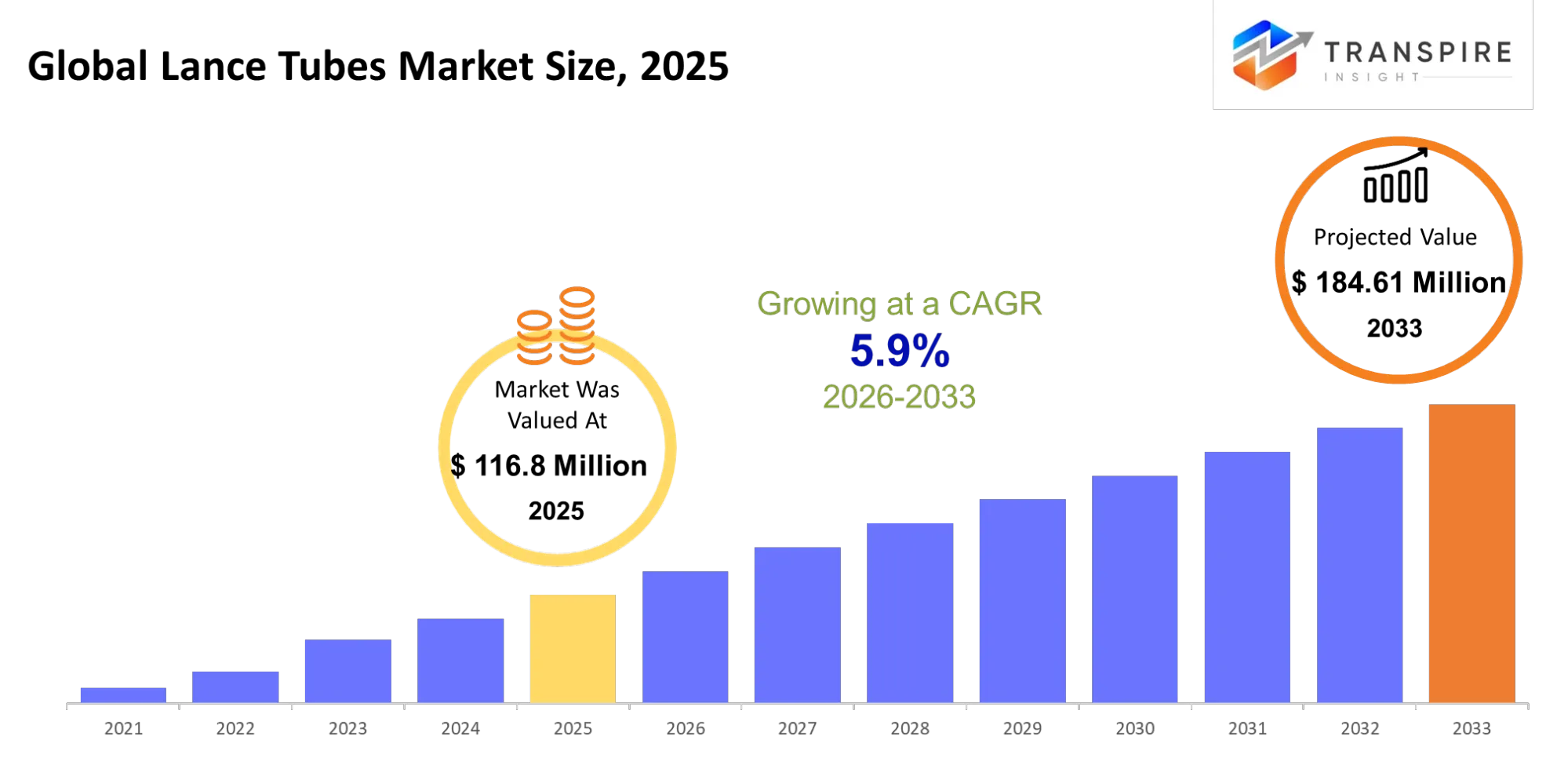
- Global Lance Tubes Market Size 2025: USD 116.8 Million
- Global Lance Tubes Market Size 2033: USD 184.61 Million
- Global Lance Tubes Market CAGR: 5.9%
- Global Lance Tubes Market Segments: By Type (Oxygen Lance Tubes, Carbon Lance Tubes, Thermal Lance Tubes, Aluminum Lance Tubes, Steel Lance Tubes, Disposable Lance Tubes, Others); By Application (Steel Manufacturing, Metal Cutting, Foundries, Construction Demolition, Industrial Cleaning, Others); By End-User (Steel Plants, Foundries, Construction Companies, Industrial Manufacturers, Others); By Diameter (Small Diameter Tubes, Medium Diameter Tubes, Large Diameter Tubes, Heavy-duty Tubes, Others)
To learn more about this report,  Download Free Sample Report
Global Lance Tubes Market Summary:
The Global Lance Tubes Market size is estimated at USD 116.8 Million in 2025 and is anticipated to reach USD 184.61 Million by 2033, growing at a CAGR of 5.9% from 2026 to 2033. At its core, this market is all about the consumable, heat-resistant pipes that foundries and steel plants rely on to inject oxygen at extreme temperatures, helping them melt down, refine, or cut through thick scrap metal. The landscape has changed significantly over the last few years as steelmakers move away from old-school blast furnaces and adopt Electric Arc Furnaces (EAFs) to cut down on their carbon footprint. This push really accelerated alongside the recent boom in global infrastructure projects, which created a massive need for quickly recycled steel. Since EAFs depend on melting heavy scrap, operators go through these disposable thermal and oxygen lance tubes incredibly fast just to keep the heat concentrated. That constant, daily need to replace burnt-out tubes is exactly what is driving the steady revenue growth across the market today.
Key Market Insights:
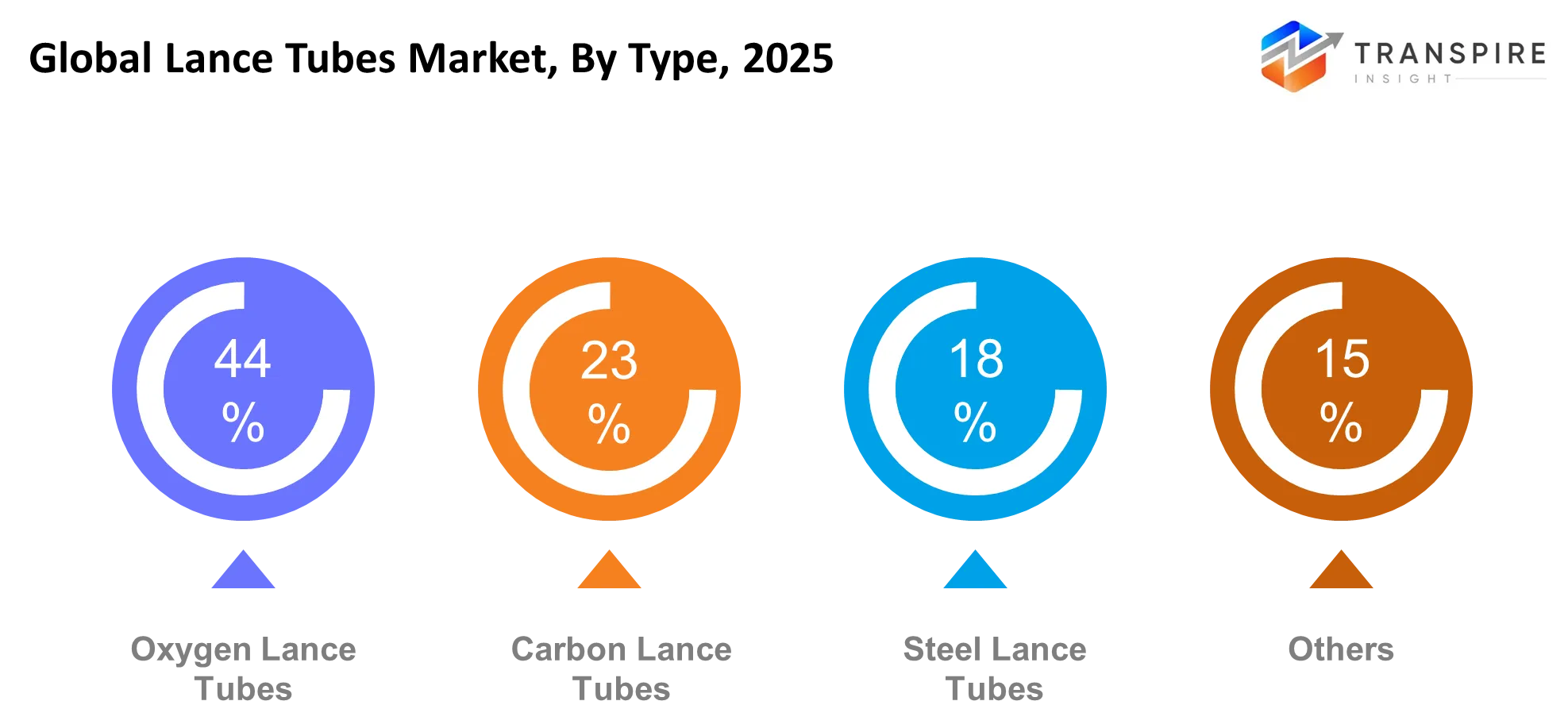
- Oxygen Lance Tubes dominate with a 44% share, driven by players like Tenaris launching ceramic-coated pipes to cut down on hazardous manual tube replacements in busy steel plants.
- Thermal Lance Tubes are growing fastest at a 9.8% CAGR. Companies like Sandvik are packing internal wires tighter to burn hotter, matching the construction industry's shift toward rapid, localized concrete demolition.
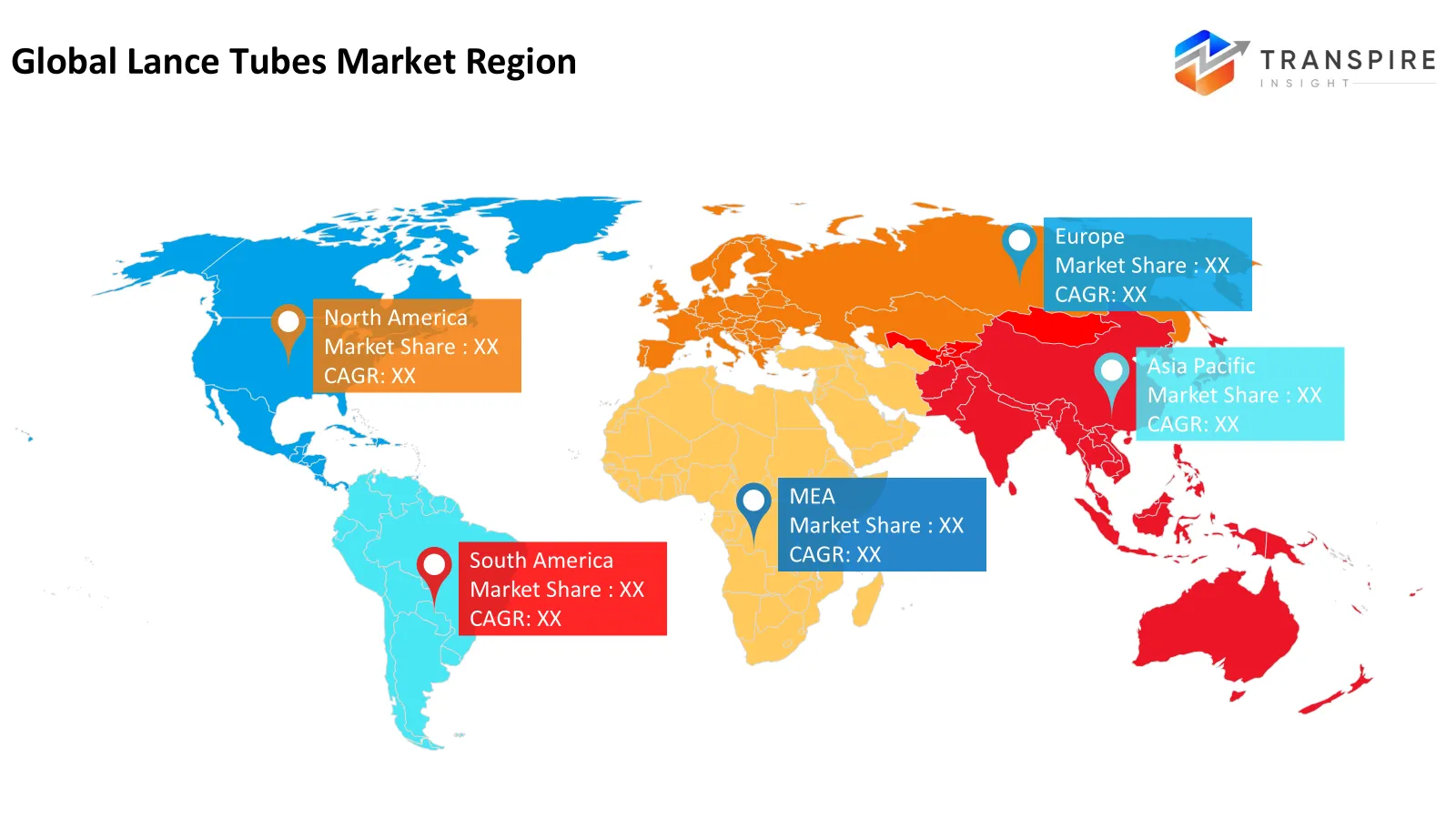
- Asia Pacific controls 42% of global volume as regional giants like Nippon Steel move toward fully automated, high-pressure oxygen injection systems to maximize their daily melt speeds.
- The Middle East is surging at a 10.7% CAGR, with global partners like ArcelorMittal heavily adopting heavy-duty tubes for continuous scrap cutting during large-scale oil rig decommissioning.
- Carbon Lance Tubes hold a solid 23% share. Manufacturers like Vallourec are fine-tuning delivery pipes to improve slag foaming, a technique that helps operators drastically drop daily electrical consumption.
- In Europe (27% share), strict green regulations are pushing major operators like Voestalpine to demand highly customized, emission-compliant lance setups with incredibly precise oxygen-to-fuel ratios.
- North America maintains a 22% footprint as domestic reshoring pushes companies like United States Steel to demand exact-tolerance tubes to support their newly upgraded, sensor-monitored furnaces.
What are the Key Drivers, Restraints, and Opportunities in the Global Lance Tubes Market ?
Driver
The massive industry push toward "green steel" is the primary engine driving this market. Steelmakers are permanently pivoting from coal-heavy blast furnaces to Electric Arc Furnaces (EAFs) to quickly slash their carbon emissions. Because EAFs rely heavily on melting dense scrap metal, operators must burn through thousands of consumable oxygen lance tubes to maintain localized arc heat and properly manage slag foaming. This continuous, high-volume replacement cycle translates directly into highly predictable, recurring revenue for suppliers. In May 2026, Primetals Technologies deployed their "EAF Ultimate" ultra-high-power furnace upgrades to major European mills. These modernized EAF setups process significantly heavier scrap loads, directly forcing operators to consume specialized oxygen lances at a much faster rate to accelerate the daily melt times.
Restraint
Extreme volatility in the global scrap metal trade heavily limits consistent market growth. Various geopolitical export bans frequently choke the supply of high-grade scrap. When raw scrap becomes too scarce or expensive, EAF operators are forced to throttle back their production cycles, which immediately drops the daily consumption volume of disposable lance tubes across the entire supply chain.
Opportunity
The rapid transition toward automated, robotic furnace floors will soon unlock massive premium pricing opportunities. As steel plants remove human workers from the hazardous melt zone, they urgently require ultra-durable, ceramic-coated lance tubes that can interface perfectly with robotic arms without bending under pressure. Suppliers who develop high-temperature composite lances specifically designed for automated handlers have a unique opportunity to upsell premium, high-margin tubes to heavily modernized foundries.
What Has the Impact of Artificial Intelligence Been on the Global Lance Tubes Market ?
Artificial intelligence is fundamentally changing how steelmakers manage their furnace operations, pulling the global lance tubes market directly into the smart-manufacturing era. Rather than relying on a human operator's visual intuition, modern Electric Arc Furnaces (EAFs) now use AI as a "soft sensor." Machine learning algorithms constantly analyze live variables—like scrap composition, current draw, and historical data—to predict exactly when the melt has reached the optimal temperature.
This operational improvement completely automates the oxygen lancing process. Instead of blasting oxygen blindly to check the melt, the AI tells the automated lance manipulator precisely how much gas to inject to create perfect slag foaming. This predictive capability actively prevents the furnace from overheating, which dramatically extends the lifespan of the consumable lance tubes and significantly cuts down on overall energy waste.
However, there is a massive integration gap holding back wider adoption. AI optimization only works if it can pull clean data, and most legacy foundries simply lack the advanced digital sensors required to feed these neural networks, requiring an incredibly expensive hardware retrofit. In April 2026, Fero Labs expanded its AI-powered Energy Analytics platform specifically for steel mills. This machine learning software acts as a virtual sensor to predict EAF tap temperatures and oxygen content, directly optimizing how and when oxygen lances are deployed to reduce overall energy waste.
Key Market Trends:
The lance tubes sector is moving away from selling basic disposable pipes and acting much more like a highly engineered components market. Steelmakers are driving this change because they desperately need to automate hazardous furnace tasks and squeeze every bit of efficiency out of their melting cycles.
- Buyers are shifting away from rapid-burn pipes, increasingly demanding ceramic and calorized coatings to extend lifespan and reduce costly furnace downtime.
- Steel plants have heavily transitioned from manual pipe feeding to automated lance manipulators, forcing manufacturers to produce exact-tolerance tubes that will not jam robotic arms.
- In urban demolition, crews are actively replacing jackhammers with thermal lances, preferring their quiet, rapid cutting power to slice through reinforced concrete.
- The "green steel" movement is changing how operators manage slag foaming, driving demand for specialized carbon injection tubes that better insulate the arc and lower electrical draw.
- As global scrap quality drops, mills are forced to melt dirtier, heavily oxidized metal. To compensate, they are switching to thicker, heavy-duty lances to pump in more oxygen and burn off impurities much faster.
- Plants no longer want to stockpile thousands of disposable pipes on site. They now rely on daily, as-needed deliveries, which means suppliers have to hold inventory in local hubs right next to major steel centers.
- Furnace operators are no longer just eyeballing the melt. Because they rely on precise smart sensors, buyers now care far more about getting tubes with a highly predictable burn rate rather than just finding the lowest bulk price.
Global Lance Tubes Market Segmentation
By Type
Oxygen Lance Tubes easily hold the top market position, capturing a massive 44% share since they are the baseline consumable for almost every electric arc furnace running today. Right behind them, Thermal Lance Tubes are expanding the fastest at a 9.8% CAGR. The growth logic here is split: oxygen and carbon lance tubes generate revenue through sheer, relentless volume in steel mills, while thermal lances are growing rapidly because construction crews are realizing they cut through reinforced concrete much faster and quieter than traditional demolition gear. Looking forward, the line between basic steel lance tubes, aluminum lance tubes, and highly specialized disposable lance tubes will start to blur. As plants automate, suppliers will be forced to engineer every single pipe to exact, premium tolerances so they do not jam inside robotic arms.
To learn more about this report, Download Free Sample Report
By Application
Steel Manufacturing completely anchors this segment, processing the vast majority of volume alongside traditional Foundries. The unique growth logic is tied strictly to constant, daily melting cycles; if a plant is making steel, it is burning through tubes, creating an incredibly predictable replacement loop. On the flip side, Metal Cutting and Construction Demolition represent a fast-growing, high-margin niche where precision matters more than bulk. As older urban infrastructure comes down, crews are utilizing lances for surgical teardowns rather than wrecking balls. Ultimately, this means the application landscape will split. Heavy industries will continue demanding massive bulk shipments, while the Industrial Cleaning and demolition sectors will force manufacturers to develop cleaner-burning, low-smoke lances specifically designed for tight or enclosed spaces.
By End-User
Major Steel Plants are the absolute heavyweight buyers here, essentially dictating the supply chain terms for everyone else. Foundries and Industrial Manufacturers pull steady numbers, but massive steel complexes drive the actual market structure. Their unique growth logic comes straight from the green steel transition; as these plants abandon coal-fired blast furnaces, they lock themselves into a permanent dependency on oxygen injection to run their new electric setups. Construction Companies act more cyclically, buying in quick bursts for specific demolition jobs. The biggest future implication is how these products are purchased. Instead of manual ordering, massive end-users will soon require suppliers to wire their inventory directly into the plant's enterprise software, triggering automated, predictive shipments the moment the factory floor runs low on supplies.
By Diameter
Small Diameter Tubes and Medium Diameter Tubes historically hold the most secure market position because they fit the standard manual setups found in older, legacy foundries. However, the unique growth logic is rapidly shifting toward Large Diameter Tubes and Heavy-duty Tubes. Because global scrap metal is dropping in quality, operators are forced to melt dirtier, heavily oxidized materials. To process that scrap quickly, they need wider pipes capable of blasting a much higher volume of oxygen directly into the melt. As a result, the future of this segment leans heavily toward advanced structural testing. Pushing massive gas volumes through wider pipes creates a serious blowout risk on the factory floor, meaning manufacturers will soon have to guarantee strict pressure ratings for every heavy-duty tube they sell.
What are the Key Use Cases Driving the Global Lance Tubes Market ?
The primary use case driving this market is extreme-heat oxygen injection during steelmaking. Foundries and large-scale mills constantly burn through these pipes to melt dense scrap metal and refine the molten bath inside Electric Arc Furnaces, making this high-volume consumption the absolute backbone of the industry.
Moving beyond the factory floor, thermal cutting is gaining serious traction across the construction sector. Demolition crews are actively swapping out loud, vibrating machinery for packed-wire lances. This lets them slice right through reinforced concrete and thick steel beams during urban teardowns much faster and a lot more quietly. Ultimately, it is a much more efficient approach that creates far less commotion than traditional methods.
As operations get smarter, specialized carbon injection for precise slag foaming is a major emerging application. Furthermore, the rise of automated robotic furnace manipulators now demands exact-tolerance tubes to handle seamless, hands-free scrap melting.
|
Report Metrics |
Details |
|
Market size value in 2025 |
USD 116.8 Million |
|
Market size value in 2026 |
USD 123.57 Million |
|
Revenue forecast in 2033 |
USD 184.61 Million |
|
Growth rate |
CAGR of 5.9% from 2026 to 2033 |
|
Base year |
2025 |
|
Historical data |
2021 - 2024 |
|
Forecast period |
2026 - 2033 |
|
Report coverage |
Revenue forecast, competitive landscape, growth factors, and trends |
|
Regional scope |
United States; Canada; Mexico; United Kingdom; Germany; France; Italy; Spain; Denmark; Sweden; Norway; China; Japan; India; Australia; South Korea; Thailand; Brazil; Argentina; South Africa; Saudi Arabia; United Arab Emirates |
|
Key company profiled |
Sandvik, Nippon Steel, ArcelorMittal, Tenaris, Vallourec, Tata Steel, Jindal Steel & Power, Tubacex, Voestalpine, United States Steel, ChelPipe, TimkenSteel, Benteler, Mannesmann Stainless Tubes, Zekelman Industries |
|
Customization scope |
Free report customization (country, regional & segment scope). Avail customized purchase options to meet your exact research needs. |
|
Report Segmentation |
By Type (Oxygen Lance Tubes, Carbon Lance Tubes, Thermal Lance Tubes, Aluminum Lance Tubes, Steel Lance Tubes, Disposable Lance Tubes, Others), By Application (Steel Manufacturing, Metal Cutting, Foundries, Construction Demolition, Industrial Cleaning, Others), By End-User (Steel Plants, Foundries, Construction Companies, Industrial Manufacturers, Others), By Diameter (Small Diameter Tubes, Medium Diameter Tubes, Large Diameter Tubes, Heavy-duty Tubes, Others) |
Which Regions are Driving the Global Lance Tubes Market Growth?
Asia Pacific easily leads the global global lance tubes market , driven by the massive scale of industrial manufacturing and scrap melting across China and India. The region benefits heavily from aggressive government-backed infrastructure mega-projects that require continuous, high-volume outputs of quickly refined steel. To keep up with this relentless production without violating new regional pollution caps, massive local foundries are rapidly upgrading to Electric Arc Furnaces. This permanent technological shift naturally locks in a massive, daily consumption cycle for disposable oxygen lance tubes just to keep the production lines running at full speed. In January 2026, Tata Steel expanded its Electric Arc Furnace (EAF) capacity by launching a new scrap-based recycling plant in Ludhiana, India. This major facility upgrade integrated automated oxygen lancing systems to process lower-grade domestic scrap much faster while significantly reducing overall carbon emissions.
Europe holds its position as the second-largest market globally, but customer buying patterns contrast sharply with the high-volume approach seen in Asia. European steelmakers aren't focused on simply expanding their capacity. Instead, their immediate priority is navigating strict environmental policies and surviving severe carbon penalties. This regulatory squeeze forces operators to invest in customized, precision-engineered lances. They have to tightly manage their oxygen-to-fuel mix just to keep waste gases down. Because of these strict requirements, the market here stays remarkably steady and profitable. If a supplier can provide premium, emission-compliant tubes, they will easily win out over competitors who are just trying to move cheap bulk inventory. In September 2025, Voestalpine pushed forward its green transition by commissioning new Electric Arc Furnaces at its Linz and Donawitz sites in Austria. To meet the new European emission rules, the setup required highly specialized, exact-tolerance lances to precisely manage slag foaming.
The Middle East is growing faster than any other region right now, driven by a sudden big shift in industry diversification away from only oil dependence. Over the last couple of years, several regional energy giants have been tearing down older offshore rigs and they are also pouring serious investment into domestic secondary steel recovery. This turn suddenly opens the door for thermal cutting applications, because demolition crews end up needing heavy-duty lances that can slice efficiently through thick marine-grade steel structures. And as the region keeps building localized steel recycling hubs to handle all that scrap, demand for specialized high-heat consumable tubes is set up perfectly for a noticeable surge. In February 2026, ArcelorMittal bought a major stake in a scrap-based steel recycling hub in Jubail, Saudi Arabia. The facility relies heavily on advanced, heavy-duty oxygen lances to quickly break down and melt decommissioned oil infrastructure, turning it into green steel for local construction projects.
To learn more about this report, Download Free Sample Report
Who are the Key Players in the Global Lance Tubes Market and how do they Compete?
The global lance tubes market is highly consolidated at the top but fiercely fragmented at the regional distribution level. Competition hinges less on undercutting bulk prices and more on metallurgical reliability and supply chain proximity. Because modern foundries rely on just-in-time daily stock replenishments rather than massive warehouses, manufacturers primarily compete by locking in automated, long-term supply contracts and building localized distribution hubs directly adjacent to major global steel corridors.
Tenaris competes heavily on an innovation strategy, deliberately stepping away from the low-margin disposable pipe wars. They differentiate their portfolio by engineering advanced calorized and ceramic-coated oxygen lances that survive significantly longer inside the melt zone. Their expansion approach targets legacy foundries currently undergoing green transitions, supplying customized, exact-tolerance tubes designed exclusively to integrate safely with newly installed robotic furnace arms.
Sandvik takes a niche specialization strategy, aggressively targeting the fast-growing thermal cutting sector. They separate themselves from standard bulk suppliers by engineering tightly packed-wire internal structures that burn fast and hot enough to safely slice through marine-grade steel and reinforced concrete. To capture new market share, Sandvik’s expansion approach bypasses traditional steel mills entirely, forming direct supply networks with massive urban demolition contractors and offshore decommissioning firms.
Company List
- Sandvik
- Nippon Steel
- ArcelorMittal
- Tenaris
- Vallourec
- Tata Steel
- Jindal Steel & Power
- Tubacex
- Voestalpine
- United States Steel
- ChelPipe
- TimkenSteel
- Benteler
- Mannesmann Stainless Tubes
- Zekelman Industries
Recent Development News
In March 2026, Kingdom Lancing rolled out a new Forward-Reverse Lock (FRL) coupling system for its oxygen lances. The update basically locks down the connection points to stop gas leaks and flashbacks, making the factory floor a lot safer during intense melting cycles. https://www.kingdomlancing.co.za/
In January 2026, Morandi Steel rolled out a new batch of heavy-duty, precise-tolerance thermal lances built specifically for European electric arc furnaces. It is a highly focused release that gives local mills the practical tools they need to push scrap melting faster, without crossing over strict EU emission limits. https://www.morandispa.it/en/products/products-for-steelworks/
In August 2025, Sandvik bought out a specialized regional manufacturer of packed-wire demolition lances to take a bigger bite out of the urban teardown market. The deal immediately boosts their thermal cutting capacity, allowing them to deliver rugged demolition equipment straight to major infrastructure contractors across North America. https://www.home.sandvik/en/news-and-media/
What Strategic Insights Define the Future of the Global Lance Tubes Market ?
The global lance tubes market is leaving its bulk-commodity roots behind and turning into a highly engineered components space. As steelmakers automate their factory floors and push for green emission targets, buyers care far less about cheap, disposable pipes and far more about premium, sensor-friendly lances.
However, there is a hidden risk catching up to this shift: coating supply chains. Because operators are rushing to adopt ceramic and calorized treatments to make their tubes last longer, any raw material shortage for these specific coatings could suddenly bottleneck the entire premium market.
On the flip side, a major emerging opportunity is opening up outside the steel mills. Thermal lances are quietly taking over the urban demolition sector, replacing heavy, vibrating machinery for fast, noise-controlled concrete cutting.
Strategically, suppliers need to stop acting like disposable hardware vendors. To win long-term contracts, manufacturers must position themselves as technical partners who can guarantee exact tolerances and predictable burn rates for automated smart-furnaces.
Global Lance Tubes Market Segmentation
By Type
- Oxygen Lance Tubes
- Carbon Lance Tubes
- Thermal Lance Tubes
- Aluminum Lance Tubes
- Steel Lance Tubes
- Disposable Lance Tubes
- Others
By Application
- Steel Manufacturing, Metal Cutting
- Foundries
- Construction Demolition
- Industrial Cleaning
- Others
By End-User
- Steel Plants
- Foundries
- Construction Companies
- Industrial Manufacturers
- Others
By Diameter
- Small Diameter Tubes
- Medium Diameter Tubes
- Large Diameter Tubes
- Heavy-duty Tubes
- Others
Regional Outlook
North America
- United States
- Canada
- Mexico
Europe
- Germany
- United Kingdom
- France
- Spain
- Italy
- Rest of Europe
Asia Pacific
- Japan
- China
- Australia & New Zealand
- South Korea
- India
- Rest of Asia Pacific
South America
- Brazil
- Argentina
- Rest of South America
Middle East & Africa
- Saudi Arabia
- United Arab Emirates
- South Africa
- Rest of the Middle East & Africa
Frequently Asked Questions
Find quick answers to common questions.
The global lance tubes market size was valued at USD 116.8 Million in 2025 and is poised to reach USD 184.61 Million by 2033, expanding at a 5.9% CAGR.
Key segments for the global lance tubes market are Type (Oxygen Lance Tubes, Carbon Lance Tubes, Thermal Lance Tubes, Aluminum Lance Tubes, Steel Lance Tubes, Disposable Lance Tubes, Others), Application (Steel Manufacturing, Metal Cutting, Foundries, Construction Demolition, Industrial Cleaning, Others), End-User (Steel Plants, Foundries, Construction Companies, Industrial Manufacturers, Others), and Diameter (Small Diameter Tubes, Medium Diameter Tubes, Large Diameter Tubes, Heavy-duty Tubes, Others).
Growth is primarily driven by the massive industry shift toward "green steel." As steelmakers permanently pivot from coal-heavy blast furnaces to Electric Arc Furnaces (EAFs) to slash carbon emissions, operators must continuously burn through high volumes of oxygen lance tubes to melt dense scrap metal, creating highly predictable, recurring revenue.
The global market is led by major manufacturers including Sandvik, Nippon Steel, ArcelorMittal, Tenaris, Vallourec, Tata Steel, Jindal Steel & Power, Tubacex, Voestalpine, United States Steel, ChelPipe, TimkenSteel, Benteler, Mannesmann Stainless Tubes, and Zekelman Industries.
Asia pacific holds a massive 42% share of the global volume. This dominance is driven by the sheer scale of industrial manufacturing and government-backed infrastructure mega-projects across China and India. As local foundries aggressively upgrade to Electric Arc Furnaces to meet new regional pollution caps, their continuous, high-volume production locks in a massive daily consumption cycle for disposable lances.
A massive premium pricing opportunity exists in developing ultra-durable, ceramic-coated lances designed specifically to interface with automated, robotic furnace arms. Additionally, the urban construction sector offers a fast-growing, high-margin opportunity as demolition crews increasingly swap out vibrating heavy machinery for packed-wire thermal lances to quickly and quietly cut through reinforced concrete.
- Sandvik
- Nippon Steel
- ArcelorMittal
- Tenaris
- Vallourec
- Tata Steel
- Jindal Steel & Power
- Tubacex
- Voestalpine
- United States Steel
- ChelPipe
- TimkenSteel
- Benteler
- Mannesmann Stainless Tubes
- Zekelman Industries
About the Authors

Pankaj Ghogare Patil
I am Pankaj Ghogare Patil, a Senior Research Analyst at Transpire Insight, specializing in the Pharmaceutical, Chemicals & Materials, Healthcare IT, and Biotechnology industry. My expertise lies in conducting comprehensive market research, analyzing industry trends, evaluating competitive landscapes, and translating complex data into actionable insights. At Transpire Insight, I closely follow emerging technologies, regulatory developments, and market innovations to create accurate, well-researched, and informative content that helps businesses and professionals make informed decisions. I am committed to producing credible, evidence-based articles that reflect industry best practices while making technical topics accessible and valuable for a broad audience.

Chakradhar Khansole
Chakradhar serves as the Research Director at Transpire Insight, bringing over 8 years of experience in technology, innovation, and strategic market intelligence. He specializes in transforming complex market data into actionable business insights that enable organizations to make informed, growth-oriented decisions. Recognized for his strategic vision and analytical expertise, Chakradhar leads high-impact research initiatives, delivering comprehensive market assessments, competitive intelligence, and forward-looking industry analysis.
Recently Published Reports
-
May 2026
Healthcare Polymer Packaging Market
Healthcare Polymer Packaging Market Size, Share & Analysis Report By Packaging Type (Syringes, IV Bottles and Pouches, Clamshells, Blisters, Bottles & Jars, Containers, Tubes, IV Parental Packaging, Others), By Type (Regulated, Non-regulated), By Polymer Type (LDPE (Low-Density Polyethylene), HDPE (High-Density Polyethylene), Homo-polymer (Homo), Random Copolymer (Random), Block Copolymer (Block), PET, Polystyrene, Polyvinyl Chloride, Polyamide/EVOH, Others), and Geography (North America, Europe, Asia-Pacific, Middle East and Africa, South and Central America), 2021 - 2031
-
Apr 2026
Hydrophilic Tape (Waterstop) Market
Hydrophilic Tape (Waterstop) Market Size, Share & Analysis Report By Type (Bentonite-Based Hydrophilic Tape, Rubber-Based Hydrophilic Tape), By Application (Residential Buildings, Commercial Buildings, Infrastructure Projects), and Geography (North America, Europe, Asia-Pacific, Middle East and Africa, South and Central America), 2021 - 2031
-
Apr 2026
Metalens Market
Metalens Market Size, Share & Analysis Report By Type (Visible Light Metalens, and Infrared Metalens), By Application (Consumer Electronics, Automotive Electronics, Industrial, Medical, and Others), and Geography (North America, Europe, Asia-Pacific, Middle East and Africa, South and Central America), 2021 - 2031
-
Apr 2026
PBT Resin Market
PBT Resin Market Size, Share & Analysis Report By Type (Reinforced PBT Resin, Unreinforced PBT Resin), By Processing Method (Injection Molding, Extrusion, Blow Molding, Others), By End-User (Automotive, Electrical & Electronics, Consumer Appliances, Industrial Machinery, Medical Devices, Packaging, Others), and Geography (North America, Europe, Asia-Pacific, Middle East and Africa, South and Central America), 2021 - 2031