

Global Lab Automation Companies Market Size & Forecast:
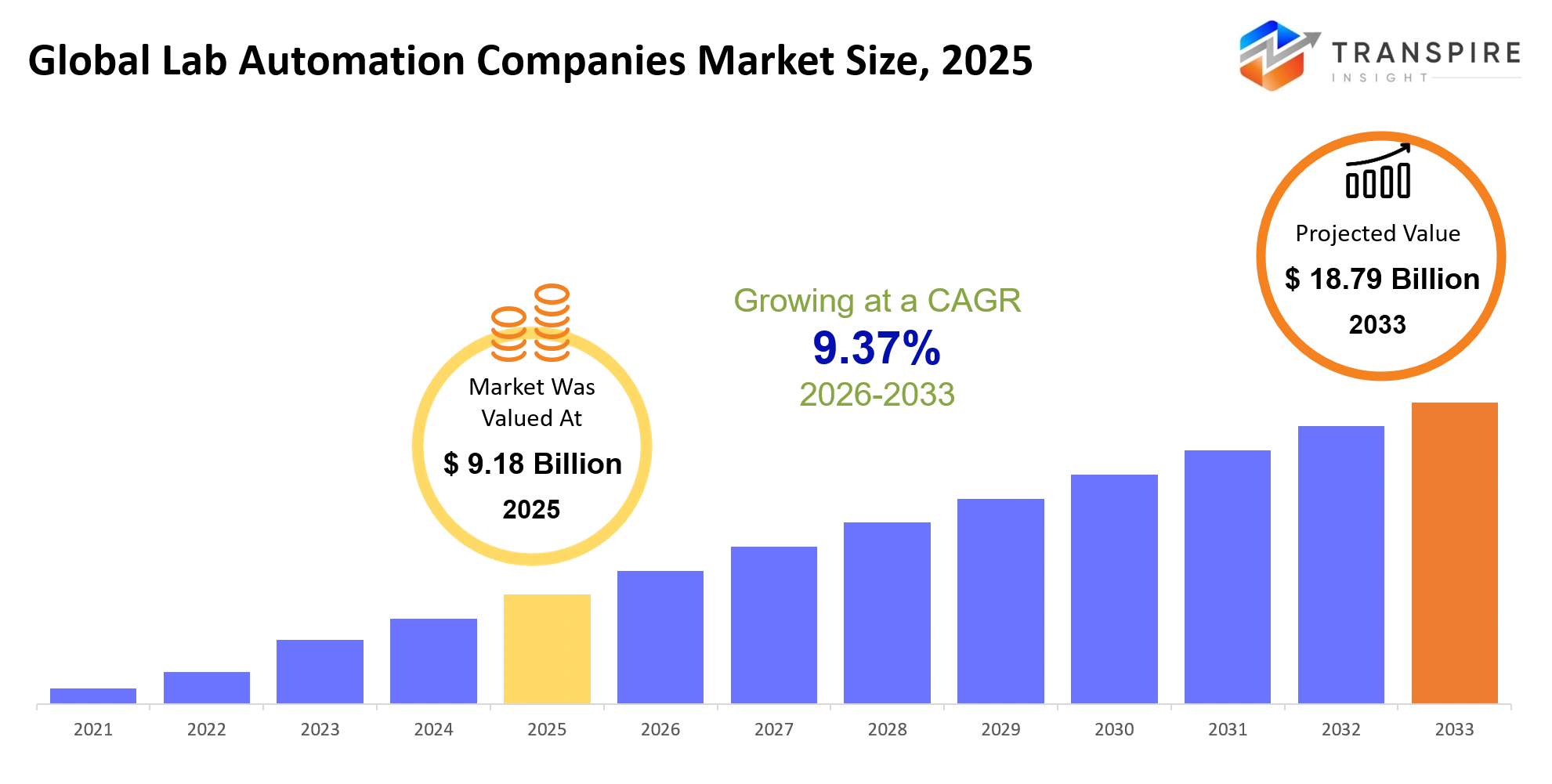
- Global Lab Automation Companies Market Size 2025: USD 9.18 Billion
- Global Lab Automation Companies Market Size 2033: USD 18.79 Billion
- Global Lab Automation Companies Market CAGR: 9.37%
- Global Lab Automation Companies Market Segments: By Product (Automated Workstations, Robotic Systems, Liquid Handling Systems, Plate Readers, Automated Storage Systems, Software, Others); By Application (Drug Discovery, Clinical Diagnostics, Genomics, Proteomics, Microbiology, Others); By End User (Pharmaceutical Companies, Biotechnology Companies, Hospitals, Research Institutes, Others); By Technology (Robotics, AI Automation, Machine Vision, IoT-enabled Systems, Others); By Workflow (Sample Preparation, Analysis, Storage, Data Management, Others).
Global Lab Automation Companies Market Summary:
As per Transpire Insight Analysis, the Global Lab Automation Companies Market size is estimated at USD 9.18 Billion in 2025 and is anticipated to reach USD 18.79 Billion by 2033, growing at a CAGR of 9.37% from 2026 to 2033.
The global lab automation companies market has evolved significantly over time. It used to be about reducing the amount of work people had to do by hand. Now it is about making laboratory work faster, more accurate, and more data-driven. Things like automated handling, robotic platforms, smart software and integrated laboratory workflows are really helping companies that make medicines, biotechnology firms, hospitals and research institutes. They are able to get work done and still be very accurate.
In the past few years, laboratories have started investing more in connected automation platforms. This is because there is a need for testing that can handle a lot of samples, medicine that is tailored to each person and finding new drugs. One big change is that artificial intelligence is being used in laboratory automation. This means that laboratories can manage their work better, use their equipment efficiently, and analyse data automatically. Because of the growth of genomic research and the development of new medicines that are based on biology, there is an even greater need for smart laboratory systems. As organisations that do research keep trying to be more efficient, make sure their results are reliable and follow the rules, automation technologies are becoming an investment. This investment helps them work better, reduces mistakes made by people and speeds up the time it takes to develop things across the whole global laboratory ecosystem. The global lab automation companies market is really important for this. The global lab automation companies market is helping to make all these things happen.
Key Market Insights:
The market is seeing the shift from standalone laboratory devices towards an ecosystem that is entirely connected and automated, helping laboratories become more efficient, producing accurate results and accelerating research findings. The market has seen companies invest in automated technology that enhances workflow connectivity while catering to the rising demands of precision diagnostics and pharmaceutical innovations.
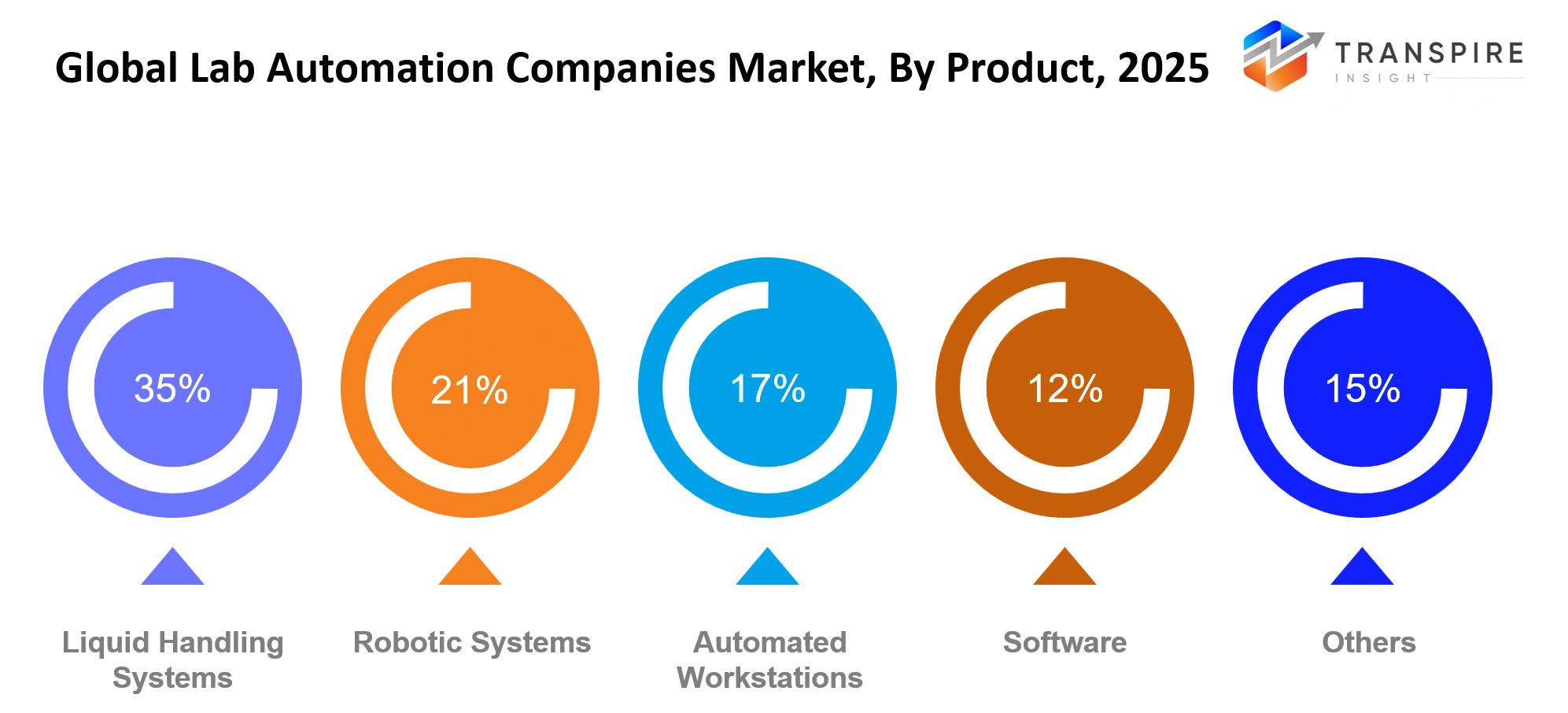
- The segment Liquid Handling Systems holds 35% market share due to its significance in helping labs automate routine activities.
- The emergence of new platforms offering higher speed and precision is seen among manufacturers.
- Robotic Systems is valued at 21% market share due to the growing trend of increasing the capabilities of robots to automate tasks such as sample preparation, testing, and storage in labs.
- The Automated Workstations segment occupies 17% market share owing to the rising demand for integrating workflows in laboratories.
- Vendors offer modular solutions for scaling up automation in laboratories as the need arises.
- Software is valued at 12% market share due to the increased use of cloud-based laboratory management software that helps monitor workflows and coordinate the work of devices as well as analyse the data generated in real-time.
- It is estimated that the fastest-growing segment of the laboratory automation market will be AI-Enabled Laboratory Automation. It will grow with a CAGR of 17.8%. Companies will implement machine learning algorithms to enhance scheduling and other processes.
What are the Key Drivers, Restraints, and Opportunities in the Global Lab Automation Companies Market?
Drivers
The global automation devices market for laboratories is rising because of the growing need for high-throughput laboratory testing in the pharmaceuticals, biotechnology, and clinical research labs. The development of medicines, genomics, and diagnostics has led to the requirement of automated laboratory processes that are quick and accurate. The use of automated devices will result in fewer errors, improved efficiency, and reduced process time. Such benefits will drive laboratories to use such automation technology, thus resulting in an increase in the sales of equipment, software, and services.
Restraints
There are some problems that do not allow more widespread adoption of automation in laboratories. First of all, high initial investments are needed to purchase robotic systems, automation software, and laboratory equipment. Moreover, integration of automation systems with laboratory information management systems, instrument compatibility, and a lack of qualified staff are some of the problems that affect the implementation of automation.
Opportunities
An opportunity arises from the increasing use of artificial intelligence-driven laboratory automation and cloud-linked laboratory ecosystems. Platforms powered by artificial intelligence can be used to plan work processes, predict equipment maintenance needs, automate quality control procedures, and derive valuable information from laboratory data. It is anticipated that continuous investments made in biopharmaceutical research, personalised medicines, and digital laboratories in the emerging markets will bring about growth opportunities. Companies that can develop automated systems that are scalable, interoperable, data-driven, and form strategic alliances with research organisations and healthcare providers will gain a competitive advantage.
What Has the Impact of Artificial Intelligence Been on the Global Lab Automation Companies Market?
AI technology has become an integral part of next-generation laboratory automation through increased automation of laboratory operations and improved speed, efficiency, and accuracy. An AI-based system can facilitate process organisation, optimisation of instrument usage, as well as analysis of big amounts of data acquired during experiments or diagnostics. With the help of AI, robotic platforms, and automated liquid handling systems, laboratories have an opportunity to automate the process, avoid mistakes, and get consistent results of the experiment. Such features are especially useful for pharmaceutical laboratories, clinical laboratories, genomics, and biotechnology due to big samples volumes used in experiments.
The second function of AI is its prediction capabilities. Predictive machine learning models can identify trends in the performance of the equipment, predict necessary maintenance, workflow bottlenecks, and suggest process improvement options even before any problems occur. AI-based data and image analysis also speeds up the process of drug discovery, biomarker identification, and laboratory quality control due to fast and accurate analysis of data. In January 2026, Thermo Fisher Scientific launched a strategic partnership with NVIDIA for incorporating artificial intelligence in scientific instrumentation and laboratory automation. This collaboration makes use of AI and robotics together with the data from interconnected laboratories to automate experimental design, sample preparation, and data analysis.
Key Market Trends:
The global lab automation companies market continues to move towards smart, connected, and scalable lab environments. Companies continue to invest in digital technologies combining robotics, artificial intelligence, and cloud-based platforms that help to streamline laboratory processes and speed up scientific innovations.
- Lab environments evolve from individual lab automation devices to an integrated lab ecosystem that provides seamless interoperation of different instruments, software, and data management platforms.
- Artificial intelligence becomes an integral part of lab automation technologies, enabling predictive maintenance, automation of workflows, and faster analysis of complex scientific data.
- Companies operating in pharmaceutical and biotechnology markets increase their investments into high-throughput automation systems, aimed at accelerating drug discovery and shortening the time needed for product development.
- Robotic automation is evolving from automating routine lab procedures to such important processes as sample preparation, materials handling, quality control, and analysis.
- Cloud-based laboratory software is becoming more popular as companies aim to achieve real-time monitoring, centralised access to data, and better collaboration of labs located in different geographical locations.
- Providers of automation services develop modular and scalable automation systems that allow expansion of automated lab functions without replacement of existing infrastructure.
Global Lab Automation Companies MarketSegmentation
By Product
The landscape of products for the global lab automation companies market is dominated by Liquid Handling Systems, accounting for 35% of the market due to their potential to increase precision and prevent any mistakes made by hand as well as enable high throughput in laboratory work. Robotic Systems account for 21% of the market, making possible the automation of repetitive processes and increasing labour productivity in laboratories. Automated Workstations account for 17% of the market and combine different functions in laboratories on one single system. Software products have a 12% share of the market because laboratories are more inclined to use digital solutions for managing work processes and analysis of collected data, and 15% of the market comprises plate readers, automated storage, and other automation products.
By Application
The applications segment is still the biggest revenue generator, as pharmaceutical and biotech companies adopt automation technologies for the process of drug discovery. The clinical diagnostics segment is witnessing an increasing demand because of increased volume of tests carried out and the requirement of rapid and accurate processes in laboratories. Additionally, genomics, proteomics, and microbiology are other applications that will fuel the growth of the automation in laboratories market owing to the requirement for advanced automation technologies.
By End User
By end users, pharmaceuticals form the largest share in terms of the demand in the market due to significant investments in drug discovery, biologics, and research and development activities. Biotechnology companies are also expanding their investments in automation in order to improve the efficiency in research and speed up innovation processes. Hospitals are implementing automated systems in laboratories in order to increase the accuracy of diagnosis and decrease the time required for testing, while research institutes are using advanced automation systems to conduct large-scale scientific research. Expansion of cooperation between companies and academic research institutions can open new possibilities for automation vendors.
By Technology
From the point of view of technologies, robotics serves as the backbone of laboratory automation, as it speeds up processes and reduces manual interaction. In addition, AI-based laboratory automation, expected to have a 17.8% CAGR, is one of the fastest-growing segments of the market, allowing predictive analytics, workflow optimisation, and decision-making. Moreover, machine vision and Internet-of-Things-based systems are increasing the efficiency of laboratory operations through equipment monitoring and quality inspection in order to achieve full digitisation of laboratories.
By Workflow
Workflow-wise, automation in sample preparation stands as the most adopted area of automation since this area affects efficiency, effectiveness, and consistency of the laboratory work process. Other areas like analysis, storage, and data management have also seen growth in automation, making it easier for laboratories to handle larger samples of tests and maintain consistency and compliance with regulatory standards. As more laboratories adopt connected automation systems, workflow optimisation will continue to play an important role in future growth.
What are the Key Use Cases Driving the Global Lab Automation Companies Market?
Liquid handling robots continue to dominate the laboratory automation market space. Such devices play a key role in automating tasks such as sample preparation and dispensing, which allows pharmaceuticals and biotech organisations to speed up drug discovery processes while ensuring increased test accuracy and reduced errors.
The scope of automation in the laboratory field keeps growing in the sphere of diagnostics, genomics, proteomics, and microbiology as laboratories deal with growing sample numbers and complexity of procedures. Clinics, research centres, and labs start using robotic equipment, automated stations, and intelligent software for more efficient laboratory operations and faster test results.
Among other new application areas are AI-enabled laboratory automation. Laboratories start implementing AI technologies as well as machine vision and digital platforms to optimise scheduling, conduct predictive maintenance, and process data efficiently. This helps accelerate the development of smart laboratories that would be able to conduct data-driven and highly efficient research and diagnostic procedures.
|
Report Metrics |
Details |
|
Market size value in 2025 |
USD 9.18 Billion |
|
Market size value in 2026 |
USD 10.04 Billion |
|
Revenue forecast in 2033 |
USD 18.79 Billion |
|
Growth rate |
CAGR of 9.37% from 2026 to 2033 |
|
Base year |
2025 |
|
Historical data |
2021 - 2024 |
|
Forecast period |
2026 - 2033 |
|
Report coverage |
Revenue forecast, competitive landscape, growth factors, and trends |
|
Regional scope |
United States; Canada; Mexico; United Kingdom; Germany; France; Italy; Spain; Denmark; Sweden; Norway; China; Japan; India; Australia; South Korea; Thailand; Brazil; Argentina; South Africa; Saudi Arabia; United Arab Emirates |
|
Key company profiled |
Thermo Fisher Scientific, Agilent Technologies, Tecan, PerkinElmer, Beckman Coulter, Hamilton Company, Siemens Healthineers, Bio-Rad Laboratories, Danaher, Eppendorf, Roche Diagnostics, Hudson Robotics, ABB, Festo, Becton Dickinson. |
|
Customization scope |
Free report customization (country, regional & segment scope). Avail customized purchase options to meet your exact research needs. |
|
Report Segmentation |
By Product (Automated Workstations, Robotic Systems, Liquid Handling Systems, Plate Readers, Automated Storage Systems, Software, Others); By Application (Drug Discovery, Clinical Diagnostics, Genomics, Proteomics, Microbiology, Others); By End User (Pharmaceutical Companies, Biotechnology Companies, Hospitals, Research Institutes, Others); By Technology (Robotics, AI Automation, Machine Vision, IoT-enabled Systems, Others); By Workflow (Sample Preparation, Analysis, Storage, Data Management, Others). |
Which Regions are Driving the Global Lab Automation Companies Market Growth?
North America
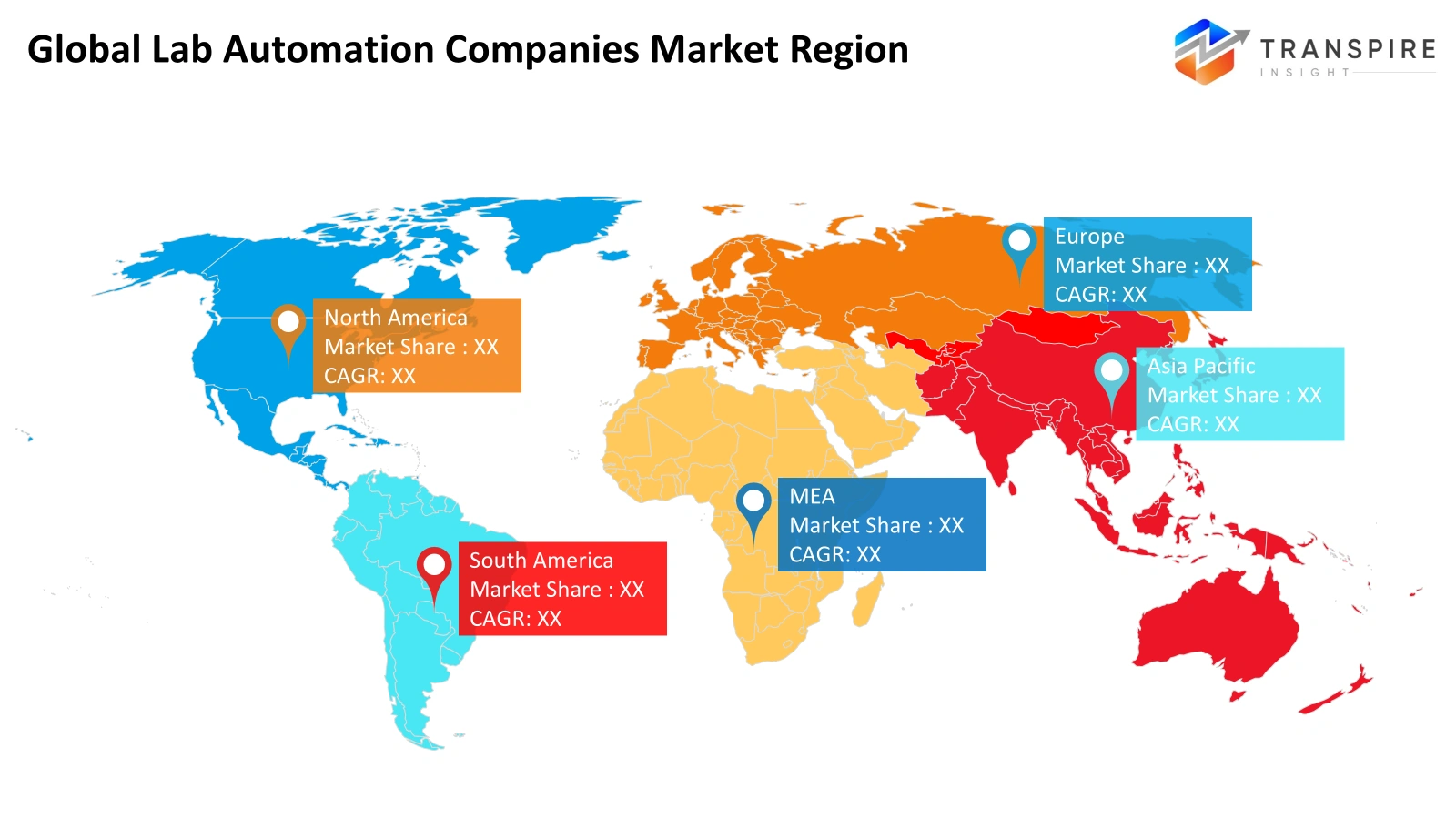
North America holds the largest market share of 42% due to its robust healthcare system, significant pharmaceutical and biotech sectors, and huge R&D expenditure. North America is favored with the implementation of robotic laboratory equipment, artificial intelligence, and digitised laboratories that enhance research efficacy and accuracy. Positive government support in life science research and the presence of key players in the market continue to solidify market dominance. Precision medicine, clinical diagnostics, and high-throughput drug discovery have also added fuel to the growth of this market.In January 2025, Agilent Technologies made an investment worth USD 725 million to increase the capacity for the manufacture of therapeutic nucleic acids in the USA. The project aims at enhancing automated lab processes in order to cater to the increasing demands for life sciences research and biopharmaceutical development.
Europe
Europe shares 29% of the total market share and dominates due to its strong research environment and stringent laboratory quality standards. There is a continuous increase in the use of automation systems in pharmaceutical manufacturers, educational institutions, and biotechnology companies to boost the effectiveness of operations and compliance with regulations. Collaboration between research firms and automation technology vendors is also increasing in Europe, which will further drive innovation in laboratory robotics, data digitisation, and workflow solutions. Consistent investments in healthcare and scientific research have ensured stable growth in the European market.In May 2025, at various industry events, Tecan Group showcased innovative AI-powered lab automation technologies and workflows demonstrating the region's strength in laboratory robots and liquid handling systems.
Asia Pacific
The Asia Pacific region, which accounts for 22% of the market, is anticipated to witness the highest growth rate at a CAGR of 18.9% during the forecast period. The fast development of the pharma production sector, biotechnology research, and healthcare facilities in various nations including China, India, Japan, and South Korea is fueling the uptake of laboratory automation systems. The favourable initiatives of governments supporting life sciences research, an increase in the number of clinical trials, and smart investment in laboratory infrastructure have led to numerous growth prospects. The adoption of advanced automation platforms with the help of artificial intelligence will make the Asia Pacific region a promising market in the coming years.
Who are the Key Players in the Global Lab Automation Companies Marketand how do they Compete?
Global competition within the market for lab automation companies is fostered by ongoing innovations and digitisation, as well as the capability of providing integrated laboratory solutions. Companies within this market are not only supplying individual laboratory equipment but are also offering complete automation ecosystems consisting of robotic systems, liquid handlers, artificial intelligence systems, laboratory software, and data management systems. Market players are increasing their market share through partnerships, mergers, and investments into R&D to address growing needs of pharmaceutical companies, biotechnology firms, hospitals, and research institutions.
Thermo Fisher Scientific offers a comprehensive portfolio of laboratory automation services, bringing together instrumentation and software to manage workflows. The company distinguishes itself by having a wide range of products and keeps increasing its global presence through acquisitions, integration of technologies, and partnerships with life sciences organisations. Danaher Corporation is competing in the market using the integration of automation with precision diagnostics and life science research platforms.
Agilent Technologies focuses on highly sophisticated analytical instruments along with intelligent laboratory software, which helps increase laboratory efficiency and accuracy. PerkinElmer builds its strength through automation tools meant for clinical diagnostics, genomics and pharmaceuticals while consistently working on digital laboratory technology. Tecan Group focuses on liquid handling automation and customised laboratory workflow, thereby helping laboratories attain accuracy and scalability. On the other hand, Hamilton Company distinguishes itself by offering automated robotic systems suited for laboratories engaged in research and diagnostics. At the same time, Beckman Coulter Life Sciences, Siemens Healthineers, and Abbott Laboratories keep on increasing their scope of automation through technological advancements and strategic collaborations.
Global Lab Automation Companies Market companies
- Thermo Fisher Scientific
- Agilent Technologies
- Tecan
- PerkinElmer
- Beckman Coulter
- Hamilton Company
- Siemens Healthineers
- Bio-Rad Laboratories
- Danaher
- Eppendorf
- Roche Diagnostics
- Hudson Robotics
- ABB
- Festo
- Becton Dickinson
Recent Development News
In March 2025, Thermo Fisher Scientific launched the new Vulcan Automated Lab, which is an artificial intelligence and robotics-driven solution aimed at automating TEM metrology processes. This move increases productivity in labs, reduces human interaction and improves automation potential for sophisticated research.
Source: https://ir.thermofisher.com
In May 2026, Tecan extended its direct sales and lab automation service offering into India by forming Tecan India. The move improves customer support for pharma, biotech, academic and diagnostics labs in India as well as increases Tecan's presence in the rapidly growing life sciences marketplace.
Source: https://www.tecan.com
What Strategic Insights Define the Future of the Global Lab Automation Companies Market?
The global market for laboratory automation is experiencing a shift towards advanced, connected, and scalable laboratory ecosystems based on cooperation between robotics, artificial intelligence, cloud computing, and data analysis that would enable better productivity and efficiency in diagnostics. As pharmaceutical and biotechnology companies, as well as research labs, invest in their digital transformation, those automation vendors that develop interoperable and flexible automation platforms will have a great chance to capitalise on the future. The industry is undergoing consolidation and acquisitions that allow vendors to diversify their technology portfolio and to gain a worldwide presence.
However, one hidden threat is the increasing difficulty of automation platform integration into existing laboratory infrastructure and software environment. Compatibility issues, security issues, and regulatory challenges could complicate the implementation and raise the deployment costs of automated technologies. On the other hand, the fast spread of AI-enabled optimisation of workflows, maintenance prediction, and cloud-based laboratory management opens many prospects for automation vendors. Automation vendors need to implement strategies based on openness and interoperability of their automation platforms, development of the capabilities of artificial intelligence, and partnerships with pharmaceutical and biotechnological companies and clinics conducting research.
Key Segmentations are:
By Product
- Automated Workstations
- Robotic Systems
- Liquid Handling Systems
- Plate Reader
- Automated Storage Systems
- Software
By Application
- Drug Discovery
- Clinical Diagnostics
- Genomics
- Proteomics
- Microbiology
By End User
- Pharmaceutical Companies
- Biotechnology Companies
- Hospitals
- Research Institutes
By Technology
- Robotics
- AI Automation
- Machine Vision
- IoT-enabled Systems
- By Workflow
- Sample Preparation
- Analysis
- Storage
- Data Management
Regional Outlook
North America
- United States
- Canada
- Mexico
Europe
- Germany
- United Kingdom
- France
- Spain
- Italy
- Rest of Europe
Asia Pacific
- Japan
- China
- Australia & New Zealand
- South Korea
- India
- Rest of Asia Pacific
South America
- Brazil
- Argentina
- Rest of South America
Middle East & Africa
- Saudi Arabia
- United Arab Emirates
- South Africa
- Rest of the Middle East & Africa
Frequently Asked Questions
Find quick answers to common questions.
The global lab automation companies market size was valued at USD 9.18 Billion in 2025 and is poised to reach USD 18.79 Billion by 2033, expanding at a 9.37% CAGR.
Key segments for the global lab automation companies market are By Product (Automated Workstations, Robotic Systems, Liquid Handling Systems, Plate Readers, Automated Storage Systems, Software, Others); By Application (Drug Discovery, Clinical Diagnostics, Genomics, Proteomics, Microbiology, Others); By End User (Pharmaceutical Companies, Biotechnology Companies, Hospitals, Research Institutes, Others); By Technology (Robotics, AI Automation, Machine Vision, IoT-enabled Systems, Others); By Workflow (Sample Preparation, Analysis, Storage, Data Management, Others).
Growth is primarily driven by factors contributing to the growth of the lab automation companies market, including the increased need for high-throughput testing, robotics, and AI integration in laboratories; the growth of pharmaceuticals and biotechnology R&D, clinical diagnostics, and the necessity of enhancing the efficiency, precision, and speed of laboratories, and decreasing laboratory operational expenses.
The global market is led by major manufacturers including Thermo Fisher Scientific, Agilent Technologies, Tecan, PerkinElmer, Beckman Coulter, Hamilton Company, Siemens Healthineers, Bio-Rad Laboratories, Danaher, Eppendorf, Roche Diagnostics, Hudson Robotics, ABB, Festo, Becton Dickinson.
The North American region constitutes 42% of the total global market share of lab automation companies and is thus the largest market for lab automation. The reason behind this is that there is very sophisticated healthcare and research infrastructure available, along with very high levels of automation in laboratories.
The commercial opportunities available in the global market of laboratory automation firms include increasing demand for AI-driven laboratory process flows, increasing acceptance of robotic systems in handling samples, growing research and development efforts in the pharmaceutical and biotechnology sectors, increasing digitalisation in laboratories, and growing healthcare infrastructure in developing nations.
- Thermo Fisher Scientific
- Agilent Technologies
- Tecan
- PerkinElmer
- Beckman Coulter
- Hamilton Company
- Siemens Healthineers
- Bio-Rad Laboratories
- Danaher
- Eppendorf
- Roche Diagnostics
- Hudson Robotics
- ABB
- Festo
- Becton Dickinson
About the Authors

Pankaj Ghogare Patil
I am Pankaj Ghogare Patil, a Senior Research Analyst at Transpire Insight, specializing in the Pharmaceutical, Chemicals & Materials, Healthcare IT, and Biotechnology industry. My expertise lies in conducting comprehensive market research, analyzing industry trends, evaluating competitive landscapes, and translating complex data into actionable insights. At Transpire Insight, I closely follow emerging technologies, regulatory developments, and market innovations to create accurate, well-researched, and informative content that helps businesses and professionals make informed decisions. I am committed to producing credible, evidence-based articles that reflect industry best practices while making technical topics accessible and valuable for a broad audience.

Chakradhar Khansole
Chakradhar serves as the Research Director at Transpire Insight, bringing over 8 years of experience in technology, innovation, and strategic market intelligence. He specializes in transforming complex market data into actionable business insights that enable organizations to make informed, growth-oriented decisions. Recognized for his strategic vision and analytical expertise, Chakradhar leads high-impact research initiatives, delivering comprehensive market assessments, competitive intelligence, and forward-looking industry analysis.
Recently Published Reports
-
Apr 2026
AI in Diabetic Retinopathy Market
AI in Diabetic Retinopathy Market Size, Share & Analysis Report By Type (Screening AI Systems, Diagnostic AI Systems, and Predictive AI Models), By Application Segment (Hospitals, Ophthalmology Clinics, Diagnostic Centers, and Research and Development), and Geography (North America, Europe, Asia-Pacific, Middle East and Africa, South and Central America), 2021 - 2031
-
Apr 2026
Psychometric Tests Market
Psychometric Tests Market Size, Share & Analysis Report By Type (Personality Tests, Ability/Aptitude Tests, Skill/Knowledge Tests, and Others), By Application (Talent Acquisition and Talent Management), and Geography (North America, Europe, Asia-Pacific, Middle East and Africa, South and Central America), 2021 – 2031
-
Apr 2026
Rare Biological Sample Collection Market
Rare Biological Sample Collection Market Size, Share & Analysis Report By Type (Isolation Kits & Reagent, Blood Collection Tubes, and Others), By Application (Oncology, Transcriptomics, Pharmacogenomics, and Others), and Geography (North America, Europe, Asia-Pacific, Middle East and Africa, South and Central America), 2021 – 2031
-
Jul 2026
Diabetic Retinopathy Market
Diabetic Retinopathy Market Size, Share & Analysis Report By Type (Proliferative Diabetic Retinopathy, and Diabetic Macular Edema (DME)), By Treatment Type (Anti VEGF Drug, Steroid Implants, Laser Surgeries, and Vitrectomy), and Geography (North America, Europe, Asia-Pacific, Middle East and Africa, South and Central America), 2021 – 2031
Our Clients







