
Global Hydropower Generation Market Size & Forecast:
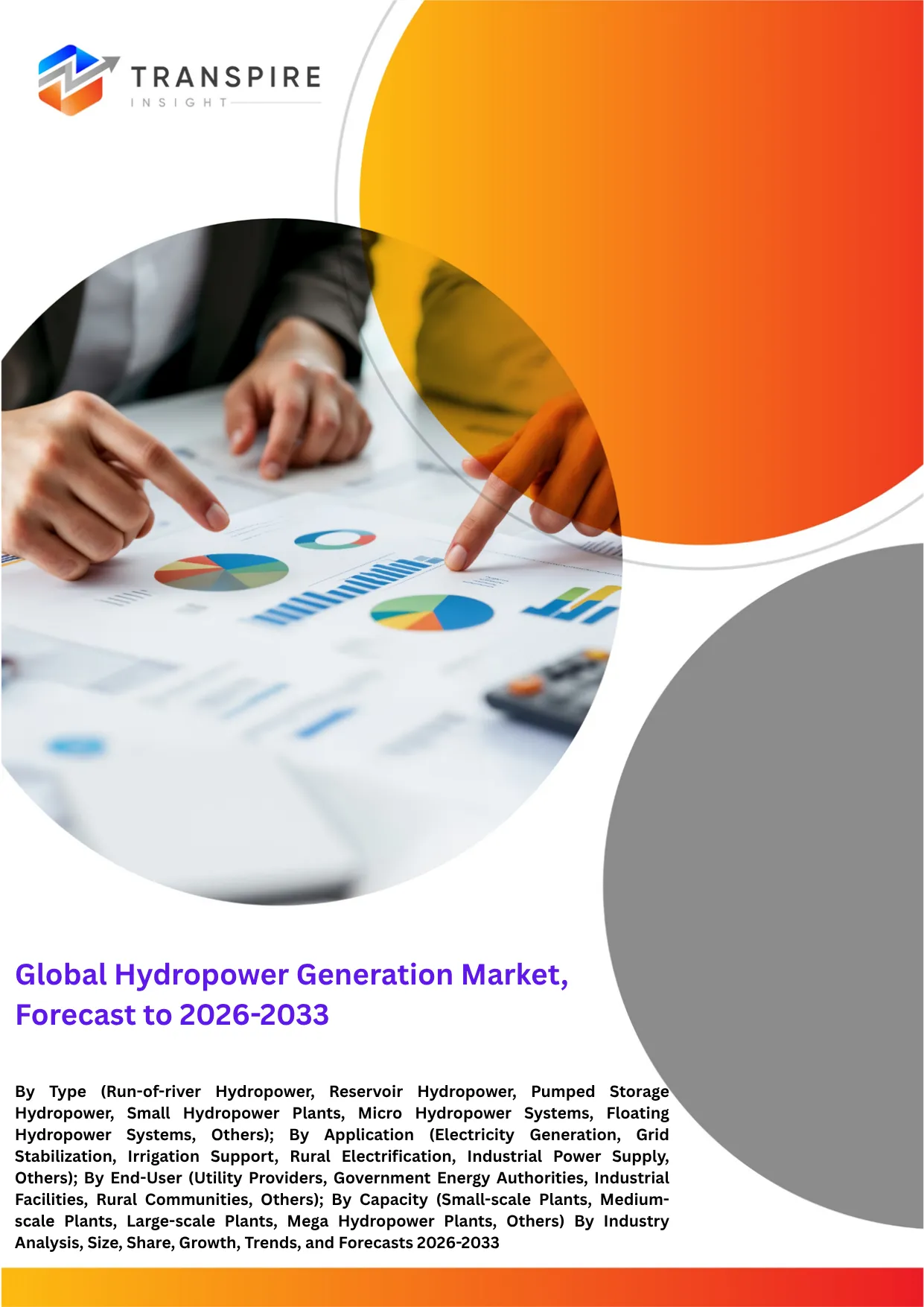
- Global Hydropower Generation Market Size 2025: USD 305.74 Billion
- Global Hydropower Generation Market Size 2033: USD 405.67 Billion
- Global Hydropower Generation Market CAGR: 3.6%
- Global Hydropower Generation Market Segments: By Type (Run-of-river Hydropower, Reservoir Hydropower, Pumped Storage Hydropower, Small Hydropower Plants, Micro Hydropower Systems, Floating Hydropower Systems, Others); By Application (Electricity Generation, Grid Stabilization, Irrigation Support, Rural Electrification, Industrial Power Supply, Others); By End-User (Utility Providers, Government Energy Authorities, Industrial Facilities, Rural Communities, Others); By Capacity (Small-scale Plants, Medium-scale Plants, Large-scale Plants, Mega Hydropower Plants, Others)
To learn more about this report,  Download Free Sample Report
Global Hydropower Generation Market Summary
The Global Hydropower Generation Market size is estimated at USD 305.74 Billion in 2025 and is anticipated to reach USD 405.67 Billion by 2033, growing at a CAGR of 3.6% from 2026 to 2033.
This industry does far more than just pour concrete for massive river dams; it captures the raw force of moving water using heavy-duty turbines to supply continuous, reliable power directly to the grid. Over the past few years, the whole sector shifted as national electricity grids started straining under the highly unpredictable nature of new solar and wind farms. A wave of unexpected blackouts during extreme weather events acted as a major wake-up call, forcing utility companies to completely rethink how they back up their primary power supply.
The market is expanding out of absolute necessity because weather-dependent green energy cannot store power for times when generation drops off. Electricity distributors face intense pressure to lock down dependable, long-term backups, forcing them to pump substantial capital into modern pumped-storage upgrades. This practical approach refits standard legacy dams into massive, physical water batteries capable of dumping clean electricity back into the grid the exact moment alternative sources fail.
Key Market Insights
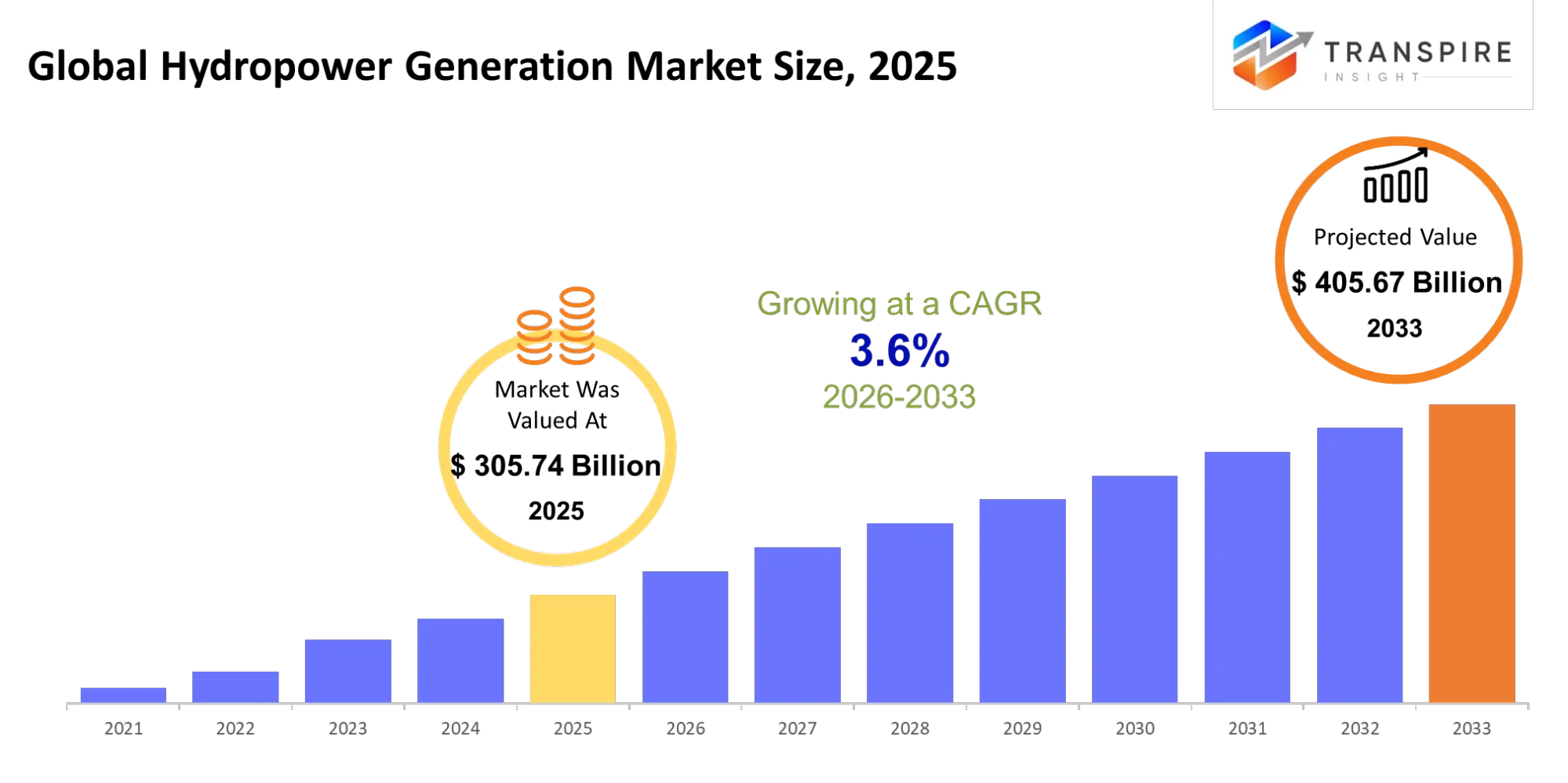
- Reservoir Hydropower - Controlling a massive 55% share, traditional dams still hold the biggest chunk of the market. Operators like Statkraft and Andritz Hydro are upgrading older facilities with predictive AI tech to catch tiny turbine flaws before they trigger full mechanical breakdowns.
- Pumped Storage Hydropower — Growing the fastest at a 7.9% CAGR, this segment is stepping up as the ultimate physical grid battery. Engineering giants like GE Vernova are landing major utility deals to turn standard reservoirs into massive storage setups that balance out sudden drops in grid power.
- Asia Pacific — Leading the pack with a 47% share, this region dominates global volume. Big engineering firms like PowerChina are heavily focused on building multi-use mega-dams that manage farm irrigation, handle seasonal flooding, and supply baseline power all at the same time.
- Europe - Holding a 24% share and expanding quickest at a 6.8% CAGR, Europe is moving fast due to strict climate mandates. Brands like Siemens Energy are actively adding digital twin monitoring software over legacy infrastructure to optimize regional grid efficiency.
- Run-of-river Hydropower - Keeping a steady footprint across the market with a 21% share, this setup avoids major environmental changes. Manufacturers like Toshiba Energy Systems are busy rolling out compact, low-head turbines that draw kinetic power directly from rivers without needing to flood nearby valleys.
- North America — Sitting at a 21% footprint, growth here is mostly driven by modernization. Local utilities are pouring money into automated hardware upgrades from Voith Hydro to revive and optimize river stations that are already decades old.
- The "Others" Segment - Making up the final 8% share, this area focuses heavily on decentralized setups. Players like Bharat Heavy Electricals (BHEL) are supplying pre-built micro-turbines for remote mountain streams, giving isolated towns a way to stay completely off the main power grid.
What are the Key Drivers, Restraints, and Opportunities in the Global Hydropower Generation Market?
Driver
Grid operators are hitting a serious wall trying to keep up with the erratic swings from solar and wind farms, turning long-duration energy storage into the market’s main growth engine. When alternative power suddenly loses strength, utilities cannot just lean on short-lived chemical batteries to hold the grid together. So, they are actively moving huge amounts of capital toward modern pumped storage. That kind of heavy infrastructure spend feeds a very predictable revenue path for the big equipment suppliers. In May 2026, GE Vernova locked in a deal to supply nine 150 MW pumped-storage units for India’s 1.35 GW Upper Sileru project. This engineering push depends on heavy-duty reversible turbines that function like giant water batteries, so operators can absorb surplus electricity, then release it right away when the grid dips unexpectedly.
Restraint
The biggest bottleneck is the mountain of upfront capital required, plus a regulatory track that can drag on forever. Building a traditional dam is nothing short of a logistical nightmare. It usually takes years of environmental reviews, messy negotiations with nearby communities about relocation, and long legal disputes over water rights. Because of those roadblocks, it is entirely normal for a multi-million-dollar project to sit stalled in the planning stage for a decade or longer before anyone pours a single bag of concrete.
Opportunity
The real breakthrough is likely to be closed-loop, off-stream pumped storage. Instead of blocking natural rivers and disrupting local ecosystems, these systems just keep cycling the same water back and forth between two man-made pools. By placing them in hilly or mountainous regions, power companies can get through approvals a lot faster. It also helps them avoid the public backlash that usually happens when developers mess with a natural river. Less friction means more momentum.
What Has the Impact of Artificial Intelligence Been on the Global Hydropower Generation Market?
AI is completely flipping how hydropower plants actually run day-to-day. For decades, facility managers stuck to rigid, pre-set water release schedules. Now, machine learning has turned these heavy mechanical sites into highly reactive digital assets. Software constantly pulls in live weather feeds, snowmelt forecasts, and sudden jumps in grid demand. Armed with that data, the system makes the tough real-time calls, figuring out the exact second to hold water back or let the turbines run full throttle to match the grid's needs perfectly.
This shift also brings a massive operational upgrade for maintenance. Power companies use AI as a highly sensitive digital twin that constantly tracks tiny vibrations and pressure spikes inside the machinery. By predicting exactly when a turbine blade might fail from metal fatigue, operators catch microscopic flaws early, preventing catastrophic breakdowns and expensive downtime.
The main roadblock holding things up is a severe integration gap. Machine learning is completely useless without clean data, and most legacy dams built half a century ago simply lack modern digital sensors. Trying to retrofit those aging, thick concrete walls with heavy-duty IoT hardware turns into a logistical nightmare with a massive price tag. In March 2026, Andritz Hydro rolled out an expansion for its Metris DiOMera AI platform across a batch of older European reservoirs. The setup essentially creates a live digital twin of the plant to analyze water flow and turbine vibrations. By predicting mechanical wear ahead of time, the software optimizes the daily generation schedule and directly prevents unplanned plant outages.
Key Market Trends:
Hydropower is rapidly moving away from its old role of just churning out steady, baseline electricity. Instead, it is turning into a massive physical shock absorber for unstable green power grids. Energy companies are forcing this shift because solar and wind farms drop off unpredictably, creating a desperate need for heavy, long-duration energy storage.
- Instead of damming up natural rivers and waiting years for permits, developers are putting their money into closed-loop, off-stream systems that just pump water between two artificial pools.
- Rigid, calendar-based water release schedules are out. Plant managers are now leaning on real-time AI digital twins to look at live weather data and decide the exact second to spin the turbines.
- Older, fixed-speed turbines are being ripped out. Power companies prefer variable-speed reversible models because they can instantly throttle up or down to catch sudden drops in the grid.
- The era of multi-billion-dollar mega-dams that take ten years to build is winding down. Capital spending is shifting toward modular micro-turbines that operators can drop straight into mountain streams for quick, decentralized power.
- Tight environmental rules mean engineers can no longer use legacy high-pressure turbine designs. They are pivoting to fish-friendly alternatives, like Archimedes screws, to boost survival rates and skip public pushback.
- Reservoirs are no longer viewed as single-use pools of water. Operators are covering the surface with floating solar arrays, which doubles the site's power capacity while physically stopping heat evaporation.
- Maintenance crews are ditching basic steel and concrete patches. They are choosing advanced anti-corrosive polymer coatings to protect underwater parts, letting them delay massive, high-cost overhauls.
Global Hydropower Generation Market Segmentation
By Type
Reservoir Hydropower easily holds the top market position, capturing a massive 55% share since traditional dams act as the heavy baseline for global clean energy grids. Right behind it, Pumped Storage Hydropower is expanding the fastest at a 7.9% CAGR. The growth logic here is split: massive reservoirs generate steady revenue through sheer, relentless baseline power, while pumped storage is growing rapidly because grid operators are realizing it functions perfectly as a massive water battery to back up unpredictable solar and wind setups. Looking forward, the line between heavy civil engineering and niche applications like Micro Hydropower Systems and Floating Hydropower Systems will start to blur. As environmental rules tighten, developers will be forced to engineer compact, Run-of-river Hydropower designs that generate local power without permanently flooding vulnerable valleys.
To learn more about this report, Download Free Sample Report
By Application
Electricity Generation completely anchors this segment, processing the vast majority of daily volume worldwide. The unique growth logic is tied strictly to heavy, baseline national demand; if a country is developing, it is burning through terawatts of continuous power, creating an incredibly predictable revenue loop. On the flip side, Grid Stabilization and Rural Electrification represent fast-growing niches where flexibility matters far more than sheer bulk output. As grids absorb more intermittent renewables, operators are utilizing hydropower specifically to catch sudden voltage dips rather than just supplying flat power. Ultimately, this means the application landscape will split. Heavy national grids will continue demanding massive Electricity Generation, while isolated regions will force manufacturers to develop specialized, low-impact machinery meant strictly for off-grid Industrial Power Supply and targeted Irrigation Support.
By End-User
Utility Providers are the absolute heavyweight buyers here, essentially dictating the infrastructure and supply chain terms for everyone else. Government Energy Authorities pull massive numbers through nationalized grid projects, but the large commercial utilities drive the actual operational market structure. Their unique growth logic comes straight from the renewable energy transition; as utilities are forced to retire coal and gas peaker plants, they lock themselves into a permanent dependency on hydroelectricity to keep the baseline grid stable. Industrial Facilities and Rural Communities act on a completely different scale, buying specialized, smaller units for off-grid independence. The biggest future implication is how these assets are managed. Instead of manual scheduling, massive end-users will soon require engineers to wire their reservoir data directly into AI-driven enterprise software, triggering automated water releases the exact moment the regional power grid starts dropping voltage.
By Capacity
Large-scale Plants and Mega Hydropower Plants dominate this segment, representing the majority of installed hydropower capacity worldwide. The unique growth logic is straightforward: national governments and massive utilities need sheer scale to power entire cities simultaneously, meaning mega-dams will always attract billions in long-term infrastructure funding. However, Small-scale Plants and Medium-scale Plants are advancing at the fastest rate, hitting roughly an 8% CAGR. This rapid expansion is happening because the era of flooding entire regions to build mega-dams is coming to a close. Developers are realizing that smaller, decentralized plants bypass agonizingly slow environmental permits and intense local pushback. Moving forward, the capacity landscape will permanently fragment. While mega-plants will undergo continuous digital retrofits to stay relevant, the true new-build volume will shift dramatically toward Small-scale modular setups that can be dropped directly into existing municipal pipelines or remote mountain streams without triggering a decade of legal battles.
What are the Key Use Cases Driving the Global Hydropower Generation Market?
Feeding national grids with massive baseline power is still what anchors this entire industry. Massive reservoirs are built for this exact reason—to keep heavy factories and booming cities running on raw, continuous electricity without sudden blackouts.
But the fastest growth is in grid stabilization. As utility companies onboard more erratic solar and wind energy, they rely heavily on pumped storage to balance the load. Operating like giant water batteries, these setups let managers instantly catch sudden voltage drops to keep the whole network stable.
Looking ahead, decentralized rural electrification is opening up a unique niche. Instead of waiting for main power lines, isolated communities are dropping plug-and-play micro-turbines directly into local streams for instant, off-grid energy independence.
|
Report Metrics |
Details |
|
Market size value in 2025 |
USD 305.74 Billion |
|
Market size value in 2026 |
USD 316.76 Billion |
|
Revenue forecast in 2033 |
USD 405.67 Billion |
|
Growth rate |
CAGR of 3.6% from 2026 to 2033 |
|
Base year |
2025 |
|
Historical data |
2021 - 2024 |
|
Forecast period |
2026 - 2033 |
|
Report coverage |
Revenue forecast, competitive landscape, growth factors, and trends |
|
Regional scope |
United States; Canada; Mexico; United Kingdom; Germany; France; Italy; Spain; Denmark; Sweden; Norway; China; Japan; India; Australia; South Korea; Thailand; Brazil; Argentina; South Africa; Saudi Arabia; United Arab Emirates |
|
Key company profiled |
GE Vernova, Voith Hydro, Andritz Hydro, Siemens Energy, Toshiba Energy Systems, Bharat Heavy Electricals, Alstom Power, China Three Gorges, Dongfang Electric, Harbin Electric, ABB, Hitachi Energy, SNC-Lavalin, PowerChina, Statkraft |
|
Customization scope |
Free report customization (country, regional & segment scope). Avail customized purchase options to meet your exact research needs. |
|
Report Segmentation |
By Type (Run-of-river Hydropower, Reservoir Hydropower, Pumped Storage Hydropower, Small Hydropower Plants, Micro Hydropower Systems, Floating Hydropower Systems, Others); By Application (Electricity Generation, Grid Stabilization, Irrigation Support, Rural Electrification, Industrial Power Supply, Others); By End-User (Utility Providers, Government Energy Authorities, Industrial Facilities, Rural Communities, Others); By Capacity (Small-scale Plants, Medium-scale Plants, Large-scale Plants, Mega Hydropower Plants, Others) |
Which Regions are Driving the Global Hydropower Generation Market Growth?
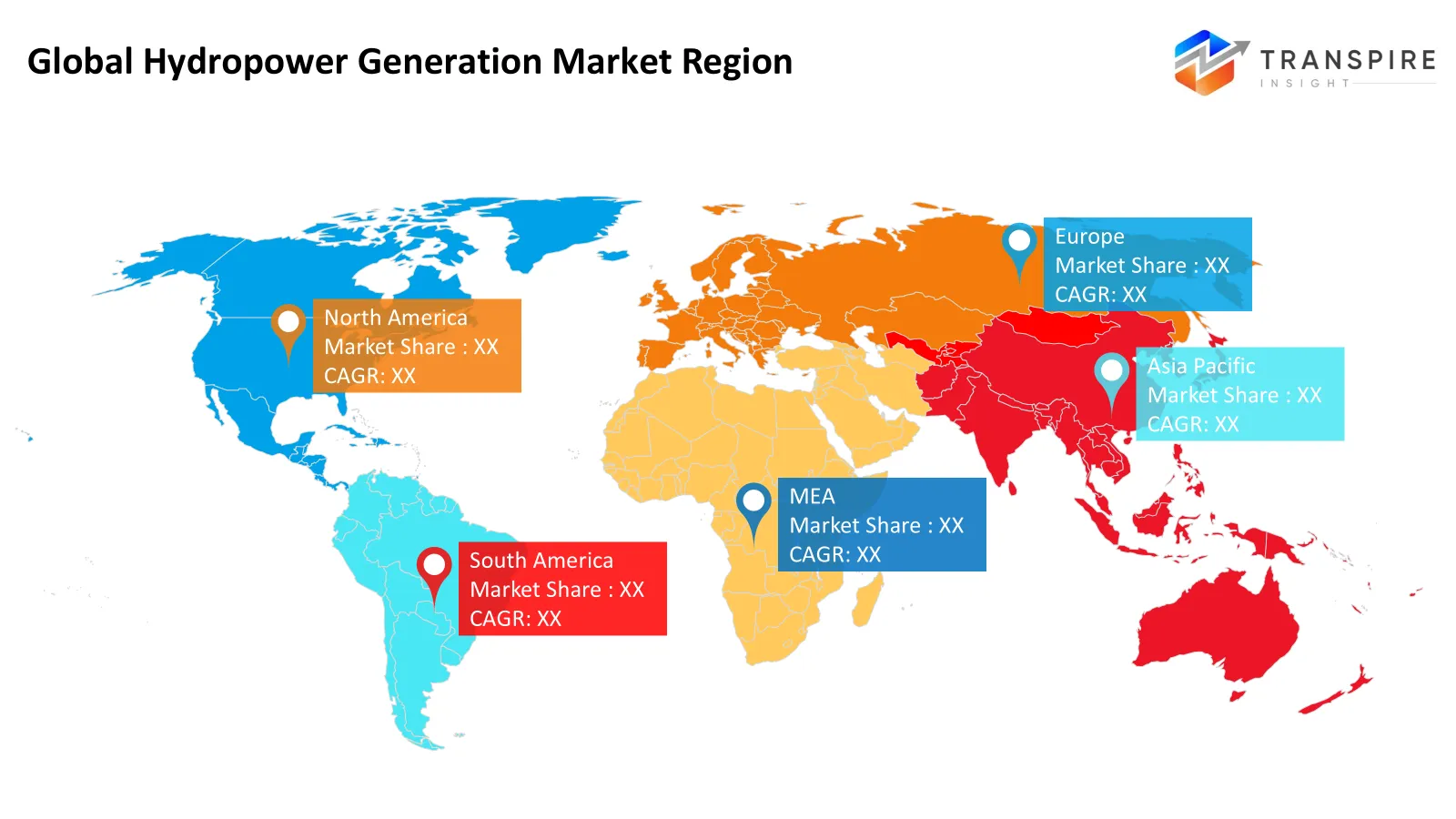
Asia Pacific sits comfortably at the top of the global hydropower market, pulling in a massive 47% share because of runaway industrial growth and soaring electricity needs across China and India. Instead of just relying on older setups, governments here are pouring money into a huge mix of massive new dams and modern pumped storage installations. Local energy providers are dealing with massive influxes of volatile solar and wind power, so they are using hydro as a giant shock absorber to prevent regional grid blackouts.
North America locks down a steady 21% of the market but runs on a completely different playbook compared to the building spree happening in Asia. Rather than trying to flood new valleys for massive projects, developers here direct their capital toward ripping out and upgrading century-old river infrastructure. Strict safety rules and federal clean energy subsidies are forcing local utilities to get the absolute most out of the assets they already own. By dropping in variable-speed turbines and setting up AI digital twins, operators are successfully boosting energy output without getting tangled up in fresh environmental lawsuits. In April 2026, the U.S. Department of Energy opened up fresh funding rounds through the Bipartisan Infrastructure Law to bankroll electro-mechanical upgrades for aging dams. This financial help gives local utilities a realistic way to replace worn-out turbines with high-tech hardware without needing to construct new walls.
Europe is moving faster than any other region with a 6.8% CAGR, pushed along by aggressive legal mandates to wipe out carbon emissions over the next few years. Recent worries over regional energy independence have forced grid managers to shift their focus toward self-contained, closed-loop pumped storage systems. Building these facilities high up in mountainous areas allows utilities to build massive water batteries without facing the heavy public anger that stops traditional river projects. Looking ahead, the real money is in software integration, as companies roll out predictive AI tools to monitor water levels and maximize every single drop for grid stability. In January 2026, the European Commission rolled out fresh Connecting Europe Facility funding targeting large-scale pumped-storage installations, including a €180 million backing for the AGUAYO II project in Spain. This major cash injection aims to speed up the construction of closed-loop water batteries to handle the continent's rapidly growing solar and wind capacity.
To learn more about this report, Download Free Sample Report
Who are the Key Players in the Global Hydropower Generation Market and how do they Compete?
The global hydropower market is no longer a straightforward race to pour the most concrete. Instead, competition has violently shifted toward digital optimization and rapid grid flexibility. Because utilities are desperately searching for ways to balance erratic wind and solar output, heavy manufacturers are fighting for dominance by proving their hardware can act as the ultimate high-speed water battery, rather than just supplying flat baseline power.
GE Vernova leans hard into a high-tech innovation strategy, aggressively targeting the massive pumped-storage segment. Their core differentiation lies in engineering heavy-duty, variable-speed reversible turbines that instantly throttle up or down to catch sudden grid dips. They are expanding by capturing massive government-backed infrastructure contracts across the Asia Pacific, specifically locking in multi-gigawatt deals in India to serve as the physical backup for massive new solar farms.
Voith Hydro executes a highly targeted sustainability and lifecycle niche strategy. Rather than just pushing new turbines, they differentiate by mastering material efficiency and upgrading century-old infrastructure. Their expansion approach focuses heavily on strictly regulated North American and European markets. They win major contracts by retrofitting aging dams with fish-friendly components and predictive AI software, allowing local utilities to boost power output without triggering fresh environmental lawsuits.
Global Hydropower Generation Market Companies:
- GE Vernova
- Voith Hydro
- Andritz Hydro
- Siemens Energy
- Toshiba Energy Systems
- Bharat Heavy Electricals
- Alstom Power
- China Three Gorges
- Dongfang Electric
- Harbin Electric
- ABB
- Hitachi Energy
- SNC-Lavalin
- PowerChina
- Statkraft
Recent Development News
In April 2026, Andritz Hydro landed a major equipment deal to supply Torrent Power's massive 3,000 MW Saidongar-1 Karjat pumped storage project in India. Setting up these ten giant reversible pump turbines builds the country's biggest water battery yet, giving regional grid managers a fast physical shock absorber to steady volatile wind and solar lines.
https://www.renewableenergyworld.com
In March 2026, Globeleq snapped up a 51% controlling stake in Zambia's Lunsemfwa Hydro Power Company from Norfund. This corporate buyout pushes the developer straight into heavy hydro generation, allowing them to trade flexible clean electricity directly across the massive Southern African Power Pool.
https://energy-news-network.com
In April 2025, Ocean Grazer officially rolled out AquaVault, a long-duration energy storage setup built around underground pumped hydro tech. By setting up a closed-loop reservoir beneath the earth, this new product launch gives utilities a flexible way to store clean energy without flooding natural river valleys or triggering public backlash.
What Strategic Insights Define the Future of the Global Hydropower Generation Market?
The future of hydropower lies in transforming rigid infrastructure into highly responsive digital nodes. The market is shifting from a pure volume play toward grid-orchestration services, where monetization hinges on rapid-response energy balancing rather than flat-rate baseline supply.
However, a critical hidden risk stems from climate-induced hydrological volatility. Relying on historical water patterns is a major pitfall, as unpredictable droughts can instantly paralyze multi-billion-dollar reservoir assets. Conversely, a massive emerging opportunity resides in the digitization of legacy dams. Integrating predictive AI and digital twin software can optimize water-flow routing to capture maximum value during peak pricing windows.
To survive this shakeup, power companies need to pull their cash away from massive new concrete dams. The smart move is pouring those funds into upgrading existing assets with variable-speed hardware and smart automation, locking down long-term insurance against increasingly erratic weather patterns.
Global Hydropower Generation Market Segmentation
By Type
- Run-of-river Hydropower
- Reservoir Hydropower
- Pumped Storage Hydropower
- Small Hydropower Plants
- Micro Hydropower Systems
- Floating Hydropower Systems
- Others
By Application
- Electricity Generation
- Grid Stabilization
- Irrigation Support
- Rural Electrification
- Industrial Power Supply
- Others
By End-User
- Utility Providers
- Government Energy Authorities
- Industrial Facilities
- Rural Communities
- Others
By Capacity
- Small-scale Plants
- Medium-scale Plants
- Large-scale Plants
- Mega Hydropower Plants
- Others
Regional Outlook
North America
- United States
- Canada
- Mexico
Europe
- Germany
- United Kingdom
- France
- Spain
- Italy
- Rest of Europe
Asia Pacific
- Japan
- China
- Australia & New Zealand
- South Korea
- India
- Rest of Asia Pacific
South America
- Brazil
- Argentina
- Rest of South America
Middle East & Africa
- Saudi Arabia
- United Arab Emirates
- South Africa
- Rest of the Middle East & Africa
Frequently Asked Questions
Find quick answers to common questions.
The Global Hydropower Generation Market size was valued at USD 305.74 Billion in 2025 and is poised to reach USD 405.67 Billion by 2033, expanding at a 3.6% CAGR.
Key segments for the Global Hydropower Generation Market are Type (Run-of-river Hydropower, Reservoir Hydropower, Pumped Storage Hydropower, Small Hydropower Plants, Micro Hydropower Systems, Floating Hydropower Systems, Others), Application (Electricity Generation, Grid Stabilization, Irrigation Support, Rural Electrification, Industrial Power Supply, Others), End-User (Utility Providers, Government Energy Authorities, Industrial Facilities, Rural Communities, Others), and Capacity (Small-scale Plants, Medium-scale Plants, Large-scale Plants, Mega Hydropower Plants, Others).
Growth is primarily driven by skyrocketing baseline electricity needs from rapid industrial development, massive government funding for green energy, and the critical demand for reliable grid-stabilization options to back up volatile wind and solar power.
The global market is led by major manufacturers including GE Vernova, Voith Hydro, Andritz Hydro, Siemens Energy, Toshiba Energy Systems, Bharat Heavy Electricals, Alstom Power, China Three Gorges, Dongfang Electric, Harbin Electric, ABB, Hitachi Energy, SNC-Lavalin, PowerChina, and Statkraft.
Asia Pacific holds a dominant 47% share of the global market, heavily steering industry dynamics through massive state-funded infrastructure mega-projects and an aggressive build-out of large pumped storage facilities to satisfy soaring power needs.
Commercial opportunities are opening up rapidly in the deployment of predictive AI and digital twin software to extract higher efficiency from aging plants, alongside a major pivot toward closed-loop pumped storage systems that function as off-stream water batteries.
- GE Vernova
- Voith Hydro
- Andritz Hydro
- Siemens Energy
- Toshiba Energy Systems
- Bharat Heavy Electricals
- Alstom Power
- China Three Gorges
- Dongfang Electric
- Harbin Electric
- ABB
- Hitachi Energy
- SNC-Lavalin
- PowerChina
- Statkraft
About the Authors

Avinash Kumar
I’m Avinash Kumar, a Senior Research Analyst at Transpire Insight, with expertise in the Electronics and Semiconductor and Energy & Power industry. My work focuses on analyzing emerging technologies, market trends, industry developments, and innovation across these sectors. I specialize in transforming complex technical and market insights into clear, research-backed content that helps professionals, businesses, and decision-makers stay informed. Through continuous industry research and data-driven analysis, I strive to deliver accurate, reliable, and practical perspectives on the latest advancements shaping the semiconductor and energy landscape.

Chakradhar Khansole
Chakradhar serves as the Research Director at Transpire Insight, bringing over 8 years of experience in technology, innovation, and strategic market intelligence. He specializes in transforming complex market data into actionable business insights that enable organizations to make informed, growth-oriented decisions. Recognized for his strategic vision and analytical expertise, Chakradhar leads high-impact research initiatives, delivering comprehensive market assessments, competitive intelligence, and forward-looking industry analysis.
Recently Published Reports
-
Apr 2026
Active Power Filter Market
Active Power Filter Market Size, Share & Analysis Report By Type (Shunt Active Power Filters, Series Active Power Filter, Hybrid Active Power Filter), By Application (Harmonics Mitigation, Reactive Power Compensation, Voltage Regulation, Power Factor Correction), By Phase (Single Phase, Three Phase), By End-User Industry (Manufacturing, Healthcare, Commercial, Automotive, Oil and Gas, Others), and Geography (North America, Europe, Asia-Pacific, Middle East and Africa, South and Central America), 2021 - 2031
-
Apr 2026
Electrical Transformer Market
Electrical Transformer Market Size, Share & Analysis Report By Core (Closed, Shell, and Berry), By Insulation (Gas, Oil, Solid, Air, and Other), By Phase (Single, and Three), By Rating (100 MVA to 500 MVA, 501 MVA to 800 MVA, and 801 MVA to 1200 MVA), and Geography (North America, Europe, Asia-Pacific, Middle East and Africa, South and Central America), 2021 – 2031
-
Apr 2026
Hydraulic Piston Pumps Market
Hydraulic Piston Pumps Market Size, Share & Analysis Report By Type (Axial Piston Pumps, Radial Piston Pumps), By Operating Pressure (Low Pressure, Medium Pressure, High Pressure), By Application (Construction, Mining, Agriculture, Automotive, Oil & Gas, Industrial Machinery, Others), By End-User (OEMs, Aftermarket), and Geography (North America, Europe, Asia-Pacific, Middle East and Africa, South and Central America), 2021 – 2031
-
Apr 2026
Laboratory Gas Generators Market
Laboratory Gas Generators Market Size, Share & Analysis Report By Product (Nitrogen Gas Generator, Hydrogen Gas Generator, Zero Air Gas Generator, Purge Gas Generator, TOC Gas Generators, Others), By Application (Gas Chromatography, Liquid Chromatography-mass Spectrometry (LC-MS), Gas Analyzers, Others), By End-user (Life Science, Chemical & Petrochemical, Food & Beverage, Others), and Geography (North America, Europe, Asia-Pacific, Middle East and Africa, South and Central America), 2021 – 2031