

Global HVAC Packaged Units Market Size & Forecast:
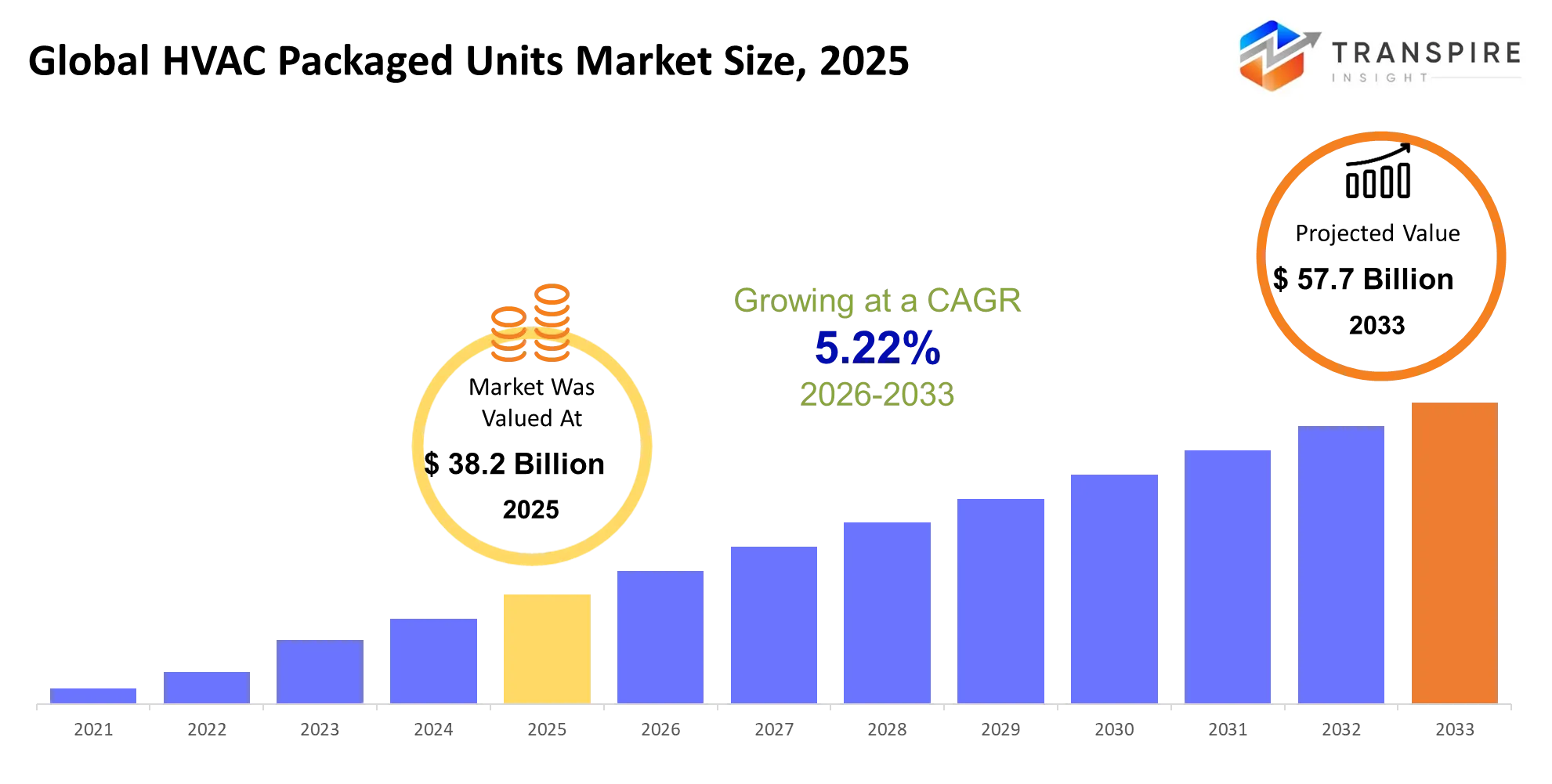
- Global HVAC Packaged Units Market Size 2025: USD 38.2 billion
- Global HVAC Packaged Units Market Size 2033: USD 57.7 billion
- Global HVAC Packaged Units Market CAGR: 5.22%
- Global HVAC Packaged Units Market Segments: By Type (Rooftop Units, Split Packaged Units, Air-cooled Units, Water-cooled Units, Modular Units, Smart HVAC Units, Others); By Application (Commercial Buildings, Industrial Facilities, Healthcare Facilities, Retail Spaces, Hospitality, Others); By End-User (Commercial Sector, Industrial Sector, Healthcare Providers, Others); By Technology (IoT-enabled HVAC, Energy-efficient Systems, AI HVAC Controls, Others)
Global HVAC Packaged Units Market Summary:
As per Transpire Insight Analysis, the global HVAC packaged units market size is estimated at USD 38.2 billion in 2025 and is anticipated to reach USD 57.7 billion by 2033, growing at a CAGR of 5.22% from 2026 to 2033.
The HVAC packaged units market has changed significantly as building owners seek to reduce energy bills and make their buildings more comfortable. In the past few years, people have started to use new kinds of heating and cooling systems that are connected to the internet and can be controlled from a distance. These systems are also very good at saving energy. The reason for this change is that energy is getting more expensive and there are rules that buildings have to follow to be more energy efficient. Also, a lot of money is being invested in buildings, and that has made people want to use these new kinds of heating and cooling systems.
One big change in the HVAC packaged units’ market is that more and more companies are adding sensors and automated systems to their products. These systems can be controlled from the internet. They make it easier to manage the heating and cooling in a building. At the same time, there are a lot of new buildings being built, like offices, data centres, hospitals and stores. These buildings need heating and cooling systems that can be trusted to work well. Because companies want to save money on maintenance and use energy wisely, they are starting to use these new kinds of HVAC packaged units more and more. This is helping the market for these products to grow. It will keep growing for a long time, not just in rich countries but also in developing ones.
Key Market Insights:
Trends within the HVAC packaged units market include intelligent and energy-efficient systems which integrate efficiency with simplicity of installation. The commercial infrastructure continues to be the main source of demand, while intelligent HVAC systems are changing purchase considerations.
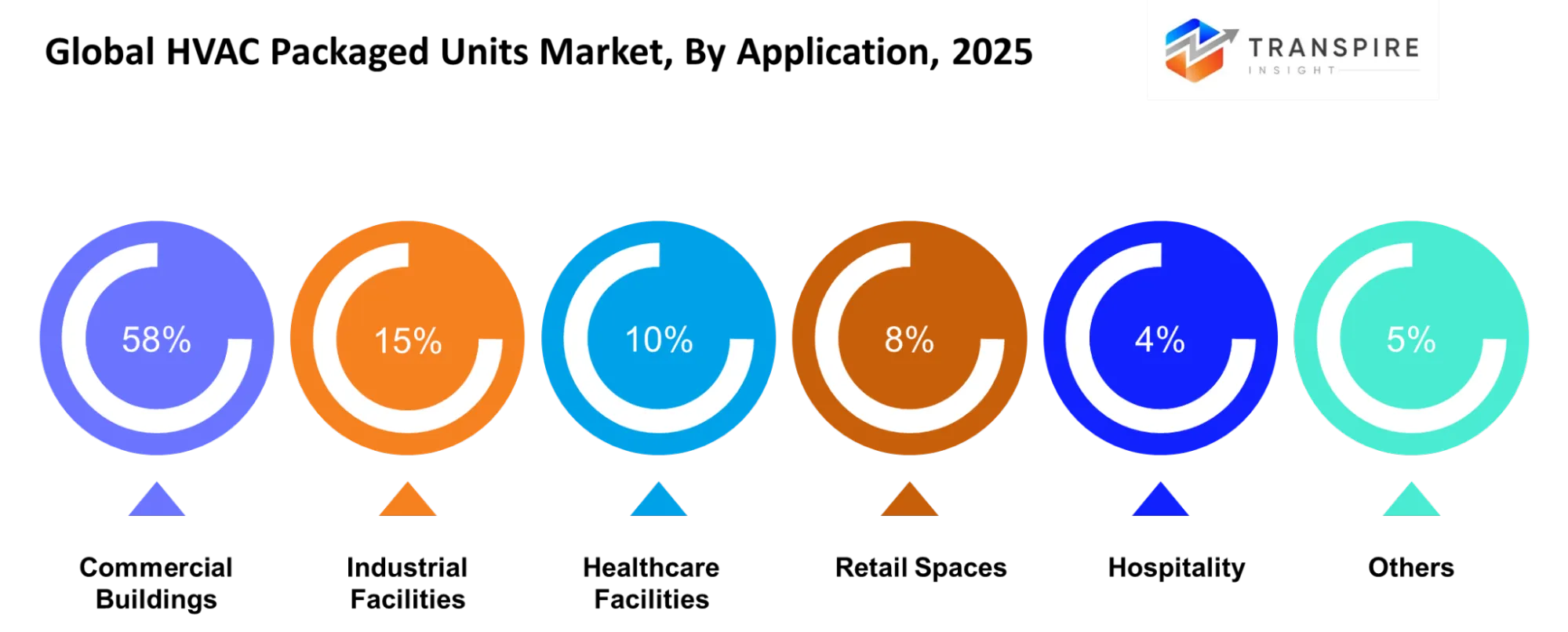
- Commercial buildings make up about 58% of the market demand, due to extensive adoption in offices, shopping malls, schools and universities, and other facilities.
- Smart HVAC units are the most rapidly developing segment, thanks to increased usage of connected building technologies and remote diagnostics systems.
- Companies are making substantial investments in artificial intelligence controls to optimise the energy consumption of their systems.
- Energy efficiency regulations encourage replacement of outdated HVAC products with innovative packages.
- Operational downtimes of commercial infrastructures are being reduced via remote diagnostics and predictive maintenance systems.
- Healthcare infrastructures make up around 10% of demand due to air quality and environmental control concerns.
- Industrial infrastructures make up about 15% of installations due to temperature-sensitive production processes.
- Retail spaces make up about 8% of the market demand to reduce energy expenses and increase client comfort.
- Leading manufacturers are extending their product lines with modular HVAC packages.
What are the Key Drivers, Restraints, and Opportunities in the Global HVAC Packaged Units Market?
Drivers
The major growth drivers include the modernisation of commercial facilities and greater focus on energy management. Increased power costs have led to the adoption of packaged HVAC systems due to their increased efficiency and ability to manage the facility. The government, as well as other agencies, are putting more stringent standards of energy performance for facilities, thereby leading to upgrades of modernised heating and cooling devices. All these help in increasing the equipment replacement rate and installation in the facilities.
Restraints
The major restraint in the industry includes the relatively high initial cost of installation for advanced HVAC packaged systems. Even though there are benefits from the use of such systems, the cost involved acts as a hindrance for small companies from adopting them. In some developing countries, the lack of skilled maintenance services limits the use of advanced systems.
Opportunities
There is potential within the rising usage of smart building ecosystems. With property developers focusing on constructing connected infrastructure, the demand for IoT-based and AI-powered HVAC technologies will continue to grow. Rapid urbanisation within developing countries in Asia Pacific and the Middle East will create a good environment for the installation of these HVAC technologies. Investment in green buildings and other sustainable construction projects will help in earning more revenues from manufacturing firms.
What Has the Impact of Artificial Intelligence Been on the Global HVAC Packaged Units Market?
The use of artificial intelligence has been seen as crucial in enhancing the performance of HVAC packaged units. Currently, artificial intelligence algorithms have been used to track temperature trends, occupancy, humidity conditions and equipment performance in real-time. This will enable facilities to make optimisations in terms of heating and cooling and at the same time reduce energy wastage.
One of the best applications in which artificial intelligence can be applied in the market is in predictive maintenance. Artificial intelligence analytics can help in the identification of parts that might fail in future so that measures are taken to avoid breakdowns. Artificial intelligence will also increase the responsiveness of the systems through automatic adjustments of airflow and temperature conditions depending on changes in the environment.
Artificial intelligence HVAC systems are currently being integrated into building management platforms in large commercial buildings. This helps in enhancing the efficiency of the building through energy-saving and sustainable building initiatives. The challenge associated with the process of implementing this technology includes cost, integration and data accuracy issues.
Instance
In September 2025,Trane Technologies debuted an AI control system for smart buildings that incorporates AI in HVAC systems directly. This system uses AI to monitor occupancy, climate forecasts, and energy consumption information in order to provide optimal heating and cooling performance. As per the firm’s claims, this technology can help in reducing energy costs by up to 25% and cutting down CO2 emissions by up to40%.
Key Market Trends
There is a trend in the market for the shift from climate control technologies to digital and energy-efficient technologies. Technology usage, sustainability goals, and operational efficiency needs still impact buying decisions.
- Intelligent HVAC systems with remote monitoring capabilities are becoming preferred by building managers.
- Predictive maintenance is becoming popular amid efforts to reduce equipment downtime of equipment.
- Energy efficiency has become one of the main criteria when it comes to making purchases.
- Smart sensors and automation are being introduced to various types of packaged units.
- Sustainability standards are shaping HVAC technology selection for commercial buildings.
- Modular HVAC systems have become more popular due to installation flexibility needs.
- Cloud-based facility management platforms are becoming more widespread.
- Low-emissions refrigerant technology has become the focus for manufacturers.
- Climate-control systems are in high demand in the healthcare and data centres sectors.
- Facility management is pushing for connected HVAC systems.
Global HVAC Packaged Units Market Segmentation
By Type
Rooftop units continue to have a significant market presence due to their extensive use in commercial buildings and easy installation process. Split packaged units continue to be popular among medium-sized structures, while air-cooled and water-cooled units are used for diverse climatic conditions and requirements. Modular units have gained acceptance on account of their versatility and flexibility. Smart HVAC units continue to witness high growth rates, backed by growing need for automation and energy efficiency.
By Application
The commercial segment continues to be the largest one, accounting for 58% of the market, thanks to high deployment rate in office spaces, shopping malls, educational buildings and mixed-use properties. The industrial segment accounts for 15% of the market, driven by manufacturing facilities that require a controlled environment. The healthcare segment accounts for 10%, followed by retail at 8% and hospitality at 4%.
By End-user
The commercial segment is still the biggest one because companies seek ways to increase efficiency and comfort of their operations. More and more industrial companies are switching to packaged units because of their help in sustaining the same level of operation and protecting equipment. The healthcare industry continues investing in HVAC systems that would help keep high levels of air quality.
By Technology
IoT HVAC systems are becoming increasingly popular for better monitoring and management. Energy-efficient HVAC is still an essential market segment due to growing concerns about sustainability. There is an accelerated growth in the adoption of AI HVAC controls due to their optimisation of performance and savings on operation.
What are the Key Use Cases Driving the Global HVAC Packaged Units Market?
HVAC packaged units are mostly used in commercial structures, where the largest percentage of these units is installed. Commercial spaces such as offices, shopping complexes, educational institutions, among others, depend on the use of these units for ensuring comfortable temperatures in the indoor environment at controlled costs.
Apart from the normal commercial uses, these units have gained more popularity in industries as well as health care facilities. This is especially due to the need for regulation of the environment within the facility as well as ensuring continuous operations.
The most recent applications of these units are in smart buildings, data centres, as well as sustainable construction sites. In these instances, connectivity of these units offers real-time monitoring and predictive maintenance.
|
Report Metrics |
Details |
|
Market size value in 2025 |
USD 38.2 Billion |
|
Market size value in 2026 |
USD 40.4 Billion |
|
Revenue forecast in 2033 |
USD 57.7 Billion |
|
Growth rate |
CAGR of 5.22% from 2026 to 2033 |
|
Base year |
2025 |
|
Historical data |
2021 - 2024 |
|
Forecast period |
2026 - 2033 |
|
Report coverage |
Revenue forecast, competitive landscape, growth factors, and trends |
|
Regional scope |
United States; Canada; Mexico; United Kingdom; Germany; France; Italy; Spain; Denmark; Sweden; Norway; China; Japan; India; Australia; South Korea; Thailand; Brazil; Argentina; South Africa; Saudi Arabia; United Arab Emirates |
|
Key company profiled |
Daikin Industries, Carrier Global, Trane Technologies, Johnson Controls, Lennox International, Mitsubishi Electric, LG Electronics, Samsung HVAC, Rheem Manufacturing, Fujitsu General, Bosch Thermotechnology, Hitachi HVAC, Panasonic, Toshiba Carrier, Blue Star |
|
Customization scope |
Free report customization (country, regional & segment scope). Avail customized purchase options to meet your exact research needs. |
|
Report Segmentation |
By Type (Rooftop Units, Split Packaged Units, Air-cooled Units, Water-cooled Units, Modular Units, Smart HVAC Units, Others); By Application (Commercial Buildings, Industrial Facilities, Healthcare Facilities, Retail Spaces, Hospitality, Others); By End-User (Commercial Sector, Industrial Sector, Healthcare Providers, Others); By Technology (IoT-enabled HVAC, Energy-efficient Systems, AI HVAC Controls, Others) |
Which Regions are Driving the Global HVAC Packaged Units Market Growth?
North America
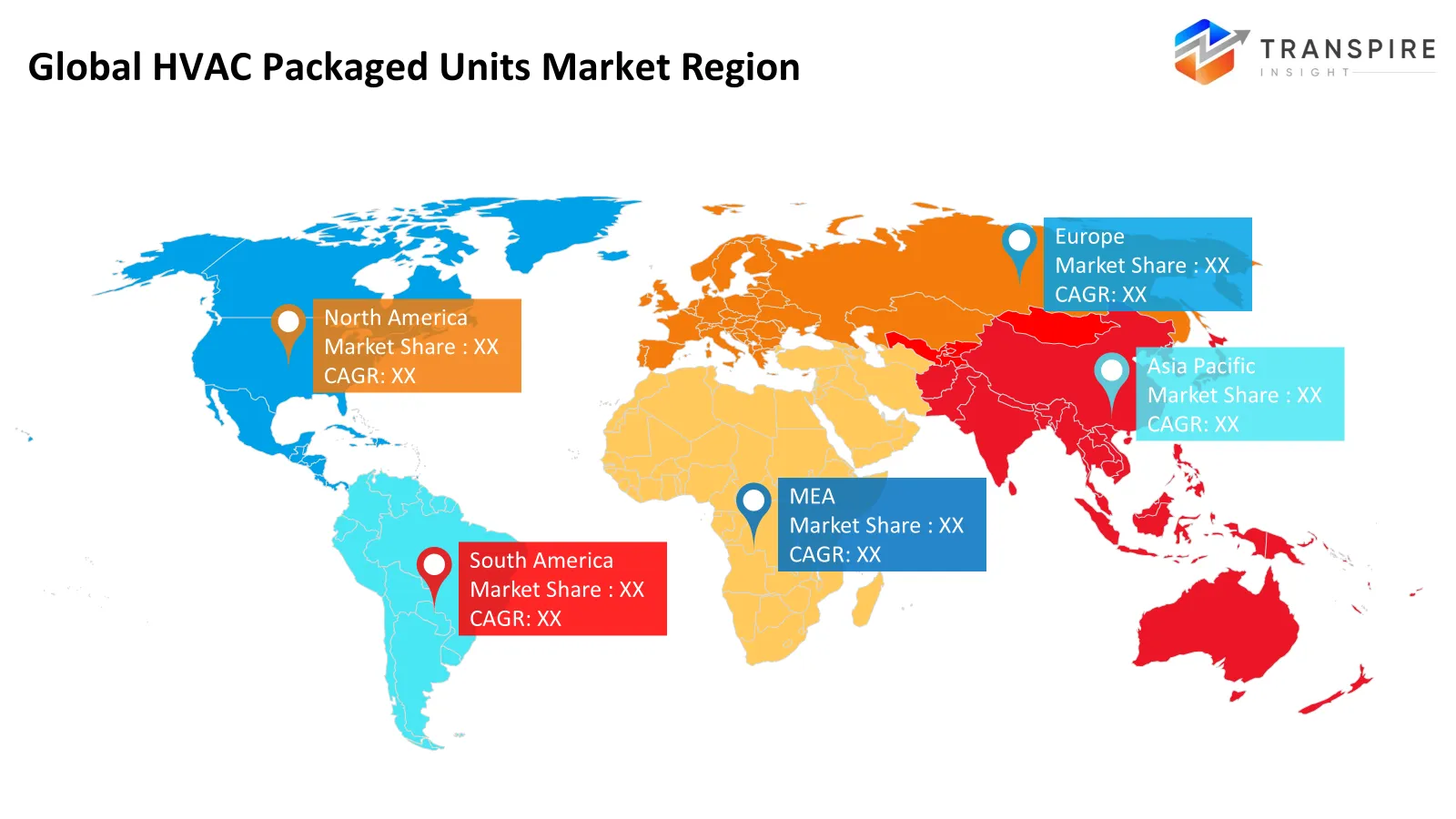
North America constitutes 36% of the worldwide market and is the largest contributor geographically. Active commercial construction work, the need to replace ageing HVAC systems, and strict energy-efficiency regulations have helped make it a dominant region. Many businesses in both the US and Canada are actively working on installing smart building systems. Facility management activities drive demand for packaged HVAC units.In November 2025,YORK introduced the Sun Pro and Sun Choice Dual Fuel RTU models in the United States. These packaged HVAC models integrate heat pumps and gas furnaces to increase energy efficiency and reduce costs for commercial establishments, thus contributing to the region’s prominence in the adoption of advanced HVAC technology.
Europe
Europe holds approximately 22% of market value and grows steadily due to environmental measures. The presence of environmental laws and regulations, energy performance standards, and use of green building systems has contributed to the steady growth of the region. Commercial and institutional buildings are giving emphasis to the installation of climate control units. Regular modernisation of building infrastructure ensures continued demand. In February 2026, Trane Technologies launched a suite of electrified heating and energy-saving commercial HVAC products in Europe and elsewhere around the world. This launch is in line with the regional decarbonization aims and bolsters the use of highly efficient packaged HVAC equipment in commercial buildings.
Asia-Pacific
The Asia-Pacific region contributes 34% of market revenue and leads in terms of growth. Urbanisation, industrialisation, and heavy infrastructure developments in the region have resulted in increased use of HVAC systems in developing countries. Increased focus on energy efficiency and smart building systems has been a driving factor. Growth in construction and commercial investments will lead to future opportunities.In May 2025,Daikin Applied broadened its Rebel and Rebel Applied packaged roof-top HVAC system range by incorporating low GWP R-32 refrigerant and inverter-driven heat pump system. This innovation helps cater to the increasing requirement of efficient packaged HVAC systems in the fast developing Asia-Pacific region.
Who are the Key Players in the Global HVAC Packaged Units Marketand how do they Compete?
The competition in the HVAC packaged units industry is based on constant innovations, product differentiation, and geographical expansion. The manufacturers compete based on energy efficiencies, intelligent technologies used, services offered, and prices aimed at the commercial and industrial consumers.
Among the key players are Carrier Global, Daikin Industries, Trane Technologies, and Johnson Controls, intelligent climate control is one of the priorities. The strategies include increasing the product portfolio of Internet of Things products, increasing energy efficiency, and building management systems. They are differentiating themselves through technological innovations, services offered, and brands. The other players, such as Mitsubishi Electric and Lennox International, are emphasising product customisation and geographical expansion among other factors.
Global HVAC Packaged Units Market Companies
- Daikin Industries
- Carrier Global
- Trane Technologies
- Johnson Controls
- Lennox International
- Mitsubishi Electric
- LG Electronics
- Samsung HVAC
- Rheem Manufacturing
- Fujitsu General
- Bosch Thermotechnology
- Hitachi HVAC
- Panasonic
- Toshiba Carrier
- Blue Star
Recent Development News
In August 2025, Lennox International made the decision to acquire the HVAC business segment of NSI Industries, which included Duro Dyne and Supco products at the approximate cost of $550 million. This move enhances Lennox’s offerings in the area of commercial HVAC systems and packaged HVAC equipment.
In May 2026, Trane Technologies signed a distribution agreement that would help make DOASs, value-added RTUs, and energy-recovery products more accessible in both the United States and Canada. This deal will help Trane Technologies make its advanced HVAC systems more available and address rising needs for energy-efficient commercial buildings.
What Strategic Insights Define the Future of the Global HVAC Packaged Units Market?
The future of the HVAC packaged units market will be defined by intelligent building technologies, sustainable design practices, and an increasing need for energy-efficient infrastructure. Monitoring capabilities and predictive maintenance features will become standard features as opposed to premium offerings in the future.
Another threat is the vulnerability to cyber-attacks in connection with the digitalization of HVAC systems. The growing trend towards smart buildings offers great potential for companies that offer integrated HVAC solutions for building management.Companies should focus on developing AI-based controls, energy efficiency technology innovations, and modular architecture of their products. Those who will succeed in combining energy efficiency, digitalization, and sustainable development practices will have the greatest success in the future market.
Global HVAC Packaged Units Market Segmentation
By Type
- Rooftop Units
- Split Packaged Units
- Air-cooled Units
- Water-cooled Units
- Modular Units
- Smart HVAC Units
By Application
- Commercial Buildings
- Industrial Facilities
- Healthcare Facilities
- Retail Spaces
- Hospitality
By End-User
- Commercial Sector
- Industrial Sector
- Healthcare Providers
By Technology
- IoT-enabled HVAC
- Energy-efficient Systems
- AI HVAC Controls
Regional Outlook
North America
- United States
- Canada
- Mexico
Europe
- Germany
- United Kingdom
- France
- Spain
- Italy
- Rest of Europe
Asia Pacific
- Japan
- China
- Australia & New Zealand
- South Korea
- India
- Rest of Asia Pacific
South America
- Brazil
- Argentina
- Rest of South America
Middle East & Africa
- Saudi Arabia
- United Arab Emirates
- South Africa
- Rest of the Middle East & Africa
Frequently Asked Questions
Find quick answers to common questions.
The global HVAC packaged units market size was valued at USD 38.2 Billion in 2025 and is poised to reach USD 57.7 Billion by 2033, expanding at a 5.22% CAGR.
Key segments for the global hvac packaged units market are By Type (Rooftop Units, Split Packaged Units, Air-cooled Units, Water-cooled Units, Modular Units, Smart HVAC Units, Others); By Application (Commercial Buildings, Industrial Facilities, Healthcare Facilities, Retail Spaces, Hospitality, Others); By End-User (Commercial Sector, Industrial Sector, Healthcare Providers, Others); By Technology (IoT-enabled HVAC, Energy-efficient Systems, AI HVAC Controls, Others).
Growth is primarily driven by Factors that drive growth include demand for more efficient heating, ventilation, and air conditioning equipment; rapid urbanisation; commercial construction activities; the increasing use of advanced smart building technology; energy efficiency standards; and the need to have an affordable means of climate control in various industries.
The global market is led by major manufacturers including Daikin Industries, Carrier Global, Trane Technologies, Johnson Controls, Lennox International, Mitsubishi Electric, LG Electronics, Samsung HVAC, Rheem Manufacturing, Fujitsu General, Bosch Thermotechnology, Hitachi HVAC, Panasonic, Toshiba Carrier, Blue Star.
North America occupies 36% share of the total HVAC packaged units market and hence is the largest regional market in the world. It is so because of high demand for energy-efficient HVAC systems, extensive commercial and industrial infrastructures, replacement of old equipment and stringent energy efficiency norms, which drive the growth of packaged units.
Opportunities in the global HVAC packaged units market can be observed in the form of increasing demand for energy-efficient and smart HVAC systems, increasing use of green buildings, increasing commercial infrastructure in developing countries, increasing replacements of old HVAC systems, and increasing use of IoT-based monitoring and predictive maintenance solutions.
- Daikin Industries
- Carrier Global
- Trane Technologies
- Johnson Controls
- Lennox International
- Mitsubishi Electric
- LG Electronics
- Samsung HVAC
- Rheem Manufacturing
- Fujitsu General
- Bosch Thermotechnology
- Hitachi HVAC
- Panasonic
- Toshiba Carrier
- Blue Star
About the Authors

Avinash Kumar
I’m Avinash Kumar, a Senior Research Analyst at Transpire Insight, with expertise in the Electronics and Semiconductor and Energy & Power industry. My work focuses on analyzing emerging technologies, market trends, industry developments, and innovation across these sectors. I specialize in transforming complex technical and market insights into clear, research-backed content that helps professionals, businesses, and decision-makers stay informed. Through continuous industry research and data-driven analysis, I strive to deliver accurate, reliable, and practical perspectives on the latest advancements shaping the semiconductor and energy landscape.

Chakradhar Khansole
Chakradhar serves as the Research Director at Transpire Insight, bringing over 8 years of experience in technology, innovation, and strategic market intelligence. He specializes in transforming complex market data into actionable business insights that enable organizations to make informed, growth-oriented decisions. Recognized for his strategic vision and analytical expertise, Chakradhar leads high-impact research initiatives, delivering comprehensive market assessments, competitive intelligence, and forward-looking industry analysis.
Recently Published Reports
-
Apr 2026
Fiber Optic Faceplates Market
Fiber Optic Faceplates Market Size, Share & Analysis Report By Type (< 300 mm2, 300-350 mm2, and > 350 mm2, By Application (Night Vision, Holographic Imaging, Medical, and Others), and Geography (North America, Europe, Asia-Pacific, Middle East and Africa, South and Central America), 2021 - 2031
-
Apr 2026
High Temperature Superconductors Market
High Temperature Superconductors Market Size, Share & Analysis Report By Type (1G HTS, and 2G HTS), By Application (Power Cable, Fault Current Limiter, and Transformer), and Geography (North America, Europe, Asia-Pacific, Middle East and Africa, South and Central America), 2021 - 2031
-
Apr 2026
Industrial Plugs and Socket Market
Industrial Plugs and Socket Market Size, Share & Analysis Report By Type (Industrial Plugs, Industrial Sockets), By Current (Up to 32 A, 32 to 125 A, Above 125 A), By Protection (Dustproof and Splash Proof, Waterproof, Explosion Proof), By End User (Heavy Industries, Oil and Gas, Chemicals and Pharmaceuticals, Power Generation, Others), and Geography (North America, Europe, Asia-Pacific, Middle East and Africa, South and Central America), 2021 - 2031
-
Apr 2026
InGaAs Avalanche Photodiodes Market
InGaAs Avalanche Photodiodes Market Size, Share & Analysis Report By Type (1100 - 1700 nm, and 1000 - 1600 nm), By Application (Missile Warning System, Muzzle Flash Detection, Wafer Defect Inspection, Laser Rangefinders, and Others), and Geography (North America, Europe, Asia-Pacific, Middle East and Africa, South and Central America), 2021 - 2031