

Global Home Infusion Therapy Market Size & Forecast:
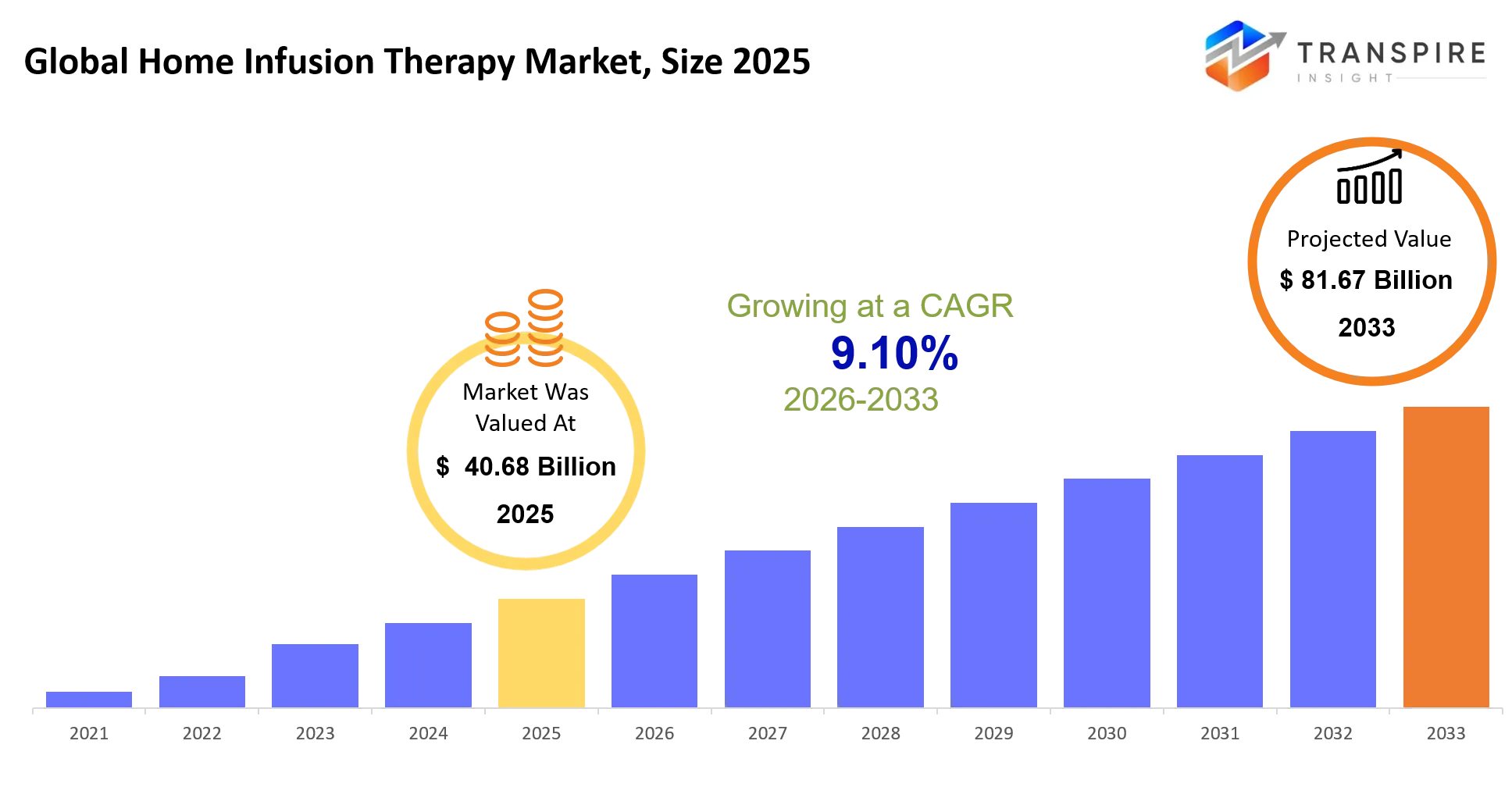
- Global Home Infusion Therapy Market Size 2025: USD 40.68 Billion
- Global Home Infusion Therapy Market Size 2033: USD 81.67 Billion
- Global Home Infusion Therapy Market CAGR: 9.10%
- Global Home Infusion Therapy Market Segments: By Type (Infusion Pumps, Intravenous Sets, Needleless Connectors, Ambulatory Pumps, Elastomeric Pumps, Disposable Infusion Devices, Others); By Application (Anti-infective Therapy, Chemotherapy, Enteral Nutrition, Hydration Therapy, Pain Management, Others); By End-User (Hospitals, Homecare Settings, Specialty Clinics, Ambulatory Centers, Others); By Distribution Channel (Hospital Pharmacies, Retail Pharmacies, Online Pharmacies, Others)
Global Home Infusion Therapy Market Summary:
As per Transpire Insight Analysis, the Global Home Infusion Therapy Market size is estimated at USD 40.68 billion in 2025 and is anticipated to reach USD 81.67 billion by 2033, growing at a CAGR of 9.10% from 2026 to 2033.
The home infusion therapy market supports the delivery of advanced intravenous therapies, nutritional therapies, and specialised therapies directly into patients' homes, allowing for decreased hospital stays while improving convenience and continuity of care. Home infusion therapy plays an increasingly vital role as health systems explore more cost-effective ways of administering long-duration and chronic therapies outside traditional health care settings. The market structure has seen changes over the last few years due to increased adoption of connected infusion technologies, remote patient monitoring, and value-based health care. A key real-world driver has been increasing support for decentralised care during times of health system capacity strain, supporting a move towards a home-based treatment path. The causal relationship fueling growth is straightforward; increases in chronic diseases and spiralling health care costs are pushing appropriate therapies to be treated at home with beneficial outcomes and resource allocation.
Key Global Home Infusion Therapy Market Insights:
Home infusion therapy is progressing with the integration of connected healthcare technologies, clinical decentralisation, and changing patient expectations for the convenience of treatment. The industry is increasingly shifting towards the idea of integrated care ecosystems, which enhance therapeutic results and make healthcare more accessible than ever, even outside of traditional healthcare settings.
- Anti-infective therapy makes up 57% of applications, and providers are increasing specialised programs for managing infections that enable continuity of care at home.
- North America accounts for 38% of the market, and businesses are investing in their digital care coordination systems to boost patient engagement and monitoring.
- Asia Pacific accounts for 31% of the market, as home healthcare facilities and technology-based service delivery models are being built in the region.
- Chemotherapy accounts for 14% of the demand, and manufacturers are looking to deliver more convenient and patient-focused infusion products.
- Enteral nutrition accounts for 10% of sales, driving up nutritional support services for the long term, beyond the hospital environment.
- 8% of the applications were hydration therapy, with providers trialling simplified care pathways to make treatment more accessible.
- Pain management takes up 6% of the share, and the advanced infusion technology enables more precise dosing and personalisation of therapy.
- Disposable infusion devices are growing at 13.8%, mirroring increased preference for infection-control solutions, operational efficiency and ease of treatment administration.
What are the Key Drivers, Restraints, and Opportunities in the Global Home Infusion Therapy Market?
Driver:
The transition of healthcare delivery from institutions to home-based treatments. This change was propelled by increasing demands on hospitals to optimise their capacity utilisation while at the same time addressing the complexities of chronic diseases. As a direct alternative to this shift in the healthcare industry, home-based infusion services enable administration of clinically necessary treatments outside of institutional care, in turn offering to optimise resources (for providers), lower the cost of treatment (for payers), and accommodate patients (for all involved), which thus further facilitates its uptake and generation of revenue.
In April 2026, AlayaCare partnered with Eitan Medical to link near-real-time data networks. This cloud infrastructure integration channels automatic fluid volumes and flow rate readings directly from home electronic pumps into patient clinical charting records to prevent manual transcription errors for field nurses.
Restriction:
Perhaps the most stubborn hurdle remains the limited availability of sophisticated clinical and home-care resources. It involves appropriately trained personnel, seamless logistics and ongoing patient monitoring, skills and resources which are neither uniformly available throughout the healthcare delivery system nor scalable to underserved communities, leading to inconsistent treatment and variability in quality of service.
Opportunities:
The growth of a digitally integrated care ecosystem presents a considerable opportunity for growth. The combined use of smart infusion devices, remote monitoring systems, and predictive analytics will have the potential to improve treatment accuracy, as well as patient adherence to therapy. Increased investment in virtual care infrastructure and burgeoning health care markets is developing new avenues for the expansion of services, which allow providers to offer more personalised, efficient, and effective treatment experiences for their patients.
In February 2026, WellSky deepened its partnership with Adoration Home Health to scale automated advisory operations. This expanded tech deployment rolls out specialised AI clinical coding systems across additional home-care offices to streamline medical documentation and optimise accuracy for highly complex home-bound patient populations.
What Has the Impact of Artificial Intelligence Been on the Global Home Infusion Therapy Market?
AI is also creating positive changes in the home infusion therapy market by helping providers in clinical monitoring and delivering improved patient outcomes. Many platforms utilise AI capabilities for automatic scheduling of therapies, monitoring medications, managing inventory and reducing paperwork for providers so they can better attend to patient needs. All provider organisations, pharmacies and home care networks are improving operational efficiencies.
Beyond automation, the predictive powers of AI are growing with the analysis of treatment patterns, adherence trends, device data, and clinical patient indicators that can predict and enable early recognition of treatment-related complications, treatment interruptions, or adverse events prior to negative outcomes. Additionally, interconnected infusion systems incorporating intelligent analytic systems can improve treatment accuracy and personalised care. From a workflow standpoint, AI offers the opportunity to better allocate resources through workforce allocation, routing, supplies, and clinical decision support. It is not widespread at this time due to issues with integrating healthcare information systems and the substantial investment needed for advanced digital infrastructure; nevertheless, AI holds strategic promise in enabling the creation of safer, more responsive, and patient-centred home infusion therapy systems.
In March 2026, WeInfuse partnered with VETRIQ to deploy an AI revenue cycle intelligence engine. This technical integration completely automates the conversion of complex paper checks and explanation of benefits (EOBs) into automated data streams, stripping away heavy manual documentation backlogs for home infusion teams.
Key Global Home Infusion Therapy Market Trends:
Home infusion therapy is moving beyond being an alternative delivery pathway to becoming an integral part of patient- centered approaches to healthcare delivery. Convenience -driven care models, digital oversight, and a focus on better clinical outcomes outside of the hospital are driving increasing momentum in the market.
- Healthcare systems are increasingly moving from institutional to home-based care, as convenience and continuity of care have been a growing focus.
- Infusion providers are shifting from equipment provision to full therapy journey care coordination, enhancing patient engagement as they progress.
- The move from remote clinical supervision to tech-supporting mainstay has become a basic functionality, which enhances treatment visibility and responsiveness.
- Infusion system vendors are making progress in moving away from a basic infusion system to a connected platform, with real-time performance management.
- Expectations have shifted from access to treatment to tailored, supportive services to boost confidence and adherence.
- Virtual consultations are being utilised more and more across care delivery models, leading to more proactive intervention and efficient follow-up management.
- The shift in clinical decision-making towards data-informed therapy optimisation is making treatment more precise and effective in the long run.
- The strategic investments focus on not just products but also on creating care ecosystems that combine technology, education and patient support infrastructure.
Global Home Infusion Therapy Market Segmentation
By Type:
Infusion pumps hold a significant position in the infusion therapy market on account of their accuracy, dependability, and long-term therapy suitability. The intravenous sets, needleless connectors, ambulatory pumps, elastomeric pumps, etc. Will increase in market share as the focus will shift to therapy safety and patient mobility. Disposable infusion devices are forecast to rise fastest at a CAGR of 13.8 as infection control measures, ease of operations, and inclination toward single-use medical products rise. These are likely to play a key role in patient-centred and cost-friendly treatment strategies.
By Application:
Anti-infectives have been leading with a share of 57% because anti-infective drugs play a vital part in curing complex infections outside the hospital. Chemotherapy 14%, enteral nutrition 10%, infusion therapy 8%, pain management 6%; other applications will gradually expand their clinical use. Increasing applications across these sectors are driven by the demands for the continuity of treatment and the comfort of patients, so home care is developing as an alternative choice in healthcare strategy.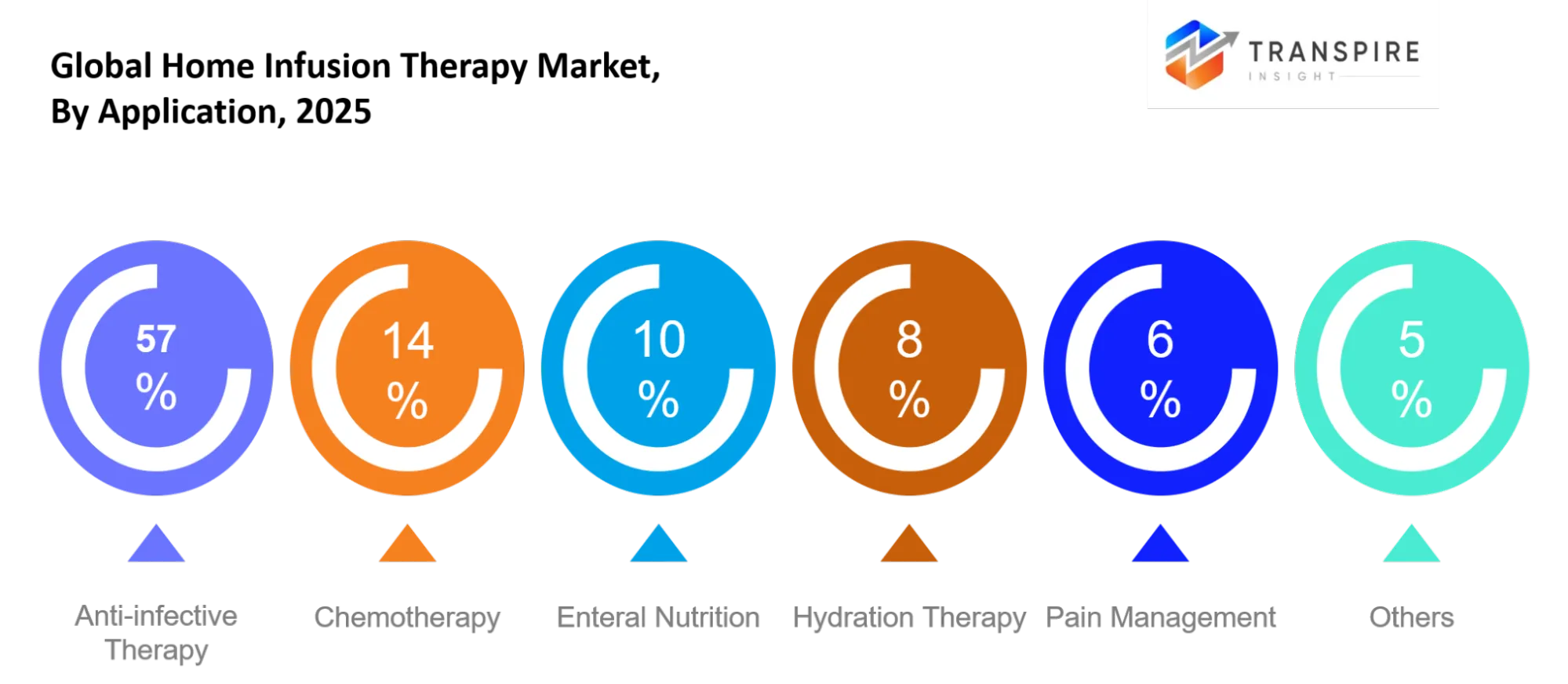
By End-User:
As the health system is shifting to home-based care delivery, the settings of home care are becoming more and more important; hospitals, specialist clinics, ambulatory care centres, and other facilities serve as referral and care management hubs.
By Distribution Channel:
Hospital pharmacies remain important players in the healthcare paradigm, while retail and online pharmacies are enhancing access, leading to a more unified, patient-centred therapy landscape. Such changes are increasing treatment flexibility, as patients can be timely treated through more patient-aligned pathways that fit with their everyday lifestyle and healthcare preferences.
What are the Key Use Cases Driving the Global Home Infusion Therapy Market?
The most significant home infusion market application is the administration of infusion-based drugs that provide long-term therapy for complex and chronic illnesses. It contributes to the convenience of patients, helps them follow the course of therapy, and contributes to the reduction of hospital dependence.
Its range of applications is widening across anti-infectives, parenteral nutrition, pain therapy, and hydration therapy. The use of home services for the treatment of various diseases is becoming more popular due to the efficiency of care and greater convenience for the patients.
Growing market opportunities include the application of therapy with biologics and immunoglobulins, and the creation of treatment plans with technological assistance. Remote monitoring systems and tailor-made treatment options lead to safer and more responsive care delivery, which confirms the importance of home infusion services.
|
Report Metrics |
Details |
|
Market size value in 2025 |
USD 40.68 Billion |
|
Market size value in 2026 |
USD 44.38 Billion |
|
Revenue forecast in 2033 |
USD 81.67 Billion |
|
Growth rate |
CAGR of 9.10% from 2026 to 2033 |
|
Base year |
2025 |
|
Historical data |
2021 - 2024 |
|
Forecast period |
2026 - 2033 |
|
Report coverage |
Revenue forecast, competitive landscape, growth factors, and trends |
|
Regional scope |
United States; Canada; Mexico; United Kingdom; Germany; France; Italy; Spain; Denmark; Sweden; Norway; China; Japan; India; Australia; South Korea; Thailand; Brazil; Argentina; South Africa; Saudi Arabia; United Arab Emirates |
|
Key company profiled |
Baxter International, B. Braun, ICU Medical, Fresenius Kabi, Smiths Medical, Moog Inc., Terumo, Avanos Medical, Option Care Health, CareFusion, Nipro, Medtronic, CVS Health, BD, Caesarea Medical |
|
Customization scope |
Free report customisation (country, regional & segment scope). Avail customised purchase options to meet your exact research needs. |
|
Report Segmentation |
By Type (Infusion Pumps, Intravenous Sets, Needleless Connectors, Ambulatory Pumps, Elastomeric Pumps, Disposable Infusion Devices, Others); By Application (Anti-infective Therapy, Chemotherapy, Enteral Nutrition, Hydration Therapy, Pain Management, Others); By End-User (Hospitals, Homecare Settings, Specialty Clinics, Ambulatory Centers, Others); By Distribution Channel (Hospital Pharmacies, Retail Pharmacies, Online Pharmacies, Others) |
Which Regions are Driving the Global Home Infusion Therapy Market Growth?
The North American home infusion therapy market currently dominates the home infusion therapy market. Its share is 38% of overall revenue due to a strong reimbursement framework, developed home care systems, and acceptance of ambulatory care models. The established partnership between health care providers, insurers, and infusion service providers enabled the quick transfer of complicated therapies into homes. Patient acceptance and continuous technology investments in connected care systems strengthen the leadership position of the region.
Europe constitutes the marketplace, which accounted for 23% and possesses a relatively moderate and significantly stable growth pattern. It is driven not by, as in North America, but by established public health systems and organised chronic disease management programs. Stable legislative systems and a focus on efficient care delivery are enabling it to sustain. It continues to grow via coordinated health pathways that focus on ease of access and quality results. In February 2026, Fresenius Kabi partnered with Phlow Corp. to construct a domestic, end-to-end medical production infrastructure. This international collaboration secures the continuous production of critical medical liquids like epinephrine injection, protecting European and global hospital supplies from severe drug shortages.
The most rapidly developing region is the Asia Pacific, accounting for 31% market share and predicted to grow at a CAGR of 12.9%. The recent advancements in health care infrastructure, increase in the accessibility of speciality health care, and increasing preference for home-care treatments have entirely changed the scenario. Investment in digital health platforms and home care services in emerging markets is creating opportunities. Healthcare modernisation will make the Asia Pacific a growing hub of the future market.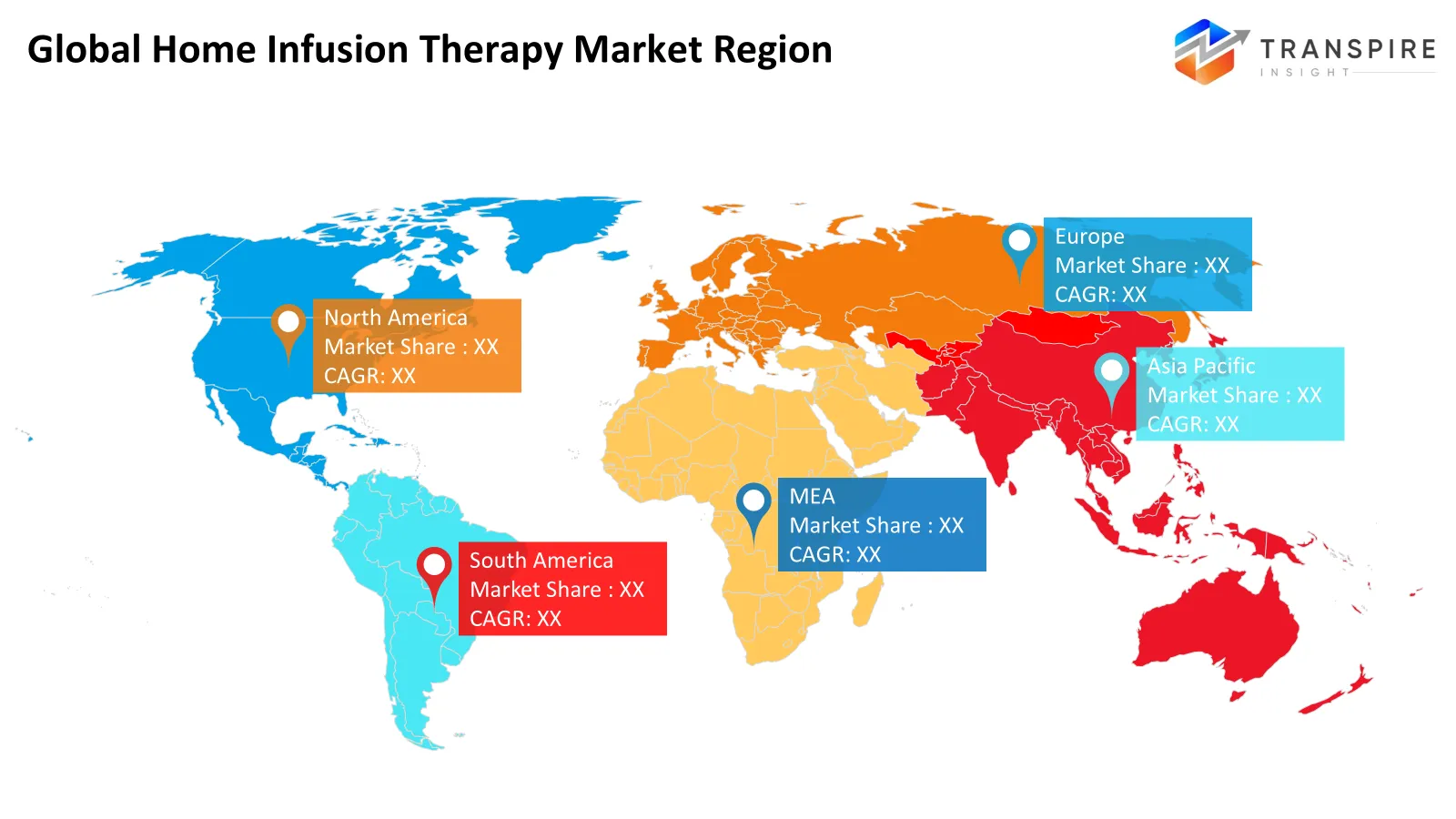
Who are the Key Players in the Global Home Infusion Therapy Market and how do they Compete?
The Global Home Infusion Therapy Market is largely focused on competition in terms of clinical efficacy, convenience, treatment accuracy, and integrated care. The competitive landscape is more focused on connected infusion technology, supported by dedicated clinical services, broader home care network coverage, and evidence-based care management, rather than solely on product offerings. Key factors to consider for success in the market are ensuring high adherence rates for patients while lowering costs for healthcare systems.
Innovation-based strategies define Baxter International, B. Braun, ICU Medical, Fresenius Kabi, Smiths Medical, Moog Inc., Terumo, Nipro, Medtronic, BD, and Caesarea Medical, whose strategies are differentiated through the superior design of their infusion pumps, safety features, medication accuracy, and digital monitoring functionalities. Their strategies centre on product improvement, regulatory approvals, partnerships, and widening geographical coverage to increase accessibility for home therapies. Option Care Health and CVS Health are primarily differentiation-based providers through integrated care delivery and patient support infrastructure across their networks. Avanos Medical and CareFusion differentiate through their specialised infusion therapy and pain management tools, respectively. All companies invest in developing interconnected care systems, professional training, and a bespoke service model for a sustainable advantage.
Key Players are:
- Baxter International
- B. Braun
- ICU Medical
- Fresenius Kabi
- Smiths Medical
- Moog Inc.
- Terumo
- Avanos Medical
- Option Care Health
- CareFusion
- Nipro
- Medtronic
- CVS Health
- BD
- Caesarea Medical
Recent Development News
- In June 2026, WeInfuse partnered with Eitan Medical to connect smart infusion pump technology with its clinical workflows. This software integration enables bidirectional data exchange between Sapphire pumps and clinical charting to reduce manual documentation errors for ambulatory and home pharmacy providers.
What Strategic Insights Define the Future of the Global Home Infusion Therapy Market?
The home infusion therapy market is transforming from a strategy of cost containment into a cornerstone of a decentralised approach to care. Clinically advanced treatments, delivered at the convenience and comfort of a home environment, offer simultaneously improved patient satisfaction, compliance, and outcomes. Fragmentation of coordination across providers, payers, and caregivers is a significant, often unseen risk that could compromise the quality of treatment and monitoring for the patient. Integration of connected infusion devices with predictive analytics and remote virtual clinical monitoring, allowing for more accurate, flexible delivery of infusions, represents a massive opportunity. Those in the market should embrace interoperable care models, invest in professional support structures, and develop outcome-based service delivery models to take advantage of this market transformation. Successful participants will find that aligning technology with the personal experience of the patient leads to durable, long-term leadership.
Key Segmentations are:
-
By Type
- Infusion Pumps
- Intravenous Sets
- Needleless Connectors
- Ambulatory Pumps
- Elastomeric Pumps
- Disposable Infusion Devices
- Others
-
By Application
- Anti-infective Therapy
- Chemotherapy
- Enteral Nutrition
- Hydration Therapy
- Pain Management
- Others
-
By End-User
- Hospitals
- Homecare Settings
- Specialty Clinics
- Ambulatory Centres
- Others
-
By Distribution Channel
- Hospital Pharmacies
- Retail Pharmacies
- Online Pharmacies
- Others
Regional Outlook
North America
- United States
- Canada
- Mexico
Europe
- Germany
- United Kingdom
- France
- Spain
- Italy
- Rest of Europe
Asia Pacific
- Japan
- China
- Australia & New Zealand
- South Korea
- India
- Rest of Asia Pacific
South America
- Brazil
- Argentina
- Rest of South America
Middle East & Africa
- Saudi Arabia
- United Arab Emirates
- South Africa
- Rest of the Middle East & Africa
Frequently Asked Questions
Find quick answers to common questions.
The Global Home Infusion Therapy Market size was valued at USD 40.68 billion in 2025 and is poised to reach USD 81.67 billion by 2033, expanding at a 9.10% CAGR.
Key segments for the Global Home Infusion Therapy Market are By Type (Infusion Pumps, Intravenous Sets, Needleless Connectors, Ambulatory Pumps, Elastomeric Pumps, Disposable Infusion Devices, Others); By Application (Anti-infective Therapy, Chemotherapy, Enteral Nutrition, Hydration Therapy, Pain Management, Others); By End-User (Hospitals, Homecare Settings, Specialty Clinics, Ambulatory Centers, Others); By Distribution Channel (Hospital Pharmacies, Retail Pharmacies, Online Pharmacies, Others).
Growth is primarily driven by the shift toward home-based care, rising chronic disease burden, advanced infusion technologies, and the need for cost-efficient treatment delivery.
The Global Home Infusion Therapy Market is led by major manufacturers, including Baxter International, B. Braun, ICU Medical, Fresenius Kabi, Smiths Medical, Moog Inc., Terumo, Avanos Medical, Option Care Health, CareFusion, Nipro, Medtronic, CVS Health, BD, and Caesarea Medical.
North America holds 38% of the Market, supported by strong healthcare infrastructure, favourable reimbursement systems, and widespread adoption of home infusion services.
Commercial opportunities include smart infusion technologies, remote patient monitoring, expansion in emerging Markets, and investments in home Healthcare Networks.
- Baxter International
- B. Braun
- ICU Medical
- Fresenius Kabi
- Smiths Medical
- Moog Inc.
- Terumo
- Avanos Medical
- Option Care Health
- CareFusion
- Nipro
- Medtronic
- CVS Health
- BD
- Caesarea Medical
About the Authors

Pankaj Ghogare Patil
I am Pankaj Ghogare Patil, a Senior Research Analyst at Transpire Insight, specializing in the Pharmaceutical, Chemicals & Materials, Healthcare IT, and Biotechnology industry. My expertise lies in conducting comprehensive market research, analyzing industry trends, evaluating competitive landscapes, and translating complex data into actionable insights. At Transpire Insight, I closely follow emerging technologies, regulatory developments, and market innovations to create accurate, well-researched, and informative content that helps businesses and professionals make informed decisions. I am committed to producing credible, evidence-based articles that reflect industry best practices while making technical topics accessible and valuable for a broad audience.

Chakradhar Khansole
Chakradhar serves as the Research Director at Transpire Insight, bringing over 8 years of experience in technology, innovation, and strategic market intelligence. He specializes in transforming complex market data into actionable business insights that enable organizations to make informed, growth-oriented decisions. Recognized for his strategic vision and analytical expertise, Chakradhar leads high-impact research initiatives, delivering comprehensive market assessments, competitive intelligence, and forward-looking industry analysis.
Recently Published Reports
-
Jul 2026
Alopecia Treatment Market
Alopecia Treatment Market Size, Share & Analysis Report By Disease Type (Alopecia Areata, Cicatricial Alopecia, Traction Alopecia, Alopecia Totalis, Androgenetic Alopecia, Alopecia Universalis, and Other Disease Types), By Treatment Type (Topical Treatments, Oral Medications, Injectable Therapies, and Hair Transplantation), By Gender (Male, and Female), By Distribution Channel (Hospitals and Clinics, Retail Pharmacies, and Online Retailers), and Geography (North America, Europe, Asia-Pacific, Middle East and Africa, South and Central America), 2021 - 2031
-
Jul 2026
Medical Ultrasound Probe Market
Medical Ultrasound Probe Market Size, Share & Analysis Report By Type (Linear Type, Convex Type, Endocavitary Probe, Phased Array/Cardiac Probe, Transesophageal (TEE) Probe, and Others), By Application (Ophthalmology, Cardiology, Musculoskeletal, Oncology, Obstetrics & Gynecology, General Imaging, and Others), By End User (Hospitals & Clinics, Diagnostic Centers, Ambulatory Surgical Centers, and Others), and Geography (North America, Europe, Asia-Pacific, Middle East and Africa, South and Central America), 2021 – 2031
-
May 2026
Biosimilars Market
Biosimilars Market By Product Type (Monoclonal Antibodies, Recombinant Hormones, Erythropoietin, G-CSF, Others), By Indication (Oncology, Autoimmune Diseases, Blood Disorders, Diabetes, Others), By Manufacturing Type (In-House Manufacturing, Contract Manufacturing), By Distribution Channel (Hospital Pharmacies, Retail Pharmacies, Online Pharmacies), By Industry Analysis, Size, Share, Growth, Trends, and Forecasts 2021-2033
-
Apr 2026
Gastrointestinal Endoscopy Market
Gastrointestinal Endoscopy Market By Type (Rigid Gastrointestinal Endoscope, Flexible Gastrointestinal Endoscopes, Disposable Gastrointestinal Endoscope), By Procedure Type (Colonoscopy, Gastroscopy, Duodenoscopy, Enteroscopy, Flexible Sigmoidoscopy, Others), By Application (Diagnosis, Treatment), By End-Users (Hospitals, Ambulatory Surgical Centers, Specialty Clinics, Laboratories, Others), By Industry Analysis, Size, Share, Growth, Trends, and Forecasts 2021-2033