

Global Dental Dust Collector Market Size & Forecast:
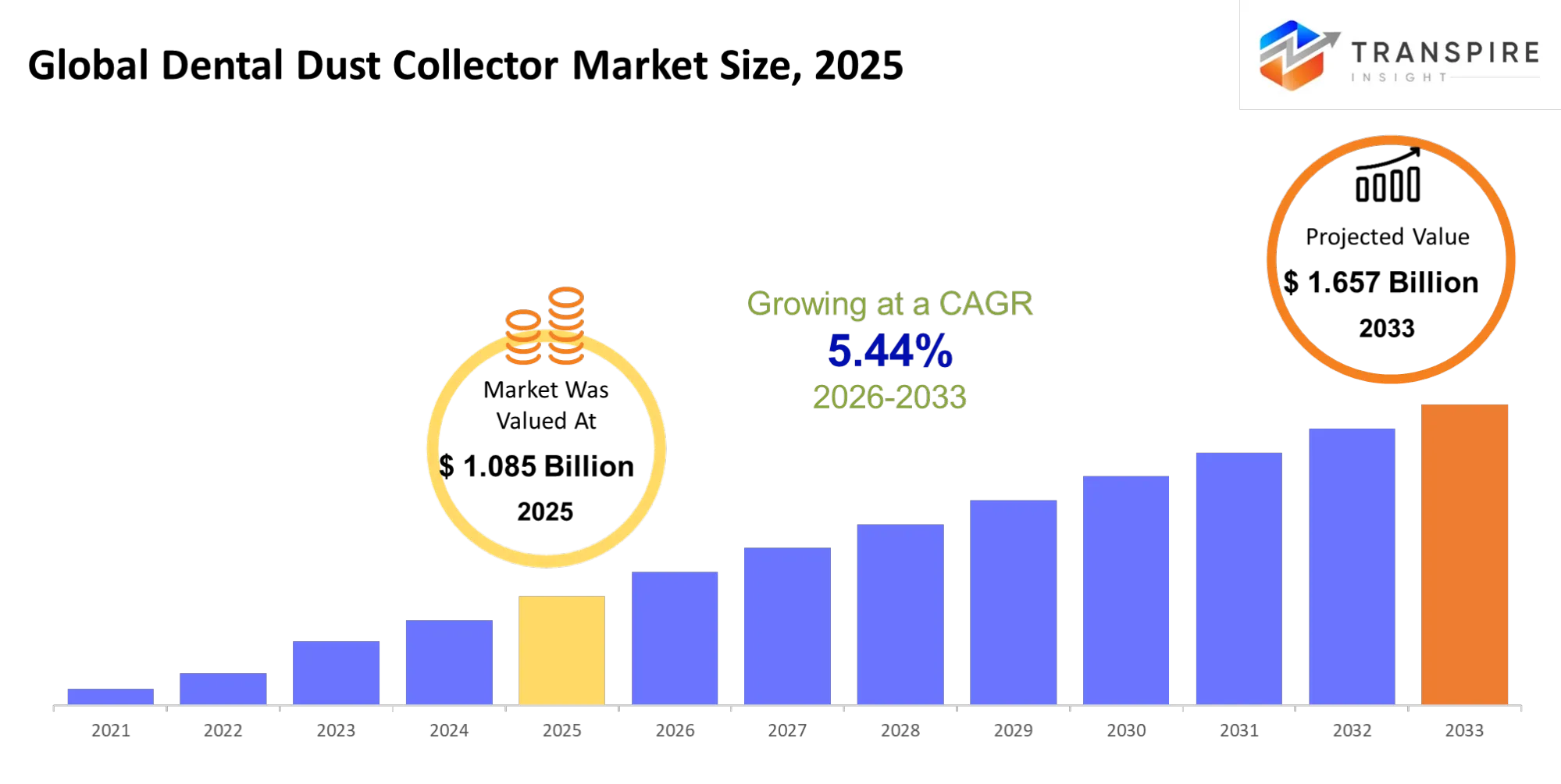
- Global Dental Dust Collector Market Size 2025: USD 1.085 billion
- Global Dental Dust Collector Market Size 2033: USD 1.657 billion
- Global Dental Dust Collector Market CAGR: 5.44%
- Global Dental Dust Collector Market Segments: By Type (Portable Dust Collectors, Centralized Dust Collection Systems, Wet Dust Collectors, Dry Dust Collectors, HEPA-filter Dust Collectors, Smart Dust Collection Systems, Others); By Application (Dental Laboratories, Orthodontic Clinics, Prosthodontic Procedures, Implantology Labs, CAD/CAM Milling Operations, Others); By End-User (Dental Clinics, Dental Laboratories, Hospitals, Specialty Dental Centers, Others); By Filtration Technology (HEPA Filtration, Activated Carbon Filtration, Cyclonic Filtration, Hybrid Filtration Systems, Others)
Global Dental Dust Collector Market Summary:
The Global Dental Dust Collector Market size is estimated at USD 1.085 billion in 2025 and is anticipated to reach USD 1.657 billion by 2033, growing at a CAGR of 5.44% from 2026 to 2033.
Dental dust collection systems are now a must-have in dental labs and clinics. They help keep the work area clean during procedures like grinding, polishing and milling. These systems reduce the particles in the air that come from dental materials. This makes the workplace safer. Helps with precise work.
The market for these systems has changed a lot over the past few years. It used to be about filtration equipment. Now it's smart and efficient dust management solutions. The big change has been the use of filtration technologies and monitoring systems. More dental labs are using CAD/CAM technology. There's a greater focus on keeping workers safe. This has increased the demand for these systems. As dental labs do digital production, they create more fine particles. This makes it more important to have good dust extraction systems. The need for these systems is closely tied to the growth of dental production and workplace safety. This is driving the market worldwide.
Key Market Insights:
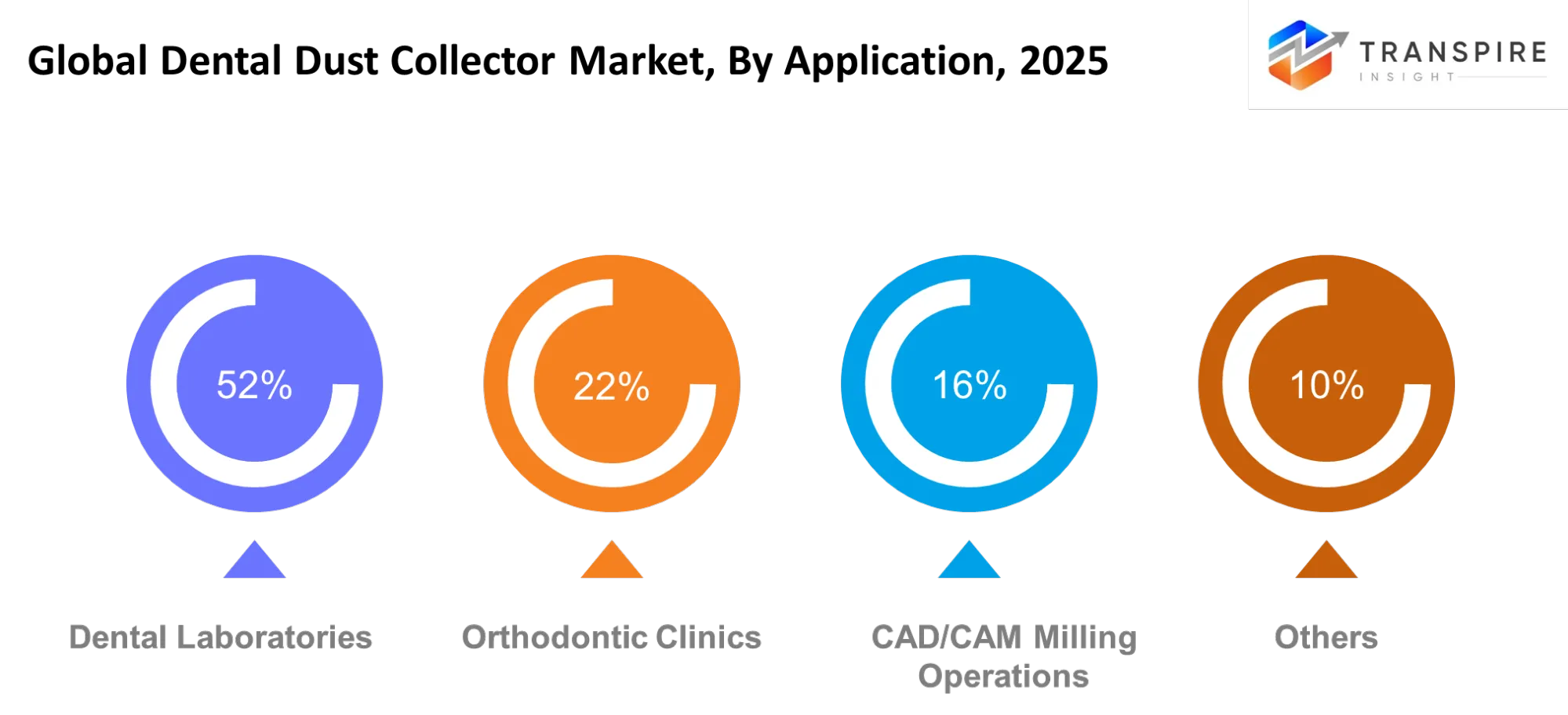
- Dental labs make up 52% of the demand for dust management. They need to remove dust when making restorations.
- Orthodontic clinics make up around 22% of demand. They. Adjust dental appliances.
- Milling centres that use computers to make dental parts make up 16% of demand. This area is growing fast. Other areas, like hospitals, make up around 10% of demand.
- Smart dust collection systems are becoming very popular. They are expected to grow by 9.6% each year.
- Companies are adding features to their systems that help manage filters and work better. Systems that use HEPA filters are becoming more popular. They can catch small particles.
- Dental clinics are focusing on keeping employees safe and air clean. They want to follow rules. Dust collection systems are being connected to workflows. This makes work easier.
- Companies are making systems that're smaller and use less energy. They want to save money and still clean the air well.
- Dental labs and clinics are key to the market. They need dust management. Labs make parts. They create a lot of dust.
- Milling centres make parts with computers. They also create dust. Smart systems are the future. They help clinics work better.
What are the Key Drivers, Restraints, and Opportunities in the Global Dental Dust Collector Market?
Drivers
The fast growth in digital dentistry and CAD/CAM restoration making is a big reason for growth too. As labs work with more zirconia, ceramic, resin, and metal, they create tons of dust. To keep things clean and workers safe, there's a real need for top-notch dust collection systems. With the bigger focus on safety these days, more labs are jumping on board to stay efficient and compliant.
Restraints
Safety is getting more attention too, which is why you see this gear showing up more across labs and dental spots. But even with all that need, growth hits snags due to pricey equipment and upkeep needs. These advanced filtration systems usually require special filters, regular fixes, and some tech know-how. That's why smaller labs and indie clinics might wait before upgrading due to cash constraints.
Opportunities
Especially in developing areas, capital investments must pass strict tests. Still, looking ahead, there’s promise in smart dust management tech. Imagine monitors tracking airflow, filter health, and service logs—they can ramp up efficiency and cut downtime. The money being poured into connected dental setups, especially in the Asia-Pacific region, will likely clear a path for fresh profit streams. Places going full steam into digital processes will probably go for these total dust management systems that help automate tasks and boost output.
What Has the Impact of Artificial Intelligence Been on the Global Dental Dust Collector Market?
Artificial intelligence is slowly changing dust collection operations by making monitoring and predictive maintenance way smarter. It helps spot problems early by analysing things like airflow, filter performance, and how the equipment is being used, which cuts down on unexpected breakdowns and saves time. This is especially useful for dental labs that run their CAD/CAM stuff constantly. They no longer need fixed schedules; now they can base their maintenance on actual data collected during operation.
As a result, costs drop and efficiency goes up.AI helps save energy too. Systems adjust based on the current workload, cutting out the waste while keeping the air clean. And at bigger places, central monitoring gives managers a clear view of what's happening in real-time across all their dust collection units, making things much easier to control. Still, there are hurdles. The first expense can really add up, and blending these smart systems with older gear needs some tech know-how. Small dental businesses might struggle with this due to their budget limits. Even so, experts see AI playing a bigger part in making these systems more dependable and safer in the dental industry. In March 2025, UptimeHealth showed how AI is big in managing dental gear now. They pointed out that AI does great work in predicting maintenance needs and keeping tabs on stuff from afar. Because of this, dentists can catch problems early, stop downtimes, and plan their upkeep better. It's helping a lot with dental dust collection systems too, which shows how important AI is becoming in this field.
Key Market Trends:
- The growth of dentistry has led to a greater need for specialised dust management systems in dental labs.
- To keep up with production, dental laboratories are investing in powerful extraction equipment.
- More and more labs are using monitoring to keep track of their systems rather than relying on manual maintenance.
- Stricter filtration standards are driving the adoption of technologies that can capture tiny particles.
- Dental facilities are looking for ways to lower their operating expenses, and energy-efficient system designs are becoming more popular.
- In labs where space's limited, compact equipment configurations are becoming the preferred choice. The use of HEPA filtration is on the rise as dental facilities strive to improve air quality.
- When it comes to dust collection systems, manufacturers are focusing on making them easy to use and able to be monitored.
Global Dental Dust Collector Market Segmentation
By Type
The market for dust collectors covers portable units, centralised systems, wet and dry collectors, HEPA-filter models, smart systems, and various other special solutions. Traditional dry and HEPA-filter systems remain very popular due to their effectiveness at catching fine dust particles. Smart systems, though, are becoming more and more popular. They're growing at an estimated CAGR of 9.6% thanks to features like real-time monitoring and predictive maintenance.
By Application
Dental labs lead in demand, making up around 52% of the market, because of how much dust they generate from grinding and polishing. Orthodontic clinics follow with nearly 22% of the demand since they need to manage dust during fabrication and adjustments. CAD/CAM milling operations contribute another 16%, which aligns with the rise of digital technology in manufacturing. The remaining applications together make up about 10% of the market.
By End Users
End users, like dental labs, still hold major influence because of their constant production and frequent use of equipment. Meanwhile, dental clinics are going for smaller, portable systems to boost cleanliness and meet regulations. Hospitals and speciality centres are also hopping on the bandwagon, pumping money into top-notch filtration to back their bigger infection-control and environment-management efforts. Moving forward, growth will get a boost from expanding digital dentistry tools and increasing focus on staff safety.
By Filtration Technology
HEPA filters stay popular because they nab super tiny particles made during dental work. For dealing with smells and general air cleaning, activated carbon filters are seeing more action. Plus, cyclonic filtration is becoming a go-to for improving how particles are split up early on. Finally, combining different methods in hybrid systems looks set to catch on big time, as places look to tackle all aspects of air quality in one go.
What are the Key Use Cases Driving the Global Dental Dust Collector Market?
In dental labs, the main use is for controlling dust during activities like restoration making, polishing, and trimming. These tasks create a lot of particle mess, so good collection systems keep things precise, clean, and safe for workers.
There's also a growing need in ortho clinics and CAD/CAM milling spots. With the rise of digital manufacturing, there's a need for specialised suction setups that can handle very fine particles from ceramics and composites.
Another cool thing is how these dust systems work with auto production gear in high-tech labs. This setup enables real-time tracking, predictive maintenance, and connected facility management, offering promising opportunities for advanced tech integration.
|
Report Metrics |
Details |
|
Market size value in 2025 |
USD 1.085 Billion |
|
Market size value in 2026 |
USD 1.144 Billion |
|
Revenue forecast in 2033 |
USD 1.657 Billion |
|
Growth rate |
CAGR of 5.44% from 2026 to 2033 |
|
Base year |
2025 |
|
Historical data |
2021 - 2024 |
|
Forecast period |
2026 - 2033 |
|
Report coverage |
Revenue forecast, competitive landscape, growth factors, and trends |
|
Regional scope |
United States; Canada; Mexico; United Kingdom; Germany; France; Italy; Spain; Denmark; Sweden; Norway; China; Japan; India; Australia; South Korea; Thailand; Brazil; Argentina; South Africa; Saudi Arabia; United Arab Emirates |
|
Key company profiled |
Renfert, Vaniman, Buffalo Dental, Handler Manufacturing, Quatro Air Technologies, DentalEZ, KaVo Dental, Dentsply Sirona, Wassermann Dental, Bego, Whip Mix, Manfredi, Sinol Dental, Handler Red Wing, Dekema |
|
Customization scope |
Free report customization (country, regional & segment scope). Avail customized purchase options to meet your exact research needs. |
|
Report Segmentation |
By Type (Portable Dust Collectors, Centralized Dust Collection Systems, Wet Dust Collectors, Dry Dust Collectors, HEPA-filter Dust Collectors, Smart Dust Collection Systems, Others); By Application (Dental Laboratories, Orthodontic Clinics, Prosthodontic Procedures, Implantology Labs, CAD/CAM Milling Operations, Others); By End-User (Dental Clinics, Dental Laboratories, Hospitals, Specialty Dental Centers, Others); By Filtration Technology (HEPA Filtration, Activated Carbon Filtration, Cyclonic Filtration, Hybrid Filtration Systems, Others) |
Which Regions are Driving the Global Dental Dust Collector Market Growth?
North America
North America dominates the market with about 38% of global demand. They have advanced dental infrastructure, and digital tech is widely used there. Also, they've got strict workplace safety rules, which push equipment updates. Big investments in lab modernisation and automation help too. People in North America know the deal when it comes to air quality management in clinics. In January 2025, Dentsply Sirona expanded its CAD/CAM dental solutions in North America, boosting in-house milling. With more milling, there's a higher need for systems that collect dental dust to keep the air clean and ensure safety.
Europe
Europe follows closely with around 29% of the market share. The steady growth there comes from regulation compliance and the need for equipment replacement. Their solid position is backed by well-established healthcare systems and strict environmental standards. Consistent technology adoption keeps their labs top-notch. It makes Europe a key spot for dental equipment innovation. In May 2025, Renfert GmbH launched the SILENT XS mobile suction unit It hit the market for clinics and labs in Europe, showing that folks there want better ways to manage dust.
Asia Pacific
The Asia Pacific region grabs nearly 24% of the market. Plus, it's got the highest growth rate, at about 10.2% CAGR. There, dental services are booming, and digital dentistry is getting more cash flow. With growing lab capacity and rising tech adoption, especially in CAD/CAM, it’s clear there are big chances for dust collection equipment suppliers. In April 2026, the Association of Digital Dentistry in Asia (ADDA) pushed digital dentistry tech with Digi Dent 2.0. More use of CAD/CAM in dentists' offices is boosting the need for fancy dust collection systems too, throughout the region.

Who are the Key Players in the Global Dental Dust Collector Market and how do they Compete?
The competition in the Global Dental Dust Collector Market mainly revolves around how well products filter, how reliable they are, their automation abilities, and their energy efficiency. Companies stand out with advanced monitoring tech, smaller designs, and customised solutions for labs.
A lot of firms focus on innovation, making smart filtration systems that improve operational views and cut down on maintenance costs. They make their products better by catching particles more efficiently, being quieter, and using less energy. Some providers expand their offerings to fit digital dentistry and CAD/CAM setups too. Some companies go for niche markets, focusing on certain lab needs or top-of-the-line filtering tech. Expanding geographically, partnering with distributors, and boosting service networks are still major ways to grow in the market. With digital workflows getting more common, suppliers who can tie dust management systems into wider connected lab ecosystems will likely have a big advantage.
Global Dental Dust Collector Market Companies
- Renfert
- Vaniman
- Buffalo Dental
- Handler Manufacturing
- Quatro Air Technologies
- DentalEZ
- KaVo Dental
- Dentsply Sirona
- Wassermann Dental
- BEGO
- Whip Mix
- Manfredi
- Sinol Dental
- Handler Red Wing
- Dekema
Recent Development News
In January 2025, Quatro Air Technologies released the iVac Twin, a high-capacity dental dust collector. It boosts the runtime of high-volume milling centres with its dual-motor setup. This allows maintenance without downtime, even during intense CAD/CAM processing of zirconia and PMMA.
In January 2026, the Benco Dental team-up with Dentsply Sirona got bigger across the country. Now, Dentsply Sirona's whole digital lab stuff, like CAD/CAM systems, is right in Benco's showrooms. This makes it easier to set up new gear and fix workflows in dental offices.
In May 2025, Renfert teamed up with Vaniman Manufacturing to add smart-sensor tech to their automated clean-air systems. This links the dust extractor's suction to the dental grinder's speed in real time, cutting down on microplastic and particle exposure for lab techs. So it not only improves air quality but also protects technicians' health.
What Strategic Insights Define the Future of the Global Dental Dust Collector Market?
The market's headed for smarter, more connected, and efficient dust management systems that fit into the bigger picture of dental manufacturing's digital shift. Companies will need automation, predictive maintenance, and links to lab production software to stay competitive down the line.
Another concern's the growing complexity of maintenance for advanced filter tech. If facilities don't keep up with service needs, watch out for high costs and equipment running poorly. Smart monitoring, AI-driven upkeep, and more CAD/CAM use present some cool chances. Supply businesses that offer combo solutions instead of just stand-alone gear will probably do better. For staying ahead, orgs should focus on systems that save energy, connect digitally, and scale up. This matters as dental labs move further into automated setups.
Global Dental Dust Collector Market Segmentation:
By Type
- Portable Dust Collectors
- Centralized Dust Collection Systems
- Wet Dust Collectors
- Dry Dust Collectors
- HEPA-filter Dust Collectors
- Smart Dust Collection Systems
By Application
- Dental Laboratories
- Orthodontic Clinics
- Prosthodontic Procedures
- Implantology Labs
- CAD/CAM Milling Operations
By End-User
- Dental Clinics
- Dental Laboratories
- Hospitals
- Specialty Dental Centers
By Filtration Technology
- HEPA Filtration
- Activated Carbon Filtration
- Cyclonic Filtration
- Hybrid Filtration Systems
Regional Outlook
North America
- United States
- Canada
- Mexico
Europe
- Germany
- United Kingdom
- France
- Spain
- Italy
- Rest of Europe
Asia Pacific
- Japan
- China
- Australia & New Zealand
- South Korea
- India
- Rest of Asia Pacific
South America
- Brazil
- Argentina
- Rest of South America
Middle East & Africa
- Saudi Arabia
- United Arab Emirates
- South Africa
- Rest of the Middle East & Africa
Frequently Asked Questions
Find quick answers to common questions.
The Global Dental Dust Collector Market size was valued at USD 1.085 Billion in 2025 and is poised to reach USD 1.657 Billion by 2033, expanding at a 5.44% CAGR.
Key segments for the Global Dental Dust Collector Market are By Type (Portable Dust Collectors, Centralized Dust Collection Systems, Wet Dust Collectors, Dry Dust Collectors, HEPA-filter Dust Collectors, Smart Dust Collection Systems, Others); By Application (Dental Laboratories, Orthodontic Clinics, Prosthodontic Procedures, Implantology Labs, CAD/CAM Milling Operations, Others); By End-User (Dental Clinics, Dental Laboratories, Hospitals, Specialty Dental Centers, Others); By Filtration Technology (HEPA Filtration, Activated Carbon Filtration, Cyclonic Filtration, Hybrid Filtration Systems, Others).
Growth is primarily driven by the Global Dental Dust Collector Market growing mainly because of more dental procedures, increased awareness about infection control and workplace safety, tougher health rules, and the rising use of advanced equipment in clinics and labs.
The global market is led by major manufacturers including Renfert, Vaniman, Buffalo Dental, Handler Manufacturing, Quatro Air Technologies, DentalEZ, KaVo Dental, Dentsply Sirona, Wassermann Dental, Bego, Whip Mix, Manfredi, Sinol Dental, Handler Red Wing, Dekema.
North America has about 38% of the Global Dental Dust Collector Market. It's due to advanced dental care, modern tech use, strict safety rules, and big companies being there. So, the area leads with these factors combined.
The Global Dental Dust Collector Market has big chances because more folks use advanced dental gear, there's a higher need for cleaner workspaces, and people pay closer attention to health standards. Also, expanding dental labs and cosmetic dentistry are boosting demand for systems that are not only efficient but compact and save energy too.
- Renfert
- Vaniman
- Buffalo Dental
- Handler Manufacturing
- Quatro Air Technologies
- DentalEZ
- KaVo Dental
- Dentsply Sirona
- Wassermann Dental
- BEGO
- Whip Mix
- Manfredi
- Sinol Dental
- Handler Red Wing
- Dekema
About the Authors

Pankaj Ghogare Patil
I am Pankaj Ghogare Patil, a Senior Research Analyst at Transpire Insight, specializing in the Pharmaceutical, Chemicals & Materials, Healthcare IT, and Biotechnology industry. My expertise lies in conducting comprehensive market research, analyzing industry trends, evaluating competitive landscapes, and translating complex data into actionable insights. At Transpire Insight, I closely follow emerging technologies, regulatory developments, and market innovations to create accurate, well-researched, and informative content that helps businesses and professionals make informed decisions. I am committed to producing credible, evidence-based articles that reflect industry best practices while making technical topics accessible and valuable for a broad audience.

Chakradhar Khansole
Chakradhar serves as the Research Director at Transpire Insight, bringing over 8 years of experience in technology, innovation, and strategic market intelligence. He specializes in transforming complex market data into actionable business insights that enable organizations to make informed, growth-oriented decisions. Recognized for his strategic vision and analytical expertise, Chakradhar leads high-impact research initiatives, delivering comprehensive market assessments, competitive intelligence, and forward-looking industry analysis.
Recently Published Reports
-
Apr 2026
AI in Diabetic Retinopathy Market
AI in Diabetic Retinopathy Market Size, Share & Analysis Report By Type (Screening AI Systems, Diagnostic AI Systems, and Predictive AI Models), By Application Segment (Hospitals, Ophthalmology Clinics, Diagnostic Centers, and Research and Development), and Geography (North America, Europe, Asia-Pacific, Middle East and Africa, South and Central America), 2021 - 2031
-
Apr 2026
Psychometric Tests Market
Psychometric Tests Market Size, Share & Analysis Report By Type (Personality Tests, Ability/Aptitude Tests, Skill/Knowledge Tests, and Others), By Application (Talent Acquisition and Talent Management), and Geography (North America, Europe, Asia-Pacific, Middle East and Africa, South and Central America), 2021 – 2031
-
Apr 2026
Rare Biological Sample Collection Market
Rare Biological Sample Collection Market Size, Share & Analysis Report By Type (Isolation Kits & Reagent, Blood Collection Tubes, and Others), By Application (Oncology, Transcriptomics, Pharmacogenomics, and Others), and Geography (North America, Europe, Asia-Pacific, Middle East and Africa, South and Central America), 2021 – 2031
-
Jul 2026
Diabetic Retinopathy Market
Diabetic Retinopathy Market Size, Share & Analysis Report By Type (Proliferative Diabetic Retinopathy, and Diabetic Macular Edema (DME)), By Treatment Type (Anti VEGF Drug, Steroid Implants, Laser Surgeries, and Vitrectomy), and Geography (North America, Europe, Asia-Pacific, Middle East and Africa, South and Central America), 2021 – 2031
Our Clients







