
Global Creator Economy Market Size & Forecast:
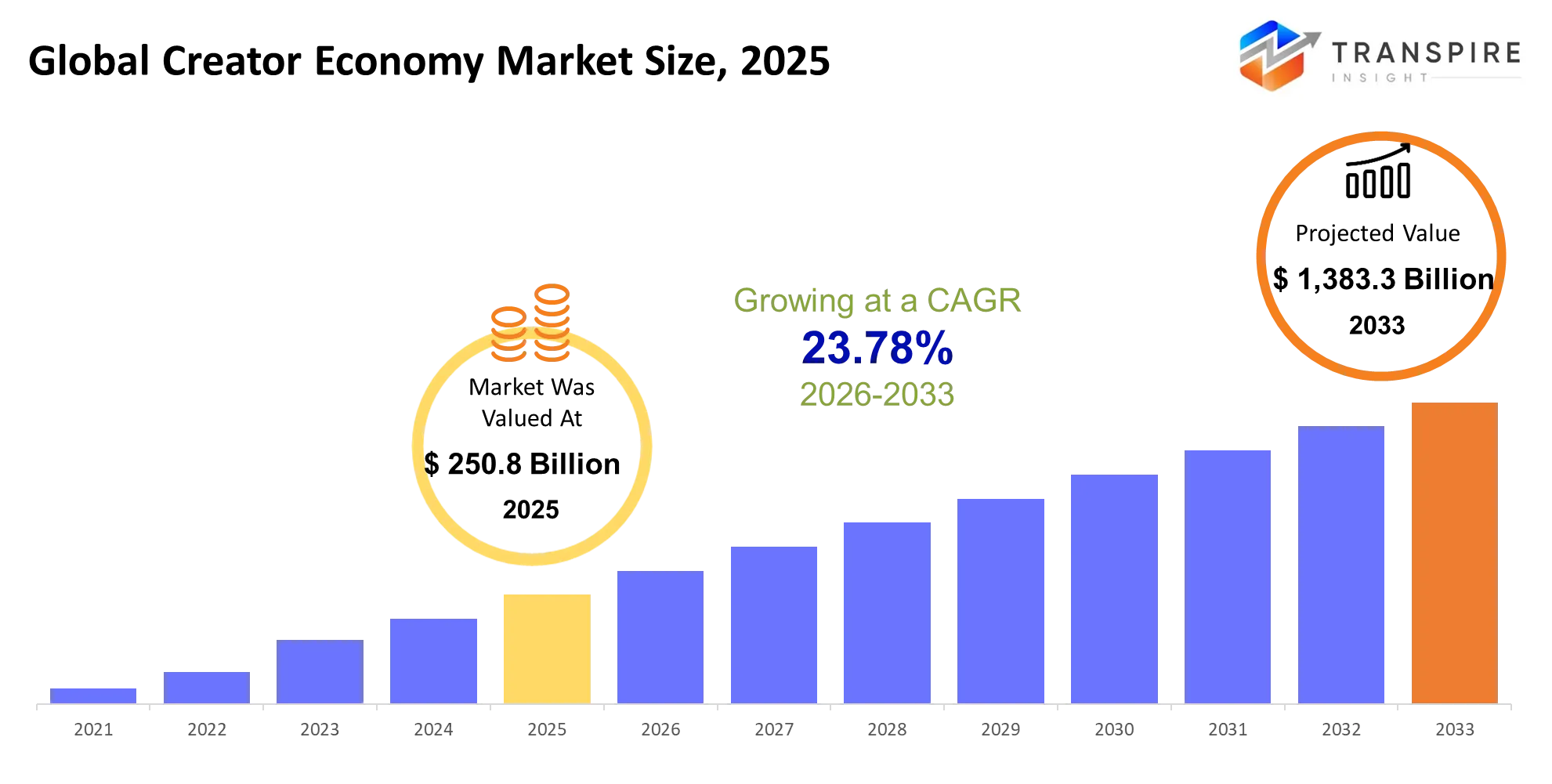
- Global Creator Economy Market Size 2025: USD 250.8 Billion
- Global Creator Economy Market Size 2033: USD 1,383.3 Billion
- Global Creator Economy Market CAGR: 23.78%
- Global Creator Economy Market Segments: By Type (Content Creation Platforms, Creator Monetization Tools, Influencer Marketing Platforms, NFT Creator Platforms, Live Streaming Platforms, Others); By Application (Social Media, Gaming, Education, Entertainment, E-commerce, Others); By End-User (Individual Creators, Enterprises, Agencies, Others); By Revenue Model (Subscriptions, Advertising, Sponsorships, Digital Sales, Others)
Global Creator Economy Market Summary:
As per Transpire Insight Analysis, the global creator economy market size is estimated at USD 250.8 Billion in 2025 and is anticipated to reach USD 1,383.3 Billion by 2033, growing at a CAGR of 23.78% from 2026 to 2033.
This fast-moving sector builds specialized digital software, live streaming setups, and tipping platforms that let independent writers, video hosts, and gamers turn their online followers into reliable businesses. Over the past few years - the entire market has moved beyond relying solely on hit-or-miss corporate brand sponsorships to execute a structural technological shift toward direct fan-to-creator monetization loops.
A major real-world trigger for this change was the sudden explosion of direct-checkout social commerce features across platforms like TikTok and Instagram. This integration gave digital video creators a way to sell physical merchandise and custom products mid-stream, turning passive scrolling directly into instant customer buying loops. Consequently, creators are rapidly ditching standard ad-revenue splits to run their businesses on premium subscriber feeds and individual product sales.
Key Market Insights:
The global creator economy market is undergoing a rapid transition from passive ad-revenue sharing to integrated direct-to-consumer digital businesses. Driven by the expansion of native checkout features, independent media makers are replacing unpredictable brand sponsorships with dedicated white-label commerce storefronts and interactive premium subscription portals to stabilize their monthly earnings.
- Locking down a dominant 59% global revenue share, the social media segment stands as the absolute operational foundation of the market, with tech giants like Meta Platforms aggressively rolling out native storefront setups to keep transactional traffic contained within their apps.
- Expanding at a distinct 17.1% CAGR, the creator monetization tools sector is establishing itself as the primary software engine, driven by platforms like Patreon building out flexible, tiered subscription infrastructure that bypasses standard ad networks.
- Capturing an authoritative 40% share of worldwide revenue, North America functions as the undisputed geographic financial heavyweight, backed by deep corporate marketing pools and platforms like YouTube scaling performance-based affiliate payouts.
- Commanding a highly stable 31% market slice, the Asia-Pacific region continues to lead growth with a 16.2% CAGR, pushing streaming spaces like TikTok to aggressively deploy live shopping modules that blend real-time entertainment with instant checkouts.
- Representing 21% of total industry demand, the European theater relies heavily on strict content compliance and digital asset protections, forcing platforms like Substack to localize their premium newsletter billing setups for diverse regional currencies.
- Securing 14% of the market footprint, the gaming application segment is transitioning from simple stream hosting to highly immersive, community-driven worlds, leveraging interactive toolsets from Discord to monetize dedicated fan servers.
- Accounting for 10% of total procurement volume, the education segment is rapidly integrating structured learning systems, utilizing course-building hubs from Kajabi to let niche experts package their knowledge behind private paywalls.
- Claiming an 8% market share, the entertainment segment is moving toward continuous high-definition broadcasting, leveraging specialized streaming platforms like Twitch to help creators monetize live interactive broadcasts through digital tipping and paid tier emojis.
- Accounting for 4% of total transaction volume, e-commerce application developers are building deep integrations with storefront specialists like Shopify, giving video creators a seamless way to launch, track, and ship physical merchandise lines directly from their social feeds.
What are the Key Drivers, Restraints, and Opportunities in the Global Creator Economy Market?
Driver
The market is expanding rapidly due to a structural transition among digital creators from simple ad-revenue reliance to direct-to-consumer digital monetization models. Traditional ad-revenue sharing setups provide highly volatile, unpredictable income streams that depend heavily on platform algorithm adjustments. This shift was triggered by the widespread integration of native social checkout features and specialized community subscription software, forcing creators to build independent, direct financial relationships with their audiences. This operational transition drives massive adoption of white-label storefronts and private community portals as individual entrepreneurs seek to shield their business revenue from sudden advertising market downturns.
Restraint
The extreme concentration of viewer attention on top-tier influencers, combined with strict regional data protection frameworks, persistently limits wide-scale revenue distribution across the broader market. A deep structural bottleneck exists because less than 10% of global creators manage to secure a livable, full-time income, creating an uneven monetization environment where amateur creators struggle to grow. This imbalance persists because major platform algorithms naturally prioritize established accounts with high engagement histories, while newly introduced digital media compliance standards simultaneously increase platform operating and verification costs for smaller, independent media makers.
Opportunity
The most lucrative growth window lies in embedding specialized, multi-language AI auto-dubbing and localization workflows directly into cross-border video streaming applications. Fusing high-fidelity voice-cloning engines with automatic regional translation networks allows creators to broadcast their content into entirely new international territories with a single click, completely removing historic language barriers. This technological breakthrough opens up massive new subscriber acquisition streams across the fast-growing Asia-Pacific corridor, helping creators capture high-margin, regional advertising spend and localized tipping revenues without needing costly local production teams.
What Has the Impact of Artificial Intelligence Been on the Global Creator Economy Market?
Artificial intelligence is actively transforming the global creator economy from an unorganized, solo-operator struggle into a highly optimized, automated media production environment. Instead of creators spending hours editing raw audio files, drafting social captions, and manually clipping horizontal videos for mobile screens, algorithmic toolsets handle the entire administrative and production backend.
Operationally, generative AI deeply optimizes day-to-day creative workflows across platform lines. Multi-agent systems use smart community managers and auto-distributors to scan incoming direct messages, separating fan notes from commercial brand inquiries to instantly flag monetizable opportunities. Furthermore, AI brings massive predictive capabilities to content planning by analyzing audience retention data curves and trending metadata. This allows individual media brands to forecast video click-through performances and automate complex multi-language voice-cloning runs before publishing a single file, radically expanding cross-border distribution.
However, a major limitation remains the audience authenticity gap. AI tools can easily draft scripts and mimic visual lighting, but deploying fully automated chat agents or synthetic alter-egos often triggers a sharp decline in viewer trust when audiences notice the lack of genuine human perspective.
In March 2026, social commerce storefront developer POP.STORE launched its Echo Me automation assistant program to streamline creator interaction loops. This platform integrates contextual language processing to scan comment blocks and send targeted merchant discount offers directly to high-converting followers on behalf of the creator, allowing solo accounts to manage large-scale direct sales networks without increasing their staff size.
Key Market Trends:
The creator economy landscape is undergoing a profound structural evolution, shifting away from standard brand sponsorship campaigns toward independent holding company architectures. Driven by extreme volatility in platform ad-revenue payouts, independent media makers are replacing ad-dependent distribution channels with white-label software pipelines and direct-to-consumer digital commerce networks to permanently control their revenue streams.
- For years, online video producers depended exclusively on a rigid ad-revenue split from host platforms, but digital media businesses are rapidly transitioning toward zero-fee monetization portals to maximize direct fan subscriptions.
- Instead of running unmonitored content cycles that risk sudden algorithmic downranking, media entrepreneurs are actively equipping their production pipelines with automated data research suites to track audience intent metrics in real-time.
- Traditional media operations historically separated their social media channels from external inventory management systems, but modern digital teams are aggressively swapping them for inline, fully closed social checkout storefronts to guarantee frictionless merchandise sales.
- To avoid severe audience attrition and subsequent engagement drops across fragmented video platforms, digital video hosts are moving away from traditional general-appeal uploads to adopt targeted, narrative-driven episodic structures.
- Rather than deploying localized, one-off marketing discount links across random comment feeds, community managers are transitioning toward automated contextual language processing networks to instantly deliver merchant links via direct message.
- Solo content creators are thinking way beyond standard multi-platform syndication, pushing a sweeping industry shift toward multi-tiered private memberships, proprietary product lines, and live interactive event programming that requires dedicated audience infrastructure.
- Instead of relying entirely on manual, time-consuming video editing loops that slow down publishing schedules, media operators are deeply embedding generative multi-model video software tools that run continuous formatting conversions automatically.
- To satisfy intense corporate media demand for scalable content deployment, high-profile creative directors are ditching basic single-format sponsorships in favor of comprehensive cross-platform media licensing agreements to ensure predictable multi-year enterprise budgets.
- Local creator networks are completely overhauling their international distribution models, pushing a major move toward continuous AI-driven audio localization and voice-cloning runs to eliminate language translation barriers across foreign viewing corridors.
Global Creator Economy Market Segmentation
By Type
Creator Monetization Tools pull in the lion's share of cash in this market simply because manufacturing and scaling them requires specialized, multi-tiered subscription and fintech infrastructure. At the same time, Content Creation Platforms and Influencer Marketing Platforms are growing incredibly fast, with monetization tools accelerating at an explosive, market-leading CAGR of 17.1%. The real reason behind this setup comes down to extreme ad-revenue volatility on traditional video hosts and the urgent need to preserve reliable monthly revenue streams over long creator lifespans. High-utility monetization tools are absolutely essential to prevent rapid audience churn and eliminate platform transaction fees that drain creative independent budgets. On the flip side, Live Streaming and NFT Creator Platforms are evolving because of a massive engineering behavioral push, forcing digital brands to source single-dashboard solutions that combine premium community messaging with direct digital sales. Looking ahead, content distribution will merge completely with native processing and checkout systems. Software suppliers will have no choice but to build out automated, closed-loop payout systems and multi-tier subscription networks to hit tough cross-border tax compliance and automated digital asset distribution standards.
By Application
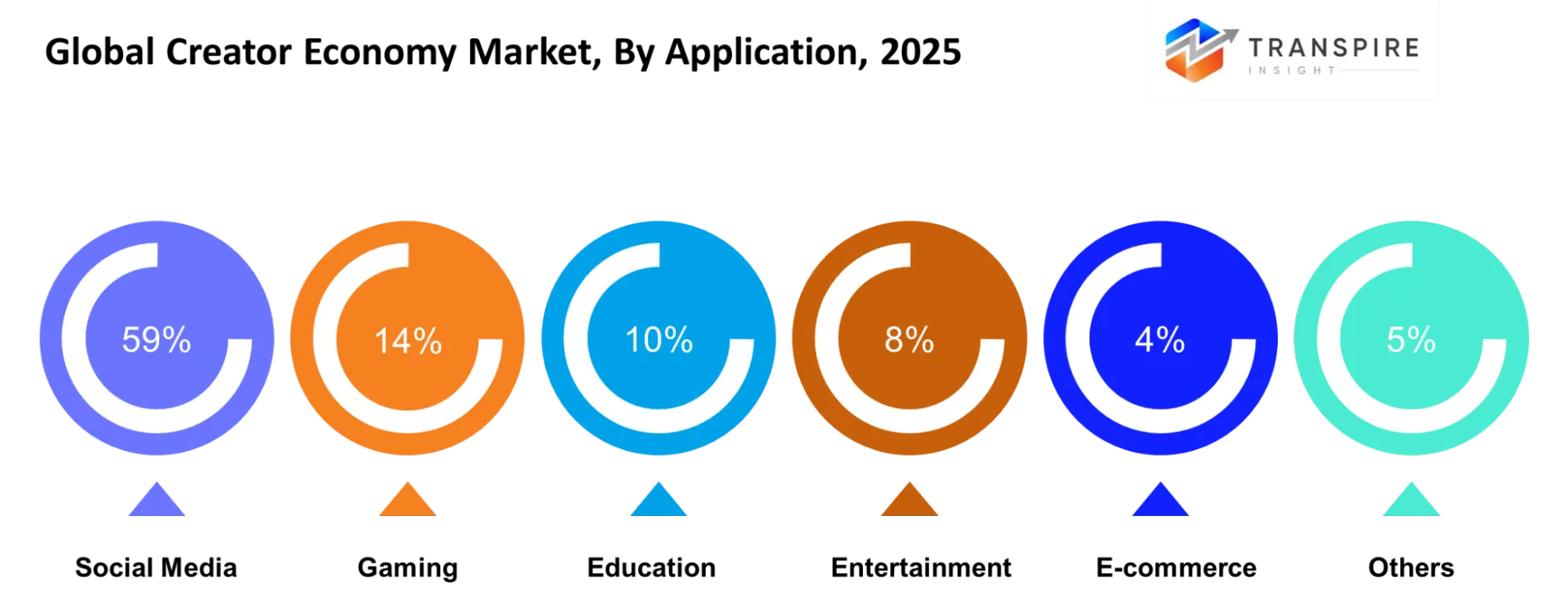
Social Media applications remain the absolute heavyweights of this industry, locking down a dominant 59% share of all global revenue. Gaming applications follow behind at 14%, with Education sitting at 10%, Entertainment at 8%, Others at 5%, and E-commerce claiming 4%. This massive concentration isn't going anywhere because master platform groups and global consumer tech brands buy software licenses and cloud infrastructure in massive institutional volumes to keep up with everyday commercial video streaming and app activity schedules. However, things get really interesting in the learning and retail space, where Education and E-commerce stand out as highly lucrative pockets as niche domain experts and independent product designers demand stable, white-label learning management systems and custom merch portals. Moving forward, everything software suppliers build will need to focus on native transaction capabilities and mobile-first community frameworks. System providers will have to balance two main workloads: supplying massive, cost-efficient video distribution architectures to traditional social network hubs while refining high-margin, interactive monetization plugins for the rapidly expanding digital learning, indie gaming, and social commerce industries.
By End-User
Individual Creators remain the absolute anchor of day-to-day market demand due to their massive, predictable aggregate procurement power for high-volume content creation and monetization tools. Meanwhile, Enterprises and dedicated Agencies are stepping in as high-value, fast-growing secondary end-users. The growth pattern here depends entirely on how quickly independent digital career paths evolve and how strictly corporations need to track creator campaign attribution metrics and digital asset copyrights. Solo media operators rely on accessible, self-serve software contracts to manage their monthly subscriber pipelines, while enterprise brands and agencies look for unique, automated compliance tools and specialized cross-platform tracking dashboards. Moving forward, major platform and software suppliers won't be able to survive just by selling standalone subscription widgets. Long-term success will mean locking down fully integrated community management platforms and data-licensing agreements. Software providers will need to bundle the actual digital tools with ongoing localization and financial services support, offering built-in AI multi-language audio dubbing, automated legal compliance tracking, and precise revenue analytics to meet changing creator tech demands.
By Revenue Model
Sponsorships and Advertising continue to capture an absolute majority of total procurement volume across established media channels due to massive, multi-year legacy corporate marketing allocations. Meanwhile, Subscriptions and Digital Sales are expanding as the primary, fast-growing revenue vectors within independent production networks. The competitive dynamic here relies entirely on whether a creator targets raw viewership volume or hyper-engaged, niche consumer communities. Major ad-supported channels utilize automated programmatic auction systems to scale broad traffic volumes across general consumer groups, whereas premium subscription and digital merchandise pipelines require high-margin transactional gateways and automated distribution networks. Moving forward, platform monetizers must construct unified multi-model transaction stacks rather than basic single-tier ad containers. Long-term market leaders will succeed by combining standard programmatic advertising systems with flexible, direct fan-funding models, providing integrated cross-border processing, custom e-commerce interfaces, and private membership access controls to insulate independent creative teams from volatile advertising market adjustments.
What are the Key Use Cases Driving the Global Creator Economy Market?
The primary use case driving this market is native social commerce and interactive storefront deployment. Digital video creators and influencers utilize built-in shoppable video tags, real-time live-stream retail modules, and custom product links to tag physical merchandise directly inside active content feeds. This setup turns standard audience views into immediate transactional checkouts without requiring the user to leave the media app.
Beyond traditional retail - the application space is expanding heavily into private, value-driven knowledge monetization and premium media distribution. Independent subject-matter specialists, digital journalists, and business instructors are increasingly leveraging white-label learning platforms and locked newsletter networks to package structured online courses, exclusive text insights, and tier-gated video series directly behind recurring monthly payment walls.
Emerging use cases are shifting toward automated multi-platform asset clipping and cross-border programmatic audio localization. Media operations actively deploy generative artificial intelligence engines to split long-form broadcasts into dozens of platform-optimized mobile shorts. At the same time, they use high-fidelity synthetic voice-cloning networks to automatically dub their media assets into dozens of regional languages, allowing localized content channels to instantly capture foreign advertising revenues.
|
Report Metrics |
Details |
|
Market size value in 2025 |
USD 250.8 Billion |
|
Market size value in 2026 |
USD 310.7 Billion |
|
Revenue forecast in 2033 |
USD 1,383.3 Billion |
|
Growth rate |
CAGR of 23.78% from 2026 to 2033 |
|
Base year |
2025 |
|
Historical data |
2021 - 2024 |
|
Forecast period |
2026 - 2033 |
|
Report coverage |
Revenue forecast, competitive landscape, growth factors, and trends |
|
Regional scope |
United States; Canada; Mexico; United Kingdom; Germany; France; Italy; Spain; Denmark; Sweden; Norway; China; Japan; India; Australia; South Korea; Thailand; Brazil; Argentina; South Africa; Saudi Arabia; United Arab Emirates |
|
Key company profiled |
YouTube, TikTok, Patreon, Twitch, Meta Platforms, Canva, Kajabi, Shopify, Adobe, Discord, Substack, Linktree, OnlyFans, Vimeo, Snap Inc. |
|
Customization scope |
Free report customization (country, regional & segment scope). Avail customized purchase options to meet your exact research needs. |
|
Report Segmentation |
By Type (Content Creation Platforms, Creator Monetization Tools, Influencer Marketing Platforms, NFT Creator Platforms, Live Streaming Platforms, Others); By Application (Social Media, Gaming, Education, Entertainment, E-commerce, Others); By End-User (Individual Creators, Enterprises, Agencies, Others); By Revenue Model (Subscriptions, Advertising, Sponsorships, Digital Sales, Others) |
Which Regions Are Driving the Global Creator Economy Market Growth?
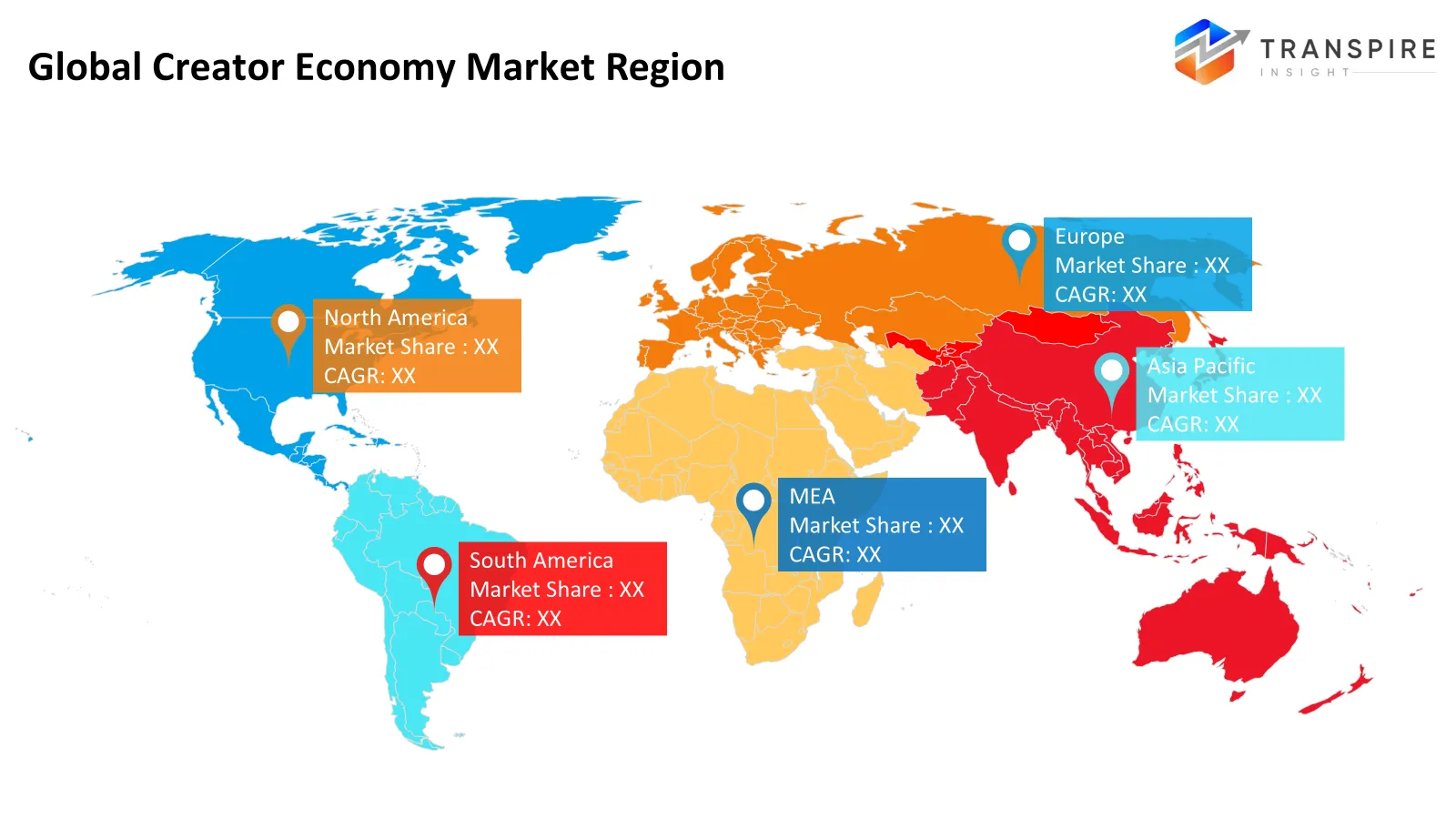
North America maintains a commanding grip on the global creator economy market, capturing a dominant 40% of all worldwide industry revenue. This geographic hegemony is heavily driven by a massive concentration of premier digital platforms, media conglomerates, and venture capital pools across the United States and Canada. The regional ecosystem is structurally supported by deep corporate brand advertising budgets and highly mature programmatic monetization networks that offer robust financial infrastructure. Consequently, integrating high-yielding affiliate loops and advanced multi-tier subscription models has become an absolute operational mandate for North American media makers seeking to turn passive online attention into highly profitable, independent enterprises.
Europe serves as a highly stable, predictable secondary pillar for the global market, locking down an essential 21% share of total industry demand. While the North American market concentrates heavily on high-volume entertainment monetization, European system adoption is driven entirely by niche knowledge networks, premium independent newsletters, and highly localized digital education hubs. This regional market stability is structurally insulated by rigid data privacy laws and strict digital copyright protections that give independent writers and teachers deep structural ownership over their community assets. To maintain strict legal compliance and ensure long-term audience trust, European media businesses steadily contract for dedicated white-label member portals equipped with specialized multi-currency billing gateways.
The Asia-Pacific region has emerged as the fastest-growing territory globally, accelerating at a market-leading 16.2% CAGR while securing a critical 31% of the overall market revenue footprint. This sudden structural shift is driven by rapid technological breakthroughs in high-speed mobile networks and an explosive live-stream shopping boom across China, India, and Southeast Asia. Historically, the region focused on basic ad-supported video distribution, but it has now rapidly pivoted into the world's largest consumer of real-time interactive e-commerce streams and mobile-first tipping apps. Looking ahead, future procurement in this booming corridor relies entirely on deploying advanced, AI-driven audio translation setups capable of generating immediate voice-cloning dubs across dozens of local regional dialects.
In April 2026 - social commerce giant TikTok Shop was confirmed to have booked an historic USD 45.6 Billion in annualized Gross Merchandise Value (GMV) across Southeast Asian markets via the comprehensive regional e-commerce industry report by Momentum Works. This rapid transaction scaling explicitly targets the booming regional live commerce sector, allowing local video creators to use inline checkout tools to turn live entertainment broadcasts into instant, frictionless retail purchasing loops for millions of digital consumers.
Who are the Key Players in the Global Creator Economy Market and How Do They Compete?
The global creator economy market operates as a fast-moving, technology-driven battlefield where brands constantly fight over audience retention curves, native monetization tools, and backend software integration. Because independent media makers want to shield their businesses from unpredictable ad-revenue drops, competition is shifting away from simple ad-supported distribution toward delivering complete, closed-loop commerce setups that slot right into video feeds. To keep ahead, the biggest names are constantly revamping their transaction software and expanding their digital footprints to capture regional shopping and subscription hubs.
YouTube protects its dominant market share through a massive infrastructure innovation model, leaning heavily on high-fidelity video delivery networks and multi-format discovery feeds. The platform keeps a clear edge over competitors by rolling out fully integrated, cloud-connected commerce setups and performance-based affiliate hubs that bypass traditional media networks. When it comes to growing its footprint, the team favors direct digital consolidation—shown by its massive 2026 update embedding native checkout capabilities and multi-language AI auto-dubbing systems to instantly bring cross-border audience corridors under its main monetization banner.
Meanwhile, Patreon competes by using a strict application-first niche specialization approach, tailoring its premium subscription dashboards directly to high-value independent writers, podcasters, and digital journalists. The company differentiates itself by offering a full clinical financial stack, bundling multi-tier community access portals together with advanced digital product marketplaces. Their growth strategy focuses entirely on locking down creator ownership and direct asset control over localized subscriber networks. This allows them to scale premium fan-funding systems ahead of rivals, processing over 25 million paid memberships while helping niche experts bypass platform algorithm volatility.
Global Creator Economy Market Companies
- YouTube
- TikTok
- Patreon
- Twitch
- Meta Platforms
- Canva
- Kajabi
- Shopify
- Adobe
- Discord
- Substack
- Linktree
- OnlyFans
- Vimeo
- Snap Inc.
Recent Development News
In October 2025, creative software powerhouse Adobe officially launched its new "Canva-focused" competitor updates and expanded its Creative Operating System to integrate multi-format generative video editing pipelines. This deep product deployment gives independent content creators a unified, high-speed dashboard to design, schedule, and format multi-platform social media assets without bouncing between separate third-party layout apps. [https://www.canva.com]
In January 2026, specialized knowledge-commerce leader Kajabi executed a major structural price and platform overhaul by removing its low-tier Kickstarter plan and launching its high-margin "Kajabi Payments" processing infrastructure. This strategic layout shift completely replaces standard third-party Stripe redirects with a native, zero-friction transaction vault, allowing professional educational creators to manage their email marketing funnels, course hosting, and premium subscription paywalls directly inside a single secure billing node. [https://scribehow.com]
In April 2026, fan-funding and patronage platform Patreon announced an exclusive global expansion of its dedicated native Discovery Network alongside a major redesign of its mobile application interface. This massive rollout opens up direct organic audience acquisition routes for over 80 million platform users, allowing creators to run private community group chats and sell live-ticketed streaming events to active patrons without being subjected to volatile public social media algorithms. [https://en.wikipedia.org]
What Strategic Insights Define the Future of the Global Creator Economy Market?
The creator economy market is steering toward a highly structured, "corporate-creator" ecosystem where top-tier independent media makers transition from solo-operator accounts into fully integrated media holding companies.
A hidden risk threatening this maturity is the tightening web of international data and financial compliance frameworks. Shifting regulatory disclosures from global oversight bodies and new localized digital service taxes create severe administrative overhead, threatening to squeeze the profit margins of independent media channels that lack corporate legal teams.
Conversely - an exceptional opportunity lies in the deployment of automated, AI-driven cross-border localization setups. Utilizing high-fidelity voice-cloning engines to instantly auto-dub multi-platform video assets allows creators to unlock entirely new regional advertising spend across foreign viewing corridors with zero localized production costs.
To secure long-term market dominance, software and platform providers must move beyond standalone checkout widgets. Strategists should instead build end-to-end operational architectures that bundle direct-to-consumer digital storefronts with built-in regional tax compliance automation and native multi-currency transaction networks.
Global Creator Economy Market Segmentation
By Type
- Content Creation Platforms
- Creator Monetization Tools
- Influencer Marketing Platforms
- NFT Creator Platforms
- Live Streaming Platforms
- Others
By Application
- Social Media
- Gaming
- Education
- Entertainment
- E-commerce
- Others
By End-User
- Individual Creators
- Enterprises
- Agencies
- Others
By Revenue Model
- Subscriptions
- Advertising
- Sponsorships
- Digital Sales
- Others
Regional Outlook
North America
- United States
- Canada
- Mexico
Europe
- Germany
- United Kingdom
- France
- Spain
- Italy
- Rest of Europe
Asia Pacific
- Japan
- China
- Australia & New Zealand
- South Korea
- India
- Rest of Asia Pacific
South America
- Brazil
- Argentina
- Rest of South America
Middle East & Africa
- Saudi Arabia
- United Arab Emirates
- South Africa
- Rest of the Middle East & Africa
Frequently Asked Questions
Find quick answers to common questions.
The global creator economy market size was valued at USD 250.8 Billion in 2025 and is poised to reach USD 1,383.3 Billion by 2033, expanding at a 23.78% CAGR.
Key segments for the Creator Economy Market are By Type (Content Creation Platforms, Creator Monetization Tools, Influencer Marketing Platforms, NFT Creator Platforms, Live Streaming Platforms, Others), By Application (Social Media, Gaming, Education, Entertainment, E-commerce, Others), By End-User (Individual Creators, Enterprises, Agencies, Others), By Revenue Model (Subscriptions, Advertising, Sponsorships, Digital Sales, Others).
Growth is primarily driven by a structural transition among digital creators from simple ad-revenue reliance to direct-to-consumer digital monetization models. This pivot is accelerated by widespread integration of native social checkout features and specialized community subscription software, forcing creators to build independent, direct financial relationships with their audiences to shield their business revenue from sudden advertising market downturns.
The global market is led by major manufacturers including YouTube, TikTok, Patreon, Twitch, Meta Platforms, Canva, Kajabi, Shopify, Adobe, Discord, Substack, Linktree, OnlyFans, Vimeo, Snap Inc.
North America holds a dominant 40% share of the worldwide market, establishing itself as the largest regional footprint. This massive influence is sustained by a deep concentration of premier digital platforms, media conglomerates, and venture capital pools, alongside high-yielding affiliate loops and mature programmatic monetization networks that offer robust financial infrastructure.
The most lucrative opportunities lie in embedding specialized, multi-language AI auto-dubbing and localization workflows directly into cross-border video streaming applications. Fusing high-fidelity voice-cloning engines with automatic regional translation networks allows creators to broadcast their content into entirely new international territories with a single click, completely removing historic language barriers and unlocking high-margin regional advertising spend.
- YouTube
- TikTok
- Patreon
- Twitch
- Meta Platforms
- Canva
- Kajabi
- Shopify
- Adobe
- Discord
- Substack
- Linktree
- OnlyFans
- Vimeo
- Snap Inc.
About the Authors

Mayur Shinde
I am Mayur Shinde, a Senior Research Analyst at Transpire Insight, specializing in the Automotive & Transportation and Information & Communication Technology (ICT) Industry. My work focuses on analyzing emerging market trends, technological advancements, competitive landscapes, and industry developments to deliver accurate, data-driven insights. I am passionate about transforming complex market information into clear, actionable content that helps businesses, professionals, and decision-makers stay informed and make confident strategic decisions.

Chakradhar Khansole
Chakradhar serves as the Research Director at Transpire Insight, bringing over 8 years of experience in technology, innovation, and strategic market intelligence. He specializes in transforming complex market data into actionable business insights that enable organizations to make informed, growth-oriented decisions. Recognized for his strategic vision and analytical expertise, Chakradhar leads high-impact research initiatives, delivering comprehensive market assessments, competitive intelligence, and forward-looking industry analysis.
Recently Published Reports
-
Apr 2026
3D Optical Profiler Market
3D Optical Profiler Market Size, Share & Analysis Report By Type (Desktop 3D Optical Profiler, and Portable 3D Optical Profiler), By Technology (Confocal Technology, and White Light Interference), By End-Use Industry (Manufacturing, Research Institutions, Automotive, Aerospace and Defense, Medical Devices, and Other), and Geography (North America, Europe, Asia-Pacific, Middle East and Africa, South and Central America), 2021 - 2031
-
Apr 2026
Depth Sensor Market
Depth Sensor Market Size, Share & Analysis Report By Type (Infrared Depth Sensors, Time-of-Flight (ToF) Sensors, Stereo Vision Sensors, Structured Light Sensors, Ultrasonic Depth Sensors), By Application (Automotive, Robotics, Gaming, Consumer Electronics, Industrial Automation, Healthcare, Security & Surveillance, Others), By End Users (Automotive Manufacturers, Consumer Electronics Companies, Healthcare Providers, Industrial Companies, Security Agencies, Gaming Companies, Robotics Companies, Others), and Geography (North America, Europe, Asia-Pacific, Middle East and Africa, South and Central America), 2021 – 2031
-
Apr 2026
Digital Manufacturing Market
Digital Manufacturing Market Size, Share & Analysis Report By Component (Hardware, Software, and Services), By Technology (Robotics, 3D Printing, Internet of Things (IoT), and Others), By Application (Automotive and Transportation, Aerospace and Defense, Consumer Electronics, Industrial Machinery, and Others), By Process Type (Computer-Based Designing, Computer-Based Simulation, Computer 3D Visualization, Analytics, and Others), and Geography (North America, Europe, Asia-Pacific, Middle East and Africa, South and Central America), 2021 – 2031
-
Apr 2026
Digital Visa Services Market
Digital Visa Services Market Size, Share & Analysis Report By Type (Individual Travelers, Group Travelers), By Application (Tourism, Business Travel, Others), and Geography (North America, Europe, Asia-Pacific, Middle East and Africa, South and Central America), 2021 – 2031