

Global Bio-Based Epoxy Curing Agents Market Summary:
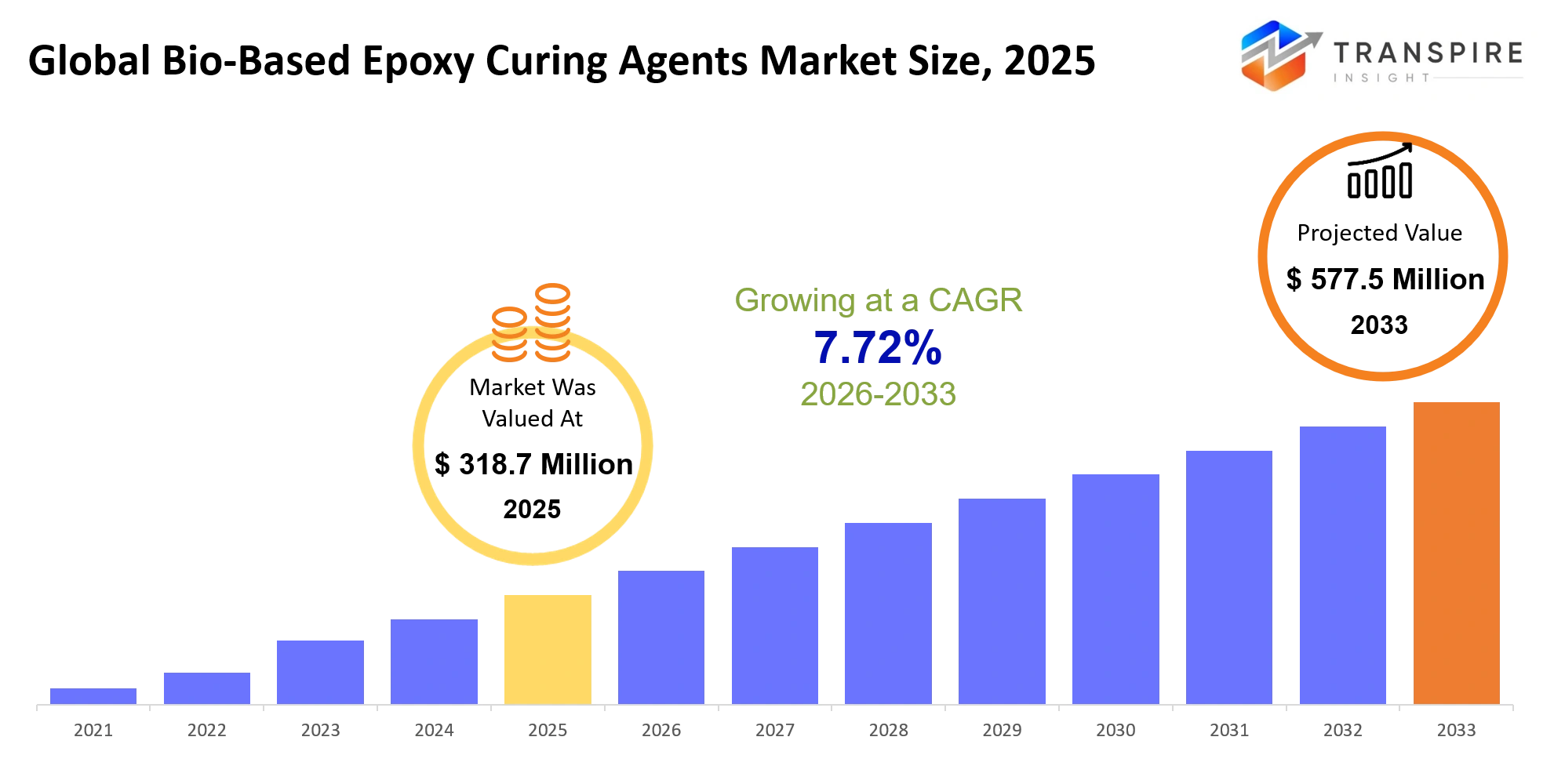
As per Transpire Insight Analysis, the Global Bio-Based Epoxy Curing Agents Market size is estimated at USD 318.7 Million in 2025 and is anticipated to reach USD 577.5 Million by 2033, growing at a CAGR of 7.72% from 2026 to 2033. The primary drivers of growth will be increased demand for eco-friendly products and environmental regulations.
The bio-based epoxy curing agents market is growing. Manufacturers are now using plant-based curing agents instead of petroleum-based ones. This change is happening because plant-based agents are better for the environment. They work as well as traditional agents. These curing agents are used in products like coatings, adhesives and construction materials. People want these products to resist chemicals for a long time and be eco-friendly.
In recent years, the market has changed a lot. New environmental rules are in place. More companies are using plant-based materials. The agents now work better with resins. A big change is that companies are making sustainable chemicals. This is part of a plan to reuse and recycle. Companies are investing more in manufacturing and reducing carbon emissions. This has helped create products and made them more popular. Many industries want materials that're good for the environment and work well. They need to meet standards. Because of this, more and more industries are using bio-based epoxy curing agents. This includes automotive, construction and renewable energy applications.
Global Bio-Based Epoxy Curing Agents Market Size & Forecast:
- Global Market Size 2025: USD 318.7 Million
- Expected Market Value (2033): USD 577.5 Million
- Forecast CAGR (2026–2033): 7.72%
- Leading Region in 2025: Europe
- Fastest Growing Region: Asia Pacific
- Key Company Profiles: Cardolite Corporation, Evonik Industries, Huntsman Corporation, Hexion, BASF, Olin Corporation, Covestro, Arkema, Kukdo Chemical, Cargill, Mitsubishi Chemical, Aditya Birla Chemicals, Atul Ltd., EMS-Chemie, Westlake Corporation
Key Market Insights:
There has been a gradual move towards using renewable curing technology as a result of efforts by manufacturers in making innovative products that are sustainable but perform well in various industrial processes.
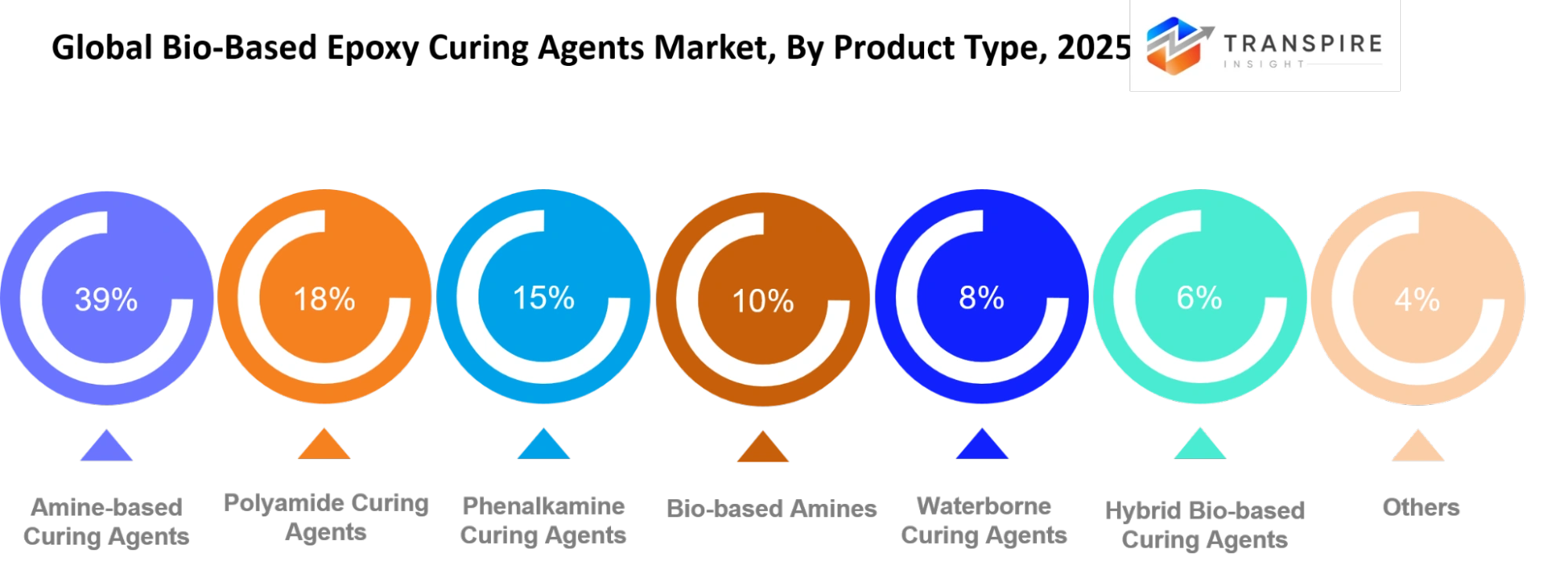
- Amines make up 39% of the curing agent market, attributed to their wide application in protective coatings, adhesives, and structural composites due to their high efficiency in curing.
- Bio-based amines will be the fastest-growing segment of the market, recording a CAGR of 15.8% from rising demand for renewable chemical compositions and low carbon content.
- Polyamide curing agents take 18% of the market and are being developed for greater flexibility and corrosion resistance in industrial and marine coatings.
- Phenalkamine curing agents account for 15% of the curing market and are becoming popular due to rapid curing action in moisture-laden and low-temperature surroundings.
- Bio-based amines make 10% of the market value, depicting the trend in the sector towards more sustainable inputs and production processes.
- Waterborne curing agents are 8% of the market due to tightening VOC regulations and increasing preference for low-emission coatings.
- Hybrid bio-based curing agents account for 6% of the market, as companies develop innovative compositions that enhance sustainability without compromising on mechanical properties.
What are the Key Drivers, Restraints, and Opportunities in the Global Bio-Based Epoxy Curing Agents Market?
Drivers
However, the market is mainly being driven by the increased demand for sustainable raw materials in various industries, including construction, automobiles, wind energy, and industrial coatings. The government agencies have tightened the rules and regulations for the use of traditional petrochemicals, thus compelling manufacturers to switch to alternative bio-based materials that produce less carbon. On the other hand, improvements in feedstock technology for bio-based materials have led to better quality performance and durability of curing agents, making it possible to be used in various industrial applications. These factors have increased product adoption, leading to creation of more revenues for manufacturers.
Restraints
There are several hurdles that this market is facing owing to the high cost of production and unavailability of bio-based materials commercially. Different factors that include varying quality of feedstock, difficulties in procurement, and need for further processing are adding up to the cost of production. In addition, end users are still apprehensive of switching from traditional petrochemicals to bio-based alternatives due to performance and pricing issues.
Opportunities
Growth opportunities can be seen in the build-up of infrastructure relating to renewable energy, as well as the creation of innovative bio-based resin systems. As more companies allocate capital to wind energy parts, lightweight composites, and sustainable construction products, there will be further applications for bio-based curing agents. Firms that invest in research, manufacturing processes, and alliances are likely to increase their competitiveness as sustainability concerns increase globally.
What Has the Impact of Artificial Intelligence Been on the Global Bio-Based Epoxy Curing Agents Market?
Through artificial intelligence, bio-based epoxy curing agent manufacturers can develop and manufacture more innovative products through optimisation of formulations and manufacturing processes as well as reduction of waste material. Artificial intelligence is used to analyse the enormous amount of data generated from both laboratory and production to provide the optimal composition of raw materials. The use of artificial intelligence helps in the development of products quickly without compromising their quality and performance levels.
Artificial intelligence is also facilitating the process of manufacture by providing predictive analytics about the maintenance requirements of production machines, production schedules, and identification of process changes which may affect the performance of curing agents.
Through artificial intelligence, manufacturers will achieve operational efficiency, minimum downtime and ensure that the agents are performing consistently across industries. adoption of artificial intelligence in the bio-based epoxy curing agents market is still low due to high implementation cost, difficulties in integrating with current production systems and skilled manpower needed to handle the digital platforms. Nevertheless, investment in digital manufacturing and intelligent process optimisation in the bio-based epoxy curing agents market will enhance innovations in the future. In December 2025,BASF demonstrated the use of AI-powered digital R&D for faster discovery and optimization of advanced materials and chemical formulations. The AI-powered research strategy used by the company not only speeds up the process of development but also enables the development of sustainable materials including those related to epoxy resins and curing agents.
Key Market Trends:
There is a trend towards adopting renewable chemicals in the market due to the alignment of product development with the current environmental considerations and industrial needs.
- There has been innovation geared towards improving curing properties, applicability and production efficiencies using sustainable technology.
- Chemical companies have been replacing the conventional petroleum-based compounds in their products with renewable materials to create more sustainable curing agents without compromising mechanical efficiency.
- Chemical companies have increased investment in R&D to enhance curing time, resistance to chemicals and the ability of curing agents to work with advanced epoxy resins.
- Sustainable coating technologies have been adopted due to increased compliance with the environmental laws in most industries.
- Increasing need for bio-based curing agents has been experienced among wind energy and lightweight composite manufacturers due to sustainability efforts.
- Chemical companies are leveraging digital manufacturing capabilities and AI process optimisation to increase the accuracy of formulations and minimise wastage.
- Collaboration between chemical manufacturers and raw material providers has improved bio-based supply chains and product development efforts.
Global Bio-Based Epoxy Curing Agents Market Segmentation
By Product Type
Amine-based curing agents are currently the leading product type, holding a 39% market share due to their extensive application in protective coatings, adhesives, and composite materials, attributed to their efficient curing abilities and mechanical properties. Polyamide curing agents make up 18%, whereas phenalkamine curing agents form 15%, both having applications in corrosive environments. Bio-based amines occupy 10%, and are expected to show the highest rate of growth among all product types as companies switch towards sustainable chemical products. Water-borne curing agents constitute 8%, and hybrid bio-based curing agents form 6%. The remaining 4% includes special curing products used in niche applications.
By Resin Type
Traditional epoxy resins will continue to account for the largest portion of demand due to the wide applicability of these materials in industrial manufacture, construction, and protective coatings. However, there is growing popularity of novolac epoxies in those applications where high heat and chemical resistance is required. The increasing eco-awareness makes it popular to use bisphenol-free and waterborne epoxy resins, while there is an increase in high-performance and UV curable epoxy resin systems in electronics, aerospace, and speciality industrial applications. Innovation in materials is likely to lead to better compatibility of bio-based curing agents with the latest epoxy resin technologies.
By Application
Protective coatings are the largest application category since there is demand for durable and corrosion resistant eco-friendly coating systems. Strong demand continues to come from the adhesives and sealant markets in construction and transportation applications where reliable bonding performance is essential. Composite manufacture is growing due to the development of renewable energy and lightweight vehicles, while electrical and electronics applications need advanced curing systems with higher thermal and electrical stability.
By End User
The construction industry continues to experience substantial demand because of the increased adoption of sustainable paints, flooring solutions, and adhesive products. Bio-based curing agents have been embraced by the automotive sector to promote light weighting and sustainable material adoption processes. The aerospace and electronics industries need durable and heat-resistant products with long-lasting performance attributes. There has also been increasing demand in renewables, marine activities, and industrial manufacturing companies in search of sustainable solutions without compromising on performance.
By Distribution Channel
The direct sales distribution channel remains popular for big industrial clients who need technical assistance and long-term business deals. Chemical distributors become essential in increasing product availability in regional markets, whereas OEM supplies help to increase ties between machinery and components makers. Online B2B sites are becoming increasingly popular as digital procurement becomes popular in the chemicals industry. Industrial suppliers, regional distributors, and exporters continue to increase market access through regional needs fulfilment and the worldwide presence of bio-based epoxy curing agent makers.
What are the Key Use Cases Driving the Global Bio-Based Epoxy Curing Agents Market?
The major use of bio-based epoxy curing agents is in the production of protective coatings due to their superior qualities of good adhesion, corrosion resistance and durability, and hence used in the construction of buildings and machinery. In addition, the market for these products is increasing in the adhesives and sealants, composites and electrical and electronic segments.
Manufacturers are increasingly adopting these curing agents to improve the quality of the products while minimising the environmental effects to meet sustainability objectives within the automobile, aerospace and industrial manufacturing industries. Future opportunities include wind energy, marine coatings and advanced composite materials because biobased curing agents allow the manufacture of lightweight and durable components.
|
Report Metrics |
Details |
|
Market size value in 2025 |
USD 318.7 million |
|
Market size value in 2026 |
USD 343.2 million |
|
Revenue forecast in 2033 |
USD 577.5 million |
|
Growth rate |
CAGR of 7.72% from 2026 to 2033 |
|
Base year |
2025 |
|
Historical data |
2021 - 2024 |
|
Forecast period |
2026 - 2033 |
|
Report coverage |
Revenue forecast, competitive landscape, growth factors, and trends |
|
Regional scope |
United States; Canada; Mexico; United Kingdom; Germany; France; Italy; Spain; Denmark; Sweden; Norway; China; Japan; India; Australia; South Korea; Thailand; Brazil; Argentina; South Africa; Saudi Arabia; United Arab Emirates |
|
Key company profiled |
Cardolite Corporation, Evonik Industries, Huntsman Corporation, Hexion, BASF, Olin Corporation, Covestro, Arkema, Kukdo Chemical, Cargill, Mitsubishi Chemical, Aditya Birla Chemicals, Atul Ltd., EMS-Chemie, Westlake Corporation. |
|
Customization scope |
Free report customization (country, regional & segment scope). Avail customized purchase options to meet your exact research needs. |
|
Report Segmentation |
By Product Type (Amine-based Curing Agents, Polyamide Curing Agents, Anhydride Curing Agents, Phenalkamine Curing Agents, Bio-based Amines, Hybrid Bio-based Curing Agents, Waterborne Curing Agents, Others); By Resin Type (Epoxy Resins, Novolac Epoxy Resins, Bisphenol-free Epoxy Resins, Waterborne Epoxy Resins, High-performance Epoxy Resins, UV-curable Epoxy Systems, Specialty Epoxy Systems, Others); By Application (Protective Coatings, Adhesives & Sealants, Composites, Electrical & Electronics, Construction, Wind Energy, Marine Coatings, Others); By End User (Construction, Automotive, Aerospace, Electronics, Marine, Renewable Energy, Industrial Manufacturing, Others); By Distribution Channel (Direct Sales, Chemical Distributors, OEM Supply, Online B2B Platforms, Industrial Suppliers, Regional Dealers, Exporters, Others). |
Which Regions are Driving the Global Bio-Based Epoxy Curing Agents Market Growth?
North America
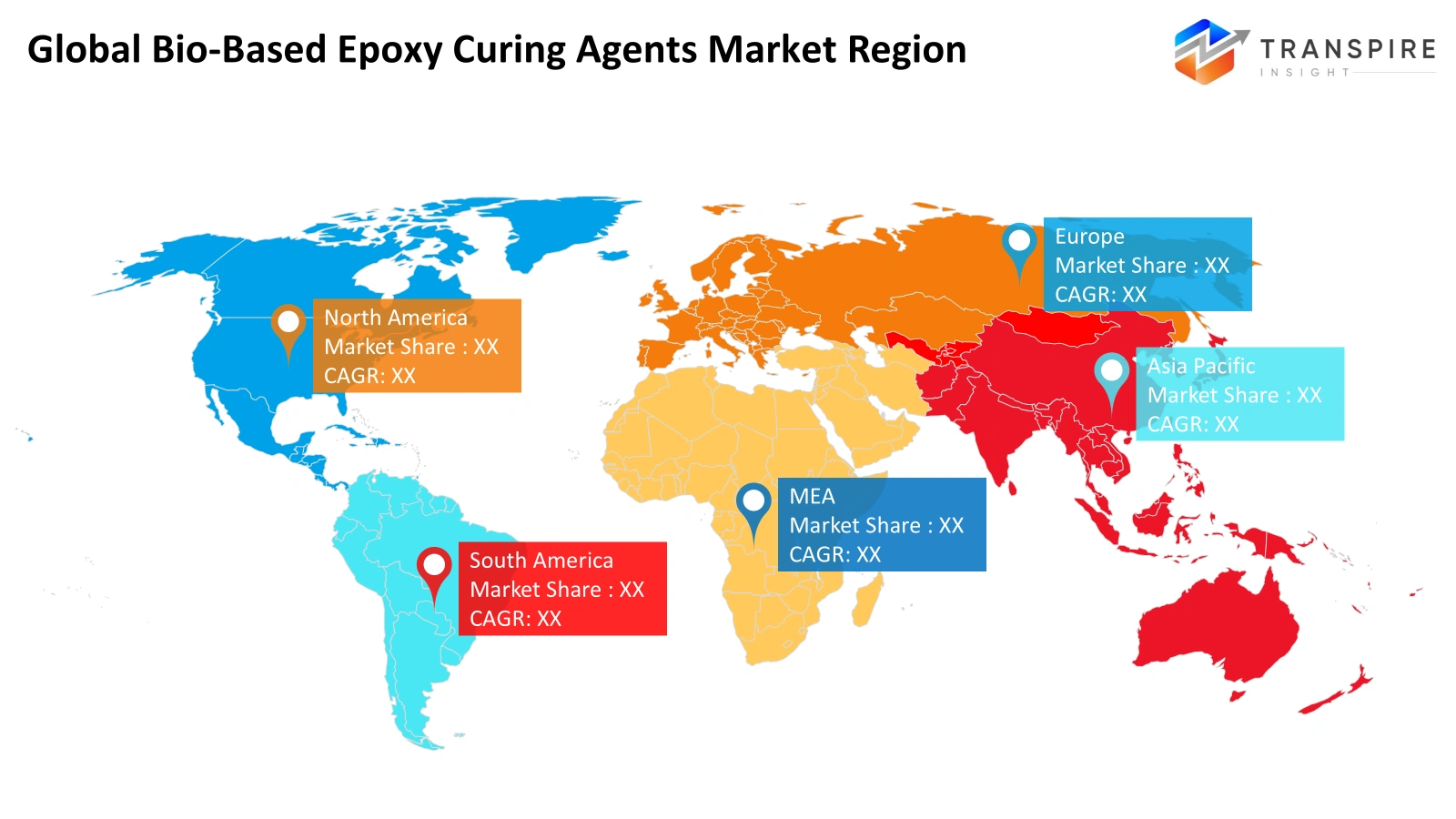
The North American market captures 25% of the total global market due to the growing investments made in material science technologies and increased usage of sustainable industrial coatings. Favourable factors include the robust research environment, established manufacturing industry, as well as cooperation between the chemical manufacturers and end users. Increasing consumption by the aerospace, electronics, and renewable energy projects has led to the application of bio-based curing agents. In May 2025, BASF Coatings expanded its range of biomass-balanced automotive refinish coatings in North America to make more sustainable coating resins available and facilitate the use of bio-based epoxy resins in various industrial and automotive applications.
Europe
Europe has the biggest market share of 37%, thanks to strict environmental policies, sustainability goals, and the presence of the highly established speciality chemicals industry. The companies operating in the region have continued to make investments in renewable feedstocks and production methods in order to meet the changing regulations. High consumption by the construction, automotive, and industrial coatings segments contributes to market dominance. Innovation in technology and governmental support for green manufacturing would help maintain the market leadership. In March 2025, BASF and Sika cooperated on the release of Baxxodur® EC 151 epoxy hardener, which is a low-VOC epoxy hardener for sustainable epoxy flooring systems, thus contributing to the environmental friendliness of epoxy hardening technologies in Europe.
Asia Pacific
The Asia Pacific region accounts for 29% of the world market share and is estimated to experience the highest growth rate at 16.9% CAGR through the forecast period. Fast-paced industrialisation, rising manufacturing capability, and increasing consciousness regarding the environment is driving the use of bio-based epoxy curing agents in the Asia Pacific region. Government initiatives supporting sustainable manufacturing and the utilisation of eco-friendly chemicals are further fuelling growth in the industry. In November 2024, Covestro initiated manufacturing of partially bio-based Desmophen® CQ NH at its Foshan plant in China using only renewable energy. The product is used in sustainable coatings in construction and infrastructure in Asia Pacific.
Who are the Key Players in the Global Bio-Based Epoxy Curing Agents Marketand how do they Compete?
The global market for bio-based epoxy curing agents is moderately competitive, and the major players have been focusing on innovation, sustainable materials, and increased capacity to develop a strong market presence. The competitiveness of the market depends on the availability of highly efficient, environmentally friendly solutions that comply with legislative requirements and cater to the needs of the construction, automotive, aerospace, electronics, and renewable energy industries.
Huntsman Corporation, Westlake Corporation, and Cardolite Corporation are developing innovative formulations to improve performance, sustainability, and compatibility of their curing agents. To succeed in the market, they have to diversify their product portfolio, invest in research, and increase geographical reach of their distribution network.Evonik Industries AG, BASF SE, Arkema S.A., Cargill, Incorporated, and Mitsubishi Chemical Group are differentiating themselves by developing sustainable products, building strategic alliances, and using renewable sources of raw materials. To become successful competitors in the market characterized by rising demand for sustainable epoxy technologies, they have to invest in the improvement of manufacturing process, supply chain management, and environment-friendly solutions.
Global Bio-Based Epoxy Curing Agents Marketcompanies
- Cardolite Corporation
- Evonik Industries
- Huntsman Corporation
- Hexion
- BASF
- Olin Corporation
- Covestro
- Arkema
- Kukdo Chemical
- Cargill
- Mitsubishi Chemical
- Aditya Birla Chemicals
- Atul Ltd.
- EMS-Chemie
- Westlake Corporation
Recent Development News
In March 2025, the joint launch of Baxxodur® EC 151 epoxy hardener for sustainable flooring solutions by BASF SE and Sika AG. The amine-type hardener allows the development of formulations with an extremely low VOC content, cures efficiently under low temperatures, and meets the rising need for environmentally sustainable epoxy use in construction and industrial flooring.
Source: https://www.basf.com
In June 2026, a paper was featured in ACS Applied Polymer Materials that outlined a new bio-based liquid latent curing agent for epoxy resins. The innovation revealed enhanced latency, increased impact strength and preserved mechanical properties.
Source: https://pubs.acs.org
What Strategic Insights Define the Future of the Global Bio-Based Epoxy Curing Agents Market?
Future trends in the global bio-based epoxy curing agents market include steady growth due to increasing use of renewable raw materials, eco-friendly technologies, and top-quality chemicals by producers. Further development of environmental policies and initiatives promoting sustainability in various sectors will continue to drive the trend toward replacement of traditional curing agents with bio-based ones. Nevertheless, one underlying threat includes the lack of availability of bio-based raw materials and their price volatility, which may have an impact on production expenses. On the other hand, growing capital expenditures on renewable energy sources, composite materials, and sustainable infrastructure constitute major business opportunities in this market segment. Those firms that develop strong relationships with suppliers of raw materials, engage more in R&D activities, and increase production efficiency will be able to achieve a competitive edge.
Key Segmentations are:
By Product Type
- Amine-based Curing Agents
- Polyamide Curing Agents
- Anhydride Curing Agents
- Phenalkamine Curing Agents
- Bio-based Amines
- Hybrid Bio-based Curing Agents
- Waterborne Curing Agents
By Resin Type
- Epoxy Resins
- Novolac Epoxy Resins
- Bisphenol-free Epoxy Resins
- Waterborne Epoxy Resins
- High-performance Epoxy Resins
- UV-curable Epoxy Systems
- Specialty Epoxy Systems
By Application
- Protective Coatings
- Adhesives & Sealants
- Composites
- Electrical & Electronics
- Construction
- Wind Energy
- Marine Coatings
By End User
- Construction
- Automotive
- Aerospace
- Electronics
- Marine
- Renewable Energy
- Industrial Manufacturing
By Distribution Channel
- Direct Sales
- Chemical Distributors
- OEM Supply
- Online B2B Platforms
- Industrial Suppliers
- Regional Dealers
- Exporters
Regional Outlook
North America
- United States
- Canada
- Mexico
Europe
- Germany
- United Kingdom
- France
- Spain
- Italy
- Rest of Europe
Asia Pacific
- Japan
- China
- Australia & New Zealand
- South Korea
- India
- Rest of Asia Pacific
South America
- Brazil
- Argentina
- Rest of South America
Middle East & Africa
- Saudi Arabia
- United Arab Emirates
- South Africa
- Rest of the Middle East & Africa
Frequently Asked Questions
Find quick answers to common questions.
The global bio-based epoxy curing agents market size was valued at USD 318.7 Million in 2025 and is poised to reach USD 577.5 Million by 2033, expanding at a 7.72% CAGR.
Key segments for the global bio-based epoxy curing agents market are By Product Type (Amine-based Curing Agents, Polyamide Curing Agents, Anhydride Curing Agents, Phenalkamine Curing Agents, Bio-based Amines, Hybrid Bio-based Curing Agents, Waterborne Curing Agents, Others); By Resin Type (Epoxy Resins, Novolac Epoxy Resins, Bisphenol-free Epoxy Resins, Waterborne Epoxy Resins, High-performance Epoxy Resins, UV-curable Epoxy Systems, Specialty Epoxy Systems, Others); By Application (Protective Coatings, Adhesives & Sealants, Composites, Electrical & Electronics, Construction, Wind Energy, Marine Coatings, Others); By End User (Construction, Automotive, Aerospace, Electronics, Marine, Renewable Energy, Industrial Manufacturing, Others); By Distribution Channel (Direct Sales, Chemical Distributors, OEM Supply, Online B2B Platforms, Industrial Suppliers, Regional Dealers, Exporters, Others).
Growth is primarily driven by increased need for sustainability, more stringent environmental laws, widespread use of low VOC epoxies and the growing use of bio-based curing agents in the construction, automobile, coatings, and electronic industries.
The global market is led by major manufacturers including Cardolite Corporation, Evonik Industries, Huntsman Corporation, Hexion, BASF, Olin Corporation, Covestro, Arkema, Kukdo Chemical, Cargill, Mitsubishi Chemical, Aditya Birla Chemicals, Atul Ltd., EMS-Chemie, Westlake Corporation.
The European region accounts for 37% of the global market of bio-based epoxy curing agents due to the presence of stringent environmental regulations, high demand for sustainable raw materials, state-of-the-art production facilities, and increased use of bio-based chemicals.
The commercial prospects in the global bio-based epoxy curing agents market include increased demand for environmentally sustainable paints and adhesives, increased usage in wind energy and electric vehicles, growth in green construction material, and increased usage in environmentally friendly industrial composites.
- Cardolite Corporation
- Evonik Industries
- Huntsman Corporation
- Hexion,
- BASF
- Olin Corporation
- Covestro
- Arkema
- Kukdo Chemical
- Cargill
- Mitsubishi Chemical
- Aditya Birla Chemicals
- Atul Ltd.
- EMS-Chemie
- Westlake Corporation
About the Authors

Pankaj Ghogare Patil
I am Pankaj Ghogare Patil, a Senior Research Analyst at Transpire Insight, specializing in the Pharmaceutical, Chemicals & Materials, Healthcare IT, and Biotechnology industry. My expertise lies in conducting comprehensive market research, analyzing industry trends, evaluating competitive landscapes, and translating complex data into actionable insights. At Transpire Insight, I closely follow emerging technologies, regulatory developments, and market innovations to create accurate, well-researched, and informative content that helps businesses and professionals make informed decisions. I am committed to producing credible, evidence-based articles that reflect industry best practices while making technical topics accessible and valuable for a broad audience.

Chakradhar Khansole
Chakradhar serves as the Research Director at Transpire Insight, bringing over 8 years of experience in technology, innovation, and strategic market intelligence. He specializes in transforming complex market data into actionable business insights that enable organizations to make informed, growth-oriented decisions. Recognized for his strategic vision and analytical expertise, Chakradhar leads high-impact research initiatives, delivering comprehensive market assessments, competitive intelligence, and forward-looking industry analysis.
Recently Published Reports
-
May 2026
Healthcare Polymer Packaging Market
Healthcare Polymer Packaging Market Size, Share & Analysis Report By Packaging Type (Syringes, IV Bottles and Pouches, Clamshells, Blisters, Bottles & Jars, Containers, Tubes, IV Parental Packaging, Others), By Type (Regulated, Non-regulated), By Polymer Type (LDPE (Low-Density Polyethylene), HDPE (High-Density Polyethylene), Homo-polymer (Homo), Random Copolymer (Random), Block Copolymer (Block), PET, Polystyrene, Polyvinyl Chloride, Polyamide/EVOH, Others), and Geography (North America, Europe, Asia-Pacific, Middle East and Africa, South and Central America), 2021 - 2031
-
Apr 2026
Hydrophilic Tape (Waterstop) Market
Hydrophilic Tape (Waterstop) Market Size, Share & Analysis Report By Type (Bentonite-Based Hydrophilic Tape, Rubber-Based Hydrophilic Tape), By Application (Residential Buildings, Commercial Buildings, Infrastructure Projects), and Geography (North America, Europe, Asia-Pacific, Middle East and Africa, South and Central America), 2021 - 2031
-
Apr 2026
Metalens Market
Metalens Market Size, Share & Analysis Report By Type (Visible Light Metalens, and Infrared Metalens), By Application (Consumer Electronics, Automotive Electronics, Industrial, Medical, and Others), and Geography (North America, Europe, Asia-Pacific, Middle East and Africa, South and Central America), 2021 - 2031
-
Apr 2026
PBT Resin Market
PBT Resin Market Size, Share & Analysis Report By Type (Reinforced PBT Resin, Unreinforced PBT Resin), By Processing Method (Injection Molding, Extrusion, Blow Molding, Others), By End-User (Automotive, Electrical & Electronics, Consumer Appliances, Industrial Machinery, Medical Devices, Packaging, Others), and Geography (North America, Europe, Asia-Pacific, Middle East and Africa, South and Central America), 2021 - 2031