

Global Aerosol Packaging Market Size & Forecast:
Global Aerosol Packaging Market Size 2025: USD 8.10 Billion
Global Aerosol Packaging Market Size 2033: USD 11.97 Billion
Global Aerosol Packaging Market CAGR: 4.98%
Global Aerosol Packaging Market Segments: By Material (Aluminum, Steel, Plastic), By Product Type (Cans, Valves, Actuators), By Application (Personal Care, Household, Automotive, Food & Beverage, Pharmaceuticals).

To learn more about this report,  Download Free Sample Report
Global Aerosol Packaging Market Summary:
The Global Aerosol Packaging Market was valued at USD 8.10 billion in 2025. It is forecast to reach USD 11.97 billion by 2033. That is a CAGR of 4.98% over the period.
Pressurized products are held in a sealed container - either made of metal or plastic - in aerosol packaging. A valve and an actuator control the release of the product itself. The system works with liquids, foams, gels, and even dry sprays. That diverse range explains why aerosol cans show up in so many different product lines all over the place.
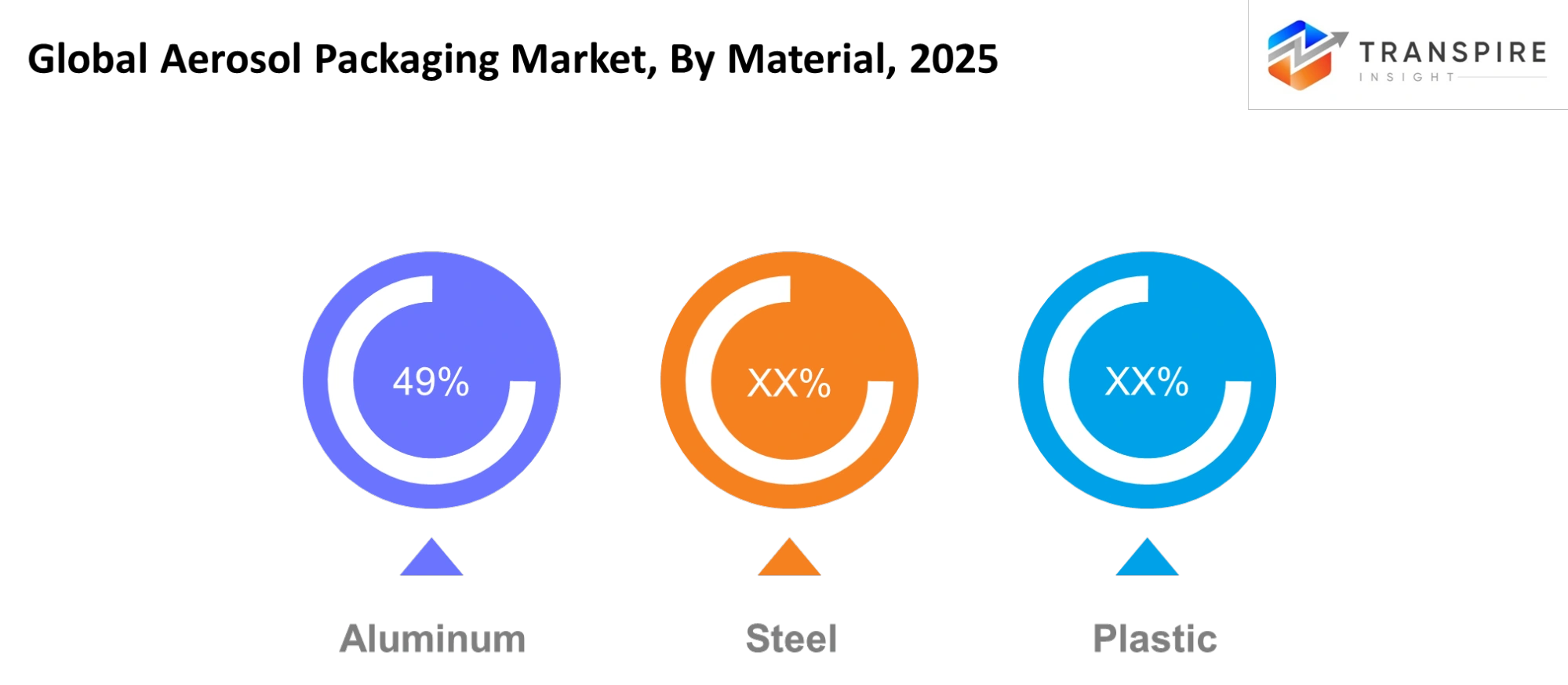
Aluminum makes up about 49% of market revenue by material. It's even lighter than steel. It withstands corrosion itself without a protective coating. And when under very high pressure, it forms extremely cleanly. Those properties really make it the standard choice for deodorants, hairsprays, and other personal care sprays where your weight and the surface finish count significantly to the customer.
Steel cans are actually much cheaper to make than aluminum. They hold a lot more internal pressure, which is perfect for products such as whipped cream and certain industrial sprays. Steel also has a quite stable presence in household and automotive applications when the cost of the material counts more than the weight of the can itself.
Plastic aerosol packaging is actually the smallest material group. It's used for products that really must not touch metal, including some pharmaceutical and food-related applications. Plastic aerosol growth is relatively slow compared to aluminum but still steady progress.
Personal care is basically the biggest application group by revenue. Deodorant, hairspray, shaving foam, and body spray - all very dependent on aerosol delivery. The format is very convenient and the consumer repurchasing rate is very high. This excellent combination produces a consistent amount of volume every year.
Key Market Trends & Insights:
- Recycling infrastructure for aluminum aerosol cans is really improving in key markets. This is significantly decreasing the material's end-of-life cost burden - a major challenge for brands that have sustainability targets.
- Compressed air and nitrogen propellants are starting to replace hydrocarbon propellants in some personal care products. Brands use this new approach to reduce volatile organic compounds (VOC) in their formulations quite a lot more effectively than before.
- Aerosol valve design has gotten much better so it now allows for bag-on-valve formats. This keeps your product completely separate from the propellant - which really opens up the format to very sensitive pharmaceuticals and food-related applications.
- Personal care in Asia-Pacific is actually the most rapidly growing regional application. The rising disposable income in India, Indonesia, and Vietnam is pulling aerosol deodorant and hair care products by the truckload.
- Aluminum can manufacturers are actually investing more heavily in lightweighting. Thinning out the walls at the same internal pressure rating really does reduce the amount of material needed per unit - all without changing the overall user experience one bit.
Global Aerosol Packaging Market Segmentation
By Material
- Aluminum: Aluminum accounts for nearly 50% of the Global Aerosol Packaging Market's revenue - it's a major player indeed! The metal is so light, resistant to corrosion, and very receptive to decorating. Aluminum cans often don't need an internal coating for many personal care products - that reduces your production costs by one step compared to steel. Beverage-grade aluminum alloys, mainly AA3104 and AA3004, make up the can's body. The dome and base use even stronger alloys to handle the propellant pressure. Most deodorant and hairspray cans sold worldwide are aluminum. What's more, the material is completely recyclable - which further secures its spot with brands managing packaging sustainability goals.
- Steel: Steel aerosol cans are constructed from tinplate - a type of low-carbon steel coated with a very thin layer of tin. Tinplate cans are actually less expensive per unit than aluminum for similar-sized cans. They can handle higher bursting pressures, relevant for items such as whipped cream, cooking spray, and some industrial or automotive products requiring greater propellant pressure. Steel cans will need an internal coating to stop corrosion when they come into contact with liquids or acids. That adds an extra step in the production process - though well established among manufacturers. Steel holds a fairly large share in household insecticide, furniture polish, and automotive lubricant spray applications, where price per can really matters to the brand.
- Plastic: Plastic aerosol packaging deals with containers crafted from PET, PP, and other types of polymers - all designed to keep pressurized products inside. This segment remains relatively small in comparison to aluminum and steel in the Global Aerosol Packaging Market. Plastic works out well for items requiring no metal-to-product contact - such as certain pharmaceutical sprays, nasal delivery systems, and food products sensitive to the transfer of metallic taste. The material is lighter than both aluminum and steel for similar volumes. Its biggest limitations lie in a lower pressure threshold and higher oxygen permeability, making it unsuitable for a wide variety of products. Growth in this area is mainly due to pharmaceutical and specialty food aerosol applications - rather than the high-volume personal care or household sectors.
To learn more about this report, Download Free Sample Report
By Product Type
- Cans: Cans represent the primary revenue-generating product type within the global aerosol packaging market. They retain both the product and propellant under great pressure. Can production constitutes a very high volume, highly capital-intensive manufacturing process. The main can manufacturers have massive facilities equipped with high-speed forming lines that produce hundreds of cans every minute. Can size, shape, and even the surface finish are really purchase decision factors for many brand customers - and can makers compete on consistency, supply reliability, and their ability to accomplish all sorts of decorating tasks specifically requested by each brand. Two-piece aluminum cans, created from a single piece of metal using impact extrusion, greatly dominate the personal care sector. Three-piece tinplate cans - made from a rolled body with a welded seam and crimped ends - are a standard item in both household and industrial applications.
- Valves: Valves actually control how the product exits the aerosol can. When you press the actuator, the valve opens - and when you let go, it closes. The valve body, stem, spring, and even gasket materials are carefully selected based on the product we're dispensing. Aqueous formulations, ethanol-based products, and quite harsh chemicals all need different gasket and stem materials so they don't degrade over the product's shelf life. Bag-on-valve systems include an additional inner bag containing the product while the propellant surrounds the bag on the outside. When the valve opens, propellant pressure causes the bag to collapse - forcing the product out. This design really keeps the product sterile and propellant-free - a requirement for pharmaceutical sprays and some wound care aerosols. Valve suppliers work very closely with formulation teams at the brand companies to perfectly align valve performance to product viscosity and achieve the desired spray pattern.
- Actuators: Actuators are basically the noticeable top component that consumers press or tilt to release the product. They actually determine the spray pattern, droplet size, and even direction of delivery. A fine mist actuator for a facial spray produces a rather different output compared to a foam actuator for shaving cream or a directional nozzle for a lubricant spray. Actuator design is really a combination of function and branding element. Brand companies spend money not only on the design but also the look of the actuator because that's what the consumer gets to see and touch at the point of use. Precision Valve, Lindal, and AptarGroup all have notable actuator design and development capabilities. Developing custom actuators for a specific brand formulation can create quite a bit of supply dependence that really supports long-term relationships with suppliers.
By Application
- Personal Care: Personal care constitutes the biggest application in the global aerosol packaging market. Deodorant, antiperspirant, hairspray, dry shampoo, shaving foam, and body spray - all employ aerosol delivery methods. The category really sees a lot of repeat purchases. A deodorant user can buy numerous cans every year. That continuous purchase pattern creates quite consistent volumes. Aerosol delivery really suits personal care since it applies the product very evenly, dries super fast, and allows the consumer great control over how much they apply. Premium deodorant and hair care brands often use aluminium cans that have been decorated very well - to place their products right in the mid and premium tiers. Asia-Pacific's personal care aerosol volume is actually increasing as deodorant penetration increases all over markets where the format was not so common before.
- Household: Household aerosols take care of insecticidal sprays, air fresheners, furniture polish, oven cleaners, and a bunch of multipurpose surface sprays. Steel tinplate cans lead this segment mainly because of their relatively lower cost per unit. Household aerosol purchases are commonly done at supermarkets and general retail, so being very price-competitive matters a lot for brands. Spray pattern and directional delivery are quite important product attributes for insecticides and cleaning products, which really drives design investment into actuators - even in a cost-sensitive category. The household segment is pretty mature in Western Europe and North America - but there's definitely room for growth in Southeast Asia and Africa, where household income growth really expands the addressable consumer base for packaged aerosol cleaning and pest control products.
- Automotive: Automotive aerosols consist of lubricants, degreasers, brake cleaners, rust inhibitors, and paint touch-up sprays. These products are usually bought at automotive parts retailers, workshops, and mass merchandise stores. Steel tinplate cans are quite standard here due to both pressure requirements and cost considerations. The automotive segment really sees consistent demand related to the number of registered vehicles in use and the maintenance habits of vehicle owners. Growth is fairly steady rather than super-fast. Electric vehicle adoption has not really decreased demand that much - since EV maintenance will still require lubricants, cleaning products, and rust protection for non-drivetrain components.
- Food & Beverage: Food aerosols include whipped cream, cooking sprays, and quite a few condiments and toppings dispensed at extremely high pressure. Whipped cream cans are made from steel tinplate and employ nitrous oxide as the propellant. Cooking sprays are made from aluminum or steel with special food-grade propellants. The segment generates less revenue than personal care or household items. Growth in the food aerosol segment is somewhat restricted by very stringent regulations on food contact materials - and also by the narrower scope of products where pressurized delivery really adds significant value to consumers justifying the packaging cost surplus over conventional formats. Bag-on-valve technology has somewhat expanded the category by allowing much more delicate food products to be packaged without having to come into contact with propellants.
- Pharmaceuticals: Pharmaceutical aerosols cover metered dose inhalers, nasal sprays, topical wound care, and dermatological sprays. It's really a very valuable yet very small-volume segment. Regulatory demands for pharmaceutical aerosol packaging are extremely tight indeed. Materials for containers, valve performance, dose consistency, and sterilization must all be tested and documented thoroughly. Aluminum remains the first choice for can materials in pharmaceutical applications - since it won't react with active ingredients and provides a very dependable moisture barrier. Bag-on-valve is the preferred format for wound care and nasal applications that demand both sterile and propellant-free delivery. Pharmaceutical aerosol packaging manufacturers have to operate under pharmaceutical GMP frameworks - which presents a much greater compliance requirement compared to the personal care or household segments need.
Country Insights
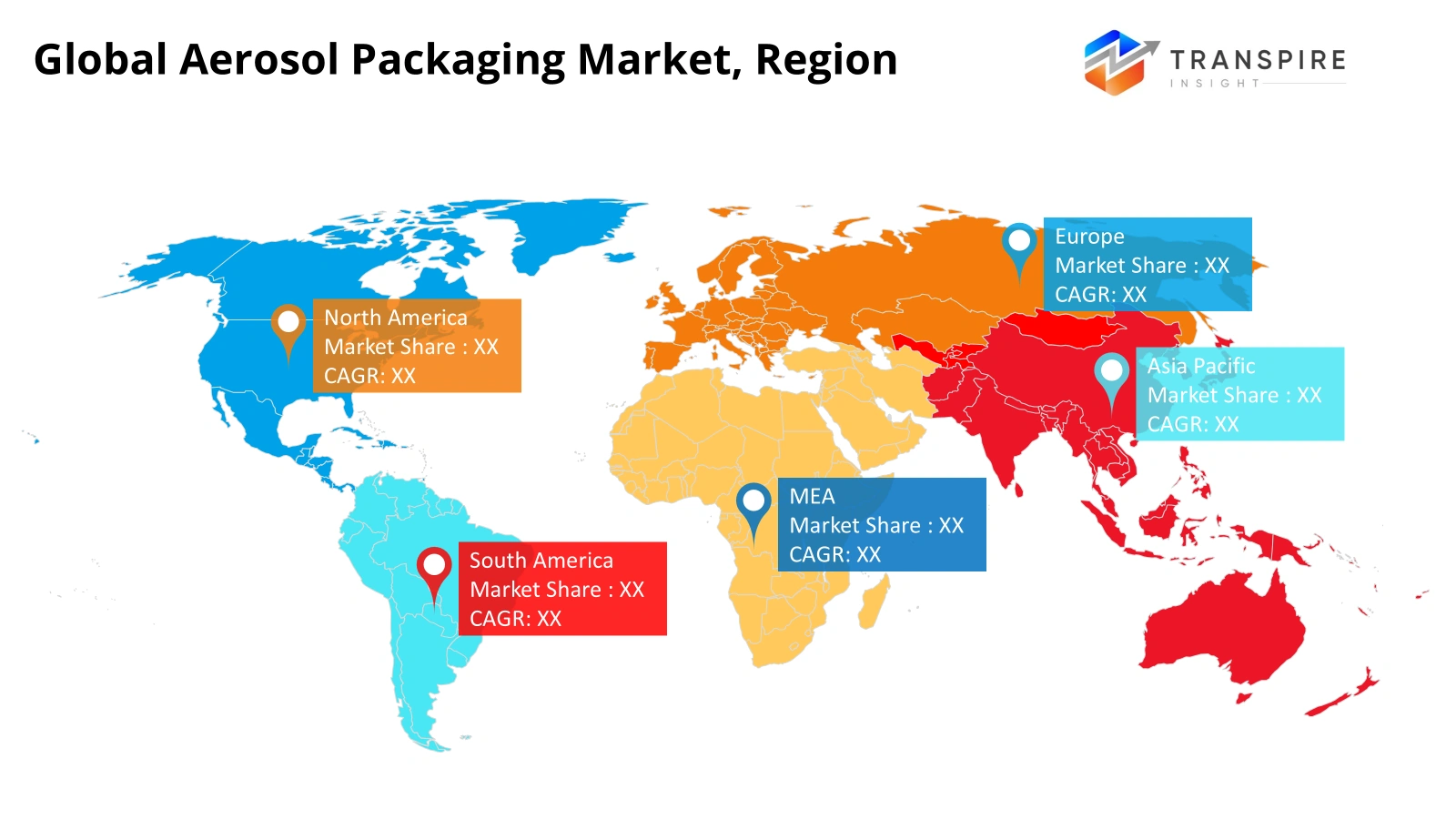
North America is a very large and very mature aerosol market. The United States has one of the highest per-capita aerosol consumption levels. Personal care and household products really drive the bulk of volume sales. Ball Corporation and Crown Holdings operate quite a lot of can manufacturing capacity here in the US. The market is rather competitive on price at the commodity tier and also on can quality and supply service at the premium tier.
Europe is the second-largest regional market when it comes to aerosols. The Western European countries - especially Germany, France, the UK, and Italy - have quite developed aerosol manufacturing bases. European aerosol brands were actually among the first to adopt compressed gas propellants and bag-on-valve formats so as to comply with VOC (volatile organic compound) regulations. The European Aerosol Federation even publishes yearly production data showing quite consistent output above 5 billion units across the whole region all the time.
Asia-Pacific is the fastest-growing region in the Global Aerosol Packaging Market right now. China is responsible for producing and consuming quite a large number of aerosols. Its domestic can manufacturing base has grown much bigger recently. India is another growing market for personal care aerosols because deodorant penetration really increases with rising urban incomes levels. Japan has a very sophisticated aerosol market with lots of premium personal care and pharmaceutical applications. Southeast Asia is contributing volume growth through the adoption of more personal care items in Indonesia, Vietnam, and the Philippines.
Latin America has quite active aerosol production going on in Brazil and Mexico. Brazil has a domestic personal care aerosol industry of meaningful size itself. Envases Universales Group is operating within the Latin American market and supplies both local brands and multinational customers here. The Middle East also has a high demand for aerosol personal care and household products - this is all related to population growth and increased urbanization in the GCC (Gulf Cooperation Council) countries.
To learn more about this report, Download Free Sample Report
Recent Development News
In 2020–2024 (continuous rollout), Achieved multi-gram reduction per can through thinner-wall forming and improved alloy strength.
Exal Corporation
In May 2023, expanded impact-extruded aluminum can innovations with thinner walls while maintaining pressure resistance.
Report Metrics
|
Report Metrics |
Details |
|
Market size value in 2025 |
USD 8.1 Billion |
|
Market size value in 2026 |
USD 8.52 Billion |
|
Revenue forecast in 2033 |
USD 11.97 Billion |
|
Growth rate |
CAGR of 4.98% from 2026 to 2033 |
|
Base year |
2025 |
|
Historical data |
2021 - 2024 |
|
Forecast period |
2026 - 2033 |
|
Report coverage |
Revenue forecast, competitive landscape, growth factors, and trends |
|
Country scope |
Global |
|
Key company profiled |
Ball Corporation, Crown Holdings Inc., Ardagh Group S.A., Trivium Packaging, CCL Industries Inc., AptarGroup Inc., Lindal Group Holding GmbH, Precision Valve Corporation, BWAY Corporation, DS Containers Inc., Exal Corporation, TUBEX Holding GmbH, Montebello Packaging Inc., Envases Universales Group, Silgan Holdings Inc. |
|
Customization scope |
Free report customization (country, regional & segment scope). Avail customized purchase options to meet your exact research needs. |
|
Report Segmentation |
By Material (Aluminum, Steel, Plastic), By Product Type (Cans, Valves, Actuators), By Application (Personal Care, Household, Automotive, Food & Beverage, Pharmaceuticals). |
Key Global Aerosol Packaging Company Insights
The global aerosol packaging market has two quite distinct supplier categories. The first comprises can manufacturers - Ball, Crown, Ardagh, Trivium, Exal, and TUBEX. These companies actually manufacture the containers themselves. They compete in terms of production scale, can quality, decoration capability, and supply dependability. Ball and Crown are the biggest by volume. They cater to international brand clients all over personal care, housewares, and food applications.
The second category holds valve and actuator suppliers - AptarGroup, Lindal, and Precision Valve. These companies design and also manufacture the dispensing equipment. Their key point of competition is engineering knowledge. A valve or actuator made for a very specific brand formula really creates a supply relationship that is even more difficult to change than a standard can contract. Aptar and Lindal also invest extremely in bag-on-valve development - which places them right at the forefront of pharmaceutical and high-end personal care growth.
CCL Industries and Silgan compete across both the packaging and closure categories - and have aerosol as part of a much wider packaging portfolio. BWAY and DS Containers focus mostly on the North American steel can market for industrial and housewares applications.
Company List
- Ball Corporation
- Crown Holdings Inc.
- Ardagh Group S.A.
- Trivium Packaging
- CCL Industries Inc.
- AptarGroup Inc.
- Lindal Group Holding GmbH
- Precision Valve Corporation
- BWAY Corporation
- DS Containers Inc.
- Exal Corporation
- TUBEX Holding GmbH
- Montebello Packaging Inc.
- Envases Universales Group
- Silgan Holdings Inc.
Global Aerosol Packaging Market Report Segmentation
By Material
- Aluminum
- Steel
- Plastic
By Product Type
- Cans
- Valves
- Actuators
By Application
- Personal Care
- Household
- Automotive
- Food & Beverage
- Pharmaceuticals
Frequently Asked Questions
Find quick answers to common questions.
The Global Aerosol Packaging Market is expected to reach approximately USD 11.97 billion by 2033.
Key segments include Material (Aluminum, Steel, Plastic), Product Type (Cans, Valves, Actuators), and Application (Personal Care, Household, Automotive, Food & Beverage, Pharmaceuticals).
Major players include Ball Corporation, Crown Holdings Inc., Ardagh Group S.A., Trivium Packaging, CCL Industries Inc., AptarGroup Inc., Lindal Group Holding GmbH, Precision Valve Corporation, BWAY Corporation, DS Containers Inc., Exal Corporation, TUBEX Holding GmbH, Montebello Packaging Inc., Envases Universales Group, and Silgan Holdings Inc.
The Global Aerosol Packaging Market size is approximately USD 8.1 billion in 2025.
The Global Aerosol Packaging Market is expected to grow at a CAGR of 4.98% from 2026 to 2033.
- Ball Corporation
- Crown Holdings Inc.
- Ardagh Group S.A.
- Trivium Packaging
- CCL Industries Inc.
- AptarGroup Inc.
- Lindal Group Holding GmbH
- Precision Valve Corporation
- BWAY Corporation
- DS Containers Inc.
- Exal Corporation
- TUBEX Holding GmbH
- Montebello Packaging Inc.
- Envases Universales Group
- Silgan Holdings Inc.
Recently Published Reports
-
Apr 2026
Pharmaceutical Cold Chain Packaging Market
Pharmaceutical Cold Chain Packaging Market By Material (Plastic,(Polyethylene (PE), Polypropylene (PP), Polyethylene Terephthalate (PET), Expanded Polystyrene (EPS), Polyurethane (PU),Others), Paper, Metal, Others), By Product (Small Boxes, Pallets, Large Sized Pallet Containers, Others), By End Use (Biopharmaceutical Companies, Clinical Research Organizations, Hospitals, Research Institutes, Logistics and Distribution Companies, Others)”, By Industry Analysis, Size, Share, Growth, Trends, and Forecasts 2026-2033
-
Apr 2026
Active & Intelligent Packaging Market
Active & Intelligent Packaging Market By Type (Active Packaging, Smart Packaging), By Material (Polymer-Based, Paper & Board-Based, Metal-Based, Glass-Based), By Technology (Time-Temperature Indicators, Freshness Indicators, RFID, Antimicrobial Packaging, Modified Atmosphere Packaging), By Application (Food & Beverages, Pharmaceutical, Cosmetics & Personal Care, Electronics & Consumer Goods, Others), By Industry Analysis, Size, Share, Growth, Trends, and Forecasts 2026-2033
-
Apr 2026
Biodegradable Cut Flower Packaging Market
Biodegradable Cut Flower Packaging Market By Material Type (Paper & Paperboard, Biodegradable Plastics, Natural Fibers, Molded Pulp, Others), By Product Type (Sleeves, Wraps, Boxes & Cartons, Bags & Pouches, Inserts & Holders), By Application (Roses, Carnations, Tulips, Chrysanthemums, Mixed Flowers, Others) and By Distribution Channel (Direct Sales, Distributors & Wholesalers, Online Channels), By Industry Analysis, Size, Share, Growth, Trends, and Forecasts 2026-2033
-
May 2026
Pharmaceutical Packaging Market
Pharmaceutical Packaging Market By Material Type (Plastic, Glass, Metal, Paper & Paperboard, Others), By Packaging Type (Bottles, Blister Packs, Vials, Ampoules, Pouches & Sachets, Others) and By End User (Hospitals & Clinics, Retail Pharmacies, Online Pharmacies, Pharmaceutical Manufacturers), By Industry Analysis, Size, Share, Growth, Trends, and Forecasts 2026-2033