

Germany Alpha-gal Syndrome Allergy Market Size & Forecast:
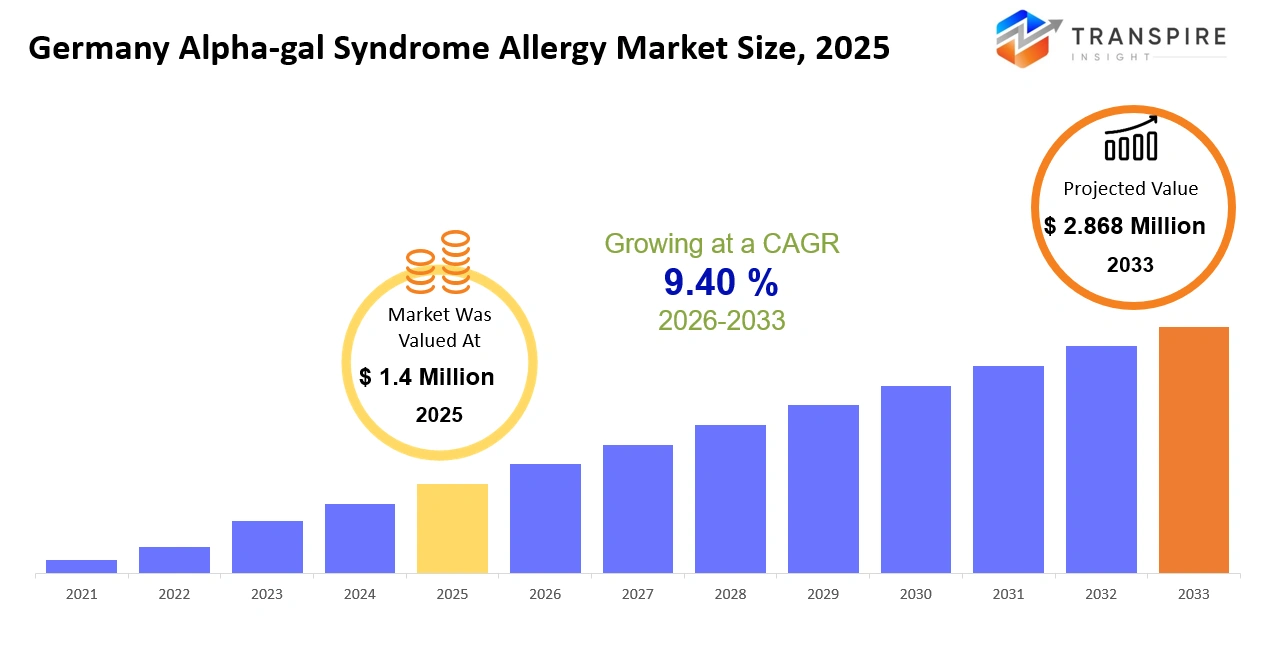
- Germany Alpha-gal Syndrome Allergy Market Size 2025: USD 1.4 Million
- Germany Alpha-gal Syndrome Allergy Market Size 2033: USD 2.868 Million
- Germany Alpha-gal Syndrome Allergy Market CAGR: 9.40%
- Germany Alpha-gal Syndrome Allergy Market Segments: By Diagnosis (Blood Tests, Skin Tests), By Treatment (Antihistamines, Epinephrine Auto-Injectors, Allergy Management Therapies), By End User (Hospitals, Diagnostic Laboratories, Allergy Clinics)
To learn more about this report,  Download Free Sample Report
Germany Alpha-gal Syndrome Allergy Market Summary:
The Germany Alpha-gal Syndrome Allergy Market size is estimated at USD 1.4 Million in 2025 and is anticipated to reach USD 2.868 Million by 2033, growing at a CAGR of 9.4 % from 2026 to 2033. The Germany Alpha-gal Syndrome Allergy Market Alpha-gal syndrome represents an acquired allergy which develops through tick bites and causes people to react with delayed symptoms after they consume mammalian meat or use products made from mammals. The Europe tick species Ixodes ricinus has shown people in Germany and its neighboring countries to develop sensitization through its bites.
Key Market Trends & Insights:
Healthcare providers are gaining greater clinical knowledge of their medical responsibilities. Physicians in Germany and Europe are becoming more aware of AGS as a diagnosis in patients with delayed allergic reactions to mammalian meat products. The expanded knowledge of allergists dermatologists, and gastroenterologists leads to more patient referrals for specialized testing procedures.
Increased Demand for Specific IgE Diagnostics: The ImmunoCAP platform and its related systems have become common diagnostic instruments for verifying AGS through their α-Gal–specific Immunoglobulin E tests. The larger laboratories and allergy clinics now use diagnostic panels which contain α-Gal and other food allergen indicators to test patients. The demand for multiplex allergy testing panels increases because broad IgE profiling enables better distinction between AGS and other food allergies.
Association with Tick Exposure Enhances Epidemiological Study: Researchers are currently studying the relationship between AGS and tick bites, with a focus on Ixodes ricinus which predominates in Germany and European countries. The forested areas of Germany which have a high tick population serve as research sites to investigate α-Gal sensitization. Public health organizations study tick-related diseases, which supports allergy research initiatives and increases public understanding of AGS.
Germany Alpha-gal Syndrome Allergy Market Segmentation
By Diagnosis Type
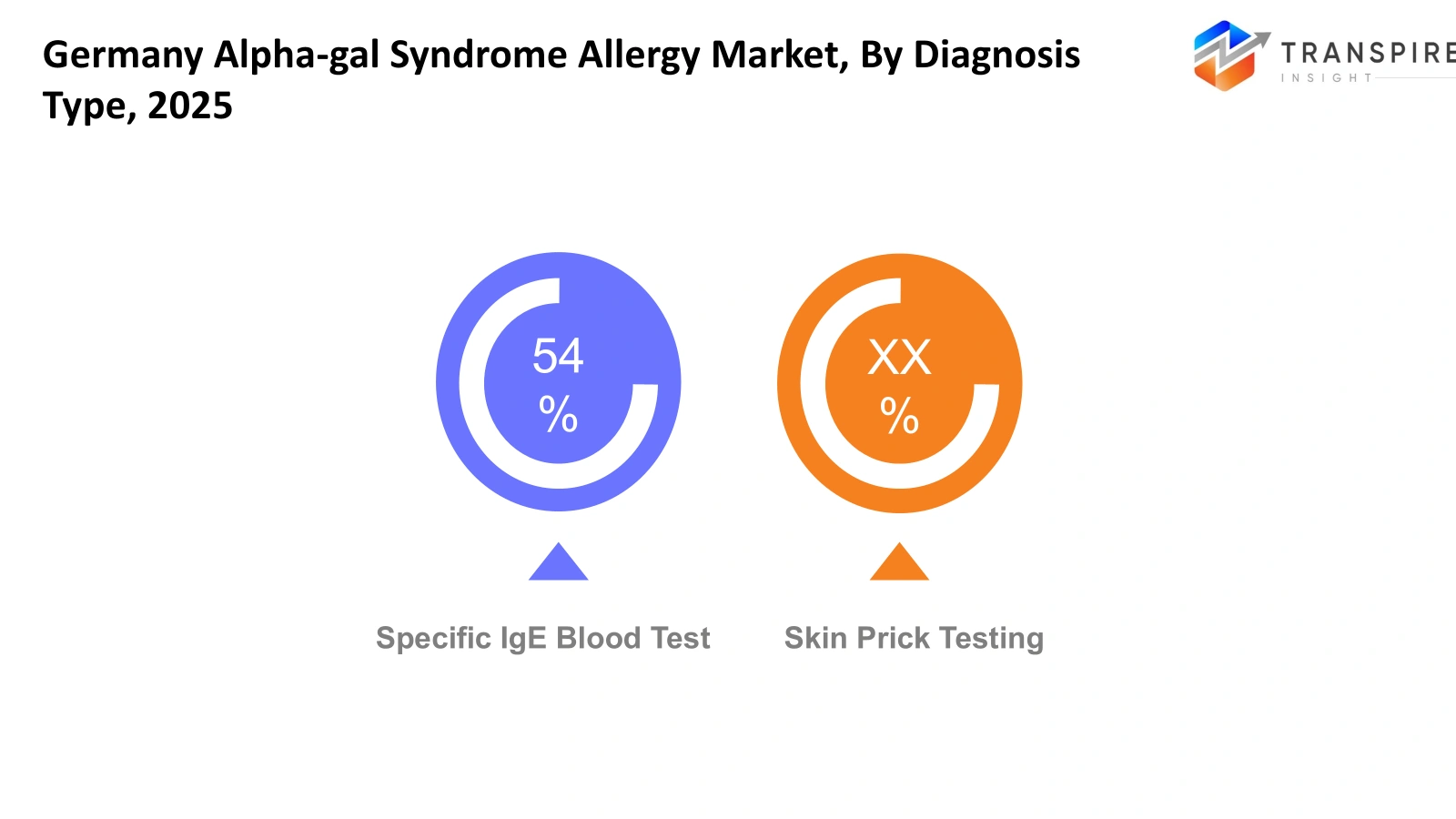
- Specific IgE Blood Test (α-Gal sIgE test)- Specific IgE Blood Test for α-Gal (α-Gal sIgE Test). The diagnostic test measures specific IgE antibodies for the alpha-gal sugar in a patient’s blood. This test is primarily used to diagnose alpha-gal syndrome and helps doctors determine whether a patient’s symptoms are related to a red meat allergy caused by tick bites. This test is a reliable test.
- Skin Prick Testing- The process of skin prick testing entails pricking the skin with a small amount of allergens. If the patient reacts to the allergens, redness or swelling occurs at the pricked site. It helps determine whether a person reacts to a particular allergen. It also helps in diagnosing a person with an allergy.
To learn more about this report, Download Free Sample Report
By Treatment Type
- Epinephrine (Adrenaline) Auto-Injectors- Epinephrine auto-injectors are emergency medicines used to treat severe allergic reactions triggered by an alpha-gal allergy. Epinephrine auto-injectors are portable devices that patients or their caregivers use to address severe allergic reactions.
- Antihistamines- Antihistamines are a class of medication used in the management of allergic symptoms of a mild to moderate nature. These symptoms include itching, hives, swelling, and nasal congestion. Antihistamines work by counteracting histamine's effects.
- Dietary Avoidance Therapy- The avoidance of dietary therapy requires the avoidance of red meat and mammalian products that contain alpha-gal. Patients are advised to make significant dietary changes and to read food labels carefully. This is the only method of managing alpha-gal syndrome in the long term.
- Patient Education & Allergy Counselling – This segment focuses on patient education on allergy causes, prevention, emergency response, and lifestyle changes. Counseling sessions are conducted by allergy specialists to ensure that patients are able to handle their allergies safely and minimize the chances of unintentional allergic responses.
By End-User
- Hospitals & Specialty Allergy Clinics- The diagnostic labs perform blood tests and immunologic tests that identify the presence of alpha-gal antibodies. Diagnostic labs assist hospitals and clinics in providing accurate results that help physicians confirm diagnoses and develop the most effective plan of action for each patient.
- Diagnostic Laboratories- The diagnostic labs perform blood tests and immunologic tests that identify the presence of alpha-gal antibodies. Diagnostic labs assist hospitals and clinics in providing accurate results that help physicians confirm diagnoses and develop the most effective plan of action for each patient.
- Academic & Research Institutes- Academic institutions and research centers concentrate on scientific research related to allergies, immunology, and tick-borne diseases. This research aids in improving diagnostic technologies, understanding the mechanisms behind alpha-gal syndrome, and exploring new treatments.
Country Insights
Clinical laboratories across Germany provide blood testing for galactose-alpha-1,3-galactose antibodies. Improved laboratory capacity shortens confirmation timelines after suspected food reactions. Allergy specialists recommend dietary management, emergency medication planning and follow-up evaluation. Collaboration between hospitals, research institutes and biotechnology firms encourages development of more accurate screening tools for allergy detection nationwide.
Patient management focuses on strict avoidance of mammalian meat products such as beef, pork and lamb. Physicians advise label reading, nutrition counseling and emergency epinephrine availability. Pharmaceutical research examines improved antihistamine formulations and supportive therapies. Education programs organized by allergy associations help families understand delayed immune reactions after tick exposure.
Public health monitoring, climate change discussion and tick habitat expansion continue shaping medical attention across Germany. Investment in allergy research grants, diagnostic innovation and physician training programs supports market growth. Greater awareness among consumers, food suppliers and healthcare providers encourages safer dietary practices after diagnosis of alpha-gal syndrome within Germany.
Recent Development News
- The results of regional sensitivity studies demonstrate the existing scope of disabilities in the studied region. The ongoing German research shows high sensitization rates for tick exposed people because AGS manifests inclinically relevant ways for people living in rural and forestry areas.
- Research on Diagnostics and Biomarkers Continues European and German research has developed better α-Gal sensitization test methods which include the improvement of quantitative IgE assay testing to achieve results beyond basic positive findings.
|
Report Metrics |
Details |
|
Market size value in 2025 |
USD 1.4 Million |
|
Market size value in 2026 |
USD 1.529 Million |
|
Revenue forecast in 2033 |
USD 2.868 Million |
|
Growth rate |
CAGR of 9.40% from 2026 to 2033 |
|
Base year |
2025 |
|
Historical data |
2021 – 2024 |
|
Forecast period |
2026 – 2033 |
|
Report coverage |
Revenue forecast, competitive landscape, growth factors, and trends |
|
Country scope |
Germany |
|
Key company profiled |
Thermo Fisher Scientific, Eurofins Scientific, Quest Diagnostics, Labcorp, Siemens Healthineers, Roche Diagnostics, Danaher Corporation, Abbott Laboratories, Bio-Rad Laboratories, HYCOR Biomedical, Omega Diagnostics, Phadia AB (Thermo Fisher), ARUP Laboratories, Trinity Biotech, BioMérieux. |
|
Customization scope |
Free report customization (country, regional & segment scope). Avail customized purchase options to meet your exact research needs. |
|
Report Segmentation |
By Diagnosis (Blood Tests, Skin Tests), By Treatment (Antihistamines, Epinephrine Auto-Injectors, Allergy Management Therapies), By End User (Hospitals, Diagnostic Laboratories, Allergy Clinics) |
Key Germany Alpha-gal Syndrome Allergy Market Insights
Germany now experiences greater medical acknowledgement of Alpha-gal Syndrome which causes delayed allergic reactions after people consume mammalian meat following tick bites from the European tick species Ixodes ricinus. Allergen specialists and immune system experts increase their testing and research activities because they have gained greater understanding of the condition.
The AGS market in Germany primarily operates through diagnostic methods, as doctors confirm the disease by testing for α-Gal–specific IgE antibodies. The laboratory and hospital systems use advanced allergy testing platforms which Thermo Fisher Scientific and Euroimmun developed.
Red meat consumption triggers symptoms which remain hidden from medical professionals because people with AGS need to wait several hours before their symptoms start. Medical professionals find it hard to diagnose this condition because its symptoms appear after a long time yet the medical community needs to improve its understanding of the disease and its diagnostic methods.
Company List
- Thermo Fisher Scientific
- Eurofins Scientific
- Quest Diagnostics
- Labcorp
- Siemens Healthineers
- Roche Diagnostics
- Danaher Corporation
- Abbott Laboratories
- Bio-Rad Laboratories
- HYCOR Biomedical
- Omega Diagnostics
- Phadia AB (Thermo Fisher)
- ARUP Laboratories
- Trinity Biotech
- BioMérieux.
Germany Alpha-gal Syndrome Allergy Market Report Segmentation
By Diagnosis
- Blood Tests
- Skin Tests
By Treatment
- Antihistamines
- Epinephrine Auto-Injectors
- Allergy Management Therapies
By End User
- Hospitals
- Diagnostic Laboratories
- Allergy Clinics
Frequently Asked Questions
Find quick answers to common questions.
The approximate Germany Alpha-gal Syndrome Allergy Market size for the market will be USD 2.868 Million in 2033.
Key segments for the Germany Alpha-gal Syndrome Allergy Market By Diagnosis (Blood Tests, Skin Tests), By Treatment (Antihistamines, Epinephrine Auto-Injectors, Allergy Management Therapies), By End User (Hospitals, Diagnostic Laboratories, Allergy Clinics)
Major players in the Germany Alpha-gal Syndrome Allergy Market are Thermo Fisher Scientific, Eurofins Scientific, Quest Diagnostics, Labcorp, Siemens Healthineers, Roche Diagnostics, Danaher Corporation, Abbott Laboratories, Bio-Rad Laboratories, HYCOR Biomedical, Omega Diagnostics, Phadia AB (Thermo Fisher), ARUP Laboratories, Trinity Biotech, BioMérieux.
The Germany Alpha-gal Syndrome Allergy Market size is USD 1.4 Million in 2025.
The Germany Alpha-gal Syndrome Allergy Market CAGR is 9.4%.
- Thermo Fisher Scientific
- Eurofins Scientific
- Quest Diagnostics
- Labcorp
- Siemens Healthineers
- Roche Diagnostics
- Danaher Corporation
- Abbott Laboratories
- Bio-Rad Laboratories
- HYCOR Biomedical
- Omega Diagnostics
- Phadia AB (Thermo Fisher)
- ARUP Laboratories
- Trinity Biotech
- BioMérieux.
Recently Published Reports
-
Apr 2026
Biosimilars Market
Biosimilars Market By Product Type (Monoclonal Antibodies, Recombinant Hormones, Erythropoietin, G-CSF, Others), By Indication (Oncology, Autoimmune Diseases, Blood Disorders, Diabetes, Others), By Manufacturing Type (In-House Manufacturing, Contract Manufacturing), By Distribution Channel (Hospital Pharmacies, Retail Pharmacies, Online Pharmacies), By Industry Analysis, Size, Share, Growth, Trends, and Forecasts 2021-2033
-
Apr 2026
Gastrointestinal Endoscopy Market
Gastrointestinal Endoscopy Market By Type (Rigid Gastrointestinal Endoscope, Flexible Gastrointestinal Endoscopes, Disposable Gastrointestinal Endoscope), By Procedure Type (Colonoscopy, Gastroscopy, Duodenoscopy, Enteroscopy, Flexible Sigmoidoscopy, Others), By Application (Diagnosis, Treatment), By End-Users (Hospitals, Ambulatory Surgical Centers, Specialty Clinics, Laboratories, Others), By Industry Analysis, Size, Share, Growth, Trends, and Forecasts 2021-2033
-
Apr 2026
Rare Inherited Metabolic Disorder Drug Market
Rare Inherited Metabolic Disorder Drug Market By Drug Class (Enzyme Replacement Drugs, Gene Therapy Drugs, Substrate Reduction Drugs, Small Module Drugs, Protein Drugs), By Route of Administration(Parenteral, Oral, Intrathecal), By Clinical Development (Marketed Drugs, Late Stage Clinical Phase III, Early Stage Clinical Phase I-II, Preclinical Candidates), By Indication (Lysosomal Storage Disorders, Urea Cycle Disorders, Amino Acid Metabolic Disorders, organic Acidemias, Peroximal Disorders), By Industry Analysis, Size, Share, Growth, Trends, and Forecasts 2021-2033
-
Jan 2026
Pharmaceutical Cleanroom Technology Market
Pharmaceutical Cleanroom Technology Market By Product (Equipment, Consumables, Services); By Cleanroom Type (Standard Cleanrooms, Modular Cleanrooms); By End Use (Pharmaceutical Companies, Biotechnology Companies), By Industry Analysis, Size, Share, Growth, Trends, and Forecasts 2021-2033