

France Maple Syrup Market Size & Forecast:
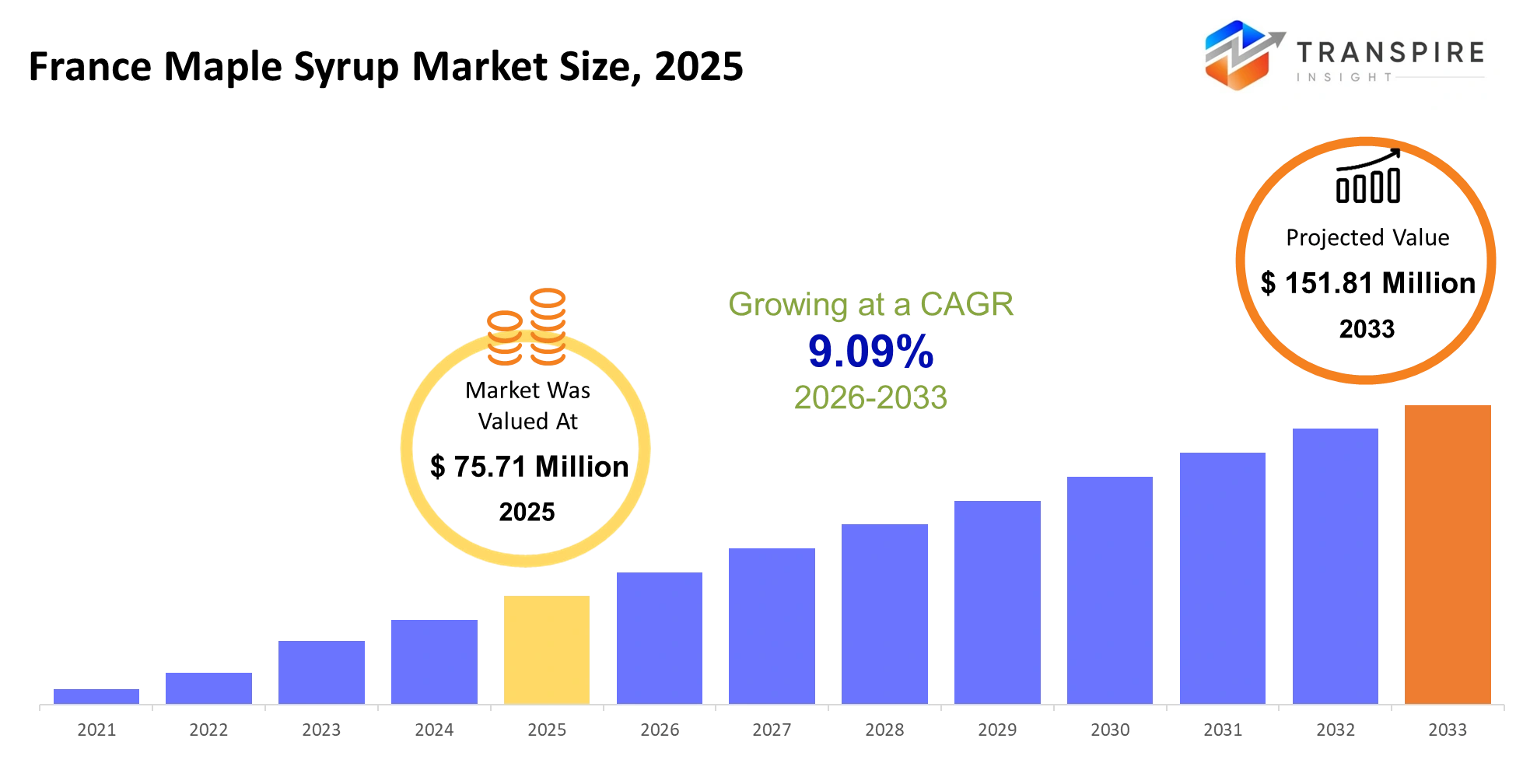
- France Maple Syrup Market Size 2025: USD 75.71 Million
- France Maple Syrup Market Size 2033: USD 151.81 Million
- France Maple Syrup Market CAGR: 9.09%
- France Maple Syrup Market Segments: By Type (Pure Maple Syrup, Blended Syrup, Organic Maple Syrup, Others); By Application (Food & Beverages, Bakery, Confectionery, Dairy, Others); By End-User (Consumers, Food Industry, Retailers, Hospitality Sector, Others); By Distribution (Supermarkets, Online Stores, Specialty Stores, Others).
To learn more about this report,  Download Free Sample Report
France Maple Syrup Market Summary
The France Maple Syrup Market was valued at USD 75.71 Million in 2025. It is forecast to reach USD 151.81 Millionby 2033. That is a CAGR of 9.09% over the period.
The France maple syrup market functions as a vital component of the country's premium food and natural sweetener industry because it provides plant-based sweetener alternatives to households and bakeries and cafés and dessert manufacturers and gourmet retailers. Maple syrup has transitioned from its status as an imported niche product to a widely used breakfast food and confectionery and dairy product and health-oriented packaged goods component. The market has shifted its structure during the past five years because French consumers and foodservice brands now demand organic syrup products that have transparent ingredient information and clean-label sources.
The food manufacturing industry started to develop more natural sweetener sourcing methods because the post-pandemic period resulted in disruptions to global sugar supply chains and price fluctuations for sweeteners. The period saw its peak when companies introduced premium products and expanded their retail shelves. Urban French markets display increasing gourmet consumption patterns, which enable suppliers to generate higher profits through their value-added organic blends and specialty packaging products and direct-to-consumer online distribution channels.
Key Market Insights
- The France Maple Syrup Market recorded USD 75.71 million in 2025 because bakery, dairy, and breakfast food applications continued to grow.
- The premium food retail market in Northern and urban regions of France generates approximately 38% market share.
- The 2024 to 2033 period saw organic maple syrup become the fastest-growing product category because consumers preferred clean-label products.
- Pure maple syrup dominates industry revenue with over 55% share because consumers increasingly avoid artificial sweeteners and blended syrups.
- Food and beverage applications maintain the largest demand contribution because café chains and gourmet bakeries and dessert manufacturers all use their products.
- Online retail channels are expanding rapidly because premium imported syrup brands are developing direct-to-consumer subscription services and specialty product distribution systems.
- The hospitality industry and premium restaurant segments drove maple syrup growth after 2022 through their development of gourmet breakfast and dessert menu items.
- Manufacturers increased their recyclable packaging and traceability systems investments between 2021 and 2025 to build their competitive advantages in the market.
- Specialty retailers expanded shelf space for imported Canadian maple products as French consumers increasingly purchased gourmet breakfast ingredients.
What are the Key Drivers, Restraints, and Opportunities in the France Maple Syrup Market?
The main factor driving growth in the France maple syrup market comes from consumers who prefer to buy upscale organic sweeteners which are now available at both retail stores and foodservice establishments. French consumers have increasingly shifted toward minimally processed ingredients after major food manufacturers reformulated products to reduce refined sugar content between 2021 and 2025. The use of maple syrup in bakery fillings and dairy toppings and cereals and gourmet beverages increased because of this development. The café chains and premium dessert brands used maple flavors as seasonal menu items which created ongoing commercial needs and increased product imports.
The market faces its most critical restriction because it depends on imported maple syrup which primarily comes from Canada. Climate changes that impact maple harvest times coupled with rising transportation costs and shifting currency rates result in ongoing price fluctuations throughout the French retail market. France lacks the ability to quickly establish maple supply chains because the production process requires specific environmental conditions and extended growing periods.
The existing structural restriction forces distributors to accept reduced profit margins while making it difficult to reach price-sensitive customers. Companies now have an important opportunity to develop premium organic products that provide functional health benefits. French food manufacturers increasingly use maple syrup as an ingredient in their protein snacks and vegan desserts and health-focused breakfast products. Retail development will increase through online specialty food platforms and luxury hospitality channels when companies invest in sustainable packaging and traceable sourcing systems and gourmet private-label products.
What Has the Impact of Artificial Intelligence Been on the France Maple Syrup Market?
AI technology along with modern digital systems is bringing new changes to the French maple syrup industry by improving inventory control and supply chain management and premium food distribution. The import and distribution sectors use AI-powered analytical tools to anticipate seasonal demand changes and manage warehouse stocks and protect organic syrup products from spoilage. Retailers use machine learning models to study online grocery shopping patterns which enables brands to create personalized product recommendations that boost sales of their premium maple products.
Food manufacturers use predictive analytics to enhance their production planning process which helps them manage ingredient orders and packaging production. AI-powered pricing solutions enable distributors to adjust their pricing strategies in response to changing Canadian maple production levels and shipping expenses and currency exchange rate fluctuations. The systems help businesses run their operations better because they decrease excess inventory and speed up product deliveries to supermarkets and specialty stores.
The advanced digital traceability systems establish better tracking methods to confirm the origin of premium maple syrup products. Buyers can use QR-based tracking systems to check the product's origin and its organic certification and its production batches. The high costs of system integration together with disconnected supply chain information from smaller distributors and specialty retailers create obstacles for AI technology implementation. Mid-sized import businesses in France currently lack digital systems which restrict their ability to use predictive analytics throughout the whole French maple syrup industry.
Key Market Trends
- The sales of organic maple syrup experienced rapid growth after 2022 because French retailers began to sell products that lacked additives and maintained their natural state.
- The breakfast restaurant industry started to use Canadian maple syrup as a replacement for synthetic pancake syrup throughout its city dining establishments.
- Specialty food platforms that operate online observed increased transaction volume for maple syrup products during the period from 2021 to 2025 through their gourmet subscription services.
- French bakery manufacturers developed new maple-flavored pastries and protein snacks and dessert fillings to create additional premium product options.
- European sustainability regulations and packaging reduction objectives forced distributors to switch to recyclable glass packaging materials.
- Retailers established stronger QR-based systems for traceability which allowed them to confirm the origins of syrup and its organic certifications and procedure authenticity after 2023.
- Private-label gourmet food brands expanded their maple syrup offerings to compete against international sweetener manufacturers who import premium products.
- Café chains increasingly used maple syrup in their seasonal drinks and dessert offerings to attract customers who spend money on high-end products.
- Importers started to use different sourcing contracts after their pandemic-related logistics problems revealed how Canadian production cycles created supply concentration risks.
- Leading brands invested in smaller premium packaging formats between 2024 and 2026 to improve affordability and retail shelf visibility.
France Maple Syrup Market Segmentation
By Type
The market base gets established through pure maple syrup because it controls premium pricing and import value and consumer buying patterns in both retail and foodservice markets. Authentic natural sweeteners with traceable sourcing and higher nutritional perception maintain their status as the top market choice for gourmet retailers and cafés and packaged food manufacturers. Blended syrup continues to meet the needs of cost-sensitive buyers who work in industrial food processing because they need affordable products that can be supplied in large quantities. Organic maple syrup experiences its most rapid growth because certified natural ingredients drive both supermarket purchasing decisions and premium food manufacturing strategies.
The market segment experiences growth through increased production of clean-label foods and higher consumption of premium breakfast items and the growth of gourmet bakery products in urban French markets. The future development process will promote investment in three areas which include organic certification programs and recyclable packaging systems and digitally traceable supply chains that enhance premium product differentiation and supplier competitiveness.
By Application
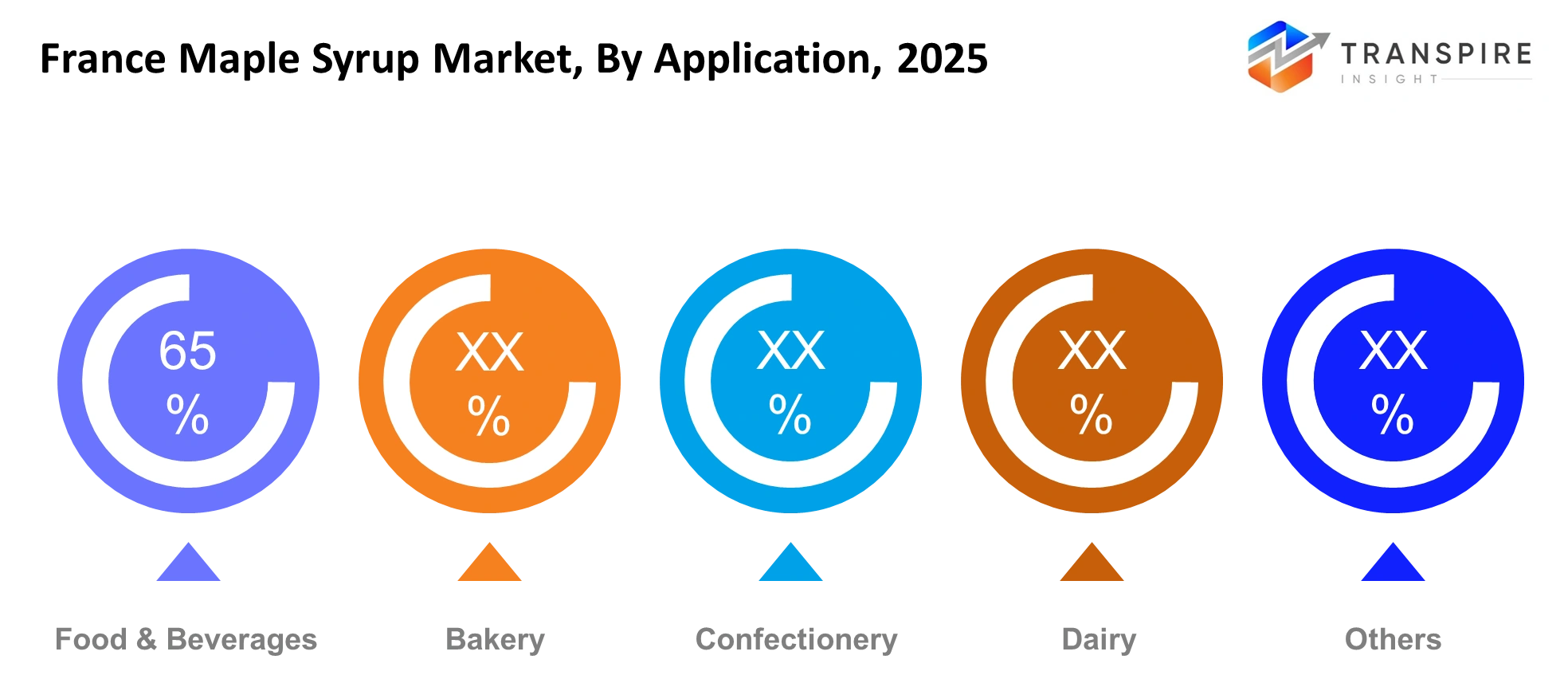
The commercial value of maple syrup gets determined through its various applications which include food manufacturing and hospitality operations and specialty retail products. Maple syrup remains the most popular sweetener because cafés and restaurants and packaged food companies use it to create breakfast items and drinks and sauces and high-end desserts. The bakery and confectionery sectors expand their syrup usage because maple-based fillings and toppings and flavor systems help products achieve better market distinction and premium shelf placement. The dairy industry expands its uses of dairy products because yogurt and ice cream and protein dessert innovations target wellness-oriented consumers.
The market for this segment will grow because companies are changing their ingredient reformulation methods and consumers are increasingly choosing natural sweetening products in premium packaged foods. Future growth will likely shift toward functional nutrition products, gourmet ready-to-eat meals, and plant-based formulations where maple syrup serves both flavor enhancement and clean-label positioning purposes.
To learn more about this report, Download Free Sample Report
By End-User
The commercial demand patterns of different buyer groups create distinct purchasing patterns and packaging requirements and product marketing methods which exist throughout the marketplace. The main market for consumers exists because French households use our products both for breakfast cooking and home baking and gourmet cooking activities. The food industry stands as a major economic force because packaged food makers and dairy producers need stable maple syrup supplies which they use in their dessert and cereal and beverage and confectionery products. Supermarkets and cafés and hotels use their gourmet food and premium breakfast and specialty dessert products to strengthen their market presence through their retail and hospitality services.
The market for this segment grows because people prefer premium food products and companies increasingly use natural sweeteners for their food production processes. Suppliers will develop specialized packaging solutions and bulk foodservice systems and direct sourcing arrangements to achieve operational improvements and better product visibility between different customer segments.
By Distribution
The process of distribution segmentation defines both product availability and market reach because the combination of retail presence and customer buying convenience determines how consumers will decide to purchase products. Supermarkets maintain the dominant share because large retail chains provide nationwide product availability, competitive pricing, and dedicated imported food sections that strengthen brand recognition. The fastest-expanding distribution system now exists through online shops which use digital grocery platforms and direct-to-consumer systems to provide customers with access to high-quality organic syrup products. Gourmet buyers continue to shop at specialty stores because these stores provide imported product collections, premium product information, and artisanal food displays which lead to higher-value purchases.
The segment grows because digital retailing increases, premium food displays expand, and customers show stronger interest in convenience-based shopping options. The future development path will drive higher spending toward e-commerce advertising, subscription gourmet food services, and sustainable packaging solutions that help businesses keep customers and establish premium brand identity during market competition.
What are the Key Use Cases Driving the France Maple Syrup Market?
The food and beverage industry in France represents the main application of maple syrup which particularly applies to breakfast foods and bakery items and dessert products. Pure maple syrup serves as a natural sweetener which high-end cafés and hotel chains and upscale bakeries use for their pancakes and waffles and pastries and yogurt toppings and candy items. The application creates maximum market demand because foodservice operators present maple syrup as an authentic imported ingredient which meets clean-label requirements.
Maple syrup usage now extends to both dairy and packaged food production. French dairy brands increasingly use maple flavors for ice creams and flavored yogurts and protein desserts while retailers showcase maple-based sauces and marinades as premium grocery items. Seasonal menu specials and gourmet breakfast menus drive repeat business for hospitality operators and specialty food retailers.
Maple syrup now finds use in sports nutrition snacks and vegan ready-to-eat meals and functional beverage development. The market for natural skincare products and exfoliating treatments through maple-derived ingredients develops as premium cosmetic and wellness companies test these ingredients.
|
Report Metrics |
Details |
|
Market size value in 2025 |
USD 75.71 Million |
|
Market size value in 2026 |
USD 82.59 Million |
|
Revenue forecast in 2033 |
USD 151.81 Million |
|
Growth rate |
CAGR of 9.09% from 2026 to 2033 |
|
Base year |
2025 |
|
Historical data |
2021 - 2024 |
|
Forecast period |
2026 - 2033 |
|
Report coverage |
Revenue forecast, competitive landscape, growth factors, and trends |
|
Regional scope |
United States; Canada; Mexico; United Kingdom; Germany; France; Italy; Spain; Denmark; Sweden; Norway; China; Japan; India; Australia; South Korea; Thailand; Brazil; Argentina; South Africa; Saudi Arabia; United Arab Emirates |
|
Key company profiled |
Citadelle, Maple Joe, Butternut Mountain Farm, Coombs Family Farms, Crown Maple, LB Maple Treat, Federation of Quebec Maple Producers, Bascom Maple Farms, Escuminac, Maple Grove, B&G Foods, The Maple Guild, Anderson's Maple Syrup, Shady Maple Farms, Turkey Hill. |
|
Customization scope |
Free report customization (country, regional & segment scope). Avail customized purchase options to meet your exact research needs. |
|
Report Segmentation |
By Type (Pure Maple Syrup, Blended Syrup, Organic Maple Syrup, Others); By Application (Food & Beverages, Bakery, Confectionery, Dairy, Others); By End-User (Consumers, Food Industry, Retailers, Hospitality Sector, Others); By Distribution (Supermarkets, Online Stores, Specialty Stores, Others). |
Which Regions are Driving the France Maple Syrup Market Growth?
The Île-de-France region dominates the French maple syrup market because it contains numerous high-end shops and gourmet food establishments and wealthy city dwellers. The hospitality and café industry in Paris generates high demand for breakfast and bakery and dessert products which use imported maple syrup. The region benefits from its modern retail systems which operate together with established methods of distributing imported products. Specialty organic stores and luxury supermarkets keep increasing their sweetener selection which establishes their market position in the region.
The second largest regional contributor after Paris shows different growth patterns between Auvergne-Rhône-Alpes and Paris-driven premium consumption. The regional demand exists because the food manufacturing industry operates steadily while bakeries maintain their production and dairy processing facilities expand. Local consumers in the region prefer organic products which come from local sources over imported luxury food items. The region establishes itself as a dependable source of maple syrup income through its continuous backing of specialty food stores and mid-sized hotel businesses.
After 2023 tourism-based hospitality development and high-end restaurant openings make Provence-Alpes-Côte d'Azur the fastest-growing market in the region. International tourism recovery increased demand for gourmet breakfast menus, artisanal desserts, and imported specialty ingredients across hotels and coastal dining destinations. Southern France experienced improved access to maple syrup through the fast growth of online gourmet food platforms. The period from 2026 to 2033 provides distributors and premium packaging companies and organic product suppliers with valuable business prospects in the high-value hospitality market.
Who are the Key Players in the France Maple Syrup Market and How Do They Compete?
The France maple syrup market showcases moderate fragmentation because Canadian exporters and specialty syrup producers and European food distributors battle for market share between premium retail stores and foodservice establishments. Companies primarily compete through organic certifications and sourcing transparency and flavor quality and retail partnerships which extend beyond price-based competition. Established suppliers use premium packaging to protect their market positions while they expand distribution through supermarket partnerships, while niche brands use gourmet branding and sustainable sourcing stories to define their market position.
Citadelle Maple Syrup uses cooperative-backed production networks together with Quebec-based tracing systems to create its unique product identity. The company emphasizes premium-grade syrup quality and export reliability, helping it secure placements in specialty European retail channels. Maple Joe competes aggressively through mass retail distribution in French supermarkets and recyclable packaging formats tailored for everyday consumer use. Its partnership-based retail approach enhances product visibility throughout Carrefour stores and Hyper U locations and additional grocery store networks.
LB Maple Treat focuses on developing diverse maple-based product lines which include organic syrups and maple sugars and flavored derivatives that serve food manufacturers and premium retailers. Crown Maple positions itself in the ultra-premium segment with artisanal branding and luxury hospitality partnerships. Coombs Family Farms , with its organic certification and natural food retail strategy, achieves competitive advantage because health-conscious consumers prefer its minimally processed sweeteners.
Company List
- Citadelle
- Maple Joe
- Butternut Mountain Farm
- Coombs Family Farms
- Crown Maple
- LB Maple Treat
- Federation of Quebec Maple Syrup Producers
- Bascom Maple Farms
- Escuminac
- Maple Grove Farms
- B&G Foods
- The Maple Guild
- Anderson's Maple Syrup
- Shady Maple Farms
- Turkey Hill
Recent Development News
In January 2026, Thales Alenia Space secured a contract to build advanced secure communication satellites for European governmental defense networks. The project strengthens encrypted data transmission capabilities across NATO-aligned operations and enhances sovereign communication resilience.
Source: https://www.thalesgroup.com
In November 2025, Rocket Lab entered a strategic launch service agreement with multiple European small satellite operators to expand dedicated low-cost orbital access. The agreement increases deployment frequency for commercial constellations targeting Earth imaging and IoT connectivity markets.
Source: https://www.rocketlabusa.com
What Strategic Insights Define the Future of the France Maple Syrup Market?
The France maple syrup market will experience three main changes during the next five to seven years which include premiumization implementation and traceable sourcing development and new food applications. The strongest force behind this transition is the integration of maple syrup into broader clean-label and gourmet food ecosystems rather than its traditional breakfast-only positioning. Food manufacturers are increasingly treating maple syrup as a multifunctional premium ingredient across bakery dairy snack and beverage categories which will support higher-value product development and stronger margins.
The market currently faces hidden danger because it depends on a North American supply base that exists in concentrated form which suffers from climate change impacts and harvest fluctuations. Adverse weather conditions in Canadian maple-producing regions will create supply shortages which will lead to price instability across European retail markets.
The growing market for functional nutrition products and premium plant-based foods which use maple-derived sweeteners presents a major emerging opportunity. Companies that invest early in organic certification QR-enabled traceability and foodservice partnerships will be better positioned to capture long-term premium demand. Strategic collaboration with gourmet retailers and hospitality chains will likely become more important than competing solely on pricing or scale.
France Maple Syrup Market Report Segmentation
By Type
- Pure Maple Syrup
- Blended Syrup
- Organic Maple Syrup
- Others
By Application
- Food & Beverages
- Bakery
- Confectionery
- Dairy
- Others
By End-User
- Consumers
- Food Industry
- Retailers
- Hospitality Sector
- Others
By Distribution
- Supermarkets
- Online Stores
- Specialty Stores
- Others
Frequently Asked Questions
Find quick answers to common questions.
The confirmed 2033 market size figure in USD 151.81 Million.
Key segments for the France Maple Syrup Market are By Type (Pure Maple Syrup, Blended Syrup, Organic Maple Syrup, Others); By Application (Food & Beverages, Bakery, Confectionery, Dairy, Others); By End-User (Consumers, Food Industry, Retailers, Hospitality Sector, Others); By Distribution (Supermarkets, Online Stores, Specialty Stores, Others).
Major France Maple Syrup Market players are Citadelle, Maple Joe, Butternut Mountain Farm, Coombs Family Farms, Crown Maple, LB Maple Treat, Federation of Quebec Maple Producers, Bascom Maple Farms, Escuminac, Maple Grove, B&G Foods, The Maple Guild, Anderson's Maple Syrup, Shady Maple Farms, Turkey Hill.
The France Maple Syrup Market size is USD 75.71 Million in 2025.
The France Maple Syrup Market CAGR is 9.09% from 2026 to 2033.
- Citadelle
- Maple Joe
- Butternut Mountain Farm
- Coombs Family Farms
- Crown Maple
- LB Maple Treat
- Federation of Quebec Maple Syrup Producers
- Bascom Maple Farms
- Escuminac
- Maple Grove Farms
- B&G Foods
- The Maple Guild
- Anderson's Maple Syrup
- Shady Maple Farms
- Turkey Hill
Recently Published Reports
-
Apr 2026
Baby Infant Formula Market
Baby Infant Formula Market Size, Share & Analysis Report By ype (Infant Milk, Follow On Milk, Specialty Baby Milk, Growing-Up Milk), By Ingredient (Carbohydrate, Fat, Protein, Minerals, Vitamins, and Others), By Product Form (Powder, Liquid, and Ready-to-feed), By Distribution Channels (Supermarket/Hypermarket, Specialty Store, Pharmacies, Online Retail, and Others), and Geography (North America, Europe, Asia-Pacific, Middle East and Africa, South and Central America), 2021 - 2031
-
Apr 2026
Edible Insects for Animal Feed Market
Edible Insects for Animal Feed Market Size, Share & Analysis Report By Type (Insect Powder, Insect Meal, Insect Bar, Insect Paste, Insect Oil, and Others), By Insect Type (Beetles, Cricket, Caterpillar, Hymenoptera, Orthoptera, Tree Bugs, and Others), By Application (Livestock, Pet Food, and Aquaculture), By Livestock Type (Poultry, Swine, and Others), and Geography (North America, Europe, Asia-Pacific, Middle East and Africa, South and Central America), 2021 - 2031
-
Apr 2026
Food Industry Disinfection and Bacterial Control Market
Food Industry Disinfection and Bacterial Control Market Size, Share & Analysis Report By Type (Chemical Disinfectants, Physical Disinfectants, and Biocides and Antimicrobials), By Application (Food Processing Equipment Surface Disinfection, Food Preparation Areas Surface Disinfection, Storage Areas Surface Disinfection, Anti-microbial Coatings Food Preservation, and Preservative Solutions Food Preservation), By End User (Meat and Poultry Processing, Dairy Processing, Seafood Processing, Bakery and Confectionery, Restaurants and Commercial Kitchens, and Food Service Providers), By Sales Channel (Online, Offline), and Geography (North America, Europe, Asia-Pacific, Middle East and Africa, South and Central America), 2021 - 2031
-
Apr 2026
Freeze Dried Food Market
Freeze Dried Food Market Size, Share & Analysis Report By Product Type (Fruits, Vegetables, Freeze-Dried Dairy Products, Freeze-Dried Meat and Seafood, Freeze-Dried Pet Food, and Prepared Meal), By Nature (Organic, and Conventional), By Form (Powdered, Granules, and Diced), By End Use (Breakfast Cereals, Dairy Products, Bakery & Confectionery, Nutritional Bars & Supplements, Powdered Beverages, Snacks, and Retail (Household)), and Geography (North America, Europe, Asia-Pacific, Middle East and Africa, South and Central America), 2021 - 2031