

Facial Care Market Summary:
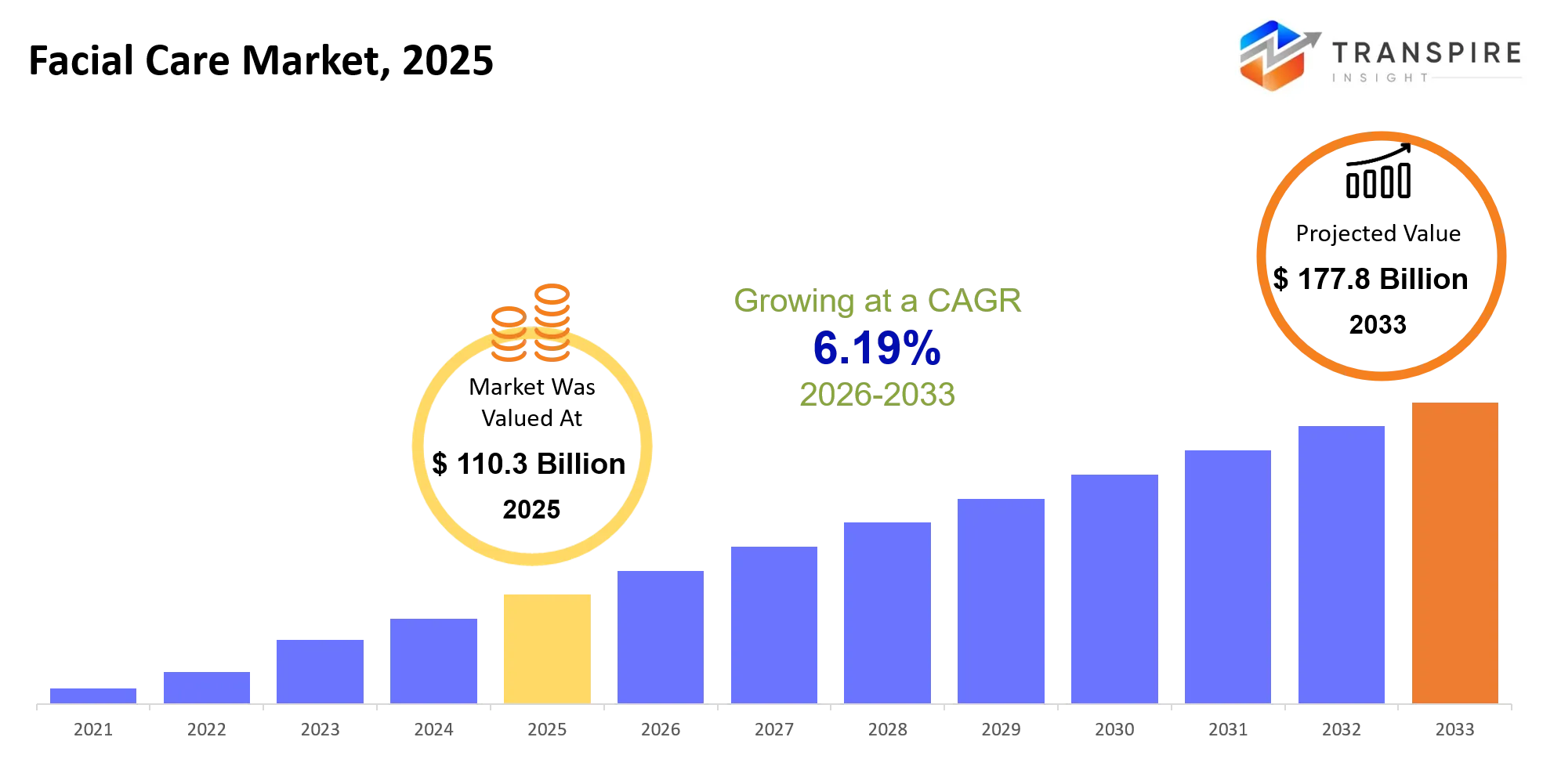
As per the Transpire Insight Analysis, The Facial Care Market size is estimated at USD 110.3 billion in 2025 and is anticipated to reach USD 177.8 billion by 2033, growing at a CAGR of 6.19% from 2026 to 2033.
facial care caters for both the daily routine as well as specific concerns, including dry, blemished, pigmented, mature, and sun-damaged skin. Over the last three to five years, the market has evolved from simplified cleansing and moisturising into ingredient-led, dermatologist-led, and customised formulas. The impact of social media education, increased regulation of ingredient lists, and the rise of online beauty retail has changed how consumers discover, compare, and purchase facial care products. A significant structural change includes the integration of digital skin analysis and direct-to-consumer selling with claimed evidence-based positioning. New forms of digital shopping, including AI-powered virtual beauty consultations, and consumer interest in skin-barrier repair and year-round sun protection have led to more investment in targeted, more advanced daily skin routines; support premiumization, brand loyalty, repeat purchase, and product innovation; and drive brand differentiation via efficacy claims, transparency of ingredients, and solutions for specific skin concerns.
Facial Care Market Size & Forecast:
- Market Size 2025: USD 110.3 Billion
- Expected Market Value (2033): USD 177.8 Billion
- Forecast CAGR (2026–2033): 6.19%
- Leading Region in 2025: Asia Pacific
- Fastest Growing Region: Middle East and Africa
- Key Company Profiles: L'Oréal, Estée Lauder, Shiseido, Procter & Gamble, Unilever, Beiersdorf, Kao Corporation, Amorepacific, Johnson & Johnson, Coty, Natura &Co, Revlon, Pierre Fabre, Kenvue, Himalaya Wellness.
Key Facial Care Market Insights:
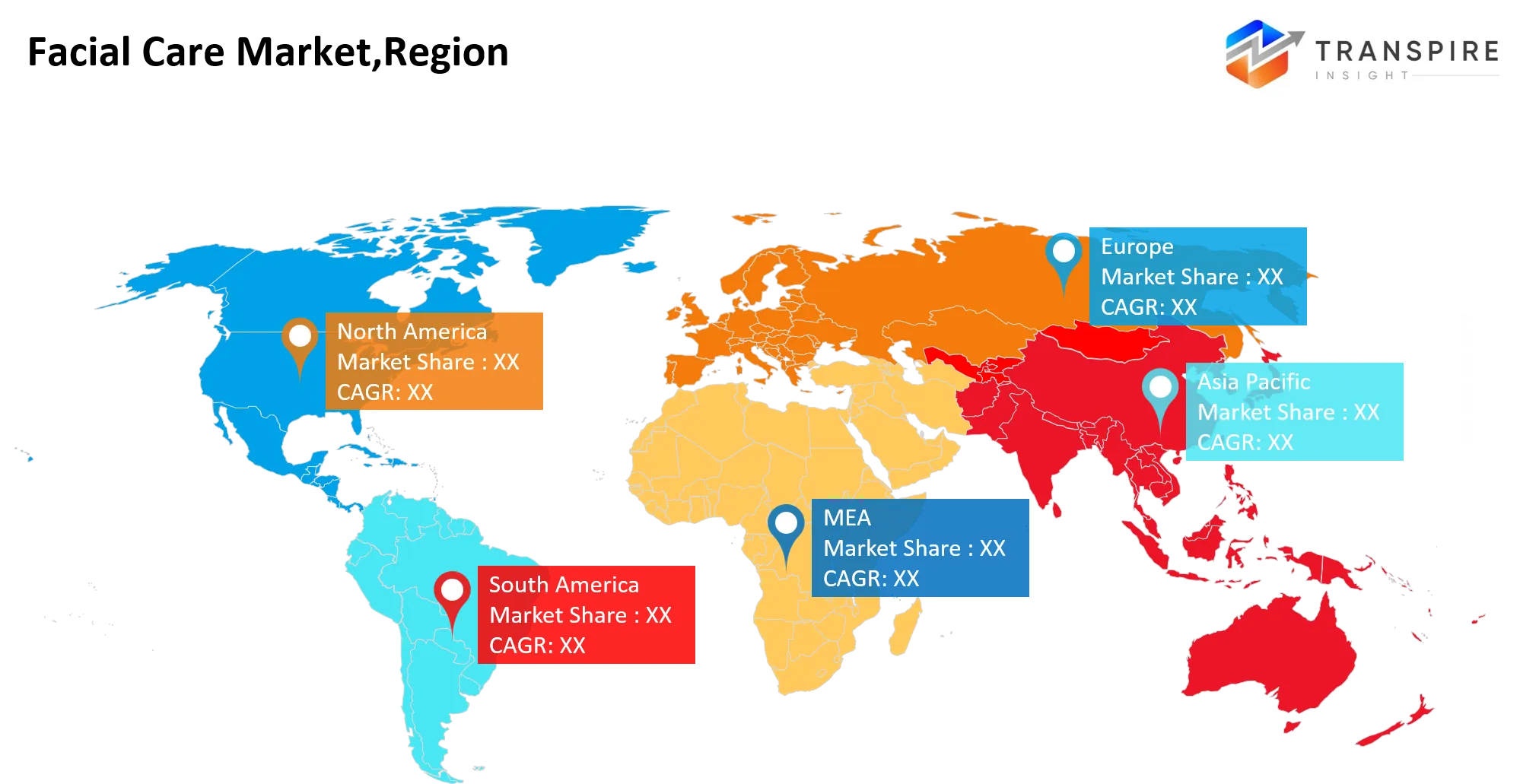
The competitive advantage is shifting from a wide range of products to efficacy that is targeted, scientific credibility, and locally relevant skincare. Asia Pacific accounts for 38.60% of the market, emphasising the need for regional consumer insight, and digital channels are increasingly shaping discovery and repeat purchase.
- Asia Pacific has the highest share at 38.60% due to K-beauty and J-beauty innovation, high digital adoption, and high routine-based consumption.
- Europe accounts for 27.00%, with regulatory standards and dermatological brands driven by pharmacists being a bulwark for evidence-based product development.
- North America is making up 24.00%, due to premium skincare, teledermatology, and AI-based personalisation for direct-to-consumer.
- The Latin American region accounts for 6.00% and is expected to grow thanks to the growth of modern retail, local botanical formulations, and increased awareness of sun protection.
- The Middle East & Africa region has 4.40% market share, but is growing at a 7.80% CAGR, supported by high-end beauty retail, hydration needs driven by climate change, and young, digitally active consumers.
- L'Oréal is continuing to innovate with AI, with the launch of its Cell BioPrint biomarker platform and increased collaboration with NVIDIA in molecular-level formulation research.
- Shiseido introduced its VOYAGER AI formulation platform, which has incorporated the power of generative AI to speed up product ideation and sensory-driven skin care development.
- Amorepacific unveiled an AI-driven Facial Ageing Map, further enhancing its science-based, vertically integrated K-beauty model.
- Consumers are taking multi-step, concern-specific routines, preferring products with niacinamide, retinol, peptides, and barrier repair ingredients over simple moisturising products.
What are the Key Drivers, Restraints, and Opportunities in the Facial Care Market?
Driver:
Ingredient-focused skincare and preventative routines are shifting expenditure towards products that address specific concerns rather than providing basic cleansing alone. Wider consumer awareness of ultraviolet damage, skin-barrier health and premature ageing has encouraged daily use of moisturisers, serums and facial sunscreen. Circana reported in June 2026 that SPF products are increasingly being incorporated into year-round skincare routines, supporting repeat purchases beyond traditional summer periods. For manufacturers, this creates opportunities to increase basket value through complementary products and specialised formulations.
Restraint:
Product credibility, formulation costs and regulatory compliance continue to constrain expansion. Consumers can struggle to distinguish clinically supported benefits from exaggerated marketing claims, weakening trust when results fall short. In the United States, the Modernisation of Cosmetics Regulation Act requires applicable facility registration, product listing, and safety substantiation, adding administrative and documentation responsibilities. These requirements can disproportionately burden smaller brands with limited regulatory resources.
Opportunity:
Personalised skincare, dermatology-led product development and emerging-market distribution offer routes to differentiated growth. AI-assisted skin assessments can connect consumer concerns with suitable product routines, while refillable packaging and ingredient transparency can strengthen brand loyalty. Companies that combine accessible pricing with credible efficacy evidence and digital consultation can convert online discovery into repeat sales. India and Southeast Asia offer potential through mobile commerce, climate-specific formulations, and products designed for pigmentation, oil control, and humidity-related skin concerns.
Driver Impact Analysis – Facial Care Market
|
Driver |
Relative Impact on Growth (%) |
Geographic Relevance |
Impact Timeline |
Demand Strength |
Growth Mechanism |
Key Beneficiaries |
Major Constraint |
|
Rising demand for anti-ageing and preventive skincare |
28% |
North America, Europe, East Asia |
Short-term (≤2 years) |
High |
Expands retinol, peptide, collagen-supporting and daily sunscreen purchases |
Dermatology brands, active-ingredient suppliers, premium skincare manufacturers |
Irritation risks, efficacy concerns and premium pricing |
|
Growing awareness of skin health and science-backed ingredients |
24% |
North America, Europe, Asia-Pacific |
Short-term (≤2 years) |
High |
Drives demand for barrier repair, acne care, hydration and targeted treatments |
Clinical skincare brands, ingredient developers, dermatology retailers |
Misleading claims and inconsistent clinical evidence |
|
Expansion of beauty e-commerce, social commerce and personalized skincare |
19% |
Asia-Pacific, North America, Europe |
Short-term (≤2 years) |
High |
Converts digital discovery into purchases through recommendations and routine bundles |
Digital-first brands, online retailers, beauty platforms |
High customer acquisition costs and counterfeit products |
|
Innovation in active ingredients, biotechnology and AI-assisted formulation |
17% |
North America, Europe, East Asia |
Medium-term (2–4 years) |
High |
Accelerates ingredient discovery and differentiated product development |
R&D-intensive manufacturers, biotech firms, ingredient suppliers |
High R&D costs and lengthy safety validation |
|
Sustainability, clean formulations and regulatory-driven product reformulation |
12% |
Europe, North America, Asia-Pacific |
Medium-term (2–4 years) |
Medium |
Encourages refillable packaging, traceable ingredients and compliant formulations |
Sustainable packaging suppliers, green chemistry firms, compliant brands |
Higher costs and limited scalable alternatives |
|
Total |
100% |
Global |
— |
— |
— |
— |
— |
What Has the Impact of Artificial Intelligence Been on the Facial Care Market?
AI is also redefining the application of facial care, making it a skin-health service informed by data rather than a generalised product category. Computer-vision applications analyse selfies or in-store scans for hydration, oiliness, redness, pigmentation, pore size, and wrinkle depth, then suggest cleansers, serums, moisturisers, and sunscreens. This automates the consultation experience and reduces wasted product attempts. Its predictive capabilities are also broadening; models use skin condition, weather, stress, hormone profiles, and habitual data to predict upcoming needs such as hydration levels or flare-ups while adapting recommendations over time.
For brands, predictive analytics support demand forecasts, targeted marketing, inventory planning, and rapid trendspotting. Operationally, the technology improves e-commerce conversion, virtual product try-ons, customer service, and the speed of clinical development by analysing consumer responses and guiding formulation research. Limitations to adoption include expense, data sensitivity, and accuracy: facial imaging can vary with lighting, camera quality, and skin tone; connecting diagnostic tools to retail, formulation, and regulatory systems will take time.
In August 2026, Haut.AI expanded its strategic partnership with Grupo Boticário to roll out its AI-powered skin analysis software across nearly 4,000 O Boticário physical retail stores in Brazil. This large-scale integration of computer-vision diagnostic technology achieved an impact of an approximately 80% increase in average skincare order value during its initial trial phase.
https://www.theacare.de/post/ai-skincare-innovations-202
Key Facial Care Market Trends:
The market is moving from "beauty" to "skin health" and is becoming more and more ingredient-conscious. Transparency of effectiveness, personalisation of recommendations, and ease of access are becoming more and more important for competitive advantage than novelty of the product.
- Barrier repair, acne, pigmentation and early ageing are all areas of concern that are moving from generic routines to regimens.
- The use of AI skin analysis is transforming the product selection process into a diagnostic-driven purchase.
- Dermatological positioning is on the rise, as shoppers prefer to choose products with scientifically proven active ingredients, rather than general beauty claims.
- The ingredient-led demand for niacinamide, retinol, peptides, vitamin C, and hyaluronic acid is picking up.
- Consumers are increasingly turning to stronger actives, and sensitive/barrier care products are becoming more important.
- Sunscreen is becoming more than a summer product; it's a daily anti-ageing and preventive-health product.
- Ecommerce and social media commerce are making the journey from skin concern to product purchase shorter.
- Brands are implementing refillable packaging, cleaner formulations, and clear sourcing to meet sustainability expectations.
- Companies are increasingly being held to account for their anti-ageing, brightening, and sensitive-skin claims, which are increasingly requiring more evidence to back up their claims.
Facial Care Market Segmentation
Product Type:
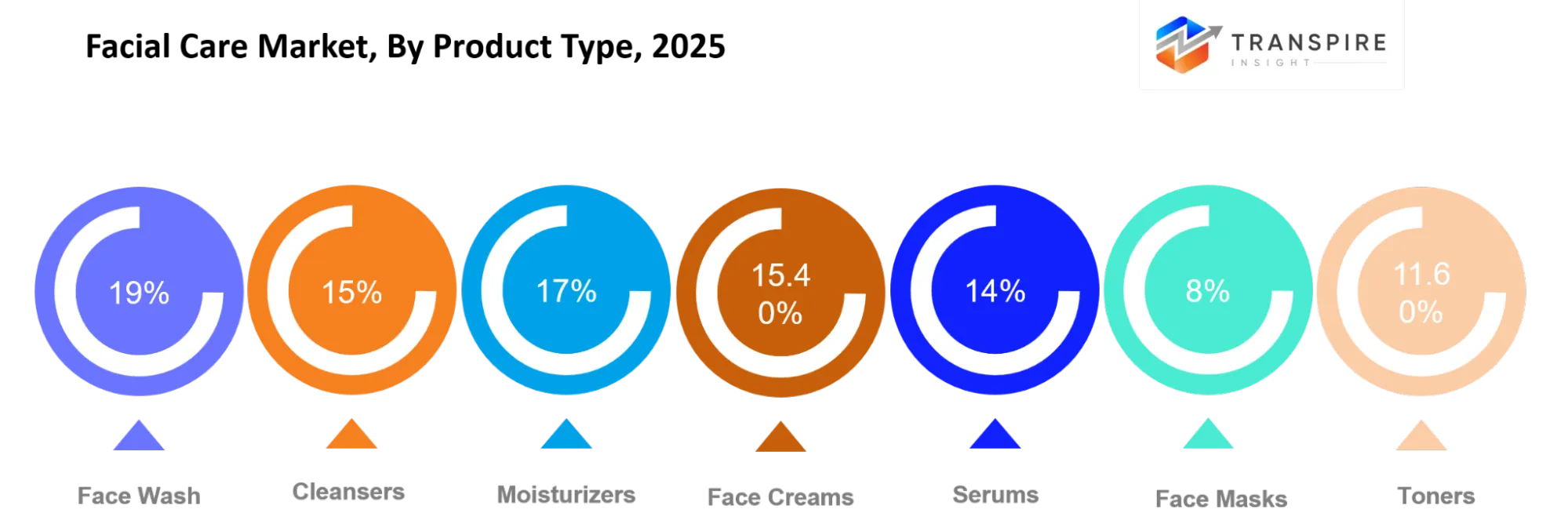
Face creams and moisturisers remain the market's pillars, representing 32.40% of sales thanks to the need to use them every day, the universal need for the category from infancy to older ages, and the repeat purchase power that exists within these categories. Face washes with 19.00% and cleansers with 15.00% occupy the base of the pyramid, the first categories in which consumers begin to build multi-step skincare routines. Moisturisers with 17.00% and face creams with 15.40% represent the stages of hydration, barrier repair, and anti-ageing. Serums account for 14.00%, with a CAGR of 9.20% (highest), as the concentrate of actives that enable higher prices and targeted products; face masks are 8.00%, toners are 6.00%, and sunscreens are 5.60%.
Skin Type:
The facial care market serves consumers with normal, dry, oily, combination, sensitive, acne-prone, and mature skin. Each category requires different cleansing, hydration and treatment approaches, creating opportunities for specialised formulations. Sensitive and acne-prone skin products increasingly emphasise gentle ingredients and barrier support, while mature skin products focus on firmness, wrinkles and elasticity. Brands that demonstrate suitability across different skin conditions can strengthen consumer trust, improve product selection and encourage repeat purchases through tailored skincare routines and recommendations.
Ingredient Type:
The market includes natural ingredients, organic ingredients, hyaluronic acid, vitamin C, retinol, niacinamide, plant extracts and peptides. Plant-derived and organic formulations appeal to consumers prioritising ingredient transparency, while established actives address specific concerns such as dehydration, pigmentation, acne and visible ageing. Hyaluronic acid supports hydration, vitamin C targets uneven tone, and retinol is associated with skin renewal. Brands increasingly compete through ingredient combinations, formulation stability, clinical testing and clear benefit communication. Reliable efficacy evidence can support differentiation, premium positioning, and long-term customer loyalty.
Application:
Facial care products address hydration, anti-ageing, brightening, acne treatment, sun protection, skin repair, oil control and sensitive-skin care. Hydration and everyday maintenance encourage frequent use, while targeted treatments support specialised routines. Growing awareness of ultraviolet exposure strengthens the role of sunscreen, while interest in uneven pigmentation and visible ageing creates opportunities for active-based formulations. Products addressing multiple concerns can simplify routines and improve convenience. Brands that combine targeted benefits with tolerability and substantiated claims are better positioned to increase consumer confidence and expand product adoption across age groups.
Distribution Channel:
Supermarkets and hypermarkets provide convenient access to everyday facial care essentials, while pharmacies support purchases requiring ingredient guidance or dermatological reassurance. Speciality stores and department stores help consumers explore premium brands, compare formulations and receive personalised assistance. Online retail benefits from product reviews, social commerce, digital consultations and personalised recommendations, enabling brands to reach consumers beyond physical retail locations. Beauty salons and direct sales provide additional channels for specialised products and customer relationships. An integrated omnichannel strategy helps businesses improve product discovery, maintain availability and convert first-time purchases into repeat sales.
Price Category:
The facial care market spans mass-market, mid-range, premium, luxury, professional, organic and dermatological products. Mass-market offerings compete through affordability, accessibility and established distribution, while mid-range products balance formulation quality with value. Premium and luxury brands differentiate through advanced ingredients, distinctive packaging and elevated consumer experiences. Professional and dermatological products emphasise specialist positioning, targeted benefits and, where substantiated, clinical evidence. Organic products attract consumers seeking particular ingredient standards. Future competitiveness will depend on delivering credible performance at each price point, enabling brands to serve varied budgets while maintaining product quality and consumer trust.
What are the Key Use Cases Driving the Facial Care Market?
The core use case is daily skin maintenance through cleansing, hydration, and barrier protection. Face creams and moisturisers collectively hold 32.40% of the market, reflecting their role in reducing moisture loss and supporting routine skincare. Face wash and cleansers complement these products by removing oil, impurities and residual sunscreen, encouraging repeat purchases.
Expanding applications include targeted treatment for acne, pigmentation, uneven texture and visible ageing. Serums, growing at a 9.20% CAGR, address these concerns through concentrated formulations, while sunscreens increasingly support year-round preventative care.
Emerging use cases include AI-assisted skincare consultations, climate-adapted formulations and personalised routines for sensitive or acne-prone skin. Online beauty retailers, pharmacies and dermatology-linked channels can use these approaches to improve product matching, customer retention and cross-selling.
|
Report Metrics |
Details |
|
Market size value in 2025 |
USD 110.3 Billion |
|
Market size value in 2026 |
USD 116.8 Billion |
|
Revenue forecast in 2033 |
USD 177.8 Billion |
|
Growth rate |
CAGR of 6.19% from 2026 to 2033 |
|
Base year |
2025 |
|
Historical data |
2021 - 2024 |
|
Forecast period |
2026 - 2033 |
|
Report coverage |
Revenue forecast, competitive landscape, growth factors, and trends |
|
Regional scope |
United States; Canada; Mexico; United Kingdom; Germany; France; Italy; Spain; Denmark; Sweden; Norway; China; Japan; India; Australia; South Korea; Thailand; Brazil; Argentina; South Africa; Saudi Arabia; United Arab Emirates |
|
Key companies profiled |
L'Oréal, Estée Lauder, Shiseido, Procter & Gamble, Unilever, Beiersdorf, Kao Corporation, Amorepacific, Johnson & Johnson, Coty, Natura &Co, Revlon, Pierre Fabre, Kenvue, Himalaya Wellness. |
|
Customization scope |
Free report customization (country, regional & segment scope). Available customized purchase options to meet your exact research needs. |
|
Report Segmentation |
Product Type (Face Wash, Cleansers, Moisturizers, Face Creams, Serums, Face Masks, Toners, Sunscreens); Skin Type (Normal Skin, Dry Skin, Oily Skin, Combination Skin, Sensitive Skin, Acne-Prone Skin, Mature Skin); Ingredient Type (Natural Ingredients, Organic Ingredients, Hyaluronic Acid, Vitamin C, Retinol, Niacinamide, Plant Extracts, Peptides); Application (Anti-Aging, Hydration, Brightening, Acne Treatment, Sun Protection, Skin Repair, Oil Control, Sensitive Skin Care); Distribution Channel (Supermarkets & Hypermarkets, Pharmacies, Specialty Stores, Department Stores, Online Retail, Beauty Salons, Direct Sales); Price Category (Mass Market, Mid-Range, Premium, Luxury, Professional, Organic, Dermatological) |
Which Regions are Driving the Facial Care Market Growth?
Asia Pacific is dominant, accounting for a 38.60% share of the facial care market, thanks to consumers' daily skincare routine being more of an essential, rather than an "now and then" experience. Japan, Korea, China, and Southeast Asia benefit from product-on-shelf availability, high e-commerce penetration, and quick churn of new products, textures, formats, and consumer claims with a notably quicker time-to-adoption. The emerging ecosystem of J- and K-beauty is constantly coming out with new formats, textures, and claims based on active ingredients that spread quickly around the world, empowered by manufacturing enablement, beauty technology, and discovery through social commerce.
In March 2026, Japanese cosmetics giant Kao Corporation accelerated its international skincare expansion by launching its core brand Bioré into the South Korean market alongside a unified marketing campaign.
https://www.kao.com/global/en/newsroom/news/release/2026/20260319-001/
Europe has a 27.00% share, playing the slow and stable game with a focus on credibility, not growth. It benefits from derm brands, pharmacy distribution, clinical testing, and hard rules for claims as defined by the EU Cosmetics Regulation. North America (24.00%) is more premium and digital-focused with tele-dermatology, AI recommendations, and a strong ready-to-consumer arm to play on. Latin America (6.00%) will play the volume-focused card as low-cost, local distribution and awareness of sun damage grows.
In October 2026, Swiss dermatology giant Galderma signed a definitive agreement to acquire the clinical, professional skincare brand ZO Skin Health for an enterprise value of $1.5 billion.
https://www.galderma.com/news/galderma-signs-agreement-acquire-zo-skin-health
Middle East and Africa have a 4.40% market share with a CAGR of 7.80%, making it the fastest-growing market. Recent advances include the growth of premium beauty retail and influencer-inspired product discovery, and the demand for products to satisfy the needs of a hot, dry climate for hydration, brightening, and pollution-protection products. Future opportunities can be found in the development of imported dermatological brands with regionally significant formulations, a focus on halal positioning and artificial intelligence-enabled virtual consultations, where no physical speciality retail exists.
In January 2026, Ulta Beauty expanded its premium retail presence across the Gulf through an ongoing partnership with Alshaya Group, locking in flagship openings at theDubai Malland the Red Sea Mall.
Who are the Key Players in the Facial Care Market, and how do they compete?
Rivalry among the players spans mass-market affordability, high-end skincare, dermatologist expertise, and ingredients-driven niche formulations. Key influences include research and development as well as brand trust; availability of products; large distribution networks; and online engagement as a discovery channel. L'Oréal balances broad coverage and scientific innovation: Its 2025 report showed the addition of 725 patents across all divisions plus the sale of its 4000th new product.
Estée Lauder positions prestige and targeted innovation, while Shiseido plays on Japanese formulation and research. Procter & Gamble and Unilever rely on well-known brands, broad coverage, affordable prices, and vast retail and distribution networks. Beiersdorf emphasises skin science with NIVEA and Eucerin; Kao Corporation and Amorepacific leverage formulation expertise and Asian skincare preferences. Johnson & Johnson, Kenvue, and Pierre Fabre focus on skin health. Coty and Revlon draw on recognition and brand branding; Natura &Co and Himalaya Wellness on nature-powered portfolios. Growth can be via e-commerce, pharmacy channels, regional adaptation, and, now, upscale product launches. With proven efficacy, transparent claims, and repeat buying, sustainable differentiation becomes attainable.
Key Players are:
- L'Oréal
- Estée Lauder
- Shiseido
- Procter & Gamble
- Unilever
- Beiersdorf
- Kao Corporation
- Amorepacific
- Johnson & Johnson
- Coty
- Natura &Co
- Revlon
- Pierre Fabre
- Kenvue
- Himalaya Wellness
Facial Care Market — Enhanced Competitive Benchmarking
Company |
Est. Revenue Share Range |
Key Offerings |
Strategic Positioning |
Geographic Strength |
Technology Focus |
L’Oréal Groupe |
7–9% |
L’Oréal Paris, Garnier, CeraVe, La Roche-Posay |
Mass-to-premium leadership with dermatological differentiation |
North America, Europe, Asia Pacific |
AI-assisted skin analysis and active-ingredient research |
Unilever |
4–6% |
Pond’s, Vaseline facial care, Dermalogica, Paula’s Choice |
Broad price-tier coverage with distribution scale |
Asia Pacific, Europe, North America |
Skin-barrier science and formulation optimization |
The Estée Lauder Companies |
3–5% |
Estée Lauder, Clinique, La Mer, Origins |
Prestige skincare leadership and premium brand differentiation |
North America, Asia Pacific, Europe |
Advanced anti-ageing research and personalized skincare |
Procter & Gamble |
3–5% |
Olay, SK-II, premium facial moisturizers, facial serums |
Science-led mass-market and premium skincare |
North America, Asia Pacific, Europe |
Peptide research, niacinamide formulations and skin science |
Shiseido Company |
2–4% |
Shiseido, Clé de Peau Beauté, Anessa facial sunscreens |
Premium skincare innovation with Japanese beauty expertise |
Asia Pacific, Japan, North America |
Skin longevity research and UV-protection technologies |
Beiersdorf AG |
2–4% |
NIVEA face care, Eucerin, La Prairie |
Skin-barrier expertise across mass and premium tiers |
Europe, North America, Asia Pacific |
Barrier-repair research and active-ingredient delivery |
Johnson & Johnson |
1–3% |
Neutrogena, Aveeno facial care |
Accessible skincare with dermatologist-oriented positioning |
North America, Asia Pacific |
Acne-care formulations and skin-tolerance research |
Kao Corporation |
1–3% |
Curél, Bioré facial cleansers, SENSAI |
Specialized cleansing and sensitive-skin solutions |
Asia Pacific, Japan, Europe |
Cleansing science and skin-barrier technologies |
Amorepacific Corporation |
1–2% |
Laneige, Sulwhasoo, AESTURA, Innisfree |
K-beauty innovation spanning accessible to luxury skincare |
Asia Pacific, North America |
Hydration delivery, skin microbiome and formulation research |
Coty Inc. |
0.5–1.5% |
Lancaster skincare, philosophy, prestige facial skincare |
Selective prestige skincare and brand-led differentiation |
Europe, North America, Asia Pacific |
Anti-ageing formulations and advanced sun-care research |
Recent Development News
In September 2026, Nykaa and L’Oréal’s corporate venture fund BOLD announced a collaboration to invest in emerging Indian beauty and personal care brands through minority stakes. The partnership combines funding, beauty-industry expertise, and omnichannel retail access, potentially helping promising facial skincare brands expand their distribution and reach more consumers.
In October 2026, Bengaluru-based Formial Labs raised ₹2.88 crore in pre-seed funding led by Zeropearl VC, with participation from angel investors. The funding is expected to support the skincare startup’s growth and product development, reflecting continued investor interest in emerging facial skincare brands.
What Strategic Insights Define the Future of the Facial Care Market?
The market is heading towards "skin-health-as-a-service," co-creating the value of the diagnostics, personalised skincare routine, and subscription replenishment as much as the product itself. And the hidden risk is over-personalisation, where AI recommendations will inevitably lead to incorrect or inconsistent recommendations due to differences in skin tones, lighting, and data quality inconsistencies, which may cause brands to face problems relating to trust and regulations. Emerging opportunities include dermatological personalisation that pulls together clinical actives, biomarker testing, and pharmacy/tele-dermatology channels to address consumers with sensitive, adult, and acne-prone skin. Brands that can authenticate AI outputs with a clinician's imprimatur can turn diagnostic engagement into sticky loyalty. Invest in product rollout drives such as claims backed by evidence, skin-inclusive analysis models, and region-specific product formulation. Only by doing this, the Asia Pacific region can secure its 38.60% market share; North America and Europe will derive customer trust from their clinical efficacy and push premium growth forward; and the Middle East & Africa will capture its 7.80% CAGR opportunity through climate-compatible and digitally accessible products.
Key Segmentations are:
Product Type
- Face Wash
- Cleansers
- Moisturisers
- Face Creams
- Serums
- Face Masks
- Toners
- Sunscreens
Skin Type
- Normal Skin
- Dry Skin
- Oily Skin
- Combination Skin
- Sensitive Skin
- Acne-Prone Skin
- Mature Skin
Ingredient Type
- Natural Ingredients
- Organic Ingredients
- Hyaluronic Acid
- Vitamin C
- Retinol
- Niacinamide
- Plant Extracts
- Peptides
Application
- Anti-Aging
- Hydration
- Brightening
- Acne Treatment
- Sun Protection
- Skin Repair
- Oil Control
- Sensitive Skin Care
Distribution Channel
- Supermarkets & Hypermarkets
- Pharmacies
- Speciality Stores
- Department Stores
- Online Retail
- Beauty Salons
- Direct Sales
Price Category
- Mass Market
- Mid-Range
- Premium
- Luxury
- Professional
- Organic
- Dermatological
Frequently Asked Questions
Find quick answers to common questions.
The facial care market size was valued at USD 110.3 billion in 2025 and is poised to reach USD 177.8 billion by 2033, expanding at a 6.19% CAGR.
Key segments for the facial care market are Product Type (Face Wash, Cleansers, Moisturizers, Face Creams, Serums, Face Masks, Toners, Sunscreens); Skin Type (Normal Skin, Dry Skin, Oily Skin, Combination Skin, Sensitive Skin, Acne-Prone Skin, Mature Skin); Ingredient Type (Natural Ingredients, Organic Ingredients, Hyaluronic Acid, Vitamin C, Retinol, Niacinamide, Plant Extracts, Peptides); Application (Anti-Aging, Hydration, Brightening, Acne Treatment, Sun Protection, Skin Repair, Oil Control, Sensitive Skin Care); Distribution Channel (Supermarkets & Hypermarkets, Pharmacies, Specialty Stores, Department Stores, Online Retail, Beauty Salons, Direct Sales); Price Category (Mass Market, Mid-Range, Premium, Luxury, Professional, Organic, Dermatological).
Growth is primarily driven by ingredient-led skincare innovation, rising awareness of skin health, demand for anti-ageing and sun-protection products, personalised skincare technologies, and expanding online beauty retail.
The facial care market is led by major manufacturers, including L'Oréal, Estée Lauder, Shiseido, Procter & Gamble, Unilever, Beiersdorf, Kao Corporation, Amorepacific, Johnson & Johnson, Coty, Natura &Co, Revlon, Pierre Fabre, Kenvue, Himalaya Wellness.
Asia Pacific holds 38.60% of the market, supported by established beauty manufacturing, strong consumer demand, ingredient innovation, localised formulations, and expanding e-commerce channels.
Key opportunities include AI-powered skincare personalisation, dermatologist-backed formulations, climate-specific products, sustainable packaging, and expansion across emerging markets.
- L'Oréal
- Estée Lauder
- Shiseido
- Procter & Gamble
- Unilever
- Beiersdorf
- Kao Corporation
- Amorepacific
- Johnson & Johnson
- Coty
- Natura &Co
- Revlon
- Pierre Fabre
- Kenvue
- Himalaya Wellness
About the Authors

Chetan Dhatrak
I’m Chetan Dhatrak, a Senior Research Analyst at Transpire Insight, specializing in the Consumer Goods, Foods and Beverages industry. I focus on analyzing market trends, consumer behavior, competitive landscapes, and industry developments to deliver accurate, data-driven insights. My research at Transpire Insight is built on credible sources and in-depth analysis, helping businesses and readers better understand market dynamics, emerging opportunities, and evolving consumer preferences. I’m committed to creating reliable, well-researched content that supports informed decision-making and reflects the latest developments in the consumer goods and food & beverage sectors.

Chakradhar Khansole
Chakradhar serves as the Research Director at Transpire Insight, bringing over 8 years of experience in technology, innovation, and strategic market intelligence. He specializes in transforming complex market data into actionable business insights that enable organizations to make informed, growth-oriented decisions. Recognized for his strategic vision and analytical expertise, Chakradhar leads high-impact research initiatives, delivering comprehensive market assessments, competitive intelligence, and forward-looking industry analysis.
Recently Published Reports
-
Apr 2026
Bottled Water Market
Bottled Water Market Size, Share & Analysis Report By Product Type (Still Bottled Water, Carbonated Bottled Water, Functional Bottled Water, and Others), By Packaging (PET, Cans, and Others), By Sales Channel (Supermarkets/Hypermarkets, Convenience Stores/Drug Stores, Grocery Stores/Club Stores, Foodservice, and Others) and Geography (North America, Europe, Asia-Pacific, Middle East and Africa, South and Central America), 2021 - 2032
-
Apr 2026
Color Cosmetic Packaging Market
Color Cosmetic Packaging Market Size, Share & Analysis Report By Application (Mascara Packaging, Liquid Packaging, and Liquid Face), By Type (Tubes & Bottles, Pens & Markers, Compacts & Containers, and Droppers & Pumps), and Geography (North America, Europe, Asia-Pacific, Middle East and Africa, South and Central America), 2021 - 2031
-
Apr 2026
External Microphone For Camera Market
External Microphone For Camera Market Size, Share & Analysis Report By Type (Shotgun Microphone, Lavalier Microphone, and Others), By Application (Digital Camera, Professional Video Camera, and Others), and Geography (North America, Europe, Asia-Pacific, Middle East and Africa, South and Central America), 2021 - 2031
-
Apr 2026
Foot Orthotic Insoles Market
Foot Orthotic Insoles Market Size, Share & Analysis Report By Type (Pre-fabricated, and Custom-made), By Material (Thermoplastic, Composite Carbon Fiber, and Others), By Distribution Channel (Drug Stores, Hospitals & Clinics, and Others), and Geography (North America, Europe, Asia-Pacific, Middle East and Africa, South and Central America), 2021 - 2031