
Europe CBD Skincare Market Summary
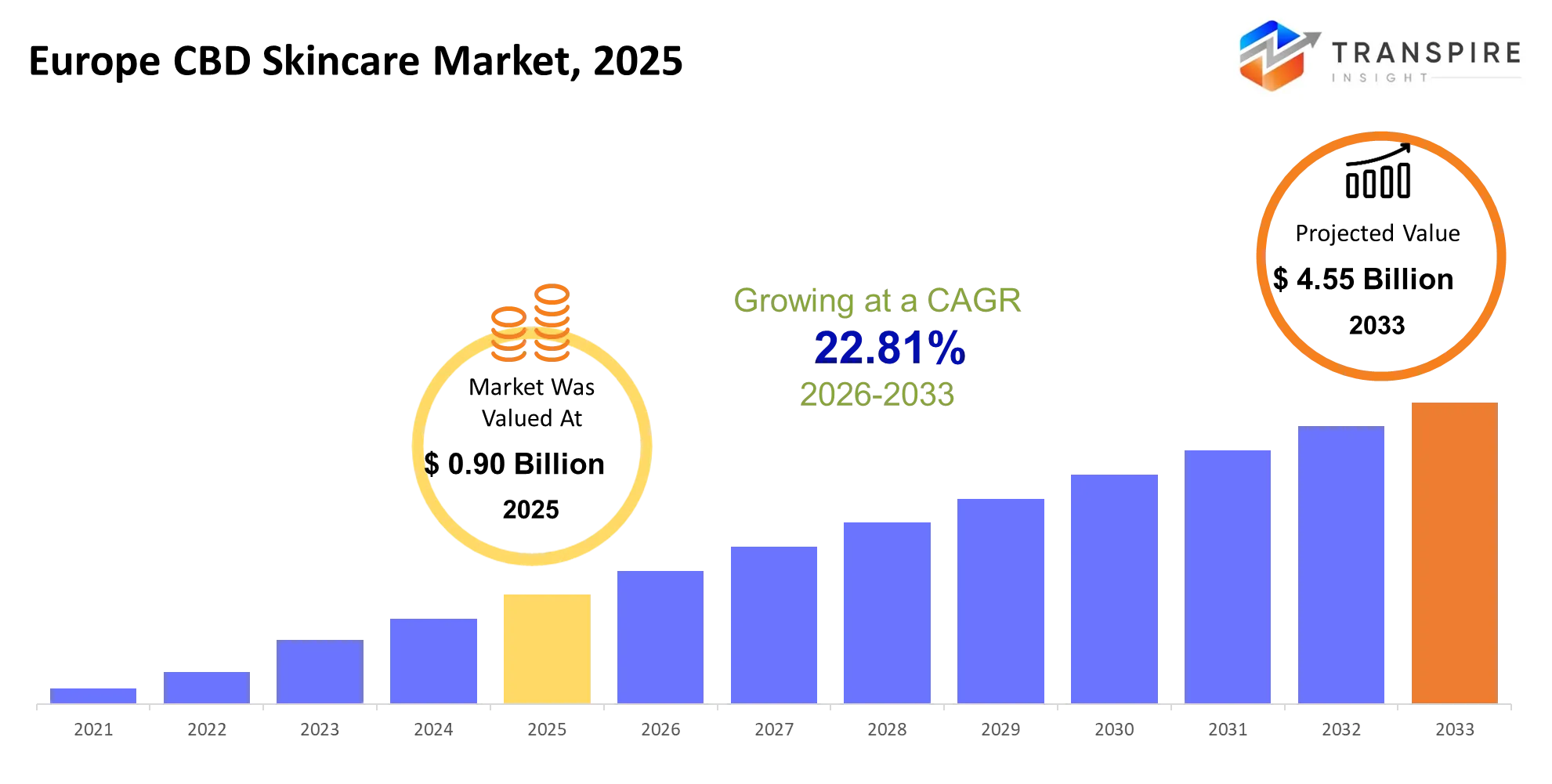
As per Transpire Insight Analysis the Europe CBD Skincare Market size is estimated at USD 0.90 Billion in 2025 and is anticipated to reach USD 4.55 Billion by 2033, growing at a CAGR of 22.81% from 2026 to 2033.
Europe’s CBD skincare market helps brands and shops by adding cannabidiol and hemp-based ingredients to face and body items. Many of the products aim to keep skin hydrated, calm redness, and support care for spots and early aging.In recent years, this market has grown. It no longer feels like a tiny corner. It now looks like full, standard beauty lines. You can find these lines in online shops, specialist sellers, pharmacies, and other places that already sell skincare.
The approach to these items has changed too. Planning is now tied to added review steps. The process covers both making the product and selling it. In 2026, work connected to the European Commission and the SCCS also set out a more defined way to judge cosmetic use. That report suggested a possible limit as high as 0.19% for use in skin cosmetics, based on the data available then.Buyers shifted as well. After pandemic disruptions, some shoppers searched for other options. Many beauty firms responded by focusing more on online sales. They also leaned into clearer ingredient info and more detailed product presentation, including how products are shown and packed.
Today’s momentum comes from two main points. For one, these products are reaching more shoppers than before. For another, brands have become better at making blends and checking how formulas work. Retail access has improved too. Because of all this, CBD skincare is not stuck in a small niche anymore. It now sits on wider beauty and wellness shelves.
Europe CBD Skincare Market Size & Forecast:
- Europe CBD Skincare Market Size 2025: USD 0.90 Billion
- Expected Market Value 2033: USD 4.55 Billion
- Forecast CAGR: 22.81%
- Leading region in 2025: UK
- Fastest Growing region: Germany
- Key Profile: The Body Shop, L'Oréal, Sephora, Kiehl's, CBD Life UK, Love Hemp, Cibdol, Endoca, Nordic Oil, Provacan, Cannaray, Naturecan, Holland & Barrett, Cannabotech, Medterra
Key Market Insights
- In 2025, the Europe CBD skincare market hit USD 0.90 billion. That number shows a wider base for CBD face and body products.
- The UK is in front. It benefits from a long run of CBD retail outlets and from early specialist skincare launches.
- Germany is growing faster than the rest. More pharmacy shelves, beauty stores, and regulated wellness channels are putting CBD items in front of shoppers.
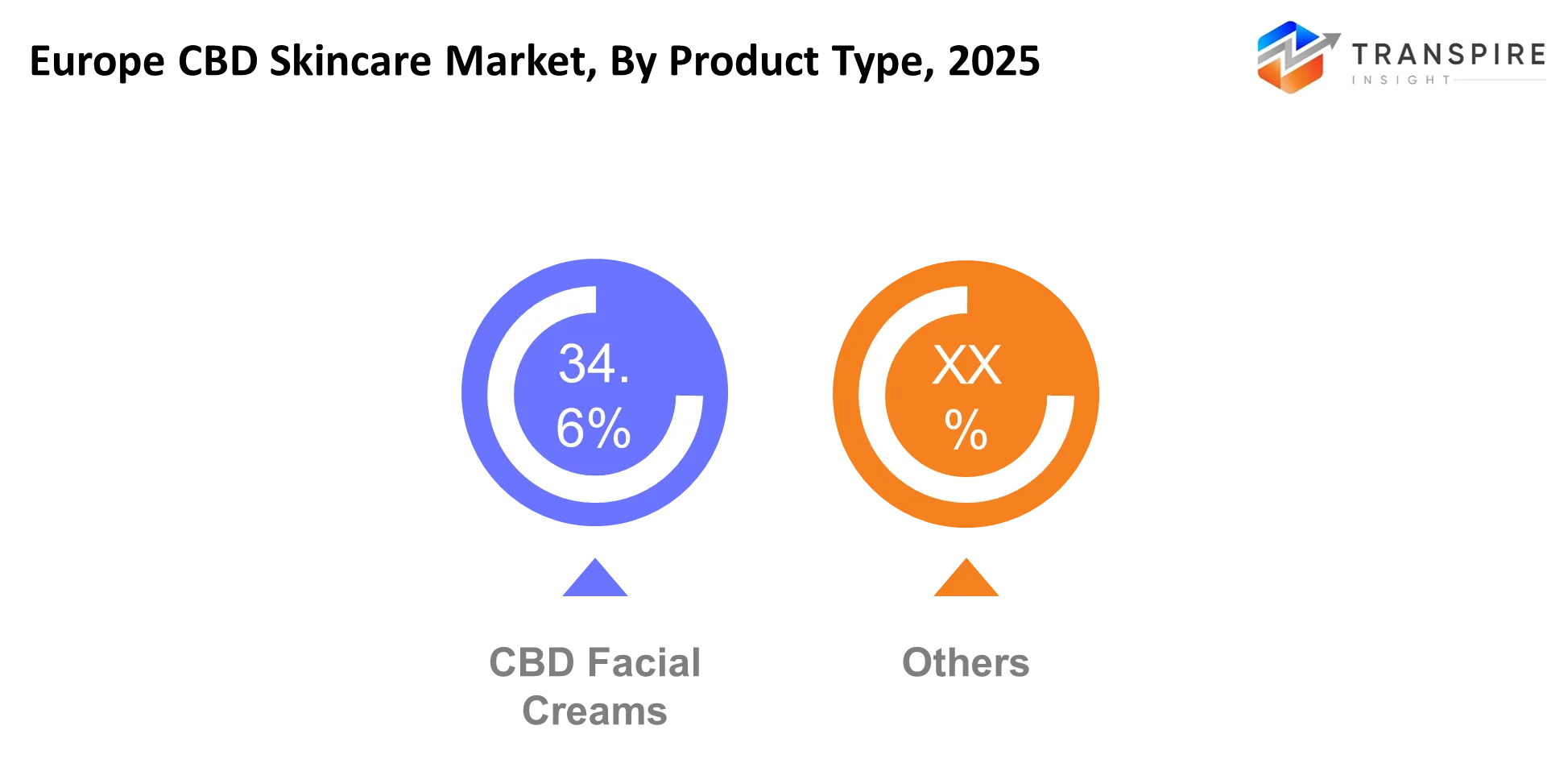
- Face creams still take the lead. People already have set skincare routines, so it is easier to add CBD to those steps.
- Serums are also picking up. They are leaving only niche shops behind, and premium brands are leaning on strong, concentrated formats for clear product goals.
- Shopping online is expanding. Digital channels now help people find CBD skincare beyond what they see in nearby stores.
- Rules are getting tighter. Meeting European cosmetic standards is pushing makers to improve ingredient records, safety reviews, and day to day formulation checks.
- Many brands are moving toward premium mixes. They blend CBD with common skincare ingredients, which supports higher value formulas rather than using CBD by itself.
- Ingredient styles are getting wider. Broad spectrum, isolate, water soluble forms, nano CBD, and hemp extract options are opening new paths for product design.
- Competition is also broadening. Major beauty groups and smaller CBD focused brands are fighting more through new products, store deals, more countries, and clear formula differences.
What are the Key Drivers, Restraints, and Opportunities in the Europe CBD Skincare Market?
Driver: CBD skincare work is no longer limited to simple hemp creams. Teams are now building products aimed at clear hydration, acne support, care for reactive skin, and aging concerns. New ways of extracting and cleaning CBD, plus better mixing methods, let brands set the CBD level more closely. They can also blend CBD with ingredients already used in common cosmetics.The European Commission’s 2026 SCCS view adds a useful reference point. It points to CBD levels up to 0.19% for use in skin cosmetics. This is based on the evidence that is available. With tighter formulation rules, retailers may feel more comfortable. That can cut uncertainty while new products are being planned. In turn, it can help open doors to better shelf placement and stronger pricing.
Restraint: Compliance is still a hard wall for many companies. CBD cosmetic products must follow the safety rules that apply to cosmetics. At the same time, the laws tied to cannabinoids can shift from one country to another. Regulation (EC) No. 1223/2009 sets the baseline for safety and product information checks before a product goes on sale. Even within Europe, national enforcement and practical reading can differ. THC thresholds may change. Ingredient sources can vary. Claims that are allowed can also differ. Documentation expectations can be stricter in some places. These gaps often raise costs and delay releases. Smaller CBD brands feel this more strongly. Testing in labs, safety reviews, formulation checks, and legal work can take a notable part of the money set aside for launch.
Opportunity: There is a real chance to lift value through newer formulation tools. Some newer delivery systems, including water-friendly and nano-CBD formats, can make it easier to build different product types. This can help brands design CBD skincare for particular cosmetic needs.
What Has the Impact of Artificial Intelligence Been on the Europe CBD Skincare Market?
AI is changing how CBD skincare gets built and sold. It does this more through formulation help and sales planning than through factory automation. Instead of replacing physical work, machine learning looks at ingredients, reviews, site searches, past buys, and stored formula records. From that, it can spot links that show up in products for hydration, sensitive skin, acne care, or anti-aging.
Brands also use forecasts to plan what to make and when. Predictive models estimate demand by product type and by region. That can lower leftover stock and make restocking more accurate. Recommendation tools can then steer shoppers toward the right items. For example, a shopper can be matched with a CBD serum, a moisturizer, a face cream, or a body lotion. The match can rely on skin worries the shopper shares and on buying patterns. In turn, sales teams may see better results because ads and lists are less generic and more specific.
Digital tools also help with checks tied to quality and rules. Some workflows can scan documents and catch gaps in ingredient details or mismatched product data before submissions. They can also look for missing formulation records during onboarding for retail. Computer vision can review package samples and detect label or print defects during production. Language tools can read large sets of customer comments and pull out the same themes that keep showing up, like texture issues, fragrance complaints, slow absorption, or packaging problems.
Still, there is a big issue with data quality. CBD skincare has fewer clear, ready-made clinical and market datasets than other skincare lines. On top of that, formula differences and local regulations can make model results less reliable. So AI can guide decisions, but lab tests and human regulatory review still matter.
Key Market Trends
- From 2021 to 2026, CBD skincare shifted. It stopped feeling like a tiny hemp brand and began to look more like everyday cosmetics. Buyers also seemed to want help with specific skin problems.
- In 2022, buying online picked up speed. A number of CBD companies sent more orders to their own sites. They leaned less on brick and mortar stores.
- By 2024, rules and checks grew stricter. Product makers worked harder on safety paperwork. They also tightened reviews of ingredients and the stated strength in their formulas. At the same time, they became more careful about what they put in product descriptions.
- By 2026, European scientific reviews leaned more on dose control and on safety proof for CBD in cosmetic products.
- Face creams and serums now feel more “premium.” Brands blend CBD with familiar cosmetic ingredients and plant extracts.
- More beauty stores are asking for details they can verify. They want clear sourcing, lab records, readable labels, and cannabinoid levels that stay within set limits.
- Specialist CBD brands are also trying to keep up with bigger beauty companies. They do this by adding more items across face care, body care, and more specific skin lines.
- Personalization in online beauty shopping is starting to show up with help from AI. It uses what the customer shares to suggest CBD products for skin concerns and daily routines.
- Formulation interest is turning toward water soluble CBD and nano CBD. The goal is better fit in creams and serums, plus lighter textures.
- Competition is also balancing out across Europe. Germany, France, Italy, Spain, and the Netherlands are creating more room for both CBD and general beauty retail.
Europe CBD Skincare Market Segmentation
By Product Type:
CBD facial creams, CBD serums, CBD moisturizers, CBD cleansers, CBD face masks, CBD body lotions, CBD eye care products, and CBD acne treatments are the main options. CBD facial creams fit into everyday face routines. CBD serums are made for stronger, more focused care. CBD moisturizers help keep skin feeling hydrated. CBD cleansers are for washing away dirt, extra oil, and daily residue. CBD face masks are for short, extra care sessions. CBD body lotions bring CBD care to areas beyond the face.
CBD eye care products are made for the skin near your eyes. These can come as creams, gels, and similar types. CBD acne treatments are meant for skin that breaks out. Many of these mix CBD with other cosmetic ingredients.New product ideas may bring lighter textures. Formulas can be made for specific needs. Many releases aim for easy, daily use. People may notice premium serums, facial creams, and special treatments more in beauty and wellness channels.
By CBD Type:
Full-spectrum CBD uses several cannabis compounds that show up in the plant. Broad-spectrum CBD also uses more than one compound. Many broad-spectrum items list no THC in the finished product. CBD isolate is not like that. It is mostly pure CBD, with fewer other compounds.
Water-soluble CBD is made to mix into water better. That can make it easier to use in drinks. Nano CBD uses very small particles. That design is meant to help it spread more evenly in a product.Hemp extract CBD comes from hemp and keeps more of the plant mix. Organic CBD follows organic growing and processing guidelines. Synthetic CBD is made in a lab starting from cannabidiol. It is often chosen to keep results the same from one batch to the next.Producers pick a type based on their goal. They also consider local laws, ingredient sources, and what customers want. Independent lab testing and clear labels still matter for confidence.
By Application:
Anti-aging items aim at lines you can see, dry feel, and skin that seems less firm. Acne care is built for skin that breaks out, with routines meant to help skin look clearer. For hydration, the goal is to keep water in, using creams, serums, masks, and lotions. Skin soothing products try to bring more comfort and make redness or dryness look less noticeable in cosmetic use.Inflammation care leans into cosmetic issues that come with discomfort. Sensitive skin care uses softer formulas to lower the chance of irritation. Pigmentation care goes after uneven-looking tone with focused cosmetic blends and added support ingredients. General skin wellness is about everyday routines, not one narrow fix. Formulation teams are likely to pair CBD with well-known ingredients like hyaluronic acid, plant extracts, ceramides, and vitamins.
By Distribution Channel:
Online retail gives shoppers access to many products. This happens through marketplaces and other digital sellers. Beauty platforms also help people browse and compare items.Specialty stores focus on CBD related goods. They also make it easier to find products and learn basics. Many offer talks on how formulas work and what to look for in ingredients.Pharmacies feel more reliable to many buyers. They are a good fit when the products are tied to skin health. They also offer help from staff and more guidance.Beauty stores stand out for visibility. They use well known skincare and makeup sections. That structure helps brands get noticed faster.
Department stores support strong shelf placement. They also help brands show up as premium options. Supermarkets, in contrast, are about quick and easy buying. They carry popular mass market skincare products.Brand websites are different. They connect the customer straight to the company. Pages can include full product details. Some sites also support subscription purchases.Professional salons bring hands on exposure. They can promote CBD skincare through facials and other treatments. Stylists and staff can make recommendations during visits.Sales on the web keep growing in value. Direct brand channels matter more too. As more people read product education and customer reviews, those sources shape what they buy.
By Consumer Type:
Women are a large part of the face skincare customer base. They often buy anti-aging items, hydration products, and routine beauty care. Men are also taking more interest in face care. Many look for moisturizers, cleansers, and skincare that targets specific concerns. Young adults tend to shop for acne support and basic hydration. They usually prefer quick routines. Many also choose beauty products that highlight ingredients. Older shoppers often lean toward anti-aging goals. They care more about skin comfort and steady hydration. They also show interest in higher-end formulas.
Premium shoppers usually want better ingredients. They may look for newer formula types and stronger product messaging. Wellness shoppers link CBD skincare with self-care habits they do every day. Sensitive-skin shoppers often want mild formulas. They tend to like short, clear ingredient lists. They also want products that feel good on skin. Vegan shoppers focus on plant-based formulas. They also care about cruelty-free rules and responsible sourcing. To reach these groups, brands can narrow their product sets. They can make claims easy to understand. They can also tailor ads and offers to match each set of needs.
By Region:
The UK, Germany, France, Italy, Spain, the Netherlands, Switzerland, and Austria are major markets in Europe. In the UK, strong CBD brands are already in place. There are also online shops, specialty stores, and wide beauty distribution.Germany has a well known pharmacy network. It also has big customer numbers. Interest is rising in regulated wellness items. France leans on its long standing cosmetics industry. The country also brings premium beauty know how and solid skills in formulation.
Italy and Spain see growth tied to current beauty retail. Demand is also moving toward more natural skincare. The Netherlands supports CBD product work through long running hemp businesses. It also relies on online channels and stores that focus on wellness.Switzerland has a strong premium beauty scene. It also has active CBD industry work. Austria adds more openings through pharmacy, beauty, and wellness outlets. How fast expansion happens will depend on clear rules and consistent product quality in each market.
What are the Key Use Cases Driving the Europe CBD Skincare Market?
Facial skincare is a main category here. People tend to wash and treat their face every day. That means they may use CBD creams, moisturizers, serums, cleansers, and masks often. This makes facial care a steady path for repeat buying. It also gives clear ways to market, like anti-aging, deep moisture, calm skin, and everyday skin support. When customers come back to the same routine, they can purchase more than if they only try a product now and then. Higher-end face items can also bring more money per buyer.
Other options sit next to this. Acne support and care for sensitive skin matter to many shoppers. This is common with younger adults, older consumers, and shoppers who prefer pharmacy brands. CBD serums, cleansers, lotions, and targeted creams can fit into smaller, more focused routines. Many buyers want products made for a specific skin need. Body lotion is another route. It can carry CBD into larger daily areas, which may appeal to people who buy wellness products and those who like premium body care.
New areas are starting to show up. Some salons may offer CBD facial services. There are also new blends, like water-soluble forms or nano-CBD styles. In a salon setting, customers can test products first. After a treatment, staff can suggest what to buy for home use. Better safety records and more consistent product formulas can help these items reach more stores during the period ahead.
|
Report Metrics |
Details |
|
Market size value in 2025 |
USD 0.90 Billion |
|
Market size value in 2026 |
USD 1.08 Billion |
|
Revenue forecast in 2033 |
USD 4.55 Billion |
|
Growth rate |
CAGR of 22.81% from 2026 to 2033 |
|
Base year |
2025 |
|
Historical data |
2021 - 2024 |
|
Forecast period |
2026 - 2033 |
|
Report coverage |
Revenue forecast, competitive landscape, growth factors, and trends |
|
Regional scope |
Europe |
|
Key company profiled |
The Body Shop, L'Oréal, Sephora, Kiehl's, CBD Life UK, Love Hemp, Cibdol, Endoca, Nordic Oil, Provacan, Cannaray, Naturecan, Holland & Barrett, Cannabotech, Medterra |
|
Customization scope |
Free report customization (country, regional & segment scope). Avail customized purchase options to meet your exact research needs. |
|
Report Segmentation |
By Product Type (CBD Facial Creams, CBD Serums, CBD Moisturizers, CBD Cleansers, CBD Face Masks, CBD Body Lotions, CBD Eye Care Products, CBD Acne Treatments); By CBD Type (Full-Spectrum CBD, Broad-Spectrum CBD, CBD Isolate, Water-Soluble CBD, Nano CBD, Hemp Extract CBD, Organic CBD, Synthetic CBD); By Application (Anti-Aging, Acne Care, Hydration, Skin Soothing, Inflammation Care, Sensitive Skin Care, Pigmentation Care, General Skin Wellness); By Distribution Channel (Online Retail, Specialty Stores, Pharmacies, Beauty Stores, Department Stores, Supermarkets, Brand Websites, Professional Salons); By Consumer Type (Women, Men, Young Adults, Mature Consumers, Premium Consumers, Wellness Consumers, Sensitive-Skin Consumers, Vegan Consumers); By Region (UK, Germany, France, Italy, Spain, Netherlands, Switzerland, Austria) |
Which Regions are Driving the Europe CBD Skincare Market Growth?
The UK still leads the regional picture. This is helped by a built out CBD shop network, specialist firms, sales that go straight to customers, and solid routes in beauty retail. Demand there also looks more settled, with consumers who already know the category. Products can reach buyers through niche stores, websites, and beauty chains. UK rules add another layer. They draw a clear line between cosmetic use and medical use. Medicinal CBD items fall under medicines rules and need marketing approval. Taken together, these factors support a strong business base for the UK.
Germany follows a different pattern for growth. Its rise ties more to its big customer base, its pharmacy network, and its habit of choosing goods with clear proof of quality. If you compare this with the UK's more specialist style, Germany may offer a bigger opening for CBD skin care to fit into normal cosmetic buying. It also aligns with wellness shoppers and people who shop through pharmacy led channels. Even there, makers still need to meet compliance steps. They must keep ingredient records and present products as cosmetic items, not as treatments. Germanys size and its long standing beauty distribution help it act as a steady part of the European CBD skincare shift toward common sales routes.
Germany is also noted as the top growing area in the outlook. New rule changes and research have made it easier to build products that meet requirements. In April 2026, the European Commission released the SCCS final scientific advice. It says CBD is seen as safe up to 0.19% in skin cosmetic goods, using the data it has. At the same time, it points out that some data gaps still exist.
Who are the Key Players in the Europe CBD Skincare Market and How Do They Compete?
The European CBD skincare space is still split up. Small niche brands sell alongside big beauty chains and well known cosmetic firms. What drives competition is not only the sticker price. Buyers also look at how well the products are made, whether ingredients can be tracked, what paperwork is available for rules, how brands describe their products, and how easy it is to find items in stores.
The Body Shop leans on its usual beauty image. It brings CBD into formats people already know, like facial oils, moisturizers, and cleansing masks. The brand also keeps its message focused on cosmetic use, not medical claims. Sephora adds pressure in a different way. It uses beauty centered shelf setups and tries to teach shoppers about CBD, so these items reach people who are already buying higher end skincare.
Specialist firms aim for a more focused angle. They highlight cannabinoid know how and they build formulas for specific needs. Cibdol stands out with topical offerings made around CBD, including versions that use liposomes. It also targets dry skin, sensitive skin, and skin with breakouts. Naturecan leans on outside checks. It offers broad spectrum CBD, makes products under European GMP rules, and markets THC as not detectable. That mix is meant to support shoppers who care a lot about quality. Pura Vida Organic goes for a certification first route. It spotlights COSMOS certified organic CBD cosmetics and it also notes vegan and cruelty free traits.
Taken together, the market seems to be dividing further. Some brands win through wide retail access and mainstream beauty placement. Others win by standing out with specific formula work, formal certifications, and claims tied to cannabinoid quality.
Company List
- The Body Shop
- L'Oréal
- Sephora
- Kiehl's
- CBD Life UK
- Love Hemp
- Cibdol
- Endoca
- Nordic Oil
- Provacan
- Cannaray
- Naturecan
- Holland & Barrett
- Cannabotech
- Medterra
Recent Development News
- "In February 2025, Sky Marketing Corporation acquired Prima. The transaction returned the CBD skincare and bodycare brand to commercial development after Prima had paused operations, expanding Sky Marketing's hemp-focused portfolio into clean, clinical skincare." https://beautymatter.com/articles/prima-acquired-by-leading-hemp-house-of-brands (BeautyMatter).
- "In June 2025, Brenntag Specialties entered an exclusive partnership with Lipomed. The agreement made plant-based, GMP-compliant CBD Pure API available across more than 30 EMEA countries, strengthening access to standardized CBD ingredients for product developers." https://www.brenntag.com/en-pt/media/news/brenntag-specialties-announces-exclusive-partnership-with-lipomed-on-natural-cbd-in-emea.html (Brenntag).
- "In July 2025, Highly Enfused launched its CBD Healing Bar in the UK. The company introduced a CBD-focused treatment model combining its skincare range with specialized treatments, creating a new salon-based route for CBD beauty adoption." https://www.highlyenfused.com/press-release-29-08-25 (Highly Enfused).
What Strategic Insights Define the Future of the Europe CBD Skincare Market?
In the coming five to seven years, EU CBD skin care may shift toward a model driven by meeting rules first, then charging more for it. This would mean using the same key ingredients across ranges, keeping CBD levels in a tight band, and relying on better safety data. It may also come down to making specific skin claims that regulators will accept, which could shape who wins shelf space.
There is also a less obvious problem. Rules can differ from one European country to the next. When that happens, a brand may have to change formulas, adjust labels, and redo parts of its compliance work for each market. That can slow down growth in the region and reduce how efficient expansion efforts are.A separate concern is the lack of solid evidence in some areas. The SCCS has pointed to limits tied to the data that is currently available. That means some claims may be harder to support than companies would like.
Still, there is room for growth. Newer delivery ideas may help CBD work better in skin products. Examples include liposomal forms, water soluble options, and nano based formats. These methods could fit well in premium serums and in skin care designed for more specific goals.To prepare, companies may want to focus on steady CBD sourcing, third party tests, clear regulatory files, and formulations that can be scaled. Doing that before aggressive expansion could lower compliance risk. It may also help build trust with retailers and support higher value positioning for the products.
Europe CBD Skincare Market Report Segmentation
By Product Type
- CBD Facial Creams
- CBD Serums
- CBD Moisturizers
- CBD Cleansers
- CBD Face Masks
- CBD Body Lotions
- CBD Eye Care Products
- CBD Acne Treatments
By CBD Type
- Full-Spectrum CBD
- Broad-Spectrum CBD
- CBD Isolate
- Water-Soluble CBD
- Nano CBD
- Hemp Extract CBD
- Organic CBD
- Synthetic CBD
By Application
- Anti-Aging
- Acne Care
- Hydration
- Skin Soothing
- Inflammation Care
- Sensitive Skin Care
- Pigmentation Care
- General Skin Wellness
By Distribution Channel
- Online Retail
- Specialty Stores
- Pharmacies
- Beauty Stores
- Department Stores
- Supermarkets
- Brand Websites
- Professional Salons
By Consumer Type
- Women
- Men
- Young Adults
- Mature Consumers
- Premium Consumers
- Wellness Consumers
- Sensitive-Skin Consumers
- Vegan Consumers
By Region
- UK
- Germany
- France
- Italy
- Spain
- Netherlands
- Switzerland
- Austria
Frequently Asked Questions
Find quick answers to common questions.
The expected Europe CBD Skincare Market size for the market will be USD 4.55 Billion in 2033.
Key segments for the Europe CBD Skincare Market are By Product Type (CBD Facial Creams, CBD Serums, CBD Moisturizers, CBD Cleansers, CBD Face Masks, CBD Body Lotions, CBD Eye Care Products, CBD Acne Treatments); By CBD Type (Full-Spectrum CBD, Broad-Spectrum CBD, CBD Isolate, Water-Soluble CBD, Nano CBD, Hemp Extract CBD, Organic CBD, Synthetic CBD); By Application (Anti-Aging, Acne Care, Hydration, Skin Soothing, Inflammation Care, Sensitive Skin Care, Pigmentation Care, General Skin Wellness); By Distribution Channel (Online Retail, Specialty Stores, Pharmacies, Beauty Stores, Department Stores, Supermarkets, Brand Websites, Professional Salons); By Consumer Type (Women, Men, Young Adults, Mature Consumers, Premium Consumers, Wellness Consumers, Sensitive-Skin Consumers, Vegan Consumers); By Region (UK, Germany, France, Italy, Spain, Netherlands, Switzerland, Austria).
Major Europe CBD Skincare Market players are The Body Shop, L'Oréal, Sephora, Kiehl's, CBD Life UK, Love Hemp, Cibdol, Endoca, Nordic Oil, Provacan, Cannaray, Naturecan, Holland & Barrett, Cannabotech, Medterra.
The Europe CBD Skincare Market size is USD 0.90 Billion in 2025.
The Europe CBD Skincare Market CAGR is 22.81% from 2026 to 2033.
- The Body Shop
- L'Oréal
- Sephora
- Kiehl's
- CBD Life UK
- Love Hemp
- Cibdol
- Endoca
- Nordic Oil
- Provacan
- Cannaray
- Naturecan
- Holland & Barrett
- Cannabotech
- Medterra
About the Authors

Chetan Dhatrak
I’m Chetan Dhatrak, a Senior Research Analyst at Transpire Insight, specializing in the Consumer Goods, Foods and Beverages industry. I focus on analyzing market trends, consumer behavior, competitive landscapes, and industry developments to deliver accurate, data-driven insights. My research at Transpire Insight is built on credible sources and in-depth analysis, helping businesses and readers better understand market dynamics, emerging opportunities, and evolving consumer preferences. I’m committed to creating reliable, well-researched content that supports informed decision-making and reflects the latest developments in the consumer goods and food & beverage sectors.

Chakradhar Khansole
Chakradhar serves as the Research Director at Transpire Insight, bringing over 8 years of experience in technology, innovation, and strategic market intelligence. He specializes in transforming complex market data into actionable business insights that enable organizations to make informed, growth-oriented decisions. Recognized for his strategic vision and analytical expertise, Chakradhar leads high-impact research initiatives, delivering comprehensive market assessments, competitive intelligence, and forward-looking industry analysis.
Recently Published Reports
-
Apr 2026
Bottled Water Market
Bottled Water Market Size, Share & Analysis Report By Product Type (Still Bottled Water, Carbonated Bottled Water, Functional Bottled Water, and Others), By Packaging (PET, Cans, and Others), By Sales Channel (Supermarkets/Hypermarkets, Convenience Stores/Drug Stores, Grocery Stores/Club Stores, Foodservice, and Others) and Geography (North America, Europe, Asia-Pacific, Middle East and Africa, South and Central America), 2021 - 2032
-
Apr 2026
Color Cosmetic Packaging Market
Color Cosmetic Packaging Market Size, Share & Analysis Report By Application (Mascara Packaging, Liquid Packaging, and Liquid Face), By Type (Tubes & Bottles, Pens & Markers, Compacts & Containers, and Droppers & Pumps), and Geography (North America, Europe, Asia-Pacific, Middle East and Africa, South and Central America), 2021 - 2031
-
Apr 2026
External Microphone For Camera Market
External Microphone For Camera Market Size, Share & Analysis Report By Type (Shotgun Microphone, Lavalier Microphone, and Others), By Application (Digital Camera, Professional Video Camera, and Others), and Geography (North America, Europe, Asia-Pacific, Middle East and Africa, South and Central America), 2021 - 2031
-
Apr 2026
Foot Orthotic Insoles Market
Foot Orthotic Insoles Market Size, Share & Analysis Report By Type (Pre-fabricated, and Custom-made), By Material (Thermoplastic, Composite Carbon Fiber, and Others), By Distribution Channel (Drug Stores, Hospitals & Clinics, and Others), and Geography (North America, Europe, Asia-Pacific, Middle East and Africa, South and Central America), 2021 - 2031