

Europe Video Conferencing Market Size & Forecast:
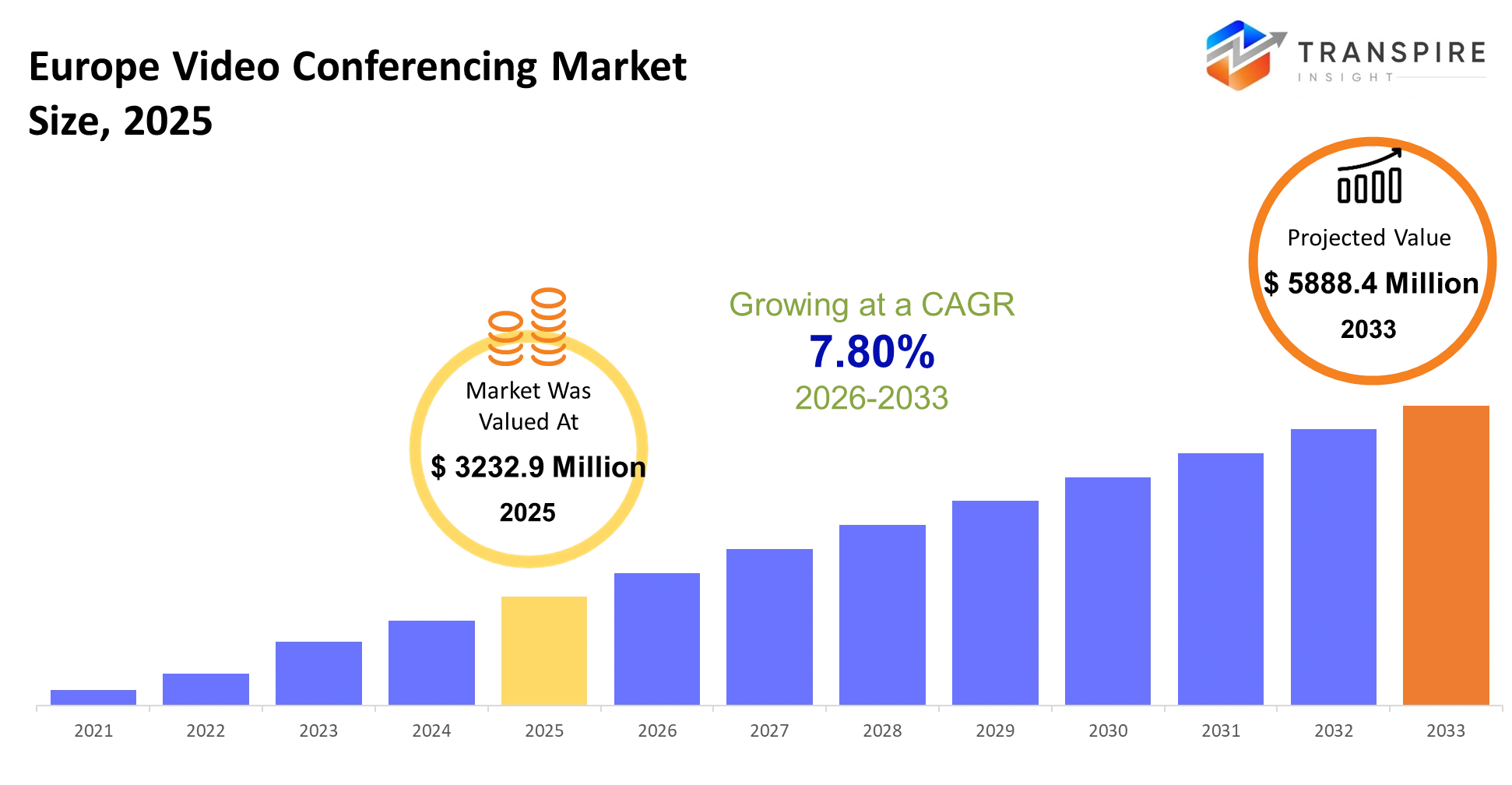
- Europe Video Conferencing Market Size 2025: USD 3232.9 Million
- Europe Video Conferencing Market Size 2033: USD 5888.4 Million
- Europe Video Conferencing Market CAGR: 7.80%
- Europe Video Conferencing Market Segments: By Type (Web Conferencing, Telepresence, Video Calls, Others), By Application (Corporate Meetings, Education, Telehealth, Others), By End-User (Enterprises, Educational Institutions, Healthcare, Others), By Deployment (Cloud, On-premise, Hybrid, Others).
To learn more about this report,  Download Free Sample Report
Europe Video Conferencing Market Summary:
The Europe Video Conferencing Market size is estimated at USD 3232.9 Million in 2025 and is anticipated to reach USD 5888.4 Million by 2033, growing at a CAGR of 7.80% from 2026 to 2033.The Europe video conferencing market now includes multiple applications that extend beyond virtual meetings. Enterprises use these platforms to operate their international business activities while they manage their engineering teams across different locations and support telemedicine services and conduct remote legal proceedings and maintain operational effectiveness for their manufacturing and logistics and professional services needs. The market provides a solution for businesses because it allows them to work together in real time without needing their employees to be at the same physical location.
The market has transitioned during the previous five years from using separate communication tools to adopting comprehensive workplace systems that include video conferencing and workflow tools and AI transcription and cybersecurity and cloud-based collaboration. The COVID-19 pandemic established the main reason which led organizations and government bodies to implement hybrid work systems across their entire operations.
Companies now assess conferencing platforms according to their ability to work together with other systems and their compliance with European data protection regulations and their capacity to connect with company software systems. The latest development has boosted recurring revenue from software sales while businesses are increasing their investment in secure and advanced collaboration systems that provide more features than basic meeting access.
Key Market Insights
- The European Video Conferencing Market in 2025 Western Europe with its 48% market share operated because businesses invested heavily in their IT infrastructure.
- The German market generates more revenue than other European markets because manufacturing automotive healthcare financial services sectors all use its technology.
- The Nordic countries will become the most rapidly expanding market until 2030 because of their digital workplace systems and their cloud-first business approach.
- The Southern European market develops new demand as SMEs increase their spending on digital collaboration while they implement remote work solutions which became necessary after the pandemic.
- The video conferencing industry generated more than 62% of its market share through cloud-based platforms which provide cost-efficient deployment options and adaptable subscription services.
- The second-largest segment for on-premise conferencing solutions exists in industries that need to maintain strict security and compliance standards.
- The market for AI-powered conferencing solutions will grow between now and 2030 because people want automatic transcription and translation services and meeting analytics tools.
- Enterprises now choose to unify their communication platforms because they want to create single digital collaboration systems that centralize their communication tools.
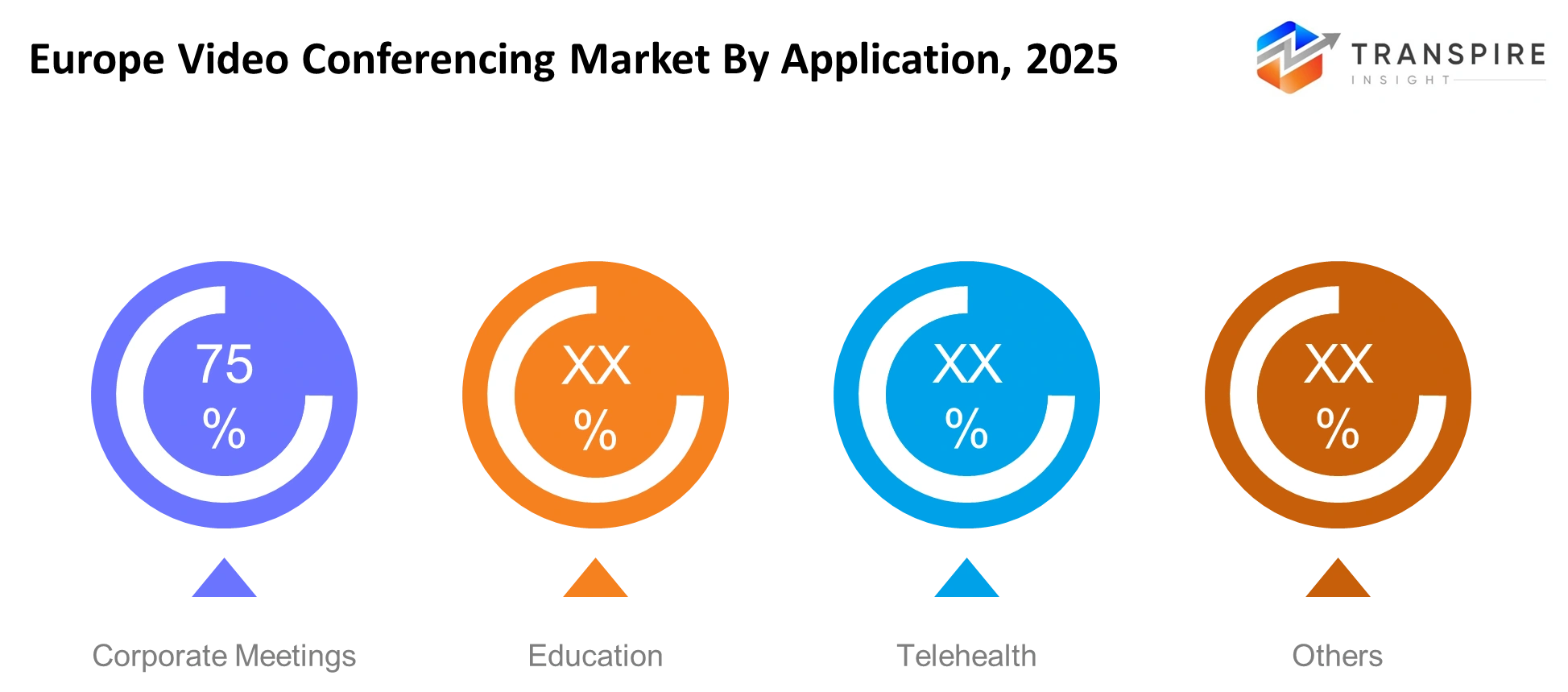
- Corporate communication established itself as the main segment of the European Video Conferencing Market which held approximately 44% market share in 2025 through its use by multinational companies with remote employees.
- Digital healthcare infrastructure investments now make telehealth and virtual healthcare consultations the fastest developing application.
- Online education platforms drive market growth as universities and training providers implement hybrid learning programs throughout their operations.
What are the Key Drivers, Restraints, and Opportunities in the Europe Video Conferencing Market?
The institutionalization of hybrid work in large enterprises and public-sector organizations has created the main driving force which pushes forward the European Video Conferencing Market. Companies shifted their operations to remote work during the COVID-19 disruption period but sustained their new work model because they achieved cost savings through reduced travel expenses and office space needs and remote project management. European businesses now embed video conferencing into their operational systems which include workflow management and cybersecurity and cloud collaboration platforms instead of using it as an independent communication solution. The platform providers experienced an extension of their subscription revenue stream while enterprises showed increased interest in advanced features which included AI-powered meeting summaries and multilingual transcription and encryption that meets compliance standards.
The market faces its most important barrier through data sovereignty requirements which create obstacles for companies to meet their cybersecurity regulations. European regulations particularly GDPR and specific security requirements for healthcare banking and government sectors mandate organizations to enforce strong control measures for their data storage and transmission procedures. Many organizations still depend on their existing IT systems which use outdated technology because those systems do not work well with contemporary cloud-based video conferencing solutions. The process of solving these infrastructure problems needs multiple years of financial commitment which creates delays for organizations in their purchasing choices while it also prevents regulated industries and mid-sized companies from adopting new technologies.
The most significant growth potential for businesses exists through their AI-powered collaboration platforms. Vendors are investing heavily in real-time translation and intelligent scheduling and sentiment analysis and automated documentation tools that improve meeting productivity. The Nordic region and Germany have become essential innovation centers because businesses in these areas implement AI-based workplace solutions for their manufacturing and engineering and professional services work.
What Has the Impact of Artificial Intelligence Been on the Europe Video Conferencing Market?
The Europe Video Conferencing Market experiences fundamental transformations through artificial intelligence and advanced digital technologies which transform communication platforms into systems that enhance workplace productivity for companies. The AI-powered conferencing tools provide automated transcription services which deliver real-time multilingual translations and create meeting summaries while tracking speakers and eliminating background noise. The capabilities of these tools enable multinational organizations which operate throughout Europe to decrease their manual administrative tasks while achieving better collaboration results. Companies now use conferencing platforms to connect with both workflow automation software and customer relationship management systems and cybersecurity monitoring tools in order to improve their remote work processes and compliance monitoring.
Collaboration ecosystems gain better predictive abilities through machine learning model advancements. AI algorithms enable providers to predict network congestion while optimizing video quality according to bandwidth conditions and detecting system failures that might lead to service interruptions. Advanced analytics engines use their capabilities to track user engagement and meeting attendance and platform performance which helps to enhance system uptime and minimize communication interruptions. The optimizations assist enterprises in achieving lower travel costs while their operational downtime decreases and employee productivity increases throughout their dispersed workforces.
AI-enabled conferencing systems provide operational benefits which organizations experience in combination with their hybrid work environments because they need dependable international coordination. The primary obstacle exists because organizations face substantial expenses when they want to connect their AI conferencing systems with their existing business systems.
Key Market Trends
- European enterprises transitioned from using separate video conferencing software to utilizing complete business collaboration platforms which included instant messaging and automated work processes and file sharing capabilities between 2021 and 2025.
- The live transcription and multilingual translation capabilities which AI powered started as premium features during 2022 became essential requirements for enterprise customers by 2025.
- The companies Microsoft Teams and Zoom and Cisco Webex increased their data center operations after GDPR regulations required enterprises to use data centers located within their specific regions.
- German manufacturing companies started to use continuous virtual meeting spaces which allowed engineers from different countries to work together while decreasing their need for travel.
- Organizations now prefer to use SaaS conferencing solutions which require less equipment than traditional hardware systems because hybrid work policies that emerged during the COVID-19 pandemic changed their purchasing patterns.
- The French healthcare system and Nordic countries both experienced growth in teleconsultation platform usage because governments introduced new digital reimbursement codes after 2021.
- European small and medium enterprises adopted online video conferencing systems which require less technical support between 2022 and 2025 because they wanted to make it easier for remote employees to start working.
- Telecom companies started to work with video conferencing vendors to provide businesses with secure collaboration solutions which worked together with their internet services and their security management solutions.
- Companies began adopting AI-based meeting analysis tools because they wanted to measure how productive their employees working remotely and in mixed environments throughout 2023 and beyond.
- Organizations that operate in regulated industries now require secure communication platforms which meet compliance standards because they forced vendors to enhance their security and auditing and user authentication systems.
Europe Video Conferencing Market Segmentation
By Type
Enterprises now choose browser-based collaboration tools which enable them to conduct virtual meetings and integrate their workflows and communicate across international borders. Small and medium-sized enterprises together with customer engagement operations use video calling solutions because they can be easily implemented and require less technical management. Telepresence systems maintain their function in corporate environments which include boardrooms and financial institutions and engineering operations because these locations demand top-level immersive communication capabilities.
The permanent introduction of hybrid work models throughout Europe has changed demand patterns which led vendors to develop unified platforms that combine their conferencing and messaging systems with AI-powered productivity tools. Real-time transcription and multilingual translation and intelligent meeting analytics have become standard features which businesses use to differentiate their products from competitors. The market future will favor integrated collaboration ecosystems which provide more value than independent communication solutions, thus creating business prospects for technology companies that develop cloud-based solutions and cybersecurity systems and AI-powered conferencing technologies.
By Application
The primary use case for corporate meetings exists because multinational companies need to maintain ongoing communication between their various office locations and supply chain network and project teams. The organizational needs of large enterprises drive them to use conferencing systems for conducting internal meetings and interacting with clients and hiring new employees and executing their business strategies. The educational sector experienced substantial growth because universities and vocational colleges adopted hybrid learning systems which used virtual classrooms and remote testing platforms. The healthcare industry showed strong growth in telehealth application use because medical facilities started using digital consultation systems for their patient care processes.
The development of secure video communication systems in Europe received a boost from governments who supported digital healthcare reimbursement regulations which created a secure payment system for this technology. Organizations continue to expand their operations in various fields which include legal processes and government work and digital events to achieve better operational efficiency while reducing their need for business travel. The upcoming growth of applications will depend on three main factors which include how well platforms work together and how they meet cybersecurity standards and how AI systems automate workflows to enhance productivity and communication within specific professional domains.
To learn more about this report, Download Free Sample Report
By End-User
Enterprises represent the largest end-user segment because large corporations allocate substantial budgets toward secure collaboration infrastructure, cloud integration, and workforce connectivity. The manufacturing and financial services and consulting and technology sectors drive procurement activity because companies need to manage their international operations and work across borders. Educational institutions form the second-largest user group because universities and training centers and professional certification programs maintain their digital learning programs for extended periods. Healthcare providers are experiencing the fastest expansion because hospitals and clinics increasingly use virtual consultations, specialist collaboration, and remote patient engagement systems.
Public sector organizations also contribute to adoption through digital governance initiatives and secure administrative communication requirements. End-user purchasing behavior now prioritizes encryption standards, interoperability with enterprise software ecosystems, and AI-driven productivity tools over basic communication functionality. Future investment patterns indicate that organizations will demand industry-specific collaboration platforms which support compliance requirements and workflow integration and scalable remote operations more than they will need general conferencing applications.
By Deployment
The deployment segment sees cloud deployment as its dominant method because organizations now prefer scalable subscription-based models which require less initial infrastructure costs while their software maintenance needs become easier to handle. The adoption of cloud platforms becomes more appealing for distributed workforces because these platforms enable quick feature deployment and provide remote access while they connect with enterprise productivity programs. Organizations that operate in regulated industries including banking and healthcare and defense and government sectors depend on on-premise deployment because their strict data sovereignty rules prevent them from using third-party cloud services.
Enterprises show growing interest in hybrid deployment models because they enable organizations to maintain operational flexibility while satisfying their cybersecurity and compliance requirements. Organizations today use cloud-based collaboration tools together with their internal data systems to create secure environments that provide scalability benefits. Cloud conferencing systems gain more trust from users because of better connectivity options and more regional data hosting facilities. The upcoming deployment patterns predict that vendors will allocate more resources to develop local cloud facilities and create AI network optimization systems and build hybrid security frameworks that enable enterprises to communicate according to compliance requirements throughout Europe.
What are the Key Use Cases Driving the Europe Video Conferencing Market?
Platform adoption across Europe is primarily driven by corporate collaboration which serves as the main use case for businesses. Video conferencing serves as the essential communication tool for large manufacturing, banking consulting and technology companies to conduct cross-border project work, executive meetings and client interactions while managing their remote teams. Organizations use hybrid work structures because they need dependable communication solutions that help them run their business operations without needing employees to travel.
Regional markets show consistent growth in healthcare and education application development. Healthcare networks and hospitals are using secure conferencing systems for teleconsultations and specialist collaboration and remote patient follow-ups as digital healthcare systems develop. Universities and vocational institutions continue to implement virtual classrooms and hybrid learning systems into their educational delivery systems for future use.
AI-assisted virtual events and remote legal proceedings and augmented and virtual reality meeting environments create new use cases. Engineering companies and industrial design firms are evaluating advanced conferencing systems which enable digital twin collaboration and real-time simulation review and multilingual technical collaboration between international project teams.
|
Report Metrics |
Details |
|
Market size value in 2025 |
USD 3232.9 Million |
|
Market size value in 2026 |
USD 3481.8 Million |
|
Revenue forecast in 2033 |
USD 5888.4 Million |
|
Growth rate |
CAGR of 7.80% from 2026 to 2033 |
|
Base year |
2025 |
|
Historical data |
2021 - 2024 |
|
Forecast period |
2026 - 2033 |
|
Report coverage |
Revenue forecast, competitive landscape, growth factors, and trends |
|
Regional scope |
Europe (Germany, United Kingdom, France, Italy, Spain and Rest of Europe) |
|
Key company profiled |
Zoom, Microsoft Teams, Google Meet, Cisco Webex, BlueJeans, GoToMeeting, RingCentral, Skype, Slack, Zoho Meeting, TeamViewer, Lifesize, Pexip, ClickMeeting, BigBlueButton |
|
Customization scope |
Free report customization (country, regional & segment scope). Avail customized purchase options to meet your exact research needs. |
|
Report Segmentation |
By Type (Web Conferencing, Telepresence, Video Calls, Others), By Application (Corporate Meetings, Education, Telehealth, Others), By End-User (Enterprises, Educational Institutions, Healthcare, Others), By Deployment (Cloud, On-premise, Hybrid, Others) |
Which Regions are Driving the Europe Video Conferencing Market Growth?
The primary market for Western Europe continues to operate as the top regional market because major companies in Germany, the United Kingdom, and France use digital collaboration throughout their business processes. The combination of strong cloud infrastructure and mature cybersecurity frameworks together with strict data protection standards enables organizations to implement enterprise-grade conferencing systems at scale. The major technology vendors proceed to build more regional data centers because they need to meet GDPR requirements and they want to enhance customer trust in their cloud communication services. The region maintains its position as the top market because it has a complete telecom provider ecosystem together with enterprise software companies and managed service providers and AI technology vendors.
Northern Europe stands as the second largest regional contributor although its growth patterns differ from Western European growth trends. Nordic countries focus on achieving operational efficiency through their workplace digitization efforts and development of sustainable remote work programs instead of pursuing large-scale corporate mergers. The stable economic environment combined with high digital literacy rates has resulted in continuous investment in cloud collaboration solutions for public services and healthcare systems and educational networks. The government-supported digital transformation initiatives together with established broadband networks enable gradual technology uptake which differs from the rapid expansion patterns displayed by bigger Western European nations.
Digital transformation is occurring at a rapid pace which makes Southern and Eastern European markets the fastest growing areas of the world. The recent investments made in broadband connectivity and cloud infrastructure and digitalization programs for enterprises have resulted in faster adoption rates throughout Italy and Poland and Spain and multiple Central European nations.
Who are the Key Players in the Europe Video Conferencing Market and How Do They Compete?
The Europe Video Conferencing Market exhibits moderate consolidation because a few global technology companies control enterprise-grade installations while regional vendors compete by specializing in their particular industries and providing compliance-based solutions. The competition now focuses on four main areas which include AI capabilities, cybersecurity systems, platform compatibility, and regional cloud computing resources instead of basic price differentials. Providers who operate in the market establish their market presence by integrating video conferencing solutions into comprehensive workplace systems which include messaging platforms and workflow management tools and enterprise collaboration applications. New business ventures encounter significant obstacles because enterprise customers now value regulatory compliance and encryption standards and integration capabilities more than basic communication functions.
Microsoft Teams enables enterprises to manage their communication and file sharing and workflow processes through its complete integration with Microsoft 365 which creates a unified operational space. The platform establishes its market position through enterprise-level security features and AI-powered meeting summaries and its widespread usage in regulated industries which include banking and government operations. Zoom Communications dedicates its resources to developing user-friendly products which include AI-driven collaborative tools that provide smart transcription and multilingual translation and advanced meeting analysis capabilities. Zoom has pursued aggressive expansion through establishing partnerships with telecom companies and hardware vendors to improve hybrid workplace implementations throughout Europe.
Cisco Webex operates as a cybersecurity and enterprise networking platform which businesses use to create secure communication systems and manage their compliance requirements. Cisco expands its business operations through the development of artificial intelligence-powered collaboration systems and its integration of cloud-based contact center solutions. Google Meet uses the Google Workspace ecosystem to attract small and medium-sized enterprises and educational institutions which need simple web-based communication tools that require minimal technical support. RingCentral provides companies with unified communications solutions which combine video conferencing and cloud telephony and contact center functions to help them decrease their need for multiple vendors when managing remote work environments.
Company List
- Zoom
- Microsoft Teams
- Google Meet
- Cisco Webex
- BlueJeans
- GoToMeeting
- RingCentral
- Skype
- Slack
- Zoho Meeting
- TeamViewer
- Lifesize
- Pexip
- ClickMeeting
- BigBlueButton
Recent Development News
In April 2026, Cisco Expands Webex Data Residency in the UK to Strengthen European Sovereign Cloud Strategy: Cisco Systems announced an expansion of its Webex data residency services into the UK, allowing enterprises and public-sector organizations to keep collaboration and AI-generated meeting data stored locally. The move reflects rising European demand for compliance-focused video conferencing infrastructure and sovereign AI capabilities.
Source: https://www.itpro.com
In April 2026, Microsoft Unveils New AI and Collaboration Features for Teams Across Enterprise Workflows: Microsoft introduced a fresh wave of AI-powered updates for Microsoft Teams in April 2026, including enhanced meeting intelligence, workflow automation, and secure collaboration tools aimed at hybrid enterprises in Europe. The rollout highlights Microsoft’s continued investment in enterprise video conferencing amid growing regulatory scrutiny in the EU collaboration software market.
Source: https://techcommunity.microsoft.com
What Strategic Insights Define the Future of the Europe Video Conferencing Market?
The European Video Conferencing Market is transitioning into an AI-based system which unifies communication and workflow automation and cybersecurity and enterprise analytics functions through cloud platforms. Businesses have permanently switched their operations to remote work and international digital collaboration which affects their work in manufacturing and healthcare and finance and professional services. The ability to achieve competitive advantage during the next five to seven years will depend on how platforms use AI productivity tools and compliance management systems and enterprise software interfaces which expand their capabilities.
The danger exists that market concentration will increase because a few hyperscale technology providers are acquiring more market share. The standardization of communication infrastructure through software ecosystems will create challenges for smaller vendors who need to preserve their ability to interoperate and set prices and maintain long-term relationships with customers. The use of immersive collaboration technologies that combine augmented reality with digital twin environments creates new business possibilities for engineering and industrial design work in Germany and Nordic countries. Organizations should focus on building strategic alliances with cybersecurity companies and AI infrastructure developers because these partnerships will help them create unique market advantages before enterprise buyers dominate the procurement process.
Europe Video Conferencing Market Report Segmentation
By Type
- Web Conferencing
- Telepresence
- Video Calls
- Others
By Application
- Corporate Meetings
- Education
- Telehealth
- Others
By End-User
- Enterprises
- Educational Institutions
- Healthcare
- Others
By Deployment
- Cloud
- On-premise
- Hybrid
- Others
Frequently Asked Questions
Find quick answers to common questions.
The approximate Europe Video Conferencing Market size for the market will be USD 5888.4 Million in 2033.
The key segments of the Europe Video Conferencing Market are By Type (Web Conferencing, Telepresence, Video Calls, Others), By Application (Corporate Meetings, Education, Telehealth, Others), By End-User (Enterprises, Educational Institutions, Healthcare, Others), By Deployment (Cloud, On-premise, Hybrid, Others).
Major players in the Europe Video Conferencing Market are Zoom, Microsoft Teams, Google Meet, Cisco Webex, BlueJeans, GoToMeeting, RingCentral, Skype, Slack, Zoho Meeting, TeamViewer, Lifesize, Pexip, ClickMeeting, BigBlueButton.
The current market size of the Europe Video Conferencing Market is USD 3232.9 Million in 2025.
The Europe Video Conferencing Market CAGR is 7.80%.
- Zoom
- Microsoft Teams
- Google Meet
- Cisco Webex
- BlueJeans
- GoToMeeting
- RingCentral
- Skype
- Slack
- Zoho Meeting
- TeamViewer
- Lifesize
- Pexip
- ClickMeeting
- BigBlueButton
Recently Published Reports
-
Apr 2026
3D Optical Profiler Market
3D Optical Profiler Market Size, Share & Analysis Report By Type (Desktop 3D Optical Profiler, and Portable 3D Optical Profiler), By Technology (Confocal Technology, and White Light Interference), By End-Use Industry (Manufacturing, Research Institutions, Automotive, Aerospace and Defense, Medical Devices, and Other), and Geography (North America, Europe, Asia-Pacific, Middle East and Africa, South and Central America), 2021 - 2031
-
Apr 2026
Depth Sensor Market
Depth Sensor Market Size, Share & Analysis Report By Type (Infrared Depth Sensors, Time-of-Flight (ToF) Sensors, Stereo Vision Sensors, Structured Light Sensors, Ultrasonic Depth Sensors), By Application (Automotive, Robotics, Gaming, Consumer Electronics, Industrial Automation, Healthcare, Security & Surveillance, Others), By End Users (Automotive Manufacturers, Consumer Electronics Companies, Healthcare Providers, Industrial Companies, Security Agencies, Gaming Companies, Robotics Companies, Others), and Geography (North America, Europe, Asia-Pacific, Middle East and Africa, South and Central America), 2021 – 2031
-
Apr 2026
Digital Manufacturing Market
Digital Manufacturing Market Size, Share & Analysis Report By Component (Hardware, Software, and Services), By Technology (Robotics, 3D Printing, Internet of Things (IoT), and Others), By Application (Automotive and Transportation, Aerospace and Defense, Consumer Electronics, Industrial Machinery, and Others), By Process Type (Computer-Based Designing, Computer-Based Simulation, Computer 3D Visualization, Analytics, and Others), and Geography (North America, Europe, Asia-Pacific, Middle East and Africa, South and Central America), 2021 – 2031
-
Apr 2026
Digital Visa Services Market
Digital Visa Services Market Size, Share & Analysis Report By Type (Individual Travelers, Group Travelers), By Application (Tourism, Business Travel, Others), and Geography (North America, Europe, Asia-Pacific, Middle East and Africa, South and Central America), 2021 – 2031