
Europe Trailer Telematics Market Size & Forecast:
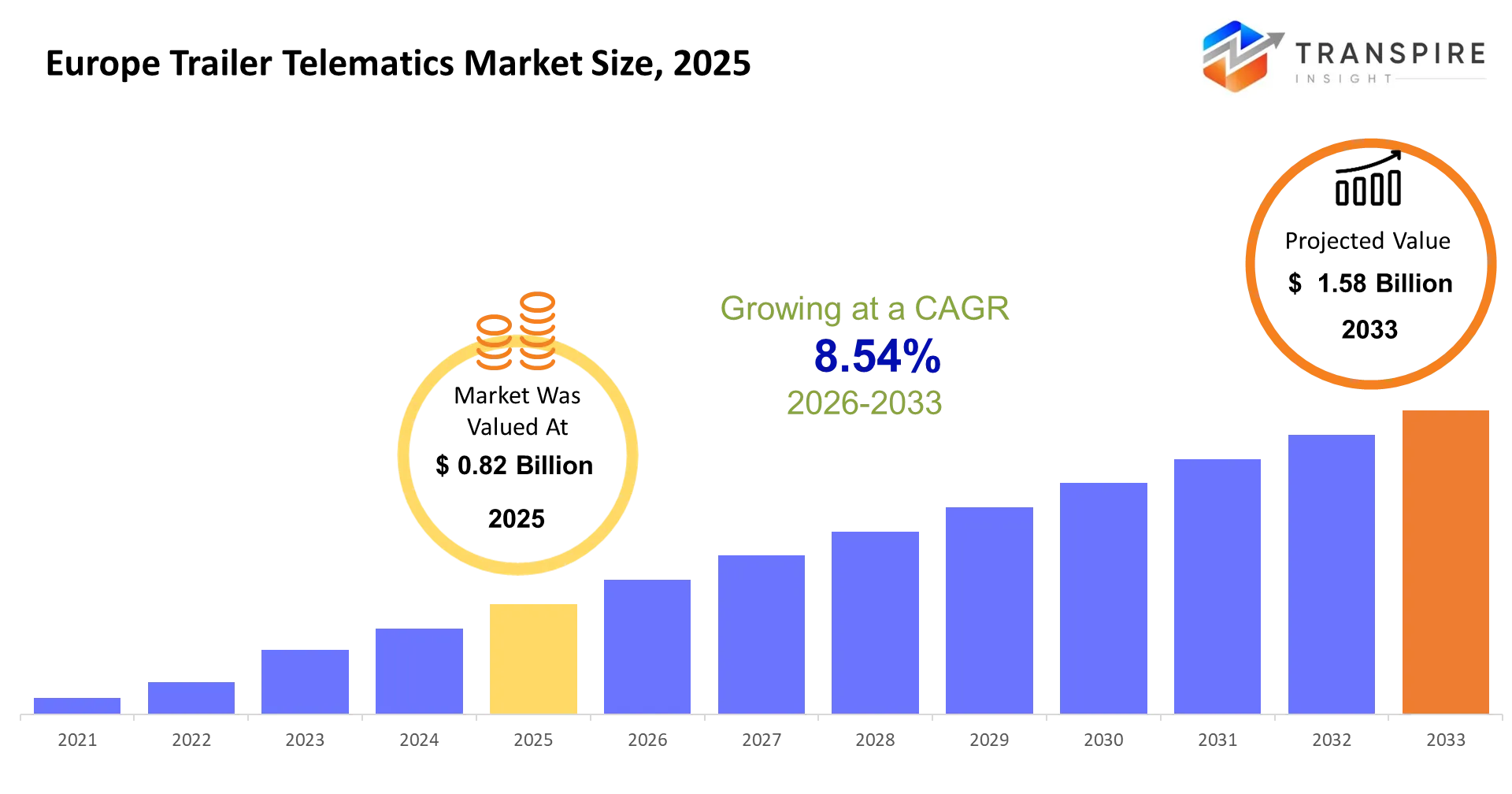
- Europe Trailer Telematics Market Size 2025: USD 0.82 Billion
- Europe Trailer Telematics Market Size 2033: USD 1.58 Billion
- Europe Trailer Telematics Market CAGR: 8.54%
- Europe Trailer Telematics Market Segments: By Type (Tracking Systems, Fleet Management Systems, Sensors, Others); By Application (Fleet Monitoring, Asset Tracking, Safety & Security, Predictive Maintenance, Others); By End-User (Logistics Companies, Fleet Operators, Transportation Firms, Others); By Connectivity (GPS, IoT, Cellular, Satellite, Others)
To learn more about this report,  Download Free Sample Report
Europe Trailer Telematics Market Summary
The Europe Trailer Telematics Market was valued at USD 0.82 Billion 2025. It is forecast to reach USD 1.58 Billion by 2033. That is a CAGR of 8.54% over the period.
The Europe trailer telematics market assists freight operators because it transforms trailers into connected assets which track their location and cargo condition and maintenance status and operational performance. The systems help logistics companies because they reduce empty mileage and enhance delivery coordination and they stop cargo spoilage and they help companies follow complex cross-border transport regulations. The market has progressed during the past five years from using separate GPS tracking systems to implementing integrated cloud-based fleet intelligence platforms which combine AI analytics with predictive maintenance and automated compliance reporting inside one operational system.
The pandemic period created major disruptions to European supply chains which resulted in freight bottlenecks that affected essential transport corridors. Transport operators needed to handle rising fuel costs and delivery delays and stricter EU emissions reporting requirements which made operational visibility and asset utilization essential for fleet operations. The industry shift transformed telematics into a fundamental investment for logistics infrastructure because it had moved beyond cost control functions. The market now depends more on recurring software revenue and OEM-integrated connectivity and sensor-based trailer monitoring solutions because these elements drive sustainable market growth.
Key Market Insights
- The Europe Trailer Telematics Market in 2025 experienced its largest share through Western Europe which controlled almost 42% of the market because of its advanced freight systems and its commitment to enforcing regulations.
- The period between 2023 and 2026 saw Germany France and the Netherlands boost their demand through their extensive trailer fleets and their implementation of advanced logistics technologies.
- Poland and Romania expanded their border infrastructure through modernization initiatives which made Eastern Europe the fastest-growing regional market.
- The market in 2025 saw its largest share from tracking systems because fleet operators needed to see their trailers at all times and needed to optimize their routes.
- The logistics industry implemented fleet management systems because they wanted to use fuel analytics and maintenance scheduling and compliance reporting through a single system.
- The market for sensor-based telematics solutions grew at its fastest rate because the pharmaceutical and refrigerated transport monitoring needs expanded through 2033.
- Application demand for fleet monitoring reached 2025 because businesses faced pressure to increase trailer usage and improve delivery performance.
- The use of predictive maintenance applications grew rapidly because AI-driven diagnostics helped organizations lower unplanned trailer downtime and their costs for maintenance.
- Logistics companies maintained the highest industry share because they needed to monitor trailer activity from a central point for their global freight operations.
- Transportation companies used cloud telematics platforms to enhance their abilities in regulatory compliance and route planning and fuel consumption management.
What are the Key Drivers, Restraints, and Opportunities in the Europe Trailer Telematics Market?
The European Union's new regulations about freight transparency and emissions standards and cross-border fleet operations create more stringent rules which drive market growth forward. The new rules about transportation together with digital tachograph requirements have compelled logistics companies to implement connected trailer technology which enables them to monitor compliance requirements and track cargo movements and driver activities in real time. Large fleet operators increasingly view telematics investment as a direct operational requirement rather than an optional efficiency tool. Telematics providers who offer cloud-based compliance automation systems together with predictive maintenance and integrated fleet analytics have experienced growth in their software revenue streams because more clients use their software on a recurring basis.
The most significant restraint remains the fragmented infrastructure across European trailer fleets. Many operators still manage mixed fleets that combine older trailers with incompatible hardware and disconnected software systems and limited onboard sensor capability. Smaller transport companies face challenges in paying for the necessary high upfront costs and extended installation periods and employee retraining expenses that are needed to retrofit their systems. The structural barrier prevents cost-sensitive markets from expanding their operations and it restricts the speed at which advanced AI telematics systems can be used.
The OEM telematics systems which include smart cold-chain logistics technology create a major opportunity for development. Automotive manufacturers and telematics providers are increasingly embedding connected systems directly into factory-built trailers and transport vehicles.Eastern and Central Europe have emerged as new expansion territories because pharmaceutical logistics and food exports and cross-border e-commerce networks require enhanced temperature monitoring and predictive diagnostics and automated cargo tracking systems.
What Has the Impact of Artificial Intelligence Been on the Europe Trailer Telematics Market?
The development of artificial intelligence together with digital technology has changed trailer telematics systems from their original role as tracking systems to become systems which predict upcoming operational needs. Fleet operators across Europe apply AI-powered telematics systems to their freight networks because these systems provide automated solutions for route optimization driver compliance monitoring cargo tracking and trailer performance evaluation. The platforms which Samsara and Geotab developed now enable companies to perform automated tachograph reporting together with driver behavior assessment and smart dispatch management from their main fleet monitoring systems. The system enables logistics providers who operate time-critical cross-border shipping activities to achieve better operational efficiency through decreased manual reporting work and faster response times.
Machine learning models develop stronger abilities to predict maintenance needs while they also enhance performance optimization processes. Advanced telematics systems monitor tire pressure brake wear refrigeration unit behavior battery performance and trailer movement patterns to detect potential failures which will result in system breakdowns. The use of AI-based route planning systems has enabled fleet operators to decrease their unplanned downtime while long-haul freight operations have achieved better fuel efficiency and reduced empty trailer mileage. The system provides real-time analytics which help organizations meet regulatory requirements through its automatic detection of temperature control transportation violations and driving hour violations.
Organizations still face challenges in adopting artificial intelligence because implementation costs remain high and their fleet systems operate across different platforms. Small and mid-sized operators maintain outdated trailer systems because their existing equipment does not support standardized connections and their operational data does not meet the requirements for precise forecasting.
Key Market Trends
- The European fleet operators have redirected their GPS tracking budget toward predictive maintenance and AI-based operational analysis platforms since 2023.
- Geotab and Samsara established OEM telematics systems in 2025 and 2026, which enabled commercial trailer fleets to decrease their need for aftermarket equipment. After 2024, EU transport compliance rules made it necessary for logistics companies to use automatic tachograph systems and continuous trailer tracking solutions.
- Pharmaceutical distribution in Central Europe increased its refrigerated transport operations, which led operators to implement more sensors for monitoring temperature and cargo safety.
- Between 2022 and 2026, fleet buyers showed greater interest in subscription-based cloud telematics systems than in ownership-based hardware solutions.
- After 2024, Eastern European countries implemented freight corridors and cross-border logistics systems, which resulted in faster technology acceptance within their regions.
- Operators in remote freight operations chose satellite-based trailer connectivity to maintain constant tracking capabilities outside regions with cellular network coverage.
- Fleet operators required software that worked with warehouse and transport management systems because their competitive advantage moved away from hardware costs.
- Continental and Bosch shifted their attention to complete tire monitoring systems and predictive diagnostic solutions because transport companies needed to minimize operational downtime.
- European freight corridors experienced a rise in cargo theft incidents, which created a higher demand for AI-based security systems that included geofencing and remote trailer immobilization features.
Europe Trailer Telematics Market Segmentation
By Type:
The market for tracking systems maintains its leading position because transport operators continue their preference for tracking trailer movements in real time while they optimize their routes through cross-border freight corridors. The retail distribution networks together with logistics providers exhibit strong interest in GPS-enabled trailer tracking solutions which enhance delivery accuracy while decreasing idle time. Fleet management systems stand as the second most common solution because fleet operators want to manage their fuel consumption and driver performance and their compliance records and maintenance plans from a single location. Refrigerated transport and high-value cargo movement rely on sensor-based systems which monitor temperature and humidity and tire pressure to maintain cargo quality and operational safety.
Integrated platforms will be developed in the future to provide users with tracking and analytics and predictive diagnostics which work through one user interface. Product developers will pursue development of AI-enabled monitoring systems which convert trailer data into operational recommendations instead of basic location reporting. Investors show growing interest in sensor fusion technologies together with cloud-native telematics software which allows efficient operation of extensive trailer fleets through simplified hardware requirements. Fleet operators are likely to reduce their demand for tracking devices because they will adopt telematics ecosystems which operate through systems installed by original equipment manufacturers.
By Application:
Fleet monitoring serves as the primary application segment because freight operators need to monitor their trailer usage and fuel consumption and route efficiency and compliance procedures throughout their operations. Centralized monitoring systems enable large transportation networks to enhance operational efficiency while they use their resources to optimize cargo scheduling between European trade routes.The asset tracking technology continues to grow in usage because businesses need to protect their shipments from rising theft risks while they must show customers that their shipments are currently moving. The demand for safety and security applications keeps increasing because transportation regulations now require drivers to follow safety rules and handle dangerous materials safely and check trailer conditions properly.
Predictive maintenance has become a top application area because operators need to decrease operational downtime while managing their equipment costs throughout its entire lifespan. The advanced telematics platforms offer real-time data analysis for brake wear and tire condition and battery status and mechanical stress which enables maintenance teams to stop expensive trailer breakdowns. The technology providers will use their budget resources to develop new AI-powered diagnostic software and monitoring tools throughout the entire prediction period. Buyers will prefer systems which provide both operational monitoring and maintenance forecasting capabilities because these systems enhance their ability to manage fleets over extended periods.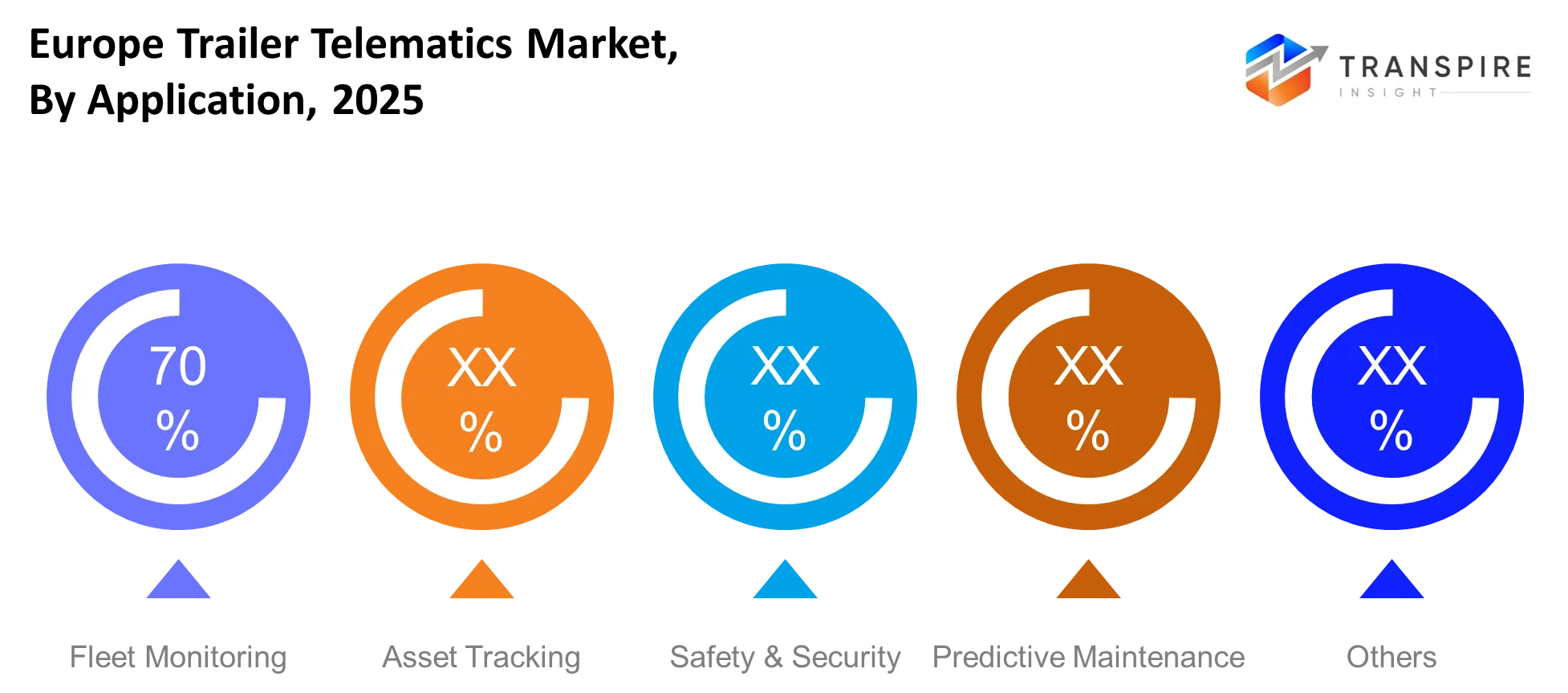
To learn more about this report, Download Free Sample Report
By End-User:
The logistics sector holds the biggest market share because companies need to handle large trailer shipments and manage their complicated international shipping operations. Distribution-heavy industries such as retail and e-commerce and pharmaceuticals and food logistics depend on connected trailer systems to enhance their shipment tracking and delivery operations. The demand from fleet operators reaches high levels because telematics platforms enable businesses to maximize their route planning and fuel efficiency and trailer distribution across their extensive truck networks. The transportation industry for long-distance freight has started to use advanced telematics systems which help them show their operational practices and meet their legal obligations.
The different end-user groups show different growth patterns because they prioritize adoption according to their operational business size and the type of cargo they handle. Logistics providers concentrate their efforts on achieving supply chain integration together with implementing real-time tracking solutions, whereas transportation companies prioritize their operational activities which focus on improving maintenance processes and decreasing operational costs. The market will see smaller companies start using subscription-based telematics services because these services enable them to make smaller initial payments while enjoying easier system setup. Technology vendors that supply modular platforms together with industry-specific analytics solutions will establish better market positions because end users require customized operational intelligence instead of standard tracking capabilities.
By Connectivity:
The market currently relies on cellular connectivity because European mobile network coverage enables stable real-time communication between trailers and fleet systems and logistics platforms. The telematics solutions which use cellular networks provide transportation organizations with an affordable method to send location data and maintenance alerts and compliance monitoring data through their highly connected transport corridors. GPS technology remains crucial for tracking routes and determining location accuracy, especially during long-distance freight operations and international shipment activities. Fleet operators are rapidly adopting IoT-enabled connectivity to achieve better sensor integration with cloud platforms and predictive analytics systems.
Satellite connectivity remains operational for particular applications which require satellite links to serve remote transport routes and hazardous cargo operations and locations where ground-based networks do not exist. Future market growth will favor hybrid connectivity systems which integrate GPS and cellular and satellite and IoT technologies into one telematics system. Product developers need to focus on three main areas which include low-latency communication and cybersecurity protection and energy-efficient data transmission for their connected trailer systems. Investors now concentrate on scalable connectivity infrastructure which enables autonomous fleet management and real-time freight tracking across international logistics networks.
What are the Key Use Cases Driving the Europe Trailer Telematics Market?
The Europe trailer telematics market exists for its main purpose, which involves tracking fleets and monitoring asset movements. The logistics sector and freight operators depend on trailer monitoring solutions that provide real-time data to enhance their route operations while reducing waiting periods and ensuring they meet EU transport standards. The highest demand exists for commercial fleets that operate long distances between multiple European nations and need to monitor their shipments at all times.
Cold-chain monitoring and predictive maintenance are expanding rapidly across pharmaceutical, food distribution, and retail supply chains. The operators of refrigerated trailer systems increasingly implement telematics systems to perform real-time tracking of temperature stability and cargo integrity and their equipment maintenance schedules. The construction and industrial transport industries now use trailer diagnostics to decrease their equipment downtime while enhancing their asset usage.
The emerging applications of AI now include cargo security monitoring systems that use AI technology and systems that combine telematics with electric trailer technology. Fleet operators are beginning to test battery health analytics, remote energy management, and automated insurance reporting for connected trailers. The applications currently exist at an initial development stage, but they will increase in usage because Europe works to advance its fleet electrification program and digital freight compliance program.
|
Report Metrics |
Details |
|
Market size value in 2025 |
USD 0.82 Billion |
|
Market size value in 2026 |
USD 0.89 Bn |
|
Revenue forecast in 2033 |
USD 1.58 Bn |
|
Growth rate |
CAGR of 8.54% from 2026 to 2033 |
|
Base year |
2025 |
|
Historical data |
2021 - 2024 |
|
Forecast period |
2026 - 2033 |
|
Report coverage |
Revenue forecast, competitive landscape, growth factors, and trends |
|
Regional scope |
Europe (Germany, United Kingdom, France, Italy, Spain, Rest of Europe) |
|
Key company profiled |
Geotab, Trimble, Samsara, Verizon Connect, AT&T, CalAmp, Omnitracs, Teletrac Navman, Zonar Systems, Orbcomm, Fleet Complete, TomTom Telematics, Continental, Bosch, Microlise |
|
Customization scope |
Free report customization (country, regional & segment scope). Avail customized purchase options to meet your exact research needs. |
|
Report Segmentation |
By Type (Tracking Systems, Fleet Management Systems, Sensors, Others); By Application (Fleet Monitoring, Asset Tracking, Safety & Security, Predictive Maintenance, Others); By End-User (Logistics Companies, Fleet Operators, Transportation Firms, Others); By Connectivity (GPS, IoT, Cellular, Satellite, Others) |
Which Regions are Driving the Europe Trailer Telematics Market Growth?
The Europe trailer telematics market shows Western Europe as its leading region because the area combines strict transport regulation with its advanced logistics systems from its developed infrastructure. The implementation of advanced fleet compliance standards in Germany, the Netherlands, and France requires carriers to track emissions and ensure driver safety and cargo security, which causes commercial trailer fleets to adopt telematics systems at a faster rate. The Rotterdam and Hamburg ports together with their major freight corridors create a strong requirement for companies to achieve real-time trailer tracking andmanage their international trailer operations across borders. The region benefits from an extensive network of original equipment manufacturers and software developers and logistics companies and communication systems which enable continuous technological development and large-scale system implementation.
Northern Europe serves as the second most significant area for market contributions because its operational stability forms the base of its market power. Scandinavian countries keep investing in smart freight systems through their stable economies which already use digital transport systems. The fleet operators in this area focus on three main goals sustainability and uptime maintenance and predictive maintenance which results in a stable demand pattern for high-value telematics services that they use to maintain operations instead of purchasing inexpensive hardware. The market depends on technological integration and public and private partnerships for green logistics but Western Europe markets operate through freight density.
The current fastest-growing region in the world has become Eastern Europe because its logistics systems undergo modernization and its countries establish trade connections with the European Union. The countries of Poland and Romania and Hungary have increased their spending on highway construction and warehouse development and cross-border freight systems during the last three years. The increasing need to fulfill EU transportation regulations has driven fleet operators in the area to replace their outdated trailer equipment with modern systems that track their assets. The period from 2026 to 2033 will create new business opportunities for telematics companies and their investors because fleet operations that require affordable solutions now lack complete access to advanced digital fleet management systems which will emerge during that time.
Who are the Key Players in the Europe Trailer Telematics Market and How Do They Compete?
The Europe trailer telematics market remains moderately fragmented although integrated digital logistics platforms which fleets are adopting today drive market consolidation. The competition between companies now extends beyond hardware price battles. Vendors now compete through their predictive analytics capabilities and their ability to show asset location in real time and their cold chain monitoring systems and their transport management software connection. Established telematics providers use AI technology to enhance their products and they create vendor-specific systems which they combine with original equipment manufacturer vehicle ecosystems. The emerging cloud-based platforms with their subscription services and rapid system installation capabilities are disrupting the market. The European Union has created stricter regulations which demand companies to track emissions and ensure driver safety and monitor cargo movements thus driving competition for software and data systems.
Geotab focuses on creating technology integrations which provide users with expandable data analysis solutions. The company achieves its competitive edge through telematics partnerships with original equipment manufacturers which enable easier installation and provide consistent data across all fleet vehicles. The company is expanding its European presence through partnerships with automotive manufacturers while developing its electric vehicle and trailer asset management solutions. Samsara differentiates itself through AI-enabled operational intelligence which integrates video telematics with compliance automation and asset tracking into one cloud-based system. The company has established a strong market position by expanding its operations for EU compliance throughout the EU which enables it to support large logistics companies that operate across international borders.
Continental competes through its ability to create seamless telematics system connections which connect tire monitoring systems and predictive maintenance systems together with their telematics hardware.Its strength derives from its ability to combine sensor engineering with tools that improve fleet efficiency and decrease trailer maintenance time and fuel expenses. Microlise focuses on providing European transport operators with specialized services that match their specific regional needs. The company established its competitive advantage through customized fleet optimization solutions and permanent logistics partnerships across the United Kingdom and mainland Europe.
Company List
- Geotab
- Trimble
- Samsara
- Verizon Connect
- AT&T
- CalAmp
- Omnitracs
- Teletrac Navman
- Zonar Systems
- Orbcomm
- Fleet Complete
- TomTom Telematics
- Continental
- Bosch
- Microlise
Recent Development News
“In April 2026, Samsara launched Smart Compliance for fleets across the EU and UK. The platform integrates tachograph compliance, AI-based safety monitoring, and telematics workflows into a unified system, strengthening Samsara’s position in Europe’s increasingly regulation-driven trailer telematics market.https://www.samsara.com
“In March 2026, Geotab entered a partnership with Hyundai Motor Company to launch a hardware-free native telematics integration across Europe. The collaboration enables fleets to access high-resolution GPS, EV diagnostics, and predictive maintenance data directly from factory-installed systems, reducing aftermarket installation costs and accelerating OEM-integrated telematics adoption.https://www.geotab.com
What Strategic Insights Define the Future of the Europe Trailer Telematics Market?
The Europe trailer telematics market is structurally moving toward integrated, predictive fleet ecosystems in which trailers function as continuously connected assets rather than passive transport units. Over the next five to seven years, this direction will be driven less by hardware penetration and more by the convergence of AI-enabled analytics, emissions compliance mandates, and cross-border logistics optimization pressures across the EU. A less visible risk lies in platform concentration: as a handful of telematics providers consolidate data ownership, smaller fleet operators may face rising switching costs and reduced interoperability, limiting competitive flexibility. At the same time, an emerging opportunity is developing around cold-chain and pharmaceutical logistics in Eastern and Central Europe, where stricter traceability requirements are accelerating demand for sensor-rich trailer intelligence. Market participants should prioritize open-architecture platforms and strategic partnerships with logistics software providers to secure long-term differentiation before interoperability standards become more restrictive.
Europe Trailer Telematics Market Report Segmentation
By Type
- Tracking Systems
- Fleet Management Systems
- Sensors
- Others
By Application
- Fleet Monitoring
- Asset Tracking
- Safety & Security
- Predictive Maintenance
- Others
By End-User
- Logistics Companies
- Fleet Operators
- Transportation Firms
- Others
By Connectivity
- GPS
- IoT
- Cellular
- Satellite
- Others
Frequently Asked Questions
Find quick answers to common questions.
The Europe Trailer Telematics Market size is USD 1.58 Billion in 2033.
Key Segments for the Europe Trailer Telematics Market are By Type (Tracking Systems, Fleet Management Systems, Sensors, Others); By Application (Fleet Monitoring, Asset Tracking, Safety & Security, Predictive Maintenance, Others); By End-User (Logistics Companies, Fleet Operators, Transportation Firms, Others); By Connectivity (GPS, IoT, Cellular, Satellite, Others).
Major Europe Trailer Telematics Market Players are Geotab, Trimble, Samsara, Verizon Connect, AT&T, CalAmp, Omnitracs, Teletrac Navman, Zonar Systems, Orbcomm, Fleet Complete, TomTom Telematics, Continental, Bosch, Microlise.
The Europe Trailer Telematics Market size is USD 0.82 Billion in 2025.
The Europe Trailer Telematics Market CAGR is 8.54% from 2026 to 2033.
- Geotab
- Trimble
- Samsara
- Verizon Connect
- AT&T
- CalAmp
- Omnitracs
- Teletrac Navman
- Zonar Systems
- Orbcomm
- Fleet Complete
- TomTom Telematics
- Continental
- Bosch
- Microlise
Recently Published Reports
-
Apr 2026
ATV & UTV Market
ATV & UTV Market Size, Share & Analysis Report By Type (ATV, and UTV), By Variants (Less Than 400 CC, 400 CC To 800 CC, and More Than 800 CC), and Geography (North America, Europe, Asia-Pacific, Middle East and Africa, South and Central America), 2021 - 2031
-
Apr 2026
Automotive Central Gateway Module Market
Automotive Central Gateway Module Market Size, Share & Analysis Report By Type (Ethernet Central Gateway Module, CAN Central Gateway Module, LIN Central Gateway Module, and FlexRay), By Application (Powertrain Control, Body Control, Infotainment System, Advanced Driver Assistance Systems (ADAS), and Others), By End User (Passenger Vehicles, and Commercial Vehicles), and Geography (North America, Europe, Asia-Pacific, Middle East and Africa, South and Central America), 2021 - 2031
-
Apr 2026
Automotive Engine Oil Filter Market
Automotive Engine Oil Filter Market Size, Share & Analysis Report By Filter Type (Fuel Filter, Engine Oil Filter, Hydraulic Oil Filter, and Others), By Filter Media (Cellulose, Synthetic, and Micro), By Sales Channel (OEMs, and Aftermarket), By Vehicle Type (Passenger Cars, Light Commercial Vehicles, Heavy Duty Trucks, Buses and Coaches, and Off-road Vehicles), and Geography (North America, Europe, Asia-Pacific, Middle East and Africa, South and Central America), 2021 - 2031
-
Apr 2026
Automotive Parts Aluminium Die Casting Market
Automotive Parts Aluminium Die Casting Market Size, Share & Analysis Report By Production Process (Pressure Die Casting, Vacuum Die Casting, Squeeze Die Casting, Gravity Die Casting), By Application (Body Parts, Engine Parts, Transmission Parts, Battery And Related Components, Other Application Types), and Geography (North America, Europe, Asia-Pacific, Middle East and Africa, South and Central America), 2021 - 2031
Our Clients