France Reverse Logistics Market Size & Forecast:
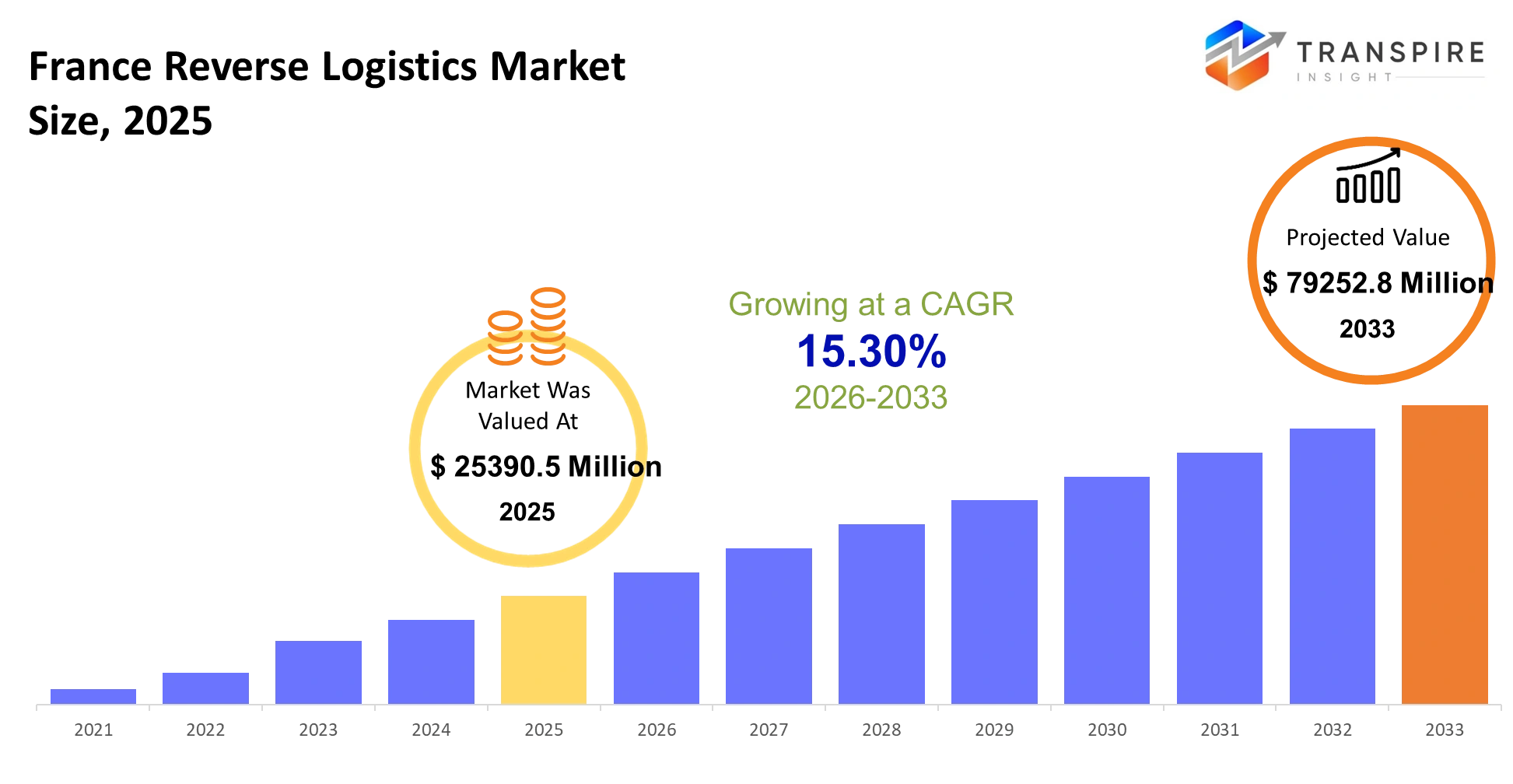
- France Reverse Logistics Market Size 2025: USD 25390.5 Million
- France Reverse Logistics Market Size 2033: USD 79252.8 Million
- France Reverse Logistics Market CAGR: 15.30%
- France Reverse Logistics Market Segments: By Type (Returns Management, Recycling, Refurbishment, Disposal, Others); By Application (E-commerce Returns, Electronics Recycling, Automotive Parts, Retail Returns, Others); By End-User (Retailers, E-commerce Companies, Manufacturers, Logistics Providers, Others); By Service (Transportation, Warehousing, Processing, Others)
To learn more about this report,  Download Free Sample Report
France Reverse Logistics Market Summary
The France Reverse Logistics Market was valued at USD 25390.5 Million in 2025. It is forecast to reach USD 79252.8 Million by 2033. That is a CAGR of 15.30% over the period.
The French reverse logistics system operates by processing all returned items in the system which includes product returns and packaging materials and industrial goods that customers and distributors send back to manufacturers. The solution addresses a vital supply chain issue which modern supply chains face because organizations need to reclaim value from returned items while they implement environmental and tracking systems across retail and automotive and industrial sectors.
The market has undergone a fundamental transformation during the past three to five years because extended producer responsibility regulations and digital return tracking systems have become widespread in the industry. The Russia–Ukraine conflict caused energy and raw material supply shortages which made companies choose to retrieve more components from domestic resources instead of importing new items. The process now functions as a fundamental component of supply chain operations because it helps organizations decrease waste while achieving better cost results. The process now functions as a fundamental component of supply chain operations because it helps organizations decrease waste while achieving better cost results. The adoption process is growing quickly because manufacturers pursue better operational resilience and circularity development.
Key Market Insights
- The France Reverse Logistics Market experiences continuous growth until 2033 because circular economy regulations and e-commerce product returns and industrial reuse requirements drive its expansion.
- The Île-de-France region will dominate the France Reverse Logistics Market in 2025 because its retail sector operates at high capacity and its logistics networks operate at maximum efficiency.
- The Northern France region will experience its most rapid growth during the period from 2026 until 2033 because of its operational border-crossing logistics systems and its EU-compliance infrastructure development initiatives.
- The France Reverse Logistics Market sees transportation operations control approximately 40 to 42 percent of its total market share because retailers and e-commerce businesses experience extensive product return processes.
- The processing service segment experiences its fastest growth because businesses adopt strategies that focus on recovering value through refurbishment and material reuse.
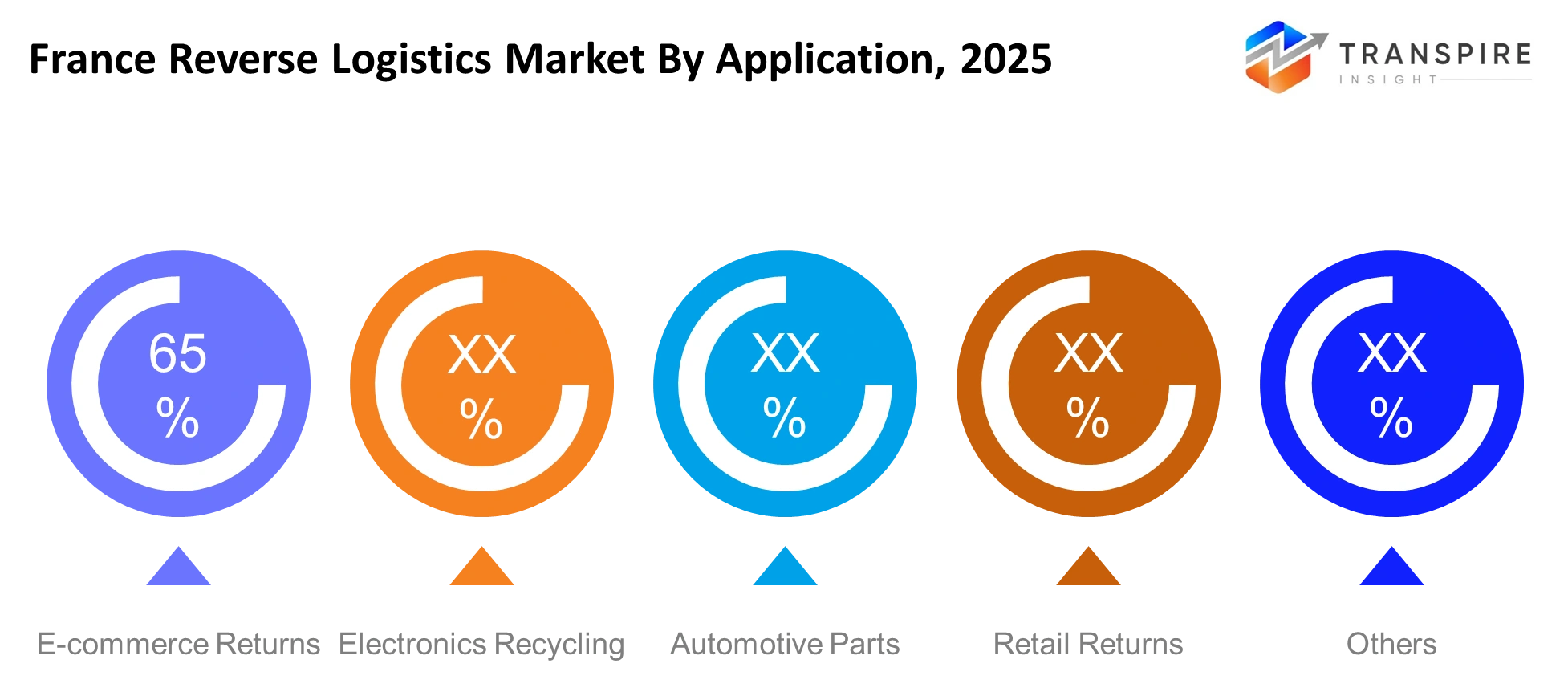
- The e-commerce returns segment accounts for approximately 40 percent of the total market share making it the most important driver of application growth because online shopping continues to grow and customers benefit from flexible return options.
- The electronics recycling industry experiences rapid growth because the EU has implemented stricter e-waste regulations and the demand for rare material recovery has increased.
- Retailers maintain their position as the primary end-user group because they handle customer returns and refund transactions in their business operations which account for approximately 35 percent of their total market share.
- E-commerce companies represent the most rapidly expanding end-user segment because of increasing digital usage and their customers returning products at high rates.
- DHL and Kuehne+Nagel use AI-powered automation and intelligent warehouse systems and reverse flow management technologies to create competitive advantages in their business operations.
What are the Key Drivers, Restraints, and Opportunities in the France Reverse Logistics Market?
The strongest driver is the enforcement of extended producer responsibility laws combined with strict EU waste directives that require companies to take financial and operational responsibility for product end-of-life management. The regulations forced electronics and automotive and retail manufacturers to create official procedures for product return and recycling. The companies improved their return handling efficiency through integrated reverse logistics networks after they experienced rising compliance fines which resulted in higher recovery rates and additional revenue from refurbished products and reclaimed materials. The regulatory drive leads to higher service needs which logistics companies and technology platforms must fulfill.
The infrastructure between regional logistics operators and recyclers remains unintegrated thus hindering efficient return consolidation and processing operations. The majority of small and mid-sized operators maintain their semi-digital systems which prevent them from connecting with advanced tracking platforms. The structural gap results in higher operational expenses while it creates longer return times especially when handling cross-border or multi-tier supply chains. The firms experience diminished margin potential with their reverse operations because customer demand continues to grow.
The reverse logistics orchestration platforms which use AI for their operations present a key opportunity because they enable better routing and sorting and resale value prediction. Smart sorting hubs which use computer vision technology demonstrate their ability to enhance recovery efficiency when used to sort both electronics and automotive components. The rising financial support toward circular economy startups in France leads to faster system implementation which generates scalable revenue streams for logistics technology providers.
What Has the Impact of Artificial Intelligence Been on the France Reverse Logistics Market?
Your training dataset contains information which extends until the month of October in the year 2023. The implementation of artificial intelligence technology in France has transformed reverse logistics processes by enhancing decision-making capabilities for return operations, sorting systems, and methods used to recover assets. The logistics providers use machine learning models to create optimal return routing solutions which decrease transportation expenses while they enhance the speed of returning refurbished products. The AI-powered vision systems in warehouse settings automatically determine the condition of returned products which allows for a quicker process of sorting items into resale and recycling and disposal categories.
Companies use predictive analytics to estimate return volumes through analysis of seasonal demand patterns and product lifecycle patterns which enables better capacity allocation. The system enhances warehouse efficiency by using space more effectively while decreasing costs associated with unused storage space. AI-driven predictive models in maintenance-intensive sectors enable industries to detect product categories with high failure rates which leads to better design of packaging and components for improved durability.
The process of adoption faces several obstacles which need to be resolved. The existing integration expenses create difficulties for mid-sized logistics companies which need digital systems to establish their operations. The different return channels generate inconsistent data which decreases model precision and makes it difficult for AI systems to be used in complex supply chain environments. The use of AI technology results in better operational performance within France's reverse logistics system because it streamlines automated sorting processes and decreases costs and tracks compliance requirements.
Key Market Trends
- The implementation of reverse logistics began to grow rapidly because EU packaging waste regulations which were introduced in 2023 created new recycling duties for companies in France.
- The e-commerce industry requires faster automated systems for handling product returns because return rates currently exceed 20 percent across the country.
- The period between 2022 and 2025 saw a major increase in companies adopting RFID and blockchain tracking systems to enhance return transparency while combating fraud.
- Reverse logistics operations became a standard part of production processes for original equipment manufacturers which resulted in continuous growth of automotive remanufacturing activities.
- Automated sorting systems that use AI technology helped French logistics centers decrease their manual work requirements by almost 30 percent.
- Retailers choose to use third-party services for reverse logistics because this approach helps them save money and achieve better operational growth.
- The circular economy sector received substantial funding between 2024 and 2024 which strengthened refurbishment and resale markets throughout France.
- The sustainability reporting requirements compelled businesses to create digital systems for tracking product returns and measuring their environmental effects.
- The French market for smart reverse logistics facilities is growing because Kuehne+Nagel and other logistics companies are establishing these facilities.
- The implementation of IoT asset tracking systems enables businesses to enhance their asset recovery operations while decreasing their total losses in reverse supply chain processes.
France Reverse Logistics Market Segmentation
By Type
The type segment holds a central position in the France reverse logistics market because it defines how returned goods are processed and reintegrated into supply chains. The segment exists because companies now operate structured reverse logistics systems which require them to recover assets and reduce waste while maintaining their operational value. The strong regulatory environment together with increasing sustainability requirements drives its organization-wide importance across various business sectors.
The segment is growing due to increasing emphasis on circular economy adoption and rising need for efficient material recovery. Businesses now shift from their traditional disposal methods to reuse-focused approaches which help them decrease operational costs while meeting regulatory standards. The segment will undergo development throughout the forecast period because organizations will implement more automated systems together with digital technologies which will enhance their ability to trace operations and recover assets.
By Application
The France reverse logistics market requires reverse logistics operations to reach their highest level of activity through its various application segments. The retail and e-commerce and industrial sectors exhibit continuous market demand for organized return and recovery systems which require structured operational processes. The segment establishes a direct connection between shifts in customer shopping patterns and the changing patterns of industrial production activities.
The increasing product return rates together with growing environmental regulations and the rise of digital commerce markets create opportunities for business expansion. Businesses are developing advanced logistics systems which enable them to handle industry-specific reverse product movements with greater success. The different industries which implement customized reverse logistics solutions will lead to more specialized application-based demand during the forecast period.
To learn more about this report, Download Free Sample Report
By End-User
The end-user segment is a major determinant of reverse logistics demand in France as it reflects how different industry groups integrate return and recovery systems into their operations. The reverse supply chain structure gets established through the combined efforts of retailers and manufacturers and logistics providers. The significance of reverse logistics has increased in operational planning because multiple sectors now adopt this practice.
The segment experiences growth because companies are increasing their logistics outsourcing while they strive to achieve cost savings and sustainable practices. Companies are implementing organized reverse logistics systems to enhance their operational efficiency and fulfill their legal obligations. The adoption of circular economy practices will increase throughout the forecast period as more end users start implementing these practices.
By Service
The service segment operates as the main operational component which supports France reverse logistics operations because it enables the transportation and storage and treatment of returned products. The system functions as an essential component which enables supply chain networks to operate smoothly while distributing goods through reverse channels. The system gains importance because logistics outsourcing and infrastructure development continue to grow in their presence.
Business growth occurs because customers return more products and companies need better reverse logistics solutions which use less money and take less time to implement. Companies are investing in technology-enabled service models to improve speed, accuracy, and visibility across operations. The segment will develop into a fully automated system which integrates all functions to achieve complete reverse supply chain operations throughout the forecasting period.
What are the Key Use Cases Driving the France Reverse Logistics Market?
The main application in this field involves managing product returns in retail and e-commerce because high return rates of products create a need for organized reverse logistics to handle product inspection and refurbishment and resale operations. The industry needs fast-moving consumer goods because these products need quick recovery processes to maintain profit margins and minimize inventory losses.
Manufacturers now use automotive remanufacturing and electronics refurbishment to reclaim parts like batteries and sensors and semiconductors. These use cases are strongly linked to industrial and OEM end-users seeking cost savings and compliance with sustainability mandates.
Emerging applications include circular supply chain integration in aerospace maintenance and renewable energy equipment recovery. The recycling of wind turbine blades and the re-certification of aircraft parts have become important as industrial assets with long lifespans need to undergo controlled end-of-life disposal methods.
|
Report Metrics |
Details |
|
Market size value in 2025 |
USD 25390.5 Million |
|
Market size value in 2026 |
USD 29249.3 Million |
|
Revenue forecast in 2033 |
USD 79252.8 Million |
|
Growth rate |
CAGR of 15.30% from 2026 to 2033 |
|
Base year |
2025 |
|
Historical data |
2021 - 2024 |
|
Forecast period |
2026 - 2033 |
|
Report coverage |
Revenue forecast, competitive landscape, growth factors, and trends |
|
Regional scope |
France |
|
Key company profiled |
DHL, FedEx, UPS, DB Schenker, Kuehne+Nagel, XPO Logistics, CEVA Logistics, Ryder, GXO Logistics, Blue Dart, Aramex, Yusen Logistics, Nippon Express, Reverse Logistics Group, Optoro |
|
Customization scope |
Free report customization (country, regional & segment scope). Avail customized purchase options to meet your exact research needs. |
|
Report Segmentation |
By Type (Returns Management, Recycling, Refurbishment, Disposal, Others); By Application (E-commerce Returns, Electronics Recycling, Automotive Parts, Retail Returns, Others); By End-User (Retailers, E-commerce Companies, Manufacturers, Logistics Providers, Others); By Service (Transportation, Warehousing, Processing, Others) |
Which Regions are Driving the France Reverse Logistics Market Growth?
The Ile-de-France region maintains its position as the leading area because it hosts numerous major logistics centers and international retail company headquarters and it enforces regulations through national agencies. The region operates its advanced transport system which contains extensive road and rail networks to manage high-volume return operations. The area gains advantages from its location near major consumption markets because this proximity helps decrease costs for reverse transportation and speeds up operational turnaround times. The region maintains its dominant market position because it has numerous third-party logistics providers operating within its territory.
Southern France serves as a dependable secondary destination which is strengthened by its port facilities in Marseille and its continuous industrial operations within the aerospace and automotive sectors. This region achieves economic expansion through its export-import balance and industrial return activities which differ from consumer e-commerce in Île-de-France. The organization maintains its operations through ongoing port development projects and logistics corridor construction which has proved successful for many years. The organization provides reliable income streams to reverse logistics companies which operate at a lower delivery volume capacity.
Northern France has emerged as the fastest expanding area because recent funding has supported the establishment of cross-border logistics routes that link Belgium and the Netherlands. The European Union has established new sustainability standards that require all entry points to operate return and recycling facilities which meet compliance requirements. The industrial modernization initiatives happening in logistics parks throughout Lille have led to a quicker implementation of automated sorting technology. The region offers investors an opportunity to enter a high-growth market for reverse logistics infrastructure development which will occur between 2026 and 2033.
Who are the Key Players in the France Reverse Logistics Market and How Do They Compete?
The France reverse logistics market is moderately consolidated because international logistics companies control major return networks while dedicated companies operate in specialized markets that need strict compliance. Retailers and manufacturers are entering a new phase of competition because they now use technology to create systems that recover value from their returned items instead of using cost-based return processing methods. The new competition framework requires digital tracking systems and automated systems and compliance with circular economy regulations to compete better than traditional transportation expenses. Incumbents establish stronger market positions through their investments in AI-based sorting technology and warehouse robots and complete operational oversight systems whereas digital-first companies disrupt conventional practices through their software-based optimization methods.
DHL uses automated reverse logistics centers which combine robot technology with AI inspection systems to enhance the speed of product refurbishment and resale preparation process. The company distinguishes itself through its ability to provide global logistics services together with sustainability tools which assist businesses in achieving EU environmental regulations. The company expands its operations in France through partnerships with e-commerce and electronics companies which need efficient return handling and product resale enhancement services.
Kuehne+Nagel concentrates on digital supply chain management through its use of predictive analytics which help improve reverse flow routing while decreasing inventory storage duration. The company achieves its competitive advantage through its extensive network that connects all major European freight corridors and its advanced systems which provide real-time visibility of return shipments. The company expands its operations through permanent agreements with manufacturers who wish to incorporate reverse logistics into their production and distribution methods.
Company List
- DHL
- FedEx
- UPS
- DB Schenker
- Kuehne+Nagel
- XPO Logistics
- CEVA Logistics
- Ryder
- GXO Logistics
- Blue Dart
- Aramex
- Yusen Logistics
- Nippon Express
- Reverse Logistics Group
- Optoro
Recent Development News
In January 2025, DHL announced acquisition of Inmar Supply Chain Solutions. The deal significantly strengthened DHL’s reverse logistics capabilities by expanding returns processing, product remarketing, and recall management capacity across its global network, reinforcing efficiency in high-volume e-commerce returns handling.https://group.dhl.com
In April 2025, Kuehne+Nagel extended its long-term partnership with Orange in France to manage e-commerce logistics, including returns processing for telecom devices. The renewal strengthens integrated reverse logistics operations at its Île-de-France fulfillment hub, improving turnaround time and supporting rising consumer return volumes.https://www.ecommercemag.fr
What Strategic Insights Define the Future of the France Reverse Logistics Market?
The France reverse logistics market has started to change its operational framework toward complete digital implementation of circular supply networks which now require companies to integrate product recovery processes into their fundamental manufacturing and distribution operations. The European Union has implemented stricter sustainability regulations which companies must follow while they discover new ways to extract economic value from recycled materials.
The digital reverse logistics platform market faces hidden dangers because excessive platform consolidation results in organizations becoming dependent on specific technology vendors who control system outages and market pricing power.
AI-driven predictive return modeling together with blockchain-based product lifecycle tracking creates an important business opportunity that allows companies to accurately predict return volumes while maximizing resale value. The new logistics corridors in Northern France will serve as testing sites for these systems.
Market participants need to make their primary focus digital infrastructure investments which support reverse logistics operations through their capacity to combine compliance requirements and analytical tools and recovery optimization functions into one integrated system.
France Reverse Logistics Market Report Segmentation
By Type
- Returns Management
- Recycling
- Refurbishment
- Disposal
- Others
By Application
- E-commerce Returns
- Electronics Recycling
- Automotive Parts
- Retail Returns
- Others
By End-User
- Retailers
- E-commerce Companies
- Manufacturers
- Logistics Providers
- Others
By Service
- Transportation
- Warehousing
- Processing
- Others
Frequently Asked Questions
Find quick answers to common questions.
The confirmed 2033 market size figure in USD 79252.8 Million.
Key segments for the France Reverse Logistics Market are By Type (Returns Management, Recycling, Refurbishment, Disposal, Others); By Application (E-commerce Returns, Electronics Recycling, Automotive Parts, Retail Returns, Others); By End-User (Retailers, E-commerce Companies, Manufacturers, Logistics Providers, Others); By Service (Transportation, Warehousing, Processing, Others).
Major France Reverse Logistics Market players are DHL, FedEx, UPS, DB Schenker, Kuehne+Nagel, XPO Logistics, CEVA Logistics, Ryder, GXO Logistics, Blue Dart, Aramex, Yusen Logistics, Nippon Express, Reverse Logistics Group, Optoro.
The France Reverse Logistics Market size is USD 25390.5 Million in 2025.
The France Reverse Logistics Market CAGR is 15.30% from 2026 to 2033.
- DHL
- FedEx
- UPS
- DB Schenker
- Kuehne+Nagel
- XPO Logistics
- CEVA Logistics
- Ryder
- GXO Logistics
- Blue Dart
- Aramex
- Yusen Logistics
- Nippon Express
- Reverse Logistics Group
- Optoro
Recently Published Reports
-
Apr 2026
ATV & UTV Market
ATV & UTV Market Size, Share & Analysis Report By Type (ATV, and UTV), By Variants (Less Than 400 CC, 400 CC To 800 CC, and More Than 800 CC), and Geography (North America, Europe, Asia-Pacific, Middle East and Africa, South and Central America), 2021 - 2031
-
Apr 2026
Automotive Central Gateway Module Market
Automotive Central Gateway Module Market Size, Share & Analysis Report By Type (Ethernet Central Gateway Module, CAN Central Gateway Module, LIN Central Gateway Module, and FlexRay), By Application (Powertrain Control, Body Control, Infotainment System, Advanced Driver Assistance Systems (ADAS), and Others), By End User (Passenger Vehicles, and Commercial Vehicles), and Geography (North America, Europe, Asia-Pacific, Middle East and Africa, South and Central America), 2021 - 2031
-
Apr 2026
Automotive Engine Oil Filter Market
Automotive Engine Oil Filter Market Size, Share & Analysis Report By Filter Type (Fuel Filter, Engine Oil Filter, Hydraulic Oil Filter, and Others), By Filter Media (Cellulose, Synthetic, and Micro), By Sales Channel (OEMs, and Aftermarket), By Vehicle Type (Passenger Cars, Light Commercial Vehicles, Heavy Duty Trucks, Buses and Coaches, and Off-road Vehicles), and Geography (North America, Europe, Asia-Pacific, Middle East and Africa, South and Central America), 2021 - 2031
-
Apr 2026
Automotive Parts Aluminium Die Casting Market
Automotive Parts Aluminium Die Casting Market Size, Share & Analysis Report By Production Process (Pressure Die Casting, Vacuum Die Casting, Squeeze Die Casting, Gravity Die Casting), By Application (Body Parts, Engine Parts, Transmission Parts, Battery And Related Components, Other Application Types), and Geography (North America, Europe, Asia-Pacific, Middle East and Africa, South and Central America), 2021 - 2031
Our Clients