Europe Synthetic Biology Market Size & Forecast:
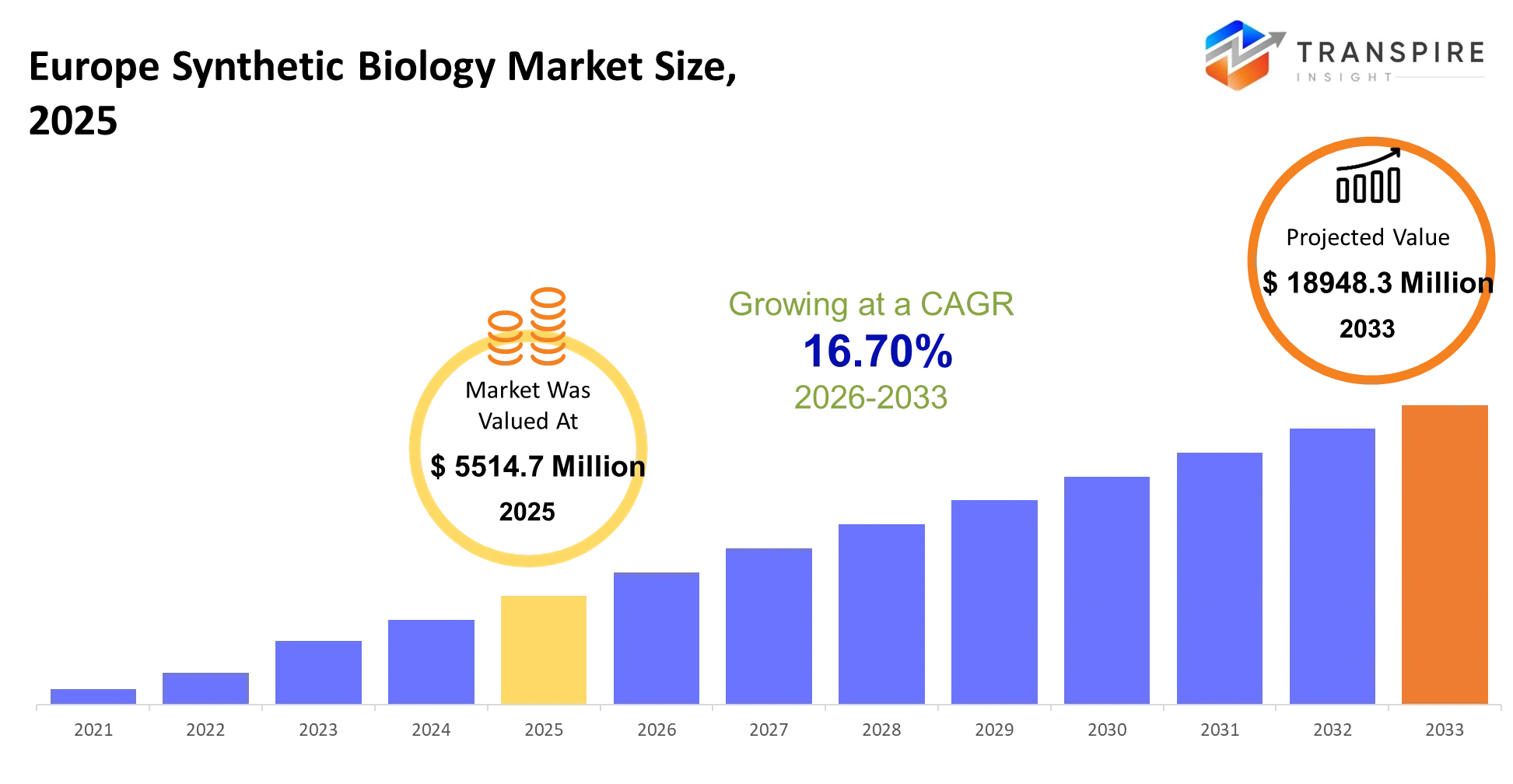
- Europe Synthetic Biology Market Size 2025: USD 5514.7 Million
- Europe Synthetic Biology Market Size 2033: USD 18948.3 Million
- Europe Synthetic Biology Market CAGR: 16.70%
- Europe Synthetic Biology Market Segments: By Type (Gene Synthesis, Genome Engineering, Synthetic DNA, Synthetic Cells, Bioinformatics, Others); By Application (Healthcare, Agriculture, Industrial Biotechnology, Energy, Research, Others); By End-User (Pharma, Biotech, Research Institutes, Agriculture Firms, Industrial, Others); By Technology (CRISPR, NGS, PCR, DNA Sequencing, AI-based Design, Others)
To learn more about this report,  Download Free Sample Report
Europe Synthetic Biology Market Summary:
The Europe Synthetic Biology Market size is estimated at USD 5514.7 Million in 2025 and is anticipated to reach USD 18948.3 Million by 2033, growing at a CAGR of 16.70% from 2026 to 2033. Synthetic biology market in europe among the advanced biotechnology industries will be characterized by engineering biological systems to meet industrial, therapeutic, and environmental needs. The development of synthetic biology products will be influenced by increasing need for accurate pharmaceutical solutions, sustainable materials, and substitutes of petrochemicals. The consumer behavior will be driven by increased preference for laboratory produced components used in foods, cosmetic items, and medicine, hence urging the producers to come up with alternative production methods. Bioethics and biosecurity regulations in Europe will become stricter, thereby affecting the course of research and rate of commercialization of research outcomes.
What Has the Impact of Artificial Intelligence Been on the Europe Synthetic Biology Market?
Artificial intelligence has become the main force which drives the development of the synthetic biology market in Europe because it changes all aspects of scientific research from data analysis to experimental setup and result forecasting. The implementation of AI technology in the European synthetic biology market has improved market research methods through its capability to conduct immediate assessments of complex biological data. Machine learning algorithms now identify hidden patterns in genomic data, which helps scientists make discoveries faster while reducing their need for conventional trial-and-error techniques. Artificial intelligence applications in European synthetic biology markets now provide better demand prediction capabilities which help identify new market developments with higher accuracy than before.
AI-driven smart automation technology goes beyond analytics to improve manufacturing activities in the European synthetic biology industry. The automated laboratory systems use predictive analytics to enhance their performance in gene synthesis and protein engineering and metabolic pathway design. The new approach helps organizations boost production while decreasing operational expenses which enables them to expedite their innovation progress. AI technology improves supply chain management through its abilities to forecast disruptions and operate inventory control systems while enhancing resource utilization, which benefits the entire European synthetic biology market.
In addition, the use of AI in europe synthetic biology market is bringing about innovative and personalized solutions that could not have been thought of before. Companies are using AI and machine learning algorithms to come up with tailor-made biological designs for different industrial or medical applications, which is providing them with an edge over their competitors. With the development of artificial intelligence in europe synthetic biology market ecosystems, more changes can be expected.
Key Market Trends & Insights:
- The europe synthetic biology market is dominated by Western Europe with about 45% market share in 2025 due to robust R&D infrastructure.
- Northern Europe is one of the fastest growing regions with more than 20% CAGR over the forecast period due to biotech investments.
- Synthetic DNA and gene synthesis constitute dominant segments with about 35% market share due to rising applications in research.
- Oligonucleotides constitute the second-largest segments due to rising use in diagnostics and therapeutics development.
- Enzymes and chassis organisms are one of the fastest growing segments due to rising use in industrial processes.
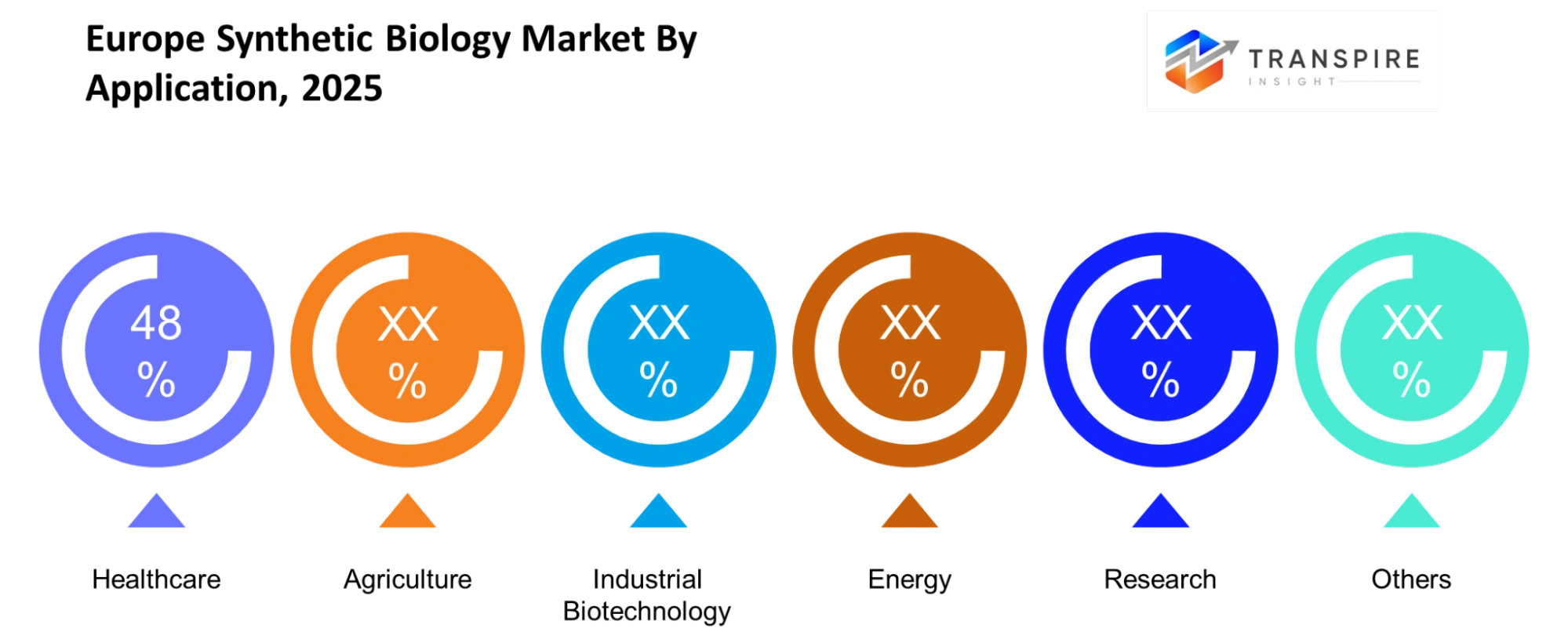
- Healthcare and pharmaceuticals are dominating the europe synthetic biology market with more than 40% market share due to precision medicine and vaccines.
- Industrial biotechnology is the fastest growing application due to rising demand for sustainable chemicals and biofuels.
- Biotechnology and pharmaceuticals are dominating the europe synthetic biology market with more than 50% market share due to robust R&D investments.
- Academic and research institutions are the rapidly growing end user in this market due to rising collaboration with biotech firms.
- Major companies operating in the europe synthetic biology market include Ginkgo Bioworks, Twist Bioscience, Thermo Fisher Scientific, Novozymes, and Evonik Industries.
Europe Synthetic Biology Market Segmentation
By Type
The technique of gene synthesis will make it possible to develop customized DNA sequences that can be used for various purposes. Genome engineering will permit the precise manipulation of genetic sequences for the design of biological systems. The synthesis of DNA will form a foundation for several uses and applications in biological sciences. Synthetic cells will offer ways through which biological functions will be controlled.
This type of bioengineering will provide important tools that will help in interpreting biological information. Computational modeling will permit prediction and analysis before conducting experiments. Other new bioengineered types will include hybrid biological systems. The section will be crucial in innovation in biological sciences because of developments in technologies used to perform bioengineering.
By Application
Applications within the healthcare field will be in personal medicine, therapeutic drugs, and vaccines, facilitated by precision biology methods. In agriculture, there will be improvements in crop characteristics, disease resistance, and sustainable agricultural inputs. The industrial biotechnology industry will facilitate the production of biochemicals, biomaterials, and enzymes, helping reduce dependency on conventional sources. Energy-related applications will consist of biofuel and renewable energy development through genetically modified organisms.
Research will be one of the key applications in the field, providing an enabling environment for experiments and testing within all industries. Consistent financial support and collaboration between organizations will enhance research outcomes and quality. Environmental solutions to problems like waste management and carbon dioxide capture will be other areas of application.
To learn more about this report, Download Free Sample Report
By End-User
The pharmaceutical industry will use synthetic biology in drug discovery, development, and personalized medicine applications. The biotechnology industry will develop innovative products and rely on state-of-the-art technology for product development and marketing purposes. Research organizations will be responsible for providing basic science knowledge through funding from universities and governments. Firms within the agriculture industry will apply biological engineering principles for enhanced agricultural output.
End-users within the industrial sector will implement synthetic biology in production techniques. As the cost effectiveness of the technology increases, adoption will rise. Environmental and specialty applications will require customized biological applications.
By Technology
CRISPR will make it possible to have precise gene editing where there will be high levels of accuracy and efficiency when making any modification. Next-generation sequencing will make it easy to analyze genetic materials at a fast pace. PCR will still be necessary in DNA amplification processes. DNA sequencing will help in getting information about genetic structures.
Artificial intelligence will make biological systems predictable and therefore easy to develop using data science. Automation and machine learning will play key roles in reducing manual labor. Others will include technologies that are a combination of hardware and software to make biological systems work effectively.
What are the Main Challenges for the Europe Synthetic Biology Market Growth?
The synthetic biology market in Europe encounters multiple technical and operational difficulties which hinder its potential for full market expansion and growth. Complex biological systems demonstrate performance variability, which leads to reliability issues when applied in practical situations. Persistent issues with product stability during storage and transport particularly affect sensitive biological components. The European synthetic biology market operates under dual pressures from supply chain limitations of specialized reagents and laboratory equipment which hinders its ability to produce standardized results throughout its operational capacity.
The Europe synthetic biology market encounters manufacturing and commercialization obstacles which restrict its development. The production process demands extensive understanding of complex systems which manufacturers need to execute production according to Good Manufacturing Practices regulations. The product introduction process encounters delays because of extended approval periods and changes in biosafety requirements. The European synthetic biology market imposes financial burdens on startups which require high capital investment and operational expenses to develop their innovative solutions.
The European synthetic biology market encounters main adoption barriers because it relies on specialized workers and sophisticated systems. The operational efficiency of organizations gets restricted by the shortage of trained professionals who specialize in genetic engineering and bioinformatics. The European smaller economies experience slower development because they lack research centers and face funding shortages. The existing market restrictions together with the inconsistent development of infrastructure continue to limit the growth possibilities within the European synthetic biology market.
Uncertainty is increased by competitive threats from other technology and changing regulations. Biotechnology practices along with new developments compete based on their ease of use and cost-effectiveness, which puts pressure on prices. However, constant revisions of regulations and ethical issues raise future risks that determine the trajectory of Europe’s synthetic biology market.
Regional Insights
The synthetic biology market in Europe will develop into different regional markets which will depend on the scientific research capacity of each region and the industrial requirements of different sectors and the governmental regulations which control each market. The market will maintain its presence in regions which possess established biotechnology manufacturing facilities and well-equipped research centers and funding resources. The growth patterns of European countries will depend on their existing infrastructure systems and the transparency of their regulations and the strength of their partnerships between government and business entities.
The synthetic biology industry in Europe will keep expanding through its regional development because each area will develop its unique applications which will include healthcare and industrial production and agricultural solutions. The development speed of innovation clusters and academic networks will depend on investment trends which will control the extent of commercial success. The regional data will show that technology adoption together with supportive policy frameworks will determine the rate of equal progress in development.
Western Europe: Western Europe will take the lead with sound research institutes, abundant funding, and a mature biotech industry. The nations of Germany, France, and the UK will join forces in driving innovation by virtue of advanced infrastructure and collaborations between the public and private sectors. With sound regulatory policies and early adoption of technology, favorable grounds will be created for commercial undertakings.
The continuous financial support for synthetic biology startups which Western Europe currently operates will enable its ongoing leadership position because of its partnerships with international companies. The region will maintain its leadership position because of the strong industrial needs which require sustainable solutions. The combination of academic excellence together with professional skills availability will create continuous innovation capacity which supports ongoing growth.
Northern Europe will develop into a fast-growing region because its sustainability objectives receive support from government innovation initiatives. Sweden Denmark and Finland will dedicate their efforts toward developing bio-based materials together with clean energy technologies. Research emphasis together with environmental responsibility will determine which research areas to explore and which industries to implement.
The digital systems which Northern Europe uses together with its research capabilities create advantages for the region. The partnership between universities and industries will result in faster product creation and market introduction. The combination of supportive policies together with funding programs will enable rapid expansion of synthetic biology applications throughout different industries.
The research infrastructure improvements and rising biotechnology funding will support Southern Europe gradual development. Italy and Spain will concentrate their efforts on developing solutions for healthcare and agriculture. The region will experience moderate growth because of innovation ecosystem development efforts which strengthen existing innovation systems.
Southern Europe will experience two main challenges because of funding shortages and its slow rate of technological progress, yet the existing policies will create better market conditions. The growth of academic research together with research partnerships will produce better development outcomes. The up-coming infrastructure improvements will enable sustained growth of the region.
Eastern Europe: The region of Eastern Europe will experience new business development because of its ability to produce cost-effective solutions and its increasing need for biotechnology research. Poland and Hungary plan to use their budget resources to build new research facilities and draw international research partnerships. The phase of early technology usage will determine how the region competes against existing market players.
Global businesses will increase their investments in Eastern Europe because the region offers them cheaper ways to run their operations. The development of a skilled workforce together with progress in infrastructure development will become essential for our progress. The region will build its synthetic biology research capacity through increased participation in research programs, which will lead to higher contributions to the European synthetic biology market.
Recent Development News
In April 2026, Novonesis announced the acquisition of a European synthetic biology startup focused on enzyme engineering to expand its bioinnovation pipeline. The deal strengthens Novonesis’ capabilities in sustainable industrial biosolutions across Europe. https://www.reuters.com
In March 2026, Ginkgo Bioworks announced the acquisition of a UK-based synthetic biology firm specializing in cell programming technologies to expand its footprint in the Europe Synthetic Biology Market. The acquisition supports Ginkgo’s strategy to scale its foundry services across Europe. https://www.ft.com
|
Report Metrics |
Details |
|
Market size value in 2025 |
USD 5514.7 Million |
|
Market size value in 2026 |
USD 6429.9 Million |
|
Revenue forecast in 2033 |
USD 18948.3 Million |
|
Growth rate |
CAGR of 16.70% from 2026 to 2033 |
|
Base year |
2025 |
|
Historical data |
2021 - 2024 |
|
Forecast period |
2026 - 2033 |
|
Report coverage |
Revenue forecast, competitive landscape, growth factors, and trends |
|
Regional scope |
Europe (Germany, United Kingdom, France, Italy, Spain, Rest of Europe) |
|
Key company profiled |
Ginkgo Bioworks, Amyris, Novozymes, Thermo Fisher, Danaher, Merck KGaA, Agilent, Illumina, Twist Bioscience, GenScript, Codexis, Evonik, BASF, DSM, Lonza |
|
Customization scope |
Free report customization (country, regional & segment scope). Avail customized purchase options to meet your exact research needs. |
|
Report Segmentation |
By Type (Gene Synthesis, Genome Engineering, Synthetic DNA, Synthetic Cells, Bioinformatics, Others); By Application (Healthcare, Agriculture, Industrial Biotechnology, Energy, Research, Others); By End-User (Pharma, Biotech, Research Institutes, Agriculture Firms, Industrial, Others); By Technology (CRISPR, NGS, PCR, DNA Sequencing, AI-based Design, Others) |
How Can New Companies Establish a Strong Foothold in the Europe Synthetic Biology Market?
For new entrants to succeed in the europe synthetic biology market, they can create themselves a niche where there are high demands that are not being fulfilled. New entrants into the europe synthetic biology market should avoid any direct competition with other firms but instead focus on solving industry gaps. Some of the areas where new entrants can develop a niche include precision medicine, sustainable products, and manufacturing products using living things. This will help them stay on track with current industry trends and quickly validate their products.
The europe synthetic biology market will be characterized by innovation as the primary source of differentiation. Companies that incorporate machine learning applications in the biological process or employ gene synthesis technologies will have a competitive edge compared to their competitors. Innovations will be protected through intellectual property rights and proprietary platforms. The adoption of automation and scalability laboratory processes in the europe synthetic biology market will increase operational efficiency and quicken innovation processes.
In the final analysis, it will be important to consider the regulatory aspects and sustainable development aspects in the europe synthetic biology market as well. Following regulations concerning biosafety and ethical issues will guarantee the confidence of the sector. Conversely, considering sustainability issues and the benefits derived from the same, such as the biodegradability or the carbon-free nature, will favor consumers. Through such a strategy, market entry will become easy.
Key Europe Synthetic Biology Market Company Insights
Europe Synthetic Biology Competitive Landscape will be characterized by competition with intense innovation activity, strength of research and industrial relevance. Market competition will continue to rely on technological capacity, rapid commercialization potential, and scale of solutions that can be developed across various industry segments, including health and industrial biotechnology sectors.
Europe Synthetic Biology Market Outlook will feature continued growth among players that differentiate through innovations in technology, collaboration, and geographical expansion of operations. Competitive insights will reveal how firms will adjust to regulatory demands and changing demand dynamics in their markets. Continued commitment to R&D will sustain growth in the region.
Product Innovation: Product innovation is another area of competition for companies operating in this market, involving development of new gene synthesis technologies, bio-materials, and innovative medicines that offer greater specificity to applications in the industry. Innovations in performance, effectiveness, and scaling potential will contribute to strong competitive position. Innovations will align with evolving demands for customized biological solutions.
Product Innovation will also focus on cost reduction and accessibility among different industries using products and services from the Synthetic Biology market. The use of automated processes and computational design approaches will accelerate development.
Company List
- Ginkgo Bioworks
- Amyris
- Novozymes
- Thermo Fisher
- Danaher
- Merck KGaA
- Agilent
- Illumina
- Twist Bioscience
- GenScript
- Codexis
- Evonik
- BASF
- DSM
- Lonza
What are the Key Use-Cases Driving the Growth of the Europe Synthetic Biology Market?
The healthcare use cases of synthetic biology in Europe are gaining momentum because they deliver measurable benefits for precision medicine and advanced therapeutics. The development of targeted treatments which include personalized cancer therapies and next-generation vaccines uses engineered cells and gene circuits. Pharmaceutical companies use synthetic biology to achieve faster drug discovery and biologics production which results in shorter development times. The European synthetic biology market is growing as these applications improve clinical outcomes and drive market adoption.
The sustainable production methods which industrial and manufacturing sectors use are now major factors that drive the growth of the European synthetic biology market. Companies are using engineered microbes to produce bio-based chemicals which include specialty materials and biodegradable plastics while decreasing their dependence on fossil-based inputs. The automotive and consumer goods industries use synthetic biology to create lightweight materials and environmentally friendly alternatives which help them meet their sustainability requirements. The organization improves operational efficiency because they achieve cost savings while they meet environmental objectives and regulatory requirements.
The European synthetic biology market expands through agricultural research which enhances crop traits and develops alternative protein sources. The process of precision fermentation enables the production of lab-grown ingredients which enhance food security and supply chain stability. Research institutions are developing new use-cases through their research work which advances biofuels and carbon capture innovations. The various applications which exist in the European synthetic biology market demonstrate strong scalability which will create permanent market growth through actual market demand.
Europe Synthetic Biology Market Report Segmentation
By Type
- Gene Synthesis
- Genome Engineering
- Synthetic DNA
- Synthetic Cells
- Bioinformatics
- Others
By Application
- Healthcare
- Agriculture
- Industrial Biotechnology
- Energy
- Research
- Others
By End-User
- Pharma
- Biotech
- Research Institutes
- Agriculture Firms
- Industrial
- Others
By Technology
- CRISPR
- NGS
- PCR
- DNA Sequencing
- AI-based Design
- Others
Frequently Asked Questions
Find quick answers to common questions.
The approximate Europe Synthetic Biology Market size for the market will be USD 18948.3 Million in 2033.
Key segments for the Europe Synthetic Biology Market are By Type (Gene Synthesis, Genome Engineering, Synthetic DNA, Synthetic Cells, Bioinformatics, Others); By Application (Healthcare, Agriculture, Industrial Biotechnology, Energy, Research, Others); By End-User (Pharma, Biotech, Research Institutes, Agriculture Firms, Industrial, Others); By Technology (CRISPR, NGS, PCR, DNA Sequencing, AI-based Design, Others).
Major Europe Synthetic Biology Market players are Ginkgo Bioworks, Amyris, Novozymes, Thermo Fisher, Danaher, Merck KGaA, Agilent, Illumina, Twist Bioscience, GenScript, Codexis, Evonik, BASF, DSM, Lonza.
The Europe Synthetic Biology Market size is USD 5514.7 Million in 2025.
The Europe Synthetic Biology Market CAGR is 16.70%.
- Ginkgo Bioworks
- Amyris
- Novozymes
- Thermo Fisher
- Danaher
- Merck KGaA
- Agilent
- Illumina
- Twist Bioscience
- GenScript
- Codexis
- Evonik
- BASF
- DSM
- Lonza
Recently Published Reports
-
Apr 2026
AI in Diabetic Retinopathy Market
AI in Diabetic Retinopathy Market Size, Share & Analysis Report By Type (Screening AI Systems, Diagnostic AI Systems, and Predictive AI Models), By Application Segment (Hospitals, Ophthalmology Clinics, Diagnostic Centers, and Research and Development), and Geography (North America, Europe, Asia-Pacific, Middle East and Africa, South and Central America), 2021 - 2031
-
Feb 2025
Psychometric Tests Market
Psychometric Tests Market Size, Share & Analysis Report By Type (Personality Tests, Ability/Aptitude Tests, Skill/Knowledge Tests, and Others), By Application (Talent Acquisition and Talent Management), and Geography (North America, Europe, Asia-Pacific, Middle East and Africa, South and Central America), 2021 – 2031
-
Feb 2025
Rare Biological Sample Collection Market
Rare Biological Sample Collection Market Size, Share & Analysis Report By Type (Isolation Kits & Reagent, Blood Collection Tubes, and Others), By Application (Oncology, Transcriptomics, Pharmacogenomics, and Others), and Geography (North America, Europe, Asia-Pacific, Middle East and Africa, South and Central America), 2021 – 2031
-
Apr 2026
Patient Lift Pendant Market
Patient Lift Pendant Market By Product Type (Wired Pendants, Wireless, Programmable), By Operation Type(Manual, Electric), By End-Users (Healthcare Professionals, Patients), By Application (Hospitals, Homecare, Rehabilitation Centers, Others), By Industry Analysis, Size, Share, Growth, Trends, and Forecasts 2021-2033
Our Clients
.jpg)