
Europe Glioblastoma Drugs Market Summary
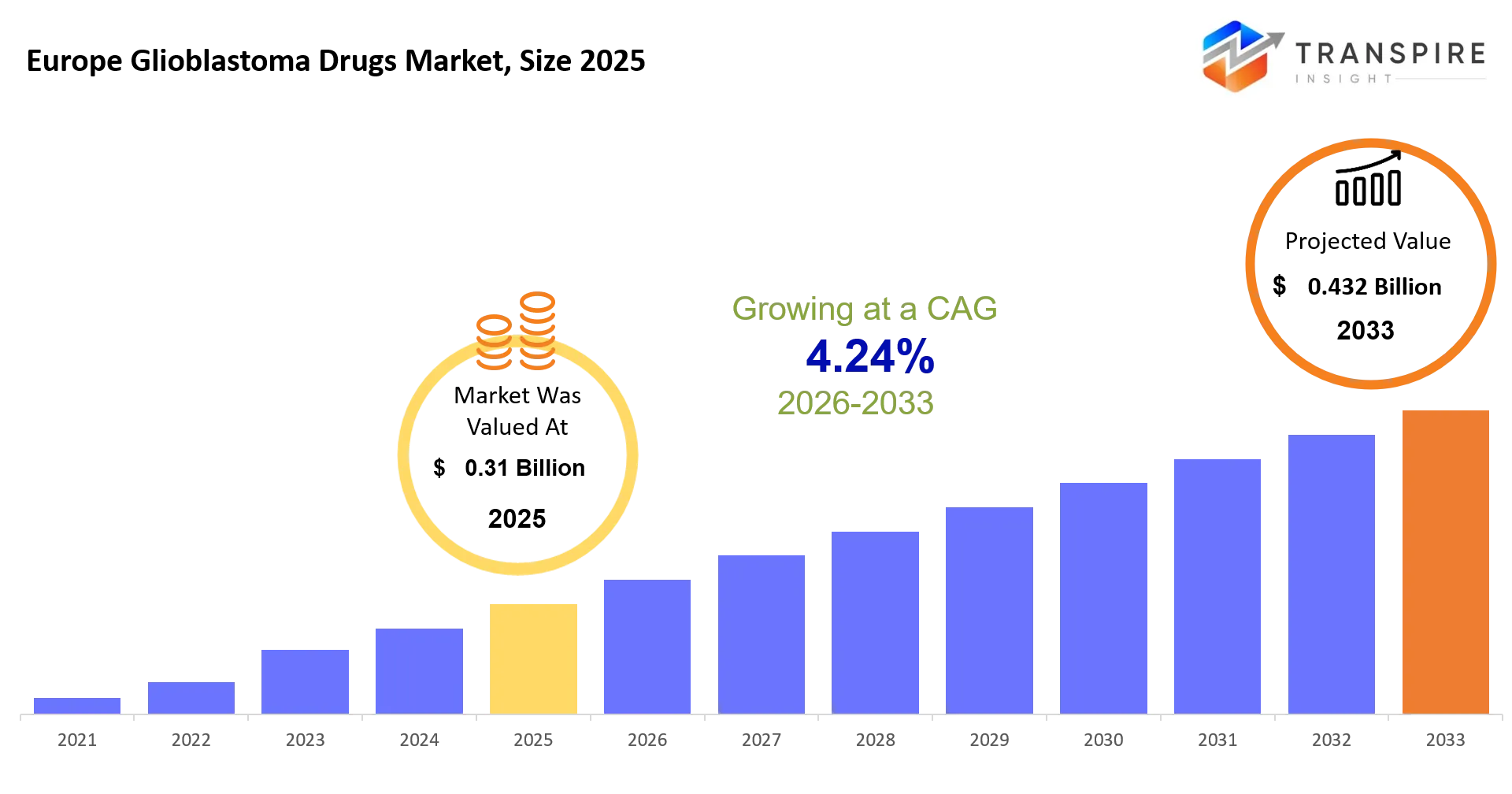
As per Transpire Insight Analysis, the Europe Glioblastoma Drugs Market size is estimated at USD 0.31 Billion in 2025 and is anticipated to reach USD 0.432 Billion by 2033, growing at a CAGR of 4.24% from 2026 to 2033.
The Europe Glioblastoma Drugs Market , kind of aims at one of the most aggressive brain cancers, by backing treatment approaches that help extend survival, keep disease progression in check , and lift day to day wellbeing , all while using surgery, radiation, chemotherapy, targeted options and also newer immunotherapy styles that are more refined . In the last three to five years , it looks like the market has drifted away from only leaning on conventional chemotherapy. Now it seems to lean much more toward precision medicine, which is supported through molecular profiling, biomarker driven decisions, and wider clinical investigations , so the whole approach feels less generic , more tailored.The COVID-19 pandemic first caused some slowdown in cancer diagnosis and clinical trials, but later recovery work helped speed up digital patient tracking, decentralized trial approaches , and kept pushing investment in oncology breakthroughs around Europe. This whole run-up , in practice, strengthened research pipelines and helped expand access to newer therapies, plus it improved how pharmaceutical firms and healthcare providers collaborate. As more personalized treatment options move through regulatory steps , healthcare systems are also putting more funds toward advanced glioblastoma care, which builds stronger commercial prospects, while at the same time encouraging wider uptake of innovative drug therapies across the region.
Europe Glioblastoma Drugs Market Size & Forecast:
- Europe Glioblastoma Drugs Market Size 2025: USD 0.31 Billion
- Expected Market Value 2033: USD 0.432 Billion
- Forecast CAGR: 4.24%
- Leading region in 2025: Germany, France, and the United Kingdom
- Fastest Growing region: Poland, Czech Republic, Romania, and Hungary
- Key Profile: Merck & Co., Roche, Novartis, Bristol Myers Squibb, Pfizer, Amgen, AstraZeneca, Bayer, Eli Lilly, Kazia Therapeutics, Novocure, Genentech, Northwest Biotherapeutics, Sun Pharma, Teva Pharmaceutical
Key Market Insights
- Western Europe kinda dominated with something like 68% market share in 2025, which was pretty much backed by Germany, France and the United Kingdom with their advanced oncology infrastructure, and also reimbursement systems that run smoothly.
- Central and Eastern Europe is expected to become the fastest expanding regional market in 2025–2033, mostly because healthcare modernization is speeding up and more people are getting access to neuro-oncology treatments.
- Chemotherapy stayed the leading treatment segment in 2025, it grabbed about 42% market share, still targeted therapies are rising steadily in clinical impact.
- Targeted therapies held the second-largest segment, mostly because molecular diagnostics keeps widening, which kinda sort of backs up the more precise treatment decisions at specialized European cancer centers after 2022, so yeah.
- Immunotherapy is forecast to show the quickest growth right through 2033, pushed by broader clinical pipelines, plus combination regimens , and solid regulatory momentum for emerging oncology medicines.
- That points toward multidisciplinary care pathways where surgery, radiotherapy, and advanced pharmaceutical governance come together, more or less in the same care lane.
- Specialized cancer centers will likely expand the fastest through the forecast window, since personalized treatment protocols keep getting more traction, and clinical trial participation is increasing, steadily.
- In 2025 hospital pharmacies basically made up around 65% of the end-user revenue, mostly because centralized procurement and the administration side of tricky oncology treatments kept feeding the system.
- In the meantime, specialty oncology clinics should end up becoming the fastest-growing end user segment by 2033, mostly because broader outpatient cancer care options are spreading across Europe.
What are the Key Drivers, Restraints, and Opportunities in the Europe Glioblastoma Drugs Market?
Primary growth is kind of coming from precision medicine, and biomarker guided treatment adoption across European oncology networks. Regulatory backing for individualized cancer therapies, plus wider genomic testing, and quicker roll-in of molecular diagnostics, has nudged treatment decisions in a new direction. With better patient stratification, clinical outcomes tend to improve, and that also boosts the commercial worth of premium therapies. Pharma companies are quietly expanding their late stage pipelines, because targeted medicines bring clearer differentiation, and reimbursement odds look better. So, these things basically translate into more treatment uptake and stronger revenue flow, across focused neuro oncology centers
High development costs and those intricate clinical trials remain the biggest structural brake. Glioblastoma is biologically mixed, in a way that makes responses harder to forecast, and it stretches trial timelines too. Getting the right, eligible patients is still difficult, mainly because incidence rates are relatively low. Also, regulatory review expects solid survival data before anything can be commercialized. From the Transpire Insight review of regional procurement announcements along with launch schedules, supply chain concentration is still the primary execution risk. All these constraints end up delaying product launches, pushing revenue realization further out, and lowering the number of therapies that actually reach commercial markets.
The strongest long term chance seems to come from this mix of artificial intelligence with molecular profiling, and also next generation immunotherapies, kind of all at once. In Europe, they keep building out genomic medicine infrastructure, via national cancer programs and a steady stream of public private investment. Cell therapies and personalized vaccines, plus those combination regimens are now moving through clinical development, not just early studies anymore. Also, Central and Eastern European countries give pretty attractive expansion windows because healthcare spending is growing, and with it the specialist oncology capacity. In the end, the firms that truly pair companion diagnostics with inventive therapeutics, will likely land in a good spot for the next market expansion phase.
What Has the Impact of Artificial Intelligence Been on the Europe Glioblastoma Drugs Market?
Artificial intelligence is kind of moving neuro-oncology drug development forward, by speeding up patient finding, helping with imaging interpretation, and also making clinical trial management easier across different European healthcare systems. Machine learning algorithms look through MRI scans while also using genomic information , to spot disease progression earlier and assist with more precise treatment selection. Digital platforms also help automate pharmacovigilance reporting, regulatory paperwork, and treatment follow up, so there’s less admin workload overall, while still keeping compliance stronger in these kinds of complicated oncology programs.
Predictive analytics lets pharmaceutical companies and hospitals kinda forecast patient enrollment, pick better clinical trial site locations, and estimate medicine needs with more accuracy. AI assisted biomarker discovery shortens early stage research timelines, because it can surface useful molecular targets from large genomic datasets. In general, these approaches improve operational efficiency, cut down on unnecessary testing, and let teams make faster development decisions , plus it supports smarter resource allocation across oncology research networks.Digital twins and advanced simulation models are also getting used to improve dose optimization, and to evaluate combination therapies before large clinical studies even start, which sounds straightforward but takes real effort.
Still, even with these improvements, broad deployment is held back. The main issue is fragmented healthcare data , interoperability problems, and the high costs of integration. A lot of hospitals still run incompatible clinical information systems. That limits how good and how large AI training datasets can be. So adoption stays slower even while the regional glioblastoma therapeutics industry keeps investing in digital transformation and precision medicine capabilities.
Key Market Trends
- Since 2022, molecular profiling has kind of been made standard in a lot of leading cancer centers , helping with more personal treatment picks and, in practice, pushing stronger adoption of targeted therapy.
- Immunotherapy combinations kind of rolled out across many European clinical pipelines over 2023–2026, which in turn created wider chances for more differentiated treatment strategies .
- Decentralized clinical trials, introduced after the pandemic , improved patient recruitment efficiency , and that also seemed to strengthen multinational oncology research collaboration, a bit unexpectedly.
- Companion diagnostics got broader reimbursement support between 2022 and 2025, so they ended up being more integrated with genomic testing alongside premium oncology therapeutics.
- Major pharmaceutical companies increased spending on biomarker- driven drug development, mainly so trial success rates look better and regulatory approval prospects become more realistic.
- AI-assisted imaging platforms now help with earlier disease progression assessment , which improves how clinicians decide, and it even optimizes the treatment monitoring workflow, day to day.
- Central and Eastern Europe has pulled in higher oncology investment since 2023 , expanding specialized treatment capacity while also increasing clinical research participation.
- Strategic licensing deals between biotechnology innovators and well established pharmaceutical companies speed up the development of new glioblastoma treatment candidates a bit faster than before, even though everybody said it would take longer.
- At the same time, real world evidence programs grew more important during reimbursement talks which made manufacturers focus on longer term clinical worth and economic value, not just what was seen at first glance .
Europe Glioblastoma Drugs Market Segmentation
By Drug Type :
Chemotherapy drugs still help carry treatment efforts across many hospitals, because years of clinical experience and well known treatment protocols sort of give a dependable base for patient care. Meanwhile targeted therapy drugs keep getting more widespread acceptance, especially since molecular testing helps sort out who might really benefit from certain approaches, not all patients are the same. Immunotherapy drugs are still being actively studied in clinical settings, and anti-angiogenic drugs stay in a key role in selected treatment plans, at least for now. Combination therapies keep strengthening clinical strategies by merging multiple treatment methods together, so disease management can be more steady.
Investigational drugs keep moving forward in the development pipeline, as pharmaceutical companies put money into newer research and fresh therapeutic mechanisms. Personalized medicines are opening additional opportunities through biomarker-guided selection and precision oncology programs, that part is very practical. Research institutions along with healthcare providers continue to assess new therapy pairings that could improve outcomes, though results can vary. Other types of therapies will also back up specialized patient needs and widen the range of future options across healthcare systems.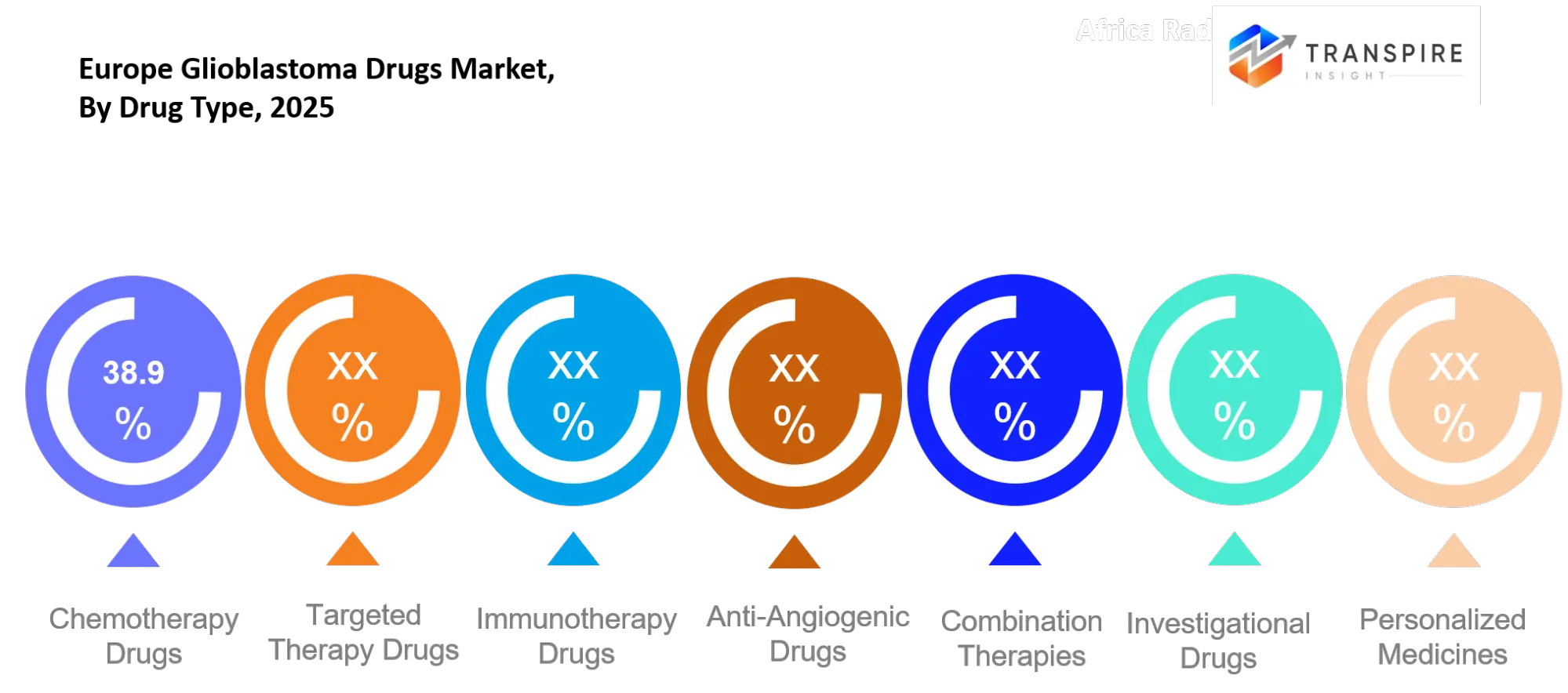
By Route of Administration :
Intravenous administration stays the preferred treatment route, mainly because a lot of established glioblastoma medicines need controlled delivery inside hospital settings. Oral therapies are getting more and more focus too, since convenient treatment options are becoming usable for some patient groups. Intrathecal administration fits those more specialized clinical situations where delivering the drug directly can give real therapeutic benefit. Implantable systems keep drawing research attention, particularly for localized drug delivery after surgical procedures, even when clinicians are already busy.
Injectable formulations still hold a solid role within hospital-based oncology treatment programs. Combination delivery methods also keep improving treatment flexibility, by letting different therapeutic approaches work together inside structured care pathways. Sustained release systems will open up further opportunities, mainly by extending drug exposure and lowering how often treatment is needed in selected cases. Other delivery methods keep moving innovation forward for oncology drug administration, with incremental but steady progress.
By Application :
Newly diagnosed glioblastoma kind of takes up the biggest application area, because treatment actually starts pretty fast right after diagnosis, with surgery, radiotherapy and drug therapy, at least in most pathways. Recurrent glioblastoma still keeps pushing researchers toward advanced medicines that might help with disease control after relapse, even when the situation gets harder. Pediatric glioblastoma remains a very specialized treatment field, backed by dedicated research initiatives and trials that are carefully designed, so they don’t feel generic. For elderly patient management , the emphasis remains on balanced strategies, considering safety , how well patients tolerate treatment and what seems clinically effective.
Precision oncology keeps broadening, through molecular profiling and biomarker testing, and somehow that helps clinicians to make more tailored calls in the end. Supportive care is still crucial too , for symptom management, and for improving quality of life across the entire treatment journey not only during the main rounds, because people need help all along the way.Research applications continue to strengthen drug development by enabling clinical trials and translational studies, basically the bridge between lab insights and patients. Other applications will add to wider therapeutic development as scientific knowledge keeps moving forward, steadily.
By Distribution Channel :
Hospital pharmacies are still kind of the main distribution channel because these tricky oncology medicines really need specialized storage, handling, and clinical oversight before they’re actually administered. Retail pharmacies keep supporting some selected oral therapies, so patients can get them beyond the big hospital settings. Online pharmacies are growing, but they’re doing so carefully, inside national regulatory frameworks for approved prescription medicines. Specialty pharmacies give more focused help for advanced oncology products and patient management services, like follow-ups and coordinated care.
Direct supply agreements also keep improving cooperation between pharmaceutical manufacturers and healthcare providers. Government supply programs help expand treatment availability across public healthcare systems in multiple European countries. Clinical trial supply channels stay essential for investigational medicines that enter research programs, even if it’s temporary and controlled. Other distribution methods continue to assist healthcare organizations with flexible product access when that makes sense.
By End User :
Hospitals account for the biggest share, because multidisciplinary teams deliver surgery radiotherapy, advanced imaging and pharmaceutical treatment, all in integrated care environments. Cancer centers keep on expanding specialized neuro-oncology services , backed by seasoned medical professionals and up-to-date treatment technologies. Research institutes are right in the middle of it all for clinical studies, biomarker discovery, and early phase therapeutic development . Specialty clinics keep tightening outpatient care by using concentrated oncology know how and coordinated follow-up services.
Academic centers help innovation move faster by linking scientific research with day to day clinical practice and physician training programs. Pharmaceutical companies continue to pour resources into drug discovery, combination regimens, and precision medicine research, to secure more robust future treatment pathways. Government hospitals still matter a lot as cancer care providers, via publicly funded healthcare services across multiple European countries. Other end users will carry on enabling treatment access through shared healthcare networks, plus specialized medical services.
What are the Key Use Cases Driving the Europe Glioblastoma Drugs Market?
The biggest use case comes in that first line stage for people newly diagnosed with glioblastoma after surgery, and then radiotherapy. In practice hospitals ,and multidisciplinary cancer centers purchase chemotherapy and combo drug therapies because those treatments are still glued into established clinical care pathways, as backed by European oncology guidelines. When hospital pharmacies handle the ordering in a consistent way, it keeps the same application running across most major healthcare systems.
After that, the secondary use cases keep widening, especially for recurrent glioblastoma management and for precision oncology programs. Specialty cancer centers and research institutes start adopting targeted therapies for patients with certain molecular profiles ,and in parallel pharmaceutical companies help widen access via clinical development programs and shared research initiatives spanning several European countries.
Looking ahead, emerging use cases lean into personalized medicines guided by advanced genomic testing and also investigational therapies tested through multinational clinical trials. Academic centers, biotechnology companies, and government-supported research networks are putting money into these directions ,because regulatory frameworks are pushing innovation for high unmet medical needs. Overall, these uses are expected to open up fresh commercial chances during the forecast period.
|
Report Metrics |
Details |
|
Market size value in 2025 |
USD 0.31 Billion |
|
Market size value in 2026 |
USD 0.323 Billion |
|
Revenue forecast in 2033 |
USD 0.432 Billion |
|
Growth rate |
CAGR of 4.24% from 2026 to 2033 |
|
Base year |
2025 |
|
Historical data |
2021 - 2024 |
|
Forecast period |
2026 - 2033 |
|
Report coverage |
Revenue forecast, competitive landscape, growth factors, and trends |
|
Country scope |
Europe (Germany, United Kingdom, France, Italy, Spain and Rest of Europe) |
|
Key company profiled |
Merck & Co., Roche, Novartis, Bristol Myers Squibb, Pfizer, Amgen, AstraZeneca, Bayer, Eli Lilly, Kazia Therapeutics, Novocure, Genentech, Northwest Biotherapeutics, Sun Pharma, Teva Pharmaceutical . |
|
Customization scope |
Free report customization (country, regional & segment scope). Avail customized purchase options to meet your exact research needs. |
|
Report Segmentation |
By Drug Type (Chemotherapy Drugs, Targeted Therapy Drugs, Immunotherapy Drugs, Anti-Angiogenic Drugs, Combination Therapies, Investigational Drugs, Personalized Medicines, Others); By Route of Administration (Oral, Intravenous, Intrathecal, Implantable Systems, Injectable Formulations, Combination Delivery, Sustained Release Systems, Others); By Application (Newly Diagnosed Glioblastoma, Recurrent Glioblastoma, Pediatric Glioblastoma, Elderly Patients, Precision Oncology, Supportive Care, Research Applications, Others); By Distribution Channel (Hospital Pharmacies, Retail Pharmacies, Online Pharmacies, Specialty Pharmacies, Direct Supply, Government Supply, Clinical Trial Supply, Others); By End User (Hospitals, Cancer Centers, Research Institutes, Specialty Clinics, Academic Centers, Pharmaceutical Companies, Government Hospitals, Others) |
Which Regions are Driving the Europe Glioblastoma Drugs Market Growth?
Western Europe made up roughly 68% of revenue in 2025, and honestly it feels like the dominant regional market there. It’s driven by strong reimbursement rules, well known oncology guidance, and regulatory routes that are already pretty established, so access to newer glioblastoma treatments across Germany, France, and the United Kingdom stays broad. Add in a maturing setup of pharmaceutical companies, biotechnology firms, university hospitals, and clinical trial networks, and you get a system that keeps pushing drug development forward plus commercialization, at a steady pace. Going forward, continued funding for precision medicine, molecular diagnostics, and dedicated neuro-oncology services should keep this leadership intact during the whole forecast period too.
Northern Europe is next, as the second largest regional contributor, mainly because healthcare delivery leans toward consistent public funding and long term clinical planning, instead of quick, aggressive expansion. Sweden, Denmark, Finland, and Norway keep regulatory frameworks that don’t swing too much, which helps adoption of innovative oncology medicines remain predictable. There’s also solid academic cooperation and coordinated procurement approaches, so demand for advanced therapies looks steady while supply disruptions are kept smaller. Overall this mix of financial steadiness and structured healthcare investment ends up creating a dependable stream of revenue for pharmaceutical manufacturers.
Central and Eastern Europe is likely to show the quickest growth from 2026 through 2033, mainly because healthcare modernization programs are expanding oncology infrastructure across Poland, the Czech Republic, Hungary, and Romania. More spending toward cancer treatment sites, better reach to molecular diagnostics , and more active involvement in multinational clinical trials have been moving the region forward lately. On top of that, regulatory alignment with wider European standards is getting smoother too, which improves access to innovative medicines and also nudges pharmaceutical investment forward. Altogether, these changes should open appealing avenues for manufacturers, biotechnology companies, and investors that want to expand into oncology markets that are still underserved.
Who are the Key Players in the Europe Glioblastoma Drugs Market and How Do They Compete?
The competitive landscape shows moderate consolidation, and the competition is more on technology innovation , clinical evidence and precision medicine capabilities rather than price alone. Big pharmaceutical companies still try to hold market share by running advanced research programs, while biotech firms ramp up the pressure by bringing in novel therapeutic approaches, plus biomarker led treatments. How clinical trials perform, what regulators approve, and strategic research partnerships remain the main drivers , shaping who’s positioned where across European oncology markets.
Roche boosts its competitive edge in precision oncology by pairing targeted therapies with advanced companion diagnostics, which in turn help physicians make personalized treatment calls. Novartis concentrates on enlarging its oncology research pipelines and using strategic licensing agreements to move innovative treatment development faster across Europe. Merck KGaA stands out via scientific collaboration with universities and biotechnology partners, building stronger translational research and biomarker discovery , especially for neuro-oncology applications.
Bristol Myers Squibb puts a lot of resources into immuno-oncology studies and combination therapy building, which leads to more unique treatment pathways that are backed by wide-ranging clinical data, you know, the kind that helps in the long run. Meanwhile, AstraZeneca grows mainly via strategic collaborations, continuing oncology research spending, and precision medicine programs where targeted therapies are blended with genomic science, kind of like aiming at something sharper. Together these moves can support long-term strength, because they boost product differentiation, widen the clinical pipeline, and help improve access to newer therapies across European healthcare systems.
Company List
- Merck & Co.
- Roche
- Novartis
- Bristol Myers Squibb
- Pfizer
- Amgen
- AstraZeneca
- Bayer
- Eli Lilly
- Kazia Therapeutics
- Novocure
- Genentech
- Northwest Biotherapeutics
- Sun Pharma
- Teva Pharmaceutical
Recent Development News
In April 2026, Servier completed the acquisition of Day One Biopharmaceuticals. The approximately US$2.5 billion transaction expanded Servier's neuro-oncology portfolio and strengthened its position in brain tumor therapies, including targeted treatments for glioma.
Source https://servier.com/
In September 2025, Servier secured European Commission approval for VORANIGO® (vorasidenib), the first targeted therapy in the EU for Grade 2 IDH-mutant diffuse glioma. The approval broadened access to precision neuro-oncology treatments across Europe and reinforced Servier's presence in the brain tumor therapeutics segment.
Source https://servier.mediaroom.com/
What Strategic Insights Define the Future of the Europe Glioblastoma Drugs Market?
The Europe Glioblastoma Drugs Market will move, kind of steadily, toward precision treatment models that combine aimed medicines and biomarker-guided patient selection, with advanced clinical study methods. Over time, progress in genomic testing, closer cooperation between biotechnology firms and academic groups, plus supportive European oncology policies will shape the long-run commercial growth. There’s also a less visible concern though, market concentration within specialized manufacturing and development networks, meaning if clinical supply is disrupted or regulatory steps get delayed, product availability could slow down even while research looks strong.
At the same time, a meaningful opening is showing up via artificial intelligence-assisted drug discovery and adaptive clinical trial structures, especially as Central and Eastern European countries keep expanding their research infrastructure and draw in multinational studies. Firms that form ties with diagnostic developers and regional cancer centers will likely improve their competitive stance, help patient access, and compress development schedules, while also building more diversified pipelines. That diversification should lessen commercial and regulatory exposure during the coming years, even if the environment stays unpredictable.
Europe Glioblastoma Drugs Market Report Segmentation
By Drug Type
- Chemotherapy Drugs
- Targeted Therapy Drugs
- Immunotherapy Drugs
- Anti-Angiogenic Drugs
- Combination Therapies
- Investigational Drugs
- Personalized Medicines
By Route of Administration
- Oral
- Intravenous
- Intrathecal
- Implantable Systems
- Injectable Formulations
- Combination Delivery
- Sustained Release Systems
By Application
- Newly Diagnosed Glioblastoma
- Recurrent Glioblastoma
- Pediatric Glioblastoma
- Elderly Patients
- Precision Oncology
- Supportive Care
- Research Applications
By Distribution Channel
- Hospital Pharmacies
- Retail Pharmacies
- Online Pharmacies
- Specialty Pharmacies
- Direct Supply
- Government Supply
- Clinical Trial Supply
By End User
- Hospitals
- Cancer Centers
- Research Institutes
- Specialty Clinics
- Academic Centers
- Pharmaceutical Companies
- Government Hospitals
Frequently Asked Questions
Find quick answers to common questions.
The Expected Europe Glioblastoma Drugs Market size for the Market will be USD 0.432 Billion in 2033.
Key segments for the Europe Glioblastoma Drugs Market are By Drug Type (Chemotherapy Drugs, Targeted Therapy Drugs, Immunotherapy Drugs, Anti-Angiogenic Drugs, Combination Therapies, Investigational Drugs, Personalized Medicines, Others); By Route of Administration (Oral, Intravenous, Intrathecal, Implantable Systems, Injectable Formulations, Combination Delivery, Sustained Release Systems, Others); By Application (Newly Diagnosed Glioblastoma, Recurrent Glioblastoma, Pediatric Glioblastoma, Elderly Patients, Precision Oncology, Supportive Care, Research Applications, Others); By Distribution Channel (Hospital Pharmacies, Retail Pharmacies, Online Pharmacies, Specialty Pharmacies, Direct Supply, Government Supply, Clinical Trial Supply, Others); By End User (Hospitals, Cancer Centers, Research Institutes, Specialty Clinics, Academic Centers, Pharmaceutical Companies, Government Hospitals, Others).
Major Europe Glioblastoma Drugs Market players are Merck & Co., Roche, Novartis, Bristol Myers Squibb, Pfizer, Amgen, AstraZeneca, Bayer, Eli Lilly, Kazia Therapeutics, Novocure, Genentech, Northwest Biotherapeutics, Sun Pharma, Teva Pharmaceutical.
The Current Europe Glioblastoma Drugs Market size is USD 0.31 Billion in 2025.
The Europe Glioblastoma Drugs Market CAGR is 4.24% from 2026 to 2033.
- Merck & Co.
- Roche
- Novartis
- Bristol Myers Squibb
- Pfizer
- Amgen
- AstraZeneca
- Bayer
- Eli Lilly
- Kazia Therapeutics
- Novocure
- Genentech
- Northwest Biotherapeutics
- Sun Pharma
- Teva Pharmaceutical
About the Authors

Pankaj Ghogare Patil
I am Pankaj Ghogare Patil, a Senior Research Analyst at Transpire Insight, specializing in the Pharmaceutical, Chemicals & Materials, Healthcare IT, and Biotechnology industry. My expertise lies in conducting comprehensive market research, analyzing industry trends, evaluating competitive landscapes, and translating complex data into actionable insights. At Transpire Insight, I closely follow emerging technologies, regulatory developments, and market innovations to create accurate, well-researched, and informative content that helps businesses and professionals make informed decisions. I am committed to producing credible, evidence-based articles that reflect industry best practices while making technical topics accessible and valuable for a broad audience.

Chakradhar Khansole
Chakradhar serves as the Research Director at Transpire Insight, bringing over 8 years of experience in technology, innovation, and strategic market intelligence. He specializes in transforming complex market data into actionable business insights that enable organizations to make informed, growth-oriented decisions. Recognized for his strategic vision and analytical expertise, Chakradhar leads high-impact research initiatives, delivering comprehensive market assessments, competitive intelligence, and forward-looking industry analysis.
Recently Published Reports
-
Jul 2026
Alopecia Treatment Market
Alopecia Treatment Market Size, Share & Analysis Report By Disease Type (Alopecia Areata, Cicatricial Alopecia, Traction Alopecia, Alopecia Totalis, Androgenetic Alopecia, Alopecia Universalis, and Other Disease Types), By Treatment Type (Topical Treatments, Oral Medications, Injectable Therapies, and Hair Transplantation), By Gender (Male, and Female), By Distribution Channel (Hospitals and Clinics, Retail Pharmacies, and Online Retailers), and Geography (North America, Europe, Asia-Pacific, Middle East and Africa, South and Central America), 2021 - 2031
-
Jul 2026
Medical Ultrasound Probe Market
Medical Ultrasound Probe Market Size, Share & Analysis Report By Type (Linear Type, Convex Type, Endocavitary Probe, Phased Array/Cardiac Probe, Transesophageal (TEE) Probe, and Others), By Application (Ophthalmology, Cardiology, Musculoskeletal, Oncology, Obstetrics & Gynecology, General Imaging, and Others), By End User (Hospitals & Clinics, Diagnostic Centers, Ambulatory Surgical Centers, and Others), and Geography (North America, Europe, Asia-Pacific, Middle East and Africa, South and Central America), 2021 – 2031
-
May 2026
Biosimilars Market
Biosimilars Market By Product Type (Monoclonal Antibodies, Recombinant Hormones, Erythropoietin, G-CSF, Others), By Indication (Oncology, Autoimmune Diseases, Blood Disorders, Diabetes, Others), By Manufacturing Type (In-House Manufacturing, Contract Manufacturing), By Distribution Channel (Hospital Pharmacies, Retail Pharmacies, Online Pharmacies), By Industry Analysis, Size, Share, Growth, Trends, and Forecasts 2021-2033
-
Apr 2026
Gastrointestinal Endoscopy Market
Gastrointestinal Endoscopy Market By Type (Rigid Gastrointestinal Endoscope, Flexible Gastrointestinal Endoscopes, Disposable Gastrointestinal Endoscope), By Procedure Type (Colonoscopy, Gastroscopy, Duodenoscopy, Enteroscopy, Flexible Sigmoidoscopy, Others), By Application (Diagnosis, Treatment), By End-Users (Hospitals, Ambulatory Surgical Centers, Specialty Clinics, Laboratories, Others), By Industry Analysis, Size, Share, Growth, Trends, and Forecasts 2021-2033