
Europe Car Wash Service Market Size & Forecast:
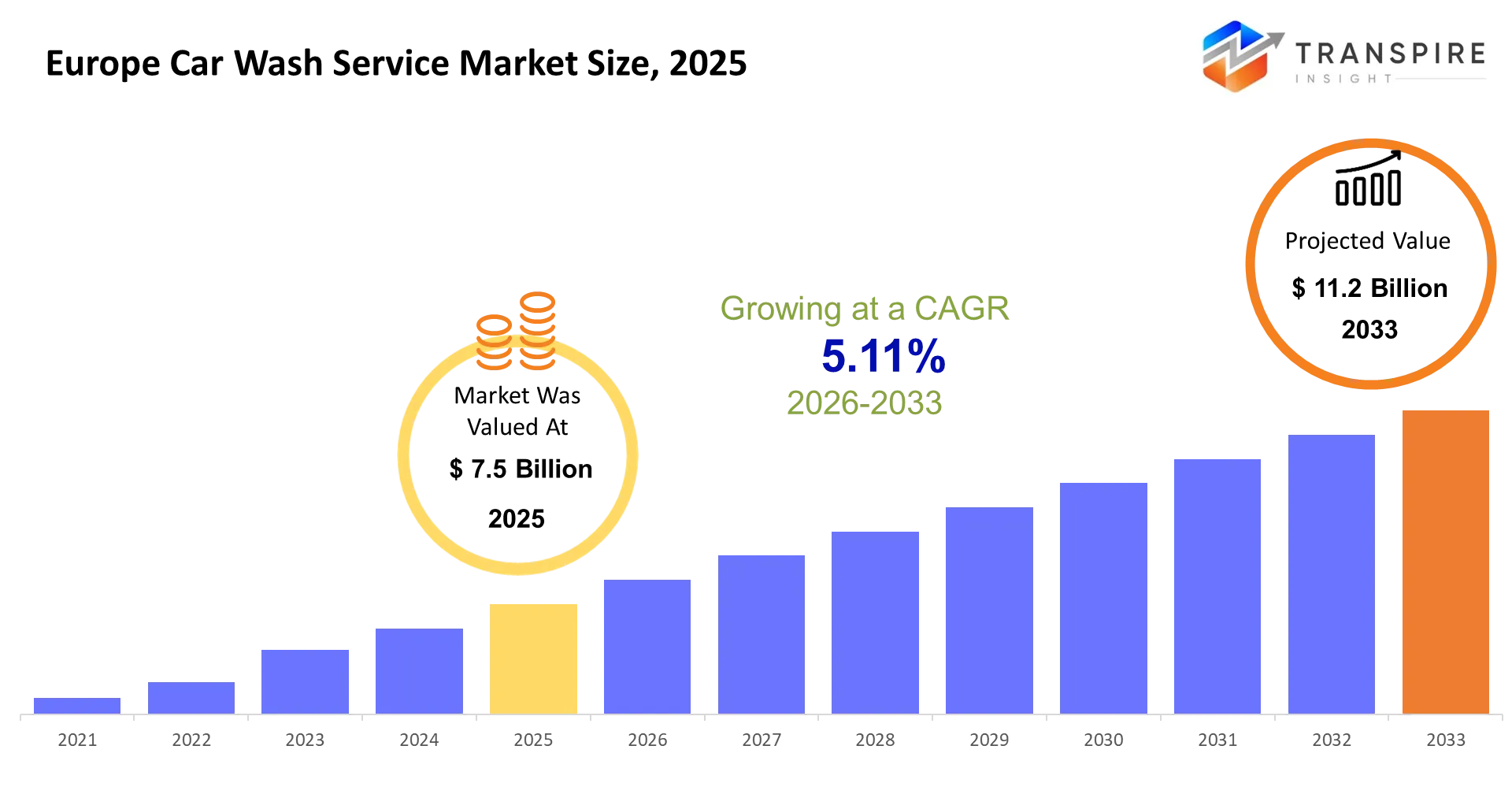
- Europe Car Wash Service Market Size 2025: USD 7.5 Billion
- Europe Car Wash Service Market Size 2033: USD 11.2 Billion
- Europe Car Wash Service Market CAGR: 5.11%
- Europe Car Wash Service Market Segments: By Type (Automatic Car Wash, Self-Service Car Wash, Hand Wash, Mobile Car Wash, Tunnel Wash, Others), By Application (Passenger Cars, Commercial Vehicles, Luxury Cars, Fleet Vehicles, Others), By End-User (Individual Owners, Fleet Operators, Businesses, Others), By Service (Exterior Wash, Interior Cleaning, Full Service, Detailing, Others).
To learn more about this report,  Download Free Sample Report
Europe Car Wash Service Market Summary:
The Europe Car Wash Service Market size is estimated at USD 7.5 Billion in 2025 and is anticipated to reach USD 11.2 Billion by 2033, growing at a CAGR of 5.11% from 2026 to 2033.
The European car wash industry functions as a vital service which helps vehicle owners maintain their car's market value while increasing paint durability and enabling commercial vehicle fleets to meet operational requirements in highly controlled metropolitan areas. Car wash facilities today perform multiple functions because their operations use water-efficient methods while preventing vehicle corrosion and meeting environmental regulations for wastewater disposal which applies exclusively to logistics fleets and vehicle rental agencies and transportation service operators.
The market has experienced a five-year transformation which shifted from divided manual washing methods to automated systems and subscription services. European operators are increasing their investments in tunnel automation and water recycling systems and digital booking platforms because both labor expenses and environmental compliance requirements have become more challenging throughout Europe. The implementation of stricter wastewater and hazardous material disposal regulations by multiple EU member states led customers and fleet managers to stop using unregulated washing methods and switch to authorized cleaning services. The development of recurring income streams through this process benefits both ride-hailing companies and business car fleets which need to maintain continuous operation while achieving consistent vehicle maintenance outcomes and reduced vehicle repair expenses.
Key Market Insights
- The Car Wash Service Market in Europe is showing continuous growth because vehicle owners need to protect their paintwork and maintain hygiene standards while keeping their vehicles operational for extended periods.
- The market share of automated tunnel wash systems increased to more than 38% in 2025 because these systems provide quicker service times and require less workforce support.
- The adoption of water recycling technology experienced substantial growth following 2022 because European Union sustainability objectives and commercial water usage limitations created new market demands.
- Fleet operators and mobility companies are increasing their adoption of recurring service contracts because this approach helps them minimize vehicle downtime while maintaining consistent vehicle appearance throughout their urban operations.
- Mobile app-based booking platforms improved customer retention rates by nearly 25% between 2021 and 2025 across major European cities.
- Western Europe leads the European Car Wash Service Market with about 46% of the market share in 2025 which Germany France and the UK together control.
- The German market holds the highest industry value because of its extensive passenger vehicle ownership and availability of automated washing facilities.
- The Eastern European market will experience its most rapid growth until 2030 because of developing urban mobility solutions and increasing disposable income levels.
- The Nordic countries are experiencing new growth in demand for environmentally friendly car wash solutions which utilize biodegradable cleaning products and recycled water systems.
- Automatic car wash services maintain their market leadership position by generating approximately 52% of total revenues in 2025 because customers choose these services for their rapid processing times and dependable results and their ability to pay digitally.
- The self-service wash station segment occupies the second largest market position because it benefits from reduced operational expenses and increasing vehicle ownership in suburban areas.
- The waterless car wash market segment will experience its highest growth rate until 2030 because sustainability regulations and water conservation initiatives create new market demand.
What are the Key Drivers, Restraints, and Opportunities in the Europe Car Wash Service Market?
The Europe car wash service market experiences its most powerful growth driver through the current European Union regulations which require stricter water discharge limits and more advanced wastewater treatment methods. German and Dutch and Scandinavian municipal authorities have established tougher regulations which restrict residential car washing activities because untreated wastewater contains detergents and oil and heavy metal contaminants. The new regulations drive both consumers and fleet operators to use commercial wash facilities which maintain water recycling systems and filtration systems according to certified standards. The professional operators achieve better financial results through their fleet maintenance contracts which include subscription wash services and premium detailing options. Automated tunnel washes and touchless systems enable operators to streamline their operations by washing more vehicles each hour while cutting down on their staffing requirements.
The market faces its most critical challenge through the expensive infrastructure and utility expenses which act as a fundamental obstacle to market development. Car wash facilities need to invest heavily in water reclamation systems and land purchasing and drainage installation and energy-efficient drying equipment to achieve compliance. Operating costs in urban Europe increase due to rising electricity expenses and the insufficient availability of commercial properties. Independent operators from smaller companies need to implement upgrades because they face prolonged return periods which create challenges in areas with less population density. The process takes longer to implement because advanced systems face obstacles which also prevent service development beyond large cities.
Electric vehicle fleet servicing brings a substantial opportunity for business growth. Ride-hailing companies and delivery fleets and leasing providers now need sensor-safe non-abrasive cleaning systems for their EVs which have cameras and autonomous driving parts. The expansion potential in Eastern Europe becomes apparent because both EV infrastructure investment and urban mobility services develop simultaneously, which creates optimal conditions for specialized automated wash networks.
What Has the Impact of Artificial Intelligence Been on the Europe Car Wash Service Market?
The European car wash service market undergoes transformation through artificial intelligence and digital technology because these innovations enhance equipment performance and decrease operational interruptions and enhance customer flow management. The operators use artificial intelligence sensors and Internet of Things monitoring systems to monitor brush pressure and water consumption and detergent levels and conveyor system operation inside their automatic tunnel washing systems. The systems use vehicle dimensions and contamination assessment to determine wash cycle requirements which results in decreased water and chemical usage while delivering constant cleaning results.
Predictive maintenance systems for pumps and dryers and water recycling systems now include machine learning models as part of their operation. Operators use vibration data and temperature records and equipment wear information to detect potential equipment failures before complete outages happen. Predictive analytics platforms have helped large automated wash chains achieve less downtime due to equipment maintenance while achieving better equipment performance. The digital fleet management system enables commercial vehicle operators to automate their wash scheduling process while tracking compliance requirements and handling service billing tasks across different sites.
The AI adoption process encounters significant obstacles because most independent car wash businesses operate with outdated systems that do not work with modern monitoring technologies. The costs for system integration remain elevated because existing facilities need expensive updates to enable cloud-based analytics and state-of-the-art sensors and automated control systems. The deployment of advanced technology in regional markets faces delays because smaller operators encounter difficulties in managing diverse operational data which impacts their ability to develop predictive maintenance systems.
Key Market Trends
- The process of automated tunnel washing systems started to replace manual cleaning methods in major cities since 2021 because operators required increased efficiency during times of labor shortages and rising employee wages.
- The Netherlands and Germany established more stringent rules for wastewater disposal which started in 2022 to expedite the transition from informal washing operations towards certified commercial facilities that operate recycling systems.
- Between 2021 and 2025 subscription-based unlimited wash memberships experienced substantial growth because operators wanted to establish stable income streams which would help them keep customers for longer periods.
- Fleet operators established partnerships with regional cleaning companies such as IMO Car Wash to handle their cleaning needs because they wanted to maintain consistent maintenance standards throughout their vehicle operations in different cities.
- The automated facilities implemented AI-based predictive maintenance systems which decreased equipment downtime through their real-time pump pressure and conveyor wear and dryer efficiency monitoring capabilities.
- Water recycling systems became more common after European utility prices increased during 2022 because operators needed to decrease their reliance on freshwater sources and lower their operational expenses.
- Electric vehicle owners preferred touchless wash systems because their sensor-equipped vehicles required cleaning methods which produced less wear on their cameras and lidar surfaces.
- Eastern Europe became the most rapidly developing regional cluster which started in 2023 because of increasing car ownership and the fast development of app-based transportation services.
- Convenience retail companies added express wash services to their operations in France Spain and Italy through partnerships with fuel stations which led to increased customer spending per visit.
- WashTec AG and Kärcher raised their investments in digital payment systems and equipment monitoring systems after 2022.
Europe Car Wash Service Market Segmentation
By Type
Automatic car wash systems hold the leading market position because high vehicle volumes, rising labor expenses, and strict water management rules favor scalable and standardized operations. Tunnel wash formats dominate commercial urban locations because they provide faster processing capacity and their subscription programs generate higher recurring revenue. Self-service facilities maintain relevance in suburban and lower-density regions because their operating costs help them achieve profitability. Hand wash services continue attracting customers who seek personalized cleaning for premium vehicles but their business growth remains restricted by their need for excessive staff dedication.
Mobile car wash operators gained traction after 2021 because digital booking platforms made it easier for customers to schedule appointments without worrying about their physical location. The market will develop through future AI-powered automation systems that combine touchless technology and water recycling systems. Equipment manufacturers are increasing investment in sensor-based systems and predictive maintenance tools while investors are prioritizing scalable automated chains that can deliver high output with minimal energy consumption in urban areas.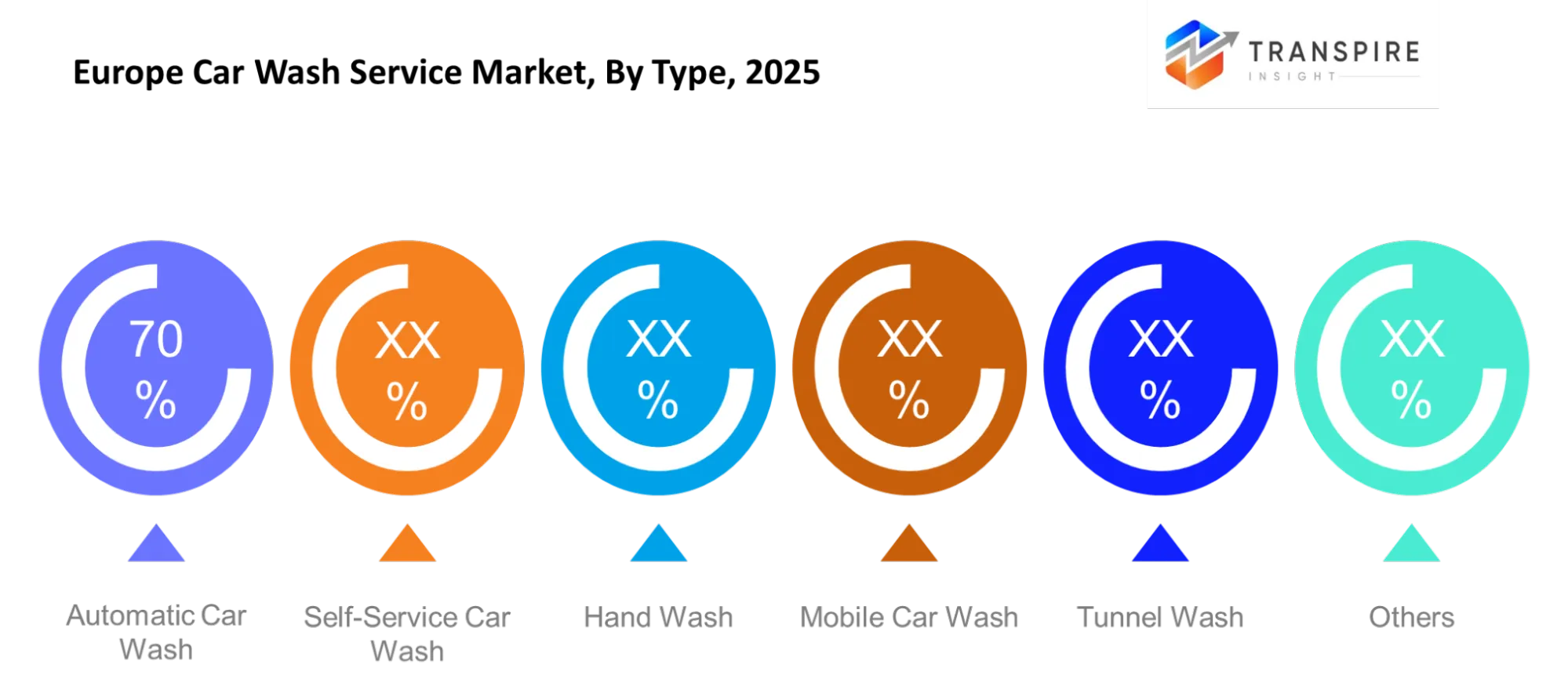
To learn more about this report, Download Free Sample Report
By Application
The high level of private vehicle ownership throughout Germany, France, Italy and the United Kingdom leads to passenger cars becoming the main source of service demand. Urban consumers increasingly prefer professional cleaning facilities due to tighter restrictions on residential vehicle washing and growing adoption of leased vehicles requiring maintenance compliance. The commercial vehicle and fleet vehicle markets experience their fastest growth because logistics operators and ride-hailing providers and delivery companies need to perform cleaning tasks to meet their operational standards and maintain their brand image.
The expansion of luxury car cleaning services continues in wealthy urban areas where customers demand paint protection and ceramic coating and premium detailing packages. The electric vehicle adoption rate caused demand patterns to change because customers started preferring touchless and sensor-safe cleaning systems. The future growth of business operations will benefit companies which can deliver their services to both high-volume fleet contracts and premium passenger vehicle maintenance through their unique service offerings and advanced wash technologies.
By End-User
The primary end-user group consists of individual vehicle owners since their continuous need for personal transportation results in consistent usage of automated and self-service systems. The convenience-driven behavior resulted in increased adoption of monthly wash subscriptions and app-based scheduling systems among urban drivers who belong to younger age groups because they wanted quicker access to services. Fleet operators have become the most vital customer segment because their long-term contracts deliver predictable revenue streams and their automated washing systems experience higher usage. Corporate mobility providers and rental car companies and logistics businesses establish vehicle maintenance operations through partnerships with major washing chains at regional locations.
Taxi operators and dealership networks represent smaller business users who generate continuous demand for regular cleaning and detailing work. The future market environment will lead to stronger consolidation between enterprises that focus on enterprise operations and their ability to implement digital billing and compliance reporting and multi-location servicing. Operators who acquire fleet contracts have become more appealing to investors because institutional demand creates steady income streams that protect against seasonal business changes.
By Service
The industry revenue base derives most of its income from exterior wash services because automated facilities turn out operationally efficient work through their continuous customer service delivery and brief service times. Urban premium markets show increasing demand for full-service packages which allow customers to combine exterior cleaning work with vacuuming and sanitization and upholstery cleaning services. Interior cleaning demand strengthened after the pandemic period as hygiene expectations became more important among ride-sharing drivers, rental companies, and commercial fleet operators. The detailing industry generates its profits from a small market segment which exists because people own luxury vehicles and use ceramic coating and expect to maintain their resale value.
Digital booking applications for residential and corporate customers have allowed mobile detailing specialists to expand their business operations in the market. The future service development process will create two new service models which combine personalized customer experiences with subscription packages and environmentally friendly cleaning products. Water-efficient detailing systems and AI customer management platforms and premium vehicle protection services will help operators achieve better profit margins while maintaining customer relationships in urban markets.
What are the Key Use Cases Driving the Europe Car Wash Service Market?
passenger vehicle cleaning serves as the primary application because urban residents now use automatic washing stations to handle their regular upkeep needs and protect their vehicle paint and follow local waste management regulations. The high number of vehicles which exist in Germany and France and the United Kingdom creates an ongoing need for tunnel washing and express outdoor cleaning services.
Logistics companies and ride-hailing services and car rental businesses are starting to adopt commercial fleet cleaning services because they need their vehicles to be cleaned according to specific standards and require quick service completion. The demand for interior sanitization services grew after 2021 because mobility companies and taxi services began implementing more rigorous cleaning procedures which applied to their customer-facing vehicles.
New technology applications now include sensor-safe cleaning methods which can be used on electric and semi-autonomous vehicles that have camera and lidar systems. Waterless and low-water mobile detailing services are becoming popular in areas which have implemented stricter water conservation rules and experience higher costs for commercial water usage.
|
Report Metrics |
Details |
|
Market size value in 2025 |
USD 7.5 Billion |
|
Market size value in 2026 |
USD 7.9 Billion |
|
Revenue forecast in 2033 |
USD 11.2 Billion |
|
Growth rate |
CAGR of 5.11% from 2026 to 2033 |
|
Base year |
2025 |
|
Historical data |
2021 - 2024 |
|
Forecast period |
2026 - 2033 |
|
Report coverage |
Revenue forecast, competitive landscape, growth factors, and trends |
|
Regional scope |
Europe (Germany, United Kingdom, France, Italy, Spain and Rest of Europe) |
|
Key company profiled |
WashTec, ISTOBAL, Ryko Solutions, Tommy Car Wash Systems, Belanger, PECO Car Wash Systems, Motor City Wash Works, Coleman Hanna, PDQ Manufacturing, Autec, Kärcher, Otto Christ, MK Seiko, D&S Car Wash Equipment, Sonny’s Enterprises |
|
Customization scope |
Free report customization (country, regional & segment scope). Avail customized purchase options to meet your exact research needs. |
|
Report Segmentation |
By Type (Automatic Car Wash, Self-Service Car Wash, Hand Wash, Mobile Car Wash, Tunnel Wash, Others), By Application (Passenger Cars, Commercial Vehicles, Luxury Cars, Fleet Vehicles, Others), By End-User (Individual Owners, Fleet Operators, Businesses, Others), By Service (Exterior Wash, Interior Cleaning, Full Service, Detailing, Others) |
Which Regions are Driving the Europe Car Wash Service Market Growth?
Western Europe stays the top regional market because Germany France and the United Kingdom keep high vehicle ownership together with developed automatic wash systems and their enforcement of strict environmental regulations. The mounting wastewater rules established by these nations restrict home-based vehicle washing which leads more people to seek out professional washing services. The combination of large city populations together with the common practice of leasing vehicles creates continuous needs for basic cleaning and detailed vehicle maintenance. The region operates through a complete support system which features established equipment producers together with modern payment systems and extensive commercial vehicle networks that provide sustained service agreements to main industry players.
Southern Europe serves as the second biggest regional market but its service demand patterns show distinct differences from Western Europe because tourist activities and seasonal travel patterns have a greater impact on market behavior. Italian and Spanish markets create consistent revenue streams through their fuel station agreements and their rental vehicle cleaning contracts and their growing retail store partnerships. Consumers in this region show a strong preference for budget-friendly exterior wash services which leads to an equal distribution between automated washing systems and manual washing methods. The stable investment flow into vehicle maintenance facilities shows continuous progress because tourism and hospitality sectors keep recovering especially in urban areas and coastal regions.
Eastern Europe experiences its fastest economic growth because urbanization progresses and middle-class citizens increase their vehicle ownership and nations boost their automated service infrastructure investments.
Who are the Key Players in the Europe Car Wash Service Market and How Do They Compete?
The Europe car wash service market demonstrates a competitive environment that features multiple competing companies between major automated washing corporations and their regional competitors and gas station chains and their independent car detailing services. The competition now focuses on four main elements which include automation technology and water conservation methods and online service options and multi-year contracts for vehicle maintenance instead of simple price competition. Established operators use subscription services and AI-powered equipment tracking and office expansion to maintain their market position while new companies develop mobile detailing services and water-efficient cleaning methods. The ability of companies to meet regulatory requirements creates a competitive advantage because businesses with advanced water recycling systems and certified wastewater treatment plants can more easily obtain municipal permits in urban areas.
WashTec AG directs its primary research efforts toward developing new tunnel automation technologies and predictive maintenance systems and urban sanitation facilities that use water reclamation systems. The company distinguishes itself by providing digital management systems that enable site operators to track chemical consumption and energy usage and equipment operational time from remote locations. IMO Car Wash competes through geographic scale and standardized express wash formats located near retail and fuel station corridors across Europe. The company establishes better long-term revenue prediction through its washing subscription services and centralized vehicle maintenance contracts which create predictable income streams that exceed those of most local competitors.
Kärcher enhances its market presence through its advanced cleaning solutions which feature touchless technology systems and energy-saving drying equipment that specifically meets the needs of high-end vehicles and electric vehicles.
Company List
- WashTec
- ISTOBAL
- Ryko Solutions
- Tommy Car Wash Systems
- Belanger
- PECO Car Wash Systems
- Motor City Wash Works
- Coleman Hanna
- PDQ Manufacturing
- Autec
- Kärcher
- Otto Christ
- MK Seiko
- D&S Car Wash Equipmens
- Sonny’s Enterprises
Recent Development News
In February 2026, Driven Brands completes IMO Car Wash divestiture to Franchise Equity Partners: Driven Brands finalized the sale of IMO Car Wash to Franchise Equity Partners, completing one of the largest recent transactions in the European car wash sector. The deal covers more than 700 locations across the UK, Germany, and other European markets, with proceeds aimed at debt reduction and operational restructuring.
Source: https://www.mobilityplaza.org
In December 2025, Franchise Equity Partners confirms international expansion through IMO acquisition: Following regulatory progress into 2026, Franchise Equity Partners stated that the acquisition of IMO Car Wash would strengthen its European retail footprint. The transition includes operational integration across major European markets, especially the UK and Germany, with focus on customer experience upgrades and higher wash volumes.
Source: https://www.prnewswire.com
What Strategic Insights Define the Future of the Europe Car Wash Service Market?
The European car wash service sector is expected to develop its operational framework through automated systems which will implement subscription services and dedicated fleet operations during the upcoming five to seven years. The need for operators to develop scalable washing systems with reduced costs for each vehicle stems from three factors which include increasing labor expenses and stricter wastewater management regulations and rising commercial vehicle usage. The market will enter a period of increased consolidation when regional chain restaurants and infrastructure companies acquire smaller independent businesses which lack funds to develop advanced recycling facilities and AI-powered maintenance systems and energy-efficient improvements.
Electricity and water pricing fluctuations across urban European areas represent a concealed danger for businesses. Businesses that operate automated tunnel facilities face challenges because their drying processes and water treatment systems consume high amounts of energy which reduces their profit margins despite increasing customer numbers. The market presents a new business opportunity which focuses on electric and autonomous vehicle maintenance through sensor-safe cleaning technologies that enable cleaning operations for camera-equipped mobility fleets in Eastern European and Nordic markets. Business organizations within the market should establish partnerships with logistics companies and leasing businesses and mobility service platforms because these relationships will increase the worth of long-term fleet agreements beyond what typical customer visits bring.
Europe Car Wash Service Market Report Segmentation
By Type
- Automatic Car Wash
- Self-Service Car Wash
- Hand Wash
- Mobile Car Wash
- Tunnel Wash
- Others
By Application
- Passenger Cars
- Commercial Vehicles
- Luxury Cars
- Fleet Vehicles
- Others
By End-User
- Individual Owners
- Fleet Operators
- Businesses
- Others
By Service
- Exterior Wash
- Interior Cleaning
- Full Service
- Detailing
- Others
Frequently Asked Questions
Find quick answers to common questions.
The Approximate Europe Car Wash Service Market size for the Market will be USD 11.2 Billion in 2033.
The key Segments of the Europe Car Wash Service Market are By Type (Automatic Car Wash, Self-Service Car Wash, Hand Wash, Mobile Car Wash, Tunnel Wash, Others), By Application (Passenger Cars, Commercial Vehicles, Luxury Cars, Fleet Vehicles, Others), By End-User (Individual Owners, Fleet Operators, Businesses, Others), By Service (Exterior Wash, Interior Cleaning, Full Service, Detailing, Others).
Major Players in the Europe Car Wash Service Market are WashTec, ISTOBAL, Ryko Solutions, Tommy Car Wash Systems, Belanger, PECO Car Wash Systems, Motor City Wash Works, Coleman Hanna, PDQ Manufacturing, Autec, Kärcher, Otto Christ, MK Seiko, D&S Car Wash Equipment, Sonny’s Enterprises.
The Current Market size of the Europe Car Wash Service Market is USD 7.5 Billion in 2025.
The Europe Car Wash Service Market CAGR is 5.11%.
- WashTec
- ISTOBAL
- Ryko Solutions
- Tommy Car Wash Systems
- Belanger
- PECO Car Wash Systems
- Motor City Wash Works
- Coleman Hanna
- PDQ Manufacturing
- Autec
- Kärcher
- Otto Christ
- MK Seiko
- D&S Car Wash Equipmens
- Sonny’s Enterprises
Recently Published Reports
-
Apr 2026
ATV & UTV Market
ATV & UTV Market Size, Share & Analysis Report By Type (ATV, and UTV), By Variants (Less Than 400 CC, 400 CC To 800 CC, and More Than 800 CC), and Geography (North America, Europe, Asia-Pacific, Middle East and Africa, South and Central America), 2021 - 2031
-
Apr 2026
Automotive Central Gateway Module Market
Automotive Central Gateway Module Market Size, Share & Analysis Report By Type (Ethernet Central Gateway Module, CAN Central Gateway Module, LIN Central Gateway Module, and FlexRay), By Application (Powertrain Control, Body Control, Infotainment System, Advanced Driver Assistance Systems (ADAS), and Others), By End User (Passenger Vehicles, and Commercial Vehicles), and Geography (North America, Europe, Asia-Pacific, Middle East and Africa, South and Central America), 2021 - 2031
-
Apr 2026
Automotive Engine Oil Filter Market
Automotive Engine Oil Filter Market Size, Share & Analysis Report By Filter Type (Fuel Filter, Engine Oil Filter, Hydraulic Oil Filter, and Others), By Filter Media (Cellulose, Synthetic, and Micro), By Sales Channel (OEMs, and Aftermarket), By Vehicle Type (Passenger Cars, Light Commercial Vehicles, Heavy Duty Trucks, Buses and Coaches, and Off-road Vehicles), and Geography (North America, Europe, Asia-Pacific, Middle East and Africa, South and Central America), 2021 - 2031
-
Apr 2026
Automotive Parts Aluminium Die Casting Market
Automotive Parts Aluminium Die Casting Market Size, Share & Analysis Report By Production Process (Pressure Die Casting, Vacuum Die Casting, Squeeze Die Casting, Gravity Die Casting), By Application (Body Parts, Engine Parts, Transmission Parts, Battery And Related Components, Other Application Types), and Geography (North America, Europe, Asia-Pacific, Middle East and Africa, South and Central America), 2021 - 2031
Our Clients