

Europe Alcohol Ingredients Market Size & Forecast:
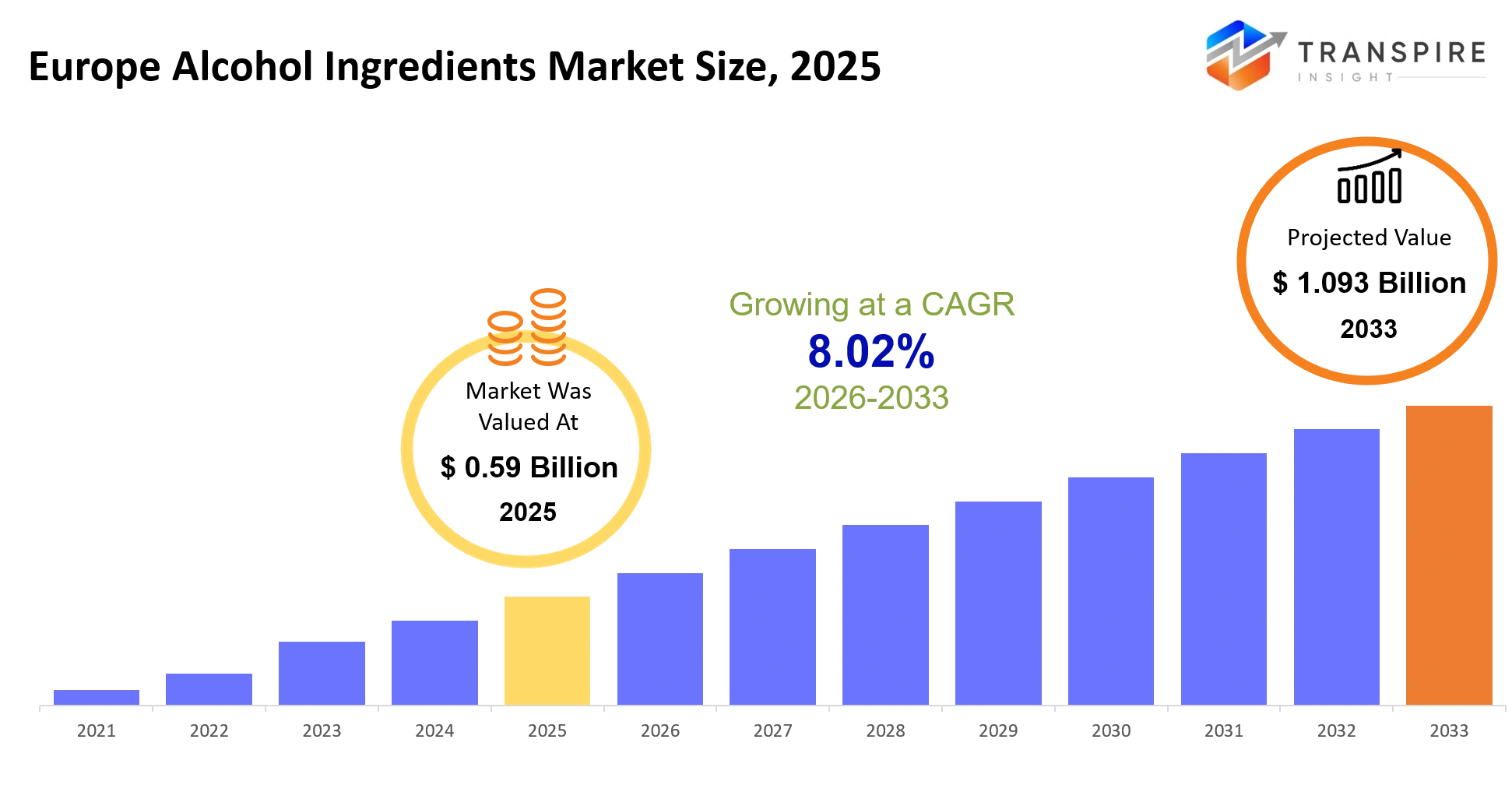
- Europe Alcohol Ingredients Market Size 2025: USD 0.59 Billion
- Europe Alcohol Ingredients Market Size 2033: USD 1.093 Billion
- Europe Alcohol Ingredients Market CAGR: 8.02%
- Europe Alcohol Ingredients Market Segments: By Ingredient Type (Yeast, Enzymes, Colorants, Flavors & Salts, Preservatives, Others); By Source (Natural, Synthetic, Others); By Beverage Type (Beer, Wine, Spirits, RTD Alcoholic Beverages, Others); By Function (Fermentation, Flavor Enhancement, Coloring, Stabilization, Others); By Distribution Channel (Direct Sales, Distributors, Online, Others); By End User (Breweries, Distilleries, Wineries, Others).
Europe Alcohol Ingredients Market Summary
The Europe Alcohol Ingredients Market was valued at .USD 0.59 Billion in 2025. It is forecast to reach USD 1.093 Billion by 2033. That is a CAGR of 8.02% over the period.
The Europe Alcohol Ingredients Market is really important for making beer, wine, spirits and those new drinks that have no alcohol. This market gives the people who make these drinks the things they need like yeast, special helpers, flavors, colors and other stuff that makes the drinks taste good and helps them make the drinks efficiently.For the people who make these drinks these ingredients help them control how the drinks turn out make the drinks taste better and reduce waste. They also help these people do what the customers want while following the rules.
In the five years the Europe Alcohol Ingredients Market has changed a lot. Now people are looking for ingredients that can help them make unique drinks drinks with less sugar and drinks with less alcohol that still taste good. What happened between Russia and Ukraine made a mess in the supply chain, which meant that the cost of grains, energy and raw materials went up and, down a lot. This made companies want to find ways to make their processes better and use ingredients that work well.
Now companies that make drinks are trying to make their products better come up with ideas and be more efficient. The people who supply the ingredients are making money by selling special ingredients, which is creating new ways for them to make money and helping them sell more to both old and new companies that make alcohol. The Europe Alcohol Ingredients Market is helping the people who make beer, wine, spirits and those new drinks to make their products better.
Key Market Insights
- The Europe Alcohol Ingredients Market is growing steadily because more breweries and distilleries are using specialty yeast, enzymes and flavoring solutions.
- Western Europe leads the market with about 45% share in 2025 thanks to its established alcohol production setup and high beverage consumption.
- Central and Eastern Europe are growing fast. Are expected to continue doing so until 2032, driven by more investments in beverage manufacturing.
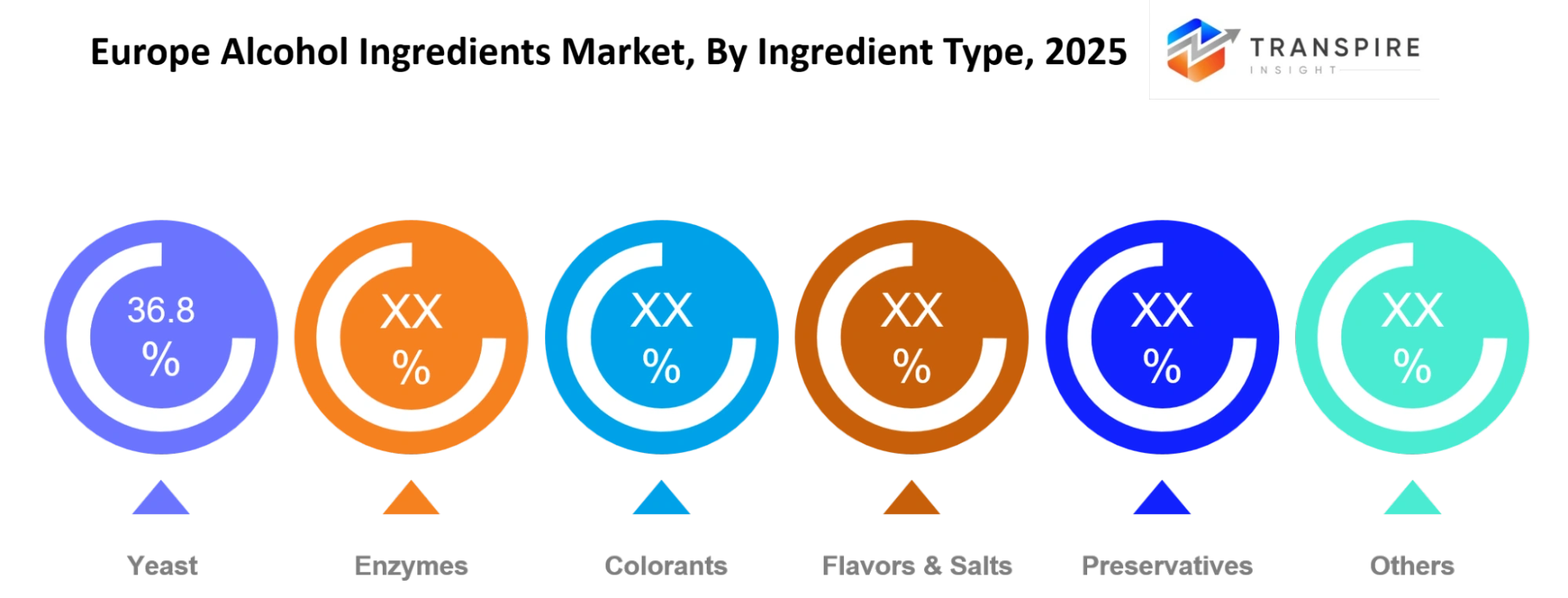
- Yeast is still the product segment making up almost 35% of the market share in 2025 because it plays a crucial role in fermentation.
- Enzymes come in second helping manufacturers make production more efficient get more out of their materials and cut down on processing costs.
- Flavoring ingredients are going to grow fast during the time we are looking at because people are starting to like premium and craft drinks more and more.
- Making beer is a part of the industrys money over 40% and this is because Europe has a long history of brewing and can make a lot of beer.
- Drinks with no alcohol are becoming more popular so we need better ways to make them taste good and to ferment them.
- Big breweries that make a lot of beer make up about half of what people want. Smaller breweries and independent distilleries that make special drinks are growing really fast.
- Companies like Kerry Group, Cargill, ADM, DSM-Firmenich, Chr. Hansen and Novozymes are getting stronger, in the market by making products working with other companies using new biotechnology and expanding what they do.
What are the Key Drivers, Restraints, and Opportunities in the Europe Alcohol Ingredients Market?
Driver
The Europe Alcohol Ingredients Market is growing fast because people want alcoholic drinks. Breweries and distilleries are using yeast, enzymes and flavors to make unique products that taste the same every time and are more efficient to make. This change happened because people are spending money on premium craft beer, flavored spirits and low-alcohol drinks which are more profitable than regular products. As companies launch specialty products ingredient suppliers make more money by creating customized formulations and fermentation solutions, which increases the use of ingredients and their prices.
Restraint
The biggest problem for the market is that raw material costs keep changing all the time. Things like grains, sugar and stuff used for fermentation are affected by weather, politics and energy costs. This is an issue in Europes farming and energy systems and it will take a while to sort out. When input costs go up beverage makers try to make profit and some might delay expanding their production change their recipes or launch premium products, which hurts the markets potential earnings.
Opportunity
There is an opportunity in low- and no-alcohol drinks. New fermentation technologies and yeast strains help producers keep the flavor but reduce the alcohol content. Countries like Germany, the United Kingdom and others in the region are investing in these technologies creating a demand for special alcohol ingredients. This will be a high-value growth area for ingredient manufacturers, over the decade.
What Has the Impact of Artificial Intelligence Been on the Europe Alcohol Ingredients Market?
The Europe Alcohol Ingredients Market is changing because of intelligence and new digital technologies. These things are helping to make fermentation better production efficient and ingredient quality management easier. Beverage manufacturers are using intelligence to monitor important parts of the process like yeast propagation, fermentation temperature control, enzyme dosing and quality assurance.These systems look at production data all the time. Adjust how things are working, which reduces differences in the process and minimizes waste of ingredients. The Europe Alcohol Ingredients Market is seeing changes because of this.
Machine learning is also helping to make predictions about alcohol production. By looking at fermentation data what the raw materials are like and the environment artificial intelligence can guess what will happen during fermentation find problems with quality and make the best use of ingredients before anything goes wrong. This helps manufacturers have failed batches make products more consistently and keep equipment working more often.In some breweries and distilleries using digital technology to make processes better has used less energy reduced losses, during production and made it possible to develop products faster. The Europe Alcohol Ingredients Market is benefiting from this.
Advanced analytics platforms are also helping companies follow the rules by tracking where ingredients come from and documenting production parameters. However it is expensive to add intelligence to old production systems. Many facilities have fermentation and processing systems that do not give complete data, which limits how well predictive models work.With this problem companies are still investing in digital manufacturing technologies, which will likely make more companies in the European alcohol ingredient industry start using these technologies. The Europe Alcohol Ingredients Market will continue to see changes because of intelligence and digital technologies.
Key Market Trends
- European breweries began using yeast for beer making in 2020. This yeast gives beer a taste and helps breweries make beer the same way every time. European breweries like this yeast because it makes their beer taste better.
- In 2022 energy and material costs went up. So beer makers started using enzymes to make beer with waste. This helps them save money on making beer. Beer makers want to make beer and save money so they use enzymes.
- Between 2021 and 2025 people started making low-alcohol and no-alcohol drinks. At first these drinks were a part of the market. Now companies are investing a lot of time and money into making them. People want alcohol and no-alcohol drinks so companies make them.
- Companies that sell ingredients to beer and drink makers now make ingredients just for them. This helps beer and drink makers make products. It also helps ingredient sellers work better with them. Ingredient sellers want to help beer and drink makers.
- Big breweries started using computers to watch their brewing process in 2023. This helps them make sure every batch of beer is the same. They do not waste any ingredients. Beer makers want to make the best beer possible.
- Liquor companies use flavorings and special ingredients to make their products taste better. This helps them charge money for their products. Fancy liquor companies want to make products so they use natural flavorings and special ingredients.
- Companies, like Kerry Group, DSM-Firmenich and Novonesis invest a lot of money in technologies. This helps them make products and stay ahead of companies. These companies want to be the best.
- There have been problems getting ingredients since 2022. So companies try to find ways to get what they need. This helps them make sure they always have the ingredients they need. Companies do not want to run out of ingredients.
- Companies try to be more sustainable. They use ingredients that use water and energy. This helps the environment. Saves companies money. Companies want to be sustainable.
- Small breweries and independent distilleries make products. They use yeast and flavor technologies to make drinks. Small breweries and independent distilleries help create products and trends in the drink making industry.
Europe Alcohol Ingredients Market Segmentation
By Ingredient Type
When it comes to making drinks the ingredients you choose are really important. This is because each ingredient affects the taste, look and quality of the drink. Yeast is an ingredient because it helps turn the ingredients into alcohol. Enzymes are also important because they help the ingredients work better together. Colorants help make the drinks look the same while flavors and salts make them taste good.Preservatives help keep the drinks fresh for a time. Drink makers want to find the mix of ingredients that make their drinks taste good and last long. Many small breweries are using ingredients to make their drinks unique. Other ingredients are used to make drinks that're just right for specific types of alcoholic beverages.
By Source
Where the ingredients come from matters. Many drink makers like to use ingredients because they want their drinks to taste real and be good for people.Ingredients from sources can actually help make drinks that are different from others. Many companies are now making sure they know the origin of their ingredients and that they are of quality.Some ingredients are created in a lab, which can be cheaper and more reliable. Big drink makers often use these lab-made ingredients to ensure their drinks taste the same everywhere. Other ingredients come from sources and are used to make special drinks. Finding a balance between using ingredients and lab-made ones is crucial, for drink makers.
By Beverage Type
Beer is a part of the drink industry especially in Europe. Yeast, enzymes and flavors are all important for making beer. Many small breweries are trying ingredients to make their beers special. They want to make beers that taste unique and are of quality.Wine makers also use ingredients to make their wines taste good. Spirits makers use ingredients to make high-quality drinks. Ready-to-drink beverages are becoming popular because they are easy to consume. Other types of drinks are also using ingredients to make them taste good.
By Function
The important function of ingredients is to help make the drink. Yeast and enzymes are crucial for this process. Drink makers are always looking for ways to make their drinks better and more consistent. They want to make sure their drinks taste good and are of quality.Making drinks taste good is also important. Colors and flavors are used to make drinks look and taste appealing. Preservatives help keep drinks fresh for a time. Other ingredients are used to make sure drinks are stable and taste good.
By Distribution Channel
Many ingredient suppliers sell their products directly to drink makers. This way they can work together to make sure the ingredients are just right for the drink. Big drink companies like to buy ingredients from suppliers to make sure they are of high quality.Some ingredients are sold through distributors, who help get the ingredients to drink makers. Online platforms are also becoming popular, for buying and selling ingredients. This makes it easier for drink makers to find the ingredients they need.
By End User
Breweries are users of ingredients because they make a lot of beer. They are always looking for ingredients to make their beers taste better and be more efficient. Breweries want to make high-quality beers that people will like.Distilleries also use ingredients to make their drinks taste good. Wineries use ingredients to make sure their wines are of quality. All these drink makers are looking for ingredients that will help them make drinks. Other drink makers are also using ingredients to make their drinks special and unique.
What are the Key Use Cases Driving the Europe Alcohol Ingredients Market?
Beer production is the reason why people need alcohol ingredients in Europe. Breweries need yeast and other things like enzymes and flavors to make beer that tastes good. Is made properly. They also need these things to make sure the beer is consistent and tastes the same every time. Because breweries make a lot of beer and are always coming up with products they use a lot of special ingredients.There are uses for these ingredients in things like spirits, wine and drinks that are ready to drink. Distilleries are using better ingredients to make premium products that taste and smell unique. Wineries are also using enzymes and preservatives to make sure their products are good and last a long time.
Now people are starting to use these ingredients in drinks that have no alcohol. To make these drinks taste good manufacturers need yeast and flavorings. Some drinks even have ingredients like plants and can be made to taste a certain way. These new uses are not very big now but they will probably become more important as companies try to make more kinds of drinks. Beer production and other uses will keep driving the need, for alcohol ingredients.
|
Report Metrics |
Details |
|
Market size value in 2025 |
USD 0.59 Billion |
|
Market size value in 2026 |
USD 0.637 Billion |
|
Revenue forecast in 2033 |
USD 1.093 Billion |
|
Growth rate |
CAGR of 8.02% from 2026 to 2033 |
|
Base year |
2025 |
|
Historical data |
2021 - 2024 |
|
Forecast period |
2026 - 2033 |
|
Report coverage |
Revenue forecast, competitive landscape, growth factors, and trends |
|
Regional scope |
Europe (Germany, United Kingdom, France, Italy, Spain, Rest of Europe) |
|
Key company profiled |
Kerry Group, Cargill, ADM, DSM-Firmenich, Chr. Hansen, Angel Yeast, Sensient Technologies, Döhler, Ashland, BASF, Tate & Lyle, Novozymes, Givaudan, Synergy Flavors, Treatt. |
|
Customization scope |
Free report customization (country, regional & segment scope). Avail customized purchase options to meet your exact research needs. |
|
Report Segmentation |
By Ingredient Type (Yeast, Enzymes, Colorants, Flavors & Salts, Preservatives, Others); By Source (Natural, Synthetic, Others); By Beverage Type (Beer, Wine, Spirits, RTD Alcoholic Beverages, Others); By Function (Fermentation, Flavor Enhancement, Coloring, Stabilization, Others); By Distribution Channel (Direct Sales, Distributors, Online, Others); By End User (Breweries, Distilleries, Wineries, Others). |
Which Regions are Driving the Europe Alcohol Ingredients Market Growth?
Western Europe is ahead in the Europe Alcohol Ingredients Market because it has a lot of breweries and fermentation industries in Germany the United Kingdom and France. The food safety rules are very strict. The EU has high standards so companies always use good enzymes, yeast and flavor systems. There are companies that supply ingredients and do biotech research, which helps to make new products and improve the way things are made. The big breweries and research centers in Western Europe help to keep the demand for these ingredients steady.
Southern Europe is also a part of the market thanks to the wine and spirits made in Italy, Spain and Portugal. This region is different from Western Europe because the demand for ingredients is more about what people like to drink and tourism than just making a lot of beverages. The people who make wine and spirits in Southern Europe want to keep the flavors and ways of making things but they are also slowly using new technologies. The rules and regulations in Southern Europe are similar to the EU standards, so the ingredients used are always the same.
Central and Eastern Europe is growing the fastest because many new craft breweries are opening and the way beverages are made is being modernized. International companies and the EU are investing to help this happen, which means new, better fermentation ingredients are being used. Beverage producers in Central and Eastern Europe want to create premium, unique drinks, so they need yeast and enzyme solutions. This means that there are opportunities for companies that supply ingredients to get into the market and sell to new customers, in Central and Eastern Europe, from 2026 to 2033.
Who are the Key Players in the Europe Alcohol Ingredients Market and How Do They Compete?
The Europe Alcohol Ingredients Market has a lot of companies that make ingredients and use biotechnology. These companies are very strong in the market.. There are also smaller companies that try to compete in specific areas. The big companies are always trying to come up with new ideas and improve their products. They want to make sure they can work well with breweries, distilleries, and wineries for the time being.
New companies that want to enter the market have a time because they need to spend a lot of money on research and development. They also have to follow strict food safety rules in the European Union. Some big companies, like Kerry Group and Tate & Lyle, are very good at producing ingredients that support fermentation. They can make products that're consistent and taste good. They work closely with beverage companies to ensure their ingredients meet their needs.
Other companies, such as DSM-Firmenich and Novonesis, use biotechnology to improve their products. They make yeast and enzymes that help breweries and distilleries make their products more efficiently. These companies work with beverage producers to develop ideas and invest heavily in research. Givaudan and Cargill are also companies in the market. They are very good at creating flavours and ensuring they have the ingredients their customers need. Givaudan is very good at making premium spirits. Rtd beverages taste good. Cargill has a network of suppliers around the world to keep costs low and ensure they have enough ingredients. Both companies work closely with their customers. Have technical support centers to help them.
Company List
- Chr. Hansen
- Angel Yeast
- Sensient Technologies
- Döhler
- Ashland
- BASF
- Tate & Lyle
- Novozymes
- Givaudan
- Synergy Flavors
- Treatt
Recent Development News
In February 2025, DSM-Firmenich confirmed strategic portfolio restructuring following the divestment of its Feed Enzymes activities to Novonesis.
The shift allowed the company to focus more strongly on high-value flavor, fragrance, and fermentation ingredient innovation for alcoholic beverage manufacturers.
Source: https://en.wikipedia.org
In 2025, Kerry Group expanded biotechnology-driven beverage ingredient capabilities including fermentation and enzyme innovation platforms.
These developments supported improved flavor consistency and faster product development cycles for beer, spirits, and RTD beverage manufacturers.
Source: https://www.kerry.com
What Strategic Insights Define the Future of the Europe Alcohol Ingredients Market?
The European alcohol ingredients market is changing fast. It is moving towards precision fermentation and high-performance ingredients made from bio-based materials. This shift is happening because of quality standards in the EU and the growing trend of premium alcoholic drinks.Over the 5 to 7 years there will be more demand for customized yeast, better enzyme engineering and technologies that can improve flavors. These advancements will help manufacturers make efficient products and create low- and no-alcohol drinks. Breweries and distilleries are investing in optimizing their processes to maintain profits to fluctuating energy and agricultural costs.There is a risk that a few biotech companies might dominate fermentation technologies. This could lead to prices and less flexibility for manufacturers. Also new technologies that create flavors or alcohol-free drinks might change how traditional ingredients are used.
A big opportunity is emerging in low-alcohol drinks in Southern and Western Europe. Changing tax laws and peoples preference for options are driving this trend. Companies should invest in fermentation systems and work with breweries to develop new drink formulations. This will help them stay ahead in the market.The market is also seeing a rise in flavor substitution technologies and alcohol-free beverage engineering. These could disrupt ingredient demand patterns if they become more effective.Companies should focus on low-alcohol product reformulation. They should also form partnerships, with breweries to secure early positioning in next-generation beverage formulations.
Europe Alcohol Ingredients Market Report Segmentation
By Product Type
- Whisky
- Vodka
- Rum
- Gin
- Brandy
- Tequila
- Liqueurs
- Others
By Distribution Channel
- On-Trade (Bars, Restaurants, Hotels)
- Off-Trade (Retail Stores, Liquor Stores)
- Online Retail
- Specialty Stores
- Direct-to-Consumer Sales
- Duty-Free Channels
- Others
By Ingredient Type
- Grain-Based Spirits
- Fruit-Based Spirits
- Sugarcane-Based Spirits
- Herbal & Botanical Infusions
- Mixed/Hybrid Ingredients
- Others
By Alcohol Content
- Low Alcohol Spirits
- Standard Alcohol Spirits
- High Strength Spirits
By End User
- Individual Consumers
- Hospitality Sector
- Premium Bars & Lounges
- Restaurants & Cafés
- Event Catering Services
- Others
Frequently Asked Questions
Find quick answers to common questions.
The expected Europe Alcohol Ingredients Market size for the market will be USD 1.093 Billion in 2033.
Key segments for the Europe Alcohol Ingredients Market are By Ingredient Type (Yeast, Enzymes, Colorants, Flavors & Salts, Preservatives, Others); By Source (Natural, Synthetic, Others); By Beverage Type (Beer, Wine, Spirits, RTD Alcoholic Beverages, Others); By Function (Fermentation, Flavor Enhancement, Coloring, Stabilization, Others); By Distribution Channel (Direct Sales, Distributors, Online, Others); By End User (Breweries, Distilleries, Wineries, Others).
Major Europe Alcohol Ingredients Market players are Kerry Group, Cargill, ADM, DSM-Firmenich, Chr. Hansen, Angel Yeast, Sensient Technologies, Döhler, Ashland, BASF, Tate & Lyle, Novozymes, Givaudan, Synergy Flavors, Treatt.
The Europe Alcohol Ingredients Market size is USD 0.59 Billion in 2025.
The Europe Alcohol Ingredients Market CAGR is 8.02% from 2026 to 2033.
- Kerry Group
- Cargill
- ADM
- DSM-Firmenich
- Chr. Hansen
- Angel Yeast
- Sensient Technologies
- Döhler
- Ashland
- BASF
- Tate & Lyle
- Novozymes
- Givaudan
- Synergy Flavors
- Treatt
About the Authors

Chetan Dhatrak
I’m Chetan Dhatrak, a Senior Research Analyst at Transpire Insight, specializing in the Consumer Goods, Foods and Beverages industry. I focus on analyzing market trends, consumer behavior, competitive landscapes, and industry developments to deliver accurate, data-driven insights. My research at Transpire Insight is built on credible sources and in-depth analysis, helping businesses and readers better understand market dynamics, emerging opportunities, and evolving consumer preferences. I’m committed to creating reliable, well-researched content that supports informed decision-making and reflects the latest developments in the consumer goods and food & beverage sectors.

Chakradhar Khansole
Chakradhar serves as the Research Director at Transpire Insight, bringing over 8 years of experience in technology, innovation, and strategic market intelligence. He specializes in transforming complex market data into actionable business insights that enable organizations to make informed, growth-oriented decisions. Recognized for his strategic vision and analytical expertise, Chakradhar leads high-impact research initiatives, delivering comprehensive market assessments, competitive intelligence, and forward-looking industry analysis.
Recently Published Reports
-
Apr 2026
Baby Infant Formula Market
Baby Infant Formula Market Size, Share & Analysis Report By ype (Infant Milk, Follow On Milk, Specialty Baby Milk, Growing-Up Milk), By Ingredient (Carbohydrate, Fat, Protein, Minerals, Vitamins, and Others), By Product Form (Powder, Liquid, and Ready-to-feed), By Distribution Channels (Supermarket/Hypermarket, Specialty Store, Pharmacies, Online Retail, and Others), and Geography (North America, Europe, Asia-Pacific, Middle East and Africa, South and Central America), 2021 - 2031
-
Apr 2026
Edible Insects for Animal Feed Market
Edible Insects for Animal Feed Market Size, Share & Analysis Report By Type (Insect Powder, Insect Meal, Insect Bar, Insect Paste, Insect Oil, and Others), By Insect Type (Beetles, Cricket, Caterpillar, Hymenoptera, Orthoptera, Tree Bugs, and Others), By Application (Livestock, Pet Food, and Aquaculture), By Livestock Type (Poultry, Swine, and Others), and Geography (North America, Europe, Asia-Pacific, Middle East and Africa, South and Central America), 2021 - 2031
-
Apr 2026
Food Industry Disinfection and Bacterial Control Market
Food Industry Disinfection and Bacterial Control Market Size, Share & Analysis Report By Type (Chemical Disinfectants, Physical Disinfectants, and Biocides and Antimicrobials), By Application (Food Processing Equipment Surface Disinfection, Food Preparation Areas Surface Disinfection, Storage Areas Surface Disinfection, Anti-microbial Coatings Food Preservation, and Preservative Solutions Food Preservation), By End User (Meat and Poultry Processing, Dairy Processing, Seafood Processing, Bakery and Confectionery, Restaurants and Commercial Kitchens, and Food Service Providers), By Sales Channel (Online, Offline), and Geography (North America, Europe, Asia-Pacific, Middle East and Africa, South and Central America), 2021 - 2031
-
May 2026
Freeze Dried Food Market
Freeze Dried Food Market Size, Share & Analysis Report By Product Type (Fruits, Vegetables, Freeze-Dried Dairy Products, Freeze-Dried Meat and Seafood, Freeze-Dried Pet Food, and Prepared Meal), By Nature (Organic, and Conventional), By Form (Powdered, Granules, and Diced), By End Use (Breakfast Cereals, Dairy Products, Bakery & Confectionery, Nutritional Bars & Supplements, Powdered Beverages, Snacks, and Retail (Household)), and Geography (North America, Europe, Asia-Pacific, Middle East and Africa, South and Central America), 2021 - 2031