

Europe Air Freight Software Market Summary
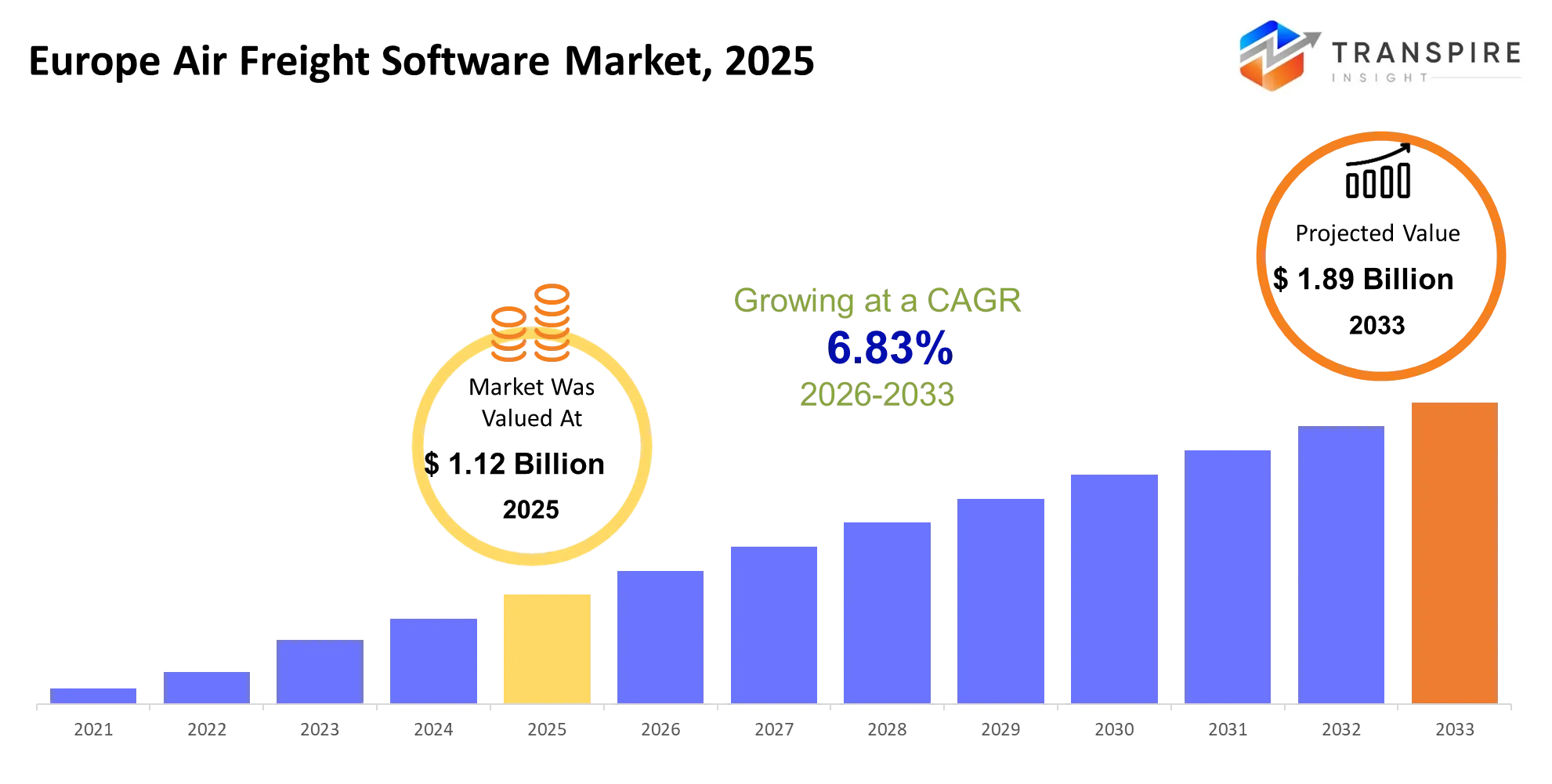
As per Transpire Insight Analysis the Europe Air Freight Software Market size is estimated at USD 1.12 Billion in 2025 and is anticipated to reach USD 1.89 Billion by 2033, growing at a CAGR of 6.83% from 2026 to 2033.
The Europe air freight software market serves airlines, freight forwarders, airports, and cargo handlers. It helps them book loads, handle space and capacity, follow shipments, fill out required paperwork, and coordinate moves across large air cargo routes.In the past three to five years, the work has changed a lot. Teams have moved away from stand alone tools and paper based steps. More companies now use cloud systems. They also connect services with APIs. Real time tracking is becoming normal. Many firms store data in shared digital records instead of separate files.
IATA has pushed a new standard for air cargo data sharing called ONE Record. It is set as the preferred standard starting in January 2026. Airlines already make up more than 70% of global air waybill volume. That puts them on a path to apply the standard as it rolls out.The COVID 19 disruptions to supply chains also played a role. After those shocks, trade became less steady. Cargo operators had to act quickly. They focused on better shipment visibility, more reliable capacity planning, and stronger day to day operations.
Another change is coming with EU eFTI. This will add a new digital requirement. Full use is planned for July 2027.All of these shifts help drive software uptake. Cargo businesses want quicker ways to share data. They also want fewer manual tasks, clearer compliance, and more control when operations are split across many groups.
Europe Air Freight Software Market Size & Forecast:
- Europe Air Freight Software Market Size 2025: USD 1.12 Billion
- Expected Market Value 2033: USD 1.89 Billion
- Forecast CAGR: 6.83%
- Leading region in 2025: Germany
- Fastest Growing region: France
- Key Profile: IBS Software, CHAMP Cargosystems, Unisys, Kale Logistics Solutions, Accelya, Descartes Systems Group, WiseTech Global, CargoWise, INFORM, IBS iCargo, Sabre, Amadeus, Oracle, SAP, Lufthansa Systems
Key Market Insights
- Germany leads the region in adoption. This is backed by solid freight facilities, heavy logistics work, and years of airline tech spending.
- France is growing faster. It benefits from money put into digital logistics, updated cargo work, and wider take up of linked software tools.
- In January 2026, ONE Record was picked as the main way to share data. The change moves users away from split and unclear message trails, toward shared digital cargo files.
- More than 70% of the world’s air waybill work comes from airlines that are ready to use ONE Record. That helps drive demand for systems that can work across different groups.
- In 2025, over 70% of cargo stakeholders said they know about ONE Record. Close to 50% also said they are set to start.
- Cloud platforms are getting more attention. Cargo firms want setups that can scale, plus API links, one place for data, and less reliance on old systems.
- AI for document work is now in real use. CHAMP and IAG Cargo are using AI to turn paper Air Waybills and related papers into clean digital data.
- Live analytics is starting to matter more for competition. It lets cargo teams watch how things run, spot delays, use space better, and cut down on manual steps.
- eFTI steps are also raising the bar for digital paperwork. Certified platforms are preparing for electronic freight information exchange. This comes before the full EU start in July 2027.
- E-commerce and pharma freight are pushing software for clearer views of shipments. They also want automation for documents, joined monitoring, and quicker fixes when problems happen.
What are the Key Drivers, Restraints, and Opportunities in the Europe Air Freight Software Market?
Driver: Digital standard work is starting to push wider use. IATA chose ONE Record as the main air cargo data sharing rule for January 2026. At the same time, many airlines, about 70 percent of the world’s air waybill flow, plan to put it in place. When everyone shares data the same way, teams need working APIs. They also need cargo tools, tracking services, and documents that connect across systems. EU eFTI is adding more pressure too. Full use is set for July 2027.
Restraint: Old systems still slow things down. Carriers, airports, ground firms, and freight forwarders can run on separate databases. They may also rely on different message formats and day to day tools. Updating or linking to older platforms costs money. It also takes engineers, time to move data, and strong security checks. Staff training is another must. If systems stay split, rollouts can drag on. That can also cut early value from new software.
Opportunity: Automation with AI can grow the market in a real way. CHAMP and IAG Cargo showed clear results with AI help for Air Waybill and document work. Less manual typing was needed. That helped downstream steps move sooner. Next areas may include AI support for capacity decisions. There is also room for better handling of odd cases. Predictive views and smoother customs paperwork are next. Real time shipment insight can be a focus as well. Suppliers that pair AI with ONE Record APIs and cloud tools can serve more needs in one setup.
What Has the Impact of Artificial Intelligence Been on the Europe Air Freight Software Market?
AI is changing how air freight software works. It is moving away from pure transaction steps and toward tools that help make decisions on their own.One key use is reading documents with AI. The software can pull details from Air Waybills and other shipment papers. That cuts down on typing by hand. It also helps the next steps start sooner. CHAMP’s work with IAG Cargo is one example. A2Z Scan turns paper files into digital records. Those records then feed into later systems for consolidation.
Machine learning is also being used for planning and monitoring. Teams use it for capacity planning and tracking shipments. It can help with revenue choices, spot odd events, and support operational forecasting. Some real-time analytics setups pull cargo data from several places. Then they can point out delays, limited capacity, and slow spots in the process. This supports quicker calls during day-to-day operations.AI can also help in customs and compliance tasks. It organizes cargo details so review and data sharing happen faster.Even so, a big issue is still data spread across many systems. Airline, forwarder, airport, ground handler, and government tools do not always line up. This leads to uneven data quality and hard integration work. IATA notes that broken up cargo data keeps causing repeat work, holds up shipments, and adds compliance risk.
Key Market Trends
- From 2024, airlines and freight forwarders have moved away from one-off messages. They now use ONE Record style digital cargo data exchange.
- In 2025, 72% of the world’s air waybill work came from airlines getting ready to use ONE Record.
- By January 2026, ONE Record was the go-to approach. This push sped up spending on APIs, stronger security, and tools that let cargo systems work together.
- AI did not stay in small trials. In 2025, CHAMP and IAG Cargo brought automated Air Waybill and document handling into daily work.
- More teams are moving off strict local setups. Cargo operators want systems that can grow, and they want quicker connections between partners.
- Online shopping has raised the bar for seeing shipments at the item level. This is especially true when house and master Air Waybill details must match.
- Electronic paperwork is also taking on more regulatory weight. EU eFTI platforms are getting ready for broader electronic freight information exchange in 2027.
- Live analytics is starting to guide day-to-day moves. It is used for cargo handling choices, capacity plans, and performance tracking.
- Connected devices and shared cargo standards are opening new paths for monitoring. Teams can track shipment conditions, send alerts, and manage exceptions.
- Pharma and other specialist cargo groups are asking for richer real-time data. They focus on cold-chain visibility, rules compliance, and safe handling.
Europe Air Freight Software Market Segmentation
By Software Type:
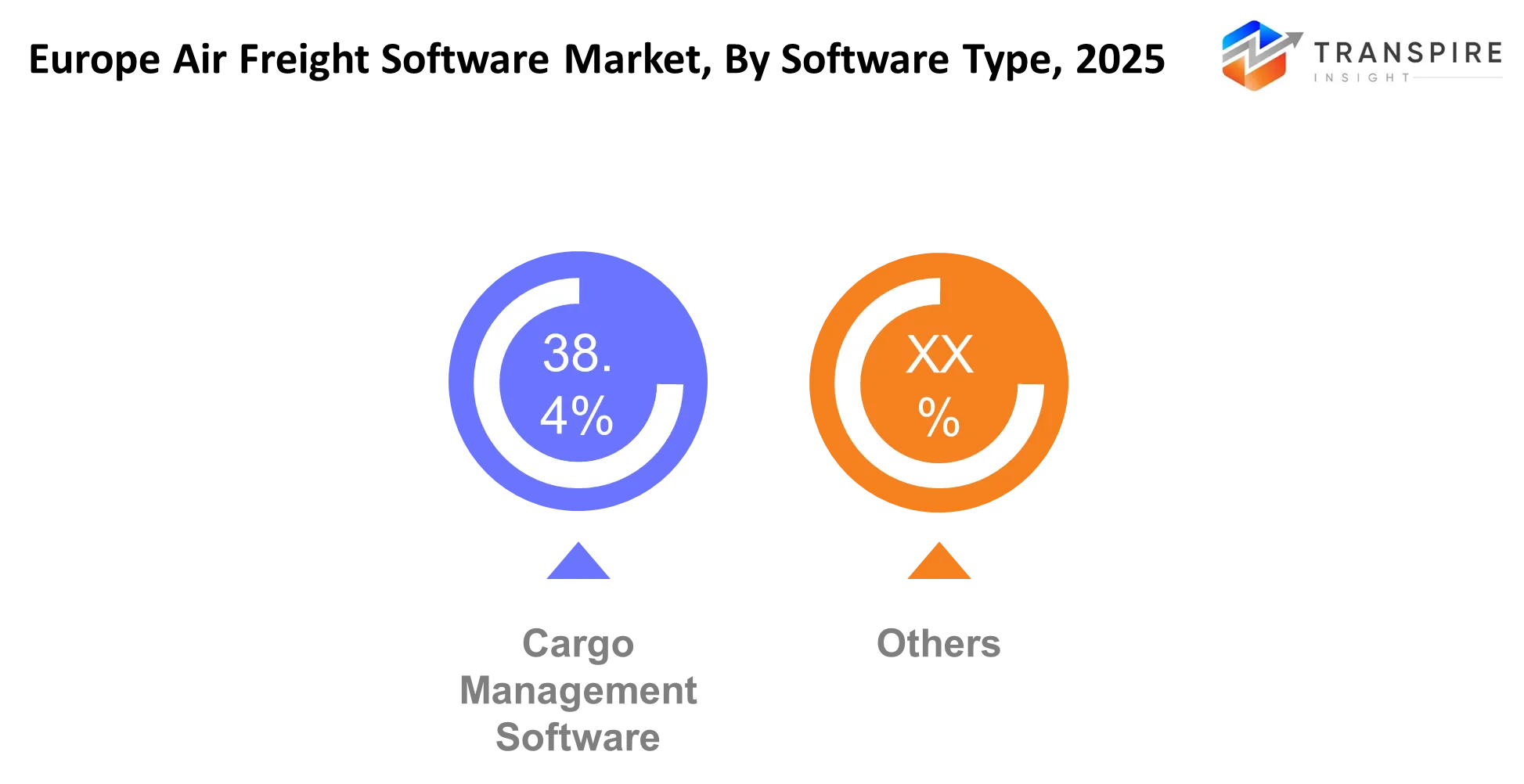
Air Cargo Management Software helps with booking, taking in cargo, controlling capacity, handling tasks, and coordinating day to day work across airline cargo routes. Freight Management Software covers forwarding work. It supports shipment planning, choosing carriers, and preparing freight documents. Warehouse Management Software runs cargo receiving and storage. It also tracks inventory, manages picking, and handles terminal steps. Cargo Booking Software checks rates, reserves space, records shipment info, and confirms bookings. Flight Planning Software aids schedule and route planning for cargo.
Revenue Management Software helps set prices and manage capacity. It also supports yield choices. Tracking and Visibility Software shows shipment progress. It tracks key milestones, sends alerts, and shares location data. Customs and Compliance Software supports declarations and screening. It manages the paperwork needed for rules, and it helps confirm compliance for cross border air freight.
By Deployment:
Cloud deployment lets teams use cargo apps over the internet. It runs on remote systems, so it scales as needs change. It also helps when work happens in several places. Updates can be handled from one central point.On-premise deployment is different. The software and operational data stay inside the company network. Admins can manage it directly. This fits groups that want full control of their systems.Hybrid deployment mixes both. Some parts stay local. Other parts move into the cloud. This can make change easier and slower, so modernization happens step by step.
SaaS means subscription access. Users get the service without doing much internal upkeep. The provider handles most maintenance tasks.Private cloud gives a dedicated cloud setup. This is for teams that want stronger control of data and security. Public cloud shares infrastructure across many customers. It still scales well and can fit flexible needs.Hosted deployment places apps on infrastructure run by someone else. That reduces the amount of work for internal teams.Edge-based deployment processes selected cargo data near where the work happens. This can cut delay and keep actions local.
By Application:
Cargo booking software lets users reserve space, enter shipment details, handle rate settings, and confirm bookings across airlines, freight forwarders, and shippers. Shipment tracking shares key milestones, shows where a load is, flags problems early, and keeps delivery status clear within cargo networks. Capacity management helps assign aircraft space, plan the load, and watch what capacity is still open. Route tools review timetables, choose routes, list transit stops, and account for real world limits so moves run more smoothly.
Warehouse management covers receiving, where goods sit, inventory checks, picking, and coordination with terminals. Revenue management supports pricing work, yield decisions, capacity allocation, and overall commercial plans. Customs processing supports e declarations, required regulatory checks, screening details, and rules for moving goods across borders. Documentation tools handle Air Waybills, invoices, certificates, customs files, and other shipment papers, which helps the shift toward common digital data exchange.
By End User:
Airlines already run on cargo systems. Those tools help them plan capacity, set prices, manage flights, and coordinate shipments in real time. They also support day to day operations and shipment updates.Freight forwarders work with their own platforms. They can prepare quotes, combine lots into one move, choose the right carriers, handle paperwork, and keep customers informed.Airports need software too. It is used to coordinate cargo, share data with partners, and watch operations as they happen.Ground handlers use digital tools for the basics. They take cargo in, move it through the warehouse, follow handling rules, and send progress updates.
Cargo terminal operators depend on software for inventory control. They also track cargo moves, run security steps, and coordinate handling with staff and partners.Logistics providers use connected platforms. With those, they manage forwarding, monitor shipments, support customs work, oversee warehousing, and handle customer requests.Shippers use apps for planning and checks. They rely on booking tools, tracking, and document handling to monitor each shipment.Customs agencies use electronic systems for filings. They run checks, confirm rules are met, and assess cargo when it crosses borders.
By Technology:
AI and machine learning help run document workflows without as much manual work. They also support forecasts, spot unusual patterns, and help plan how much capacity to use. They guide day to day choices in operations.IoT links cargo sensors to real devices in the field. It can track where a shipment is. It also records temperature, item or unit condition, and handling events as they happen.Blockchain is used to keep data changes secure. It allows clear traceability from start to finish. It also helps manage how information is shared between cargo groups.
Big data analytics looks through large sets of operation data. It supports forecasting and checks performance trends. It also helps with network planning and cargo related insights.Cloud computing gives on demand computing power. It also centralizes access to cargo data and tools. This supports cargo apps at different scales.API integration connects systems across the air and logistics chain. It links airlines, forwarders, airports, handlers, customs, and other partners. It does this through common interfaces. RFID enables automatic checks for cargo and equipment. It supports tracking for cargo units and handling units during moves.Digital twins build a virtual copy of the operations. Teams can test workflows there first. They can check capacity limits, find bottlenecks, and run planning with different scenarios for cargo sites.
By Region:
Germany is strong in this group. It has big aviation hubs, solid transport work, and cargo tech that is already in use. Frankfurt helps carry a lot of the load. Other logistics hubs also back cargo planning. They support tracking, freight forwarding, and day to day operations software.The UK stays in a top tier role. It has key air cargo gateways. It also benefits from steady international trade. Its logistics tools are well built and widely used.France has solid aviation capacity. It is also pushing more digital logistics features. That mix keeps its position steady.The Netherlands stays important for air cargo tech. Schiphol connects to freight runs. The wider international network helps move goods fast and reliably.
Spain supports tech take up too. Major airports handle large cargo volumes. Tourism adds extra shipping needs. Retail logistics and cross border trade add more demand.Italy keeps demand across several areas. Manufacturing is active. Pharmaceuticals move through regularly. Automotive shipments and freight forwarding also play a role.Belgium and Switzerland bring niche cargo work. They rely on major aviation gateways. Pharma logistics runs there as well. High value parcels are common. Cross border freight services help link routes across regions.
What are the Key Use Cases Driving the Europe Air Freight Software Market?
Cargo booking and shipment management stay central. Airlines and freight forwarders still need one coordinated view of reservations, space, papers, and shipment steps.Digital tools cut down on manual booking work. They also help data move better between carriers, forwarders, ground handlers, and shippers.Shipment tracking and warehouse coordination are spreading too. This shows up at more airports, cargo yards, and logistics companies.E-commerce needs the house Air Waybill and master Air Waybill to match. Pharma needs steady monitoring of conditions and up to date operational status.New areas are now taking shape.
These include AI for document checks, forecasting for capacity, automated customs tasks, and sharing data through ONE Record.CHAMP’s AI document automation with IAG Cargo points to real progress in taking cargo details from paper to digital. ONE Record then supports wider work through APIs.
|
Report Metrics |
Details |
|
Market size value in 2025 |
USD 1.12 Billion |
|
Market size value in 2026 |
USD 1.19 Billion |
|
Revenue forecast in 2033 |
USD 1.89 Billion |
|
Growth rate |
CAGR of 6.83% from 2026 to 2033 |
|
Base year |
2025 |
|
Historical data |
2021 - 2024 |
|
Forecast period |
2026 - 2033 |
|
Report coverage |
Revenue forecast, competitive landscape, growth factors, and trends |
|
Regional scope |
Europe (Germany, United Kingdom, France, Italy, Spain and Rest of Europe) |
|
Key company profiled |
IBS Software, CHAMP Cargosystems, Unisys, Kale Logistics Solutions, Accelya, Descartes Systems Group, WiseTech Global, CargoWise, INFORM, IBS iCargo, Sabre, Amadeus, Oracle, SAP, Lufthansa Systems |
|
Customization scope |
Free report customization (country, regional & segment scope). Avail customized purchase options to meet your exact research needs. |
|
Report Segmentation |
By Software Type (Air Cargo Management Software, Freight Management Software, Warehouse Management Software, Cargo Booking Software, Flight Planning Software, Revenue Management Software, Tracking & Visibility Software, Customs & Compliance Software); By Deployment (Cloud-Based, On-Premise, Hybrid, SaaS, Private Cloud, Public Cloud, Hosted, Edge-Based); By Application (Cargo Booking, Shipment Tracking, Capacity Management, Route Optimization, Warehouse Management, Revenue Management, Customs Processing, Documentation); By End User (Airlines, Freight Forwarders, Airports, Ground Handlers, Cargo Terminal Operators, Logistics Providers, Shippers, Customs Agencies); By Technology (AI & Machine Learning, IoT, Blockchain, Big Data Analytics, Cloud Computing, API Integration, RFID, Digital Twins); By Region (Germany, UK, France, Netherlands, Spain, Italy, Belgium, Switzerland) |
Which Regions are Driving the Europe Air Freight Software Market Growth?
Germany leads the regional market. A big reason is Frankfurt Airport, which acts as a major air cargo hub in Europe. Germany also has many airlines and freight players close to each other. That includes forwarders, ground handlers, and logistics firms. On top of that, the country exports a lot from heavy industry. It also ships pharmaceuticals and supports automotive freight. Tech-focused cargo work also plays a role.
Lufthansa Cargo is another key factor. The carrier has run digital change efforts for years. Because of this, customers there are used to cargo platforms. They book loads online. They track shipments. They manage handling through systems. Lufthansa Cargo has worked with IBS Software in several parts of its network. This includes digital mail and cargo handling work. These steps help keep Germany seen as a place where new tools get adopted early.
The UK is also a major contributor, but it looks different from Germany. UK cargo activity leans more toward international forwarding. E-commerce flows matter more too. Express shipments also stand out. Cross-border trade plays a larger part. Heathrow and East Midlands function as strong entry points for cargo. In London, the business environment supports needs like booking, shipment tracking, customs steps, and revenue management features. UK operators also deal with harder paperwork for international shipments. This comes after changes tied to the country’s trading relationship with the European Union. Because of that, steady investment in digital freight work helps software spread across airlines, forwarders, airports, and logistics providers. It does this without depending as much on the industrial manufacturing mix seen in Germany.
France is growing faster than the other regional markets in the same group. Airline upgrades are one driver. Freight digitization is another. Cloud-based operating systems are also expanding. More standard digital cargo exchange is underway. That shift brings more chances for firms to move into shared platforms as ONE
Who are the Key Players in the Europe Air Freight Software Market and How Do They Compete?
Competition is driven by tech. It is also fairly focused on a mix of niche aviation software firms and big enterprise tech players. People who buy these tools now look at more than the license cost. They compare platforms by what they can do for cargo needs. They also check how well systems work together. Cloud setup matters too. Many buyers want AI features, faster rollout, and clear help after go live. They also care about whether the platform follows industry standards.
The shift toward ONE Record is making some things stand out even more. Secure APIs and shared data structures are now a key part of the pitch. This is also opening doors for vendors that can connect airlines, forwarders, ground handlers, airports, and regulators in one flow. CHAMP Cargosystems stands out with cargo focused platforms. It also pushes fast digital automation. CHAMP A2Z Scan automates Air Waybill work with AI and OCR. CHAMP 1Neo-Connect supports customers as they move toward ONE Record.
IBS Software plays with a SaaS product called iCargo. It brings together cargo sales, day to day operations, accounting, and shipment visibility. Lufthansa Cargo is a major customer in Europe. WiseTech Global sells CargoWise. It leans on connected logistics workflows and global forwarding operations. Descartes Systems Group focuses on shipment management, customs tasks, compliance needs, and links across modes of transport.
Company List
- IBS Software
- CHAMP Cargosystems
- Unisys
- Kale Logistics Solutions
- Accelya
- Descartes Systems Group
- WiseTech Global
- CargoWise
- INFORM
- IBS iCargo
- Sabre
- Amadeus
- Oracle
- SAP
- Lufthansa Systems
Recent Development News
- "In April 2026, CHAMP Cargosystems expanded its strategic partnership with Neurored to enable ONE Record through 1Neo-Connect and eAWB solutions. The collaboration adds standardized real-time data sharing to existing electronic Air Waybill workflows, helping freight forwarders, shippers, and carriers reduce manual processes and improve shipment visibility.https://www.champ.aero/press-releases/neurored-and-champ-cargosystems-expand-partnership-to-enable-one-record-with-1neo-connect-and-eawb-solutions (CHAMP Cargosystems)."
- "In March 2026, CHAMP Cargosystems launched support for the Boeing 777-300ERSF within its Cargospot Weight & Balance solution. The update adds automated load planning and AI-powered optimization for the high-volume freighter, supporting airlines operating increasingly diverse converted freighter fleets.https://www.champ.aero/press-releases/champ-cargosystems-adds-new-aircraft-type-boeing-777-300ersf-to-its-load-planning-solution-cargospot-weight-balance (CHAMP Cargosystems)."
- "In July 2025, CHAMP Cargosystems entered a partnership with IAG Cargo to deploy AI-powered A2Z Scan for automated Air Waybill and cargo-document processing. The deployment converts paper documents into digital data and reduces manual handling, strengthening automation across airline and ground-handling operations.https://www.champ.aero
What Strategic Insights Define the Future of the Europe Air Freight Software Market?
The direction of the market is shifting toward linked digital cargo systems. This is instead of a pile of separate apps that do not talk to each other. ONE Record should keep strong influence here. With shared, standard APIs, teams can avoid repeated data work, improve how well shipments can be tracked, and link airlines, forwarders, ground handlers, and regulators using one common data view.There is a risk that is easy to miss. Things can split during rollout. If governments, airlines, and tech providers move to the standards at different speeds, the network value can shrink. Then the gains from digital integration may not show up as expected.
Another opening is using AI on top of shared cargo data. The focus can be on auto documentation, better planning for capacity, handling exceptions faster, and improving revenue outcomes. CHAMP’s AI document work already points to a clear step from manual checks to workflow automation. For that reason, market players should push for open APIs, work that fits ONE Record, and AI tools that can be added in parts. They should also avoid locking into closed platforms. This approach lets software choices change as European cargo data rules and day to day needs evolve toward 2033.
Europe Air Freight Software Market Report Segmentation
By Software Type
- Air Cargo Management Software
- Freight Management Software
- Warehouse Management Software
- Cargo Booking Software
- Flight Planning Software
- Revenue Management Software
- Tracking & Visibility Software
- Customs & Compliance Software
By Deployment
- Cloud-Based
- On-Premise
- Hybrid
- SaaS
- Private Cloud
- Public Cloud
- Hosted
- Edge-Based
By Application
- Cargo Booking
- Shipment Tracking
- Capacity Management
- Route Optimization
- Warehouse Management
- Revenue Management
- Customs Processing
- Documentation
By End User
- Airlines
- Freight Forwarders
- Airports
- Ground Handlers
- Cargo Terminal Operators
- Logistics Providers
- Shippers
- Customs Agencies
By Technology
- AI & Machine Learning
- IoT
- Blockchain
- Big Data Analytics
- Cloud Computing
- API Integration
- RFID
- Digital Twins
By Region
- Germany
- UK
- France
- Netherlands
- Spain
- Italy
- Belgium
- Switzerland
Frequently Asked Questions
Find quick answers to common questions.
The expected Europe Air Freight Software Market size for the market will be USD 1.89 Billion in 2033.
Key segments for the Europe Air Freight Software Market are By Software Type (Air Cargo Management Software, Freight Management Software, Warehouse Management Software, Cargo Booking Software, Flight Planning Software, Revenue Management Software, Tracking & Visibility Software, Customs & Compliance Software); By Deployment (Cloud-Based, On-Premise, Hybrid, SaaS, Private Cloud, Public Cloud, Hosted, Edge-Based); By Application (Cargo Booking, Shipment Tracking, Capacity Management, Route Optimization, Warehouse Management, Revenue Management, Customs Processing, Documentation); By End User (Airlines, Freight Forwarders, Airports, Ground Handlers, Cargo Terminal Operators, Logistics Providers, Shippers, Customs Agencies); By Technology (AI & Machine Learning, IoT, Blockchain, Big Data Analytics, Cloud Computing, API Integration, RFID, Digital Twins); By Region (Germany, UK, France, Netherlands, Spain, Italy, Belgium, Switzerland).
Major Europe Air Freight Software Market players are IBS Software, CHAMP Cargosystems, Unisys, Kale Logistics Solutions, Accelya, Descartes Systems Group, WiseTech Global, CargoWise, INFORM, IBS iCargo, Sabre, Amadeus, Oracle, SAP, Lufthansa Systems.
The Europe Air Freight Software Market size is USD 1.12 Billion in 2025.
The Europe Air Freight Software Market CAGR is 6.83% from 2026 to 2033.
- IBS Software
- CHAMP Cargosystems
- Unisys
- Kale Logistics Solutions
- Accelya
- Descartes Systems Group
- WiseTech Global
- CargoWise
- INFORM
- IBS iCargo
- Sabre
- Amadeus
- Oracle
- SAP
- Lufthansa Systems
About the Authors

Mayur Shinde
I am Mayur Shinde, a Senior Research Analyst at Transpire Insight, specializing in the Automotive & Transportation and Information & Communication Technology (ICT) Industry. My work focuses on analyzing emerging market trends, technological advancements, competitive landscapes, and industry developments to deliver accurate, data-driven insights. I am passionate about transforming complex market information into clear, actionable content that helps businesses, professionals, and decision-makers stay informed and make confident strategic decisions.

Chakradhar Khansole
Chakradhar serves as the Research Director at Transpire Insight, bringing over 8 years of experience in technology, innovation, and strategic market intelligence. He specializes in transforming complex market data into actionable business insights that enable organizations to make informed, growth-oriented decisions. Recognized for his strategic vision and analytical expertise, Chakradhar leads high-impact research initiatives, delivering comprehensive market assessments, competitive intelligence, and forward-looking industry analysis.
Recently Published Reports
-
Apr 2026
ATV & UTV Market
ATV & UTV Market Size, Share & Analysis Report By Type (ATV, and UTV), By Variants (Less Than 400 CC, 400 CC To 800 CC, and More Than 800 CC), and Geography (North America, Europe, Asia-Pacific, Middle East and Africa, South and Central America), 2021 - 2031
-
Apr 2026
Automotive Central Gateway Module Market
Automotive Central Gateway Module Market Size, Share & Analysis Report By Type (Ethernet Central Gateway Module, CAN Central Gateway Module, LIN Central Gateway Module, and FlexRay), By Application (Powertrain Control, Body Control, Infotainment System, Advanced Driver Assistance Systems (ADAS), and Others), By End User (Passenger Vehicles, and Commercial Vehicles), and Geography (North America, Europe, Asia-Pacific, Middle East and Africa, South and Central America), 2021 - 2031
-
Apr 2026
Automotive Engine Oil Filter Market
Automotive Engine Oil Filter Market Size, Share & Analysis Report By Filter Type (Fuel Filter, Engine Oil Filter, Hydraulic Oil Filter, and Others), By Filter Media (Cellulose, Synthetic, and Micro), By Sales Channel (OEMs, and Aftermarket), By Vehicle Type (Passenger Cars, Light Commercial Vehicles, Heavy Duty Trucks, Buses and Coaches, and Off-road Vehicles), and Geography (North America, Europe, Asia-Pacific, Middle East and Africa, South and Central America), 2021 - 2031
-
Apr 2026
Automotive Parts Aluminium Die Casting Market
Automotive Parts Aluminium Die Casting Market Size, Share & Analysis Report By Production Process (Pressure Die Casting, Vacuum Die Casting, Squeeze Die Casting, Gravity Die Casting), By Application (Body Parts, Engine Parts, Transmission Parts, Battery And Related Components, Other Application Types), and Geography (North America, Europe, Asia-Pacific, Middle East and Africa, South and Central America), 2021 - 2031
Our Clients



