
Europe Advanced Vehicle Diagnostics and Remote Services Market Size & Forecast:
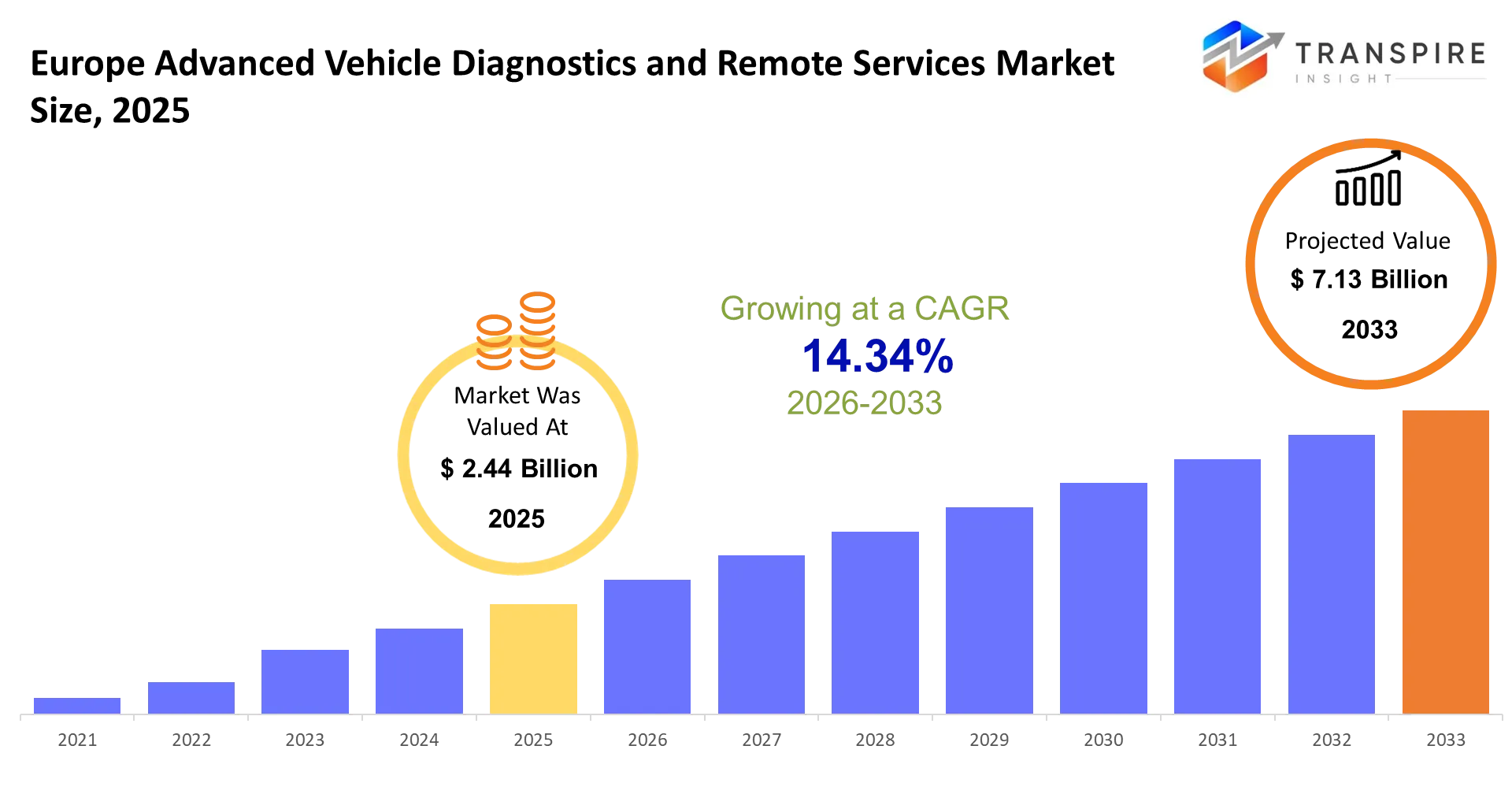
- Europe Advanced Vehicle Diagnostics and Remote Services Market Size 2025: USD 2.44 Billion
- Europe Advanced Vehicle Diagnostics and Remote Services Market Size 2033: USD 7.13 Billion
- Europe Advanced Vehicle Diagnostics and Remote Services Market CAGR: 14.34%
- Europe Advanced Vehicle Diagnostics and Remote Services Market Segments: By Type (On-board Diagnostics, Remote Diagnostics, Predictive Maintenance, Others), By Application (Fleet Management, Telematics, Vehicle Health Monitoring, Others), By End-User (Automotive OEMs, Fleet Operators, Service Providers, Others), By Connectivity (4G, 5G, IoT, Others).
To learn more about this report,  Download Free Sample Report
Europe Advanced Vehicle Diagnostics and Remote Services Market Summary:
The Europe Advanced Vehicle Diagnostics and Remote Services Market size is estimated at USD 2.44 Billion in 2025 and is anticipated to reach USD 7.13 Billion by 2033, growing at a CAGR of 14.34% from 2026 to 2033. The Europe Advanced Vehicle Diagnostics and Remote Services Market has progressed from its original workshop support function to establish a genuine operational intelligence system that provides real-time data about connected vehicles. Fleet operators, OEMs, insurers, and service providers now use remote diagnostics to detect faults before breakdowns occur, reduce vehicle downtime, optimize maintenance cycles, and manage software-driven vehicle systems across passenger and commercial fleets. Vehicles now function as data-producing systems instead of existing only as mechanical components, which has made this ability essential.
The market has undergone a structural transformation during the past five years because cloud-based telematics and over-the-air diagnostics now serve as the core technologies for electric vehicles and software-defined vehicles. The transition accelerated after the COVID-19 pandemic and subsequent semiconductor shortages exposed how costly unplanned downtime and fragmented service networks could become.
The automotive industry faced dual challenges from stricter emissions regulations and vehicle safety standards in Europe which required manufacturers to establish systems for predictive monitoring and remote compliance management. Subscription-based diagnostics and fleet analytics and remote software services have become the main revenue source for connected vehicle companies, which now outpace revenue from conventional repair services.
Key Market Insights
- The German automotive manufacturing infrastructure produced a market share of nearly 28% which led to its control of the Europe Advanced Vehicle Diagnostics and Remote Services Market in 2025.
- Western Europe maintains a large industry presence which connects through mobility investments that Western European countries like France Italy and the United Kingdom.
- Eastern Europe represents the fastest-growing regional market through 2032 as fleet digitization and smart transportation projects accelerate vehicle connectivity adoption.
- The Nordic countries have become new centers of demand because commercial fleet operators need both predictive maintenance and systems that monitor vehicle emissions compliance.
- The Europe Advanced Vehicle Diagnostics and Remote Services Market in 2025 established remote diagnostics services as the leading segment which held more than 42% market share because clients required solutions to optimize fleet uptime.
- The logistics industry has seen increased demand for telematics-enabled predictive maintenance which has become its second most important operational sector because it provides real-time vehicle performance data.
- The market for over-the-air software update services will experience its highest growth rate between 2026 and 2032 because more software-defined vehicles will become operational.
- AI-powered vehicle health monitoring platforms are gaining market traction as OEMs focus on reducing dealership dependency and warranty service costs.
- Connected cars achieved a market share of approximately 55% because passenger vehicles together with premium and mid-range vehicle categories experienced increased connected car adoption.
- The commercial fleet management sector has become the fastest developing market segment because transport operators want to achieve both lower maintenance expenses and improved operational efficiency.
- The market for electric vehicle diagnostics platforms is expanding because customers need solutions that enable them to track battery performance and manage energy remotely.
What are the Key Drivers, Restraints, and Opportunities in the Europe Advanced Vehicle Diagnostics and Remote Services Market?
The primary driving force behind the expansion of the Europe Advanced Vehicle Diagnostics and Remote Services Market stems from the swift development of software-defined electric vehicles and software-defined vehicles. European automakers now integrate hundreds of sensors, connected control units, and cloud-linked telematics systems into modern vehicles, making traditional maintenance models inefficient. OEMs began using continuous remote diagnostics after Euro 6 emissions compliance requirements and new vehicle safety monitoring regulations became mandatory. Subscription-based remote monitoring and over-the-air software updates together with data-driven maintenance platforms enable automakers to create predictable income streams while fleets and consumers demand reduced downtime and proactive maintenance. This has turned diagnostics from a repair operation into a continuous digital service business.
The market faces two major structural obstacles which include cybersecurity problems and data interoperability issues. The automotive software ecosystem has multiple segments which vehicle diagnostics platforms use to gather highly sensitive operational information and driver data. European GDPR compliance obligations, combined with the absence of standardized cross-brand diagnostic architectures, make integration expensive and slow. Small fleet operators and independent service providers postpone their adoption process because they need to invest heavily in infrastructure upgrades and cybersecurity enhancements and technician training programs. The industry suffers from operational fragmentation which decreases aftermarket revenue growth potential while hindering interoperability between different vehicle systems used in mixed fleet operations.
The upcoming expansion will be driven through AI-based predictive diagnostic capabilities which will enhance commercial electric vehicle fleet operations. The logistics industry in Germany, the Netherlands, and Scandinavian countries is making significant investments in connected electric vehicle fleet infrastructure to achieve two goals: minimizing battery failure incidents and enhancing energy efficiency. The use of advanced analytics platforms which forecast battery deterioration and charging system faults and component failures before they happen will help organizations decrease their operational interruptions. European freight systems are moving towards electrification, and companies that offer remote diagnostic services with AI capabilities and edge computing and real-time fleet monitoring will achieve profitable service agreements.
What Has the Impact of Artificial Intelligence Been on the Europe Advanced Vehicle Diagnostics and Remote Services Market?
The Europe Advanced Vehicle Diagnostics and Remote Services Market now operates through predictive fleet intelligence instead of reactive maintenance because of artificial intelligence and digital technologies. Automotive OEMs and fleet operators now deploy AI-driven diagnostics platforms which use telematics networks to track engine performance and battery health and braking systems and vehicle software behavior throughout their entire operational period. The systems detect system faults through automatic anomaly detection which activates remote troubleshooting processes and establishes maintenance schedules for upcoming component failures to decrease unplanned vehicle downtime which affects commercial fleets.
Machine learning models achieve better predictive maintenance results because they study past driving behaviors and sensor data and environmental conditions. AI-based battery analytics in electric vehicle fleets use degradation rate predictions and charging efficiency assessments to help operators extend battery life while reducing battery replacement expenses. Western European fleet operators who implemented remote predictive diagnostics platforms experience both decreased maintenance costs and enhanced vehicle uptime. The combined work of advanced route optimization and energy management systems results in fuel savings and improved emissions compliance.
The adoption of AI technology suffers from an essential problem because vehicle data ecosystems operate in disconnected segments. The development of algorithms face challenges because different OEM software systems use different sensor standards and traditional fleet systems create compatibility issues. The high initial costs required for implementing AI-powered diagnostic systems make it difficult for smaller operators to decide whether to proceed with their implementation.
Key Market Trends
- European original equipment manufacturers have enhanced their ability to deploy software through over-the-air updates since 2021 because they need connected vehicles to drive their future revenue growth from aftermarket services.
- Germany and France adopted remote diagnostics technology at a faster rate after Euro 6 standards mandated commercial fleets to monitor their emissions in real time.
- Fleet operators achieved better operational efficiency by implementing AI-driven predictive maintenance systems which detect sensor problems before they develop into equipment failures.
- Electric vehicle diagnostic systems experienced a growth period from 2022 until 2025 because battery health assessment became essential for managing fleet operational profitability.
- Robert Bosch GmbH and Continental AG developed new telematics partnerships which use cloud technology to boost their recurring remote service revenue across European markets.
- Logistics companies increasingly adopted condition-based maintenance practices which use real-time vehicle performance data to replace their existing scheduled maintenance systems.
- Independent repair providers lost market share after OEMs restricted proprietary vehicle software access within connected automotive ecosystems during 2023 and 2024.
- 5G-enabled vehicle communication systems improved remote diagnostics response speed, which enabled technicians to detect faults more quickly and decreased the need for roadside assistance.
- Cybersecurity spending experienced a significant increase after connected vehicle data breaches revealed security weaknesses in telematics systems that operated across international borders and in remote fleet control operations.
- Scandinavian fleet operators used AI-based energy optimization systems which enhanced their ability to predict electric vehicle range and charging performance during extreme winter weather conditions.
Europe Advanced Vehicle Diagnostics and Remote Services Market Segmentation
By Type
The type segment market leader Remote diagnostics because automotive manufacturers and fleet operators need to detect faults instantly while they want to minimize their service downtime. The mandatory emissions and safety compliance requirements that exist throughout Europe force both passenger vehicles and commercial vehicles to use on-board diagnostics systems. The connected vehicle systems create increased operational data, which results in faster expansion of predictive maintenance solutions. Machine learning models enable battery health monitoring, engine performance tracking, and component failure prediction, which identifies potential breakdowns before they happen.
The smaller operators face adoption challenges because predictive platforms need both complete system integration and standardized vehicle data access to operate effectively. The market future will advance toward AI-powered diagnostic systems that use remote software updates, predictive alerts and automated maintenance scheduling to operate their functions. The manufacturers who implement cloud analytics together with over-the-air service capabilities will create new recurring revenue streams while they boost their customer retention rates.
By Application
The main application area of fleet management systems shows growth because logistics companies and leasing businesses and commercial transportation firms need to track their vehicles through connected monitoring systems which help them manage their operating expenses and vehicle availability. Telematics platforms together with their usage-based services and driver performance monitoring systems have become a major market segment because both insurers and mobility service providers use these platforms. The demand for vehicle health monitoring systems is increasing because electric vehicles become more common and Western European countries implement stricter emissions regulations.
Connected diagnostics systems now provide operational efficiency advantages through their ability to support route optimization and fuel consumption analysis and remote troubleshooting functions in large fleet operations. The investment behavior of different regions shows that smaller transport operators will postpone their digital platform development until they can afford infrastructure expenses and handle system integration challenges. The industry will experience growth through implementation of predictive fleet analytics and software-defined vehicle management system solutions. The market for enterprise contracts will benefit from technology providers who develop integrated platforms that combine telematics solutions with AI-based optimization tools and diagnostic capabilities.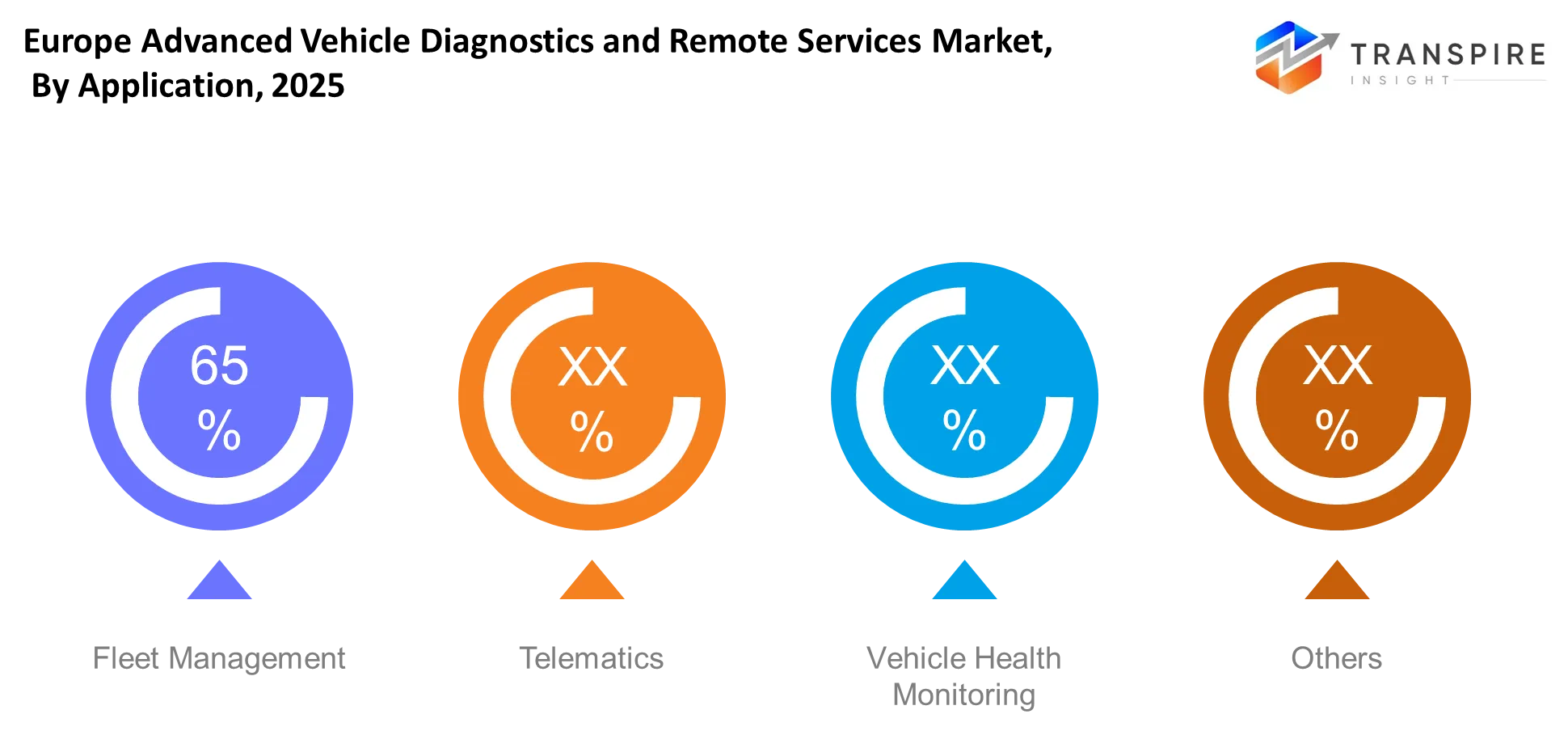
To learn more about this report, Download Free Sample Report
By End-User
The end-user segment of the automotive industry is primarily controlled by automotive OEMs because connected vehicle platforms have become essential tools for managing warranties and performing software updates and generating revenue from digital services during their entire lifecycle. Automotive manufacturers now use proprietary diagnostic systems which they integrate into their vehicle designs to protect their control over service networks and customer data. Fleet operators who run commercial transport businesses show the quickest growth among end-user groups because they want to achieve both lower maintenance costs and decreased operational interruptions.
Service providers and independent repair networks continue facing competitive pressure because modern vehicle software environments limit access to proprietary diagnostic information. Leasing companies and mobility service firms are now implementing remote monitoring platforms to enhance their asset utilization and forecasting accuracy for resale values. The future development of the market will create stronger competition between OEM-controlled ecosystems and independent aftermarket platforms. Companies that provide secure multi-brand diagnostic systems together with predictive maintenance solutions will achieve better market results in environments that use multiple types of fleet vehicles.
By Connectivity
The current dominant technology for connectivity in Europe Connects all vehicles through existing mobile networksbecause 4G provides necessary telematics and diagnostic data and remote software updates. Automotive manufacturers use IoT-enabled systems to monitor vehicle components and track fleet operations through their growing sensor-based monitoring capacity. The 5G connectivity network now represents the fastest growing market segment because it delivers low latency communication and real time analytics and self driving vehicle technology.
Network operators can deliver faster remote diagnosis services through their enhanced network capabilities which now support improved over-the-air updates and faster emergency response times. Rural transport corridors and cross-border logistics routes continue to experience operational difficulties because their network reliability shows significant variations. The upcoming investment trends will lead to increased implementation of edge computing and vehicle-to-everything systems and cloud-based analytics solutions. The European software-defined mobility infrastructure growth will create business opportunities for network providers and automotive technology firms that develop scalable high-speed connectivity systems.
What are the Key Use Cases Driving the Europe Advanced Vehicle Diagnostics and Remote Services Market?
The market for remote diagnostics in commercial fleet management operates as the primary use case which drives its adoption throughout Europe. The three organizations which include logistics operators public transport providers and leasing companies depend on connected diagnostics platforms to decrease vehicle downtime and enhance their maintenance scheduling processes while they achieve better fuel efficiency across their extensive vehicle networks.
The new technologies support battery health monitoring systems which monitor electric vehicle fleets and telematics-based insurance services. Automotive original equipment manufacturers together with fleet operators now use predictive analytics to monitor battery deterioration and driver actions and their compliance with European transportation regulations which have become more rigorous. Premium passenger vehicles now use remote software updates as a standard feature.
AI-powered autonomous vehicle diagnostics and smart mobility projects which use vehicle-to-infrastructure communication systems serve as emerging use cases. Multiple urban transport authorities and mobility service providers deploy real-time traffic-responsive diagnostics platforms which enhance route efficiency and charging management while they enable remote safety monitoring of connected electric fleets.
|
Report Metrics |
Details |
|
Market size value in 2025 |
USD 2.44 Billion |
|
Market size value in 2026 |
USD 2.79 Billion |
|
Revenue forecast in 2033 |
USD 7.13 Billion |
|
Growth rate |
CAGR of 14.34% from 2026 to 2033 |
|
Base year |
2025 |
|
Historical data |
2021 - 2024 |
|
Forecast period |
2026 - 2033 |
|
Report coverage |
Revenue forecast, competitive landscape, growth factors, and trends |
|
Regional scope |
Europe (Germany, United Kingdom, France, Italy, Spain and Rest of Europe) |
|
Key company profiled |
Bosch, Continental, Denso, ZF Friedrichshafen, Harman, Qualcomm, NXP, Infineon, Siemens, IBM, AT&T, Verizon, Vodafone, Geotab, Trimble |
|
Customization scope |
Free report customization (country, regional & segment scope). Avail customized purchase options to meet your exact research needs. |
|
Report Segmentation |
By Type (On-board Diagnostics, Remote Diagnostics, Predictive Maintenance, Others), By Application (Fleet Management, Telematics, Vehicle Health Monitoring, Others), By End-User (Automotive OEMs, Fleet Operators, Service Providers, Others), By Connectivity (4G, 5G, IoT, Others) |
Which Regions are Driving the Europe Advanced Vehicle Diagnostics and Remote Services Market Growth?
The market performance of Western Europe establishes Germany France and the United Kingdom as the leading manufacturers because they possess strong automotive production systems and advanced vehicle-to-everything technology. The implementation of remote diagnostics systems across passenger and commercial vehicle fleets experienced a rapid increase because strict emissions regulations and mandatory vehicle safety monitoring standards required compliance. The automotive OEMs together with telematics providers and cloud software companies have established integrated service networks which deliver predictive maintenance and over-the-air vehicle management services. The region maintains its position as a worldwide leader because of advanced electric vehicle infrastructure and extensive use of connected vehicles in the automotive market.
Northern Europe stands as the second largest regional contributor because its growth patterns differ from Western Europe which experiences manufacturing-driven growth. Scandinavian countries focus their efforts on developing fleet efficiency and energy optimization while implementing sustainable transportation solutions instead of large-scale vehicle manufacturing. AI-enabled diagnostics systems which Swedish Norwegian and Danish public transport operators and logistics companies use to maintain their electric commercial fleets during extreme weather conditions demonstrate their commitment to technological advancement. The digital infrastructure remains stable while organizations achieve strong cybersecurity protection and follow predictable regulatory processes to establish a dependable framework which supports remote service revenue generation.
The fleet modernization process in Eastern Europe together with growing cross-border logistics operations makes this region the fastest expanding area in the world. The European Union funding programs made it possible for Poland Romania and Hungary to boost their expenditure on connected transport infrastructure from 2023 to 2025 after they had adopted smart mobility solutions.
Who are the Key Players in the Europe Advanced Vehicle Diagnostics and Remote Services Market and How Do They Compete?
The current market environment shows moderate consolidation because major automotive technology companies control most connected diagnostic systems throughout Europe. Businesses now compete based on their software integration abilities and predictive analytics precision and cybersecurity protection and cloud-based fleet management solutions instead of their hardware pricing models. Established automotive suppliers maintain their market position by integrating their exclusive diagnostic systems into connected vehicle networks, while software-based mobility companies establish their presence through AI-powered analytics and telematics solutions. The digital transformation of commercial fleets together with the rise of electric vehicles creates new competitive challenges for companies that use subscription models to provide remote services which produce continuous income streams beyond standard vehicle upkeep.
Robert Bosch GmbH develops its unique identity through its complete system integration of vehicle sensors with telematics equipment and AI-based predictive maintenance tools. The company uses its strong connections with European OEMs to integrate remote diagnostics into vehicle systems which reduces its need for external diagnostic solutions. Continental AG concentrates its efforts on creating software-based mobility systems which include advanced driver assistance systems and their ability to use connected diagnostic information for enhancing vehicle safety and operational efficiency. Continental partners with electric vehicle manufacturers and cloud computing providers to build its over-the-air software management systems, which enable remote software updates across connected vehicle fleets.
ZF Friedrichshafen AG uses predictive fleet intelligence systems designed specifically for commercial transportation companies and logistics operators to create its competitive advantage. ZF delivers diagnostic solutions for heavy-duty fleet operations because of its extensive knowledge in drivetrain systems and commercial vehicle technology. Valeo SA develops integrated service platforms which combine battery analytics with thermal management systems and connected mobility software to create solutions that improve energy efficiency and electric vehicle diagnostic capabilities. TomTom NV develops its business through location-based telematics which provide transport operators with enhanced route optimization abilities and predictive maintenance capabilities across international logistics systems.
Company List
- Bosch
- Continental
- Denso
- ZF Friedrichshafen
- Harman
- Qualcomm
- NXP
- Infineon
- Siemens
- IBM
- AT&T
- Verizon
- Vodafone
- Geotab
- Trimble
Recent Development News
In April 2026, Bosch Forecasts Higher 2026 Automotive Software and Diagnostics Revenue: Germany-based Robert Bosch GmbH announced stronger 2026 revenue expectations driven by investments in vehicle software, connected mobility platforms, and digital automotive services. The company highlighted increasing demand for software-enabled diagnostics and remote vehicle management capabilities across Europe’s connected vehicle ecosystem.
Source: https://www.reuters.com
In March 2026, Volvo Trucks Expands Remote Programming and Predictive Maintenance Capabilities: Volvo Trucks introduced enhanced connectivity services featuring self-serve remote programming, proactive software updates, and predictive maintenance functions for commercial fleets. The development supports Europe’s growing demand for uptime optimization and remote diagnostics solutions in connected trucking operations.
Source: https://www.volvogroup.com
What Strategic Insights Define the Future of the Europe Advanced Vehicle Diagnostics and Remote Services Market?
The Europe Advanced Vehicle Diagnostics and Remote Services Market is developing into complete software-based mobility systems that generate more enduring digital service value than standard vehicle maintenance. The strongest force behind this transition is the convergence of electric vehicle adoption, AI-enabled predictive maintenance, and stricter European data-driven compliance requirements. The upcoming five to seven years will show a shift in competitive advantage which will come from owning connected vehicle data platforms instead of relying on hardware production capacity.
The automotive industry faces a hidden danger because proprietary OEM-controlled software systems are becoming more common in the market. The automotive industry restricts third-party access to diagnostic information which results in independent service providers and smaller telematics companies losing market access while ecosystem flexibility decreases and innovation progresses at a slower pace. Battery lifecycle analytics for commercial electric fleets now show emerging potential especially in Eastern Europe where fleet electrification infrastructure experiences rapid growth.
The market should select cloud-based diagnostic systems which enable vehicles from different manufacturers to communicate with each other through their diagnostic systems. Companies that combine cybersecurity capability, AI-driven predictive analytics, and cross-border fleet management functionality will likely secure stronger enterprise partnerships and higher recurring service revenue over the forecast period.
Europe Advanced Vehicle Diagnostics and Remote Services Market Report Segmentation
By Type
- On-board Diagnostics
- Remote Diagnostics
- Predictive Maintenance
- Others
By Application
- Fleet Management
- Telematics
- Vehicle Health Monitoring
- Others
By End-User
- Automotive OEMs
- Fleet Operators
- Service Providers
- Others
By Connectivity
- 4G
- 5G
- IoT
- Others
Frequently Asked Questions
Find quick answers to common questions.
The Approximate Europe Advanced Vehicle Diagnostics and Remote Services Market size for the Market will be USD 7.13 Billion in 2033.
The key Segments of the Europe Advanced Vehicle Diagnostics and Remote Services Market are By Type (On-board Diagnostics, Remote Diagnostics, Predictive Maintenance, Others), By Application (Fleet Management, Telematics, Vehicle Health Monitoring, Others), By End-User (Automotive OEMs, Fleet Operators, Service Providers, Others), By Connectivity (4G, 5G, IoT, Others).
Major Players in the Europe Advanced Vehicle Diagnostics and Remote Services Market are Bosch, Continental, Denso, ZF Friedrichshafen, Harman, Qualcomm, NXP, Infineon, Siemens, IBM, AT&T, Verizon, Vodafone, Geotab, Trimble.
The Current Market size of the Europe Advanced Vehicle Diagnostics and Remote Services Market is USD 2.44 Billion in 2025.
The Europe Advanced Vehicle Diagnostics and Remote Services Market CAGR is 14.34%.
- Bosch
- Continental
- Denso
- ZF Friedrichshafen
- Harman
- Qualcomm
- NXP
- Infineon
- Siemens
- IBM
- AT&T
- Verizon
- Vodafone
- Geotab
- Trimble
Recently Published Reports
-
Apr 2026
ATV & UTV Market
ATV & UTV Market Size, Share & Analysis Report By Type (ATV, and UTV), By Variants (Less Than 400 CC, 400 CC To 800 CC, and More Than 800 CC), and Geography (North America, Europe, Asia-Pacific, Middle East and Africa, South and Central America), 2021 - 2031
-
Apr 2026
Automotive Central Gateway Module Market
Automotive Central Gateway Module Market Size, Share & Analysis Report By Type (Ethernet Central Gateway Module, CAN Central Gateway Module, LIN Central Gateway Module, and FlexRay), By Application (Powertrain Control, Body Control, Infotainment System, Advanced Driver Assistance Systems (ADAS), and Others), By End User (Passenger Vehicles, and Commercial Vehicles), and Geography (North America, Europe, Asia-Pacific, Middle East and Africa, South and Central America), 2021 - 2031
-
Apr 2026
Automotive Engine Oil Filter Market
Automotive Engine Oil Filter Market Size, Share & Analysis Report By Filter Type (Fuel Filter, Engine Oil Filter, Hydraulic Oil Filter, and Others), By Filter Media (Cellulose, Synthetic, and Micro), By Sales Channel (OEMs, and Aftermarket), By Vehicle Type (Passenger Cars, Light Commercial Vehicles, Heavy Duty Trucks, Buses and Coaches, and Off-road Vehicles), and Geography (North America, Europe, Asia-Pacific, Middle East and Africa, South and Central America), 2021 - 2031
-
Apr 2026
Automotive Parts Aluminium Die Casting Market
Automotive Parts Aluminium Die Casting Market Size, Share & Analysis Report By Production Process (Pressure Die Casting, Vacuum Die Casting, Squeeze Die Casting, Gravity Die Casting), By Application (Body Parts, Engine Parts, Transmission Parts, Battery And Related Components, Other Application Types), and Geography (North America, Europe, Asia-Pacific, Middle East and Africa, South and Central America), 2021 - 2031
Our Clients