
Ethical Problems in Artificial Insemination Market Summary:
According to Transpire Insights, a detailed research report on the market reflects that the fertility clinics and assisted reproductive technology service segment dominates the Ethical Problems in Artificial Insemination Market, accounting for approximately 67% of the total share worldwide. Leading fertility healthcare providers contribute significantly to the market with substantial annual revenues and an estimated 17–21% market share, making them key contributors to market development, ethical compliance advancement, reproductive healthcare innovation, expansion of fertility service capabilities, and growth dynamics.
Market Snapshot
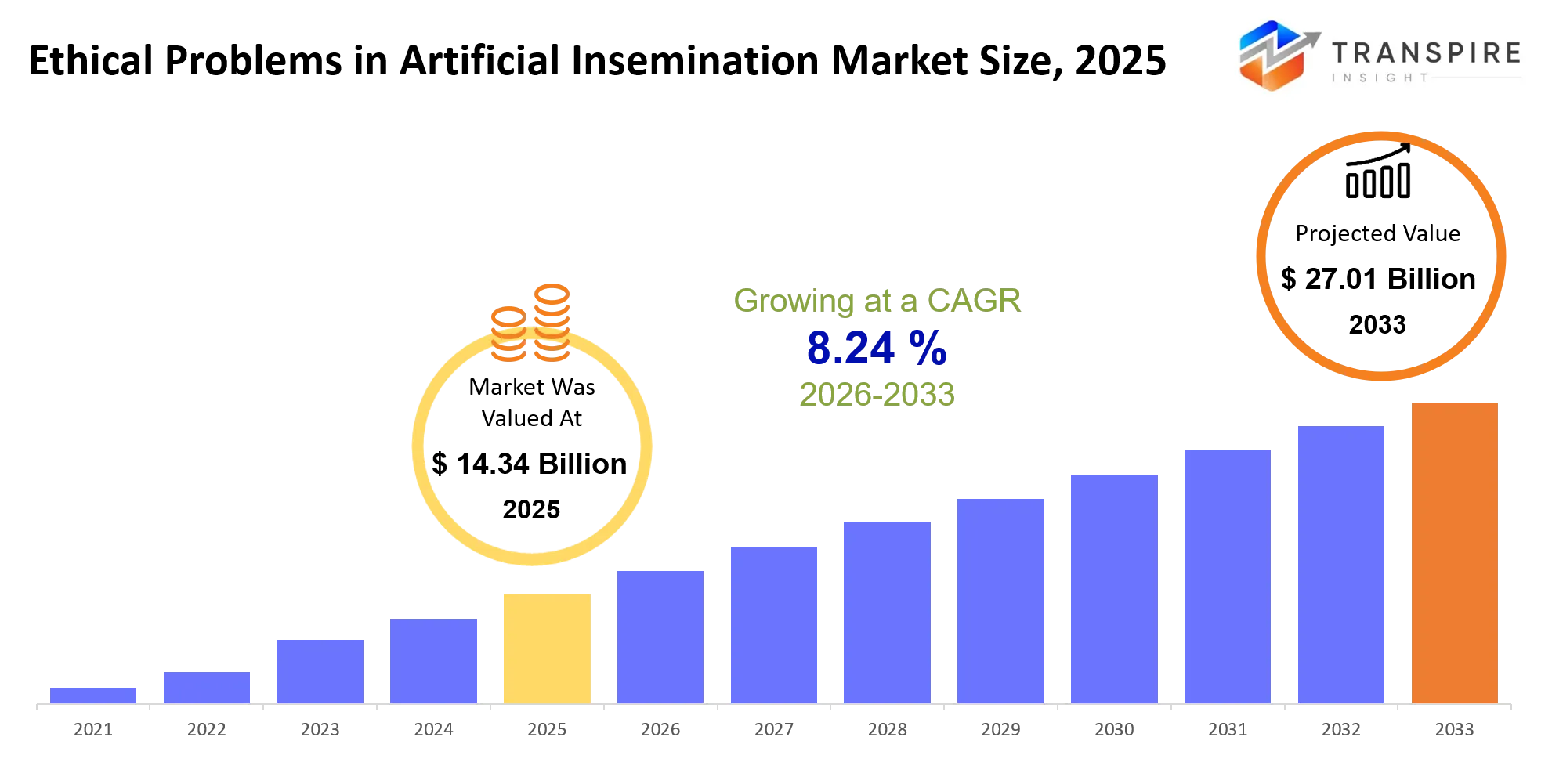
- Market Value (2025): USD 14.34 Billion.
- Expected Market Value (2026): USD 15.56 Billion.
- Estimated Market Value (2033): USD 27.01 Billion.
- Forecast CAGR (2026–2033): 8.24%.
- Leading Region in 2025: Asia Pacific
- Second-largest Region: North America
- Fastest Growing Region: Europe
Introduction
The assisted reproductive services and technologies used to introduce sperm into a female's reproductive tract are part of the artificial insemination market, which faces significant ethical issues such as donor anonymity conflicts, algorithmic bias in genetic selection, and socioeconomic healthcare disparities. By physically inserting sperm into the uterus (intrauterine) or cervix (intracervical), artificial insemination, an assisted reproductive technology (ART), can result in pregnancy. Artificial insemination (AI) is a type of assisted reproduction in which the female body is manually filled with collected sperm in order to achieve conception. Intrauterine insemination (IUI) is frequently employed for selective livestock breeding in agriculture and in humans. Because of its ease of use, safety, and efficiency in assisted reproduction, artificial insemination has many benefits. Without general anesthesia, the minimally invasive treatment can be swiftly carried out in clinical settings, lowering surgical risks and enhancing patient convenience. By directly injecting sperm into the reproductive system, it helps overcome certain obstacles to reproduction, such as anatomical barriers and cervical difficulties. Furthermore, by carefully choosing healthy gametes, artificial insemination promotes genetic management, improving reproductive outcomes, preventing disease, and advancing genetics in both human fertility treatments and animal breeding initiatives. The increasing use of artificial insemination technology around the world is fueled by these advantages.
For instance:
High financial expenditures, legal limitations pertaining to donor tracing, and stark healthcare disparities are the main ethical concerns in the market for assisted reproduction and artificial insemination. These international issues exacerbate South Africa's regional socioeconomic disparities, inadequately funded public infrastructure, and significant reliance on private sector investments.
Market Highlights: -
- Asia Pacific is anticipated to hold roughly 22% share of the Ethical Problems in Artificial Insemination Market over the predicted time frame.
- North America is expected to grow at a rapid CAGR in the Ethical Problems in Artificial Insemination Market by holding roughly 40% of the share during the forecast period.
- Europe is anticipated to hold around 31% share of the Ethical Problems in Artificial Insemination Market over the predicted time frame.
- By service type, the Genetic Counseling segment dominated the market and holds an estimated 30% share in 2025 and is projected to grow at a substantial CAGR during the forecast period.
- By application, the Human Fertility Clinics segment dominated the market and holds nearly 45% share in 2025 and is projected to grow at a substantial CAGR during the forecast period.
- By end user, the Fertility Clinics segment dominated the market and holds nearly 52% share in 2025 and is projected to grow at a substantial CAGR during the forecast period.
- Universal Public Funding Models: By lowering financial barriers and enhancing access for qualified individuals regardless of marital status or sexual orientation, nations like France have increased public healthcare coverage for assisted reproductive technologies, including artificial insemination. In the Ethical Problems in Artificial Insemination Market, these policies promote reproductive equality while influencing moral debates about accessibility, healthcare financing, and legal frameworks.
How is Technology Driving Growth in the Ethical Problems in Artificial Insemination Market?
By increasing the precision, effectiveness, and customization of fertility treatments, artificial intelligence (AI) is revolutionizing assisted reproductive technology. AI-powered embryo assessment systems examine embryo quality and make more accurate predictions about viability by utilizing machine learning and cutting-edge imaging technologies. Improved genetic analysis and better reproductive outcomes are made possible by advancements in automated sperm selection methods and preimplantation genetic testing (PGT). Furthermore, to optimize customized treatment regimens, data-driven fertility workflows use laboratory performance parameters, stimulation responses, and patient history. While addressing important ethical issues pertaining to accuracy, openness, data privacy, and the appropriate use of AI-based reproductive solutions, these technological developments are advancing the development of assisted reproductive care and artificial insemination.
Market Drivers
The need for artificial insemination operations is being driven by the rising prevalence of infertility, which is caused by stress, changes in lifestyle, and age-related fertility loss. Adoption of assisted reproductive technologies has also been influenced by postponing children due to financial priorities and career growth. Access to reproductive treatments is increasing due to growing social acceptance among various family arrangements, such as same-sex couples and single parents. Additionally, patients are being encouraged to use artificial insemination as an initial treatment choice rather than more sophisticated treatments like in-vitro fertilization (IVF) due to the preference for affordable and minimally invasive reproductive solutions, which is driving the expansion of the market. Compared to more sophisticated reproductive treatments like in-vitro fertilization (IVF), artificial insemination is less expensive and less intrusive, requiring less hormonal stimulation and simpler procedures. Because intrauterine insemination (IUI) operations can be carried out effectively in outpatient clinical settings with shorter treatment time frames, they offer excellent accessibility. Artificial insemination improves genetic selection, increases milk and meat production, and improves livestock breeding efficiency, all of which contribute significantly to agricultural productivity beyond human fertility care. By offering a dependable reproductive solution for infertile couples, single parents, and LGBTQ+ families, it also promotes a variety of family-building options and increases market adoption worldwide.
For Instance: -
- In the US the market has high out-of-pocket expenses, donor anonymity disputes, and inconsistent legal personhood laws are some of the ethical issues facing the assisted reproduction and artificial insemination (AI) industries. These difficulties coincide with significant market expansion and significant private investments in both domestic and foreign industries.
- Due to commercial investments, high costs, and unequal access, the market for assisted reproduction and artificial insemination poses significant ethical challenges on a scale. High financial barriers, disagreements over donor confidentiality, and regulatory disparities within Europe are major obstacles.
Restrain
The availability of artificial insemination services is hampered globally by high treatment costs, restricted insurance coverage, and insufficient reimbursement systems. Adoption rates are further impacted by cultural and religious restrictions in some areas, and fertility clinics have difficulties due to complicated legal and regulatory regulations. Together, these elements have an effect on the expansion of the market for ethical issues in artificial insemination.
Analysis of Prices and Consumer Behaviour
The primary drivers of the Ethical Problems in Artificial Insemination market are ethical compliance laws, regulatory processes, and patient safety protocols (around 60% of impact on the market, due to rising apprehension for informed consent, donor laws, genetics testing, and responsible usage of assisted reproductive technologies). The cost of introducing state-of-the-art ethical compliance systems, counseling support, and regulatory monitoring is estimated to be about 25%–30% more than traditional fertility service solutions owing to the usage of standardized protocols, legal compliance, and regular quality control. About 50% of the artificial insemination procedures are done through fertility clinics and specialized reproductive healthcare firms owing to the increasing infertility incidents and accessibility of assisted reproductive technologies. Fertility healthcare and reproductive medicine sectors account for about 65%–70% of the demand owing to the increasing investments in fertility services and ethical health practices. Healthcare providers report that around 55% care about ethical standards, patient consent and complying with regulations and transparency of treatments when implementing the artificial insemination services. In addition, roughly 30%–35% of the companies would like to have long-term cooperation and establish institutional partnerships to provide people with the ethical reproductive healthcare services consistently and in compliance with the regulations all over the world.
Top Companies in the Ethical Problems in Artificial Insemination Market
- CooperSurgical
- Vitrolife
- Merck KGaA
- Ferring Pharmaceuticals
- Genea
- IVI RMA Global
- Virtus Health
- Monash IVF
- Progyny
- Cryos International
- Fairfax Cryobank
- European Society of Human Reproduction and Embryology
- American Society for Reproductive Medicine
- IFFS
- Hamilton Thorne
Market Segmentation
The Ethical Problems in Artificial Insemination Market share is divided into five categories: By service type, application, end user, delivery mode and organization type.
The Genetic Counseling dominated the market, accounting for estimated 30% in 2025 and is expected to rise at a significant CAGR during the forecast period.
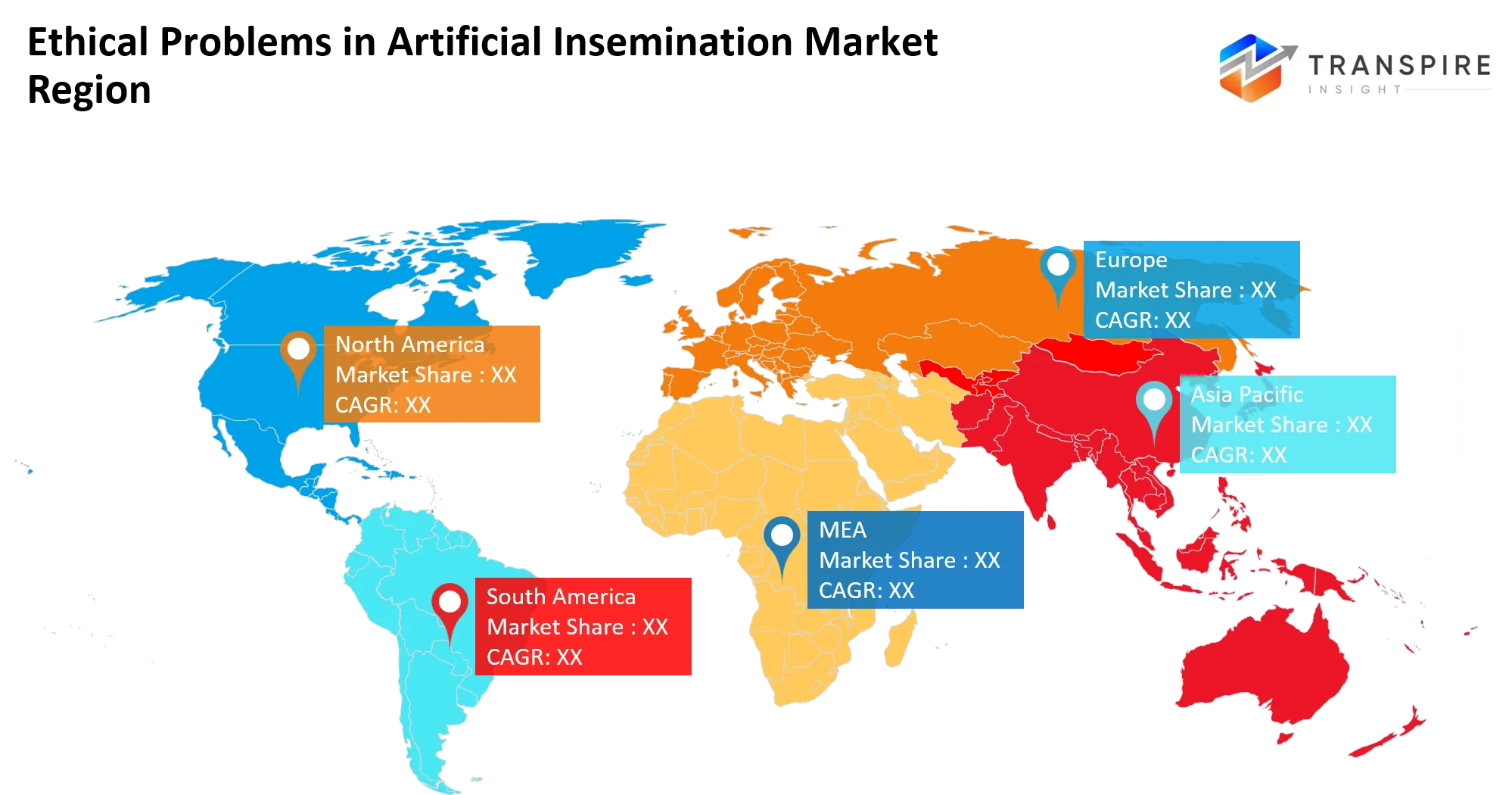
The Ethical Problems in Artificial Insemination Market is segmented by service type into Ethics Consulting, Fertility Counseling, Legal Advisory Services, Clinical Ethics Assessment, Genetic Counseling, Bioethics Training, Regulatory Compliance Services, Others Among these, the Genetic Counseling segment dominated the market, accounting for estimated 30% in 2025 and expected to increase at a significant CAGR during the forecast period. With an expected 30% of the market in 2025, genetic counseling dominated due to the growing need for individualized healthcare solutions, growing awareness of genetic abnormalities, and the expanding use of precision medicine. The segment's notable CAGR rise over the projection period is being further supported by improvements in healthcare infrastructure, growing applications for genetic testing, and advancements in genomic technology.
The Human Fertility Clinics dominated the market, accounting for nearly 45% in 2025, and is expected to rise at a significant CAGR during the forecast period.
The Ethical Problems in Artificial Insemination Market is segmented by application into Human Fertility Clinics, Animal Breeding, Academic Research, Healthcare Policy, Bioethics Education, Legal Services, Others. Among these, the Human Fertility Clinics segment dominated the market, accounting for nearly 45% in 2025 and expected to increase at a significant CAGR during the forecast period. Due to rising incidence of infertility, increased demand for assisted reproductive technologies, and increased awareness of fertility treatments, the Human Fertility Clinics segment held a nearly 45% share of the market in 2025. During the projected period, considerable CAGR growth is anticipated to be supported by developments in in-vitro fertilization (IVF), increased access to specialized fertility care, and improved clinical success rates.
The Fertility Clinics dominated the market, accounting for nearly 52% in 2025 and is expected to rise at a significant CAGR during the forecast period.
The Ethical Problems in Artificial Insemination Market is segmented by end user into Hospitals, Fertility Clinics, Universities, Research Institutes, Government Organizations, Veterinary Centers, Others. Among these, the Fertility Clinics segment dominated the market, accounting for nearly 52% in 2025 and expected to increase at a significant CAGR during the forecast period. Due to rising rates of infertility, increased use of assisted reproductive technologies, and rising demand for cutting-edge fertility treatments, the Fertility Clinics segment dominated the market in 2025 with a nearly 52% share. During the projection period, it is anticipated that technological developments in IVF treatments, increased success rates, and increased accessibility to healthcare will propel market expansion and sustain a notable CAGR.
Regional Segment Analysis of the Ethical Problems in Artificial Insemination Market:
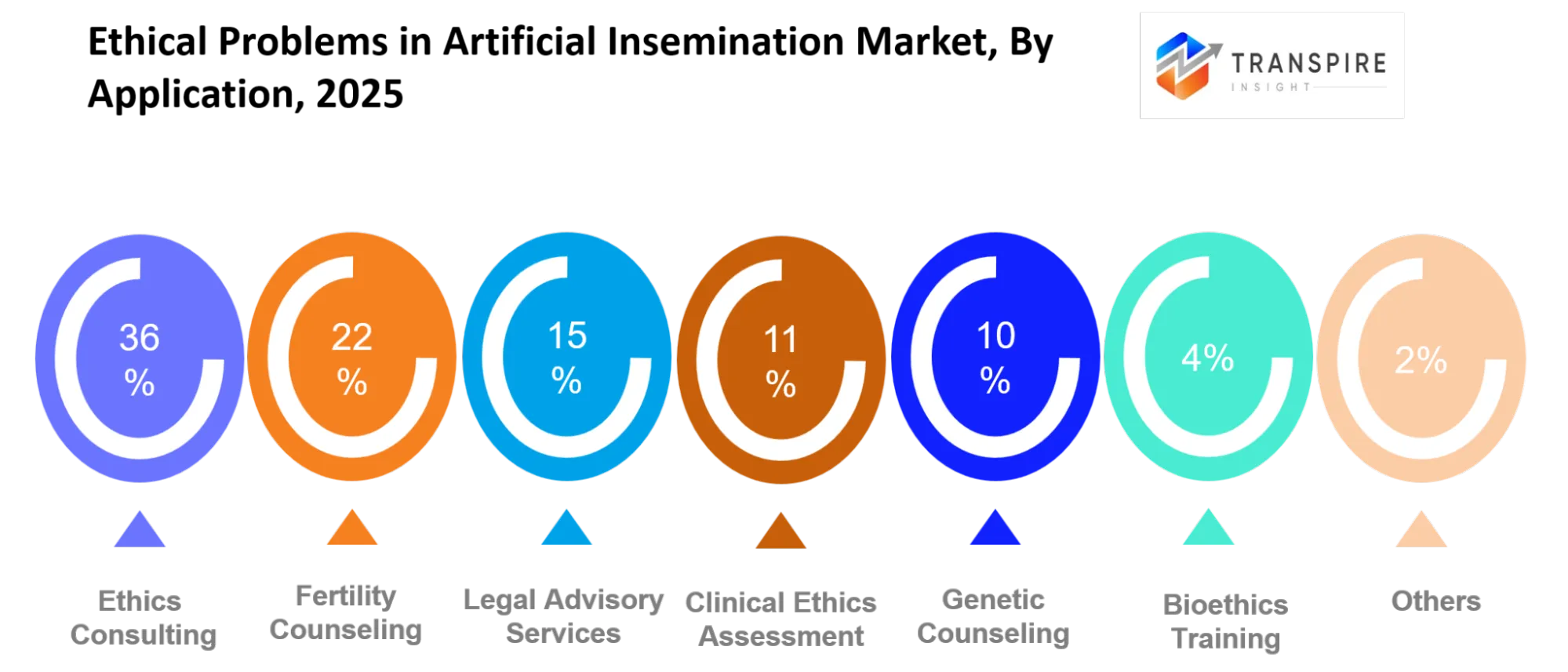
- North America (U.S., Canada, Mexico)
- Europe (Germany, France, U.K., Italy, Spain, Rest of Europe)
- Asia-Pacific (China, Japan, India, Rest of APAC)
- South America (Brazil and the Rest of South America)
- The Middle East and Africa (UAE, South Africa, Rest of MEA)
Asia Pacific is the fastest-growing region in the Ethical Problems in Artificial Insemination Market during the period, holding roughly 22% share.
Asia pacific is the fastest-growing region in the Ethical Problems in Artificial Insemination Market during the forecast period, holding roughly 22% share during the forecast period. With a 22% market share, Asia Pacific is the fastest-growing region in the ethical problems in artificial insemination market. This growth is fueled by rising infertility rates, expanding fertility healthcare infrastructure, growing awareness of ethical issues, and increased adoption of assisted reproductive technologies. Regional market expansion is also being aided by reproductive medicine advancements and supportive government efforts.
North America is the fastest-growing region in the Ethical Problems in Artificial Insemination Market during the period, holding roughly 40% share.
North America is expected to grow at a rapid CAGR in the Ethical Problems in Artificial Insemination Market holding roughly 40% share during the forecast period. With a 40% market share, North America is the fastest-growing region in the ethical problems in artificial insemination market. This is due to the region's advanced reproductive healthcare infrastructure, rising use of assisted reproductive technologies, and growing awareness of ethical and regulatory issues. Growing demand for fertility treatments, favorable healthcare spending, and robust research initiatives are all contributing to the expansion of the regional market.
Europe is expected to grow at a rapid CAGR in the Ethical Problems in Artificial Insemination Market, holding around 31% of the share during the forecast period.
Europe is expected to grow at a rapid CAGR in the Ethical Problems in Artificial Insemination Market holding around 31% share during the forecast period. The Ethical Problems in Artificial Insemination Market is anticipated to expand at a substantial compound annual growth rate (CAGR) in Europe due to the region's sophisticated reproductive healthcare systems, growing use of assisted reproductive technologies, and strict ethical laws. During the projected period, increasing investments in fertility research and growing awareness of patient safety, genetic concerns, and reproductive rights will propel regional market expansion.
Strategies for Market Growth in Non-Leading Regions:
The growth of underdeveloped regions will be impacted positively by the formation of cost-efficient and scalable assisted reproductive technology infrastructure and ethical artificial insemination operations. It is important to open more fertility centers, reproductive health facilities and create frameworks for ethical compliance at a local level, due to which it will be possible to cut down reliance on sophisticated healthcare centers and improve accessibility to affordable artificial insemination services. Forming partnership relations with fertility experts, healthcare providers, research and development centers, regulatory bodies, as well as reproductive technology firms will raise the share of artificial insemination services in the marketplace. In order to raise awareness regarding the ethical guidelines, patient education, reproductive rights, genetic aspects of artificial insemination procedure and other quality criteria, a special training course will be developed. Moreover, the introduction of flexible financial option models will increase availability of fertility services and help to implement them on a larger scale.
Future Market Trends for the Ethical Problems in Artificial Insemination Market: -
1.End of Donor Anonymity: Traditional donor privacy is being challenged by an increasing number of legal frameworks and registries that grant kids the right to know their biological origins.
2.Cross-Border Reproductive Travel: Patients are moving more frequently to areas with clearer or more lenient laws pertaining to same-sex and single-parent access.
3.Consent and Parentage Disputes: Discussions about legal personhood and multi-party custody are still sparked by the intricate legal frameworks around frozen genetic material.
4."Designer" and Genetic Screening Concerns: Increased pre-implantation and donor genetic profiling make it more difficult to distinguish between chosen genetic enhancement and the prevention of inherited illnesses, which has led to increased social and medical scrutiny.
5.Algorithmic and Machine Learning Ethics: Concerns about algorithmic bias, transparency, and the "dehumanization" of fertility therapy are raised by the use of digital decision-support tools and machine learning in reproductive workflows.
6.Equitable Access and Commodification: Treatments are primarily limited to wealthy populations due to high procedural costs and unequal insurance or public reimbursement coverage, which intensifies discussions about reproductive tourism and the commercialization of human gametes.
Recent Development
- In January 2026: By focusing on quality assurance, responsible adoption of emerging healthcare technologies, and ethical issues surrounding AI-enabled applications, the Australian National Health and Medical Research Council (NHMRC) improved ethical oversight frameworks for assisted reproductive technologies. These programs address changing ethical issues within the Ethical Problems in Artificial Insemination Market while promoting accountability, safety, and transparency in fertility treatments.
- In May 2026: Research on ex-vivo human sperm production has advanced, according to Paterna Biosciences, indicating possible developments in assisted reproductive technology. New ethical issues pertaining to reproductive safety, genetic implications, regulatory monitoring, and the proper integration of emerging fertility treatments could have an impact on the Ethical Problems in Artificial Insemination Market.
This study forecasts revenue at global, regional and country levels from 2020 to 2033. Transpire Insights has segmented the Ethical Problems in Artificial Insemination Market based on the below-mentioned segments:
Ethical Problems in Artificial Insemination Market, By Service Type
- Ethics Consulting
- Fertility Counseling
- Legal Advisory Services
- Clinical Ethics Assessment
- Genetic Counseling
- Bioethics Training
- Regulatory Compliance Services
- Others
Ethical Problems in Artificial Insemination Market, By Application
- Human Fertility
- Clinics
- Animal Breeding
- Academic Research
- Healthcare Policy
- Bioethics Education
- Legal Services
- Others
Ethical Problems in Artificial Insemination Market, By End User
- Hospitals
- Fertility Clinics
- Universities
- Research Institutes
- Government Organizations
- Veterinary Centers
- Others
Ethical Problems in Artificial Insemination Market, By Delivery Mode
- Onsite Consulting
- Virtual Consulting
- Hybrid Services
- Online Training
- Others
Ethical Problems in Artificial Insemination Market, By Organization Type
- Public Institutions
- Private Healthcare Providers
- NGOs
- Academic Institutions
- Others
Ethical Problems in Artificial Insemination Market, By Regional Analysis
North America
- US
- Canada
- Mexico
Europe
- Germany
- UK
- France
- Italy
- Spain
- Russia
- Rest of Europe
Asia Pacific
- China
- Japan
- India
- South Korea
- Australia
- Rest of Asia Pacific
South America
- Brazil
- Argentina
- Rest of South America
Middle East & Africa
- UAE
- Saudi Arabia
- Qatar
- South Africa
- Rest of the Middle East & Africa
Frequently Asked Questions
Find quick answers to common questions.
Rising infertility, increasing ART adoption, expanding genetic counseling, AI integration, and evolving ethical regulations are driving market growth.
Genetic Counseling dominates the market due to increasing demand for personalized medicine, genetic testing, and ethical reproductive healthcare guidance worldwide.
Fertility clinics lead because of increasing assisted reproductive procedures, specialized fertility services, ethical compliance requirements, and advanced reproductive technologies.
Asia Pacific leads due to expanding fertility infrastructure, increasing infertility rates, government initiatives, and growing awareness of ethical reproductive healthcare.
Key challenges include informed consent, donor anonymity, genetic screening, AI ethics, data privacy, regulatory compliance, and equitable access to fertility treatments.
- CooperSurgical
- Vitrolife
- Merck KGaA
- Ferring Pharmaceuticals
- Genea
- IVI RMA Global
- Virtus Health
- Monash IVF
- Progyny
- Cryos International
- Fairfax Cryobank
- European Society of Human Reproduction and Embryology
- American Society for Reproductive Medicine
- IFFS
- Hamilton Thorne
About the Authors

Pankaj Ghogare Patil
I am Pankaj Ghogare Patil, a Senior Research Analyst at Transpire Insight, specializing in the Pharmaceutical, Chemicals & Materials, Healthcare IT, and Biotechnology industry. My expertise lies in conducting comprehensive market research, analyzing industry trends, evaluating competitive landscapes, and translating complex data into actionable insights. At Transpire Insight, I closely follow emerging technologies, regulatory developments, and market innovations to create accurate, well-researched, and informative content that helps businesses and professionals make informed decisions. I am committed to producing credible, evidence-based articles that reflect industry best practices while making technical topics accessible and valuable for a broad audience.

Chakradhar Khansole
Chakradhar serves as the Research Director at Transpire Insight, bringing over 8 years of experience in technology, innovation, and strategic market intelligence. He specializes in transforming complex market data into actionable business insights that enable organizations to make informed, growth-oriented decisions. Recognized for his strategic vision and analytical expertise, Chakradhar leads high-impact research initiatives, delivering comprehensive market assessments, competitive intelligence, and forward-looking industry analysis.
Recently Published Reports
-
Apr 2026
AI in Diabetic Retinopathy Market
AI in Diabetic Retinopathy Market Size, Share & Analysis Report By Type (Screening AI Systems, Diagnostic AI Systems, and Predictive AI Models), By Application Segment (Hospitals, Ophthalmology Clinics, Diagnostic Centers, and Research and Development), and Geography (North America, Europe, Asia-Pacific, Middle East and Africa, South and Central America), 2021 - 2031
-
Apr 2026
Psychometric Tests Market
Psychometric Tests Market Size, Share & Analysis Report By Type (Personality Tests, Ability/Aptitude Tests, Skill/Knowledge Tests, and Others), By Application (Talent Acquisition and Talent Management), and Geography (North America, Europe, Asia-Pacific, Middle East and Africa, South and Central America), 2021 – 2031
-
Apr 2026
Rare Biological Sample Collection Market
Rare Biological Sample Collection Market Size, Share & Analysis Report By Type (Isolation Kits & Reagent, Blood Collection Tubes, and Others), By Application (Oncology, Transcriptomics, Pharmacogenomics, and Others), and Geography (North America, Europe, Asia-Pacific, Middle East and Africa, South and Central America), 2021 – 2031
-
Jul 2026
Diabetic Retinopathy Market
Diabetic Retinopathy Market Size, Share & Analysis Report By Type (Proliferative Diabetic Retinopathy, and Diabetic Macular Edema (DME)), By Treatment Type (Anti VEGF Drug, Steroid Implants, Laser Surgeries, and Vitrectomy), and Geography (North America, Europe, Asia-Pacific, Middle East and Africa, South and Central America), 2021 – 2031
Our Clients







