
Electric Vehicles Market Summary:
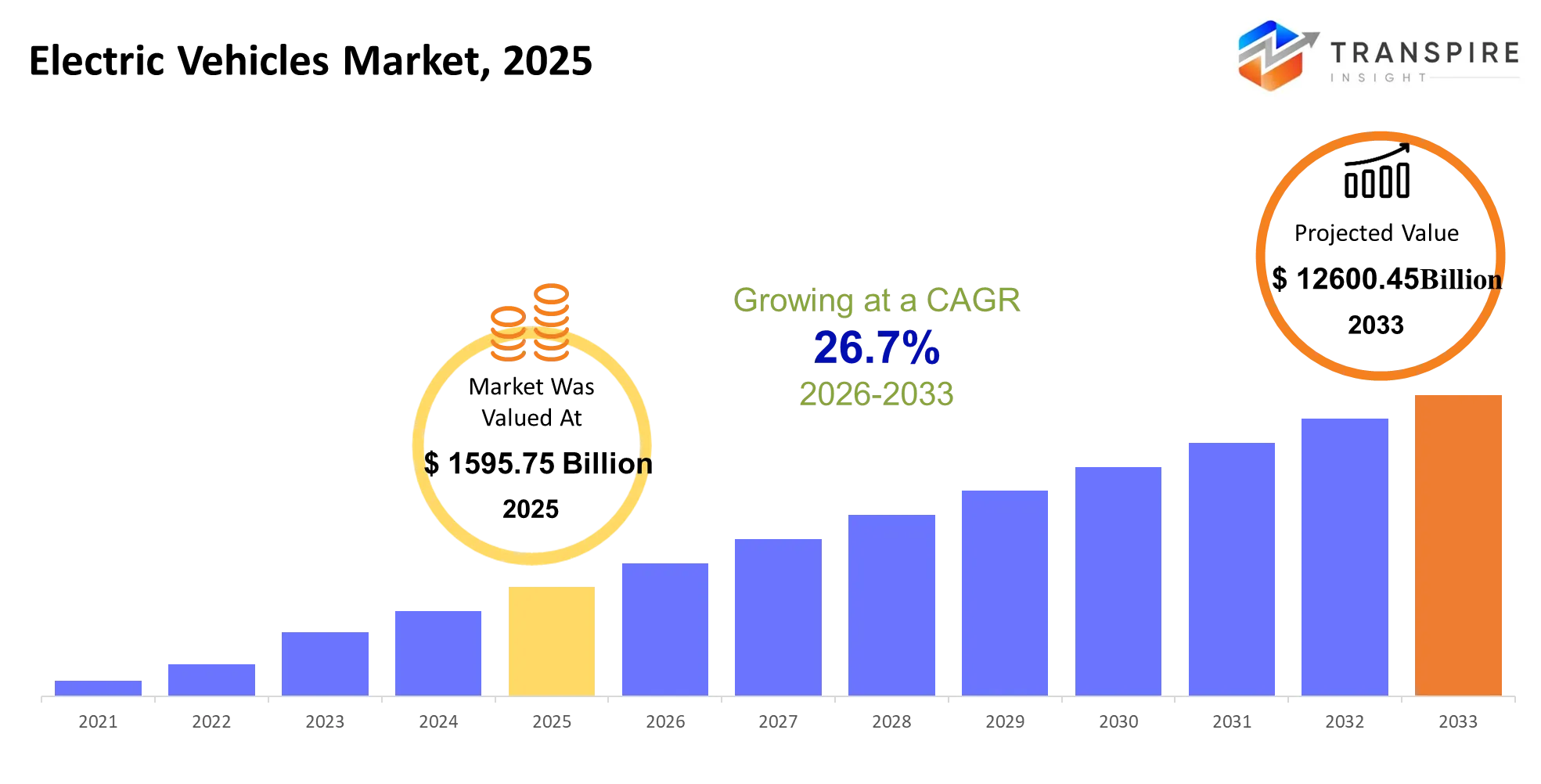
As per Transpire Insight Analysis, the Electric Vehicles Market size is estimated at USD 1595.75 billion in 2025 and is anticipated to reach USD 12600.45 billion by 2033, growing at a CAGR of 26.7% from 2026 to 2033.
The electric vehicles market is changing the way the automotive industry works. It brings battery-powered transportation for personal use, public buses and commercial vehicles. In years, the industry has moved past the early stage of adoption. Car companies are now offering electric vehicle models. Governments are helping by giving incentives and investing in charging stations. This move toward battery vehicles is growing stronger. Battery technology keeps getting better. The cost of making these vehicles is being looked at more closely. Improvements in lithium-ion battery charging systems and vehicle software are making electric mobility more practical. One big reason for this growth is rules on vehicle emissions. There is also investment in making batteries locally. These changes are pushing car makers to build production capacity. They are also bringing out models at different price points. Because of this, electric vehicles are becoming easier to get. They are cheaper to run. The network of charging stations keeps growing. All of these things are helping electric vehicles spread across markets around the world.
Electric Vehicles Market Size & Forecast:
- Market Size 2025: USD 1595.75 Billion
- Expected Market Value (2033): USD 12600.45 Billion
- Forecast CAGR (2026–2033): 26.7%
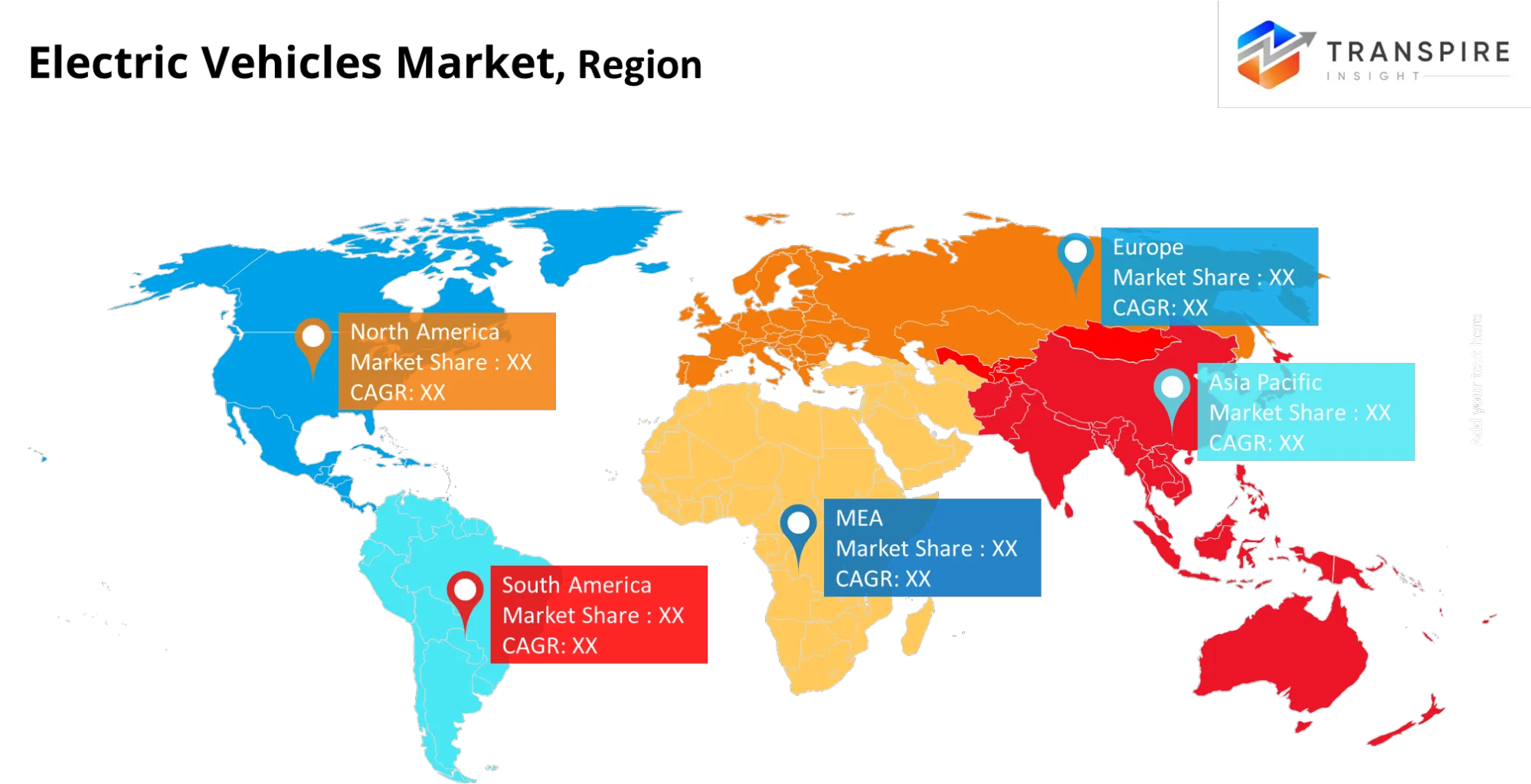
- Leading Region in 2025: Asia Pacific
- Fastest Growing Region: Europe
- Key Company Profiles: BYD, Tesla, Volkswagen, SAIC Motor, BMW, Mercedes-Benz, Hyundai Motor Group, Stellantis, Ford, General Motors, Geely, Renault, Tata Motors, NIO, XPeng
Key Market Insights:
The market is moving towards adoption of battery electric vehicles, increased production capacity, and advancements in battery technology.
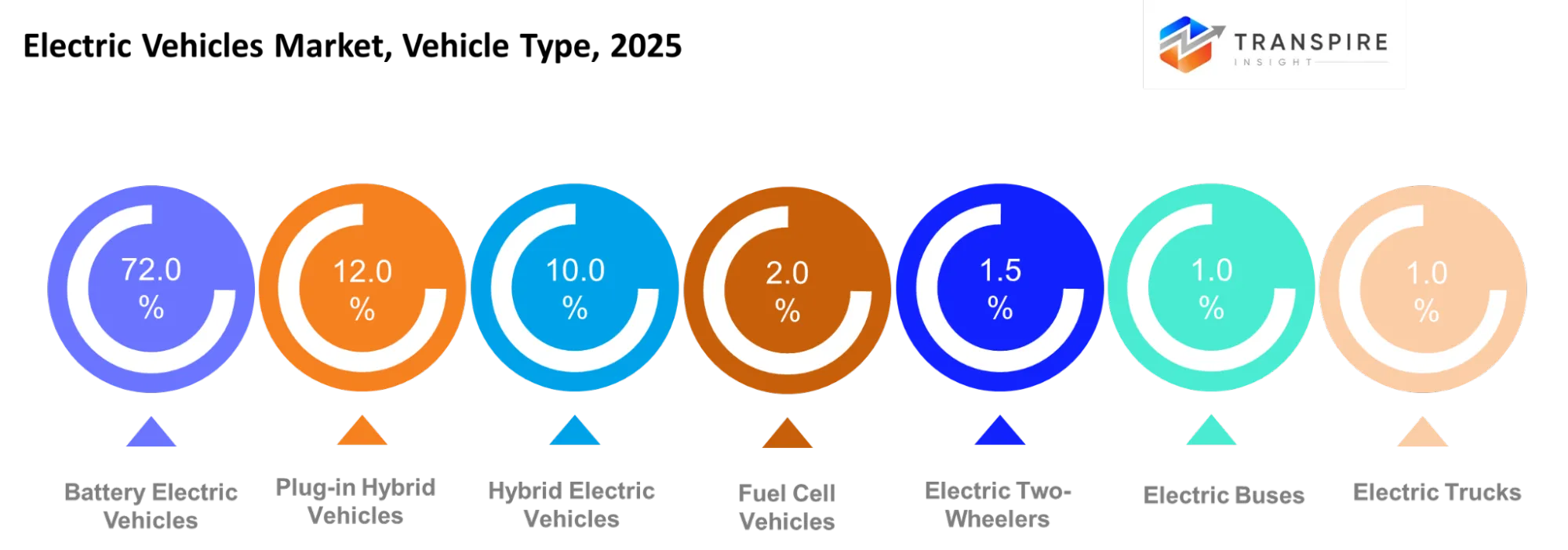
- Battery Electric Vehicles constituted 72.0% of the market, backed by the growth of companies like BYD and Tesla in their fully electric vehicle range.
- Fuel Cell Vehicles have been identified as the most rapidly growing category with a CAGR of 25.5%, owing to increasing interest in hydrogen-fueled commercial transport.
- The share of Plug-in Hybrid Vehicles stood at 12.0% of the market, as manufacturers kept providing consumers with multiple options considering the limited charging infrastructure.
- Hybrid Electric Vehicles formed 10.0% of the market, as manufacturers continued to launch fuel-efficient models with a combination of conventional engines and electric propulsion systems.
- Electric two-wheelers, electric buses, and electric trucks are increasing the scope of application in the industry.
What are the Key Drivers, Restraints, and Opportunities in the Electric Vehicles Market?
Drivers
Government initiatives for electrification and stringent vehicle emission norms are pressuring automobile manufacturers to ramp up production of electric vehicles. Incentives, taxation and investment in charging infrastructure have helped address some of the barriers to adoption. The rise in battery manufacturing facilities is helping automobile companies address supply issues and control costs of production. This will help sales of automobiles and also open up new avenues of revenue generation for the companies.
Restraints
The high cost of automobiles and the lack of charging infrastructure in certain developing nations continue to hinder adoption. Battery manufacturing involves raw materials like lithium, nickel, and graphite, which expose the manufacturer to commodity prices. The availability of charging infrastructure, the cost of installing it, and the cost of battery replacement affect the decision-making process, especially in the case of consumers lacking home charging stations.
Opportunities
Innovations in solid-state batteries, battery swap and fuel cell technology have the potential to generate new opportunities. Investments in battery recycling and domestic manufacturing by manufacturers will improve supply chain resilience. Opportunities exist even in emerging markets like Asia Pacific and Latin America through cheap electric two-wheelers and public transportation electrification.
|
Driver |
Relative Impact on Growth (%) |
Geographic Relevance |
Impact Timeline |
Demand Strength |
Growth Mechanism (5–10 words) |
Key Beneficiaries (5–10 words) |
Major Constraint (5–10 words) |
|
Rising Consumer Adoption of Electric Vehicles |
27% |
China, Europe, North America, Asia Pacific |
Short-term |
High |
Growing environmental awareness accelerates electric vehicle purchases. |
EV manufacturers, dealerships, battery suppliers, end users. |
High upfront prices and limited consumer affordability. |
|
Declining Battery Costs and Improving Battery Performance |
23% |
China, South Korea, Japan, North America |
Medium-term |
High |
Lower battery costs improve vehicle affordability and competitiveness. |
Battery manufacturers, automakers, material suppliers, technology developers. |
Critical mineral price volatility and supply chain disruptions. |
|
Government Incentives and Stringent Emission Regulations |
20% |
Europe, China, India, North America |
Short-term |
High |
Financial incentives and emission targets encourage EV adoption. |
Automakers, EV buyers, charging operators, battery manufacturers. |
Policy uncertainty and inconsistent government incentive programmes. |
|
Expansion of EV Charging Infrastructure |
17% |
China, Europe, North America, India |
Medium-term |
High |
Wider charging networks improve accessibility and reduce range anxiety. |
Charging operators, utility companies, EV manufacturers, consumers. |
Grid capacity limitations and uneven charging station distribution. |
|
Technological Advancements in Electric Vehicle Systems |
13% |
China, Japan, South Korea, Europe, North America |
Long-term |
High |
Battery innovations and faster charging improve vehicle performance. |
Battery developers, semiconductor suppliers, automakers, software providers. |
High research costs and technology commercialization challenges. |
|
Total |
100% |
What Has the Impact of Artificial Intelligence Been on the Electric Vehicles Market?
The technology of artificial intelligence has been able to enhance the performance of electric cars through battery management, vehicle automation and intelligent use of energy. The use of AI technology in battery management systems is able to analyse temperature, charging trends and energy consumption. The predictive maintenance technology uses sensor data from the vehicle to detect any unusual operation and assist in identifying the failure of any components which could cause a breakdown. Automobile companies have been able to integrate AI into various aspects of their operations, such as the advanced driver assistance system, which includes collision detection, lane monitoring and adaptive cruise control. The systems have been able to increase the safety of the vehicle while allowing the company to develop the technology needed for autonomous driving. AI has also helped the automobile companies by improving the quality and productivity of production in factories through the use of inspection systems and intelligent charging platforms. There has been a need for significant investments in the development of software, computing infrastructure and cybersecurity due to the integration of AI into electric vehicles. There has been a concern regarding the data quality and reliability of the systems.
Instance
In October 2026, General Motors unveiled its plan for developing cars through the use of artificial intelligence technology, which would help develop vehicles faster, make batteries better and facilitate autonomous car technology. This will enable the development of efficient electric cars and provide a smart driving experience. https://news.gm.com/home.detail.html/Pages/news/us/en/2026/oct/1021-gm-forward-2026.html
Key Market Trends:
The market is shifting toward battery innovations, digital vehicle platforms and convenient charging rather than increasing the volume of vehicle production.
- Automakers are transitioning from offering few electric vehicles to offering a wide range of electric vehicles that include compact cars, SUVs and commercial mobility.
- Battery development is shifting from lithium-ion batteries to lithium iron phosphate batteries and other battery alternatives.
- Vehicle manufacturers are incorporating software, digital dashboards and over-the-air software updates in their vehicles.
- Fast charging has become important in reducing charging times and improving the long-distance travel experience.
- Automotive manufacturers are increasing local production and collaborations with suppliers to reduce dependency on the international supply chain.
- Fleets are increasingly adopting electric vehicles for delivery, logistics and ride-hailing services to manage operating costs.
Electric Vehicles Market Segmentation
By Vehicle types
Battery Electric Vehicles had the highest share of the electric vehicles market, standing at 72.0%. The demand for these vehicles can be attributed to the absence of tailpipe emissions, improved battery performance and the availability of charging stations. Plug-in Hybrid Vehicles made up 12.0% of the market share, while Hybrid Electric Vehicles constituted 10.0% as there was still demand for cars that have both conventional and electric engines. Fuel Cell Vehicles had 2.0% of the market share but were predicted to have the fastest growth rate at 25.5% as a result of possible use in heavy transportation. The Electric Two-Wheelers segment constituted 1.5% of the market, with Electric Buses and Electric Trucks accounting for 1.0% each and Others taking 0.5%.
By Vehicle class
Passenger Cars constitute an essential vehicle type due to the suitability of this vehicle type for daily commutes. Electric SUVs are becoming popular as carmakers introduce electric versions of such vehicles, which have more space inside, increased range and improved capabilities. Sedans and Hatchbacks cater to customers who are looking for a different balance of features such as comfort and ease of use in urban settings. Commercial Vehicles are becoming increasingly popular for businesses trying to go green. Buses and Trucks have potential in public transport and freight, respectively.
By Propulsion
Battery Electric Vehicles (BEV) remain the dominant category of propulsion, supplemented by a growing number of BEV models. There are also Plug-in Hybrid Electric Vehicles (PHEV) and Hybrid Electric Vehicles (HEV) for those who prefer a mix of electric and conventional, internal combustion power. Fuel Cell Electric Vehicles (FCEV) are finding new applications for longer range and shorter refuelling, while Extended-Range EVs offer additional driving range through combined battery and generator power, and Battery-Swapping EVs offer an interesting way to take some of the pain out of long charge times with interchangeable batteries, among other emerging propulsion solutions.
By Battery Type
Lithium-Ion remains a key part of the EV value chain due to existing manufacturing infrastructure and energy storage capabilities. LFP batteries are increasingly common as a technology that is well-suited for cost minimisation, safer operation, thermal stability and greater lifespan. NMC and NCA are also well-established as a chemistry that is suitable for EVs with a greater emphasis on range and specific energy density. Solid-State cells remain of interest to investors due to the promise of a safer and greater energy density, and wider commercialisation remains an obstacle to consider. Sodium-Ion batteries are also being explored as an alternative to Lithium-based cells, and lead-acid and other batteries have ongoing use cases.
By Application
Personal Transportation is the primary use of electric vehicles, as consumers move from fossil-powered cars and two-wheelers to EVs for everyday transport. Public Transportation is an area of growth, driven by electric-powered urban buses and other shared mobility services. Commercial fleet operators are seeking EVs to optimise operations and to cut fuel costs. Logistics & Delivery: Electrification of vans, trucks and two-wheelers is enabling some commercial operators to introduce their own delivery fleet. Ride hailing: These operators are planning to deploy EVs. Government Vehicles range from municipal and public service vehicles to other specialised applications.
By Sales Channel
OEM Dealers are still an important distribution channel for demonstration, financing, after-sales and warranty services. Online Sales will gain relevance as manufacturers increasingly adopt digital vehicle configuration, booking and retailing channels. Direct Sales enable certain manufacturers to establish a closer relationship with customers through direct contact and control of the purchase process. Fleet Sales enable logistics and transportation companies, as well as corporations, to leverage bulk purchasing. Leasing can provide an alternative to making vehicle ownership investments up front, while Subscription can grant flexible access to EVs. Government Procurement will enable greater use of public mass transit vehicles and institutional EV fleets.
What are the Key Use Cases Driving the Electric Vehicles Market?
Use cases for personal transportation include the prominent role played by BEVs, electric cars, SUVs, and two-wheelers for commuting, household mobility and short trips within cities. Lower cost of operation and ease of charging are factors in the usage increase. Usage cases in commerce are growing via electric buses, commercial trucks, logistics vehicles, and ride-sharing services. The use of electric transport for cost management and meeting emissions goals is being considered by many firms. Potential use cases involve trucks that run on hydrogen and battery swap technology, as well as electric fleets for government use.
|
Report Metrics |
Details |
|
Market size value in 2025 |
USD 1595.75 Billion |
|
Market size value in 2026 |
USD 2409.2 Billion |
|
Revenue forecast in 2033 |
USD 12600.45 Billion |
|
Growth rate |
CAGR of 26.7% from 2026 to 2033 |
|
Base year |
2025 |
|
Historical data |
2021 - 2024 |
|
Forecast period |
2026 - 2033 |
|
Report coverage |
Revenue forecast, competitive landscape, growth factors, and trends |
|
Regional scope |
United States; Canada; Mexico; United Kingdom; Germany; France; Italy; Spain; Denmark; Sweden; Norway; China; Japan; India; Australia; South Korea; Thailand; Brazil; Argentina; South Africa; Saudi Arabia; United Arab Emirates |
|
Key company profiled |
BYD, Tesla, Volkswagen, SAIC Motor, BMW, Mercedes-Benz, Hyundai Motor Group, Stellantis, Ford, General Motors, Geely, Renault, Tata Motors, NIO, XPeng |
|
Customization scope |
Free report customization (country, regional & segment scope). Avail customized purchase options to meet your exact research needs. |
|
Report Segmentation |
Vehicle Type (Battery Electric Vehicles, Plug-in Hybrid Vehicles, Hybrid Electric Vehicles, Fuel Cell Vehicles, Electric Two-Wheelers, Electric Buses, Electric Trucks, Others)Vehicle Class (Passenger Cars, SUVs, Sedans, Hatchbacks, Commercial Vehicles, Buses, Trucks, Two-Wheelers)Propulsion (BEV, PHEV, HEV, FCEV, Extended-Range EV, Battery-Swapping EV, Hybrid Fuel Cell, Others)Battery Type (Lithium-Ion, LFP, NMC, NCA, Solid-State, Sodium-Ion, Lead-Acid, Others)Application (Personal Transportation, Public Transportation, Commercial Fleet, Logistics, Ride-Hailing, Delivery, Government, Others)Sales Channel (OEM Dealers, Online Sales, Direct Sales, Fleet Sales, Leasing, Subscription, Government Procurement, Others) |
Which Regions are Driving the Electric Vehicles Market Growth?
North America
North America constitutes a 12.5% share of the market of electric vehicles, backed by innovative automobile engineering, investments in battery production and vehicle branding. The key role in North America is played by the USA with respect to investments in the production of batteries and electric vehicles. Companies such as Tesla and General Motors are developing their capabilities of manufacturing electric vehicles because of changing demands of customers. Further growth will be ensured by charging infrastructure expansion, vehicle affordability and a competitive battery chain.
In June 2025, Ford made progress with their BlueOval Battery Park Michigan plant that will be producing LFP battery cells for electric vehicles. This development is seen to improve domestic battery production and availability of affordable electric vehicles in the US market. https://www.fromtheroad.ford.com/us/en/articles/2025/ford-owned-american-battery-plant-future-electric-vehicles
Europe
Europe accounted for 24.0% of the market of electric vehicles and will grow at a CAGR of 14.2% during the forecast period. The strict standards concerning the emissions of vehicles and investments in environmentally friendly transport stimulate manufacturers to make vehicles more electric. Manufacturers are extending the range of electric vehicles while increasing battery efficiency and charging compatibility.
In February 2026, Skoda has inaugurated a new assembly line for battery systems in its plant in Mladá Boleslav in the Czech Republic, with an annual production of up to 335,000 battery systems. This development improves Europe's battery production capability and the production of electric vehicles by Volkswagen. https://www.skoda-storyboard.com/en/press-releases/skoda-opens-new-battery-systems-assembly-hall-becoming-volkswagen-groups-largest-bev-battery-system-manufacturer-and-an-essential-pillar-of-its-electrification-strategy/
Asia Pacific
Asia Pacific leads the electric vehicle market, holding 58.0%, with the help of large-scale automobile manufacturing, efficient battery chains and the presence of electric vehicles in the Chinese region. Government initiatives, along with investments in domestic manufacturing and a diverse range of vehicle pricing options, have helped to establish the ecosystem in the region. BYD and many other companies from the region have been developing their capabilities in manufacturing. Growth in the Indian and Southeast Asian regions will create more opportunities for passenger vehicles and electric two-wheelers.
In July 2025, Tata Motors began the production of its Harrier. EVs in their Pune factory in India. This development improves the company’s line of electric SUVs as well as domestic production of EVs. https://www.tatamotors.com/press-releases/tata-motors-commences-production-of-the-all-new-harrier-ev/
Who are the Key Players in the Electric Vehicles Market, and how do they Compete?
Competitive dynamics in the international electric vehicles market have been affected by battery technology, vehicle prices, manufacturing capabilities and software integration. Different companies have employed various competitive strategies in order to gain an upper hand in the market, some of which are centred on mass production of affordable vehicles while others are based on production of luxury cars.BYD employs vertical integration of batteries and vehicles in order to enable it to manage the costs of production and offer an increasing array of electric vehicles. It has a competitive advantage in terms of battery technology through its blade battery. The Hyundai Motor Company and Kia employ competitive strategies based on design, vehicle variety and advanced electric power train technology. The General Motors Company is concentrating on battery development and electric trucks to give it an edge in North America. SAIC Motor and Geely Auto employ comprehensive manufacturing capabilities and regional product strategy in their competition. BMW and Mercedes-Benz compete on premium electric mobility.
Electric Vehicles Market companies
- BYD
- Tesla
- Volkswagen
- SAIC Motor
- BMW
- Mercedes-Benz
- Hyundai Motor Group
- Stellantis
- Ford
- General Motors
- Geely
- Renault
- Tata Motors
- NIO
- XPeng
|
Company |
Est. Revenue Share Range |
Key Offerings |
Strategic Positioning |
Geographic Strength |
Technology Focus |
|
BYD Company |
16–20% |
BYD Seal, Atto 3, Dolphin, Denza EVs |
Vertically integrated volume leader |
Asia Pacific, Europe, Latin America |
Blade batteries, e-Platform 3.0, integrated powertrains |
|
Tesla, Inc. |
8–11% |
Model 3, Model Y, Model S, Cybertruck |
Premium technology-led EV and software ecosystem |
North America, Europe, Asia Pacific |
Autonomous driving, 4680 cells, OTA software |
|
Geely Holding Group |
8–11% |
Zeekr EVs, Geely Galaxy, Volvo EX30, Polestar |
Multi-brand diversification and platform sharing |
Asia Pacific, Europe, Latin America |
SEA architecture, smart cockpits, battery integration |
|
Volkswagen Group |
6–9% |
Volkswagen ID series, Audi e-tron, Porsche Taycan, Škoda Enyaq |
Multi-brand scale and platform-based competition |
Europe, China, North America |
MEB, PPE, battery cell development |
|
SAIC Motor |
5–8% |
MG4 EV, MG ZS EV, IM electric vehicles, Wuling EVs |
Mass-market pricing and international expansion |
Asia Pacific, Europe, Latin America |
Modular EV platforms, battery integration, intelligent driving |
|
Changan Automobile |
3–5% |
Deepal S07, Deepal L07, Avatr EVs, Qiyuan EVs |
Technology-led diversification across vehicle segments |
Asia Pacific, Europe, Middle East |
SDA architecture, intelligent driving, electric powertrains |
|
Chery Automobile |
2–4% |
Exeed Sterra, iCAR EVs, Omoda E5, Jaecoo EVs |
Export-oriented expansion and affordable electrification |
Asia Pacific, Latin America, Middle East |
E0X platform, intelligent connectivity, battery efficiency |
|
Hyundai Motor Group |
3–5% |
Hyundai IONIQ 5, IONIQ 6, Kia EV6, Kia EV9 |
Premium design and diversified EV portfolio |
Asia Pacific, Europe, North America |
E-GMP, 800V charging, advanced battery management |
|
BMW Group |
3–5% |
BMW iX, i4, i5, MINI Electric |
Premium electric mobility and performance differentiation |
Europe, North America, Asia Pacific |
Neue Klasse, Gen6 eDrive, 800V architecture |
|
Leapmotor |
1–3% |
C10, C16, T03, B10 |
Affordable smart EVs and partnership-led expansion |
Asia Pacific, Europe, Middle East |
Cell-to-chassis, intelligent cockpits, integrated electronics |
Recent Development News
In April 2026, Hyundai Motor Company and TVS Motor Company entered into a joint development pact to develop and commercialise electric three-wheelers for India and other markets. The alliance merges the capabilities of Hyundai in vehicle design and those of TVS in its electric three-wheeler platform for last-mile mobility solutions. https://www.hyundai.com/in/en/hyundai-story/media-center/press-release/hyundai-motor-tvs-motor-formalize-partnership
In May 2025, General Motors and LG Energy Solution made plans for the commercialisation of lithium manganese-rich battery cells for future electric trucks and full-size SUVs. The purpose of this alliance is to design new battery chemistry and enhance the performance of future electric vehicles. Commercial production to be done in the United States https://investor.gm.com/news-releases/news-release-details/gm-and-lg-energy-solution-pioneer-lmr-battery-cell-technology
What Strategic Insights Define the Future of the Electric Vehicles Market?
The future of the electric vehicles industry will be characterised by increased competition, whereby the efficiency of the batteries, affordability, and manufacturing capacity will play key roles. While Battery Electric Vehicles are leading in terms of adoption, other emerging technologies such as hydrogen fuel cell technology and solid-state batteries may present new possibilities for expansion. One of the hidden risks in the industry will be the reliance on critical battery components, which may present manufacturers with supply chain risks and unforeseen production costs. Those who engage in battery recycling, localised manufacturing, and diverse sourcing of materials will have better supply chains. There are many opportunities for growth in the emerging markets of the Asia Pacific region in terms of electric two-wheelers, commercial fleets, and low-cost passenger vehicles. Battery technologies, efficient charging networks, and software integration will be key for vehicle manufacturers in designing the right products.
Vehicle Type
- Battery Electric Vehicles
- Plug-in Hybrid Vehicles
- Hybrid Electric Vehicles
- Fuel Cell Vehicles
- Electric Two-Wheelers
- Electric Buses
- Electric Trucks
- Others
Vehicle Class
- Passenger Cars
- SUVs
- Sedans
- Hatchbacks
- Commercial Vehicles
- Buses
- Trucks
- Two-Wheelers
Propulsion
- BEV
- PHEV
- HEV
- FCEV
- Extended-Range EV
- Battery-Swapping EV
- Hybrid Fuel Cell
- Others
Battery Type
- Lithium-Ion
- LFP
- NMC
- NCA
- Solid-State
- Sodium-Ion
- Lead-Acid
- Others
Application
- Personal Transportation
- Public Transportation
- Commercial Fleet
- Logistics
- Ride-Hailing
- Delivery
- Government
- Others
Sales Channel
- OEM Dealers
- Online Sales
- Direct Sales
- Fleet Sales
- Leasing
- Subscription
- Government Procurement
- Others
By Regional Analysis
North America
- US
- Canada
- Mexico
Europe
- Germany
- UK
- France
- Italy
- Spain
- Russia
- Rest of Europe
Asia Pacific
- China
- Japan
- India
- South Korea
- Australia
- Rest of Asia Pacific
South America
- Brazil
- Argentina
- Rest of South America
Middle East & Africa
- UAE
- Saudi Arabia
- Qatar
- South Africa
- Rest of the Middle East & Africa
Frequently Asked Questions
Find quick answers to common questions.
The electric vehicles market size was valued at USD 1595.75 Billion in 2025 and is poised to reach USD 12600.45 Billion by 2033, expanding at a 26.7% CAGR
Key segments for the electric vehicles market are Vehicle Type (Battery Electric Vehicles, Plug-in Hybrid Vehicles, Hybrid Electric Vehicles, Fuel Cell Vehicles, Electric Two-Wheelers, Electric Buses, Electric Trucks, Others)Vehicle Class (Passenger Cars, SUVs, Sedans, Hatchbacks, Commercial Vehicles, Buses, Trucks, Two-Wheelers)Propulsion (BEV, PHEV, HEV, FCEV, Extended-Range EV, Battery-Swapping EV, Hybrid Fuel Cell, Others)Battery Type (Lithium-Ion, LFP, NMC, NCA, Solid-State, Sodium-Ion, Lead-Acid, Others)Application (Personal Transportation, Public Transportation, Commercial Fleet, Logistics, Ride-Hailing, Delivery, Government, Others)Sales Channel (OEM Dealers, Online Sales, Direct Sales, Fleet Sales, Leasing, Subscription, Government Procurement, Others)
Growth is primarily driven by increasing environmental concerns, increasing adoption of sustainable transportation, government subsidies and incentives, advancements in battery technology, expanding EV charging infrastructure, and growing consumer demand for fuel-efficient and low-emission vehicles
The market is led by major manufacturers including BYD, Tesla, Volkswagen, SAIC Motor, BMW, Mercedes-Benz, Hyundai Motor Group, Stellantis, Ford, General Motors, Geely, Renault, Tata Motors, NIO, XPeng
Asia Pacific has a share of 58.0%. Its dominance is based on its strong electric vehicle production capability, growing demand from consumers, government support, growing charging stations, and the existence of automakers and battery producers such as China, Japan, and South Korea.
Business opportunities in the world market for electric vehicles through investments made in the development of electric vehicle charging infrastructure, development of new battery technologies, electric battery recycling, affordable electric cars, and increased demand for electric commercial vehicles. Other business opportunities include investments in fast charging systems, battery production, and smart mobility systems.
- BYD
- Tesla
- Volkswagen
- SAIC Motor
- BMW
- Mercedes-Benz
- Hyundai Motor Group
- Stellantis
- Ford
- General Motors
- Geely
- Renault
- Tata Motors
- NIO
- XPeng
About the Authors

Mayur Shinde
I am Mayur Shinde, a Senior Research Analyst at Transpire Insight, specializing in the Automotive & Transportation and Information & Communication Technology (ICT) Industry. My work focuses on analyzing emerging market trends, technological advancements, competitive landscapes, and industry developments to deliver accurate, data-driven insights. I am passionate about transforming complex market information into clear, actionable content that helps businesses, professionals, and decision-makers stay informed and make confident strategic decisions.

Chakradhar Khansole
Chakradhar serves as the Research Director at Transpire Insight, bringing over 8 years of experience in technology, innovation, and strategic market intelligence. He specializes in transforming complex market data into actionable business insights that enable organizations to make informed, growth-oriented decisions. Recognized for his strategic vision and analytical expertise, Chakradhar leads high-impact research initiatives, delivering comprehensive market assessments, competitive intelligence, and forward-looking industry analysis.
Recently Published Reports
-
Apr 2026
ATV & UTV Market
ATV & UTV Market Size, Share & Analysis Report By Type (ATV, and UTV), By Variants (Less Than 400 CC, 400 CC To 800 CC, and More Than 800 CC), and Geography (North America, Europe, Asia-Pacific, Middle East and Africa, South and Central America), 2021 - 2031
-
Apr 2026
Automotive Central Gateway Module Market
Automotive Central Gateway Module Market Size, Share & Analysis Report By Type (Ethernet Central Gateway Module, CAN Central Gateway Module, LIN Central Gateway Module, and FlexRay), By Application (Powertrain Control, Body Control, Infotainment System, Advanced Driver Assistance Systems (ADAS), and Others), By End User (Passenger Vehicles, and Commercial Vehicles), and Geography (North America, Europe, Asia-Pacific, Middle East and Africa, South and Central America), 2021 - 2031
-
Apr 2026
Automotive Engine Oil Filter Market
Automotive Engine Oil Filter Market Size, Share & Analysis Report By Filter Type (Fuel Filter, Engine Oil Filter, Hydraulic Oil Filter, and Others), By Filter Media (Cellulose, Synthetic, and Micro), By Sales Channel (OEMs, and Aftermarket), By Vehicle Type (Passenger Cars, Light Commercial Vehicles, Heavy Duty Trucks, Buses and Coaches, and Off-road Vehicles), and Geography (North America, Europe, Asia-Pacific, Middle East and Africa, South and Central America), 2021 - 2031
-
Apr 2026
Automotive Parts Aluminium Die Casting Market
Automotive Parts Aluminium Die Casting Market Size, Share & Analysis Report By Production Process (Pressure Die Casting, Vacuum Die Casting, Squeeze Die Casting, Gravity Die Casting), By Application (Body Parts, Engine Parts, Transmission Parts, Battery And Related Components, Other Application Types), and Geography (North America, Europe, Asia-Pacific, Middle East and Africa, South and Central America), 2021 - 2031
Our Clients