

Cellulose-Based Cold Chain Insulated Liners Market Summary:
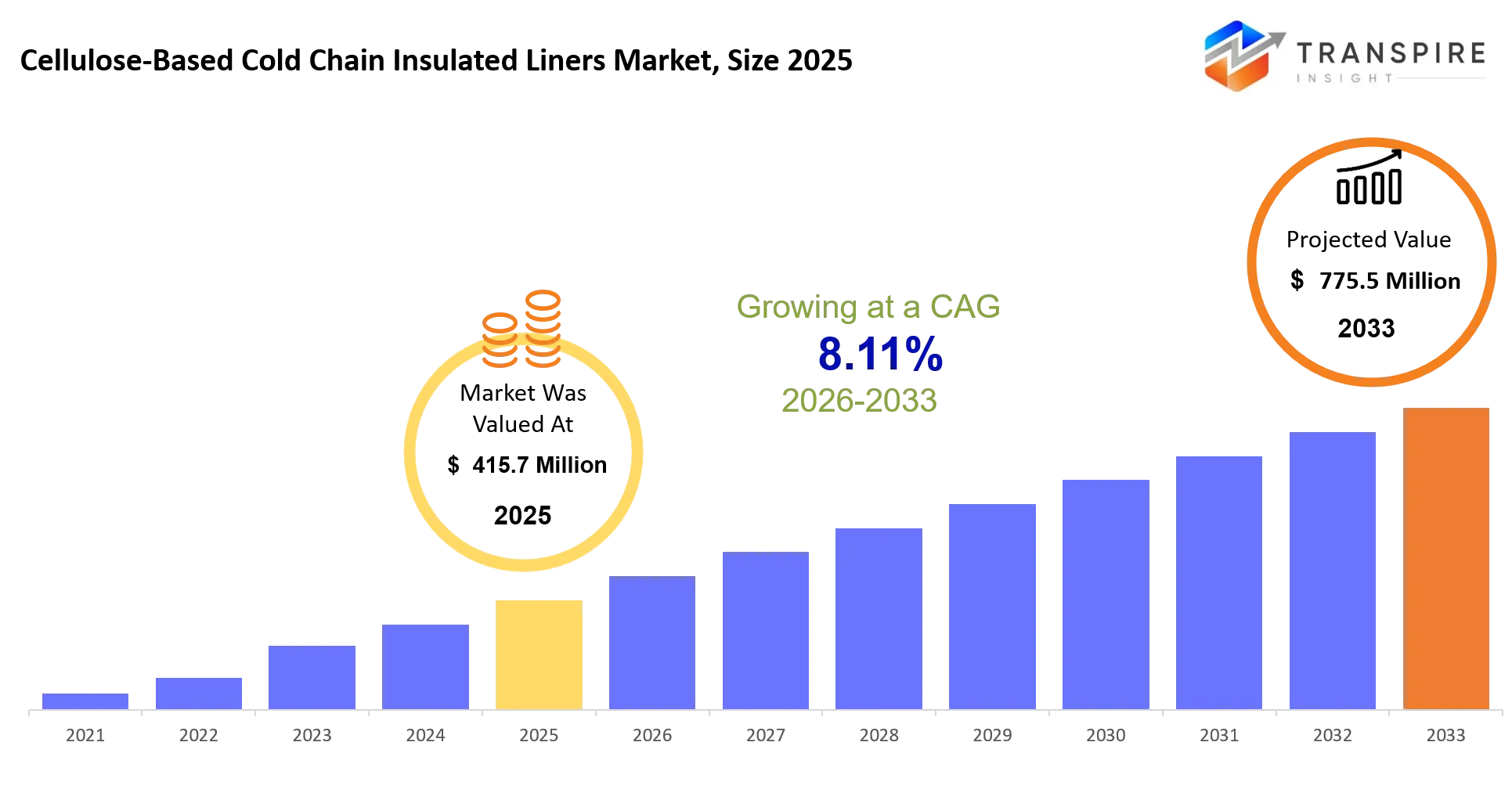
As per Transpire Insight Analysis, the Cellulose-Based Cold Chain Insulated Liners Market size is estimated at USD 415.7 million in 2025 and is anticipated to reach USD 775.5 million by 2033, growing at a CAGR of 8.11% from 2026 to 2033. Growth is being fueled by increased demand for sustainable packaging for cold chain operations, growth in e-commerce, and strict environmental regulations.
The global cellulose-based chain insulated liners market has undergone significant transformation. Earlier, the packaging sector had been offering packaging to maintain the required temperature of the goods. However, the current market offers industries reliable insulation solutions due to environmental regulations and sustainability requirements. The market growth of cellulose-based chain insulated liners has also been propelled by the increase in e-commerce grocery and cold chain pharmaceutical deliveries. In this case, there is an increasing demand for sustainable packaging solutions.
Consumers demand sustainable solutions for delivery packaging that is recyclable or biodegradable. That is the reason why the market for cellulose-based chain insulated liners is doing well. Companies invest in technology advancements related to the development of cellulose insulation to foster market growth. The market for cellulose-based chain insulated liners is critical for companies delivering foodstuffs and pharmaceutical goods. These companies require the delivery of products under required temperature conditions.
Cellulose-Based Cold Chain Insulated Liners Market Size & Forecast:
- Global Market Size 2025: USD 415.7 Million
- Expected Market Value (2033): USD 775.5 Million
- Forecast CAGR (2026–2033): 8.11%
- Leading Region in 2025: North America
- Fastest Growing Region: Europe
- Key Company Profiles: Ranpak, Sealed Air, DS Smith, TemperPack, Cascades, Smurfit Westrock, Mondi Group, Huhtamaki, Sonoco Products, Nordic Cold Chain Solutions, Vericool, Cryopak, Woolcool, Nature Pack, Thermal Packaging Solutions
Key Market Insights:
The market is continuously moving towards sustainable cold chain packaging due to the adoption of eco-friendly materials in place of traditional insulating materials by various industries.
- Cellulose Fibre Liners hold 42% share owing to their superior insulation performance and growing use in pharmaceuticals and food delivery.
- The Compostable Insulated Liners category is expected to witness the highest growth, exhibiting a CAGR of 18.2% on the back of stringent government environmental regulations and sustainable corporate initiatives.
- Moulded Cellulose Insulated Liners account for 21% of the market with growing efforts from producers to create lighter and more robust packaging options for temperature-sensitive shipments.
- The Recycled Paper Insulated Liners are 15% share due to increasing investments being made in recyclable and circular packaging materials.
- Multi-layer Cellulose Insulated Liners make up 10% of the market, with manufacturers developing more effective multi-layer insulations to enhance thermal performance.
- Producers of packaging products are increasing production of cellulose insulation products to cater to the growing demands of cold chain logistics and e-commerce industries.
- Manufacturers of pharmaceutical products are increasingly using cellulose insulation for better shipment and reduced impact on the environment by packaging products.
- Advanced automation in packaging production and material engineering allows manufacturers to create consistent products and reduce material waste in the manufacturing process.
What are the Key Drivers, Restraints, and Opportunities in the Cellulose-Based Cold Chain Insulated Liners Market?
Drivers
The growth of the market can be attributed to the rising demand for eco-friendly temperature-controlled packaging solutions in pharmaceuticals, food, and e-commerce supply chains. With the increasing government restrictions regarding the usage of disposable plastic products, firms are now using environmentally friendly products such as cellulose in place of traditional insulating materials. Due to the growing number of biological products, vaccines, fresh food transport, and online grocery shopping services, the market is seeing increased demand for recyclable insulated liners.
Restraints
The increased manufacturing cost of the cellulose-based insulating liner material is one of the key barriers when comparing its use to that of the conventional plastic or foam-based insulated liners. The manufacturers of cellulose insulated liners will encounter the challenge of availability of raw materials, consistent insulation in different climatic environments and manufacturing in large scale without incurring higher costs. These structural barriers have been impeding adoption of the cellulose insulated liners in markets where the decision-making process in packaging is mainly driven by cost considerations.
Opportunities
Opportunities are the development of high-performing compostable insulating liners. Many investments are being made in sustainable packaging innovation in Europe and North America that are opening up new growth opportunities. The companies that adopt advanced material engineering, automation technology and circularity business models in their offerings will have good chances of growing their market share.
What Has the Impact of Artificial Intelligence Been on the Cellulose-Based Cold Chain Insulated Liners Market?
AI technology is making the production process of cold chain insulated liners from cellulose more effective through intelligent production planning, quality control and efficient supply chain management. The manufacturers are currently using AI analytics in order to control the production process, find material inconsistencies, and decrease the number of defects. In this way, the producers are able to maintain the insulation effectiveness of the liners and decrease the cost of production.
In the field of cold chain logistics, the usage of forecasting technology allows the companies to predict the demand for temperature-sensitive packaging considering the seasonal factors, shipment volume, and regional requirements. Thus, the companies can optimise their inventories, minimise the waste of materials, and plan better deliveries. Route optimisation is another tool that makes it possible to minimise delays in the delivery of pharmaceuticals, fresh food, and biotechnological products. The use of AI technologies is difficult for many manufacturers because of the high costs of its implementation, the necessity of integration into the production process, and the availability of data. Small and mid-sized companies especially experience financial and technological difficulties connected with AI implementation. In January 2025, DS Smith introduced its innovative temperature control packaging solution, named TailorTemp. It is based on fibres and is used in the pharmaceutical cold chain logistics. The company applies AI technology to predict temperature performance, design recyclable fibre-based insulation packaging, and develop products faster.
Key Market Trends:
There is an ongoing trend towards using sustainable and high-performing insulation products, as different industries strive to reduce their carbon footprint while maintaining effective thermal insulation.
- Innovations in reusable materials, manufacturing processes, and cold chain logistics are transforming the way products are developed and purchased within various industries.
- Manufacturers are switching from traditional foam insulations to cellulose insulations due to the need for sustainability and strict packaging requirements.
- Packaging firms are focusing on creating lightweight and more efficient thermal insulating designs to minimise transportation costs.
- Pharmaceutical and biotech firms are increasingly opting for reusable and insulated liners to maintain sustainable temperature control shipments.
- Firms involved in the food and beverages industry are opting for fibre-based thermal insulation materials in response to the increasing consumer demand.
- Automation of liner production processes is gaining ground to create more consistent products and minimise manufacturing costs.
- Developments in materials allow the creation of multilayered cellulose insulation with improved temperature retention for longer shipment periods.
- Companies are developing regional manufacturing and logistics processes to make their supply chain stronger and reduce delivery time.
Cellulose-Based Cold Chain Insulated Liners MarketSegmentation
By Product Types
Cellulose Fibre Liners dominate with the highest market share of 42% owing to the excellent thermal insulation properties of these liners, light weight, and wide acceptance in both pharmaceuticals and food cold chain industries. The next is the Moulded Cellulose Insulated Liners, which occupy 21%, then come the Recycled Paper Insulated Liners at 15%. Multi-layer Cellulose Liners make up 10%, Compostable Insulated Liners 8%, Hybrid Fibre Liners 2%, and the Others 2%. Though compostable insulated liners account for a relatively lower market share, they are expected to grow at a high pace with a compound annual growth rate of 18.2%.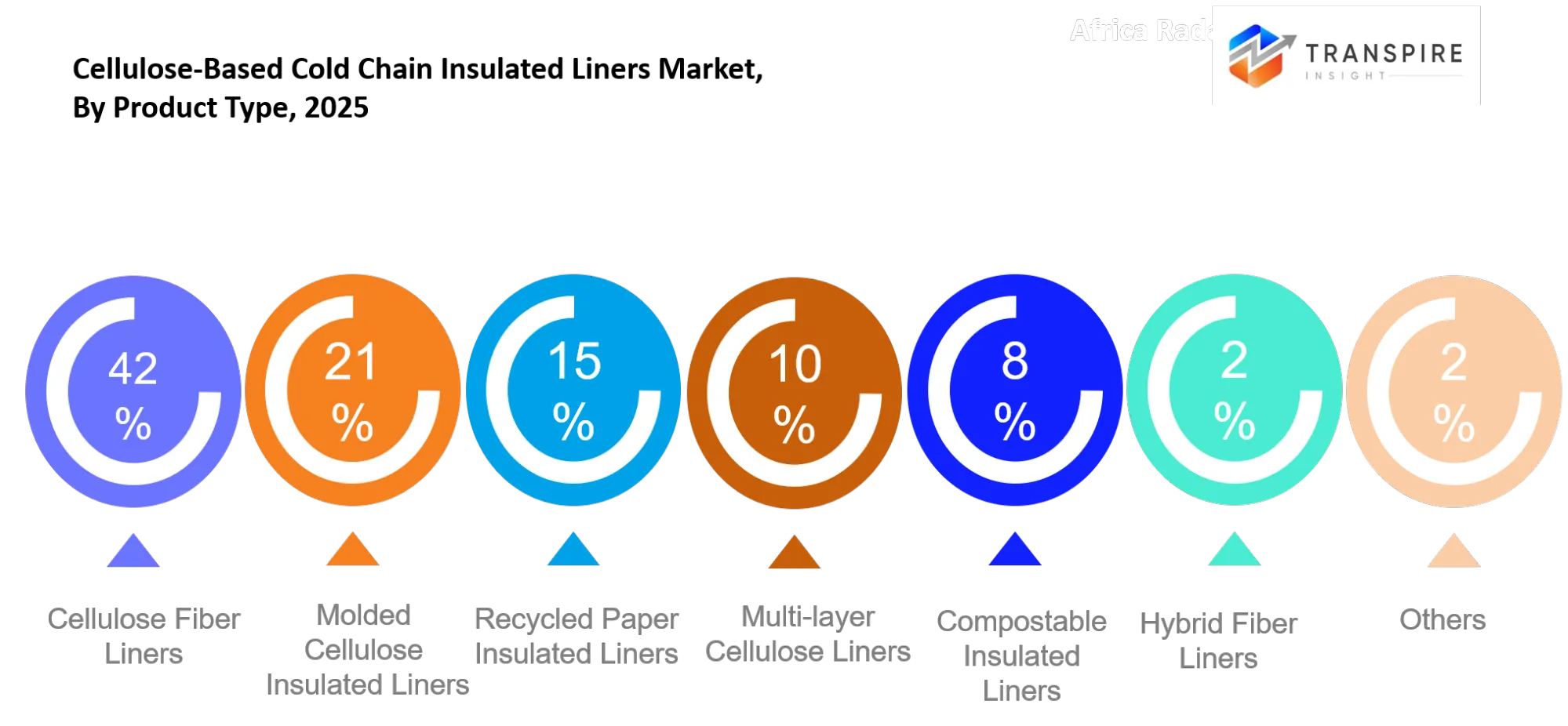
By Application Types
Pharmaceuticals are the top application type due to the requirement of thermal control in transporting vaccines, biologics, and speciality medicines. Also, there is a significant portion of food & beverages and fresh produce in the market because retailers pay attention to reducing the spoilage of their products. Seafood and meal kits are continuously growing owing to the development of the online grocery delivery business. The new application fields include biotechnology and e-commerce grocery, where cellulose-based insulation materials have good opportunities to develop.
By End User
The Cold Chain Logistics Providers segment is the largest end user in terms of demand because they need sustainable insulation solutions for the transportation of temperature-sensitive products. The usage among Pharmaceutical Companies will witness high adoption to meet the safety standards for products, whereas Food Manufacturers are focusing on sustainable packaging solutions. The growth among the E-commerce Companies is also driving demand owing to the increasing adoption of home delivery services. The demand among the Packaging Companies, Retailers, and others will be driven by the adoption of recyclable insulated materials.
By Distribution Channel
The Direct Sales channel is the favoured channel, especially when large pharmaceuticals and food companies procure customised insulated packages directly from the manufacturers. The contribution of the Packaging Distributors in meeting the demands in regional markets is significant, while the Online B2B Platform channel is witnessing growth due to quick procurement and wide product selection. The OEM Suppliers offer integration in packaging solutions for industrial customers, and the Exporters are expanding the international presence of cellulose insulated liners.
By Insulation Type
Multi-layer insulation is increasingly accepted due to its ability to provide better thermal insulation for long-distance shipments. Single-layer insulation is still commonly used in short-term shipments where it is necessary to be cost-effective. Reflective insulation is increasingly adopted where temperature stabilisation becomes important. Hybrid insulation is achieved by combining cellulose with other materials. Innovations in materials will continue to make insulation more popular in cold chain logistics operations.
What are the Key Use Cases Driving the Cellulose-Based Cold Chain Insulated Liners Market?
Cold chain insulation liners made from cellulose are commonly employed to ship temperature-sensitive pharmaceuticals, vaccines, biologics, and speciality drugs since maintaining a constant temperature is critical in such circumstances. The prevalence of Cellulose Fibre Liners (42%) is attributed to their capability to offer reliable insulation in addition to the sustainability agenda.
These insulation liners are increasingly finding applications in the food and beverages industry, ranging from produce and seafood to dairy products and frozen foods and meal kits delivery. E-commerce food platforms and cold chain logistics companies are increasingly using cellulose insulation to cut back on packaging waste and keep the integrity of the transported product intact. Applications that are emerging include biotech shipments, clinical trial samples, luxury food exportation, and eco-friendly last-mile delivery services. These changing applications are presenting new opportunities for more sophisticated cellulose insulation liners.
|
Report Metrics |
Details |
|
Market size value in 2025 |
USD 415.7 million |
|
Market size value in 2026 |
USD 449.4 million |
|
Revenue forecast in 2033 |
USD 775.5 million |
|
Growth rate |
CAGR of 8.11% from 2026 to 2033 |
|
Base year |
2025 |
|
Historical data |
2021 - 2024 |
|
Forecast period |
2026 - 2033 |
|
Report coverage |
Revenue forecast, competitive landscape, growth factors, and trends |
|
Regional scope |
United States; Canada; Mexico; United Kingdom; Germany; France; Italy; Spain; Denmark; Sweden; Norway; China; Japan; India; Australia; South Korea; Thailand; Brazil; Argentina; South Africa; Saudi Arabia; United Arab Emirates |
|
Key company profiled |
Ranpak, Sealed Air, DS Smith, TemperPack, Cascades, Smurfit Westrock, Mondi Group, Huhtamaki, Sonoco Products, Nordic Cold Chain Solutions, Vericool, Cryopak, Woolcool, Nature Pack, Thermal Packaging Solutions |
|
Customization scope |
Free report customization (country, regional & segment scope). Avail customized purchase options to meet your exact research needs. |
|
Report Segmentation |
By Product Type (Cellulose Fiber Liners, Molded Cellulose Insulated Liners, Recycled Paper Insulated Liners, Multi-layer Cellulose Liners, Compostable Insulated Liners, Hybrid Fiber Liners, Thermal Cellulose Panels, Others); By Application (Pharmaceuticals, Food & Beverage, Fresh Produce, Seafood, Meal Kits, Biotechnology, E-commerce Grocery, Others); By End User (Cold Chain Logistics Providers, Pharmaceutical Companies, Food Manufacturers, E-commerce Companies, Packaging Companies, Retailers, Others); By Distribution Channel (Direct Sales, Packaging Distributors, Online B2B Platforms, OEM Suppliers, Exporters, Others); By Insulation Type (Single-layer, Multi-layer, Reflective Insulation, Hybrid Insulation, Others) |
Which Regions are Driving the Cellulose-Based Cold Chain Insulated Liners MarketGrowth?
North America
North America has the largest share of the market, which is 39%, thanks to the robust cold chain infrastructure in place, stringent regulations on drug transport, and high demand for sustainable packaging solutions. Investments have been made in both temperature-controlled logistics and recycling technologies of packaging. Increasing usage of cellulose insulated liners by pharmaceutical firms, food producers, and online retailers will contribute further to its market dominance. These are the reasons why North America will retain its market dominance. In October 2025, TemperPack (United States) received a US$10 million investment from Closed Loop Partners for the purpose of expanding its manufacturing of the ClimaCell® paper-based and curbside recyclable cold chain insulation. The growth will be driven by the increased demand of their pharmaceutical, grocery delivery, and food retail customers for sustainable alternatives to EPS foam used for temperature-controlled shipping. This reflects the leading position of North America in terms of development of cellulose-based cold chain packaging.
Europe
The market share held by Europe is 30%, while the highest growth rate in the forecast period is predicted to be registered by the European market at a CAGR of 19.1%. The growth in the European market will be fueled by the stringent environmental policies and initiatives of the circular economy, and growing adoption of compostable packaging solutions. Unlike North America, Europe gives more importance to the reduction of packaging waste through sustainable innovations.In January 2025, DS Smith (United Kingdom) presented their new TailorTemp fibre-based temperature-controlled packaging designed specifically for the pharmaceutical industry at the Pharmapack Europe 2025 conference. The recyclable corrugated fibre insulation keeps cold chain integrity during up to 36 hours of transportation and allows reducing the environmental footprint of the temperature-controlled logistics of pharmaceutical companies.
Asia Pacific
The share of the Asia Pacific region in the global market is 24%, and this region is showing potential due to the growth of production facilities, food exports, and temperature management. The rise of urbanisation, the delivery of groceries through e-commerce, and the increasing demand for sustainable packaging are opening new avenues for the region. There are efforts being made by governments and private enterprises towards building state-of-the-art cold chain facilities. Such trends are likely to favour the uptake of cellulose-based insulated liners in Asia Pacific.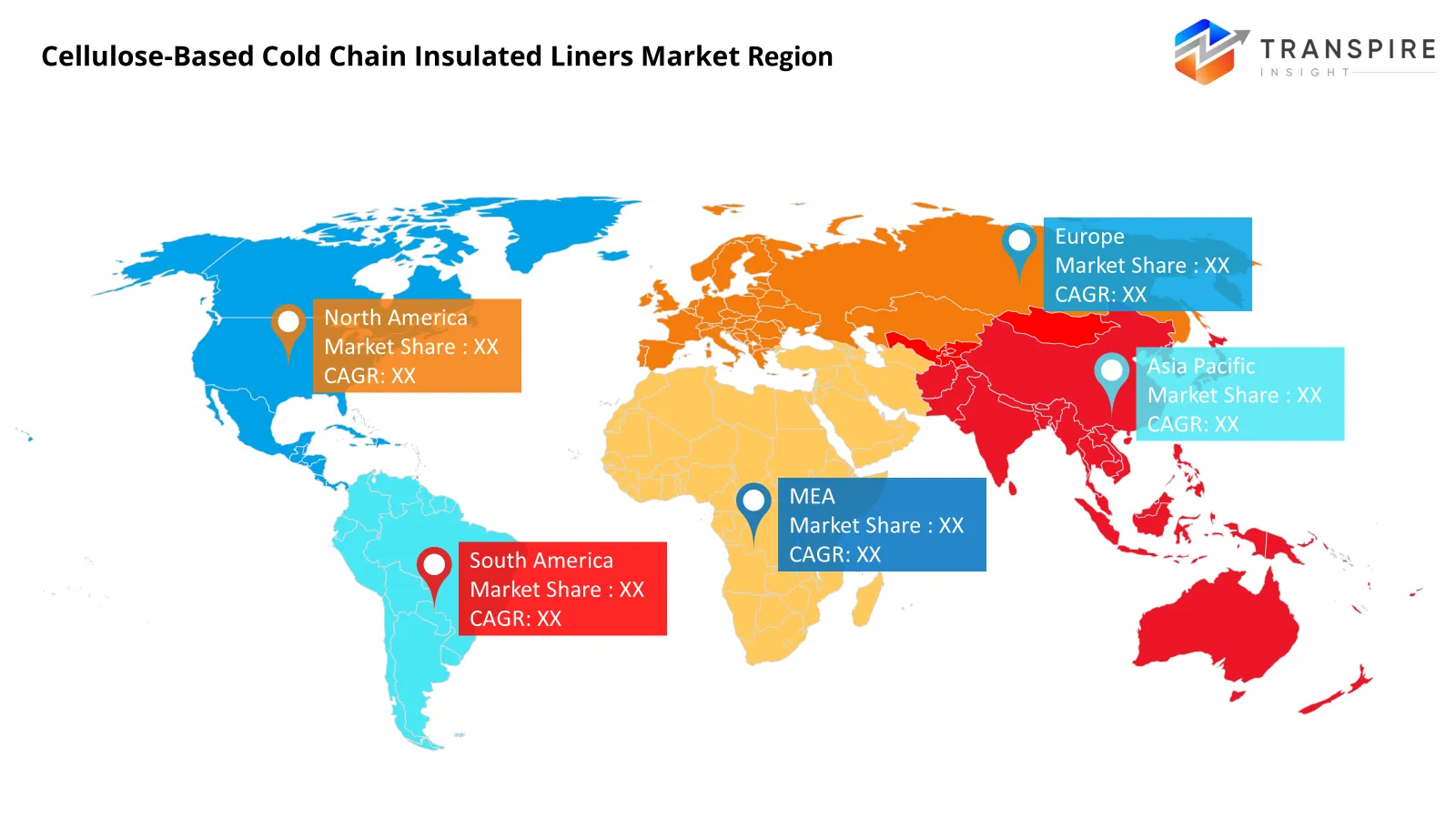
Who are the Key Players in the Cellulose-Based Cold Chain Insulated Liners Marketand how do they Compete?
The competition within the international cellulose-based cold chain insulated liners market is mainly driven by product innovation, sustainability, effectiveness of insulation properties, and improvements within the logistics chain. Manufacturers invest in product innovation and develop recyclable and compostable insulation materials that adhere to new environmental regulations while ensuring adequate insulation and protecting the requirements of the pharmaceutical, food, and biotech industries.
The main participants in the industry, such as Ranpak Holdings Corp., TemperPack Technologies, Cold Chain Technologies, DS Smith, Sealed Air Corporation, Sonoco Products Company, Packaging Corporation of America, Smurfit Westrock, Storopack, and Cascades Inc., compete by producing innovative fibre-based insulation products that have higher thermal insulation properties and a lower environmental footprint. Some companies have developed unique material and packaging technologies as well as work closely with the cold chain logistics companies.
The companies further compete by continuing investments in R&D and production process automation as well as sustainable packaging innovations. Strategic partnerships, expansions and geographic expansion into high-growth areas help companies to meet increasing demands of the pharmaceutical, food, and e-commerce industries.
Cellulose-Based Cold Chain Insulated Liners Market companies
- Ranpak
- Sealed Air
- DS Smith
- TemperPack
- Cascades
- Smurfit Westrock
- Mondi Group
- Huhtamaki
- Sonoco Products
- Nordic Cold Chain Solutions
- Vericool
- Cryopak,
- Woolcoo
- Nature Pack
- Thermal Packaging Solutions
Recent Development News
In April 2026, TemperPack released a new WaveKraft recyclable paper-based mailer as an alternative to regular shipping boxes. This innovation bolsters sustainable cold chain packaging through enhanced cushioning capability, packing efficiency, and recyclability for e-commerce shipments and temperature-sensitive cargo.
In January 2025, DS Smith rolled out TailorTemp, a temperature-controlled packaging made from fibre for pharmaceutical cold chain logistics at Pharmapack Europe. This solution is recyclable and allows 36 hours of temperature control, enabling pharmaceutical companies to lessen their reliance on expanded polystyrene (EPS) packaging.
What Strategic Insights Define the Future of the Cellulose-Based Cold Chain Insulated Liners Market?
The market will increasingly shift towards materials that are recyclable and high-performance insulation solutions due to increasing sustainability efforts among pharmaceuticals, food, and e-commerce companies. Continued investments in the research and development of fibre-based materials and automation in manufacturing, as well as the design of thermal packaging solutions, will contribute to increasing efficiency and adoption of the solutions. There is a lurking challenge in the form of scarcity of high-quality recycled fibre and high production costs of cellulose-based insulation solutions as opposed to traditional plastic-based insulation solutions, which may influence costs and profitability. However, the growing need for cold chain facilities in emerging economies and increasing demand for sustainable packaging solutions provide major opportunities for manufacturers.
By Product Type
- Cellulose Fiber Liners
- Molded Cellulose Insulated Liners
- Recycled Paper Insulated Liner
- Multi-layer Cellulose Liner
- Compostable Insulated Liners
- Hybrid Fiber Liners
- Thermal Cellulose Panels
By Application
- Pharmaceuticals
- Food & Beverage
- Fresh Produce
- Seafood
- Meal Kits
- Biotechnology
- E-commerce Grocery
By End User
- Cold Chain Logistics Providers
- Pharmaceutical Companies
- Food Manufacturers
- E-commerce Companies
- Packaging Companies
- Retailers,
By Distribution Channel
- Direct Sales
- Packaging Distributors
- Online B2B Platforms
- OEM Suppliers
- Exporters
By Insulation Type
- Single-layer
- Multi-layer
- Reflective Insulation
- Hybrid Insulation
Regional Outlook
North America
- US
- Canada
- Mexico
Europe
- Germany
- UK
- France
- Italy
- Spain
- Russia
- Rest of Europe
Asia Pacific
- China
- Japan
- India
- South Korea
- Australia
- Rest of Asia Pacific
South America
- Brazil
- Argentina
- Rest of South America
Middle East & Africa
- UAE
- Saudi Arabia
- Qatar
- South Africa
- Rest of the Middle East & Africa
Frequently Asked Questions
Find quick answers to common questions.
The Cellulose-Based Cold Chain Insulated Liners Market size was valued at USD 415.7 Million in 2025 and is poised to reach USD 775.5 Million by 2033, expanding at an 8.11% CAGR.
Key segments for the Cellulose-Based Cold Chain Insulated Liners Market are By Product Type (Cellulose Fiber Liners, Molded Cellulose Insulated Liners, Recycled Paper Insulated Liners, Multi-layer Cellulose Liners, Compostable Insulated Liners, Hybrid Fiber Liners, Thermal Cellulose Panels, Others); By Application (Pharmaceuticals, Food & Beverage, Fresh Produce, Seafood, Meal Kits, Biotechnology, E-commerce Grocery, Others); By End User (Cold Chain Logistics Providers, Pharmaceutical Companies, Food Manufacturers, E-commerce Companies, Packaging Companies, Retailers, Others); By Distribution Channel (Direct Sales, Packaging Distributors, Online B2B Platforms, OEM Suppliers, Exporters, Others); By Insulation Type (Single-layer, Multi-layer, Reflective Insulation, Hybrid Insulation, Others)
Growth is primarily driven by the growing requirement for temperature-sensitive pharma shipments, the development of cold chain logistics, increasing use of sustainable packaging materials, increased online food delivery, and environmental regulations that promote eco-friendly insulation solutions.
The global market is led by major manufacturers including Ranpak, Sealed Air, DS Smith, TemperPack, Cascades, Smurfit Westrock, Mondi Group, Huhtamaki, Sonoco Products, Nordic Cold Chain Solutions, Vericool, Cryopak, Woolcool, Nature Pack, Thermal Packaging Solutions
North America has the largest share of 39% in the world market of cellulose-based cold chain insulated liners due to the developed cold chain system, pharmaceutical and food delivery industry, high demand for sustainable packaging and stringent environmental laws favouring eco-friendly insulation material.
Opportunities within the commercial sphere may include increased logistics for pharmaceutical cold chain operations, higher demand for sustainable packaging, increased online grocery delivery, increase in transport requirements for vaccines, and eco-friendly insulation in emerging Markets.
- Ranpak
- Sealed Air
- DS Smith
- TemperPack
- Cascades
- Smurfit Westrock
- Mondi Group
- Huhtamaki
- Sonoco Products
- Nordic Cold Chain Solutions
- Vericool
- Cryopak,
- Woolcoo
- Nature Pack
- Thermal Packaging Solutions
About the Authors

Pankaj Ghogare Patil
I am Pankaj Ghogare Patil, a Senior Research Analyst at Transpire Insight, specializing in the Pharmaceutical, Chemicals & Materials, Healthcare IT, and Biotechnology industry. My expertise lies in conducting comprehensive market research, analyzing industry trends, evaluating competitive landscapes, and translating complex data into actionable insights. At Transpire Insight, I closely follow emerging technologies, regulatory developments, and market innovations to create accurate, well-researched, and informative content that helps businesses and professionals make informed decisions. I am committed to producing credible, evidence-based articles that reflect industry best practices while making technical topics accessible and valuable for a broad audience.

Chakradhar Khansole
Chakradhar serves as the Research Director at Transpire Insight, bringing over 8 years of experience in technology, innovation, and strategic market intelligence. He specializes in transforming complex market data into actionable business insights that enable organizations to make informed, growth-oriented decisions. Recognized for his strategic vision and analytical expertise, Chakradhar leads high-impact research initiatives, delivering comprehensive market assessments, competitive intelligence, and forward-looking industry analysis.
Recently Published Reports
-
May 2026
Healthcare Polymer Packaging Market
Healthcare Polymer Packaging Market Size, Share & Analysis Report By Packaging Type (Syringes, IV Bottles and Pouches, Clamshells, Blisters, Bottles & Jars, Containers, Tubes, IV Parental Packaging, Others), By Type (Regulated, Non-regulated), By Polymer Type (LDPE (Low-Density Polyethylene), HDPE (High-Density Polyethylene), Homo-polymer (Homo), Random Copolymer (Random), Block Copolymer (Block), PET, Polystyrene, Polyvinyl Chloride, Polyamide/EVOH, Others), and Geography (North America, Europe, Asia-Pacific, Middle East and Africa, South and Central America), 2021 - 2031
-
Apr 2026
Hydrophilic Tape (Waterstop) Market
Hydrophilic Tape (Waterstop) Market Size, Share & Analysis Report By Type (Bentonite-Based Hydrophilic Tape, Rubber-Based Hydrophilic Tape), By Application (Residential Buildings, Commercial Buildings, Infrastructure Projects), and Geography (North America, Europe, Asia-Pacific, Middle East and Africa, South and Central America), 2021 - 2031
-
Apr 2026
Metalens Market
Metalens Market Size, Share & Analysis Report By Type (Visible Light Metalens, and Infrared Metalens), By Application (Consumer Electronics, Automotive Electronics, Industrial, Medical, and Others), and Geography (North America, Europe, Asia-Pacific, Middle East and Africa, South and Central America), 2021 - 2031
-
Apr 2026
PBT Resin Market
PBT Resin Market Size, Share & Analysis Report By Type (Reinforced PBT Resin, Unreinforced PBT Resin), By Processing Method (Injection Molding, Extrusion, Blow Molding, Others), By End-User (Automotive, Electrical & Electronics, Consumer Appliances, Industrial Machinery, Medical Devices, Packaging, Others), and Geography (North America, Europe, Asia-Pacific, Middle East and Africa, South and Central America), 2021 - 2031