

Barcode Printers Market Summary:
As per Transpire Insight Analysis, the Barcode Printers Market size is estimated at USD 5.1 billion in 2025 and is anticipated to reach USD 10.53 billion by 2033, growing at a CAGR of 9.5% from 2026 to 2033. Growth is fueled by the increasing use of automation in warehouses, growth in e-commerce, and the growing need to track inventory and products effectively.
The barcode printers market has changed a lot over time. It used to be about label printing. Now it is about printing solutions. These solutions help people see what is in stock, track products, and make work easier in all kinds of industries. In recent years, people have started to use cloud-connected printers, printers that work with RFID, and mobile printers. This is because businesses want to make their warehouses, stores, and shipping operations
A big reason for this change is that online shopping is growing fast. This means people need to label products and get orders out quickly. At the time, some industries like healthcare and food had to follow strict rules about tracking products. This has made more companies start using barcode printing. All these things are making businesses work better, reducing mistakes and helping them manage supplies. This is why the barcode printers market is likely to keep growing. The barcode printers market is getting stronger because of all these changes. The use of barcode printers is becoming more common. This is helping the market to expand.
Barcode Printers Market Size & Forecast:
- Global Market Size 2025: USD 5.1 Billion
- Expected Market Value (2033): USD 10.53 Billion
- Forecast CAGR (2026–2033): 9.5%
- Leading Region in 2025: North America
- Fastest Growing Region: Asia Pacific
- Key Company Profiles: Zebra Technologies, Honeywell, SATO Holdings, Toshiba Tec, TSC Auto ID, Brother Industries, Seiko Epson, Citizen Systems, BIXOLON, Godex, Printronix, Brady Corporation, Cab Produkttechnik, Postek, Wasp Barcode Technologies

Key Market Insights:
The market is going through constant changes as there is a trend toward automation in label creation, real-time tracking of assets, and digital supply chains. Innovations in technology and printing solutions per industry continue to facilitate the adoption of these trends.
- Barcode printers used in industries constitute 38% of the market and are valued for their ruggedness and capacity to deal with heavy-duty printing in the industrial environment.
- Desktop barcode printers make up 24% of the market because of their increased adoption in retail stores, pharmacies, and small businesses looking for low-cost label printers.
- Mobile barcode printers make up 15% of the market as more service providers and deliveries use portable label printers.
- Thermal transfer barcode printers make up 10% of the market because of the requirement for long-lasting, high-quality labels from the industry and the health sector.
- RFID barcode printers make up 9% of the market, which is the fastest-growing category and expected to grow at 16.9% CAGR because of the development of intelligent inventory and automatic tracking.
- Direct thermal barcode printers make up 2% of the market, being an economically viable option for short-lived labelling purposes like shipping labels and receipts.
- The others make up 2% of the market because of niche industrial and commercial labelling needs.
- Printer manufacturers strive to improve printer performance using cloud computing and enterprise management systems.
What are the Key Drivers, Restraints, and Opportunities in the Barcode Printers Market?
Drivers
This market is making progress because of the efforts of companies trying to improve the traceability of products, increase warehouse efficiency and accuracy of inventory through effective labelling systems. The main driver of growth is the quick digitalisation of supply chains, which is possible due to the growth of e-commerce, organised retail, and industrial automation. Businesses are purchasing barcode printers that can be integrated with their warehouse management system and ERP system, thus providing fast product recognition and error reduction. This process has led many companies to replace old printing devices with new smart solutions.
Restraints
The market continues facing difficulties associated with high levels of investments and integration complexities. First, the advanced industrial and RFID-based barcode printers may need some compatible software, infrastructure improvements, and even staff training, thereby complicating their adoption by small and medium enterprises. Second, integration with existing enterprise IT systems might extend the time of implementation process and increase its costs, thereby postponing purchase decisions of price-sensitive consumers.
Opportunities
The greatest opportunity is associated with the expanding use of RFID printing technologies and cloud-based labelling solutions. With industries becoming interested in enhancing the visibility of their supply chains and automating the inventory control processes, the need for intelligent solutions will grow rapidly. Moreover, expanding investments in manufacturing in the Asia-Pacific region, as well as automation of warehouses in developing countries, will open up opportunities for vendors to present new solutions for barcode printing.
What Has the Impact of Artificial Intelligence Been on the Barcode Printers Market?
The barcode printer industry will be transformed due to the integration of artificial intelligence that brings about accuracy, connectivity, and data-driven labelling processes. The contemporary barcode printers that come with AI-based software can detect any problem in the printing process, enhance print quality, and make adjustments in the printer settings depending on workload and labelling needs. It helps minimize down time and wastage in materials and increases efficiency, especially in large-scale operations like manufacturing plants, warehouses, and distribution centres.
AI makes predictive maintenance possible by constantly monitoring the performance of the printer and detecting any problem that can cause equipment failure at any time. Predictive maintenance allows companies to schedule maintenance in advance and thus prolong the service life of the equipment without incurring any unexpected maintenance costs. AI also helps organisations make predictions regarding label needs and plan for inventories. In January 2025, Cognex Corporation released its AI-based DataMan 290 and DataMan 390 barcode readers that use AI algorithms to improve barcode decoding efficiency, ease of implementation, and boost manufacturing efficiency. AI-assisted barcode recognition systems encourage a higher requirement for high-end barcode printers and labellers.
Key Market Trends:
There are trends emerging in the barcode printers market since companies have started adopting more efficient systems such as intelligent labelling, printing and automation.
- Organisations have begun shifting from using individual printing units to network-enabled barcode printers, which allow them to manage the devices and increase efficiency in their operations across different locations.
- Printer management based on the cloud is gaining popularity as it enables companies to perform remote monitoring of the device's functionality and cut down maintenance time.
- RFID printing on barcodes is gaining popularity since manufacturers, retailers and logistics firms want to have better visibility of inventory and automated asset tracking.
- More companies are opting for portable printers to meet the needs of growing e-commerce, field services and last-mile delivery businesses, where labels are printed onsite.
- Intelligent printer management based on AI and diagnostics is being incorporated to help prevent any unexpected failures and enhance the efficiency of the devices.
- Environmental considerations have been playing a greater role in making decisions in terms of purchase, as manufacturers introduce eco-friendly products and technologies.
Barcode Printers Market Segmentation
By Product Type
Industrial Barcode Printers are dominating the segment with 38% market share because of the capability of providing continuous and high-volume printing in manufacturing, warehousing, and logistics centres. The market share of Desktop Barcode Printers is 24% as it benefits from the high demand from retailers, the healthcare industry, and small businesses who have the requirement of portable printers. Mobile Barcode Printers are contributing 15% in the segment due to the importance of mobility in last-mile deliveries and field activities. The contribution of Thermal Transfer Printers is 10%, while the market share of RFID Barcode Printers is 9%, as it is expected to witness the fastest growth owing to investments in smart inventory management systems. Direct Thermal Printers and Other categories have a market share of 2% each. Based on the printing technology, Thermal Transfer continues to lead the segment due to its reliability, while RFID and Hybrid Printing technology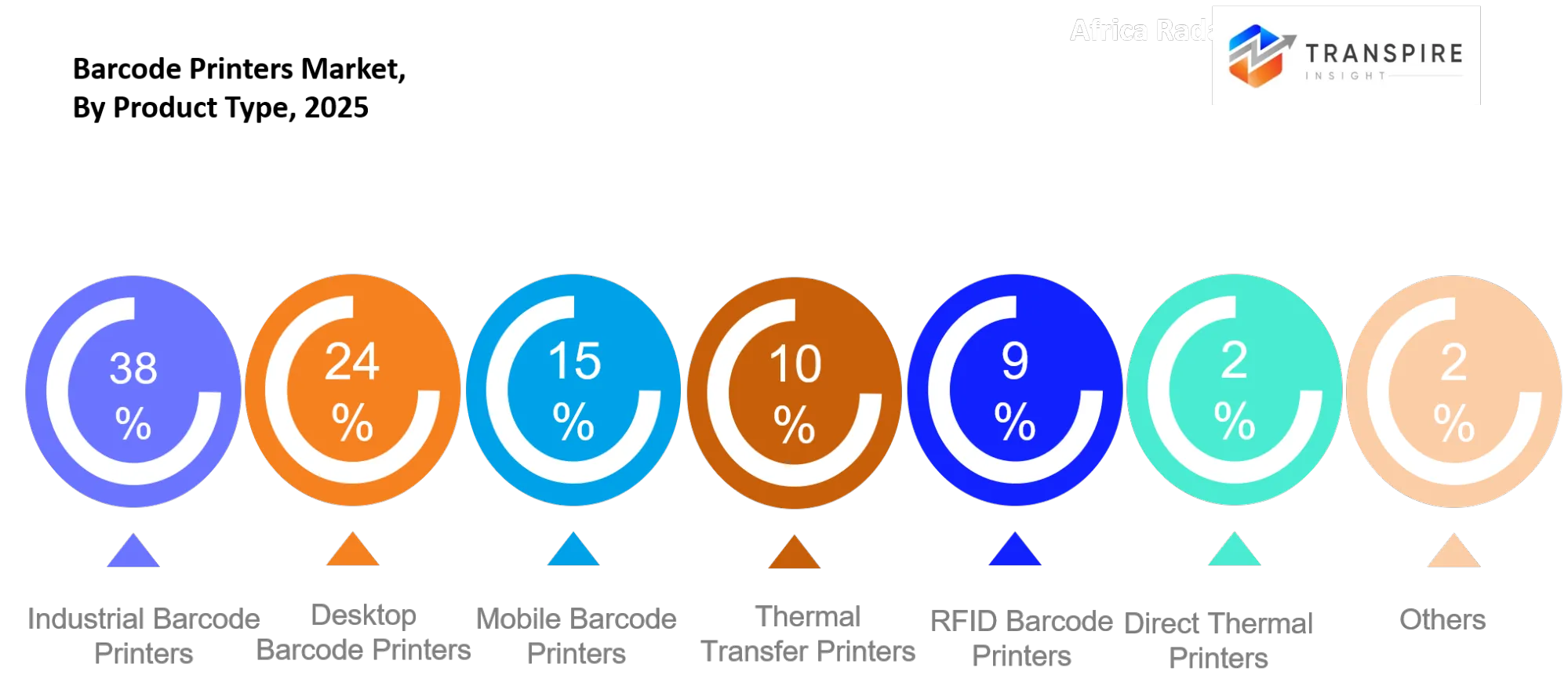
By end-user
manufacturing continues to be the biggest user of barcode printing technology owing to the need for identification and compliance of products in the production environment. The expansion of barcode printing technology use in retail and logistics continues due to the demand generated by e-commerce in processing orders and shipping labels. There is also an increase in the use of this technology in the healthcare sector in support of patient identification, specimen tracking, and labelling of medicines. Governments, warehousing companies, and transporters are incorporating barcode printing technologies to enhance asset management and efficiency.
By application
The labelling of products continues to be the major one, facilitated by growing production volumes and increased traceability requirements in various industries. The need for inventory management and asset tracking has been growing in importance for companies trying to get better control of stock movements and assets. Ship labels are also increasingly important due to the expansion of e-commerce and third-party logistics. The development of healthcare identification systems is another factor responsible for rising demands for high-quality barcode labels. Tickets and other applications are adding diversity to the market.
By Distribution Channel
There is dominance of direct sales and value-added resellers in the distribution channel environment, as there is a need for customised printing solutions and installation assistance, among others, from enterprise-level customers. Industrial distributors play an important role in the provision of equipment to manufacturing and logistics companies, whereas OEM suppliers help in enhancing market presence through hardware solutions. There has been a steady growth in online retailing distribution channels, as there has been an increase in the purchasing of barcode printers by small and medium-sized enterprises through digital platforms.
What are the Key Use Cases Driving the Barcode Printers Market?
Barcode printers are an essential part of the process of product labelling, which is the most widespread use case of the technology, especially in the industries that use Industrial Barcode Printers. Manufacturers, distributors, and logistics providers all require these barcode printers to print durable labels that will help increase the accuracy of inventory, improve product tracing and the shipping process.
Use cases of barcode printers grow wider as they find their application in retail, in hospitals and clinics, as well as in the sphere of transportation. As a result of increased activity of e-commerce and automation of warehouses, there arises a need for more efficient and fast solutions for labelling. New trends include printing of RFID tags, use of mobile printing technologies and cloud-connected barcode systems that allow real-time information about the processes and supplies. As businesses get smarter and build digital operations and warehouses, barcode printers become essential equipment.
|
Report Metrics |
Details |
|
Market size value in 2025 |
USD 5.1 Billion |
|
Market size value in 2026 |
USD 5.58 Billion |
|
Revenue forecast in 2033 |
USD 10.53 Billion |
|
Growth rate |
CAGR of 9.5% from 2026 to 2033 |
|
Base year |
2025 |
|
Historical data |
2021 - 2024 |
|
Forecast period |
2026 - 2033 |
|
Report coverage |
Revenue forecast, competitive landscape, growth factors, and trends |
|
Regional scope |
United States; Canada; Mexico; United Kingdom; Germany; France; Italy; Spain; Denmark; Sweden; Norway; China; Japan; India; Australia; South Korea; Thailand; Brazil; Argentina; South Africa; Saudi Arabia; United Arab Emirates |
|
Key company profiled |
Zebra Technologies, Honeywell, SATO Holdings, Toshiba Tec, TSC Auto ID, Brother Industries, Seiko Epson, Citizen Systems, BIXOLON, Godex, Printronix, Brady Corporation, Cab Produkttechnik, Postek, Wasp Barcode Technologies |
|
Customization scope |
Free report customization (country, regional & segment scope). Avail customized purchase options to meet your exact research needs. |
|
Report Segmentation |
By Product Type (Desktop Barcode Printers, Industrial Barcode Printers, Mobile Barcode Printers, RFID Barcode Printers, Card Printers, Thermal Transfer Printers, Direct Thermal Printers, Others); By Printing Technology (Thermal Transfer, Direct Thermal, Inkjet, Laser Printing, RFID Printing, Hybrid Printing, Others); By End User (Retail, Manufacturing, Logistics, Healthcare, Government, Warehousing, Transportation, Others); By Application (Product Labeling, Asset Tracking, Inventory Management, Shipping Labels, Healthcare Identification, Ticketing, Others); By Distribution Channel (Direct Sales, Value-added Resellers, Online Retail, Industrial Distributors, OEM Suppliers, Others) |
Which Regions are Driving the Barcode Printers Market Growth?
North America
The share of North America in the world barcode printer market is 36%. This is explained by high levels of developed manufacturing industry in the area, high levels of automation of warehouses and the use of technologies of the digital supply chain. In addition, North America is characterised by a developed retail, healthcare and logistics market that uses barcode labels. Regular investments in smart warehousing, automation of production and cloud-based printing technologies contribute to the growth of demand in the market. At the same time, the presence of major suppliers of technologies and distribution channels in the region makes it possible to stay in the leading position.
Europe
Europe accounts for 27% of the global market, growing steadily due to strict rules of product identification and the need for improving operational efficiency in manufacturing and healthcare sectors. Unlike North America, growth in Europe is mainly driven by regulatory requirements, sustainability in manufacturing and the development of industrial facilities. The upgrade of infrastructure for labelling is aimed at improving traceability and quality of products as well as making the supply chain transparent. Regular industrial production contributes to the development of the market.In April 2025, SATO Europe GmbH released AEP Cloud – a no-code cloud platform designed for simplified barcode labelling and identification, as well as compliance with the Digital Product Passport (DPP). This platform allows better barcode printer integration and traceability in manufacturing, logistics and healthcare sectors in Europe.
Asia Pacific
The Asia Pacific region accounts for 31% of the worldwide market and will witness the highest growth at a CAGR of 17.8%. Rapid industrialisation, increasing network of e-commerce, and growing investments in logistics infrastructure are some of the major factors that are driving the demand for efficient barcode printers. Growth in manufacturing industries of countries like China, India, Japan, and Southeast Asian countries has boosted the trend of automating the process of labelling. This has provided huge opportunities for manufacturers of barcode printers in the Asia Pacific region.In March 2025, Zebra Technologies presented new technologies of intelligent automation, machine vision and industrial barcode scanning and printing solutions at ProMat 2025. These technologies are designed to assist rapidly growing manufacturing and logistics operations in the Asia-Pacific region.
Who are the Key Players in the Barcode Printers Marketand how do they Compete?
Competitiveness in the international market for barcode printers depends on firms that specialise in technology innovations, solutions specific to industries, and development of distribution networks on a global level. Competing not on price but based on durable hardware, printer management using cloud technology, RFID capability, and integration with warehouse management systems and enterprise software, such an approach to competition leads to constant product development as well as helps organisations achieve greater precision in labelling, efficiency and visibility of supply chains.
By developing intelligent printing solutions, RFID solutions, and a cloud-based platform for printer management, Zebra Technologies enhances its position on the market. By developing high-performance industrial printers intended for use in manufacturing, retail, healthcare, and logistics, companies differentiate themselves from their competitors. Honeywell International develops its position by offering integrated solutions in barcode printing and automatic identification, working perfectly with warehouse automation and enterprise mobility.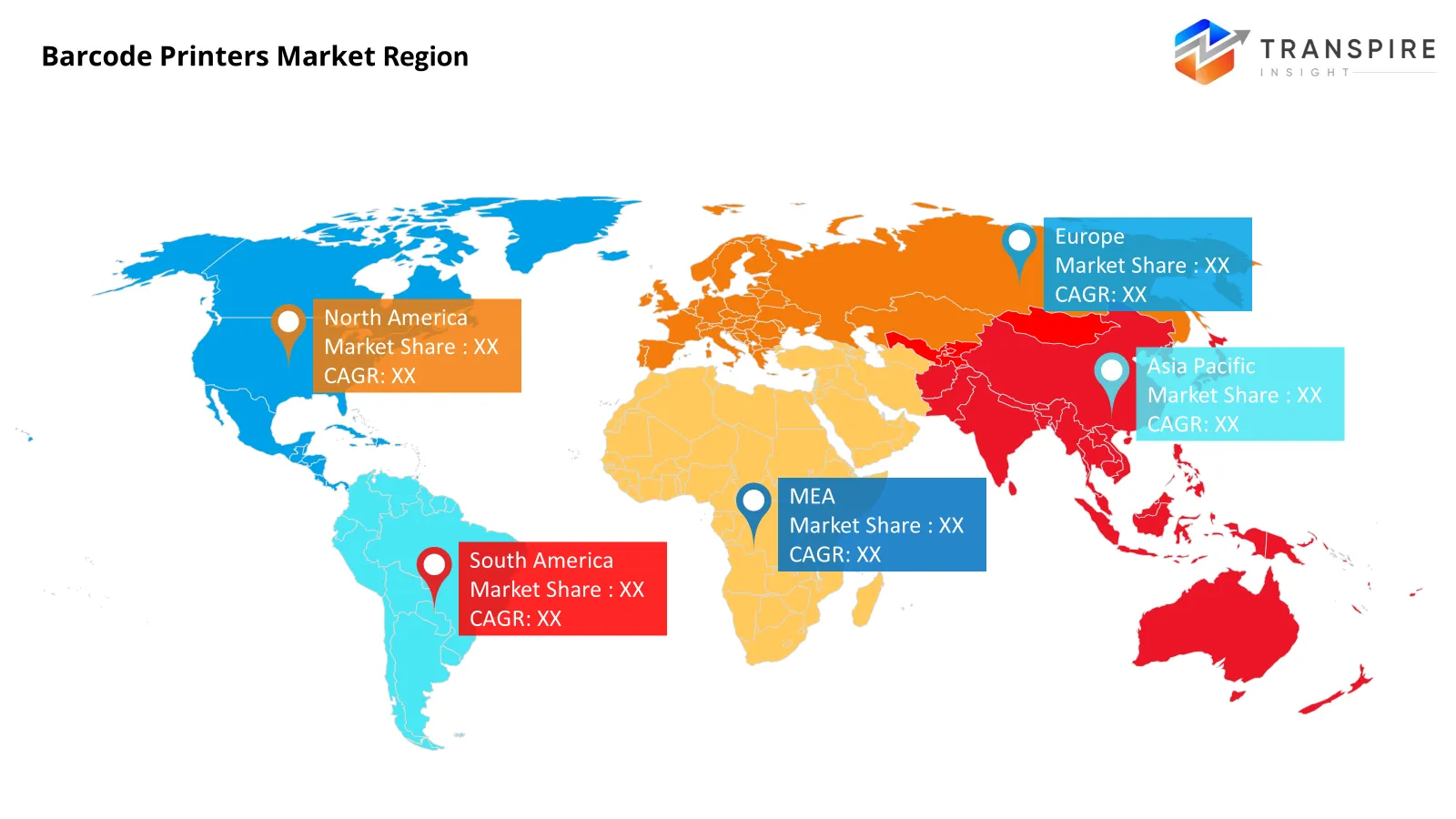
Barcode Printers Market companies
- Zebra Technologies
- Honeywell
- SATO Holdings
- Toshiba Tec
- TSC Auto ID
- Brother Industries
- Seiko Epson
- Citizen Systems
- BIXOLON
- Godex
- Printronix
- Brady Corporation
- Cab Produkttechnik
- Postek
- Wasp Barcode Technologies
Recent Development News
In January 2026, Toshiba America Business Solutions came up with the BX610T and BX620T industrial barcode printers. Some of the key features of these new products include cloud connectivity, PDF printing capability, and fast label production. These products have been developed to improve the efficiency of companies such as manufacturers, warehouses and retail firms.
In September 2025, SATO Corporation launched the CL4-SXR and CL6-SXR industrial printers that will be released globally in 2026. Some of the important features of these industrial printers include self-monitoring and maintenance, improved security, and sustainability, among others.
What Strategic Insights Define the Future of the Barcode Printers Market?
Future growth prospects in the barcode printers market globally will depend on the increased usage of intelligent labelling systems, automated warehouses, and interconnected supply chain ecosystems. Organisations will have to consider the use of cloud-based, RFID-compatible, and AI-based printing systems to optimise their processes and achieve inventory and product visibility. One of the less acknowledged risks in barcode printer implementations will include the difficulty of integrating new barcode printing systems into existing enterprise architectures. In addition to that, the opportunity will lie in the increasing level of automation and digitisation in the industries of developing countries. The companies that focus on software connectivity, remote device management, and sustainable printing will benefit from a strengthened position in the market. Long-term success will depend on establishing technological partnerships, introducing innovative products and solutions customised for each customer's needs.
By Product Type
- Desktop Barcode Printers
- Industrial Barcode Printers
- Mobile Barcode Printers
- RFID Barcode Printers
- Card Printers
- Thermal Transfer Printers
- Direct Thermal Printers
By Printing Technology
- Thermal Transfer
- Direct Thermal
- Inkjet
- Laser Printing
- RFID Printing
- Hybrid Printing
By End User
- Retail
- Manufacturing
- Logistics
- Healthcare
- Government
- Warehousing
By Application
- Product Labeling
- Asset Tracking
- Inventory Management
- Shipping Labels
- Healthcare Identification
- Ticketing
By Distribution Channel
- Direct Sale
- Value-added Resellers
- Online Retail
- Industrial Distributors
- OEM Suppliers
Regional Outlook
North America
- US
- Canada
- Mexico
Europe
- Germany
- UK
- France
- Italy
- Spain
- Russia
- Rest of Europe
Asia Pacific
- China
- Japan
- India
- South Korea
- Australia
- Rest of Asia Pacific
South America
- Brazil
- Argentina
- Rest of South America
Middle East & Africa
- UAE
- Saudi Arabia
- Qatar
- South Africa
- Rest of the Middle East & Africa
Frequently Asked Questions
Find quick answers to common questions.
The Barcode Printers Market size was valued at USD 5.1 Billion in 2025 and is poised to reach USD 10.53 Billion by 2033, expanding at a 9.5% CAGR.
Key segments for the Barcode Printers Market are By Product Type (Desktop Barcode Printers, Industrial Barcode Printers, Mobile Barcode Printers, RFID Barcode Printers, Card Printers, Thermal Transfer Printers, Direct Thermal Printers, Others); By Printing Technology (Thermal Transfer, Direct Thermal, Inkjet, Laser Printing, RFID Printing, Hybrid Printing, Others); By End User (Retail, Manufacturing, Logistics, Healthcare, Government, Warehousing, Transportation, Others); By Application (Product Labeling, Asset Tracking, Inventory Management, Shipping Labels, Healthcare Identification, Ticketing, Others); By Distribution Channel (Direct Sales, Value-added Resellers, Online Retail, Industrial Distributors, OEM Suppliers, Others).
Growth is primarily driven by increased use of barcodes for tagging in retail, logistics, manufacturing, and healthcare; rapid growth in e-commerce and warehouse automation; increased need for inventory management; and technological advancements in thermal and wireless printing.
The global market is led by major manufacturers including Zebra Technologies, Honeywell, SATO Holdings, Toshiba Tec, TSC Auto ID, Brother Industries, Seiko Epson, Citizen Systems, BIXOLON, Godex, Printronix, Brady Corporation, Cab Produkttechnik, Postek, Wasp Barcode Technologies.
North America constitutes 36% of the total global market share for barcode printers due to its wide application in the retail sector, logistics industry, hospitals, and manufacturing industries. High investments in automation of warehouses and growth of e-commerce are additional factors that support the region’s dominance in the Market.
Commercial opportunities exist due to increasing demand for RFID barcode printers, an increase in online transactions, warehouse automation, use of barcodes in healthcare to track patients and assets, development of mobility in printers and RFID barcodes, and demand from developing countries.
- Zebra Technologies
- Honeywell
- SATO Holdings
- Toshiba Tec
- TSC Auto ID
- Brother Industries
- Seiko Epson
- Citizen Systems
- BIXOLON
- Godex
- Printronix
- Brady Corporation
- Cab Produkttechnik
- Postek
- Wasp Barcode Technologies
About the Authors

Avinash Kumar
I’m Avinash Kumar, a Senior Research Analyst at Transpire Insight, with expertise in the Electronics and Semiconductor and Energy & Power industry. My work focuses on analyzing emerging technologies, market trends, industry developments, and innovation across these sectors. I specialize in transforming complex technical and market insights into clear, research-backed content that helps professionals, businesses, and decision-makers stay informed. Through continuous industry research and data-driven analysis, I strive to deliver accurate, reliable, and practical perspectives on the latest advancements shaping the semiconductor and energy landscape.

Chakradhar Khansole
Chakradhar serves as the Research Director at Transpire Insight, bringing over 8 years of experience in technology, innovation, and strategic market intelligence. He specializes in transforming complex market data into actionable business insights that enable organizations to make informed, growth-oriented decisions. Recognized for his strategic vision and analytical expertise, Chakradhar leads high-impact research initiatives, delivering comprehensive market assessments, competitive intelligence, and forward-looking industry analysis.
Recently Published Reports
-
Apr 2026
Fiber Optic Faceplates Market
Fiber Optic Faceplates Market Size, Share & Analysis Report By Type (< 300 mm2, 300-350 mm2, and > 350 mm2, By Application (Night Vision, Holographic Imaging, Medical, and Others), and Geography (North America, Europe, Asia-Pacific, Middle East and Africa, South and Central America), 2021 - 2031
-
Apr 2026
High Temperature Superconductors Market
High Temperature Superconductors Market Size, Share & Analysis Report By Type (1G HTS, and 2G HTS), By Application (Power Cable, Fault Current Limiter, and Transformer), and Geography (North America, Europe, Asia-Pacific, Middle East and Africa, South and Central America), 2021 - 2031
-
Apr 2026
Industrial Plugs and Socket Market
Industrial Plugs and Socket Market Size, Share & Analysis Report By Type (Industrial Plugs, Industrial Sockets), By Current (Up to 32 A, 32 to 125 A, Above 125 A), By Protection (Dustproof and Splash Proof, Waterproof, Explosion Proof), By End User (Heavy Industries, Oil and Gas, Chemicals and Pharmaceuticals, Power Generation, Others), and Geography (North America, Europe, Asia-Pacific, Middle East and Africa, South and Central America), 2021 - 2031
-
Apr 2026
InGaAs Avalanche Photodiodes Market
InGaAs Avalanche Photodiodes Market Size, Share & Analysis Report By Type (1100 - 1700 nm, and 1000 - 1600 nm), By Application (Missile Warning System, Muzzle Flash Detection, Wafer Defect Inspection, Laser Rangefinders, and Others), and Geography (North America, Europe, Asia-Pacific, Middle East and Africa, South and Central America), 2021 - 2031