

Audio Codec Market Summary:
According to Transpire Insights, a detailed research report on the market reflects that the consumer electronics application segment dominates the Audio Codec Market, accounting for approximately 64% of the total market share worldwide. Realtek Semiconductor Corp. leads the market with approximately USD 3.6 billion in annual revenue and an estimated 18-22% market share, making it the leading contributor to market development through continuous audio codec innovation, advanced high-definition and low-power codec technologies, expanding manufacturing capabilities, strategic OEM partnerships, and sustained industry growth dynamics.
Market Snapshot
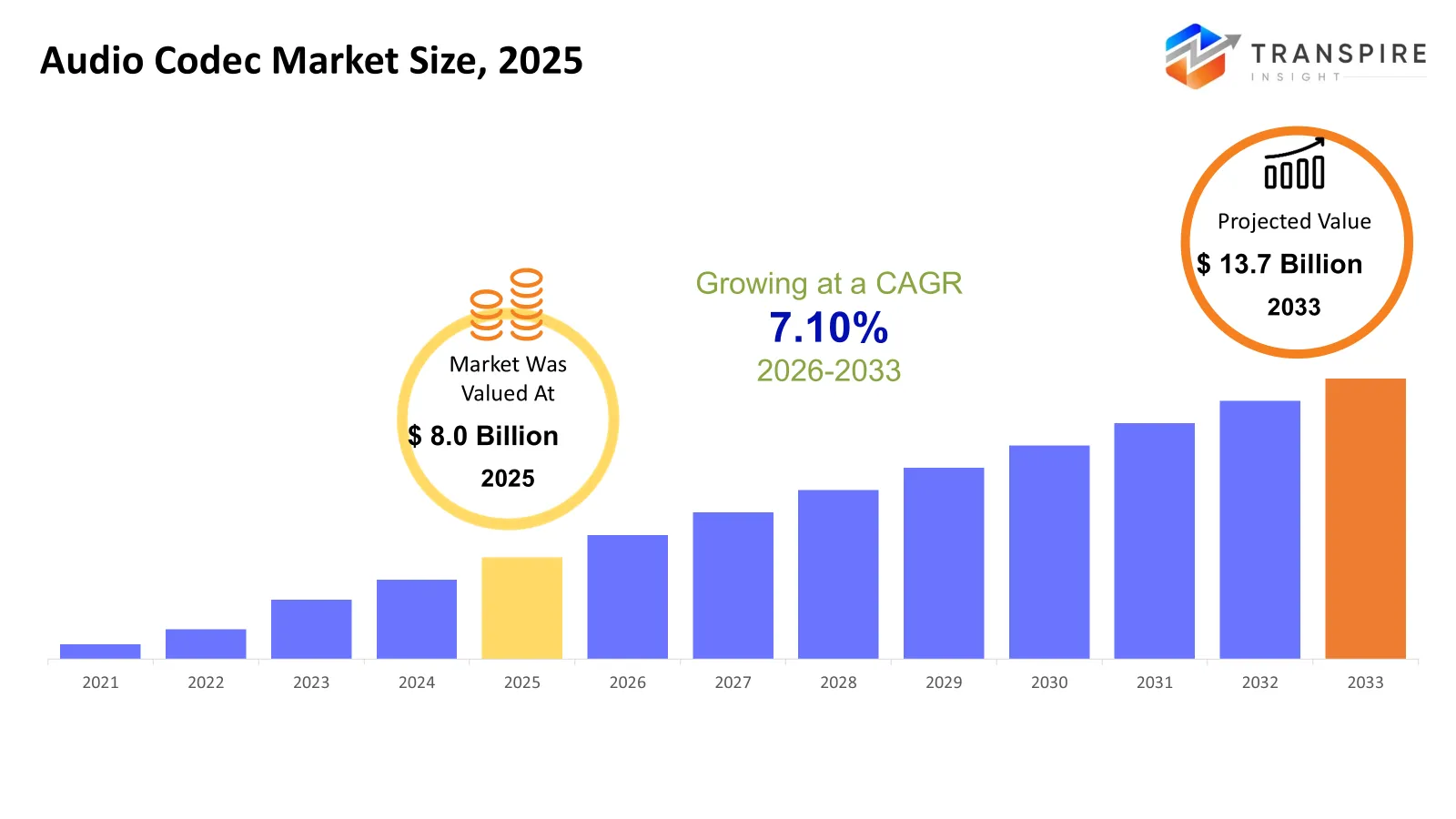
- Market Value (2025): USD 8.0 Billion.
- Expected Market Value (2026): USD 8.5 Billion.
- Estimated Market Value (2033): USD 13.7 Billion.
- Forecast CAGR (2026-2033): 7.10%.
- Leading Region in 2025: Asia Pacific
- Second-largest Region: North America
- Fastest Growing Region: Europe
Introduction
The Audio Codec Market is experiencing steady growth and is predicted to grow the forecast period. The increasing demand for high-quality digital audio across consumer electronics, automotive infotainment, telecommunications, gaming, and smart connected devices is driving the market growth. An audio codec (coder-decoder) is a hardware or software algorithm that enables to convert the analog audio to digital signals and decoding the digital data back into analog sound. This enables audio to be compressed, transmitted and played efficiently. Advances in artificial intelligence, wireless communication technologies, high-resolution audio formats, and edge computing are driving the improvements in codec performance and sound quality, latency, and energy efficiency. As adoption of smartphones, wireless earbuds, smart speakers, connected vehicles and multimedia streaming platforms continues to grow, the pace of innovation is accelerating and audio codec technologies are an important element of the modern digital audio ecosystem.
For instance:-
- North America: North America leads the Audio Codec Market The market's growth is driven by strong semiconductor innovation, increased demand for premium consumer electronics, AI-powered audio technologies, and expanding investments in automotive infotainment and enterprise communication solutions.
- Asia-Pacific: The fastest-growing regional market in Asia-Pacific is being driven by the growing smartphone manufacturing, increasing consumer electronics production, rapid adoption of IoT and rising investments in advanced wireless audio and connected device technologies.
Key Market Highlights: -
- Asia Pacific is expected to grow at a rapid CAGR in the Audio Codec Market by holding around 45% of the share during the forecast period.
- North America is anticipated to hold roughly 36.8% share of the Audio Codec Market over the predicted timeframe.
- Europe is anticipated to hold nearly 24%share of the Audio Codec Market over the predicted timeframe.
- By Codec Type, the AAC dominated the market and holds nearly 18.7% share in 2025 and is projected to grow at a substantial CAGR during the forecast period.
- by device type, the Smartphones dominated the market and holds close to 40% share in 2025 and is projected to grow at a substantial CAGR during the forecast period.
- By Deployment, the consumer electronics dominated the market and holds about 35% share in 2025 and is projected to grow at a substantial CAGR during the forecast period.
- Digital Transformation & AI Adoption: Government-supported semiconductor initiatives, 5G infrastructure development, and growing investments in AI, consumer electronics, and connected devices are driving innovation and adoption of advanced audio codec technologies.
How is Technology Driving Growth in the Audio Codec Market?
Technology is one of the major growth drivers for the Audio Codec Market. The growth is driven by the rising demand for high-resolution audio, AI-enabled sound processing, and advanced wireless communication technologies. Ongoing innovations in audio compression algorithms, low latency codec solutions, Bluetooth LE Audio, and 5G connectivity are enabling continued improvements in sound quality, power consumption, and transmission efficiency for consumer electronics, telecommunications, automotive infotainment, and gaming applications. Furthermore, the increasing acceptance of spatial audio, voice-enabled smart devices, cloud communication platforms, and connected ecosystems is further boosting the demand for next-generation audio codec technologies, thereby facilitating sustained innovation and long-term market growth across the globe.
Market Drivers
The growth of the audio codec market is driven by constant investments in semiconductor innovation, rise in production of consumer electronics, and surge in adoption of AI-powered audio technologies. The increasing demand for smartphones, wireless earbuds, smart speakers, connected vehicles and enterprise communication systems is propelling the deployment of advanced audio codec solutions. The increasing investments in 5G infrastructure, Bluetooth LE Audio, IoT ecosystems and high-resolution audio technologies are further propelling the market growth. R&D activities, strategic partnerships between semiconductor manufacturers and device OEMs, and rapid integration of energy-efficient and low-latency audio codecs across automotive, healthcare, gaming, and telecommunications applications will support continued market growth and technological advancement.
For Instance: Europe: Europe continues to be a strong market with growing investments in the automotive audio systems, smart home ecosystems, enterprise communications, and energy-efficient audio codec technologies supported by regular digital innovations.
Restrain
The growing complexity of integrating audio codec solutions across a wide range of hardware platforms, operating systems and communication standards poses a challenge for the Audio Codec Market. Small and mid-sized manufacturers face financial roadblocks due to high R&D costs, licensing requirements and the need to continuously upgrade technology. Additionally, the technical challenges of maintaining low power consumption, minimizing signal distortion, and providing consistent high resolution audio in small, battery powered devices still present significant hurdles to wider market adoption and drive up product development costs.
Analysis of Prices and Consumer Behaviour
The audio codec solution market is dominated by high-definition and AI-enabled audio codecs (around 66% of the total market), mainly due to demand from consumer electronics, automotive infotainment, telecommunications, gaming and enterprise communication sectors. Premium high-performance audio codec solutions are projected to command a price premium of 30%-40% over traditional codecs because of advanced AI-based audio processing, low-latency performance, spatial audio support, superior energy efficiency and compliance with next-generation wireless communication standards. Integrated hardware audio codecs now make up around 58% of total unit shipments, driven by their proliferation in smartphones, wireless earbuds, smart speakers, laptops, automotive infotainment systems and IoT devices. The consumer electronics segment accounts for almost 68% of total market demand, driven by the rapid adoption of connected devices and multimedia applications. Consumer purchase behavior suggests that approximately 57% of buyers want better audio quality, low power consumption, AI-enabled noise cancellation, and compatibility with multiple wireless standards . Approximately 35% of enterprise customers and OEMs prefer long-term supply agreements and strategic procurement contracts to optimize costs, ensure product availability, and maintain stable semiconductor supply chains across markets.
Top Companies in the Audio Codec Market
- Dolby Laboratories
- Fraunhofer IIS
- Qualcomm
- Cirrus Logic
- Synopsys
- Realtek Semiconductor
- NXP Semiconductors
- MediaTek
- Texas Instruments
- Analog Devices
- Intel
- Apple
- Samsung Electronics
- Sony Group
- Broadcom
Audio Codec Market Segmentation
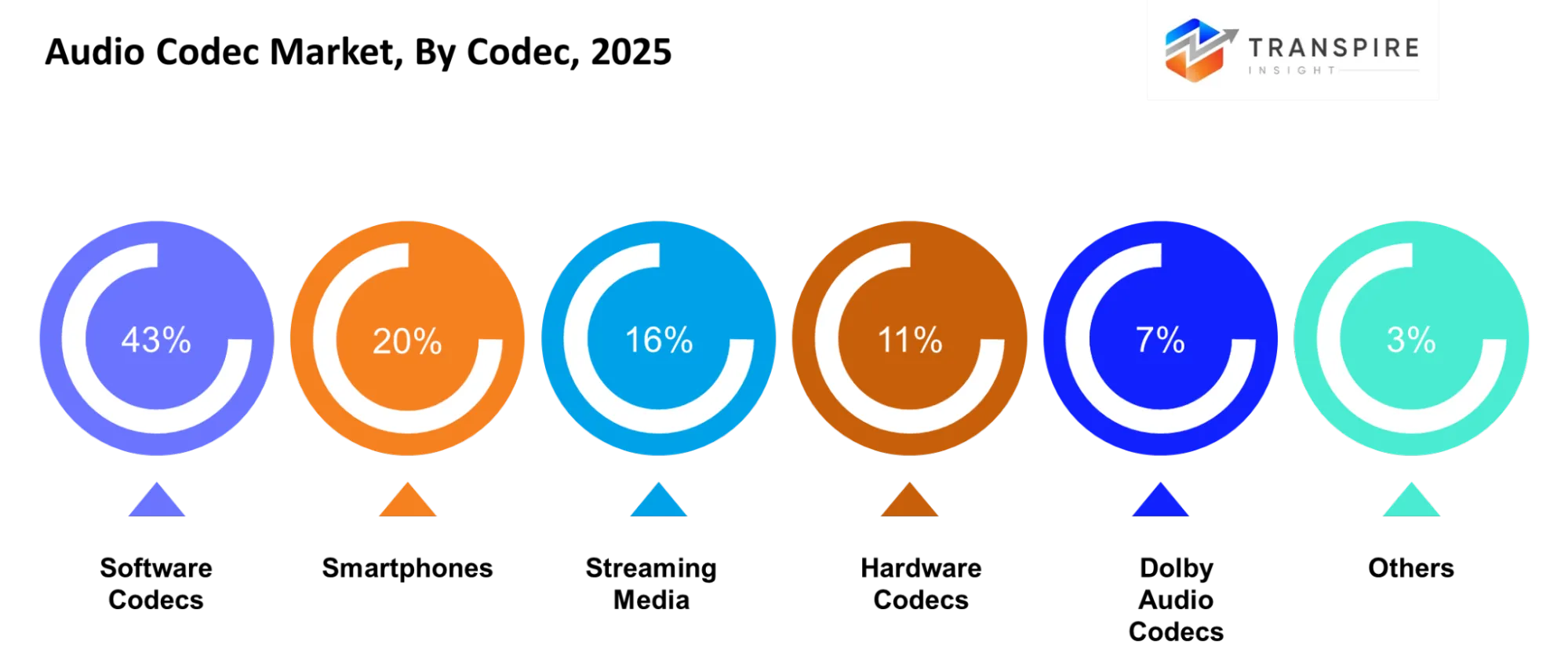
The Audio Codec Market share is divided into five categories: By Codec Type, By Device Type, By Application, By Deployment, By End User.
The AAC dominated the market, accounting for nearly 18.7% in 2025 and is expected to rise at a significant CAGR during the forecast period.
The Audio Codec Market is segmented by codec type into aac, mp3, opus, flac, dolby audio codecs, others Among these, the AAC dominated the market, accounting for nearly 18.7 % in 2025 and expected to increase at a significant CAGR during the forecast period. AAC dominated due to its superior audio compression efficiency, excellent sound quality, and broad compatibility across smartphones, streaming platforms and consumer electronics worldwide.
The Smartphones dominated the market, accounting for close to 40% in 2025, and is expected to rise at a significant CAGR during the forecast period
The Audio Codec Market is segmented by device type into smartphones, pcs & laptops, smart tvs, automotive infotainment, iot devices, others. Among these, the Smartphones dominated the market, accounting for close to 40% in 2025 and expected to increase at a significant CAGR during the forecast period. The dominance of smartphones was driven by widespread adoption, increased multimedia consumption, advanced audio processing capabilities and growing demand for high quality wireless communication experiences.
The consumer electronics dominated the market, accounting for about 35% in 2025 and is expected to rise at a significant CAGR during the forecast period.
The Audio Codec Market is by application into streaming media, voice communication, gaming, broadcasting, consumer electronics, others Among these, the consumer electronics dominated the market, accounting for about 35% in 2025 and expected to increase at a significant CAGR during the forecast period. Consumer electronics led the way, with demand for smartphones, wearables, smart speakers and premium audio experiences requiring advanced, energy-efficient codec technologies.
Regional Segment Analysis of the Audio Codec Market
- Europe (Germany, France, U.K., Italy, Spain, Rest of Europe)
- North America (U.S., Canada, Mexico)
- Asia-Pacific (China, Japan, India, Rest of APAC)
- South America (Brazil and the Rest of South America)
- The Middle East and Africa (UAE, South Africa, Rest of MEA)
Asia Pacific is expected to grow at a rapid CAGR in the Audio Codec Market, holding around 45% of the share during the forecast period.
The Asia Pacific is expected to grow at a rapid CAGR in the Audio Codec Market, accounting for roughly 45% of the market share during the forecast period. The region’s strength is driven by its large semiconductor manufacturing ecosystem, growing smartphone and consumer electronics manufacturing, escalating adoption of wireless audio devices, accelerating deployment of 5G networks and increasing demand for AI-enabled audio technologies. Asia Pacific is the largest growth engine for the audio codec industry, with more investments in automotive infotainment systems, IoT devices, and smart connected products in China, Japan, South Korea, and India further spurring regional innovation, production capacity, and long-term market growth.
North America is the fastest-growing region in the Audio Codec Market during the period, holding roughly 36.8% share.
The audio codec market is witnessing the fastest growth in North America and is expected to account for about 36.8% of the market share during the forecast period. The region's growth is fueled by the strong presence of leading semiconductor manufacturers, the rapid adoption of AI-powered audio technologies and the increasing demand for premium consumer electronics, smart devices and advanced automotive infotainment systems. Ongoing investment in 5G infrastructure, cloud-based communication platforms, gaming technologies and enterprise collaboration solutions further accelerate innovation and adoption. Strong research and development initiatives and early adoption of next-generation wireless audio standards and high-performance codec solutions bolster North America's dominance in the audio codec market.
Europe is the fastest-growing region in the Audio Codec Market during the period, holding nearly 24% share.
The growing complexity of integrating audio codec solutions across a wide range of hardware platforms, operating systems and communication standards poses a challenge for the Audio Codec Market. Small and mid-sized manufacturers face financial roadblocks due to high R&D costs, licensing requirements and the need to continuously upgrade technology. Additionally, the technical challenges of maintaining low power consumption, minimizing signal distortion, and providing consistent high resolution audio in small, battery powered devices still present significant hurdles to wider market adoption and drive up product development costs.
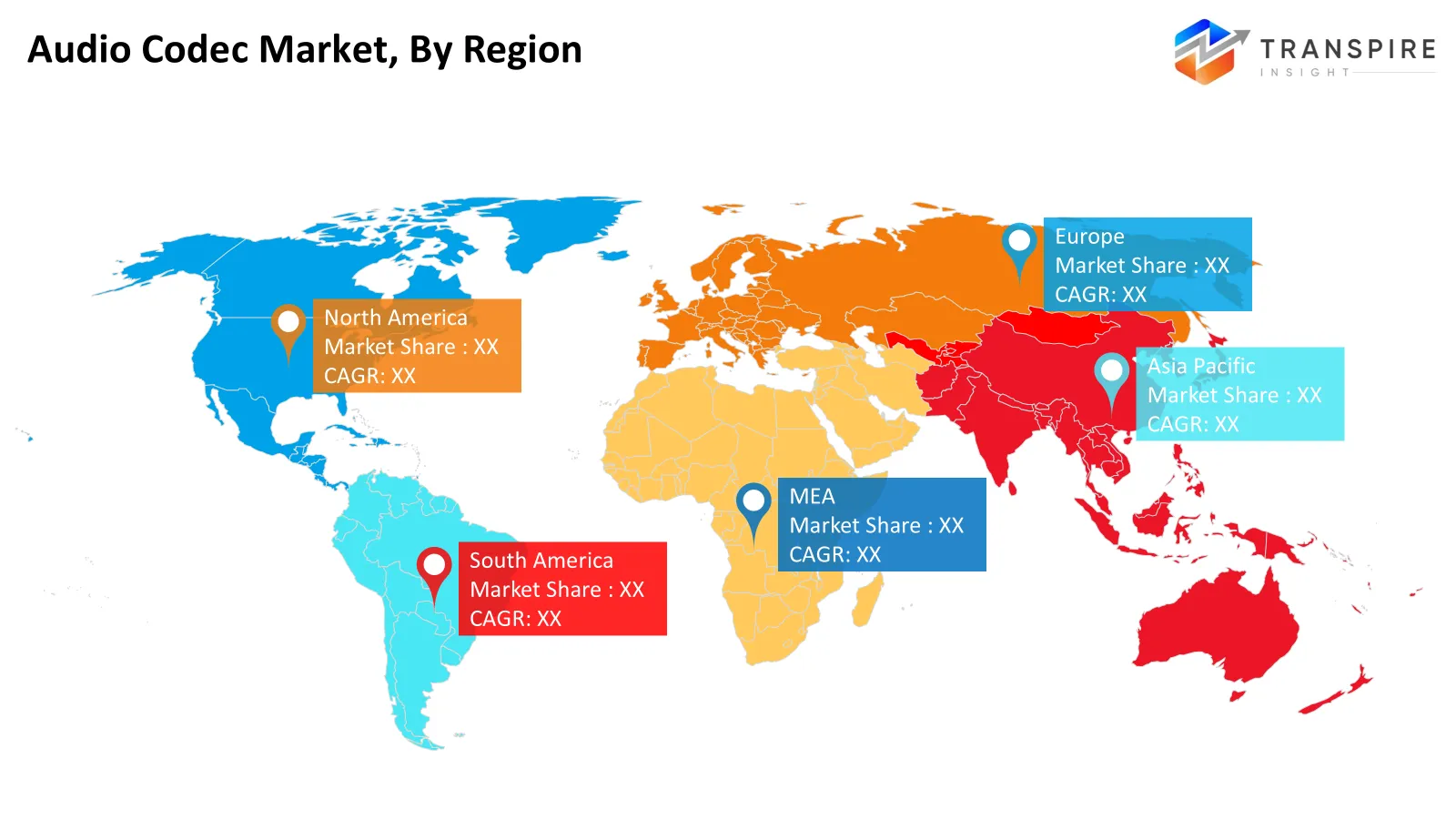
Strategies for Market Growth in Non-Leading Regions:
Advancing the non-leading regions through cost-effective and scalable audio codec, semiconductor manufacturing and software optimization technologies would strengthen regional electronics ecosystems and empower small- and medium-sized technology manufacturers.Developing local capabilities in semiconductor assembly, audio chipset manufacturing and embedded software development can help reduce import dependence, enhance supply chain resilience and cut production costs. “Building strategic partnerships with consumer electronics manufacturers, automotive OEMs, smartphone manufacturers, IoT device makers and telecommunications providers will enhance market penetration and accelerate technology adoption. We will increase the workforce through expanding technical training programs in semiconductor design, embedded systems, AI-powered audio processing, and wireless communication standards to improve product quality. More flexible financing models, long-term supply agreements, technology licensing and contract manufacturing partnerships will make it more affordable and encourage wider adoption. We can increase access to advanced audio codec solutions and foster sustainable long-term growth in emerging markets by working with government digital transformation initiatives, semiconductor development programs, smart manufacturing projects, and expanding digital distribution channels and regional innovation ecosystems
Future Market Trends for the Audio Codec Market: -
- AI-Powered Audio Processing: AI and machine learning will enhance real-time noise reduction, speech enhancement, adaptive audio optimization and codec efficiency in consumer electronics, telecoms and enterprise communications systems.
- Growth of Immersive Wireless Audio - Adoption of spatial audio, Bluetooth LE Audio, and ultra-low-latency codec technologies will enhance high-resolution wireless streaming, gaming experiences, wearable devices, and automotive infotainment applications.
- Growth in smart connected devices: Innovation in energy-efficient, high-performance audio codecs will be driven by increasing demand for IoT devices, smart speakers, connected vehicles, and next-generation mobile technologies in consumer and industrial markets.
Recent Development
- In January 2026 - Product Launch: Leading semiconductor companies launched next-gen AI-enabled audio codecs with ultra-low power consumption, improved noise cancellation, and high-res audio support for smart consumer electronics.
- In April 2026 - Technology Progress: Audio codec developers enhanced Bluetooth LE Audio and spatial audio features, enabling better wireless sound quality, lower latency, and easy connectivity in automotive and wearable devices.
Market Segment
This study forecasts revenue at , regional and country levels from 2020 to 2033. Transpire Insights has segmented the Audio Codec Market based on the below-mentioned segments:
Audio Codec Market, By Codec Type
- AAC
- MP3
- Opus
- FLAC
- Dolby Audio
- Codecs
- Others
Audio Codec Market, By Device Type
- Smartphones
- PCs & Laptops
- Smart TVs
- Automotive Infotainment
- IoT Devices
- Others
Audio Codec Market, By Application
- Streaming Media
- Voice Communication
- Gaming, Broadcasting
- Consumer Electronics
- Others
Audio Codec Market, By Deployment
- Hardware Codecs
- Software Codecs
- Embedded Codecs
- Others
Audio Codec Market, By End User
- Consumer Electronics
- Automotive
- Media & Entertainment
- Telecom
- Others
Audio Codec Market, By Regional Analysis
North America
- US
- Canada
- Mexico
Europe
- Germany
- UK
- France
- Italy
- Spain
- Russia
- Rest of Europe
Asia Pacific
- China
- Japan
- India
- South Korea
- Australia
- Rest of Asia Pacific
South America
- Brazil
- Argentina
- Rest of South America
Middle East & Africa
- UAE
- Saudi Arabia
- Qatar
- South Africa
- Rest of the Middle East & Africa
Frequently Asked Questions
Find quick answers to common questions.
Rising demand for smartphones, AI-powered audio processing, wireless devices, 5G connectivity, and high-resolution multimedia applications is accelerating market growth.
Asia Pacific dominates the market due to strong semiconductor manufacturing, expanding consumer electronics production, rapid smartphone adoption, and increasing 5G investments.
AAC offers superior audio compression, excellent sound quality, lower file sizes, and broad compatibility across streaming platforms and consumer electronic devices.
Consumer electronics leads demand, driven by increasing adoption of smartphones, wireless earbuds, smart speakers, gaming devices, and advanced multimedia technologies worldwide.
Integration complexity, high development costs, licensing requirements, and power-efficiency challenges restrict adoption while increasing product development and manufacturing expenses.
- Dolby Laboratories
- Fraunhofer IIS
- Qualcomm
- Cirrus Logic
- Synopsys
- Realtek Semiconductor
- NXP Semiconductors
- MediaTek
- Texas Instruments
- Analog Devices
- Intel
- Apple
- Samsung Electronics
- Sony Group
- Broadcom
About the Authors

Avinash Kumar
I’m Avinash Kumar, a Senior Research Analyst at Transpire Insight, with expertise in the Electronics and Semiconductor and Energy & Power industry. My work focuses on analyzing emerging technologies, market trends, industry developments, and innovation across these sectors. I specialize in transforming complex technical and market insights into clear, research-backed content that helps professionals, businesses, and decision-makers stay informed. Through continuous industry research and data-driven analysis, I strive to deliver accurate, reliable, and practical perspectives on the latest advancements shaping the semiconductor and energy landscape.

Chakradhar Khansole
Chakradhar serves as the Research Director at Transpire Insight, bringing over 8 years of experience in technology, innovation, and strategic market intelligence. He specializes in transforming complex market data into actionable business insights that enable organizations to make informed, growth-oriented decisions. Recognized for his strategic vision and analytical expertise, Chakradhar leads high-impact research initiatives, delivering comprehensive market assessments, competitive intelligence, and forward-looking industry analysis.
Recently Published Reports
-
Apr 2026
Fiber Optic Faceplates Market
Fiber Optic Faceplates Market Size, Share & Analysis Report By Type (< 300 mm2, 300-350 mm2, and > 350 mm2, By Application (Night Vision, Holographic Imaging, Medical, and Others), and Geography (North America, Europe, Asia-Pacific, Middle East and Africa, South and Central America), 2021 - 2031
-
Apr 2026
High Temperature Superconductors Market
High Temperature Superconductors Market Size, Share & Analysis Report By Type (1G HTS, and 2G HTS), By Application (Power Cable, Fault Current Limiter, and Transformer), and Geography (North America, Europe, Asia-Pacific, Middle East and Africa, South and Central America), 2021 - 2031
-
Apr 2026
Industrial Plugs and Socket Market
Industrial Plugs and Socket Market Size, Share & Analysis Report By Type (Industrial Plugs, Industrial Sockets), By Current (Up to 32 A, 32 to 125 A, Above 125 A), By Protection (Dustproof and Splash Proof, Waterproof, Explosion Proof), By End User (Heavy Industries, Oil and Gas, Chemicals and Pharmaceuticals, Power Generation, Others), and Geography (North America, Europe, Asia-Pacific, Middle East and Africa, South and Central America), 2021 - 2031
-
Apr 2026
InGaAs Avalanche Photodiodes Market
InGaAs Avalanche Photodiodes Market Size, Share & Analysis Report By Type (1100 - 1700 nm, and 1000 - 1600 nm), By Application (Missile Warning System, Muzzle Flash Detection, Wafer Defect Inspection, Laser Rangefinders, and Others), and Geography (North America, Europe, Asia-Pacific, Middle East and Africa, South and Central America), 2021 - 2031