
Market Summary
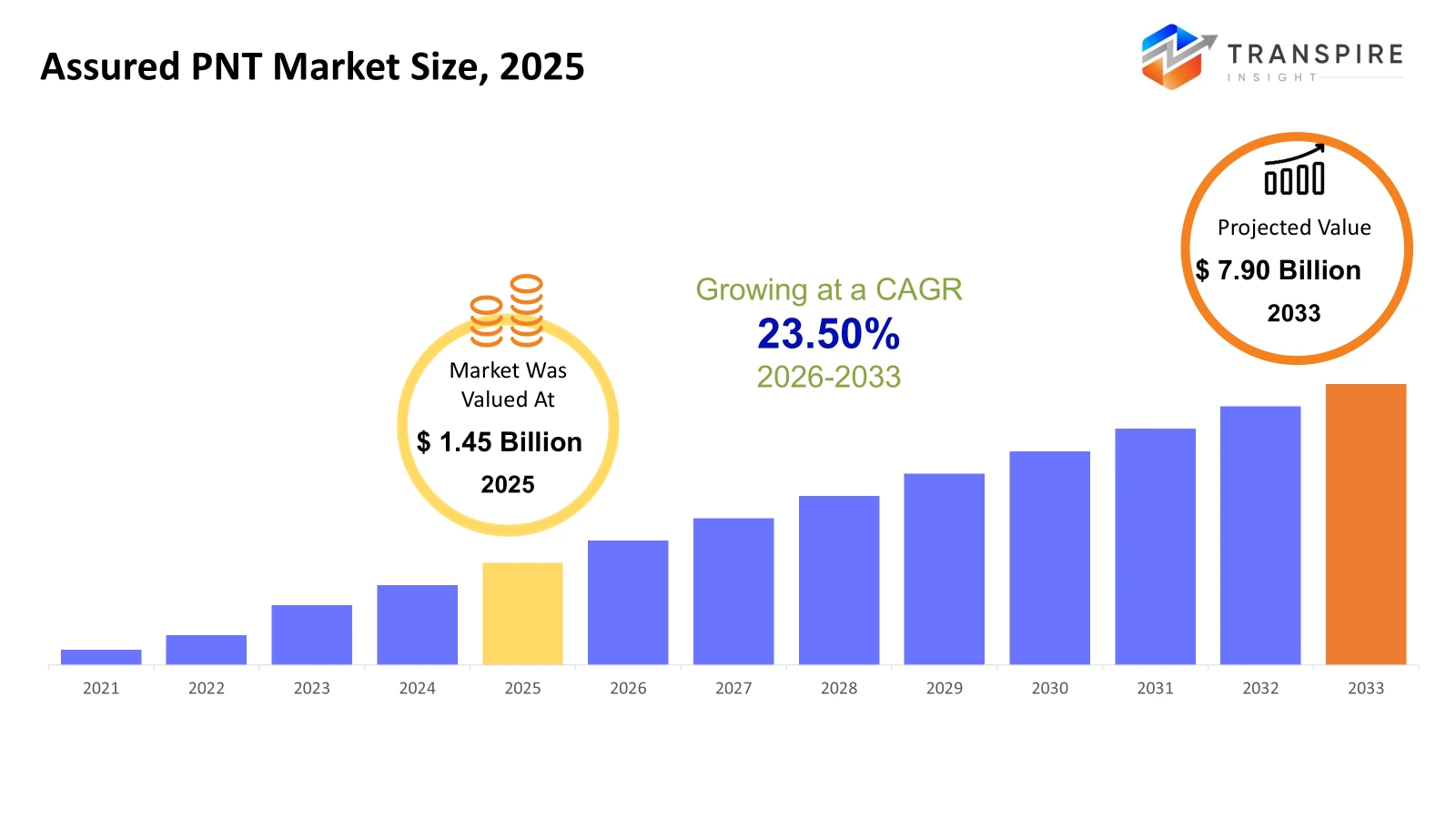
The global Assured PNT market size was valued at USD 1.45 billion in 2025 and is projected to reach USD 7.90 billion by 2033, growing at a CAGR of 23.50% from 2026 to 2033. A surge in demand for reliable positioning shows up wherever exact location data matters most: military missions fly without hiccups, aircraft stick to course, and power grids stay synced. When signals waver, problems follow fast. Systems now need backup plans built right in, especially since spoofing or jamming can happen anytime. Performance under pressure defines what works today. Outages once considered rare are now planning priorities. Resilience is not optional anymore; it shapes every upgrade decision. Tech must deliver even when GPS fails silently.
Market Size & Forecast
- 2025 Market Size: USD 1.45 Billion
- 2033 Projected Market Size: USD 7.90 Billion
- CAGR (2026-2033): 23.50%
- North America: Largest Market in 2026
- Asia Pacific: Fastest Growing Market
To learn more about this report,  Download Free Sample Report
Key Market Trends Analysis
- The North American market share is estimated to be approximately 41% in 2026. Heavy defense budgets help North America stay ahead in the assured PNT field. Its edge comes not just from high-tech aviation progress but also readiness to use tough navigation tools where it matters most. Military needs sparked early shifts, which spread into vital systems too.
- With heavy spending on updated weapons tech, the United States holds global sway through smarter combat drones that operate alone, plus advanced GPS safeguards built into key networks. Power stays firm because tools evolve constantly, especially those guarding routes and defenses vital to survival.
- Across the Asia Pacific, growth surges ahead as defense spending climbs. Rising aerospace initiatives push momentum forward. New economies embrace reliable positioning, navigation, and timing systems. Military sectors adopt them. So do critical infrastructure networks. Autonomous technologies integrate these tools too.
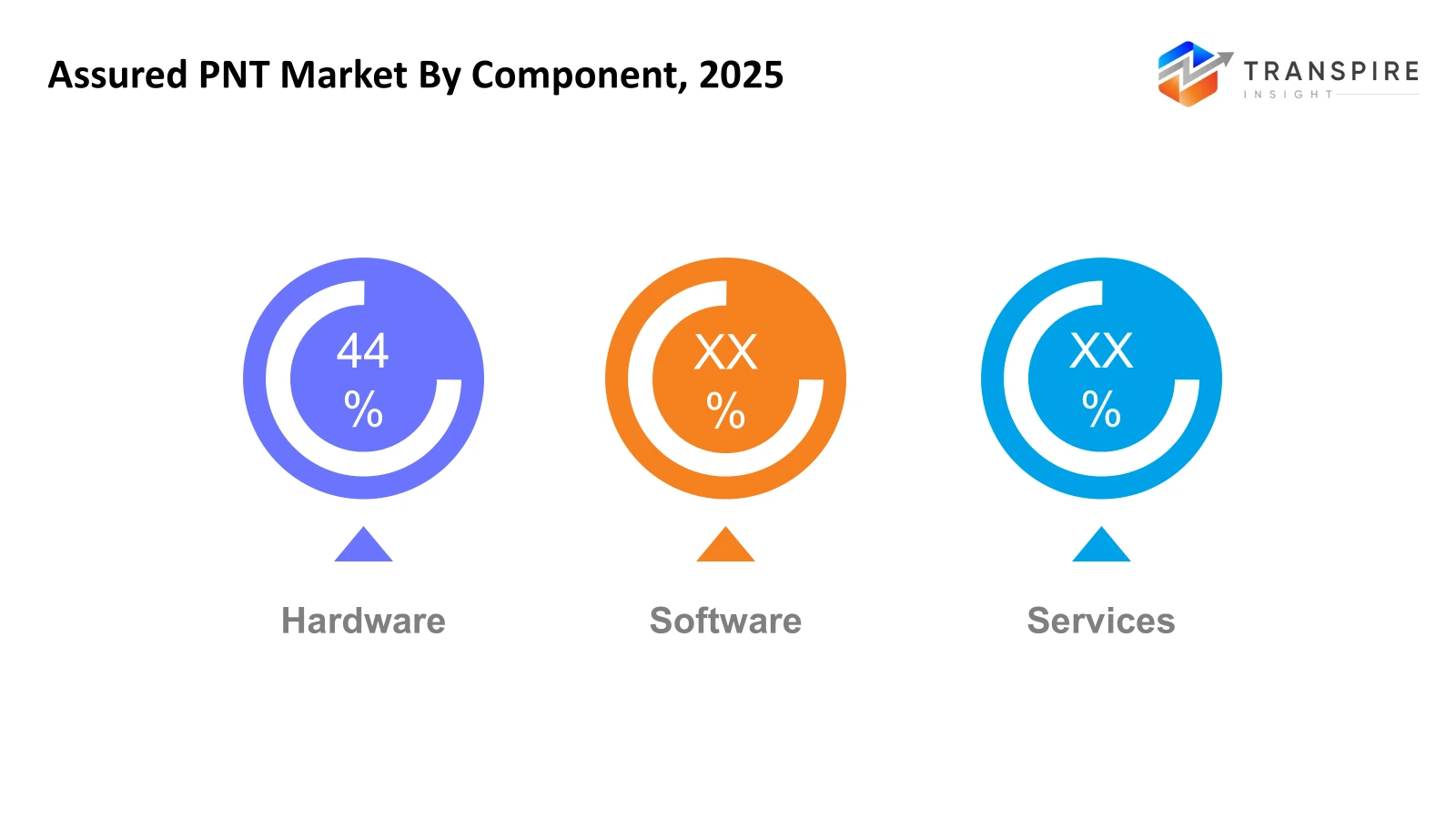
- Hardware shares approximately 46% in 2026. Firmware is not what holds sway here; hardware does, simply because it keeps navigation steady when things get rough. Atomic clocks tick inside these systems, giving precise timing that rarely slips. Inertial sensors track movement without relying on outside signals, which matters a lot in tight spots. Receivers built to resist jamming make sure data still flows even under attack. Defense teams lean on this gear heavily during missions where failure is not an option. Aerospace applications depend on it just as much, needing reliability above all else.
- Not stopping, INS keeps going where GPS fails. This trait matters most when planes, drones, or defense tools need steady guidance. Its role grows quiet, but critical in places where signals cannot reach.
- Floor-based setups take the biggest slice, mainly because they are rolled out widely across defense machines, used to guard vital facilities, and then also show up in trusted time networks for communication hubs.
- Secure navigation gets more funding because armed forces need protection from signal tampering. Reliability during key operations drives demand. Rising risks like jamming push priorities toward resilient systems. Military missions depend on uninterrupted performance under pressure.
Right now, a steady rise is happening in how much value is placed on solid positioning, navigation, and time data. When GPS fails, wobbles, or gets tampered with, backup systems step in without blinking. Instead of just one signal path, these setups mix motion sensors, ultra-precise clocks, ground-based signals, and even non-GPS satellites. Think aircraft staying on course, power grids syncing up, armies moving, all while under electronic pressure. Behind the scenes, many industries lean harder each year on exact location and split-second timing. Because missing those marks risks more than delays, it risks breakdowns. Resilience is not an extra anymore; it runs underneath everything that moves or connects. As dependence on secure and uninterrupted positioning grows worldwide, the assured PNT market continues to expand, driven by defense modernization, critical infrastructure protection, and the need for reliable alternatives to vulnerable satellite-based systems.
Growing risks to GPS signals, like jamming or fake transmissions, that mess up vital tasks. Because of this, defense groups now spend more on reliable positioning tech so missions keep working under pressure. Not far behind, fast progress in self-flying drones, driverless machines, and smart robots adds even greater need for tough navigation tools. Without steady GPS, these devices must still know where they are, moving precisely without error, staying safe while doing their jobs.
New tech keeps pushing how well we can trust where things are and when they happen, opening up fresh chances in the marketplace. Because sensors have gotten smarter, plus clocks now rely on atoms, location data stands up better under pressure. When these systems link with smart algorithms, deep number crunching, and faster ways to send signals, they work much harder without breaking down. Security worries about phone lines, electricity flow, and money movements make leaders want tools that track time exactly. That need grows stronger every day.
More cash flowing into defense upgrades, flight tech improvements, and yet stronger public works projects help push things forward. Because old-style GPS feels less dependable now, groups at every level focus harder on spare or different ways to navigate. Planes in regular service, ships at sea, and even factory robots rely more on solid positioning data, opening fresh paths for progress. With so many areas leaning heavily on precise location signals day after day, these secure systems start mattering deeply when situations get messy or dangerous.
Assured PNT Market Segmentation
By Component
- Hardware
When it comes to reliable positioning and timing, actual devices take the lead. These systems run on tangible parts like atomic clocks or motion detectors - that work together without needing constant outside signals. Components such as antennas feed data into receivers, forming a chain of hardware-based precision. Physical gear stays central because accuracy hinges on machinery that operates independently. From sensor to clock, each piece plays a role in maintaining stable navigation performance.
- Software
When it comes to handling signals, figuring out position, or keeping time tightly aligned, software plays a key role. It sharpens precision while helping the system stay strong under pressure. Without it, coordination would drift, responses lag, and performance drop.
- Services
Fueled by rising needs, service offerings inch forward. As companies seek help tying systems together, this area gains ground. Staying up to date is not optional - tuning and advising carve out space here. When tech requires fine-tuning or knowledge support, these tasks open doors. Keeping PNT running sharp means updates matter more than ever.
To learn more about this report, Download Free Sample Report
By Technology
- Global Navigation Satellite Systems
From satellites above, location signals reach Earth to support precise timing and position. These systems work alongside safeguards that resist interference while linking with fallback options when needed.
- Inertial Navigation Systems
Beyond satellite signals, Inertial Navigation Systems keep moving without interruption. When GPS fades, these systems persist - drawing on internal sensors alone. Motion data builds position updates step by step. Not reliant on outside contact, they operate in isolation. Even in signal blackouts, location tracking continues untouched.
- Satellite-Based Augmentation Systems
A signal drifts through space, nudged into better shape by satellite networks that tidy up mistakes. These fixes matter most where precision counts - planes rely on them, military gear uses them too. Glitches in navigation fade when extra satellites step in, smoothing the data. Accuracy climbs without overhaul, just quiet tweaks from orbiting helpers.
- Real-Time Kinematics
Out in the field, accuracy tightens when signals adjust on the fly. That kind of live tuning works well where every inch matters, think drones that navigate themselves or systems guiding military movement. Instead of waiting, corrections happen instantly. Positioning locks in fast because updates flow without delay. This method thrives wherever exact location shapes outcomes.
- Sensor Fusion
When different inputs team up - like satellite signals, motion trackers, inside systems - the path gets clearer. Glitches fade when one source slips, another holds steady. Mixing these streams sharpens precision where alone they might fail. Accuracy climbs not by adding parts but by linking them well. A stumble in GPS finds balance through internal tracking. Signals cross-check without drama or extra noise. Stronger results emerge quietly behind linked sensing.
- Atomic Clock Technology
Timing built on atomic precision keeps military actions aligned. Communications systems stay linked through these measurements instead of older methods. Infrastructure relies on such accuracy to function without delays. Precision like this replaces guesswork across vital services.
By Platform
- Ground Platforms
Firm on the surface, these setups hold most of the space because armies roll them out heavily in armored units, communication towers rely on their stability, while essential field missions keep depending on their reach. Despite shifts elsewhere, dirt-level systems still shape the bulk of demand across active zones where fixed presence matters more than mobility.
- Airborne Platforms
Flying machines now fill the skies more than before. Because drones take on bigger roles, their presence climbs fast. Military planes join them, expanding the numbers. Alongside, self-flying systems are rising in use too.
- Maritime Platforms
Floating out at sea, these systems need reliable positioning just to keep boats, subs, or cargo vessels moving safely when GPS drops out. Ships can not afford guesswork if signals vanish mid-journey across open water.
- Space Platforms
Orbiting stations rely on dependable timing and location signals. These signals guide satellites through their paths overhead. Missions beyond Earth need precise fixes to stay on course. Locked-in position data keeps orbital gear where it should be.
By End-Users
- Defense and Military Organization
Military units lean heavily on strong navigation tools so missions keep running without hiccups. What drives this part ahead is how tightly success is tied to signals that hold up under pressure.
- Aerospace Industry
Pilots rely on precise timing and positioning because it keeps flights on track. Navigation systems stay accurate when signals are trustworthy. Mission success in the skies depends heavily on consistent data flow. Aircraft adjust smoothly mid-flight thanks to stable reference points.
- Government Agencies
A single signal keeps power grids steady during blackouts. When clocks drift, emergency responses slow down. Hidden timing pulses guard air traffic paths. Outages reveal how much cities depend on silent synchronization. Broken navigation misleads rescue teams at night. Precision feeds data into border surveillance loops. Military movements rely on unseen coordination points. Stations scattered across regions hold time steady. Without it, supply chains begin to wobble.
- Transportation and Logistics Companies
From trucking firms to delivery services, they rely on dependable positioning data so vehicles stay on course. While managing large fleets, precise timing helps keep schedules tight. Because operations run more smoothly when location signals are trustworthy. Even small delays fade when navigation stays consistent. As routes adjust in real time, coordination sharpens across networks. When dispatchers know where each unit is, decisions come faster. Though systems face interference, solid PNT cuts through noise. Since accuracy affects fuel use, it touches costs too. From start to finish, reliable movement depends on steady signals.
- Telecommunications Providers
Fresh off the grid, telecom companies lean on steady signals to keep clocks aligned across towers. Timing never slips when location data holds firm through every call. Without hiccups in positioning, networks stay locked step by step. Each connection rides a pulse that hinges on accuracy, no matter the distance.
- Commercial and Industrial Organization
Fueled by wider use of reliable positioning, timing, and navigation, factories and businesses are seeing steady momentum. Automation systems now lean more on precise signals, pulling advances into daily operations. Robotics rolls forward, guided steadily by accurate data streams. Movement within smart setups depends heavily on constant signal flow. Growth emerges quietly, built on system after system, turning to trusted inputs.
Regional Insights
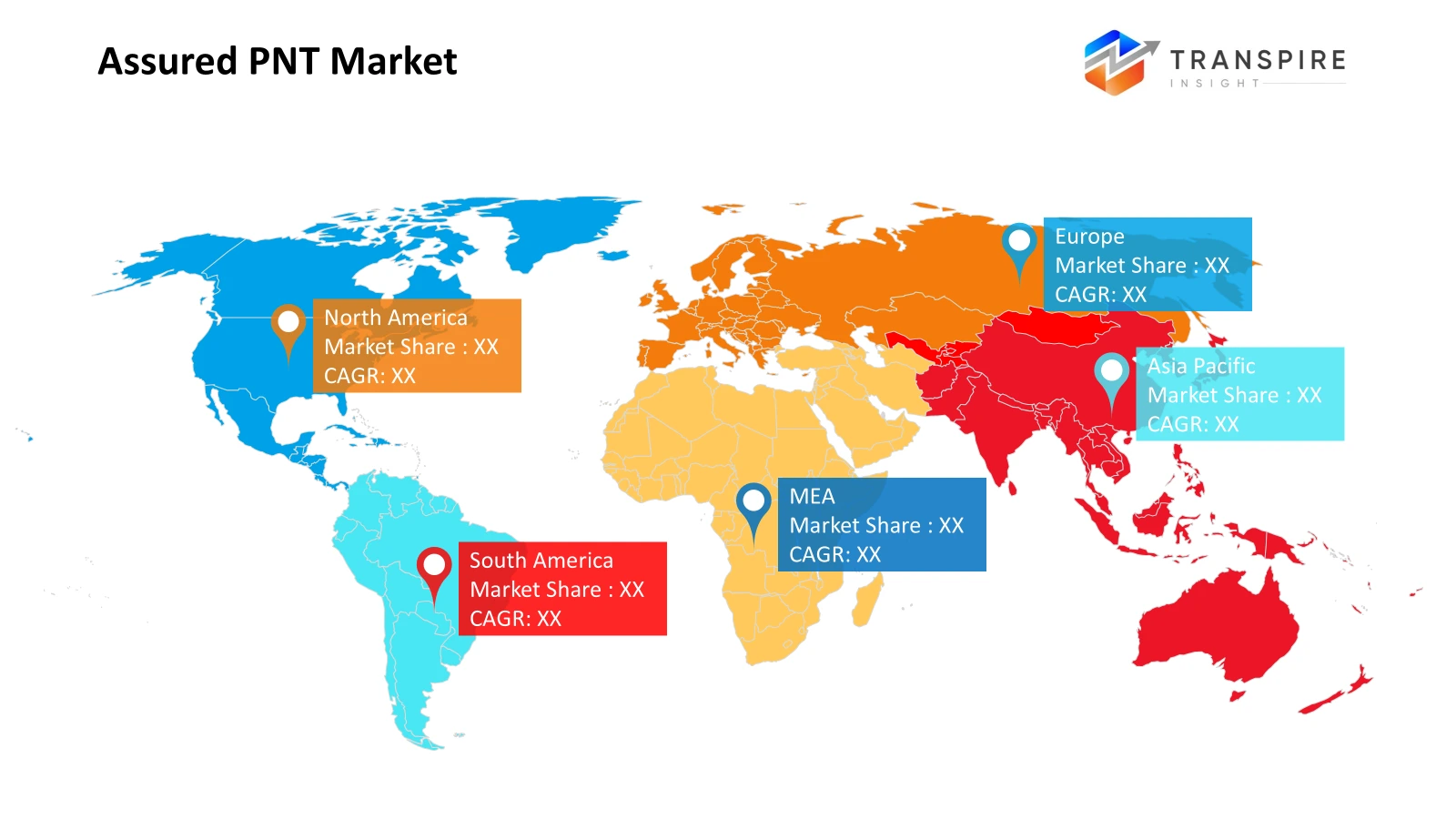
On top of heavy defense budgets, North America holds the lead in assured PNT because of its mature aerospace setup and quick uptake of tough navigation tools. Large outlays on alternatives to GPS, upgrades in armed forces gear, plus efforts to shield essential facilities. Big arms makers, skyflight firms, and state-backed projects targeting signal disruption are now fueling expansion at a faster pace. Another reason: more self-piloted combat units, drones flying missions without crews, along with protected time signals used in banking and phone grids - these raise the need across the area.
The second biggest market worldwide sits in Europe, driven forward through rising spending on safeguarding defenses, air travel security, and essential structures. Germany, along with the United Kingdom, pushes harder to control its own positioning tools, lessening ties to foreign satellite signals. Tough rules already in place help, while high-level aircraft tech plus programs shielding transit networks, power supplies, and data lines add momentum. New ways to navigate emerge alongside teamwork seen among state bodies and commercial firms, nudging growth slowly but surely throughout the area.
Growth here outpaces elsewhere, thanks to bigger military spending, a booming aviation sector, stronger push for self-operating tech. Nations like China, India, and Japan pour funds into tough locations and guidance tools; security matters more now, and so does backing driverless transport progress. New roads rise fast, space-based tracking expands, unease about GPS weaknesses spreads, and all fuel need across the area. Elsewhere, parts of Latin America, plus regions in Africa and the Middle East, gain traction, lifted by fresh construction waves, updated armed forces gear, deeper understanding of protected navigation needs.
To learn more about this report, Download Free Sample Report
Recent Development News
- May 28, 2025 – VIAVI launched a second-generation RSR transcoder for assured PNT in GPS-denied environments.
- February 12, 2026 – Strengthens future autonomous capability with new ISR and assured PNT partnership.
|
Report Metrics |
Details |
|
Market size value in 2025 |
USD 1.45 Billion |
|
Market size value in 2026 |
USD 1.80 Billion |
|
Revenue forecast in 2033 |
USD 7.90 Billion |
|
Growth rate |
CAGR of 23.50% from 2026 to 2033 |
|
Base year |
2025 |
|
Historical data |
2021 – 2024 |
|
Forecast period |
2026 – 2033 |
|
Report coverage |
Revenue forecast, competitive landscape, growth factors, and trends |
|
Regional scope |
North America; Europe; Asia Pacific; Latin America; Middle East & Africa |
|
Country scope |
United States; Canada; Mexico; United Kingdom; Germany; France; Italy; Spain; Denmark; Sweden; Norway; China; Japan; India; Australia; South Korea; Thailand; Brazil; Argentina; South Africa; Saudi Arabia; United Arab Emirates |
|
Key company profiled |
Lockheed Martin, Northrop Grumman, Raytheon Technologies, BAE Systems, Honeywell, Thales Group, L3Harris Technologies, Leonardo, General Dynamics, Hexagon AB, Curtiss-Wright, Israel Aerospace Industries, Collins Aerospace, Safran, Spirent Communications, Viavi Solutions, and Leidos |
|
Customization scope |
Free report customization (country, regional & segment scope). Avail customized purchase options to meet your exact research needs. |
|
Report Segmentation |
By Component (Hardware, Software, Services), By Technology (Global Navigation Satellite System, Inertial Navigation Systems, Satellite Based Augmentation Systems, Real-Time Kinematics, Sensor Fusion, Real-Time Kinematics, Sensor Fusion, Atomic Clock Technology), By Platform (Ground Platforms, Airborne Platforms, Maritime Platforms, Space Platforms,), By End-Users (Defense and Military Organizations, Aerospace Industry, Government Agencies, Transportation and Logistics Companies, Telecommunications Providers, Commercial and Industrial Organization) |
Key Assured PNT Company Insights
One name stands out in the Assured PNT field: Lockheed Martin, building tools that keep movement precise even when signals fail. Though many chase progress, this firm delivers working answers where others only promise. When jamming happens or satellites go quiet, their gear keeps functioning through layered sensing and smart integration. From tanks rolling over rough terrain to jets slicing through hostile skies, its tech runs beneath every move. Even ships at sea and orbiting craft rely on these systems when accuracy means survival. Instead of chasing trends, they push ahead with upgrades tied directly to real battlefield needs. Working hand-in-hand with national security teams shapes how fast new ideas become actual hardware. Because resilience is not optional anymore, being ready counts more than ever before. Their footprint stretches far, not by accident, but because tough conditions demand proven responses. While others talk about future readiness, Lockheed Martin equips forces now, without delay.
Key Assured PNT Companies:
- Lockheed Martin
- Northrop Grumman
- Raytheon Technologies
- BAE Systems
- Honeywell
- Thales Group
- L3Harris Technologies
- Leonardo
- General Dynamics
- Hexagon AB
- Curtiss-Wright
- Israel Aerospace Industries
- Collins Aerospace
- Safran
- Spirent Communications
- Viavi Solutions
- Leidos
Global Assured PNT Market Report Segmentation
By Component
- Hardware
- Software
- Services
By Technology
- Global Navigation Satellite System
- Inertial Navigation Systems
- Satellite-Based Augmentation Systems
- Real-Time Kinematics
- Sensor Fusion
- Real-Time Kinematics
- Sensor Fusion
- Atomic Clock Technology
By Platform
- Ground Platforms
- Airborne Platforms
- Maritime Platforms
- Space Platforms
By End-Users
- Defense and Military Organizations
- Aerospace Industry
- Government Agencies
- Transportation and Logistics Companies
- Telecommunications Providers
- Commercial and Industrial Organization
Regional Outlook
- North America
- United States
- Canada
- Mexico
- Europe
- Germany
- United Kingdom
- France
- Spain
- Italy
- Rest of Europe
- Asia Pacific
- Japan
- China
- Australia & New Zealand
- South Korea
- India
- Rest of Asia Pacific
- South America
- Brazil
- Argentina
- Rest of South America
- Middle East & Africa
- Saudi Arabia
- United Arab Emirates
- South Africa
- Rest of the Middle East & Africa
Frequently Asked Questions
Find quick answers to common questions.
The approximate Assured PNT Market size for the market will be USD 7.90 billion in 2033.
Key segments for the Assured PNT Market are By Component (Hardware, Software, Services), By Technology (Global Navigation Satellite System, Inertial Navigation Systems, Satellite Based Augmentation Systems, Real-Time Kinematics, Sensor Fusion, Real-Time Kinematics, Sensor Fusion, Atomic Clock Technology), By Platform (Ground Platforms, Airborne Platforms, Maritime Platforms, Space Platforms,), By End-Users (Defense and Military Organizations, Aerospace Industry, Government Agencies, Transportation and Logistics Companies, Telecommunications Providers, Commercial and Industrial Organization).
Major Assured PNT Market players are Lockheed Martin, Northrop Grumman, Raytheon Technologies, BAE Systems, Honeywell, and Thales Group.
The North America region is leading the Assured PNT Market.
The Assured PNT Market CAGR is 23.50%.
- Lockheed Martin
- Northrop Grumman
- Raytheon Technologies
- BAE Systems
- Honeywell
- Thales Group
- L3Harris Technologies
- Leonardo
- General Dynamics
- Hexagon AB
- Curtiss-Wright
- Israel Aerospace Industries
- Collins Aerospace
- Safran
- Spirent Communications
- Viavi Solutions
- Leidos
Recently Published Reports
-
Apr 2026
Aerospace Fluoropolymers Market
Aerospace Fluoropolymers Market Size, Share & Analysis Report By Type (PTFE, FEP, PFA, ETFE, and Others), By Application (Electrical Insulation, Seals & Gaskets, Coatings, and Others), By End User (Commercial Aviation, Military Aviation, General Aviation, and Others), and Geography (North America, Europe, Asia-Pacific, Middle East and Africa, South and Central America), 2021 - 2031
-
Apr 2026
Airborne SATCOM System Market
Airborne SATCOM System Market Size, Share & Analysis Report By Type (SATCOM Terminals, Transceivers, Airborne Radio, Modems and Routers, SATCOM Radomes, and Other), By Application (Government and Defense and Commercial), and Geography (North America, Europe, Asia-Pacific, Middle East and Africa, South and Central America), 2021 – 2031
-
Apr 2026
Ship Leasing Market
Ship Leasing Market Size, Share & Analysis Report By Vessel Type (Container Ships, Bulk Carriers, Tankers, and Specialized Vessels), By Lease Duration (Short-Term Lease (Less than 1 year), Medium-Term Lease (1-5 years), and Long-Term Lease (More than 5 years)), By Lease Type (Bareboat Charter, Time Charter, Financial Lease, and Others), By End-User Industry (Oil and Gas, Manufacturing and Industrial, Automotive, Agriculture and Food, Retail and Consumer Goods, and Others), and Geography (North America, Europe, Asia-Pacific, Middle East and Africa, South and Central America), 2021 – 2031
-
Apr 2026
Thread Rolling Dies Market
Thread Rolling Dies Market Size, Share & Analysis Report By Type (Flat Thread Rolling Dies, Circular (Cylindrical) Dies, Tangential Thread Rolling Dies, Planetary Thread Rolling Dies, and Other Types), By Material Type (High-Speed Steel (HSS), Carbide, Tool Steel, Alloy Steel, and Other Specialized Alloys), By Distribution Channel (Direct Sales, Distributors and Dealers, and Online Platforms), By Application (Automotive Industry, Aerospace and Defense, Construction and Infrastructure, Industrial Machinery, Electronics and Electrical Components, Medical Devices, and Fastener Production), and Geography (North America, Europe, Asia-Pacific, Middle East and Africa, South and Central America), 2021 – 2031
Our Clients